
Review · GLASGOW
Glasgow Afternoon Tea Experience
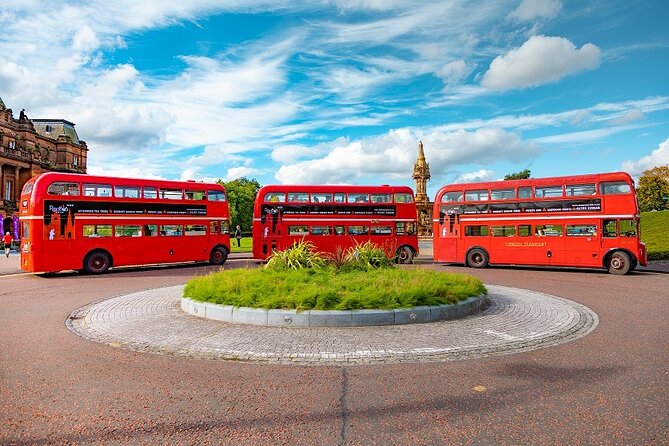
Glasgow’s afternoon tea bus turns sightseeing into a moving meal. You settle into a vintage Routemaster, pass major city sights, and eat sandwiches, warm scones, petit fours, and cupcakes while the streets roll by. It is a clever way to get your bearings without spending the afternoon on foot.
I like the generous food service and the relaxed, playful crew, especially Helen, Tallulah, and George. I also like the efficient route, which links the city centre, the Cathedral quarter, Glasgow Green, the Clyde waterfront, and the West End in about 90 minutes. The main drawback is clear: there is no regular live or recorded commentary, so you should not book this as your main history tour.
The Glasgow Afternoon Tea Experience at a Glance
- Vintage Routemaster ride: You tour Glasgow aboard an adapted classic bus rather than a modern sightseeing coach.
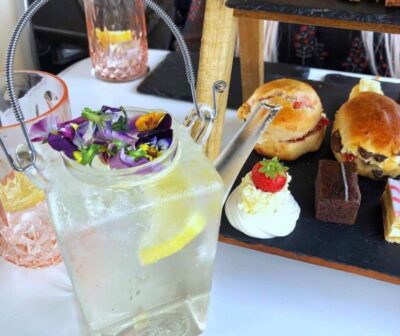
- A full tea spread: Expect handmade sandwiches, a warm scone with cream and jam, petit fours, cupcakes, and unlimited tea or coffee.
- Broad city route: The ride passes George Square, Glasgow Cathedral, the Necropolis, the Clyde Arc, Kelvingrove, and many other city sights.
- A social atmosphere: Singing, music, jokes, and friendly service are part of the mood, with shared tables possible on busy departures.
- Short and useful timing: The experience lasts about 70 to 90 minutes, making it easy to fit into a packed Glasgow day.
- Important limitation: This is a dining experience while touring, not a traditional guided sightseeing tour with detailed explanations.
Why This Bus Ride Works for a First Look at Glasgow
The best reason to book this outing is simple: you can see a broad sweep of Glasgow while resting your feet and eating lunch-sized portions of tea food. In a city with sights spread from the medieval east end to the museums and university in the West End, that can save useful time.
The bus route gives you a quick sense of Glasgow’s shape. You move from the civic centre around George Square toward the Cathedral and Necropolis, then cross the River Clyde and continue toward the Scottish Event Campus, Riverside Museum, and Kelvingrove. You will not stop for long visits at each sight, but you can mark places to return to later.
The tone is more cheerful than scholarly. The crew handles food and drinks while the driver deals with city traffic, and the atmosphere may include singing or a singalong. Helen is often singled out for her comic timing and energy, while Tallulah and George have also helped create the friendly feel that makes this outing work well for birthdays, family occasions, and a first afternoon in town.
Do keep your expectations in the right place. The route description names many sights, but the bus does not provide a continuous history lesson. You may hear occasional comments about places you pass, but you should plan a separate museum visit, walking tour, or self-guided route if you want detailed context.
More Afternoon Tea in the UK
- London: Afternoon Tea Cruise on the River Thames
★ 4.4 · 3,274 reviews - London: Afternoon Tea Bus Tour – 1960s Routemaster Bus
★ 4.5 · 2,032 reviews - London: Afternoon Tea Bus with a Glass of Prosecco
★ 4.4 · 1,853 reviews
What You Eat During the 90-Minute Ride
Afternoon tea arrives as the bus gets moving, so the meal is part of the entertainment rather than a formal hotel-style tea. The spread includes handmade sandwich selections, a home-baked warm scone with cream and jam, petit fours, cupcakes, and unlimited tea or coffee.
The food leans generous and sweet. You get enough to make this feel like a light meal rather than a token snack, and the combination of savoury sandwiches, cream and jam, small cakes, and hot drinks suits the length of the ride. Some customers have also added alcoholic drinks, but those are not listed among the included items, so check the available options when booking or boarding.
The warm scone is a highlight for many people, though food quality can vary with timing and personal taste. One unhappy experience described a dry scone, stiff sandwich bread, and weak coffee. That is a useful reminder to tell the crew promptly if something is not right. The staff can often replace or correct an item during the ride, but it is much harder to fix a complaint after you leave.
Vegetarian and gluten-free options are available if you specify your needs when you reserve. Products may contain nuts, so ask about this before booking if it matters to you. The tour does not include a souvenir drinks cup.
From George Square to Glasgow Cathedral
The departure point is 36 Shuttle Street, Glasgow G1 1QA, and the bus returns there at the end. Early in the route, the city centre gives you a quick look at Glasgow’s civic face.
George Square is dominated by the City Chambers, an ornate building that reflects Glasgow’s wealth during the industrial age. From the bus, you get the setting and scale, but not an interior visit. If the building catches your eye, return later for a closer look.
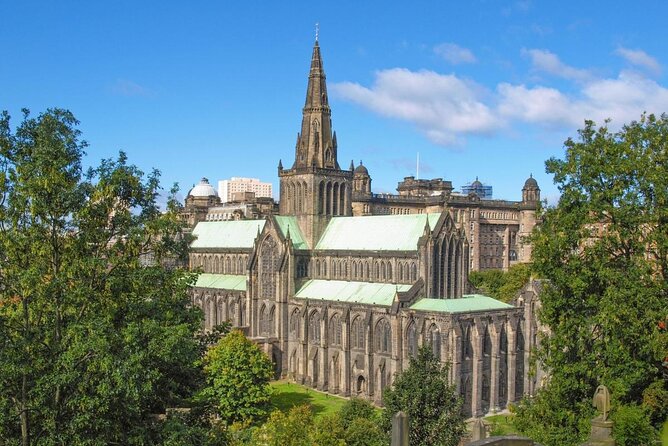
The route then reaches Glasgow Cathedral, one of the most important medieval buildings in Scotland. It survived the Reformation of 1560 intact, which makes it unusual on the Scottish mainland. Next door, the Necropolis climbs the hill with Victorian tombs, monuments, and broad views back toward the city.
This is one of the most worthwhile sections to note for a later walk. The bus lets you see where the Cathedral and Necropolis sit in relation to the centre, but the experience does not give you the time or quiet needed to explore the cemetery’s architecture and stories. Save that for another outing, and wear good shoes for the hill.
Glasgow Cross, the Brewery, and Glasgow Green
The ride continues through Glasgow Cross, where the seven-storey Tolbooth Steeple marks an old centre of civic life. Its clock and stone crown are easy to spot. The surviving steeple once belonged to a larger Tolbooth containing council rooms, the town clerk’s office, and a city prison.
You also pass Tennent’s Wellpark Brewery, which has produced beer since 1885, and the famous Tennent’s Bar in the West End later in the route. These stops add a useful note about Glasgow’s working and social culture. You see the city not just as a collection of grand buildings, but as a place shaped by brewing, trade, engineering, and everyday pubs.
At Glasgow Green, the People’s Palace offers a look at how local people lived, worked, and played. Nearby, the Doulton Fountain is a striking piece of ceramic architecture and was a major attraction at the 1888 International Exhibition. The fountain is the largest ceramic fountain ever constructed.
Again, the value here is orientation. You see several sites from your seat, but you do not get admission or extended stops. If museums are your priority, build extra time into your Glasgow plans for the People’s Palace and the other collections along the route.
Same leaf, a different ritual:
- Edinburgh Afternoon Tea Experience
★ 4.5 · 1,275 reviews - The Kensington Palace Gardens Royal High Tea
★ 4.5 · 934 reviews - Afternoon Tea River Cruise on the Thames
★ 4.0 · 884 reviews - London Afternoon Tea Bus with Panoramic Tour
★ 4.0 · 763 reviews
Crossing the Clyde and Seeing Glasgow’s Industrial Side
The Clyde section gives the ride its strongest sense of Glasgow’s engineering past and present. You pass the Kingston Bridge, which carries the M8 through the city centre and handles around 150,000 vehicles each day. It is a working piece of infrastructure, not a pretty photo stop, but it helps explain how traffic moves through Glasgow.
The Clyde Arc, known locally by its distinctive shape, crosses the river between Finnieston and Pacific Quay. Its angled design makes it one of the more recognizable modern bridges in the city.
The Finnieston Crane provides a sharper link to Glasgow’s industrial age. This giant cantilever crane once loaded cargo, including steam locomotives, onto ships bound for destinations around the world. It no longer works as a commercial crane, but it remains a strong symbol of the city’s shipbuilding and engineering identity.
You then pass the SEC Armadillo and the SSE Hydro, two major venues at the Scottish Event Campus. The Armadillo opened in 1997 and was designed by Foster + Partners. The Hydro is a large indoor arena used for concerts and other events. This part of the route feels more modern and event-focused than the old centre.
Riverside Museum, Glasgow Tower, and the West End
The Riverside Museum is Glasgow’s transport museum, with more than 3,000 objects ranging from locomotives and cars to prams, paintings, skateboards, and even a Stormtrooper. The bus passes the museum rather than taking you inside, but its location beside the river makes it easy to add to your schedule.
Glasgow Tower is part of the Glasgow Science Centre complex on the south bank of the Clyde. The free-standing tower is another example of the city’s modern waterfront development. You get a quick visual survey of this area, but no admission to the Science Centre or tower is included.
The route then moves toward the University of Glasgow, the Hunterian Art Gallery, and Kelvingrove Museum. Founded in 1451, the university has links to figures such as Adam Smith, James Watt, and Lord Kelvin. The Hunterian holds works by artists including Rubens, Rembrandt, the Scottish Colourists, and the Glasgow Boys.
Kelvingrove Museum opened in 1901 and remains one of Glasgow’s most popular museums. Its architecture alone makes it worth seeing, while its family-friendly displays suit a wide range of interests. This is a strong area for a second outing, since the bus can show you where several major West End attractions are without asking you to walk between them first.
The final named sight is the Mitchell Library at Charing Cross. It serves as the centre of Glasgow’s library network and holds Scottish and international collections. It is not a standard sightseeing stop, but it rounds out the picture of Glasgow as a city of public institutions, art, education, and civic life.
Seating, Comfort, and the Vintage Bus Trade-Off
The bus is part of the attraction, but it also sets the limits of comfort. This is a vintage Routemaster, with original-style seating and a compact interior. Tables may be shared, especially on busy weekend departures, and some positions offer more room than others.
A few seats can feel tight, particularly if you are placed at the front and several people share one bench. If seating matters to you, contact the operator in advance rather than assuming you can choose on the day. The most popular seats may be allocated early.
There is no toilet on board, so use facilities before departure. The ride usually lasts 70 to 90 minutes, depending on traffic and conditions. Fans are used, but there is no air conditioning. On a warm day, the bus may feel hot, while wet or cold weather can make the enclosed vintage interior more appealing.
The classic bus may also show signs of age. That is part of the appeal for some people and a source of irritation for others. If you want polished, quiet, climate-controlled transport, choose another sightseeing option. If you like old vehicles, close quarters, and a little harmless bustle around the tea service, the setting adds character.
Price, Timing, and Who Gets Good Value
At about $61.46 per person, this is not the cheapest way to eat tea in Glasgow, and it is not the most detailed way to tour the city. You are paying for the combination of food, transport, staff service, a vintage vehicle, and a carefully chosen route.
I see the value most clearly when you have only one day in Glasgow, are travelling with family, or want a low-effort activity between museum visits. It also works well as a birthday treat or a gift. The food is plentiful enough to replace a light lunch, and the ride covers ground that would take much longer on foot.
The value drops if your main goal is historical interpretation. There is no live or recorded guide commentary, and the route may pass a sight without giving you much explanation. You should think of this as afternoon tea with a city view, not a hop-on hop-off bus or professional city lecture.
Bookings are often made well ahead, with an average booking lead time of about 55 days. Arrive 10 to 15 minutes early at Shuttle Street. The bus cannot wait for late arrivals, and latecomers are not entitled to a refund. Full payment is required at booking, and free cancellation is available up to 24 hours before the start time.
The maximum group size is 20 people. Children must be at least three years old, anyone under 14 must have an adult with them, and service animals are allowed. Most people can participate, but the vintage bus layout may not suit every mobility need, so ask the operator about access before reserving.
Should You Book the Glasgow Afternoon Tea Bus?
Book it if you want a sociable, lighthearted way to see a wide portion of Glasgow while eating a proper spread of tea food. It is particularly suitable for a first afternoon, a family celebration, a birthday, or anyone who would rather sit than tackle the city’s hills and long distances.
Skip it if you need detailed commentary, guaranteed personal table space, air conditioning, or a quiet formal tea. You will get more from the experience if you accept its limits: it is a moving meal, a vintage vehicle ride, and a quick visual introduction to Glasgow.
My practical plan would be to take this early in your stay, use it to mark the Cathedral, Necropolis, People’s Palace, Riverside Museum, and Kelvingrove for later visits, then explore those places on foot or indoors. With that approach, the bus does exactly what it should: it gives you a pleasant overview, fills you up, and saves your legs for the sights that deserve more time.
FAQ
Where does the Glasgow Afternoon Tea Experience begin and end?
It begins at 36 Shuttle Street, Glasgow G1 1QA, and returns to the same meeting point at the end.
How long does the experience last?
The tour lasts about 70 to 90 minutes, with the advertised duration listed as approximately one hour and 30 minutes. Traffic and other conditions can affect the timing.
Is this a fully guided sightseeing tour?
No. The operator describes it as a dining experience while touring Glasgow, with no live or recorded guide commentary. There may be occasional comments about places of interest and a singalong.
What food and drinks are included?
You receive handmade sandwiches, a warm scone with cream and jam, petit fours, cupcakes, and unlimited tea and coffee.
Are vegetarian and gluten-free options available?
Yes. Vegetarian and gluten-free options are available, but you must state your requirements when making the reservation. Products may contain nuts.
Do I need to arrive early?
Yes. You should arrive 10 to 15 minutes before departure. The bus cannot wait for late arrivals, and refunds are not offered to people who miss the departure.
Is there a toilet on the bus?
No. There is no toilet on board, so plan to use facilities before the ride begins.
Can children join the experience?
Children must be at least three years old. Children aged three to nine are charged the child rate, those aged 10 and over are charged the adult rate, and anyone under 14 must be accompanied by an adult.
Newly steeped around the UK
- York: Private Horse-Drawn Carriage Ride and Afternoon Tea★ 5.0 · 3 reviews
- Traditional Afternoon Tea Experience and Baking Class in Stratford-upon-Avon★ 5.0 · 23 reviews
- RHS Garden Wisley and Tea in the Garden Entry Ticket★ 4.0 · 10 reviews
- Afternoon Tea Experience Cooking Class★ 5.0 · 2 reviews
- Royal London Tour with Afternoon Tea at The Rubens at the Palace★ 4.5 · 5 reviews
- Kensington Palace Special Exhibition, Guided Walk & High Tea★ 5.0 · 2 reviews
- Royal Afternoon Tea & Walk at Kensington Palace★ 4.5 · 3 reviews
- Overnight Lake District with Cream Tea and Cruise from London★ 4.5 · 7 reviews
Afternoon Tea Experiences, compared.
London: Afternoon Tea Cruise on the River Thames
Read our review →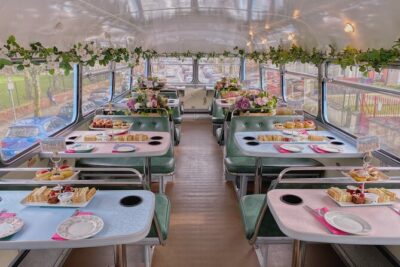
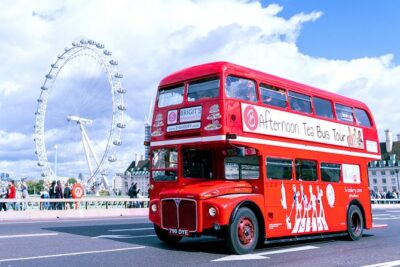
London: Afternoon Tea Bus Tour – 1960s Routemaster Bus
Read our review →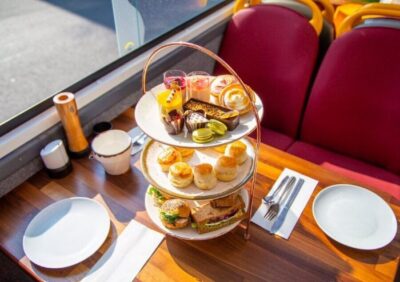
London: Afternoon Tea Bus with a Glass of Prosecco
Read our review →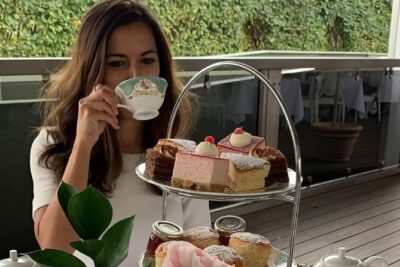
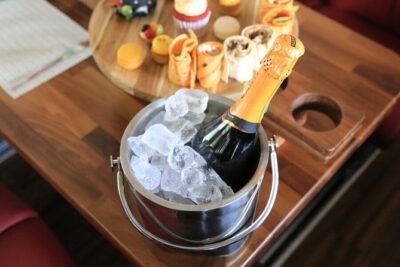
Edinburgh: Vintage Bus Tour with Afternoon Tea or Gin
Read our review →Browse the lists this tea experience appears in