
Review · TAIPEI
Street Food Cooking Class in Taipei : Gua Bao/Lu Rou Fan/Boba Tea
Taiwanese street food becomes much more interesting when you make it yourself. In this two-hour class, you prepare gua bao, lu rou fan, and bubble tea, then sit down to eat what you made. The tapioca pearls are made from scratch, which gives the class one especially useful trick to take home.
I like the small group of no more than eight, since cooking needs hands-on help. I also like the recipe book, a practical souvenir that lets you try the dishes again at home. The one drawback is that the class packs several recipes into two hours, so some steps move quickly, and the boba-making process can be harder than it looks.
Key points at a glance
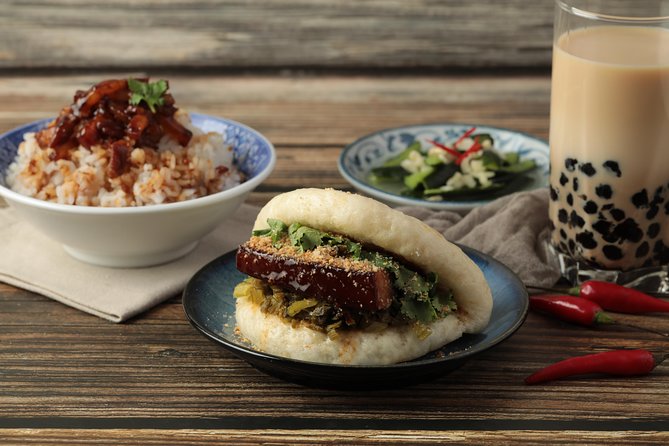
- Three Taiwanese favorites: Make steamed gua bao, braised pork for lu rou fan, and bubble milk tea.
- Boba from scratch: Roll and prepare chewy tapioca pearls instead of simply adding packaged ones.
- Small class size: A maximum of eight people allows more direct instruction.
- Cook, then eat: The class ends with a homemade meal at the meeting point.
- Family-friendly pace: Children ages 8, 10, and 11 were happily included in every stage of one class.
- Useful takeaway: A recipe book helps you recreate the dishes after returning home.
Why this class is different from a Taipei food tour
A food tour lets you sample many things. This class asks you to slow down and understand three of them. That difference matters. You see how dough becomes a soft bun, how pork takes on its savory flavor, and how a drink associated with Taiwan is built from its chewy pearls.
The focus is xiao chi, the Taiwanese idea of small eats. These are not side dishes in the usual sense. They are the everyday foods that appear at stalls, shops, and casual eateries across Taiwan. Gua bao and lu rou fan are especially good choices for a cooking class because each has a clear structure and a strong connection to local food culture.
The experience takes place at CookInn Taiwan’s Zhongshan classroom in Taipei’s Datong District. You start and finish at the same place, which keeps the afternoon simple. The scheduled start time is 2:30 pm, and the full session lasts about two hours.
You will not leave with a giant survey of Taiwanese cuisine. You will leave with a better understanding of a few important dishes, a full meal, and skills you can try in your own kitchen.
More Bubble Tea Experiences around Taipei:
- Xiao Long Bao, Beef Noodles & Boba Tea Cooking Class in Taipei
★ 5.0 · 159 reviews - Xiao Long Bao, Chicken vermicelli with mushroom and sesame oil, Tofu strips salad, Bubble milk tea. Taiwan Traditional Delicacies Experience-A (Taipei Cooking Class)
★ 5.0 · 79 reviews - Xiao Long Bao & Boba Tea Cooking Class in Taipei
★ 5.0 · 28 reviews
Starting with gua bao dough and steamed buns
Gua bao is sometimes called a Taiwanese hamburger. Instead of a sliced bread roll, it uses a soft, folded steamed bun. The bun wraps around braised pork belly and is commonly paired with other fillings and toppings, though the supplied details focus on making the bun and preparing the pork.
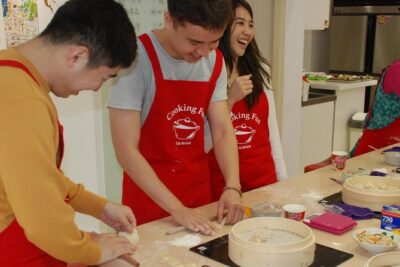
Making the dough is one of the most useful parts of the class. You learn how to prepare the buns from scratch, rather than simply assembling ingredients that someone else has made. That gives you a clearer sense of why gua bao has its particular texture.
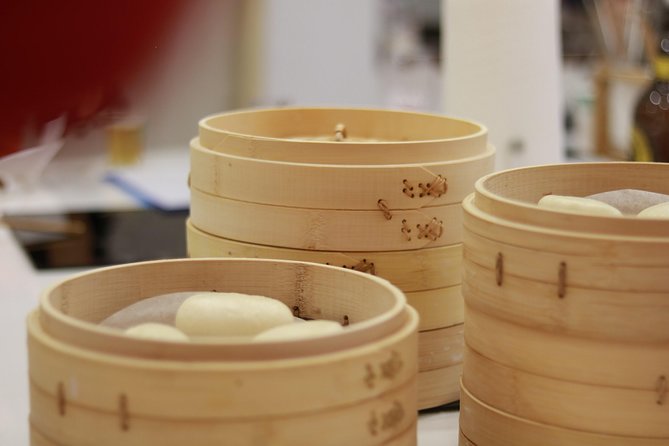
The steaming step is also part of the appeal. A bun that looks plain before cooking changes into something soft and pliable after steaming. This is a good lesson in Taiwanese cooking: simple-looking food often depends on careful texture and timing.
You should expect to work with guidance rather than simply watch a demonstration. The small class limit is important here. If you are unsure about shaping the buns or handling the dough, the instructor has a reasonable chance to correct you before the food reaches the steamer.
One practical point: the gua bao is the dish most likely to please everyone in your group. The cooking class has received especially strong praise for the finished buns, and one participant singled them out as the best part of the meal. If you have already eaten gua bao in Taipei, this section helps explain how the bun and pork come together.
Braising pork for lu rou fan
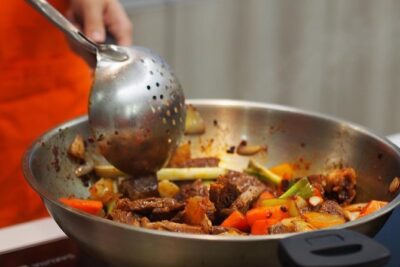
The second main dish is lu rou fan, a bowl of rice topped with finely prepared braised pork. The class focuses on the tips for braising classic pork belly, while the rice is prepared separately for serving.
Braising is not flashy work. It is about building flavor over time and understanding how the pork changes during cooking. That makes it a useful skill beyond this single dish. Once you know the basic method, you can think more clearly about how Taiwanese cooks turn a modest cut of meat into a deeply savory topping.
The lu rou fan portion also gives the class some balance. Gua bao is built around bread and a handheld format, while lu rou fan is served as a rice dish. You get to see two different ways Taiwanese street food uses the same broad family of flavors.
The supplied experience details do not promise an elaborate menu of toppings or side dishes, so you should book this for the main preparations rather than for a full banquet. The food you make becomes the meal at the end, and the emphasis is on learning the core dishes.
If you are cooking with children, this part may require more direct adult help than the bun shaping or drink preparation. Still, the class has included children ages 8, 10, and 11 in all stages, with a patient instructor bringing them into the work. That makes it a sensible choice for families who want an activity beyond sightseeing.
Making tapioca pearls for bubble milk tea
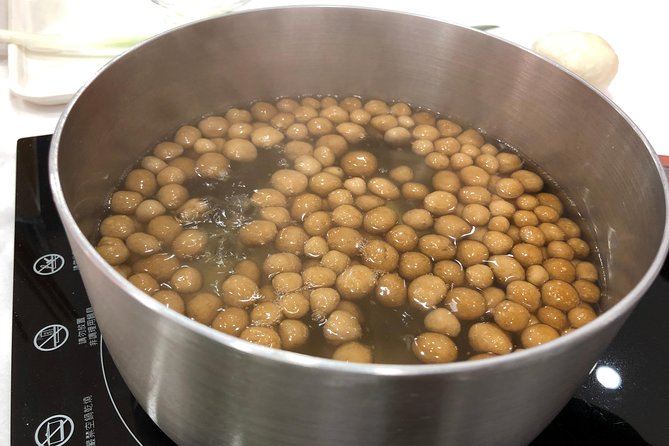
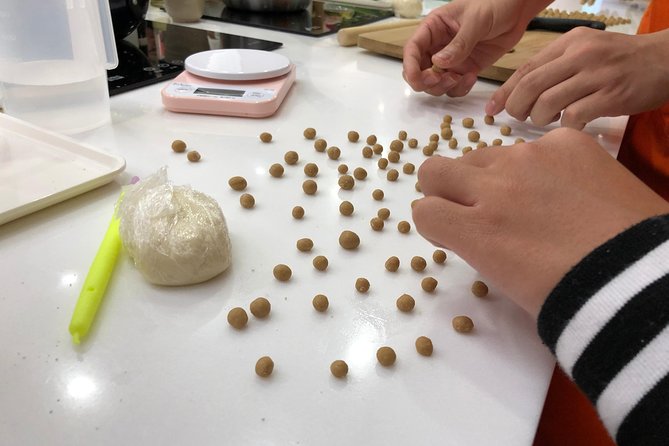
Bubble milk tea is the most playful part of the class, but it may also be the most demanding. You make the chewy tapioca pearl from scratch, then prepare and shake your own cup of bubble milk tea.
This is more than a drink stop with a recipe attached. The pearls are the key feature, and working with them shows why the texture is so important. The process can be difficult, especially if you are used to simply ordering boba at a shop. One participant described making the pearls as hard, so do not expect this section to be effortless.
That challenge is part of the value. You get a better sense of how much work sits behind a familiar Taiwanese drink. You also have a story to take home: the cup is not just something you tasted in Taipei, but something you helped build from the chewy pearls onward.
The class description specifically says you will shake the bubble milk tea yourself. That gives this portion a clear finish and keeps it active rather than turning it into a lecture. If you have never made boba, this may be the most memorable skill of the afternoon.
Still, expectations matter. Homemade pearls may not look perfectly uniform, and the class does not promise a professional drink-shop result. Treat the process as a lesson in texture and technique, not as a competition with Taiwan’s best tea shops.
More Cooking Classes with Tea around Taipei:
- Xiao Long Bao, Pork thick soup, Bubble milk tea. Taiwan Traditional Light Meals Experience-B (Taipei Cooking Class)
★ 5.0 · 24 reviews - Xiao long bao, Pork thick soup, Bubble milk tea. (Taiwan Cooking Class)-B
★ 5.0 · 18 reviews - Xiao Long Bao, Chicken vermicelli with mushroom and sesame oil, Tofu strips salad, Bubble milk tea. Taiwan Traditional Delicacies Experience-A (Taipei Cooking Class)
★ 5.0 · 8 reviews - Xiao Long Bao, Chicken vermicelli with mushroom and sesame oil, Tofu strips salad, Bubble milk tea. Taiwan Traditional Delicacies Experience-A (Taipei Cooking Class)
★ 5.0 · 5 reviews
A class designed for individual help
With a maximum of eight people, this is much smaller than a large demonstration class. That matters when you need help with dough, braising, or tapioca pearls. You should have more access to the instructor than you would in a crowded workshop.
Angela is identified as an especially capable and interesting instructor, and she has been described as patient with children. The available information does not guarantee that she leads every date, so check the booking details if having a particular instructor matters to you.
The teaching style appears practical and easy to follow. You are not expected to arrive with professional cooking skills. One class was described as easy and fun, and the recipes are presented for ordinary participants rather than trained cooks.
The small group also affects the social side of the afternoon. You are likely to work alongside a handful of other people, not disappear into a crowd. That can be a plus if you enjoy shared cooking, though anyone seeking a private class should note that this is a small-group activity, not a private booking.
Sitting down to eat what you made
At the end, you sit down at the meeting point and eat the food prepared during the class. This is an important finish. You can taste the results while the instructions are still fresh, and you can judge how the dishes differ from what you have ordered at street stalls or restaurants.
The meal includes the gua bao, lu rou fan, and bubble tea preparations described above. The gua bao has received the strongest praise, while the lu rou fan is also part of the satisfying final spread. Since the food is made during the session, the exact quantity and presentation may depend on the group’s pace and work.
Come hungry. Two hours of cooking can make a meal feel well earned, and the experience is built around eating at the end rather than sampling a few bites along the way.
You also receive a recipe book. That is a better souvenir than a novelty item because it gives you a chance to repeat the class at home. The dishes do require ingredients and time, but the recipe book helps turn a pleasant Taipei memory into a meal you can share with family.
What the $79 price gets you
At $79 per person, this is not the cheapest way to eat Taiwanese food. You can buy gua bao, lu rou fan, and bubble tea for far less than the class price. The value comes from the instruction, the hands-on work, the small group, the meal, and the recipe book.
I would consider the price reasonable if you want more than a tasting. You are paying to learn several techniques, including bun-making, braising, and fresh tapioca preparation. The class also saves you from buying separate meals while you are there, though the meal itself should not be treated as the main financial justification.
The price is less convincing for someone who only wants to sample Taipei’s food. A street-food tour or a few casual meals would offer more variety. This class suits you best if you enjoy cooking, want a structured indoor activity, or hope to recreate Taiwanese dishes after your trip.
The maximum group size of eight helps support the price. Personal guidance is hard to provide in a large class, especially when several people are handling dough and cooking at once. Here, the limited size gives the instructor more room to help.
Who should book this Taipei cooking class
I would recommend it to first-time visitors who want a direct connection to Taiwanese food culture. It is also a strong choice for repeat visitors who have already eaten the famous dishes and now want to know how they are made.
Families should give it serious thought. The class has successfully involved children ages 8, 10, and 11, and the instructor was patient with them. Cooking gives younger children a clear job and a reason to stay engaged, though adults should be ready to help with any hot or difficult steps.
It also suits couples, friends, and solo visitors who like small-group activities. The shared format gives you some company without the feel of a large tour.
You may want to skip it if you dislike structured activities, do not enjoy cooking, or have very limited time in Taipei. Two hours is not a huge commitment, but the 2:30 pm start does shape your afternoon. It is best placed on a day when you can reach the Zhongshan classroom without rushing from another major sight.
The class ends back at the meeting point, so you do not need to arrange a separate pickup or find your way to a different finish point. A mobile ticket is provided, and confirmation is received when you book.
Booking, timing, and cancellation
The meeting point is CookInn Taiwan’s Zhongshan classroom at 66 Section 1, Chengde Road, second floor, in Datong District, Taipei City. The stated start time is 2:30 pm, and the activity ends at the same location after about two hours.
Free cancellation is available up to 24 hours before the start time for a full refund. Changes or cancellations made within 24 hours are not accepted for a refund. The activity also requires a minimum number of people, so if the provider cancels for that reason, you are offered another date or experience, or a full refund.
Because the class begins at a fixed time, arrive with enough margin to find the classroom. The supplied details do not state a separate late-arrival policy, so do not count on being able to join after the cooking has begun.
Should you book it?
Book this class if you want to understand three Taiwanese staples rather than simply order them. The strongest reasons are the small group, the from-scratch gua bao buns, the homemade tapioca pearls, and the recipe book you can use later.
I would be especially keen to book it for a family or for anyone already curious about bubble tea and steamed buns. Keep your expectations practical: the class is compact, the boba can be tricky, and the meal is built around a few dishes rather than a long menu.
For a hands-on afternoon at CookInn Taiwan, $79 is a fair price when you value instruction and the chance to repeat the recipes at home. If you only want the cheapest meal in Taipei, spend the money at a street stall instead.
FAQ
How long does the Taiwanese street-food cooking class last?
The class lasts about two hours.
What dishes will I make?
You will make gua bao, including the steamed buns and braised pork belly, lu rou fan, and bubble milk tea with tapioca pearls made from scratch.
Where does the class meet?
The class meets at CookInn Taiwan’s Zhongshan classroom at 66 Section 1, Chengde Road, second floor, in Datong District, Taipei City.
What time does the class start?
The scheduled start time is 2:30 pm.
How many people can join the class?
The maximum group size is eight people.
Can I cancel for a full refund?
Yes. You can cancel at least 24 hours before the local start time for a full refund. Cancellations or changes made less than 24 hours before the start time are not refunded.
Newly steeped around Taipei
- Xiao long bao, Pork thick soup, Bubble milk tea. (Taiwan Cooking Class)-B★ 5.0 · 18 reviews
- Xiao Long Bao, Chicken vermicelli with mushroom and sesame oil, Tofu strips salad, Bubble milk tea. Taiwan Traditional Delicacies Experience-A (Taipei Cooking Class)★ 5.0 · 5 reviews
- Xiao Long Bao, Chicken vermicelli with mushroom and sesame oil, Tofu strips salad, Bubble milk tea. Taiwan Traditional Delicacies Experience-A (Taipei Cooking Class)★ 5.0 · 8 reviews
- Taiwan Traditional Delicacies Experience, Xiao Long Bao, Chicken vermicelli with mushroom and sesame oil, Tofu strips salad, Bubble milk tea.★ 5.0 · 6 reviews
- Taipei Fresh Market Tour and Colorful Bubble Tea Making★ 5.0 · 6 reviews
- Taiwanese Baking Class with Oolong Tea Tasting in Taipei★ 5.0 · 4 reviews
- Sip & Savor: Maokong Tea & Shenkeng Stinky Tofu Private Day Tour★ 4.5 · 9 reviews
- Pineapple Pastry with Egg Yolk, Longan Cake, High Mountain Oolong Tea. Taiwan Traditional Dessert Experience-D (Taipei Cooking Class)★ 5.0 · 2 reviews
Bubble Tea Experiences, compared.
Xiao Long Bao, Beef Noodles & Boba Tea Cooking Class in Taipei
Read our review →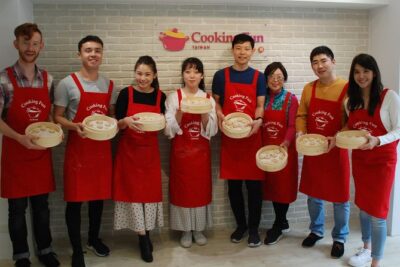
Xiao Long Bao, Pork thick soup, Bubble milk tea. Taiwan Traditional Light Meals Experience-B (Taipei Cooking Class)
Read our review →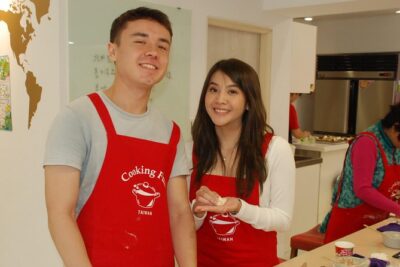
Xiao long bao, Pork thick soup, Bubble milk tea. (Taiwan Cooking Class)-B
Read our review →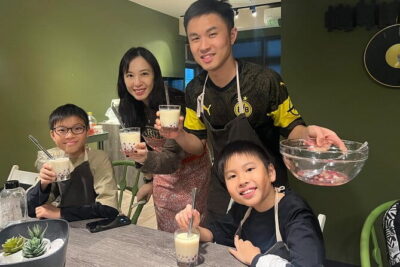
Taipei Fresh Market Tour and Colorful Bubble Tea Making
Read our review →
Browse the lists this tea experience appears in