
Review · INDIA
Srinagar Old City Heritage Walking Tour with Kahwa Tea
Srinagar’s old city is best understood on foot, one shrine, market, and courtyard at a time. This three-hour walk links Pather Masjid with Jamia Masjid Srinagar while a local guide explains how Buddhist, Hindu, Persian, Muslim, and colonial influences shaped the city. I like the focus on storytelling and the chance to meet artisans, and I like that kahwa is served in a local setting rather than treated as a quick photo stop.
The main thing to consider is the walking itself. You’ll use winding alleys and uneven city streets, with no transport included. The route is not suitable for children under 10, pregnant women, wheelchair users, people with visual impairments, or anyone with a low level of fitness.
Key points at a glance
- Pather Masjid begins the story: Start beside one of Srinagar’s notable old mosques before heading into the city’s historic core.
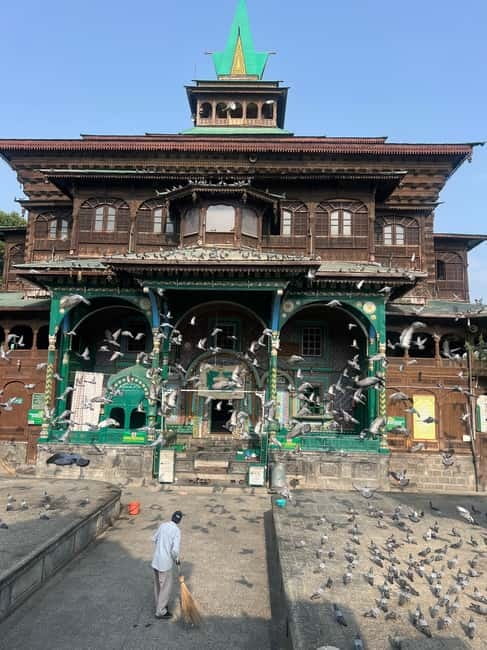
- Khanqah-e-Budshah adds depth: The route includes this important religious and architectural site, along with the tomb of Budshah.
- Jamia Masjid is the grand finish: The walk ends at Srinagar’s great congregational mosque, where kahwa is served.
- Local guides shape the walk: Syed and Furqan have led especially strong versions of the tour, using legends, architecture, and historical detail.
- Small groups help: With a limit of 10 people, you have a better chance to hear questions and follow the guide through narrow lanes.
- The price covers more than sightseeing: At $32, you pay for three hours of guiding, cultural context, artisan contact, local conversations, and kahwa.
Starting at Pather Masjid in Srinagar’s old city
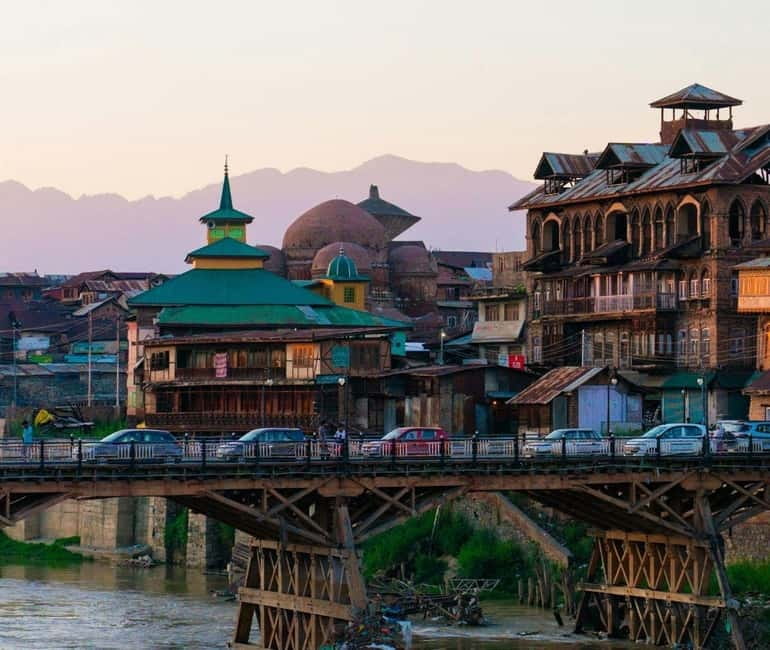
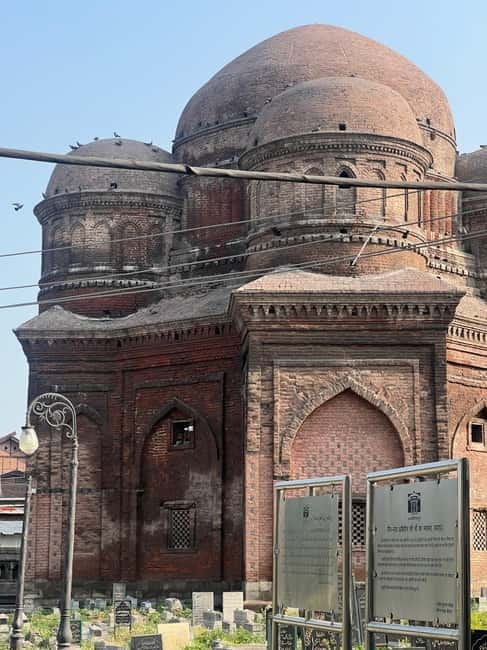
The walk begins at Pather Masjid, a fitting place to enter Srinagar’s older quarters. The opening guided visit lasts about 30 minutes, giving you time to look at the building and hear why it matters before the route moves into the surrounding streets.
This opening is useful because Srinagar can feel confusing at first. The old city is made up of lanes, religious sites, trading areas, and buildings from different periods. A guide gives those pieces an order. Instead of seeing one old structure after another, you begin to understand how faith, trade, craft, and daily life overlap.
The walk then continues for about 10 minutes. That sounds brief, but a short transfer on foot is practical here. You are not being driven between isolated attractions. The point is to see how the sites relate to one another inside the old city.
Wear shoes you can walk in for several hours. Sunglasses, a hat, and sunscreen are also sensible, since the route includes time outside. The tour does not include transport, so arrange your own way to Pather Masjid and from Jamia Masjid after the walk.
More Heritage Visits with Tea around India:
- Heritage Tour : Private Boat, Havelis, City Walk & High Tea
★ 5.0 · 6 reviews - Tea plantation walk with Visit of Historical ,village & Market
★ 5.0 · 5 reviews - Luxury Boat ride, Havelis, Heritage Walk & High Tea
★ 4.3 · 2 reviews
Shrines, tombs, and Kashmir’s changing traditions
The middle section includes several guided visits, each lasting roughly 30 to 45 minutes. This is where the walk earns its keep. You’ll hear about ancient shrines, forgotten temples, Mughal-era architecture, and the many cultural layers that shaped Kashmir.
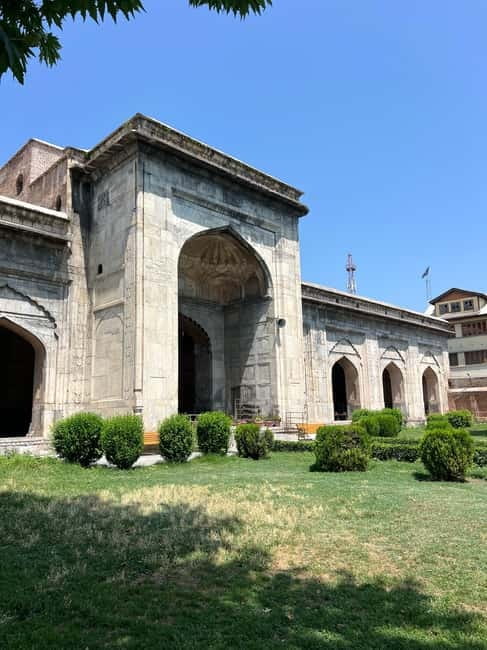
One important stop is Khanqah-e-Budshah’s tomb, also associated with the Budshah Tomb. The site received special praise from the people who took this walk, particularly for its architecture and the stories attached to it. You should expect the guide to explain both what you are looking at and how the place fits into Srinagar’s past.
Another highlight is Khanqah Moala, also known as Khanqah-e-Moula. Its history and religious importance make it one of the more memorable parts of the route. The value here is not just the building itself. A good guide can connect the site to the people, beliefs, and traditions that helped shape the old city.
The tour also includes ancient shrines and forgotten temples. The exact order can vary, and the supplied details do not name every temple or shrine. That is worth keeping in mind if you are looking for a fixed checklist of landmarks. This is a guided heritage walk, not a timed museum circuit.
I like that distinction. You are given a broad look at Srinagar’s past rather than a narrow focus on one period. Buddhist and Hindu roots, Persian influence, Islamic architecture, Mughal design, and colonial-era traces are all part of the story. The guide’s job is to help you see connections without turning the walk into a lecture.
Architecture that rewards a slower look
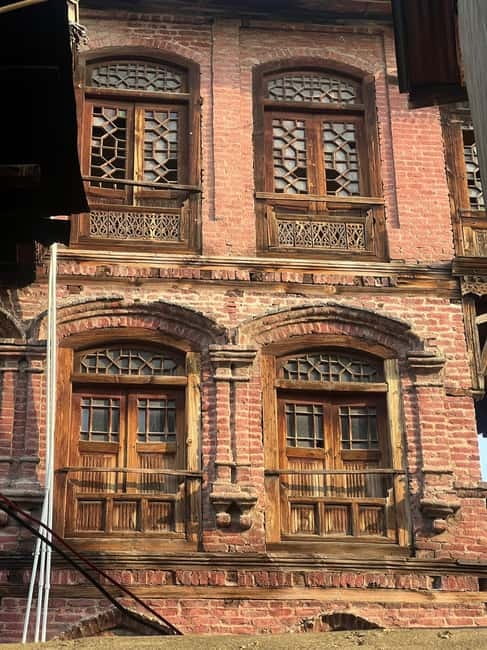
Srinagar’s old-city buildings are easy to pass without understanding what makes them important. The walk slows you down. A doorway, tomb, mosque, or courtyard can become a clue to the city’s past when someone explains its design and purpose.
The architecture is a major reason to book this tour. One participant singled out the Budshah Tomb and Jamia Masjid as the strongest visual highlights. Another praised the attention given to shrines, mosques, and landmarks. That fits the route: you get a mix of religious buildings, public spaces, and older structures rather than a single style repeated all afternoon.
The guide may also point out details that are hard to appreciate alone. These could include the way a building is positioned, the symbols connected with it, or the stories attached to a local figure. I would not expect a formal architectural survey, but you should expect useful context and plenty of stops for questions.
Photography and videography permits are not included. If you plan to take professional photographs or film, check the rules before you go. For ordinary sightseeing, bring your camera if you wish, but follow the guide’s instructions at religious sites and respect local customs.
Markets, courtyards, and working crafts
The route includes time in markets and quiet courtyards, plus a meeting with local artisans. This is where the tour moves beyond monuments. You get a look at places connected to everyday work and local trade.
The shopping portion lasts about 15 minutes. Do not treat this as a dedicated shopping tour. It is better understood as a short chance to see local commerce and perhaps browse crafts while learning how traditional skills remain part of life in Srinagar.
The artisan visit is another strong feature. The activity promises contact with people keeping age-old crafts alive, but it does not name a particular craft or guarantee a specific workshop. I would go with an open mind. The value is in hearing directly about the work and traditions rather than expecting a long hands-on class.
The quiet courtyards matter for the same reason. They give you a pause from the movement of the market and a chance to notice the old city’s less obvious spaces. These are the places where a local historian can add color that guidebooks often miss, from a neighborhood story to an explanation of how a building was used.
The small group limit of 10 is helpful here. Narrow lanes and working markets are easier to manage with fewer people. You can also ask questions without shouting across a large group. The trade-off is that the tour may feel less private than a one-to-one walk, and the pace will depend on the whole group.
More Tea Experiences around India:
- Munnar Tea Trail Tour with Factory Experience ( By Munnar Info)
★ 5.0 · 458 reviews - Village Vibes: Cansaulim Coastal E-Bike & Japanese Tea Tour
★ 5.0 · 292 reviews - Munnar Tea valley Tour ( By Munnar Info)
★ 5.0 · 83 reviews - Tea planation walking In Munnar- (by Munnar Info)
★ 5.0 · 53 reviews
Finishing at Jamia Masjid Srinagar
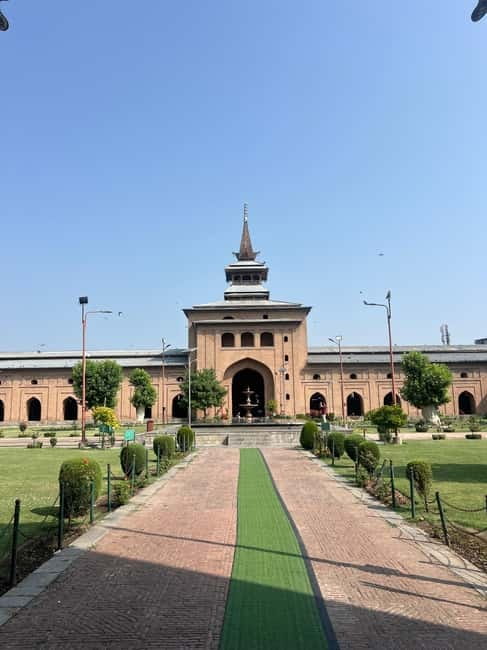
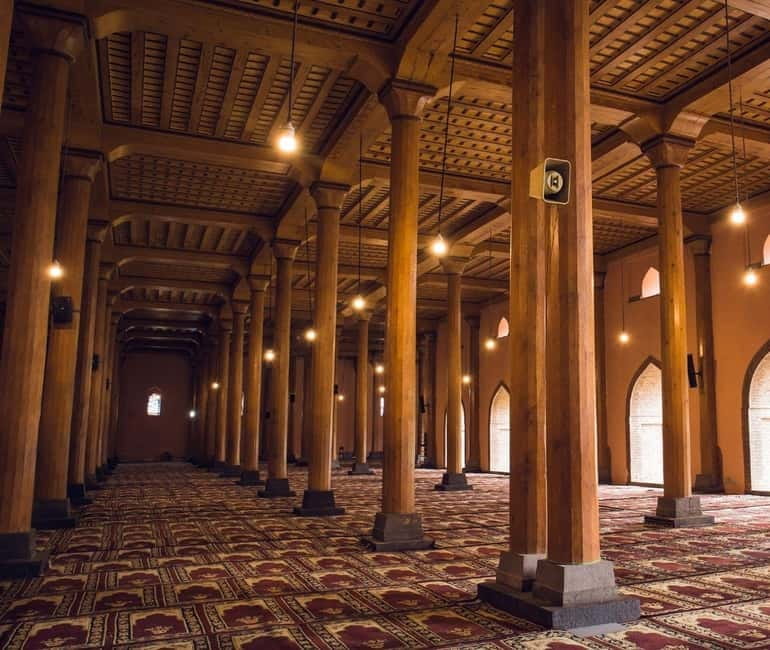
The walk ends at Jamia Masjid Srinagar after a final guided visit of about 30 minutes. This is the biggest architectural finish on the route and one of its clearest anchors.
Jamia Masjid is not simply a final photo stop. It gives the walk a sense of scale. After visiting shrines, tombs, markets, and tucked-away courtyards, you arrive at a major mosque tied closely to the identity of Srinagar’s old city.
Plan to listen carefully here. The site is religious as well as historic, so dress modestly and behave respectfully. Short skirts, ripped clothing, see-through clothing, bare feet, and disruptive behavior are not allowed on this activity. Alcohol, drugs, vaping, weapons, and sharp objects are also prohibited.
Kahwa is served at the end, according to the experience details and firsthand feedback from the route. This is a simple but well-chosen finish. Kashmiri kahwa is traditionally spiced tea, and sharing it in a local setting gives you time to talk with the guide and local people after the walking is done.
Food and drinks are not included beyond the specified kahwa. If you need a meal, plan for that separately.
What the guides add to the three hours
The guide is the heart of this activity. The tour is offered in English, Hindi, Urdu, and Kashmiri, with a local historian or cultural expert leading the group.
Two guide names appear in the strongest accounts of the walk: Syed and Mr. Furqan. Syed was praised for explaining Srinagar’s history, architecture, and markets clearly. Furqan was noted for adjusting his explanations to the interests of the person on the walk and for covering legends, facts, shrines, mosques, and landmarks with care.
That detail matters because this route depends on interpretation. Without a good guide, several stops could look like old buildings with impressive names. With the right guide, the tomb, mosque, temple, and market become parts of a longer story about how Kashmiris lived and how the city changed over centuries.
The guide can also help with the social side of the visit. The activity includes conversations with locals, and the tea stop offers a natural moment for that. Still, conversations are not scripted, so the amount of interaction can vary. Ask questions if you want more than a passing introduction.
Is $32 a fair price?
At $32 per person, this is a reasonable price for a three-hour small-group walk if you care about context. You are paying for a guide, access to a planned heritage route, contact with local artisans, conversations with locals, and kahwa. Transport, permits, and extra food are not included.
The value is strongest for someone who would otherwise walk through the old city without knowing what they were seeing. A self-guided visit costs less, but you would need to research the sites and find your way between them yourself. You would also miss the local explanations and arranged introductions.
The value is weaker if you want a private tour, a long shopping session, or a route built around photography. The group can include up to 10 people, and the walk follows a shared schedule. At three hours, it offers a useful introduction rather than a full study of every historic quarter.
Free cancellation up to 24 hours before the activity and the reserve-now, pay-later option make booking less risky. Starting times depend on availability, so check the schedule before committing your day.
Who will enjoy this walk most?
I would choose this tour if you like architecture, religious history, local stories, and walking through working neighborhoods. It is especially useful early in a Srinagar visit, since the guide can give you a sense of the old city before you explore more on your own.
It also suits curious visitors who want more than major sights. The artisan meeting, markets, courtyards, and tea stop add human detail to the monuments.
I would not choose it for a relaxed, accessible sightseeing outing. The route uses winding alleys and requires a reasonable level of fitness. It is not suitable for children under 10, pregnant women, wheelchair users, visually impaired people, or people with low fitness. Unaccompanied minors are not allowed.
Come dressed modestly and ready to walk. Leave pets, baby strollers, handcarts, large party behavior, and anything prohibited by the activity rules at home.
Should you book the Srinagar Old City Heritage Walking Tour?
Book it if you want Srinagar explained by someone from the city, not just photographed from a vehicle. The strongest reasons are the thoughtful route from Pather Masjid to Jamia Masjid, the stops at Khanqah Moala and the Budshah Tomb, and the guide-led stories that connect architecture with local life.
The kahwa is a pleasant finish, but it is not the main reason to go. The real value is the access to places and stories you could easily miss on your own. At $32, that is a fair exchange for three focused hours, especially with a group capped at 10.
Skip it if you dislike walking, need step-free access, or prefer a private and highly flexible schedule. For everyone else, this is a strong way to meet Srinagar’s old city at street level.
FAQ
How long does the Srinagar Old City Heritage Walking Tour last?
The tour lasts three hours.
Where does the walking tour start?
It starts at Pather Masjid in Srinagar.
Where does the tour finish?
The tour finishes at Jamia Masjid Srinagar.
What languages can the guide speak?
Guides are available in English, Hindi, Urdu, and Kashmiri.
How many people can join the group?
The activity is limited to 10 participants.
Is kahwa included?
Yes. A cup of traditional Kashmiri kahwa is included at a local spot.
Is transportation included?
No. Transportation is not included, so you need to reach Pather Masjid and arrange your onward transport from Jamia Masjid Srinagar.
Are food and other drinks included?
No. Food and drinks are not included except for the specified kahwa.
What should I bring?
Bring comfortable shoes, sunglasses, a sun hat, and sunscreen.
Who is this tour not suitable for?
It is not suitable for children under 10, pregnant women, wheelchair users, visually impaired people, or people with a low level of fitness.
Newly steeped around India
- Varanasi: Sunrise Boat Ride with Masala Tea – Arti Ceremony★ 4.5 · 4 reviews
- Heritage Tour : Private Boat, Havelis, City Walk & High Tea★ 5.0 · 6 reviews
- Tea plantation walk with Visit of Historical ,village & Market★ 5.0 · 5 reviews
- Tea Farm Tourism★ 5.0 · 8 reviews
- Tea plantation walk and stay in valley view Room (By Munnar Info)★ 4.0 · 2 reviews
- Munnar Tea Plantation Evening walking with Sunset View★ 5.0 · 8 reviews
- Tea Plantation, Grass Land and Mountain Hiking in Munnar★ 5.0 · 6 reviews
- Tea Tasting Session at India’s oldest tea boutique : Sancha Tea Boutique★ 5.0 · 13 reviews
India Tea Tours, compared.

Munnar: Tea trail, Tea Factory, and Tea Tasting Tour
Read our review →
Amchong Tea Estate + Factory Visit (with Hi-tea only)
Read our review →
Guwahati Tea Garden Tour with Lunch & Hi Tea (Premium Experience)
Read our review →Browse the lists this tea experience appears in