
Review · MOROCCO
Visit the Oasis & Tea at the basket maker.
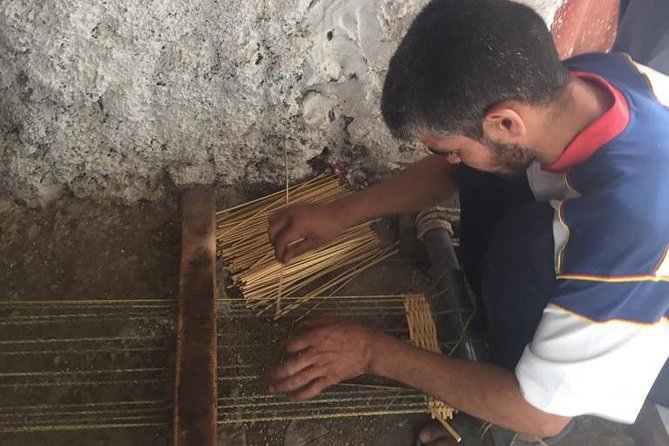
The most memorable part of this Essaouira outing comes at the end: tea with a basket-making family, after a walk through the Ain el Hajar oasis. You see the rush being woven, learn how a small family business works, and share the kind of Moroccan welcome that feels more personal than a quick stop at a shop.
I like two things especially. First, the walk connects water, farming, olive oil, and local craft instead of treating the countryside as empty scenery. Second, the small maximum of 12 people keeps the outing more personal. The main consideration is that this is a walking experience in the open air, and poor weather can lead to a change of date or cancellation.
Key points to know before booking
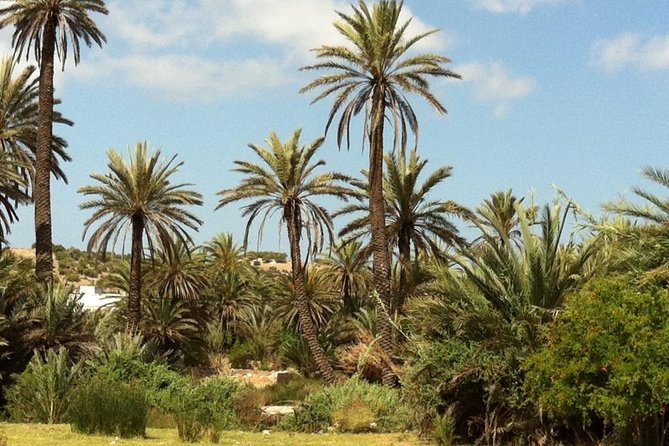
- A spring feeds the oasis: Ain el Hajar’s water supports olive trees, gardens, and market gardening across the area.
- The walk begins beneath a remarkable argan tree: The starting point is described as the largest argan tree in the region.
- Sidi Bourahmoune adds a spiritual stop: The route crosses fields and gardens before reaching the saint’s mausoleum.
- A high viewpoint gives the best sense of the oasis: You can look back toward the spring and see how water shapes the area.
- The final tea is part of a working family business: You watch rush basket weaving rather than visiting a staged cultural display.
- The price includes transport and tea: At $47.12 per person, the value depends on how much you appreciate a small, local half-day outing.
Why Ain el Hajar makes a fine change from Essaouira
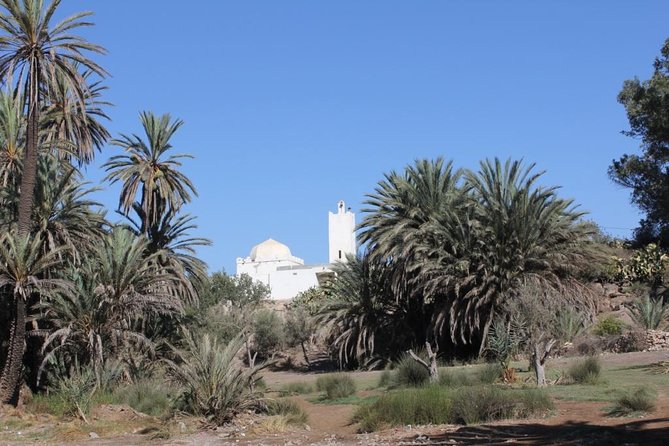
Essaouira is known for its sea air, old walls, and busy medina, but the countryside nearby tells a different story. At Ain el Hajar, the focus shifts to a spring that supplies water to the surrounding area. That one fact explains much of what you see: trees, cultivated plots, irrigation channels, and gardens growing where dry conditions would otherwise make farming difficult.
I like this setting because it gives the walk a clear purpose. You are not simply passing through trees. You are seeing how water supports daily life and how people have adapted the oasis over time.
The area once had many more palm trees. Olive trees have taken their place, and irrigation has helped turn parts of the oasis toward market gardening. That change gives the walk an agricultural angle. You can look at the fields and ask practical questions about what grows there, how water is directed, and why olive trees matter so much to the local economy.
The experience is also a good fit if you want time outside without signing up for a demanding full-day trek. The advertised duration is about four hours, with the main oasis stop listed as two hours. The rest of the time allows for transport, the route between points, and the tea and craft visit.
More Afternoon Tea in Morocco:
- Argan Forest, tea time at a Berbers family & Visit of an Argan cooperative.
★ 5.0 · 21 reviews - London: Afternoon Tea Cruise on the River Thames
★ 4.4 · 3,274 reviews - Afternoon Tea Bus Tour in Dublin
★ 5.0 · 2,791 reviews
Starting at the great argan tree
The morning begins at Labo Abdelkrim Khatabi d’Analyses Médicales, 287 Rue Oued El Makhazine, in Essaouira. The start time is 9:00 a.m., and the tour returns to this same meeting point. Private transportation is included, which simplifies the trip for anyone staying in Essaouira and not wanting to arrange a separate ride into the countryside.
The first landmark is said to be the biggest argan tree in the region. That makes a useful opening point, because the argan tree is closely tied to southern Morocco. Here, it is not just a photo stop. It sets up the wider story of local trees, farming, and the resources people use around the oasis.
From there, you walk across fields and gardens. The exact ground conditions are not specified, so sensible footwear is a good idea. You should also bring bottled water, since it is not included. The morning timing helps you avoid the strongest afternoon heat, but you are still outdoors and should dress for sun and walking.
This first part will appeal to you if you prefer a guide-led walk with room for questions. One past outing connected with the argan forest was led by Naima, who explained the area clearly and responded to questions with patience. If Naima is assigned to your departure, you can expect an especially personable guide. Guide assignments can vary, so treat her name as useful information, not a guarantee.
Walking through olive groves and working gardens
The walk’s strength is the way it links natural features with human work. The oasis has forestry resources, olive trees, and cultivated gardens. You get a closer look at a place that functions as farmland, not simply a scenic patch of green.
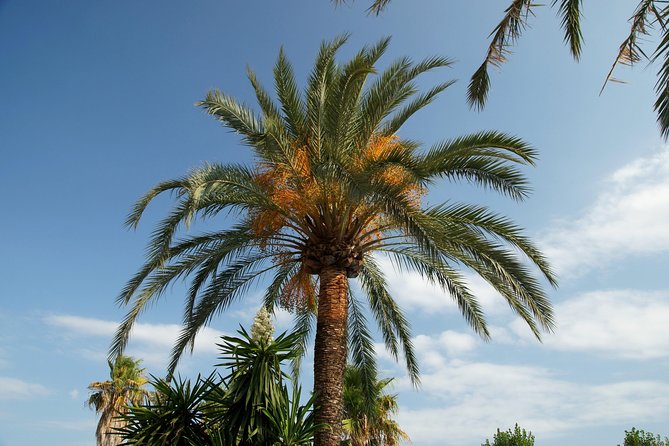
The olive trees deserve attention. They have replaced many of the palms that once filled the oasis, changing both its appearance and its agricultural use. Olive oil production is part of that story, and you might come across a stone mason shaping the stones used as millstones for extracting olive oil.
That possibility adds a welcome touch of everyday life. A millstone is not a decorative object in this context. It points to the practical work behind a product often associated with Moroccan cooking. If the stone mason is working during your visit, this could become one of the most distinctive moments of the morning. Since it is described as something you might encounter, it should not be treated as a guaranteed stop.
The gardens also help you understand the irrigation system. The spring brings water to the region, and channels or other irrigation arrangements make market gardening possible. Your guide can help connect the visible water system with the crops and trees around you. That explanation is likely to be more useful than a list of plant names, because it shows why the oasis exists in its present form.
Sidi Bourahmoune and the meaning of the route
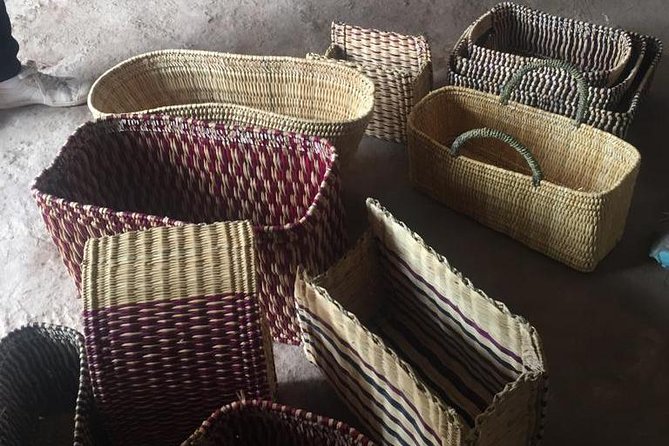
The route continues toward the mausoleum of Saint Sidi Bourahmoune. This gives the walk a religious and cultural point as well as an agricultural one. A mausoleum connected with a local saint is not the same sort of sight as a major monument in a city. Its value comes from its place in the community and in the route through the countryside.
You should approach this stop with respect. The information provided does not promise an interior visit, a formal ceremony, or a detailed architectural tour. Think of it as a meaningful landmark along the walk, one that adds local character to the setting.
This is also where a good guide matters. Naima’s ability to explain and answer questions was particularly well suited to a route like this, where the interest lies in connections. You may want to ask about the saint, the mausoleum, the oasis, and how the religious site fits into local life. The experience is strongest when you remain curious rather than expecting a major historic attraction.
The route is not built around a long list of monuments. It is about seeing several modest parts of rural life in sequence: the argan tree, fields, gardens, olive trees, a possible stone mason, the mausoleum, and the water source. For me, that makes the morning feel grounded.
More Tea Experiences around Morocco:
- Around Marrakech: Camel Ride in Palm Groves including Tea
★ 4.4 · 1,245 reviews - Marrakech:excursion quad in Oasis palm & jbilat desert,tea
★ 5.0 · 1,180 reviews - Marrakech: Pottery Workshop with Moroccan Tea
★ 4.8 · 756 reviews - Marrakech: Medina by Night Walking Tour with Moroccan Tea
★ 4.6 · 586 reviews
The viewpoint above the spring
At some point, the path reaches a viewpoint over the oasis, extending toward the spring. This should be the moment when the separate details begin to make sense. From above, you can see the relationship between the water source, trees, gardens, and cultivated ground.
A viewpoint is often where a countryside walk either earns its time or does not. Here, it has a clear job. It lets you understand the oasis as a whole rather than seeing each garden or grove at ground level. If you enjoy taking photographs, this is likely one of the better opportunities, though the exact view will depend on the day and visibility.
Do not expect a grand mountain panorama based on the information available. The appeal is more intimate. You are looking across a productive oasis and tracing the effects of a spring. That is a different kind of beauty, and it suits visitors who like seeing how a place works.
The route may be more enjoyable for people who appreciate a measured pace than for anyone seeking a strenuous hike. The experience is described as a walk of roughly four hours overall, but no precise distance or difficulty rating is given. If you have concerns about the ground or your walking ability, ask before departure.
Tea and rush weaving at the family workshop
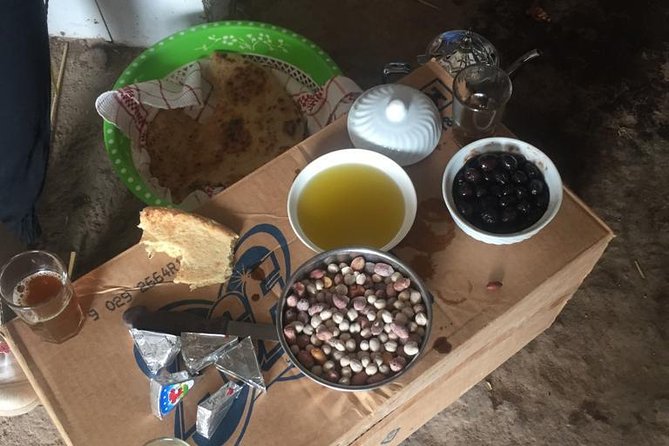
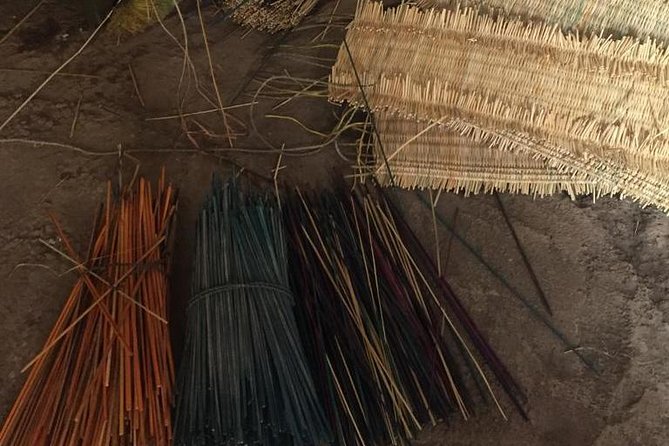
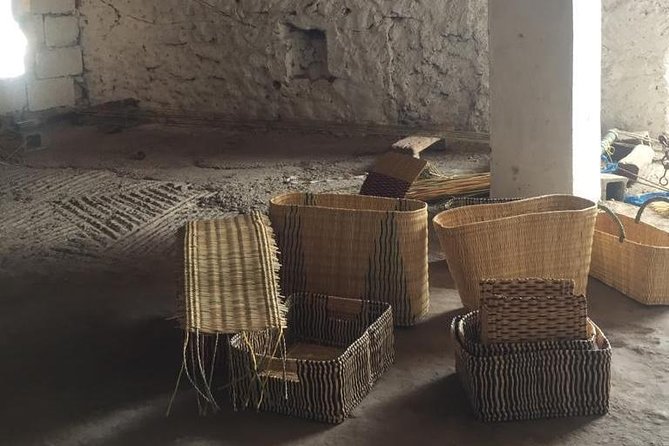
The final stop brings you to a basket maker. This is a family business, and you can watch the maker weave with rush. The craft is not added as a token shopping stop. It is presented as a working skill passed through a family setting, followed by traditional tea.
That combination is the heart of the outing. The tea gives you time to sit, talk, and receive Moroccan hospitality in a homegrown setting. The basket work gives the visit a practical focus. You see the material, the method, and the person doing the work instead of only seeing finished goods arranged for sale.
I would not book this experience expecting a formal demonstration with a fixed script or a large craft center. The appeal is smaller and more direct. You are visiting a family business, so the atmosphere may depend on the day, the pace of the work, and how much conversation develops through the guide.
The tea is included. Bottled water is not, so bring your own water for the walk and save your attention for the tea stop. The hospitality is an important part of the value, but it should not be confused with a full meal. The information provided identifies traditional tea, not lunch or snacks.
What $47.12 buys you
The price is $47.12 per person. That is not the cheapest way to spend a morning near Essaouira, but the comparison should include what is bundled into it: private transportation, the guided countryside visit, and tea at the basket maker.
You are paying for access and context as much as transport. Without a guide, you could perhaps reach the general area, but you would miss the links among the spring, irrigation, olive trees, millstones, mausoleum, and craft work. You would also need to arrange your own transport and find the family workshop.
The maximum group size is 12. That is small enough to make questions practical, though it is not a private tour for one couple or one family. The listing calls the transportation private, while the activity allows up to 12 participants, so you should understand private transportation as transport arranged for the tour rather than a guaranteed private departure with no other participants.
For the right person, the price is fair. I would see good value here if you want a half-day outside the city, prefer local contact to a major attraction, and like having transport handled for you. If your main goal is a long hike, a cooking class, or a full meal, this is probably not the best match.
Timing, comfort, and practical details
The meeting point is easy to identify in central Essaouira: Labo Abdelkrim Khatabi d’Analyses Médicales at 287 Rue Oued El Makhazine. The tour begins at 9:00 a.m. and ends back there, so you do not need to plan a separate return from the countryside.
The experience is mobile-ticket friendly. Confirmation is provided when you book, and service animals are allowed. It is near public transportation, although the tour itself includes private transport. Most people can participate, but the walk takes place across fields and gardens, and no detailed accessibility information is supplied.
Bring:
- Bottled water, which is not included
- Comfortable shoes suitable for walking outside
- Sun protection appropriate for a morning in open fields
- A phone or camera for the argan tree, gardens, viewpoint, and craft stop
The tour requires good weather. If conditions are poor, the provider offers another date or a full refund. It also requires a minimum number of participants, so a departure can be changed or canceled if that minimum is not reached.
Cancellation is free until 24 hours before the 9:00 a.m. start time. Canceling or changing within the final 24 hours does not qualify for a refund, so pay attention to the local time in Essaouira.
Who will enjoy this morning most
I would recommend this outing to you if you want to see a quieter side of the Essaouira area. It suits people who enjoy walking, small-scale agriculture, traditional craft, and conversation over tea.
It is particularly good for:
- Anyone who has already explored the medina and wants a rural contrast
- Visitors curious about argan and olive trees
- People who prefer a small group to a large coach outing
- Anyone who values a family-run craft visit
- Photographers looking for trees, fields, gardens, and an elevated view
- Couples, families, or solo visitors who want transport included
You may want to choose something else if you dislike outdoor walking or want a tightly scheduled sequence of major sights. The route is about observation and local connection. Its best moments may be quiet: looking across the oasis, watching rush being woven, or listening to an explanation about water and farming.
The limited rating sample gives the experience a 4.8 out of 5, with strong praise for the argan walk, the tea with a Berber family, and Naima’s kindness and explanations. Those are the elements I would place at the center of your expectations. The walk and the welcome matter more here than polished entertainment.
Should you book the Ain el Hajar outing?
Book it if you want a small-scale, half-day experience that connects nature, farming, local faith, olive oil, and craft. The tea at the basket maker is the most personal feature, while the spring and irrigation system give the walk real substance.
Think twice if you need a detailed distance rating, guaranteed access to every described sight, or a full meal. Weather and minimum numbers can affect departure, and the possible stone mason encounter is not guaranteed.
For most visitors who have a free morning in Essaouira, the combination is appealing: transport from town, a countryside walk, a meaningful viewpoint, and tea with a working family. Bring water, wear comfortable shoes, and go ready to ask questions. That is how this outing gives you more than a pleasant view.
FAQ
Where does the experience start?
It starts at Labo Abdelkrim Khatabi d’Analyses Médicales, 287 Rue Oued El Makhazine, Essaouira 44000, Morocco.
What time does the tour begin?
The start time is 9:00 a.m.
How long does the experience last?
The experience lasts approximately four hours. The Ain el Hajar portion is listed as two hours.
Where does the tour end?
It ends back at the meeting point in Essaouira.
Is transportation included?
Yes. Private transportation is included.
Is tea included?
Yes. Traditional tea at the basket maker is included. Bottled water is not included.
Can I cancel for a full refund?
Yes, if you cancel at least 24 hours before the experience start time. Cancellations or changes made less than 24 hours before the start are not refunded.
Newly steeped around Morocco
- Desert Sunset Camel Ride With Free Tea in The Desert Camp★ 5.0 · 3 reviews
- Private Quad Biking Safari In The Palm Grove Of Marrakech And Berber Home Tea★ 5.0 · 3 reviews
- Argan Forest, tea time at a Berbers family & Visit of an Argan cooperative.★ 5.0 · 21 reviews
- Walk to the cascade and marabout of Sidi Mbark & for a tea to Kaouki★ 5.0 · 14 reviews
- Sunset Sandboarding & Mint Tea in Timlaline Dunes★ 5.0 · 5 reviews
- Agadir Quad ATV Adventure Tour with Berber Tea Experience★ 5.0 · 18 reviews
- Marrakech: Agafay Desert Quad Bike, with Pool swim Lunch Tea★ 5.0 · 5 reviews
- Fez Outdoor Adventure: Quad Ride, Camel Photo & Mint Tea★ 5.0 · 2 reviews
Afternoon Tea Experiences, compared.
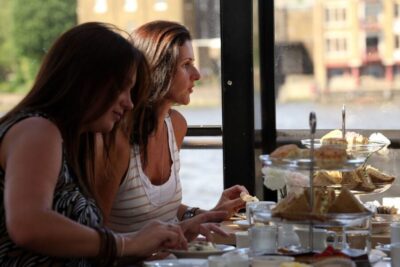
London: Afternoon Tea Cruise on the River Thames
Read our review →

London: Afternoon Tea Bus Tour – 1960s Routemaster Bus
Read our review →
London: Afternoon Tea Bus with a Glass of Prosecco
Read our review →


Browse the lists this tea experience appears in