

Review · LONDON
London: Royal Hampton Court Guided Tour with Afternoon Tea
Hampton Court Palace gives you two very different royal worlds in one visit: Henry VIII’s Tudor court and the later baroque palace of William III and Mary II. This tour connects them with stories, courtyards, kitchens, and a proper afternoon tea rather than leaving you to puzzle it all out alone.
I like the full-day palace ticket, which lets you keep exploring after the 2-hour guided walk. I also like the mix of expert storytelling and quiet independent time, especially since guides such as Tom, Thomas, Julie, and Geraint have been praised for making the palace easy to understand.
The main caution is the afternoon tea can vary. Many bookings describe it as excellent, with generous sandwiches, scones, desserts, and good tea, while one found it disappointing. At $206 per person, that difference matters.
Key points to know before booking

- Henry VIII’s palace in real scale: See the courtyards, kitchens, gatehouse, and rooms tied to the Tudor court.
- Two palace styles in one visit: Tudor Hampton Court meets Wren’s Fountain Court, built for William III and Mary II.
- A guide makes the details easier to spot: Guides including Tom, Thomas, Julie, Geraint, Suzane, and Brandon have been praised for clear, lively explanations.
- Afternoon tea is built into the day: Expect finger sandwiches, pastries, scones, and a choice of premium teas.
- You keep the palace ticket afterward: Stay on to explore the interiors, gardens, chapel, and 60 acres at your own pace.
- A simple trip from London: Meet at Hampton Court Railway Station, then finish at the palace rather than returning with a group.
Why Hampton Court works so well as a London side trip
Hampton Court is about 30 minutes out of London, yet it feels far removed from the city. You meet your guide at the entrance to Hampton Court Station, which keeps the start point simple. From there, the palace is the whole focus of the day.
This is not just a quick photo stop. The ticket is valid for the full day, while the guided portion lasts about two hours. The complete experience takes roughly 2.5 to 3 hours, but you can remain at the palace and continue exploring once the formal tour and tea are finished.
That arrangement is one of the strongest reasons to book. A guide gives you a clear path through a large and sometimes confusing site, then you get time to return to rooms or gardens that caught your attention. You are not trapped in a group for the entire visit, and you are not left alone with a map from the start.
At $206 per person, this is not a budget palace outing. You are paying for entry, a live English-speaking guide, afternoon tea, and the convenience of having the main visit organized. The value is best for someone who wants a polished half-day experience with room to extend it, rather than someone who only wants a basic admission ticket.
More Afternoon Tea in London
- London: Afternoon Tea Bus Tour – 1960s Routemaster Bus
★ 4.5 · 2,032 reviews - London: Afternoon Tea Bus with a Glass of Prosecco
★ 4.4 · 1,853 reviews - The Kensington Palace Gardens Royal High Tea
★ 4.5 · 934 reviews
Meeting at the station and entering Tudor England
Your guide meets you at the entrance to Hampton Court Station. This is useful for first-time visitors because you do not need to search for a tour office inside the palace grounds.
The opening story centers on Cardinal Wolsey, who created the original palace and gifted it to Henry VIII in 1528. That handover gives the building an immediate political edge. Hampton Court was not simply a comfortable country residence. It was a statement of power, wealth, and royal favor.
Your guide then leads you through the courtyards that witnessed major events at court. This is where a good guide earns the fee. Hampton Court is full of names, dates, marriages, rivalries, and changes in ownership. A clear storyteller can turn those facts into a sequence you can follow.
Guides named Tom, Thomas, Julie, Geraint, Suzane, and Brandon have all led bookings for this experience. The strongest pattern is personal attention and a friendly style. Tom has been praised for patience and for repeating points when needed, while Julie has been described as easy to understand and generous with answers. Geraint has a reputation for adding local knowledge and humor.
You should still keep your expectations realistic. The guided route does not cover every room and garden feature in the palace. One person wished the guide had continued through the entire complex, which is a fair point. Hampton Court is huge, and two hours can only introduce its main stories.
Anne Boleyn’s Gatehouse and the Tudor court
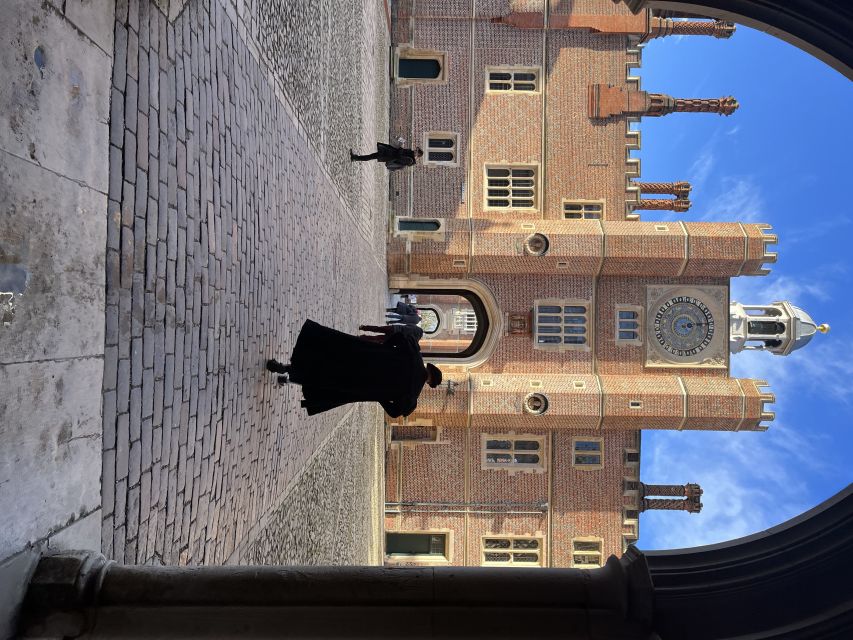
Passing under Anne Boleyn’s Gatehouse adds a memorable human detail to the visit. Anne lived at Hampton Court before her execution, and the gatehouse connects the palace to the darker side of Henry VIII’s court.
This is the sort of place where a guide adds value beyond a recorded commentary. You can hear the story while standing in the space linked to it, then notice the setting itself rather than treating Anne Boleyn as only a name in a family tree.
The tour also helps put Henry VIII’s many marriages into a wider setting. The usual focus on wives and executions can become a bit repetitive, but Hampton Court gives those events a physical backdrop. You see the courtyards and rooms where royal business, ceremony, and personal drama overlapped.
The supplied audio guide is available in Spanish, Chinese, Dutch, French, German, Japanese, Kannada, Korean, and Russian. The live tour itself is in English. If you prefer another language for extra information after the guided visit, the audio options give you a useful fallback.
Fountain Court and the palace’s second identity
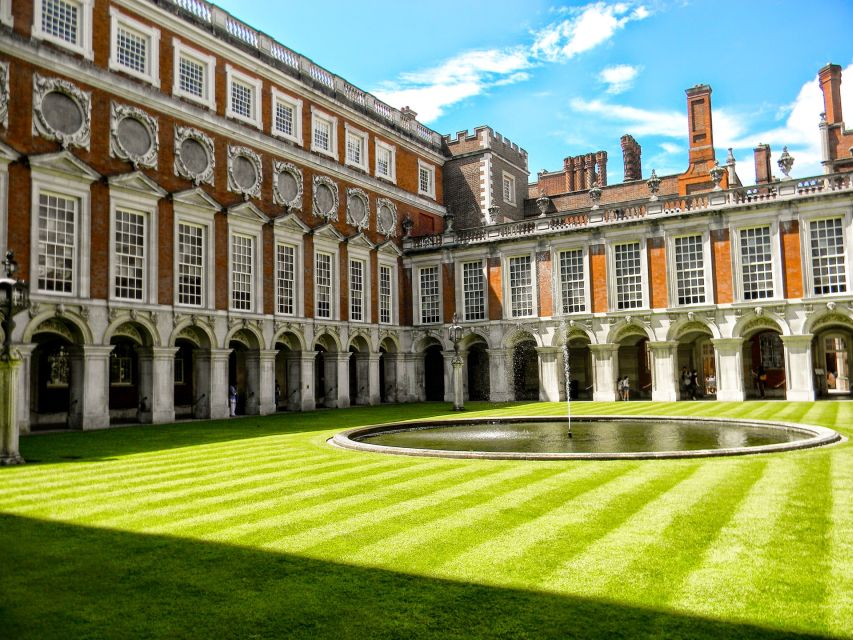
Hampton Court is not only a Tudor palace. The tour takes you to Fountain Court, the grand baroque section created by Sir Christopher Wren for William III and Mary II.
This change in style is one of the most interesting parts of the visit. Henry VIII’s Hampton Court is tied to Tudor ceremony and court life, while Wren’s work reflects a later royal taste for symmetry, scale, and formal design. You are seeing one palace that carries several chapters of English royal history.
The unusual joint rule of William III and Mary II also gives the guide another strong story to tell. Their shared monarchy was very different from Henry VIII’s one-man rule, and the architecture helps you see that shift.
If you enjoy buildings as much as royal gossip, pay attention here. Guides have pointed out details such as painted faux marble and less obvious architectural features that you might pass without noticing. This is a good example of why the guided portion matters, even if you plan to spend the afternoon exploring alone.
The palace can be crowded, particularly at popular times. A capable guide needs to keep the group together and adjust the pace. Tom has been praised for doing exactly that with a small group, while still providing detailed explanations. A private group is available if you want a more personal format, though the price and arrangements should be checked when booking.
More Afternoon Tea in the UK
- Afternoon Tea River Cruise on the Thames
★ 4.0 · 884 reviews - London Afternoon Tea Bus with Panoramic Tour
★ 4.0 · 763 reviews - London: Great British Afternoon Tea Bus Tour
★ 4.7 · 616 reviews - Buckingham Palace & Afternoon Tea Sightseeing Tour with PG Tips
★ 4.5 · 540 reviews
The sunken gardens and Henry VIII’s kitchens
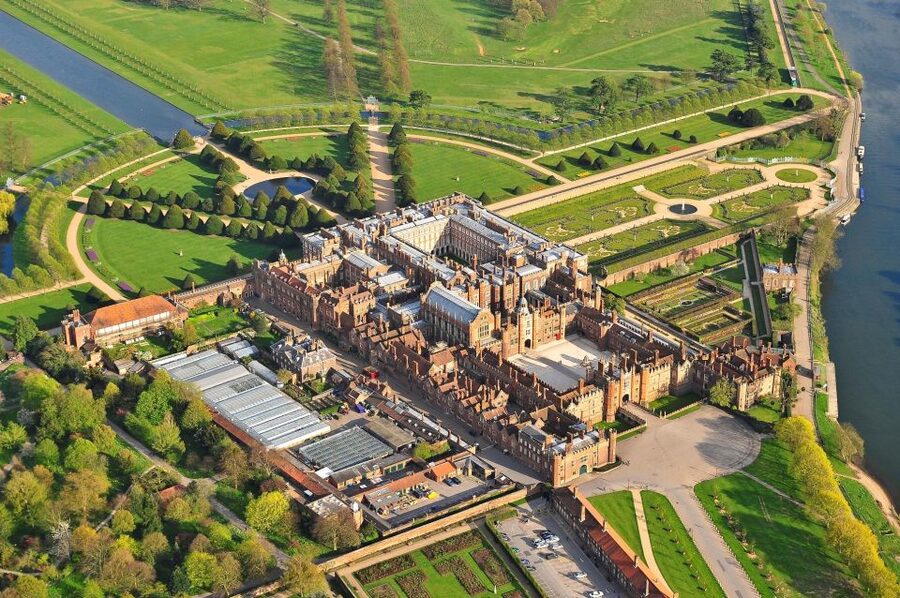
The route continues through the restored sunken gardens before reaching the vast Tudor kitchens. The gardens provide a welcome change from interiors and let you see how the outdoor spaces fit into the palace plan.
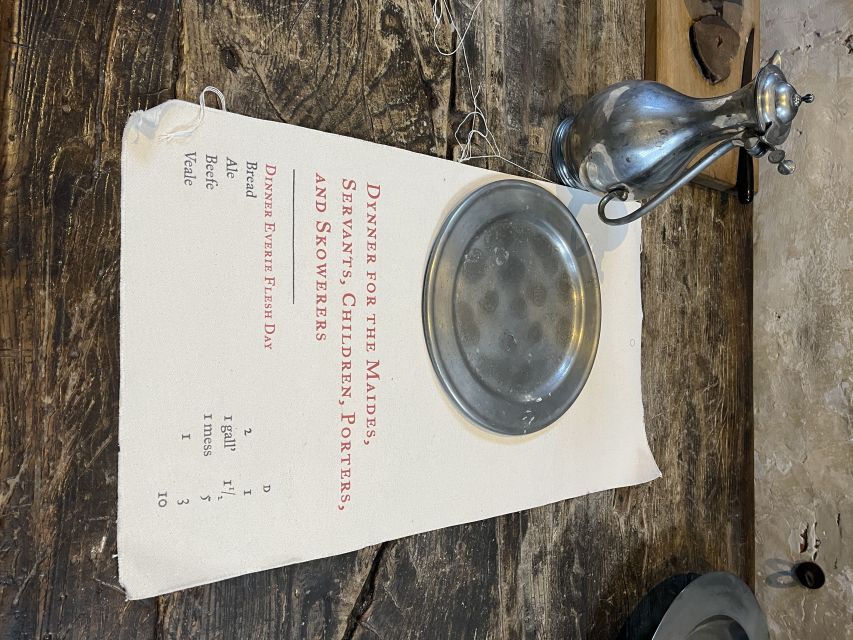
The kitchens are especially useful for understanding the scale of royal life. They shift the story away from portraits and grand rooms and toward the work needed to feed a court. Henry VIII’s household was not a small family operation. The size of the kitchens helps you picture the staff, supplies, preparation, and service required behind the scenes.
I would pay close attention here if you are visiting with children or anyone who finds everyday details more interesting than royal portraits. The kitchens offer a practical way into the past, though the guided visit still moves at a set pace. You can return to areas that interest you after tea because your palace ticket remains valid.
Afternoon tea in a royal setting
The tour ends its guided route at the Tiltyard, originally used for jousting, for afternoon tea. The tea includes delicate finger sandwiches, pastries, freshly baked scones, and a selection of premium teas.
The food gives the day a slower middle point. After walking through courtyards and palace rooms, you can sit down, eat, and discuss the royal family and the history of tea and afternoon tea ceremony. It is not merely a snack added to the booking. It is intended as part of the historical mood.
Some bookings describe the tea at The Mitre Hotel, including a table overlooking the river and a setting that felt casually luxurious. Another account describes five kinds of sandwiches, two scones per person, five desserts, and a good tea selection. A separate booking noted that the portions were large enough to require takeaway boxes.
There is a discrepancy in the supplied details about the exact tea venue, with the route information naming the Tiltyard and several accounts referring to The Mitre. Check the meeting and tea location at the time of booking so you know where to go after the palace walk.
The quality is not guaranteed to feel identical on every date. Several people found the tea excellent, while one called it underwhelming and suggested finding a different provider. That is the clearest weakness in an otherwise strongly praised experience.
Food for children is not included, so families should ask about arrangements before booking. The tea format may suit adults especially well, while children may prefer more time in the palace and gardens.
Your extra time inside the palace and gardens
After tea, you are free to continue at Hampton Court Palace. This is where the experience becomes more than a guided introduction.
You can revisit the courtyards, take your time with rooms you passed quickly, and explore the 60 acres of gardens. The gardens are a major reason not to rush back to London. If the weather is good, they give you space after the indoor tour and a chance to see the palace from different angles.
You also have the option to visit the chapel and other areas that may be closed temporarily during the guided portion. One booking specifically appreciated being able to leave for tea and return to the palace afterward, then see the chapel after a private service had ended.
That return access is a practical benefit. Hampton Court is too large to absorb in one fast walk, and some rooms may be crowded or unavailable at a particular moment. The full-day ticket gives you a second chance.
Still, do not read full-day entry as a promise that a guide will accompany you all day. The live tour lasts about two hours. The rest is self-guided time, supported by the included audio guide and your own pace.
What the guiding is really worth
The strongest part of this experience is the live guide. Names change from booking to booking, but the most praised guides include Tom, Thomas, Julie, Geraint, Suzane, and Brandon.
The useful difference is not simply the amount of information. It is the ability to explain the palace in plain language, answer questions, keep the group together, and point out small features you would miss alone. Tom has been praised for patience and clear communication. Thomas has been described as warm, humorous, and skilled at bringing the palace and its characters to life. Julie has received praise for her personal manner and deep familiarity with the site.
Geraint has been singled out for local insight, humor, and attention to details such as hidden passageways and faux-marble decoration. Those small observations can make a familiar royal story feel fresh.
Guide quality can never be guaranteed by name alone, especially if the staff schedule changes. But the repeated praise for this group of guides suggests that the human element is central to the experience. If you enjoy asking questions, you will likely get more from this than from an audio guide alone.
Who should book this Hampton Court experience
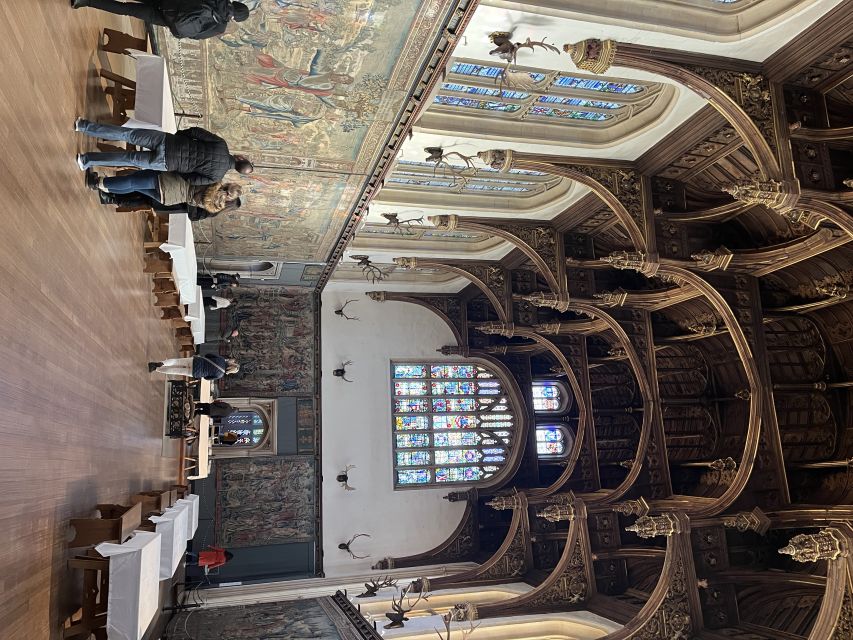
I would recommend it to first-time Hampton Court visitors who want structure without giving up personal time. It is also a good fit if you like royal history but prefer stories and personalities to a silent room-by-room visit.
The format suits couples, families with older children, and small groups. A private group is available, which may be useful if you want more control over the pace or commentary. The site is wheelchair accessible, but the palace is large, so it is sensible to confirm the exact route and tea arrangements before you go.
You may want a different option if your priority is the lowest admission price, a full-day private guide, or a guaranteed high-end tea. At $206, the package needs to deliver value through convenience and interpretation. The ticket and independent time help, but the tea remains the least predictable part.
Pets and oversized luggage are not allowed. You can cancel up to 24 hours before the experience for a full refund, and reserve now while paying later, which helps if your London schedule is still shifting.
Should you book it?
Book this tour if you want Hampton Court explained by a friendly English-speaking guide, followed by a traditional tea and several hours to explore on your own. The route covers the palace’s most important contrasts, from Henry VIII’s Tudor world to Wren’s baroque Fountain Court, and the full-day ticket gives you needed flexibility.
I would book it particularly for the guide-led introduction. The palace is large, and guides such as Tom, Thomas, Julie, and Geraint have shown how much more you can notice with a clear storyteller beside you.
If afternoon tea is the main reason you are booking, confirm the venue and current menu first. If the tea provider is strong, this becomes a comfortable all-in-one day near London. If the tea is average, the palace and guide still carry the experience, but the $206 price will feel harder to justify.
FAQ
Where does the tour meet?
Your guide meets you at the entrance to Hampton Court Railway Station.
Where does the experience finish?
The guided experience finishes at Hampton Court Palace.
How long does the guided tour last?
The guided palace portion lasts about two hours. The total experience takes approximately 2.5 to 3 hours.
Is palace admission included?
Yes. A full-day entry ticket to Hampton Court Palace is included, with skip-the-line entry.
Can I stay at Hampton Court after the guided tour?
Yes. You can continue exploring the palace and its 60 acres of gardens for the remainder of the day.
What does afternoon tea include?
The tea includes finger sandwiches, pastries, freshly baked scones, and a selection of premium teas.
What language is the live tour in?
The live tour is conducted in English.
Are audio guides available in other languages?
Yes. Audio guide options include Spanish, Chinese, Dutch, French, German, Japanese, Kannada, Korean, and Russian.
Is the experience wheelchair accessible?
Yes, the activity is listed as wheelchair accessible. Pets and oversized luggage are not allowed.
Newly steeped around London
- Royal London Tour with Afternoon Tea at The Rubens at the Palace★ 4.5 · 5 reviews
- Kensington Palace Special Exhibition, Guided Walk & High Tea★ 5.0 · 2 reviews
- Royal Afternoon Tea & Walk at Kensington Palace★ 4.5 · 3 reviews
- Overnight Lake District with Cream Tea and Cruise from London★ 4.5 · 7 reviews
- Harry Potter Tour & Magical Afternoon Tea★ 4.5 · 22 reviews
- London: Afternoon Tea Experience at The Clipper Lounge★ 5.0 · 2 reviews
- Official National Gallery Highlights Tour and Afternoon Tea★ 3.5 · 10 reviews
- Christmas Delights: Festive Tea & Doughnuts at Borough Market★ 5.0 · 3 reviews
Afternoon Tea Experiences, compared.
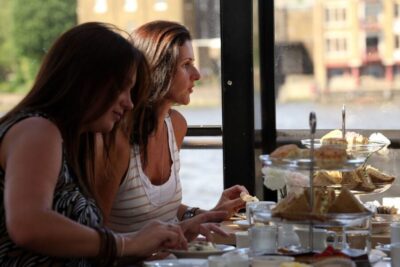
London: Afternoon Tea Cruise on the River Thames
Read our review →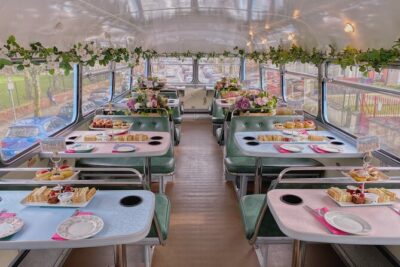

London: Afternoon Tea Bus Tour – 1960s Routemaster Bus
Read our review →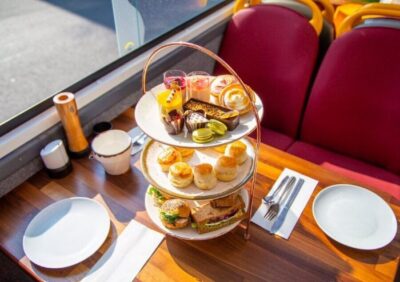
London: Afternoon Tea Bus with a Glass of Prosecco
Read our review →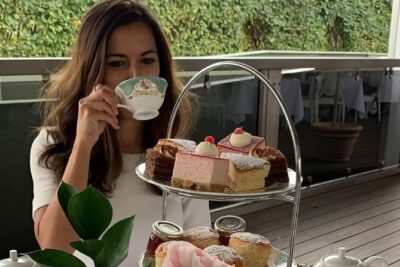


Browse the lists this tea experience appears in