
Review · MARRAKESH
Marrakech: Moroccan Pastries and Tea Class with a Local
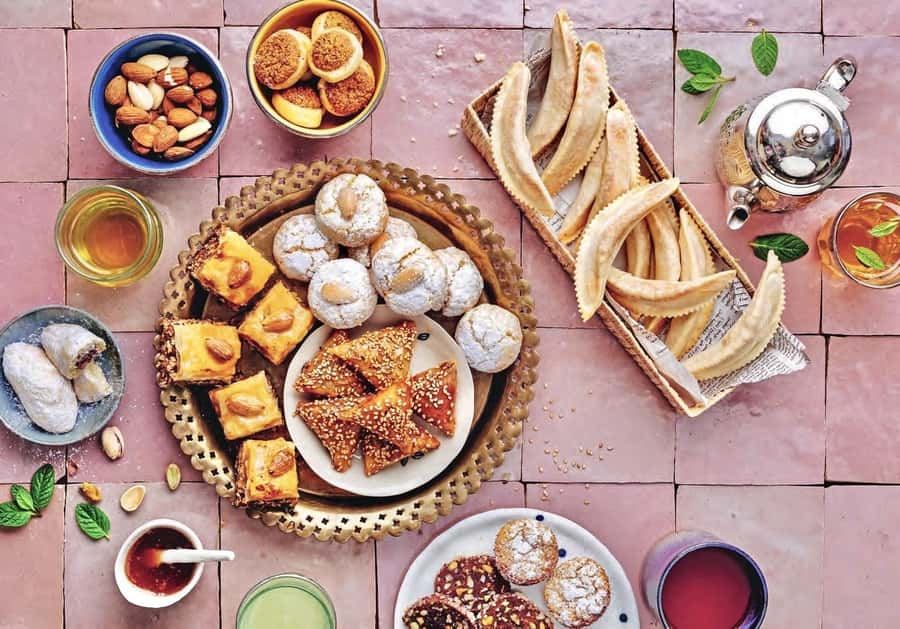
Moroccan pastry is less about complicated equipment than careful hands. In this 150-minute Marrakech class, you learn the small tricks behind traditional sweets, then eat what you have made with mint tea. The recipes can include fekkas and Kaab el Ghazal, with flavors such as fennel and orange blossom water.
I like two things right away: you take a box of pastries home, and the class gives you more than a cooking demonstration. You actually work through the pastry-making process, then learn the famous Moroccan tea ritual and have a go at pouring it. The main consideration is that the exact workshop address arrives before your date, so you will need to allow time to find it.
Key points
- Traditional Moroccan recipes: You may make fekkas, Kaab el Ghazal, and other biscuits or pastries.
- Tea is part of the lesson: Prepare Moroccan mint tea and practice the traditional pouring style.
- A useful take-home treat: Your freshly made pastries are packed for you to enjoy later.
- Small groups: The class accepts no more than 10 participants, and smaller bookings may become private sessions.
- Good for families with older children: Teenagers have enjoyed the hands-on work, though children under four cannot attend.
- A sensible break from the souks: The relaxed workshop offers two and a half hours of focused, practical activity.
Moroccan pastry in a small Marrakech kitchen
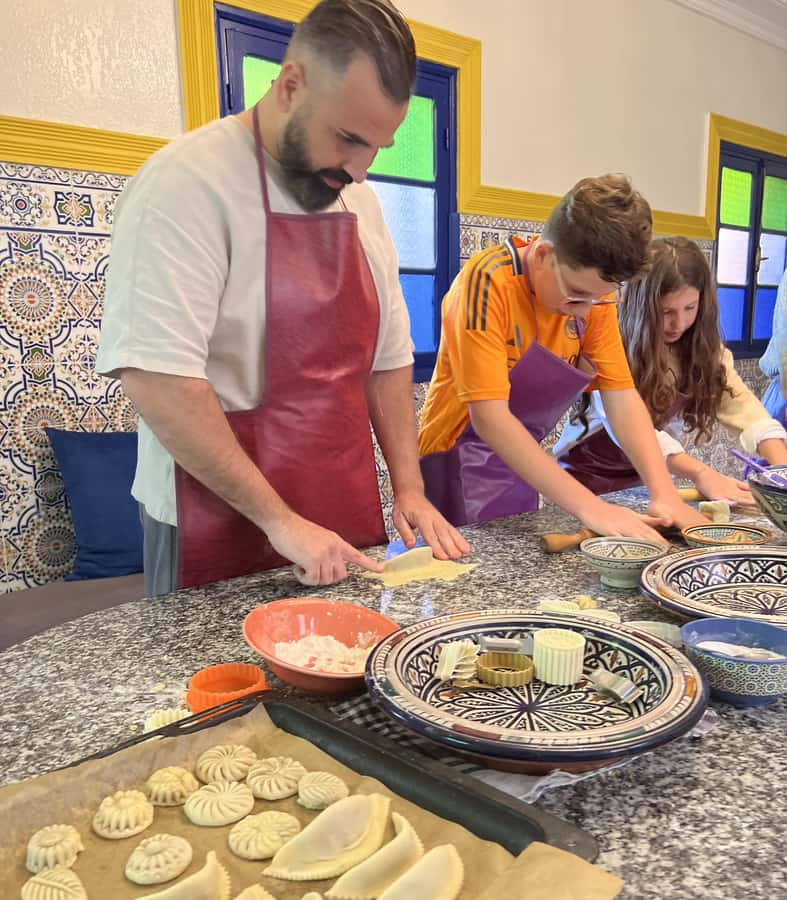
This is a pastry-focused class rather than a broad Moroccan cooking lesson. That distinction matters. If you want to learn a full tagine or several savory dishes, this is not the right choice. If you want to understand the sweet side of Moroccan food and leave with something edible in your bag, it fits well.
The class is limited to 10 people. That is small enough for the instructor to show each step and keep an eye on the work. A booking for four people has sometimes turned into a private session when no one else is booked, which can make the pace feel more personal. You should not count on having the room to yourself, but the small-group setup gives you a fair chance to ask questions.
The instructor teaches in Arabic, French, and English. That makes the class practical for international visitors, though pastry work still depends on watching closely. I would listen for the details that do not appear in a basic recipe: how thin to roll the dough, how much filling to use, and how to shape each pastry without tearing it.
The class is run by Khmisa Workshops. Individual instructor names are not supplied, so you should not book expecting a particular teacher. What you can expect is a local-led lesson with the equipment and ingredients needed for the pastry work.
More Tea-Making Classes around Marrakesh:
- Moroccan Hands on traditional pastries & Tea class in Marrakech
★ 4.5 · 33 reviews - London: Traditional English Scone Making and Tea Workshop
★ 5.0 · 702 reviews - London Traditional English Scone Making and Tea Workshop
★ 5.0 · 271 reviews
Starting with the tricks behind the sweets
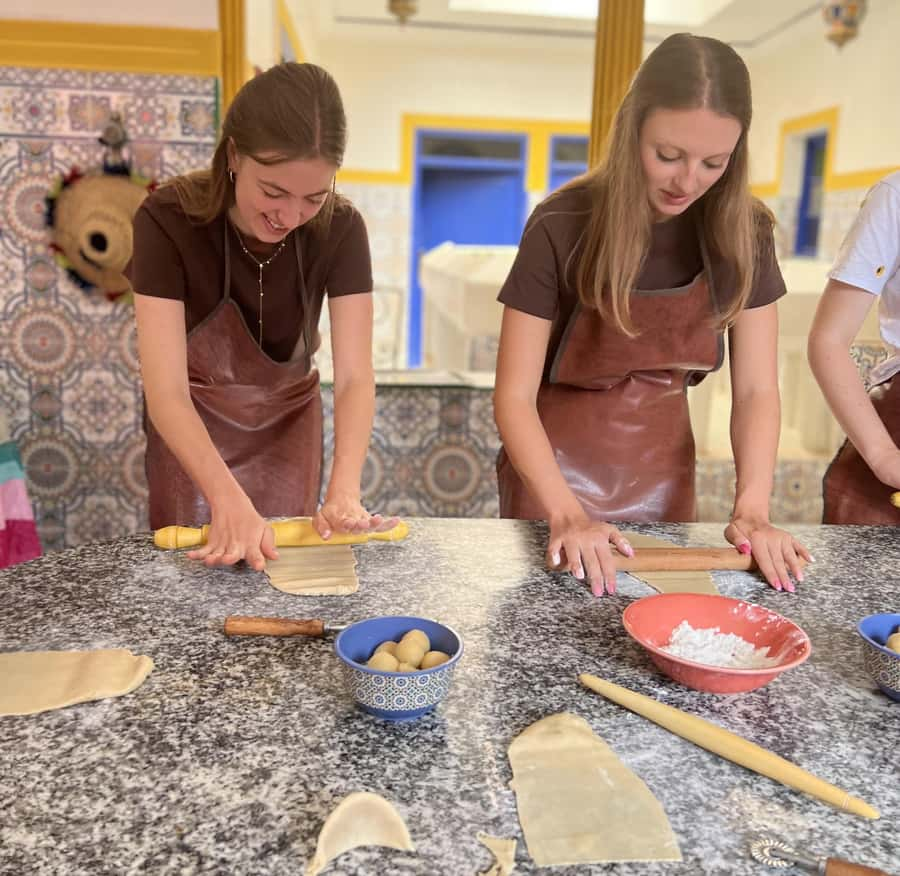
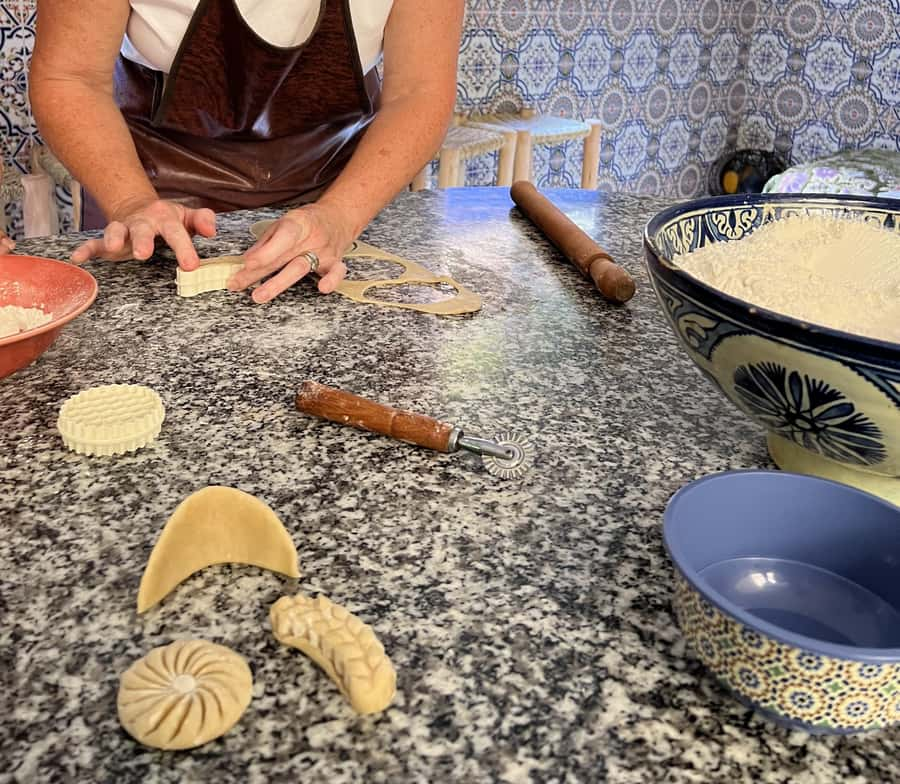
Moroccan pastries can look simple in a bakery display, but shaping them neatly takes patience. The class focuses on the precise techniques that give them their texture and appearance. This is the useful part for a beginner, since a recipe alone may tell you what to add but not how the dough should feel or how tightly a pastry should be formed.
You may work with ingredients such as fennel seeds and orange blossom water. These are small additions, but they give Moroccan baking its particular character. Fennel brings a light anise note, while orange blossom water adds a floral scent. The class is a good place to learn how these flavors are used without guessing at home.
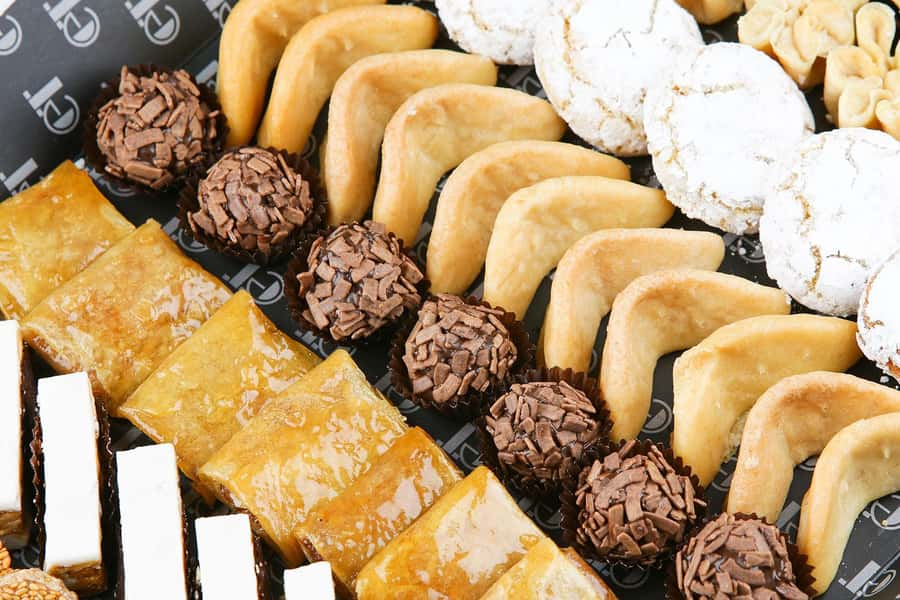
The available information does not give a fixed, step-by-step menu for every date. That means the exact pastries may vary. Fekkas and Kaab el Ghazal have been made in the class, along with other biscuits and pastries, so you can expect traditional Moroccan examples rather than generic cookies.
I like that the lesson is described as practical and precise, not simply a tasting. You will be shown what to do at each stage and then repeat it yourself. For a first-time baker, that removes some of the pressure. You do not need to arrive with pastry skills, though you should expect that shaping the pastries may be harder than it first appears.
Fekkas, Kaab el Ghazal, and hands-on shaping
Fekkas is a Moroccan biscuit with a firm, satisfying texture. Kaab el Ghazal, often translated as gazelle horn, is a more delicate pastry associated with almond filling and a curved shape. Making both gives you a useful contrast between a biscuit-style bake and a pastry that needs more careful shaping.
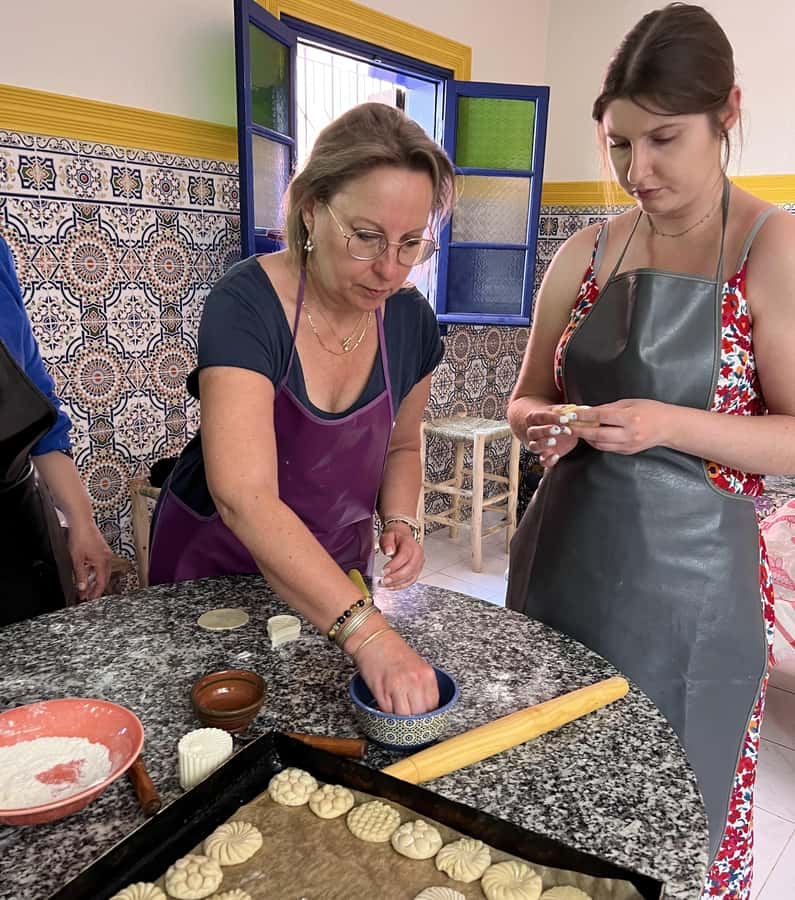
You may also handle dough, fillings, seeds, and fragrant flavorings as the instructor guides you through the work. The exact equipment is provided, so you do not need to bring baking tools. Wear clothes that are comfortable for cooking and bring water, since this is an active class rather than a seated tasting.
The class works well for people who enjoy learning by doing. I would not choose it if you want a polished pastry demonstration where someone else does all the work. Flour, shaping, and small corrections are part of the point. One participant described the work as hard but satisfying, which is a fair way to think about it.
For families, the format has real appeal. Two teenage boys enjoyed the pastry work and the tea pouring, and the class gave their family something different from another visit to the souks. Children under four are not suitable for the experience, and anyone under 18 must attend with an adult.
Fresh pastries, mint tea, and the best part of the class
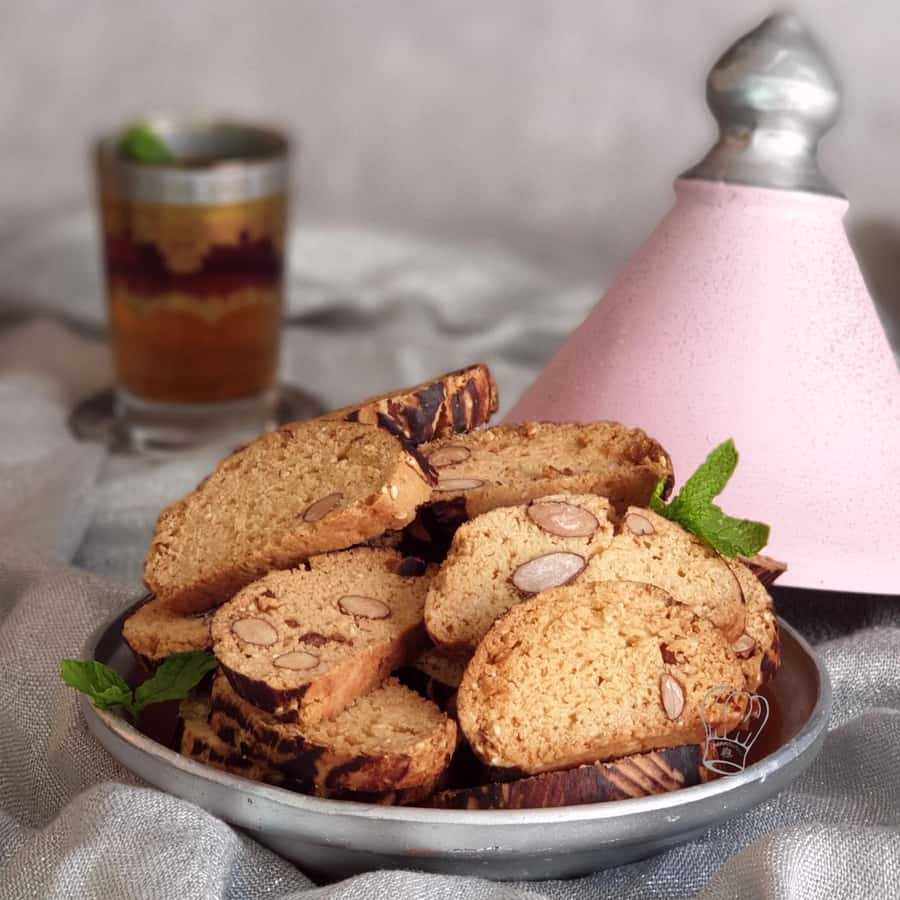
After the baking work, you taste the pastries with Moroccan mint tea. This is not just a snack added at the end. Tea is a central part of Moroccan hospitality, and learning to prepare it helps connect the food to a daily custom.
You will learn how to make your own mint tea and practice pouring it. The pouring can be entertaining, especially for children and teenagers, but it also gives you a small skill to repeat at home. The class includes a tasting session with the tea, so you can try the finished pastries while they are fresh.
The tasting is also a useful chance to compare textures and flavors. Fennel, orange blossom water, sweet fillings, and mint tea do not all work in the same way on the palate. You get a clearer sense of why these ingredients are used together than you would from simply buying a mixed box at a bakery.
The amount you take home is a strong part of the value. You receive a box of pastries after the tasting, so the experience continues after you leave. That makes this a particularly sensible choice before a road trip, such as a journey toward Merzouga, when a box of Moroccan sweets can serve as a snack for the next part of your trip.
One practical tip: ask for the recipes before the class ends. The experience teaches the methods, but one participant specifically wished they had requested the recipes. Do not assume a printed recipe sheet is included. If you want to recreate the pastries at home, ask while the instructor is still available.
More Tea Experiences around Marrakesh:
- Around Marrakech: Camel Ride in Palm Groves including Tea
★ 4.4 · 1,245 reviews - Marrakech:excursion quad in Oasis palm & jbilat desert,tea
★ 5.0 · 1,180 reviews - Marrakech: Pottery Workshop with Moroccan Tea
★ 4.8 · 756 reviews - Marrakech: Medina by Night Walking Tour with Moroccan Tea
★ 4.6 · 586 reviews
Why the $40 price can make sense
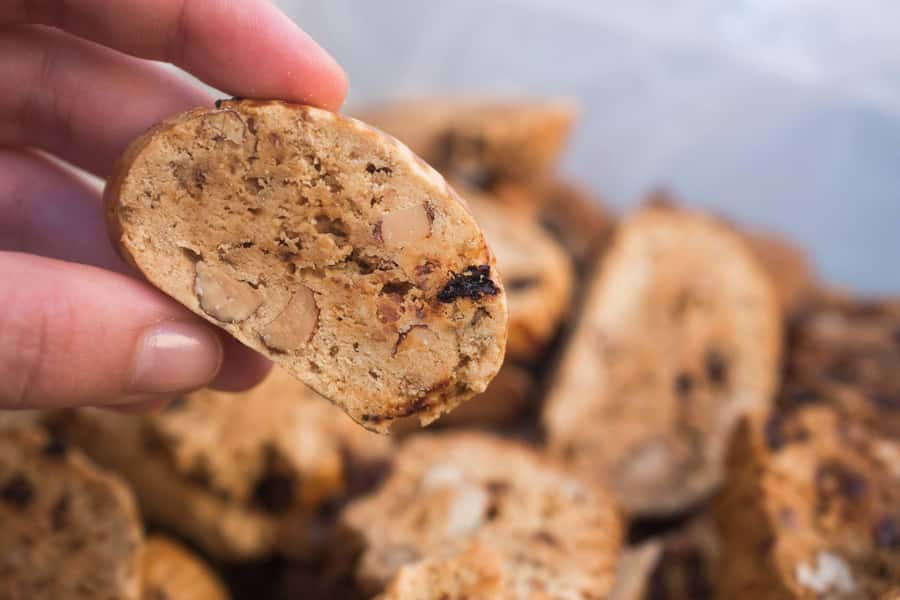
At $40 per person, the price is reasonable if you place value on participation, not only on food. The fee includes the pastry class, cooking equipment, the tasting, mint tea, and a box to take home. You are paying for two and a half hours of instruction and a finished edible product, rather than a short market sample.
The value improves for people who are curious about Moroccan baking but have little experience. A beginner can ask questions and watch the instructor demonstrate each step. Someone who already bakes often may find the class less technically demanding, though the traditional recipes and local flavor combinations still provide a useful point of comparison.
The price does not include hotel pickup, drop-off, or extra food and drinks. You will need to arrange your own way to the workshop. A taxi can work, but leave time for finding the door. One couple arrived late after taking a taxi, and the instructor helped direct the driver and guide them to the entrance. That was kind and practical, but it is better not to depend on last-minute help.
The exact meeting address is sent before the experience date. This is convenient once you have the information, but less convenient when planning your Marrakech schedule in advance. Check the message before setting out and give yourself extra time if you are unfamiliar with the area.
A calm pause from the souks
The class is a useful change of pace after time in the medina. Marrakech can demand constant attention: shopkeepers, traffic, directions, and the noise of the market. Two and a half hours spent concentrating on dough and tea gives you a quieter way to experience the city.
That does not mean the class is passive. You will be working, shaping, tasting, and carrying a box home. The difference is that the activity has one clear focus. You are not rushing between sights or trying to decide which shop to enter.
I especially like this option for a middle day in Marrakech. It can break up sightseeing without taking the whole day, and the finished pastries give you something connected to the city rather than another standard souvenir. It also works well on a day when the heat or crowded streets make a slower indoor activity appealing, though the supplied information does not specify the workshop’s exact room or air-conditioning.
The class has earned a 4.7 out of 5 rating from 84 bookings, with praise focused on the friendly teaching, the traditional pastries, the amount of food to take home, and the relaxed family atmosphere. A single four-star assessment still pointed to one useful issue: remember to ask for the recipes.
Who will enjoy this pastry workshop?
I would recommend it most strongly to:
- First-time bakers who want clear, guided practice.
- Couples looking for a hands-on food activity.
- Families with teenagers.
- Anyone who wants a break from the souks.
- People planning a road trip who will appreciate portable snacks.
- Visitors interested in Moroccan flavors such as orange blossom water and fennel.
It is less suitable if you need a fully scheduled sightseeing tour, hotel transportation, or a class designed for very young children. Children under four cannot attend, and minors must be accompanied by an adult.
You should also think about your interest level. The workshop is built around making pastries, not merely eating them. If rolling, shaping, and following instructions sounds enjoyable, the class should feel rewarding. If you want a quick tasting with no kitchen work, choose another food experience.
The language options are Arabic, French, and English. That is helpful, but pastry instruction can still involve gestures and visual learning. Watch the demonstrations closely and ask questions when a step is unclear.
Booking details worth knowing before you go
The class lasts 150 minutes, or two and a half hours. Starting times depend on availability, so check the schedule before you build the rest of your day around it.
You can reserve now and pay later, which helps if your Marrakech plans are still shifting. Free cancellation is available up to 24 hours before the experience for a full refund. These terms are useful, but the more important planning point is the meeting address, which is sent before your date.
Bring water and wear comfortable clothing suitable for cooking. Allergy information must be provided in advance. This matters because Moroccan pastries can contain several ingredients and fillings, and the class needs that information before you arrive.
No hotel pickup or drop-off is included. Arrange your own transport and allow extra time to locate the workshop. If you are taking a taxi, having the address ready for the driver should make the journey easier.
Should you book the Marrakech pastry class?
Book it if you want a friendly, practical food experience with a clear payoff. You learn traditional pastry methods, make mint tea, eat the fresh results, and leave with a box for later. The small group limit and the possibility of a private session add value without turning the class into a formal culinary school lesson.
I would be especially keen to book this for a family with teenagers or for a couple who has already seen the major sights and wants something more personal. The class also makes sense before a long journey, when the take-home pastries will not go to waste.
Skip it if your main goal is savory Moroccan cooking, or if you dislike hands-on kitchen work. Also plan carefully around the meeting point, since transport is not included and the address arrives close to the date. For everyone else, $40 buys a useful slice of Moroccan food culture, plus something sweet to eat on the way back to your hotel.
FAQ
How long does the Moroccan pastry class last?
The experience lasts 150 minutes, or two and a half hours.
How much does the class cost?
The price is $40 per person.
What pastries might I make?
The class may include traditional Moroccan pastries and biscuits such as fekkas and Kaab el Ghazal. The exact menu is not fixed in the supplied details.
Is Moroccan mint tea included?
Yes. You will learn how to make Moroccan mint tea and taste it with the pastries you prepare.
Can I take pastries home?
Yes. A box of pastries is included for you to take home after the tasting.
Is cooking equipment provided?
Yes. All necessary cooking equipment is included.
What languages does the instructor speak?
The class is offered in Arabic, French, and English.
How many people are in each group?
The group is limited to 10 participants. Smaller bookings may sometimes become private sessions.
Can children attend?
Children under four are not suitable for the activity. Participants under 18 must be accompanied by an adult.
What should I bring and wear?
Bring water and wear comfortable clothing suitable for cooking. You must provide allergy information in advance.
Is hotel pickup included?
No. Hotel pickup and drop-off are not included, and you will need to arrange your own transport to the workshop.
Can I cancel the booking?
You can cancel up to 24 hours in advance for a full refund. You can also reserve now and pay later.
Newly steeped around Marrakesh
- Desert Sunset Camel Ride With Free Tea in The Desert Camp★ 5.0 · 3 reviews
- Private Quad Biking Safari In The Palm Grove Of Marrakech And Berber Home Tea★ 5.0 · 3 reviews
- Moroccan Hands on traditional pastries & Tea class in Marrakech★ 4.5 · 33 reviews
- Agafay Desert, 2H of Quad Biking, tea & transfer from Marrakech★ 5.0 · 55 reviews
- Marrakech:quad excursion at Jbilet desert with Moroccan tea★ 4.5 · 63 reviews
- Lamsaty Pottery Workshop with Moroccan Tea★ 5.0 · 75 reviews
- Marrakech Guided Souks Tour with a Local Insider★ 4.6 · 109 reviews
- Marrakech: Agafay Desert Quad Bike Tour with Moroccan Tea★ 4.6 · 216 reviews
Tea Making & Blending Classes, compared.
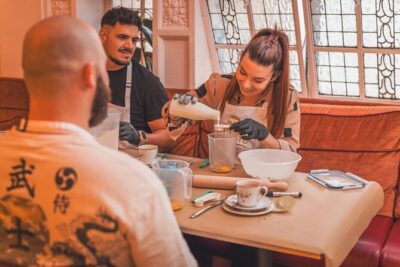
London: Traditional English Scone Making and Tea Workshop
Read our review →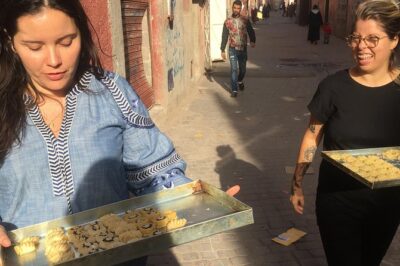
Moroccan Hands on traditional pastries & Tea class in Marrakech
Read our review →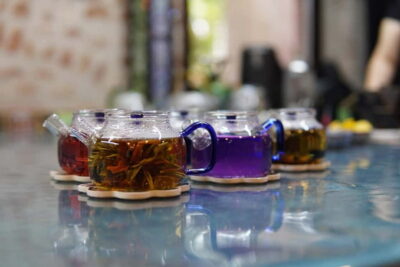
Istanbul: World Teas & Turkish Tea Brewing, Tasting Workshop
Read our review →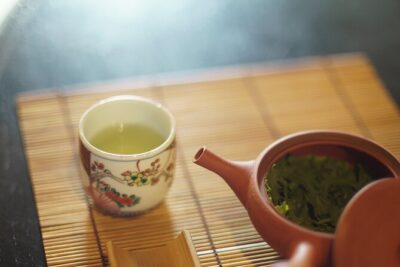
Discover Japanese Tea Blending Techniques in Osaka
Read our review →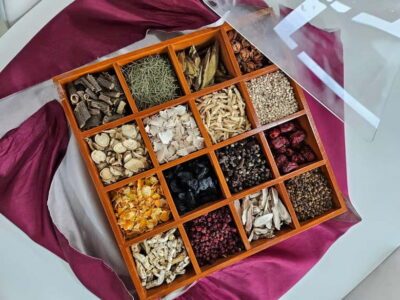
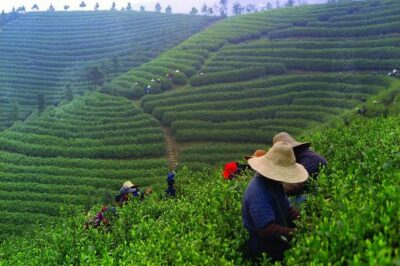
Experience Chengdu: Private Tea-Making Day Tour of Mengdingshan Tea Plantation
Read our review →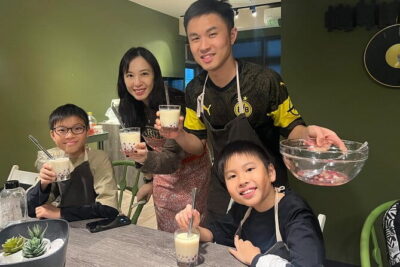
Taipei Fresh Market Tour and Colorful Bubble Tea Making
Read our review →Browse the lists this tea experience appears in