
Review · MUNNAR
Munnar Tea Trail Tour , Tea factory visit & Tea Tasting
Munnar’s tea country is best understood on foot, and this small-group tour takes you through Lockhart tea estate before moving into a working factory. You can see tea pluckers at work, learn about their daily life, and look toward Chokramudi Peak and Idli hills. I like the mix of outdoor walking and machinery, and I like that the tour ends with tea tasting rather than a quick photo stop.
The price is modest at $14, especially if all three parts run as planned: plantation walk, factory visit, and tasting. The main caution is guide quality. Some guides provide strong local insight, while others may speak limited English or offer little explanation, so this experience is not equally reliable every day.
Key points to know before booking

- Lockhart tea estate: Expect up to two or three hours of walking through working tea fields.
- Tea pluckers at work: You may spend time near workers and learn about their local culture and daily routine.
- 1936 factory: The Lockhart factory uses older machinery and produces orthodox tea in a traditional method.
- Nine-level tasting program: The tasting section may cover tea blending and tasting, with lessons arranged from basic to more advanced.
- Small group size: The maximum is 10 people, which should make questions and walking easier.
- Weather matters: Poor conditions can lead to a changed date or a full refund.
Walking into Lockhart’s tea fields
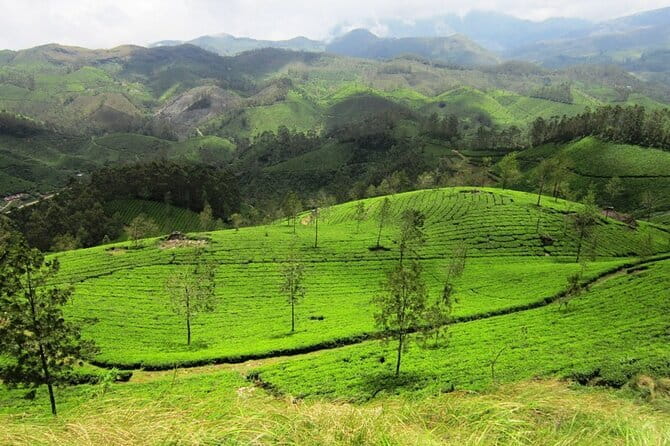
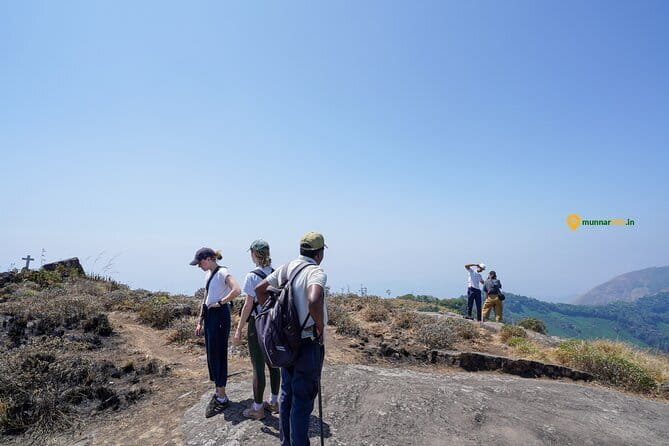
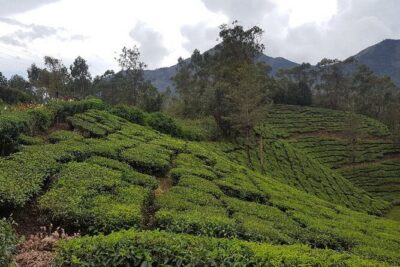
The first part is the reason to book this experience. You leave the town setting behind and spend up to two or three hours walking through Lockhart tea estate, where the neat rows of tea plants spread across Munnar’s high country.
This is not just a garden visit. The tour is meant to show you tea as a crop and a workplace. You can see tea pluckers carrying out the careful work of collecting leaves, then spend time learning about their local culture and lifestyle. That human element gives the walk more meaning than simply stopping at a viewpoint and taking pictures.
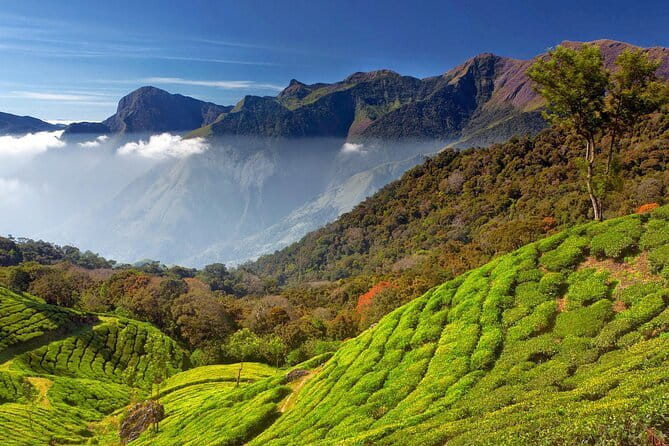
The route also includes views toward Chokramudi Peak and Idli hills. The exact quality of the views will depend on clouds and weather, which change quickly in Munnar. Still, the setting gives you a useful sense of why this region is suited to tea farming.
You should be comfortable walking for several hours. The supplied details do not give a difficulty rating, trail surface, or elevation profile, so you should not treat this as a formal trekking expedition with a clearly graded route. It is better understood as a guided plantation walk, with time outdoors and some uneven or ordinary estate walking possible.
Wear practical shoes and clothes that can handle damp conditions. This is especially important because the tour requires good weather and may be rearranged if conditions are poor. There is no need to dress formally for the factory portion. You will get more from the walk if you can focus on the plants, workers, and views rather than worrying about your footwear.
More Tea Trail Walks around Munnar:
- Munnar Tea Trail Tour with Factory Experience ( By Munnar Info)
★ 5.0 · 458 reviews - Tea planation walking In Munnar- (by Munnar Info)
★ 5.0 · 53 reviews - Munnar: Tea trail, Tea Factory, and Tea Tasting Tour
★ 4.9 · 47 reviews
Meeting tea workers and seeing the work up close

Tea can look tidy and effortless from a distance. The plantation walk helps correct that impression. Tea depends on repeated handwork, and seeing pluckers in the fields gives you a clearer idea of the labor behind the drink served in nearly every Indian home and café.
The guide is supposed to explain the work and help you speak with people in the area. This is one of the most valuable parts of the tour when it is handled well. A good guide can point out how the plants are managed, explain what the workers are doing, and place the plantation within local life.
Guide performance is the most important variable here. One account describes a guide who pointed out plants, birds, rivers, and other details across the area, giving the walk a wider local focus. Another account describes a guide with limited English who offered little background. That difference is substantial. The walk itself remains attractive, but the explanation determines whether you gain an understanding of tea farming or simply stroll among the bushes.
If the guide’s English is hard for you to follow, ask direct questions early. You can ask how the tea is picked, what happens to the leaves after collection, and how orthodox tea differs from other production methods. You should also confirm that the plantation walk is included before setting off, since the quality of the tour depends on all parts being properly delivered.
Inside the Lockhart factory built in 1936
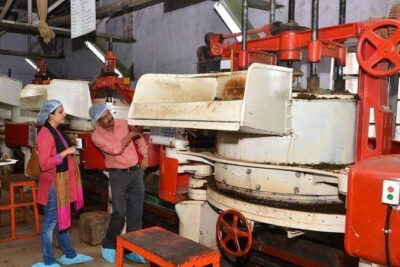
After the plantation section, the experience moves indoors to Lockhart tea factory. The factory was built in 1936 and is presented as a place where older machinery and traditional orthodox tea production can still be seen.
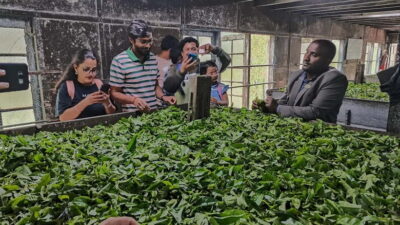
This is the practical heart of the tour. You learn what happens after the leaves leave the field, including the stages involved in making tea and the machinery used in the process. A factory visit gives useful context to the plantation walk: the field shows you the crop, while the factory shows you how that crop becomes a finished product.
The factory portion is listed as lasting about one hour. You should expect a briefing on tea making, the factory’s past, and the health benefits associated with tea. The exact depth of the explanation will depend on your guide and the presentation on the day.
The phrase old machinery is important here. Do not expect a polished modern visitor center or a museum with elaborate displays. The interest lies in seeing a working production setting and learning how orthodox tea is made in a traditional way. If you enjoy industrial details, machinery, and the stages of food production, this part may be more interesting than the scenic walk.
You should also keep expectations realistic. The information does not promise that every machine will be operating during your visit, nor does it specify the production schedule. You are being offered access to the process and an explanation, not a guarantee of a full factory shift from start to finish.
What orthodox tea means here
Orthodox tea is made through traditional methods that involve more handling of the leaves than fast, highly standardized production. The tour uses the Lockhart factory to introduce this style of tea making and to show how machinery supports the process.
For you, the value is not only learning a definition. You can connect the term to the actual factory setting, the leaves seen earlier in the fields, and the cup served during tasting. That progression makes the experience easier to remember.
The factory briefing also covers tea’s origins. Tea comes from Camellia sinensis, a cultivated plant with origins in the area between India and China. This short botanical detail helps explain why the same plant can produce very different teas depending on farming, processing, blending, and preparation.
The tour also presents tea as one of the world’s most widely consumed drinks. That claim is broad, but the point is useful: tea is not a niche product in Munnar. It is a major part of the region’s economy, identity, and daily life.
More Tea Tastings in Munnar:
- Twinings 2-Hour Tea Tasting Masterclass in London
★ 5.0 · 105 reviews - Tea Tasting and Pairing Concept Workshop
★ 5.0 · 57 reviews - Biking Real Shanghai& Tea Tasting Experience
★ 4.5 · 45 reviews - Matcha Experience with of Japanese Tea Tasting in Tokyo
★ 5.0 · 31 reviews
Tasting tea instead of simply buying it
The final part is tea tasting. This is more useful than a basic sample at a shop because the program is designed around tasting and blending lessons.
The tasting course is described as having nine levels, arranged to build knowledge gradually. You are not promised all nine levels during this three-hour experience. Instead, the session appears to introduce the structure and some of the ideas used in a wider tea education program.
You may learn to compare teas, notice differences in taste, and understand how blending changes a cup. The details provided do not list the exact teas served or the number of samples, so you should not book this expecting a fixed tasting menu.
Still, the tasting gives the day a natural finish. You have seen the tea plants, watched or learned about factory processing, and then tasted the result. That sequence is what gives the $14 price good potential value, provided the plantation, factory, and tasting are all included as planned.
If you already know a great deal about tea, the program may feel introductory. If you usually drink tea without thinking about its origin or production, the tasting should add a useful layer to the experience.
Timing, group size, and the $14 value

The advertised duration is about three hours, with the plantation walk taking up to two or three hours and the factory visit listed at about one hour. Since those figures leave little room for transport, introductions, and tasting, the timing may be approximate rather than a strict schedule.
That is not unusual for a local walking experience, but it matters if you have a train, airport transfer, or another fixed booking afterward. I would leave extra time after the tour rather than planning a tight connection.
The group limit is 10 people. That is small enough for a guide to answer questions and keep the walking group together, while still giving the experience a social feel. It is not a private tour, and the supplied details do not promise private transportation.
The meeting point is Rijo Villa, also called Nature Glade Cottage, near the KSRTC bus stand on Amman Temple Street, behind Sree Paravathi in Moolakadai, Munnar. The activity returns to this same meeting point. It is near public transportation, which makes the start and finish relatively simple if you are staying around central Munnar.
At $14, the tour is inexpensive for a three-hour program with a plantation walk, factory visit, and tasting. I would judge the value by the guide’s explanations and by whether all three sections happen, not by the price alone. A cheap tour with no useful guidance is poor value. A well-run small-group visit that includes working fields and an old factory is a sensible buy.
The guide makes or breaks the experience
The strongest version of this tour has a local guide who knows more than the route. The guide should connect the plants, workers, hills, factory, machinery, and tea in your cup.
One particularly strong account describes a guide who knew the tea plantations and also identified plants, birds, and rivers in the area. That is the kind of broad local knowledge that can turn a basic walk into a worthwhile introduction to Munnar.
But you should also take the language issue seriously. At least one account describes an English-speaking guide whose communication was too limited to provide useful background. Another describes a tuk-tuk driver handling the transfers and leaving the person to walk around a small tea field alone, without the promised explanations.
I cannot treat that poor version as the expected experience, but it is a clear reason to confirm the plan at the start. Ask who will lead the plantation walk, whether the factory visit and tasting are included, and how the walking route will work. If the answer is vague, you have useful information before the tour gets underway.
The operator is Munnar Valley Trekking & Tours. No guide names are supplied, so you should not book this expecting a particular named expert.
Who should book this Munnar tea tour
I would recommend this experience to you if you want a short introduction to Munnar’s tea industry rather than a full-day excursion. It suits people who enjoy walking, local workspaces, traditional machinery, and tasting sessions.
It is also a good fit if you want to meet the region through its working life. The tea pluckers and factory workers offer a more grounded view of Munnar than a sightseeing loop based only on viewpoints.
You may want something else if you dislike walking, need a highly structured schedule, or expect a polished museum-style presentation. It may also disappoint you if you want an advanced tea certification course, since the tasting program is presented as an introduction to a nine-level course rather than a complete advanced lesson.
Families and older visitors should consider the walking time carefully. The tour requires several hours on foot, but the available information does not give a difficulty rating or accessibility details. Ask the operator for current trail conditions if walking ability is a concern.
The tour requires good weather and a minimum number of participants. If poor weather cancels it, you can choose another date or receive a full refund. The same applies if the minimum group size is not met.
Should you book the Lockhart Tea Trail?
Book it if you want the best value from a modestly priced, half-day-style experience and you are willing to accept some uncertainty in guide quality. The combination of tea fields, working people, an old factory, and tasting is well chosen.
Before you begin, confirm three things: the walk is guided, the 1936 factory visit is included, and the tea tasting will take place. Those quick questions protect you from the weakest version of the experience.
I would skip it if you need guaranteed English fluency, a detailed fixed itinerary, or a fully accessible route. For everyone else, this is a worthwhile way to spend a few hours in Munnar, especially if you care more about how tea is grown and made than about collecting another viewpoint photo.
FAQ
How long does the Munnar Tea Trail Tour last?
The tour lasts approximately three hours. The plantation walk may take up to two or three hours, and the factory visit is described as lasting about one hour.
Where does the tour begin?
It begins at Rijo Villa, also called Nature Glade Cottage, near the KSRTC bus stand on Amman Temple Street, behind Sree Paravathi in Moolakadai, Munnar.
Where does the tour end?
The activity ends back at the original meeting point.
What will I see at Lockhart tea estate?
You will walk through the tea plantation, see tea pluckers at work, learn about their local culture and lifestyle, and view Chokramudi Peak and Idli hills.
What happens at the Lockhart tea factory?
You will receive an explanation of tea making, learn about the factory’s history and tea’s health benefits, and see the traditional orthodox tea production process and older machinery.
Is tea tasting included?
Yes. The experience includes a tea-tasting section covering tea tasting and tea blending as part of a program arranged in nine levels.
Can I cancel for a full refund?
Yes, if you cancel at least 24 hours before the experience starts. Cancellations or changes made within 24 hours are not refunded, and poor weather or an insufficient minimum group may lead to a new date or a full refund.
More Tea Factory Tours in Munnar
- From Munnar: Tea Factory, Plantation, and National Park Tour
★ 4.7 · 3 reviews - Kyoto: Tea Museum Tickets and Matcha Grinding Experience
★ 4.9 · 739 reviews - Uva Halpewatte Tea Factory Tour in Ella Sri Lanka
★ 5.0 · 653 reviews - Nuwara Eliya: Tea Factory and Pickle Waterfalls Tuk Tuk Tour
★ 4.7 · 113 reviews
Newly steeped around Munnar
- Tea plantation walk with Visit of Historical ,village & Market★ 5.0 · 5 reviews
- Tea Farm Tourism★ 5.0 · 8 reviews
- Tea plantation walk and stay in valley view Room (By Munnar Info)★ 4.0 · 2 reviews
- Tea Plantation, Grass Land and Mountain Hiking in Munnar★ 5.0 · 6 reviews
- Munnar Tea Plantation Evening walking with Sunset View★ 5.0 · 8 reviews
- Munnar: Tea Garden and Elephant Safari Trip by 4×4★ 4.1 · 16 reviews
- From Munnar: Tea Factory, Plantation, and National Park Tour★ 4.7 · 3 reviews
- Private Munnar Tea Trek★ 4.6 · 38 reviews
Tea Trails & Plantation Walks, compared.
Munnar: Tea trail, Tea Factory, and Tea Tasting Tour
Read our review →
Discover the Lake Agnes Tea House Trail with an Audio Nature Tour
Read our review →
Tea plantation walk with Visit of Historical ,village & Market
Read our review →
Browse the lists this tea experience appears in