
Review · THAILAND
Best Places in Chiang Rai White, Blue, Big Buddha, Tea Plantation
Chiang Rai’s famous temples look like something from a dream: one is covered in white ornament, another glows blue, and a third is watched over by a giant Buddha. This full-day trip from Chiang Mai fits the region’s headline sights into one packed run, with hotel pickup and a driver handling the long road.
I like the small maximum of 12 people, which is far better than being lost in a large coach group. I also like the useful mix of temples and Singha Park’s tea fields, plus lunch, entrance fees, insurance, and an air-conditioned vehicle in the price. The catch is simple: this is an 11-hour day with roughly three hours each way on the road, and some departures include extra stops that can eat into temple time.
Key points to know before booking
- Three striking temple stops: See Wat Rong Khun, Wat Rong Suea Ten, and Wat Huay Pla Kang in one day.
- A very long road day: Plan for about 11 hours, with the Chiang Mai to Chiang Rai drive taking roughly three hours each way.
- Small group format: The advertised maximum is 12 people, with hotel pickup and drop-off included.
- Singha Park adds a change of pace: You get tea plantation views, a drink stop, and a break from temple interiors.
- Extra stops can be an issue: Hot springs, cafés, shops, or a Long Neck village may be suggested, even though they are not central to the advertised route.
- Dress for temple rules: Cover your shoulders and knees, wear easy-slip shoes, and bring water and sun protection.
Is a day trip from Chiang Mai worth the long drive?
Chiang Rai is far enough from Chiang Mai that this tour is really a road trip with temple stops, not a relaxed city excursion. Pickup begins around 7:15 a.m., and depending on hotel locations, it can take close to an hour to collect the group. Return drop-offs may not finish until around 8 or 8:30 p.m.
That sounds daunting, but the route gives you a practical way to see Chiang Rai without arranging a bus, hiring a private car, or spending several nights there. The drive is broken up with comfort stops, and guides generally announce opportunities to use the toilet or buy snacks.
I would book this if you have limited time in northern Thailand and want the major sights handled in one sweep. If you have two or three spare days, staying in Chiang Rai is the better choice. You can see each temple without watching the clock, and you will not spend most of the day in a minivan.
The advertised price is $54.59 per group of up to one person, though you should check the final booking total carefully if you are booking for more than one person. For what is included, the value is strong: transport, lunch, temple admission, guide, insurance, and pickup are bundled together. The value drops if you dislike long drives or if unscheduled stops reduce your time at the main sights.
More Tea Plantation Tours in the world:
- From Taipei: Thousand Island Lake and Pinglin Tea Plantation
★ 4.7 · 519 reviews - Active Volcano, Rice Field, Hot Spring, Fruit market, Tea Plantation with Lunch
★ 5.0 · 513 reviews - Furnas: Tea Plantations, Lake and Volcano Guided Tour
★ 4.8 · 511 reviews
White Temple: beautiful, strange, and built for strong reactions
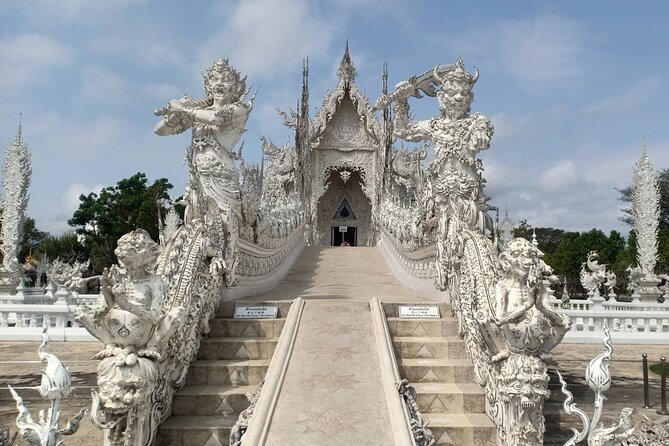
Wat Rong Khun, usually called the White Temple, is the star of the route. Its bright white surfaces are covered with detailed decoration that catches the light, giving the complex an icy, almost unreal appearance.
The temple was designed and built by local artist Chalermchai Kositpipat. It is not an old royal temple in the usual sense. Much of its fame comes from its modern artistic vision, unusual imagery, and theatrical design.
That distinction matters. If you expect a centuries-old sanctuary with quiet, weathered walls, you may find the White Temple too polished or too theatrical. If you enjoy contemporary art, unusual religious symbolism, and photography, it is one of the most memorable stops in northern Thailand.
The scheduled visit is about 40 minutes, although some departures have allowed closer to an hour. That is enough to walk through the principal area and take photographs, but not enough for a slow examination of every detail. The complex can be crowded, so the time may feel short.
Wear shoes that come off easily. You may need to remove them before entering the temple, and modest clothing is required. Avoid revealing tops and shorts. Bring a hat and water for the outdoor areas, but remember that the heat can build quickly around the white surfaces.
Blue Temple: strong color and modern Buddhist art
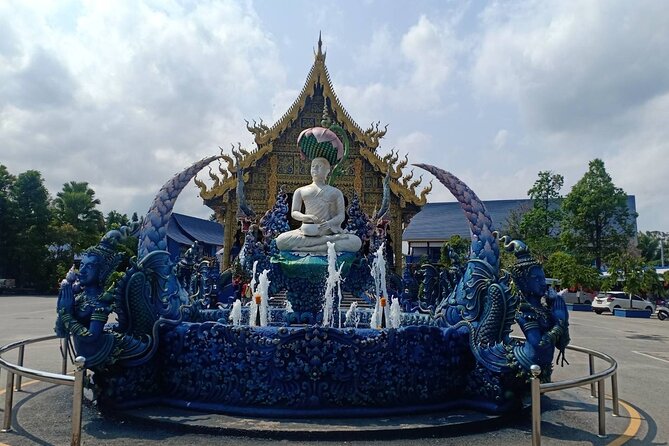
Wat Rong Suea Ten, known as the Blue Temple, offers a sharp change from the White Temple. Its walls, roof details, and interior decoration use intense sapphire-blue tones, with gold and other bright accents adding to the effect.
The color is not a small design touch. It shapes the whole visit. Inside, the painted surfaces and large Buddha image create a dramatic setting, and the temple is easy to appreciate even if your guide gives only a short explanation.
The planned stop is about 40 minutes, though some groups spend around 30 minutes here. That gives you time to walk around, look inside, and take photographs. It does not give you much room to sit quietly or study the artwork at length.
This is one of the places where a guide can make a big difference. Some departures have included clear explanations about the temple and its art. Others have offered little information beyond the meeting time, leaving people to search for background on their phones. If your guide is less comfortable speaking English, ask direct questions early in the day and note the return time for each stop.
Wat Huay Pla Kang and the giant Buddha
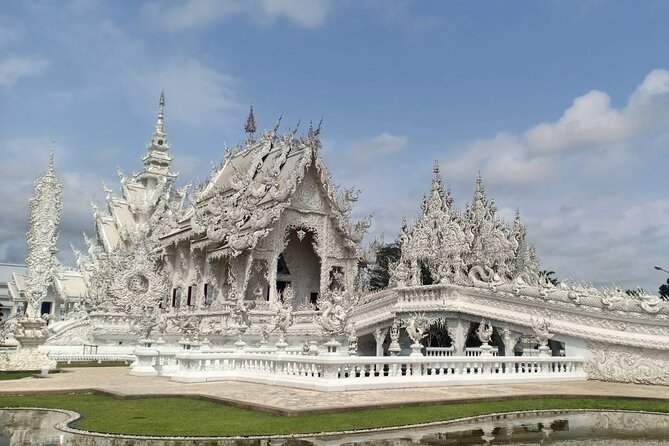
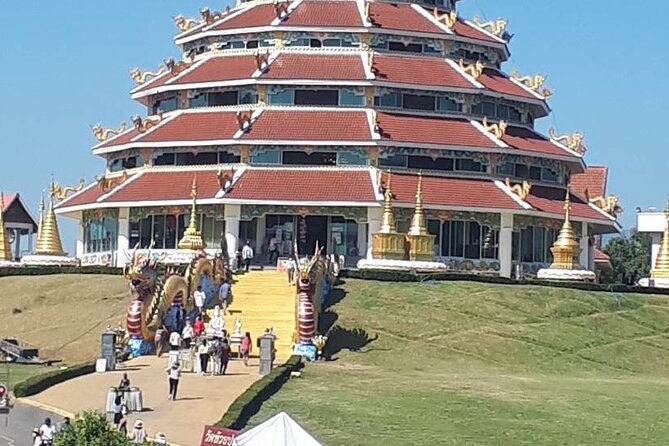
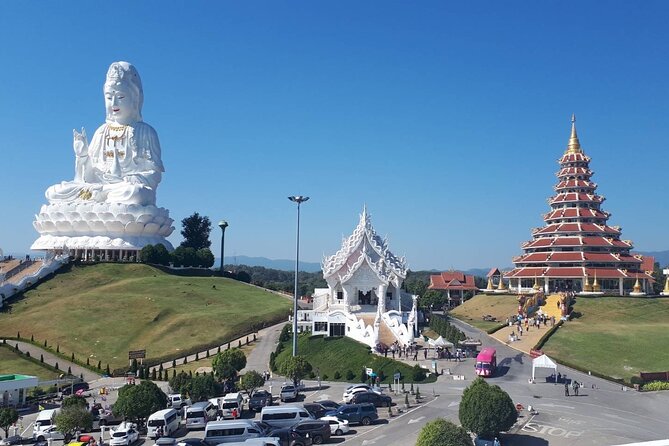
Wat Huay Pla Kang is often described as the Big Buddha stop, but the site is more than one large statue. The complex includes a nine-floor pagoda, 12 surrounding structures, and a huge white Buddha figure that can be seen from a distance.
The scale gives this stop a different feel from the White and Blue Temples. You get broader views across the grounds, more open space, and a chance to see a temple complex rather than one tightly designed building.
The visit is scheduled for about 40 minutes, though some groups spend 45 minutes to an hour here. That extra time helps because the site is spread out. Still, you may need to choose between looking closely at the pagoda, walking toward the Buddha, and taking photographs.
This was the favorite stop for some people on the route because it felt less crowded and less familiar than the White Temple. That is useful to know. The White Temple gets most of the attention, but Wat Huay Pla Kang may leave the stronger personal impression if you prefer space and a less polished setting.
The word red temple sometimes appears in descriptions of this stop because of the complex’s colorful buildings. Do not expect a single conventional temple visit. It is a large compound with several structures, a pagoda, and the giant Buddha as its main visual anchor.
More Tea Experiences around the world:
- Kyoto: Tea Ceremony in a Traditional Tea House in Kiyomizu
★ 4.9 · 3,519 reviews - London: Afternoon Tea Cruise on the River Thames
★ 4.4 · 3,274 reviews - Kyoto: Tea Ceremony Ju-An at Jotokuji Temple
★ 4.9 · 3,207 reviews - Afternoon Tea Bus Tour in Dublin
★ 5.0 · 2,791 reviews
Singha Park and the tea plantation
Singha Park is the route’s change of rhythm. After several temple visits, you move into a large tea-growing area with open views, planted fields, and a chance to buy or drink tea.
The stop is listed at about 40 minutes, but some departures have spent only 20 minutes there. In practice, treat it as a scenic photo and refreshment break rather than a full agricultural tour. You may not receive a detailed explanation of how the tea is grown or processed.
The plantation is connected with the company associated with Singha beer, and the setting is attractive. It gives you a chance to stretch your legs, take photographs, and cool down with a drink. If you expect a guided walk through the fields, you may be disappointed.
I like keeping this stop in the itinerary because four temple visits in a row would feel repetitive. Just keep your expectations modest. You are getting a short look at the tea fields, not an extended tea education.
The stops between the headline sights
This is where the tour can become less predictable. The advertised route focuses on the White Temple, Blue Temple, Wat Huay Pla Kang, and Singha Park, but some departures have also stopped at hot springs, cafés, a jewelry shop, or a Long Neck village.
The hot spring stop is mainly a comfort break with snacks, coffee, souvenirs, and the chance to see people boiling eggs. It is not a sit-down hot spring experience. You do not normally soak there.
The Long Neck village is listed as optional and is not included in the price. Still, some groups have been encouraged to stop even when nobody wanted to pay for entry. If you do not wish to visit, say so clearly and ask whether the stop is part of the day’s schedule or simply being offered as an extra.
This matters for two reasons. First, these stops can take time away from the main temples. Second, a visit to a Long Neck attraction raises ethical concerns for some people because the setting can feel like people are being displayed for photographs. I would decide your position before departure so you are not pressured beside the road.
Some groups have also stopped at Lalitta Café, a garden café with drinks and attractive photo spots. It can be a pleasant break, but it is an additional commercial stop rather than one of Chiang Rai’s essential sights.
Transport, group size, and the rhythm of the day
The vehicle is air-conditioned, but comfort can vary. The long road sections are the hardest part, especially during hot weather. One poor departure involved weak air conditioning and heat exhaustion, while other departures found the van comfortable and the driving smooth.
Minivan seats can also feel tight if you are tall or need extra room. The small group limit of 12 is helpful, but it does not turn a long road journey into a spacious one.
Pickup is offered from hotels, which removes the need to find a meeting point. Allow patience during the collection process. One departure involved a 50-minute delay, while most accounts describe pickup as prompt and well organized.
Drop-off can also take time because the driver may need to serve several hotels. Road construction and traffic have caused some people to be dropped near their accommodation rather than directly outside it. Confirm the final drop-off plan with the guide before the return drive.
The best guides make the day much easier. Rainy and Cookie are names associated with especially warm, helpful service, and some guides have been praised for explaining each stop, giving clear meeting times, and checking that everyone stays hydrated. English ability is not perfectly consistent, so your experience may depend heavily on who leads your group.
Lunch and what to pack
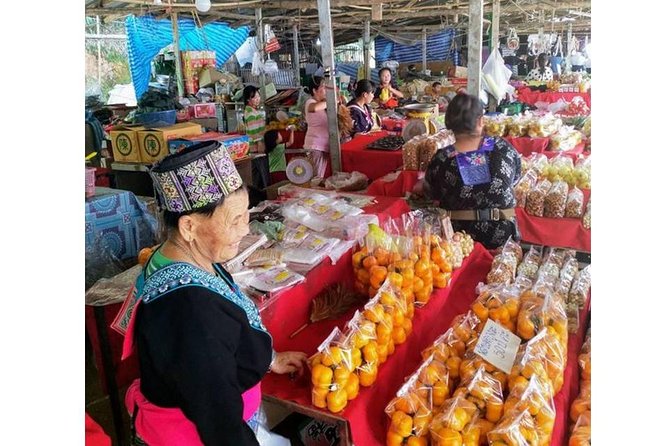
Lunch is included, and several departures have found it tasty. It is generally a practical group meal rather than a long restaurant experience. You should not expect a leisurely break with many menu choices.
Hot food on a hot day has been uncomfortable for some people. If you struggle with heat, carry water and use the meal break to sit in shade when possible.
Pack:
- A refillable water bottle
- Snacks for the road
- Sun protection
- A light layer for strong vehicle air conditioning
- Shoes that slip off easily
- Clothing that covers shoulders and knees
- Cash for optional stops or drinks
The tour requires a moderate level of physical fitness. You will be getting in and out of the vehicle, walking around temple grounds, standing in heat, and managing stairs or uneven areas at some sites.
How much explanation should you expect?
This is the tour’s most uneven feature. Some guides give a useful introduction before each stop and explain the history and design in simple English. Others mainly point you toward the entrance, set a meeting time, and let you explore alone.
That freedom can be pleasant. You can take photographs without a constant commentary, and you are not tied to a guide inside every building. But if you want a serious lesson in Lanna art, Buddhist symbolism, and local history, this may not satisfy you.
I recommend doing a little reading before you go. Learn the basic story behind Chalermchai Kositpipat and the White Temple, note the different design approach at the Blue Temple, and understand that Wat Huay Pla Kang is a modern complex rather than an ancient monument. That preparation will help you get more from short visits.
At every stop, ask two practical questions: How long do we have, and where do we meet? Clear communication prevents the confusion that has affected some departures.
Who should book this Chiang Rai tour?
This trip suits you if you:
- Have only one free day for Chiang Rai
- Want the main temples without arranging transport
- Prefer a small group to a large coach
- Like modern, highly visual architecture
- Are comfortable with a long road journey
- Want lunch and entrance fees handled in advance
- Appreciate hotel pickup and drop-off
I would hesitate if you:
- Dislike spending six or more hours in a vehicle
- Want slow temple visits
- Prefer ancient sites over modern artistic complexes
- Need guaranteed strong English commentary
- Do not want optional commercial stops
- Find heat and crowded places difficult
The temples are modern, colorful, and deliberately dramatic. Some people find them astonishing. Others think they look more like a theme park than a traditional religious site. Neither reaction is wrong, but you should know what kind of experience you are buying.
Should you book it?
Book this tour if your priority is efficient sightseeing. It gives you a lot for the price and removes the hardest planning problem, the long trip from Chiang Mai to Chiang Rai. The small group, included lunch, hotel pickup, and four contrasting stops make it a sensible choice for a first look.
Do not book it expecting a slow or deeply traditional temple day. Expect a packed schedule, short visits, road time, and possible extra stops. If you can stay in Chiang Rai, do that instead. If you cannot, this is a practical way to see the White Temple, Blue Temple, Big Buddha complex, and tea plantation in one ambitious day.
Free cancellation is available when you cancel at least 24 hours before the start time. The tour may be rescheduled or refunded if poor weather causes cancellation.
FAQ
How long does the Chiang Rai tour from Chiang Mai take?
The advertised duration is about 11 hours. Actual return time can vary because of hotel pickups, traffic, road conditions, and the number of drop-offs.
What time does pickup begin?
The listed start time is 7:15 a.m. Pickup is offered from hotels, but collecting everyone can take additional time.
Which temples are included?
The route includes Wat Rong Khun, known as the White Temple, Wat Rong Suea Ten, known as the Blue Temple, and Wat Huay Pla Kang, the Big Buddha complex.
Is Singha Park included?
Yes. The itinerary includes a stop at Singha Park’s tea plantation, though the amount of time there can vary.
Is lunch included?
Yes. Lunch, temple admission fees, taxes, insurance, an English-speaking guide, and an air-conditioned vehicle are included.
Is the Long Neck village included?
No. The Long Neck village is listed as an optional extra and is not included in the tour price. Ask the guide whether any proposed stop is part of the planned schedule before paying for entry.
What should I wear to the temples?
Wear modest clothing that covers your shoulders and knees. Bring shoes that are easy to remove because you may need to take them off before entering the White Temple.
Newly steeped around the world
- York: Private Horse-Drawn Carriage Ride and Afternoon Tea★ 5.0 · 3 reviews
- Yokohama : Tea Ceremony with Sweets and Souvenir★ 5.0 · 5 reviews
- Washington, D.C.: Tea Around Town Bus Tour with Landmarks★ 3.4 · 7 reviews
- Whisk Your Own Matcha: A Zen Matcha Experience at Temple★ 3.6 · 7 reviews
- Yogyakarta: Prambanan Tour, Sukuh Temple & Tea Plantation★ 5.0 · 3 reviews
- Walking Tour: Yanaka,Nezu& Sendagi: Tea Ceremony & Old Tokyo★ 5.0 · 3 reviews
- Wadi Rum: 2-Hour Jeep Tour with Bedouin Tea★ 5.0 · 11 reviews
- Volcano, Hot Spring, Mud Bath & Tea plantation all included★ 5.0 · 5 reviews
Tea Plantation & Farm Tours, compared.
From Taipei: Thousand Island Lake and Pinglin Tea Plantation
Read our review →
Furnas: Tea Plantations, Lake and Volcano Guided Tour
Read our review →
São Miguel: Furnas Volcano & Tea Plantation Tour with Lunch
Read our review →
Furnas Volcano & Tea Plantation With Traditional Lunch, East Tour
Read our review →
Furnas: Volcano Wonders, Tea Plantation & Waterfall Tour
Read our review →
Adventure in the Furnas, with volcanoes, lagoons and tea plantations
Read our review →
Bandung: White Crater, Scenic Tea Plantations & Hot Spring
Read our review →Browse the lists this tea experience appears in