
Review · USA
Big Island Jungle Tour with Guava Green Tea
The most unusual part of this Big Island outing is that you are not simply looking at tropical plants. Jason and Nicki welcome you into their working rainforest homestead, where 150 apple banana plants, hand-carved tikis, lava-rock sculptures, and recycled structures all share the same space.
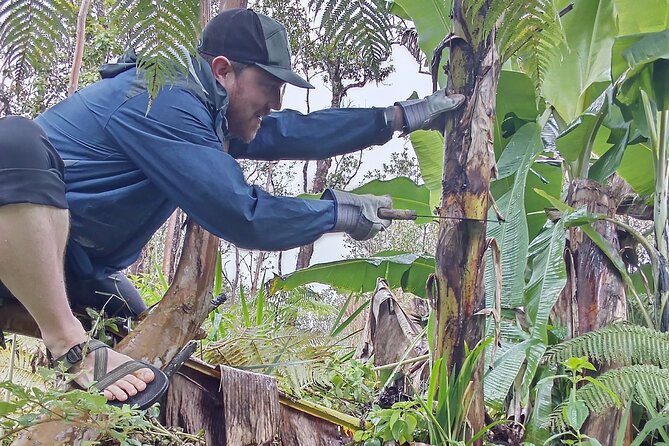
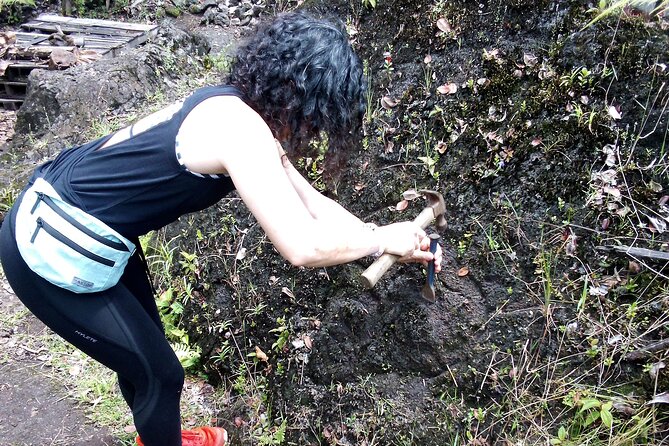
I like the hands-on spirit. You may use a hammer and chisel to carve a tiki, help with planting, or try a little axe work under guidance. I also like the clear look at off-grid living, from water catchment to composting toilets. The main caution is that this is not a polished resort attraction. The setting is rustic, and people who need an easy, highly accessible outing may find the activity demanding.
Key points to know before you go
- Jason and Nicki lead a personal tour: You visit their own rainforest property and hear how they grow food, make art, and live with limited infrastructure.
- More than a garden walk: The two-hour visit includes tiki carvings, lava-rock sculpture, more than 300 Hawaiian hapuu ferns, banana cultivation, and recycled construction.
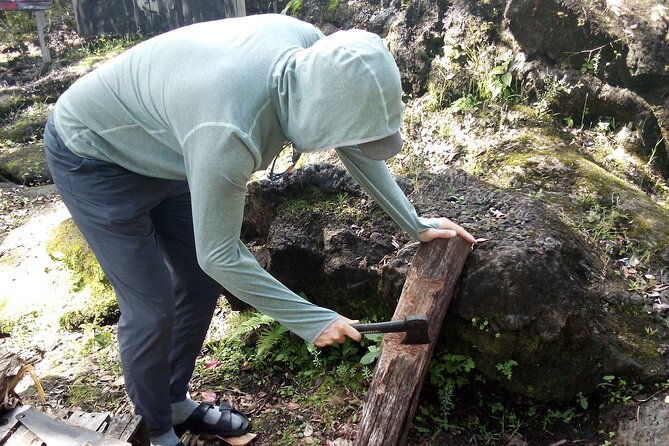
- Hands-on activities matter here: You may get to use a chisel, hammer, axe, or planting tools rather than only watch demonstrations.
- The tea tasting closes the visit: Expect samples of banana green tea and guava green tea at the Tiki Tea Bar.
- A small group keeps it personal: The maximum group size is 10 people, and the activity is offered in English.
- Plan your own way there: Private transportation is not included, and the tour begins and ends on Jungle King Avenue in Fern Forest.
A rainforest visit with a personal point of view
Paradise Unplugged is less like a standard sightseeing stop and more like an invitation into Jason and Nicki’s way of life. Their property combines tropical cultivation, outdoor art, practical recycling, and off-grid systems in one compact visit.
That mix gives the tour its appeal. You are not only being shown a rainforest. You are seeing how two people have adapted to it, worked with its soil and plants, and turned available materials into useful structures and artwork.
I would choose this activity if I wanted a Big Island outing with conversation and character. It suits curious people who enjoy learning by doing. The hosts have built a visit around their own projects, so the tone is personal rather than scripted.
The tour lasts about two hours. That is enough time to cover the main areas without turning the visit into an all-day commitment. At the same time, the amount packed into those two hours means the tour is active and varied. You move from art to plants, from food production to construction, then finish with tea.
More Green Tea Tours in the USA:
- Experience all of Japanese culture and Japanese food experience classes “origami, udon, Japanese food, green tea, calligraphy” in 4 hours
★ 5.0 · 105 reviews - Uji: Green Tea Tour with Byodoin and Koshoji Temple Visits
★ 4.8 · 72 reviews - Scenic Green Tea Fields of Hidden Kyoto & Local Tea Exp (Private)
★ 5.0 · 32 reviews
Tiki carvings and lava rock sculpture first
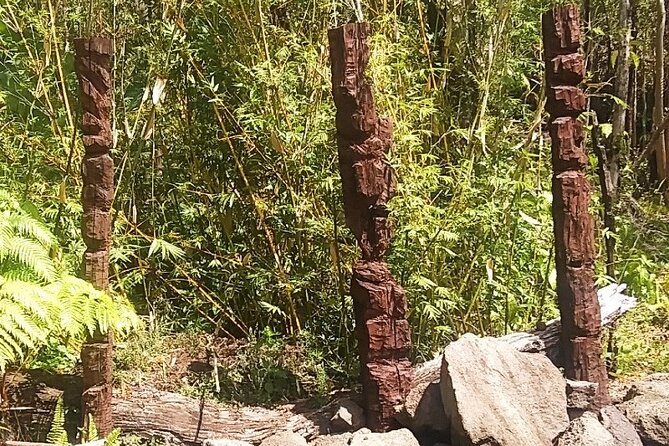
The visit begins with Jason and Nicki’s collection of hand-carved tikis. It is presented as the largest collection of rainforest tikis in Hawaii, giving the opening portion a strong visual focus.
These are not factory-made souvenirs arranged for display. They are part of the hosts’ own creative work, and the setting lets you see the carvings close up. That matters because the detail, tools, and materials are easier to appreciate at arm’s length than from behind a barrier.
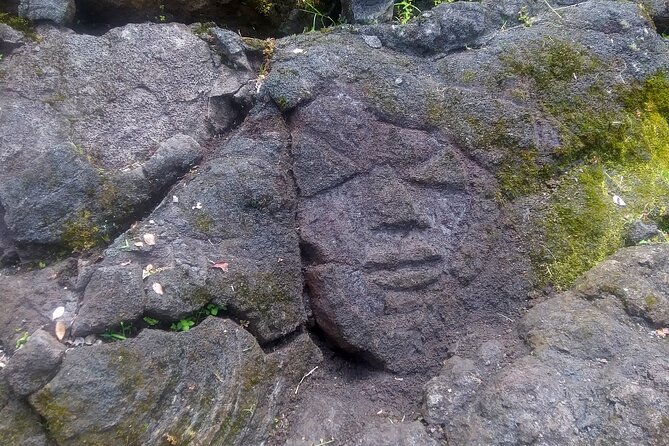
Next comes the lava-rock sculpture collection, including Mount Rastamore. The use of volcanic stone connects the artwork to the Big Island itself. You are seeing local material turned into large-scale art rather than simply hearing about the island’s volcanic origins in an abstract way.
This section will suit you if you enjoy folk art, handmade objects, and creative reuse. If you expect a formal museum with labels and a quiet indoor gallery, adjust your expectations. The appeal comes from the hosts’ storytelling and the outdoor setting.
The fern garden and the work of growing bananas
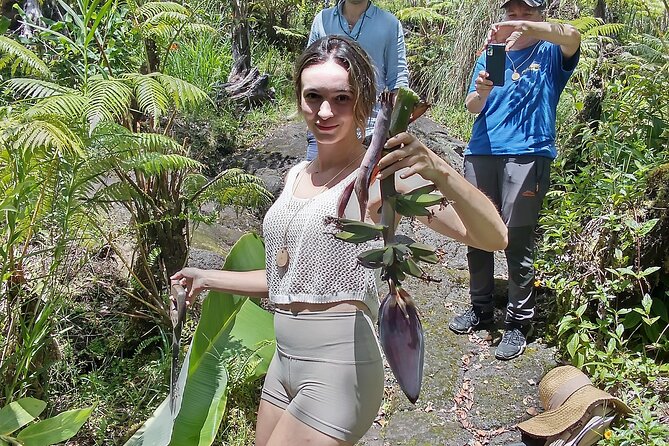
The tour then moves into a tropical garden with more than 300 Hawaiian hapuu ferns. The number alone gives you a sense of the scale of the planting, but the real value is the chance to look at how a rainforest garden is maintained.
The tour is not framed as a botany class, yet plants are central to the visit. You learn about the plant life around the property and see how edible species fit into daily life. This is useful context for anyone who has admired Hawaii’s thick greenery but wondered what can actually be grown and used.
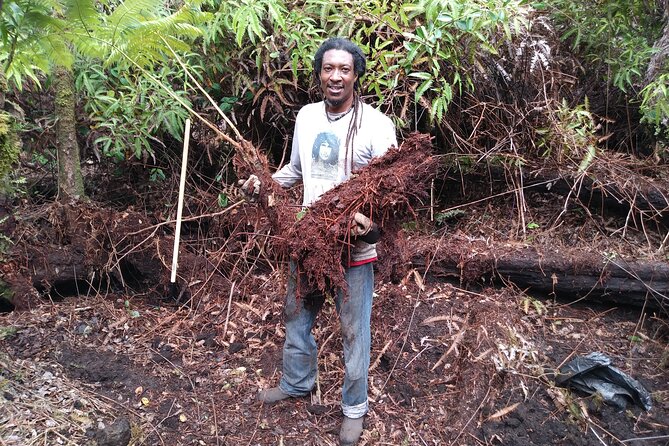
Banana cultivation is another major part of the visit. Paradise Unplugged has a collection of more than 150 apple bananas, and Jason explains the techniques used to harvest them. The focus is practical. You are shown how the plants are handled rather than simply being told that bananas grow in Hawaii.
That distinction makes the stop worthwhile. A banana at a market can seem like a simple food, but cultivation requires care, timing, and labor. Here, you get a closer look at that process and at the work involved in maintaining a large collection.
People who enjoy gardening, edible plants, or self-sufficient living will likely get the most from this section. If you are mainly seeking scenic views, the tour may feel more instructional than picturesque.
Outdoor art and the chance to make something
After the garden and banana area, you enter an outdoor art gallery featuring the hosts’ latest exhibition. The material is not limited to one style. Along with tiki and lava-rock work, Jason has created paintings on wooden pallets, including pieces inspired by a New York artist.
The gallery adds another layer to the visit. You see how discarded or ordinary materials can become art, and you get a better sense of the hosts’ broad creative interests. The art is not separated from the rest of the property. It sits among the plants, tools, structures, and working parts of the homestead.
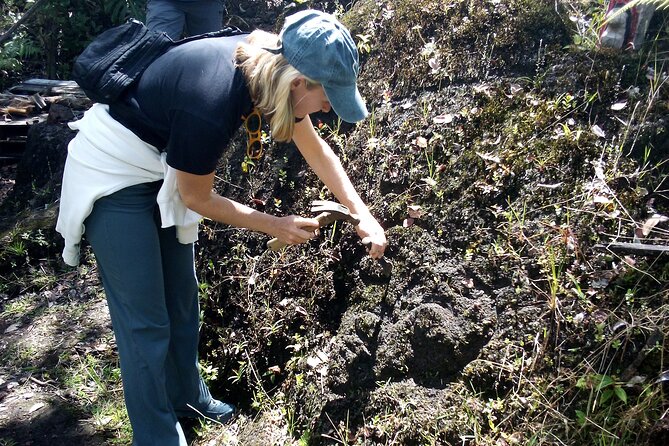
The most engaging moment for many people will be the chance to try carving a tiki. You may use a hammer and chisel and get a small taste of the patience and physical effort involved.
Some descriptions of the visit also include the chance to plant crops and try a little axe work on the wood used for tiki carving. The exact amount of hands-on activity can depend on the flow of the day, but the tour is designed to let you participate rather than only observe.
This is where the rustic nature of the experience becomes important. You should be comfortable with outdoor work and basic tools. The activity is not presented as a physically effortless walk, and one past assessment called it unsuitable for people with physical limitations. The official information says most people can participate, but detailed accessibility information is not provided, so ask before booking if mobility is a concern.
More Tea Experiences around the USA:
- Tea Around Town: High Tea Experience and Tour of Washington DC
★ 4.0 · 154 reviews - SF’s Chinatown: Tea & Dim Sum Food Tour – Includes full meal, 3hr
★ 5.0 · 153 reviews - Tea Around Town® NYC: Mobile Tea Room Experience
★ 3.5 · 99 reviews - Charleston: Wadmalaw Island Wine Tasting and Tea Garden Trip
★ 4.9 · 94 reviews
Inside the Okina, an off-grid lesson
One of the most useful parts of the visit is the Okina, an off-grid structure made from recycled pallets. It gives you a concrete place to see how the hosts approach building and daily living with reused materials.
Inside, Jason and Nicki explain key parts of their system, including water catchment and composting toilets. These details may sound basic, but they show how a home can function when standard services and easy access to supplies are not the whole answer.
I like this part because it turns environmental ideas into practical examples. You are not hearing a general lecture about sustainability. You are seeing the structures and systems that support an actual way of life.
The recycled pallets also fit the larger theme of the property. Wood becomes sculpture, discarded materials become walls or art surfaces, and the surrounding plants provide food and atmosphere. The visit shows how creativity and necessity can overlap.
You should come with an open mind. Off-grid living is not displayed as a luxury product. It includes work, maintenance, and compromise. That honest side may be exactly what makes the visit interesting, but it will not appeal to everyone.
Banana and guava green tea at the Tiki Tea Bar
The tour ends at the Tiki Tea Bar with samples of banana green tea and guava green tea. Coffee and tea are included in the price, and the tasting gives the visit a relaxed finish.
The two teas offer different impressions. Banana leaf tea has been described as smooth and lighter than ordinary green tea. Guava leaf tea is closer in taste to green tea. These are simple samples, not a full meal or a formal tasting menu, but they connect neatly to the plants and food-growing themes you have just seen.
The title of the activity highlights guava green tea, but you should expect banana tea as well. This is a nice detail for anyone interested in local plants and homemade drinks. It also gives you a chance to sit, talk, and ask final questions after the more active parts of the tour.
Do not book this expecting a large refreshment service. The included drink is a sample, and no meal is listed. Eat beforehand if you need something substantial.
What the $75 price gets you
At $75 per person, this is not the cheapest short activity on the Big Island. The value depends on what you want from a tour.
If you only want a quick rainforest walk, the price may feel high for two hours. The visit does not include private transportation, and you must make your own way to Jungle King Avenue in Fern Forest. You are paying for access to a private creative property, a small-group visit, instruction, hands-on activities, and the hosts’ time.
That equation works better if you value personal contact and practical learning. You see a large tiki collection, lava-rock sculpture, a substantial fern garden, banana cultivation, an art gallery, and an off-grid structure in one visit. The tea tasting is a small extra, while the real value lies in the variety and the personal access.
The maximum group size is 10 people. A group that size still allows for conversation, but it is not a private tour. Since the visit depends heavily on Jason and Nicki’s explanations, a smaller group may make the experience feel more relaxed and interactive.
The activity is offered in English. Confirmation arrives when you book, and the tour normally sells about 16 days ahead of time, so reserve early if your schedule is fixed.
Who will enjoy this most
I would recommend the tour to you if you like:
- Handmade art and unusual outdoor collections
- Tropical gardening and edible plants
- Learning how people manage an off-grid home
- Recycling, water catchment, and composting systems
- Small-group activities with plenty of conversation
- Trying simple tools and taking part in practical tasks
It is also a good choice if you have already seen the Big Island’s major sights and want a more personal look at local life. The focus is not on famous viewpoints or a dramatic natural attraction. It is on the work, creativity, and daily choices behind one rainforest homestead.
I would be more cautious if you want a smooth, fully paved, carefully staged attraction. The setting is rustic, and the activity can involve tools and physical effort. People with mobility limits should confirm suitability before booking.
The tour can work for couples, small groups, and outdoor-minded families, but the data does not give a minimum age or detailed child policy. If you are booking for children, ask the provider about participation in the tool-based activities.
Practical details that affect your decision
The meeting point is on Jungle King Avenue in Fern Forest, Hawaii, and the activity returns to that same location. Private transportation is not included, so you need to arrange your own route there and back.
The mobile ticket makes entry simple, and the tour is conducted in English. The activity lasts approximately two hours, though you should allow extra time for getting to the meeting point and for any questions or conversation at the end.
Free cancellation is available if you cancel at least 24 hours before the local start time. A cancellation within 24 hours is not refundable, and late changes are not accepted.
Should you book the Big Island Jungle Tour?
Book it if you want a hands-on, personal rainforest visit built around art, cultivation, and off-grid living. Jason and Nicki’s property offers far more variety than the name alone suggests, from Mount Rastamore and hundreds of hapuu ferns to apple bananas, pallet paintings, water catchment, and tea made from local leaves.
Skip it if you need easy transportation, a highly polished attraction, or a low-effort outing. For everyone else, the $75 price can make sense because it gives you direct access to a working creative homestead and the chance to take part rather than simply look around.
FAQ
Where does the Big Island Jungle Tour begin?
The tour begins on Jungle King Avenue in Fern Forest, Hawaii, at the Paradise Unplugged property.
Where does the tour end?
The activity ends back at the same meeting point on Jungle King Avenue.
How long does the tour last?
The tour lasts approximately two hours.
How much does the tour cost?
The listed price is $75 per person.
Is transportation included?
No. Private transportation is not included, so you must arrange your own transportation to and from the meeting point.
What is included in the tour?
Coffee and/or tea are included. The visit also includes access to the property’s tiki collection, lava-rock sculptures, tropical garden, banana cultivation area, outdoor art gallery, Okina off-grid structure, and the hands-on activities offered during the visit.
What drinks are served?
The visit ends with samples of banana green tea and guava green tea at the Tiki Tea Bar. Coffee and tea are listed as included.
How many people can join the tour?
The tour has a maximum group size of 10 people.
Can I cancel for a full refund?
Yes. You can cancel for a full refund at least 24 hours before the experience start time. Cancellations or changes made less than 24 hours before the start time are not accepted, and the amount paid is not refunded.
Newly steeped around the USA
- Washington, D.C.: Tea Around Town Bus Tour with Landmarks★ 3.4 · 7 reviews
- Tea By The Sea★ 5.0 · 9 reviews
- Tea Blending★ 4.5 · 8 reviews
- Tea Around Town: A Charming Tea Experience in Philadelphia★ 3.5 · 24 reviews
- St. Johns River High-Tea Cruise Tour in Sanford★ 5.0 · 2 reviews
- Premium Loose Leaf Tea and Chocolate Tasting★ 3.0 · 4 reviews
- Beach Yoga & Tea Experience on South Beach★ 5.0 · 19 reviews
- Tea Plantation and Winery Tour in Charleston★ 5.0 · 3 reviews
Green Tea Tours, compared.
Uji: Green Tea Tour with Byodoin and Koshoji Temple Visits
Read our review →
Scenic Green Tea Fields of Hidden Kyoto & Local Tea Exp (Private)
Read our review →
Osaka; Japanese Tea ceremony experience, Macha and Sencha
Read our review →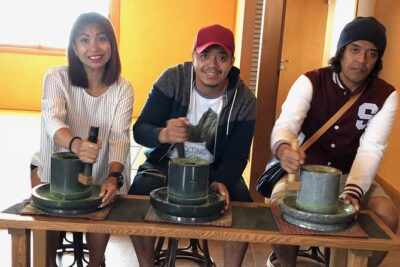
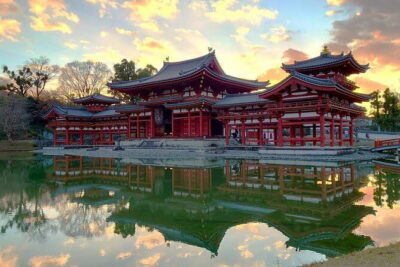
Slow Cycling Tour at Uji’s Matcha Green Tea Fields and Heritage
Read our review →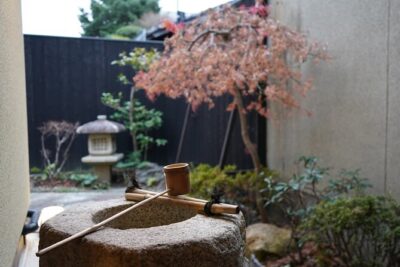
Sencha-do the Japanese Tea Ceremony Workshop in Kyoto
Read our review →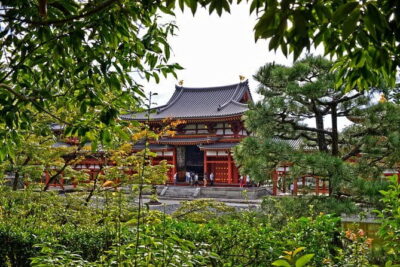
Uji Tea Ceremony and UNESCO Heritage Walking Tour
Read our review →Browse the lists this tea experience appears in