
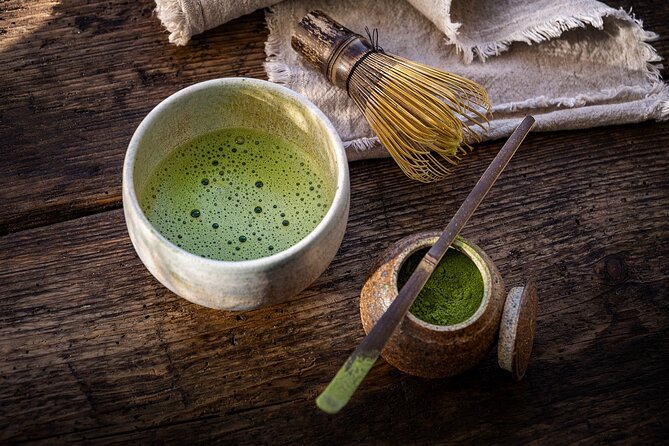
Review · KYOTO
Scenic Green Tea Fields of Hidden Kyoto & Local Tea Exp (Private)
Kyoto’s best tea country lies beyond the usual temple circuit, and this private outing takes you into Wazuka and Ujitawara, where carefully planted tea rows cover the hills. You’ll also visit Byodo-in, a local tea cafe, mountain temples, and photo-worthy country roads.
I like the private vehicle and flexible pickup, especially because several stops are hard to reach without a car. I also like the mix of famous sights and quiet local places, plus guide Daiki’s practical habit of adjusting the day when possible, even dropping guests near dinner afterward.
The main drawback is time. Five and a half hours sounds generous, but the route covers a wide area, and the drive to the tea villages and Shoju-in takes time. Admission fees and your cafe purchase are extra, and some walking and stairs are required.
Key points at a glance
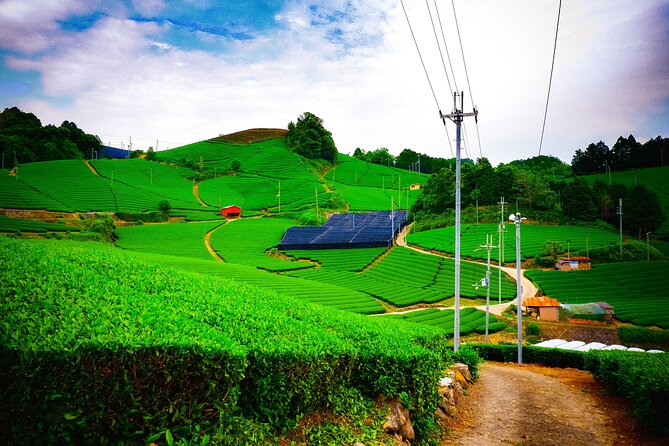
- Tea fields that climb the hills: Ishitera and Ujitawara offer the tour’s most striking views, with geometric rows of tea plants stretching up the slopes.
- A private ride beyond Kyoto’s center: Pickup and drop-off can be arranged at different places, with an air-conditioned Nissan van for two to six people.
- A convertible option for solo guests: One-person bookings use an open-air Mini Cooper, adding a fun touch to the rural roads.
- Tea at local prices: The cafe stop includes matcha and green tea, with premium tea available at prices said to be about half or one-third of city rates.
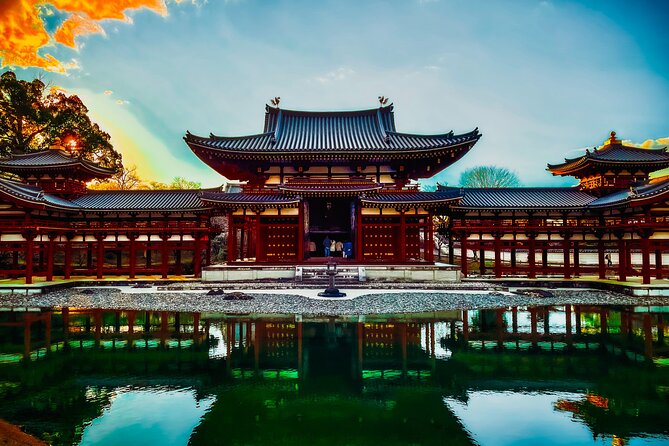
- Byodo-in’s famous Phoenix Hall: The temple appears on Japan’s 10-yen coin and gives the afternoon a major cultural anchor.
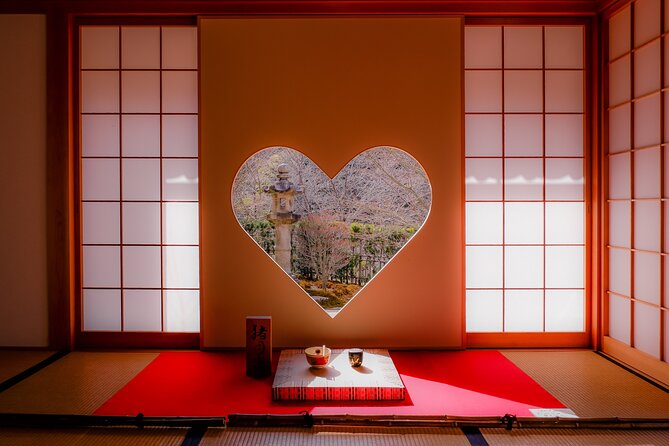
- A temple with a heart-shaped window: Shoju-in adds a small, photogenic religious site to the tea-country route.
Leaving Kyoto for Japan’s tea country
This tour begins at 1 p.m. and lasts about five and a half hours. That timing makes it easy to pair with a slower morning in Kyoto, though it also means you will return in the evening. Pickup is offered across a wide area, and the starting and ending points can be different, which is useful if you want to finish near a restaurant or another part of town.
The route works best as a private outing rather than a group bus trip. You spend much of the afternoon in the countryside, and a private vehicle lets the guide manage the pace around photo stops, road conditions, and site closures. Daiki is the guide most often named in the feedback, and his role appears to go beyond simply driving. Expect explanations about tea, temples, Japanese culture, monks, samurai, and the country’s ninja traditions.
For two to six people, the vehicle is an air-conditioned Nissan van. That is the practical choice for families or friends, especially if you are carrying bags or simply prefer space. Solo participants ride in a convertible Mini Cooper. That option is less about efficiency and more about enjoying the roads, views, and open air as you leave the city behind.
More Green Tea Tours in Japan
- Kyoto Matcha Green Tea Tour
★ 4.7 · 28 reviews - Sencha-do the Japanese Tea Ceremony Workshop in Kyoto
★ 5.0 · 21 reviews - Cycling Tour at Uji’s Matcha Green Tea Fields and Heritage
★ 5.0 · 10 reviews
Byodo-in and the Phoenix Hall
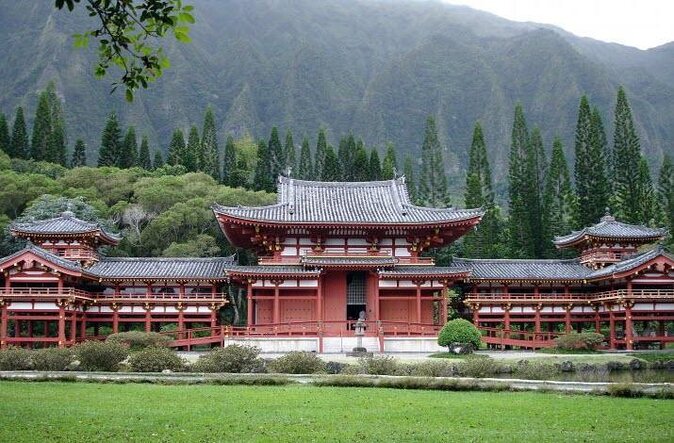
The first major stop is Byodo-in Temple, with about two hours set aside. This is the most famous site on the route and the place that gives the afternoon its historical weight.
The Phoenix Hall dates from nearly 1,000 years ago and represents the Buddhist Pure Land, or paradise, on earth. Its elegant structure sits across the water, creating the familiar image seen on Japan’s 10-yen coin. Even if you have seen photographs, the setting gives you a chance to study the building, its reflection, and the details of the grounds at a calm pace.
The two-hour allocation is useful because Byodo-in is not a quick roadside stop. You can take in the hall, walk around the temple grounds, and listen to the guide explain how religious life and tea culture developed over the centuries. The tour connects monks, samurai, and ninja traditions to the wider story of tea, which gives the later rural stops more meaning.
Admission is not included. The stated fee is ¥600 per person. Keep that small extra cost in mind when comparing the tour price, particularly if your group includes several people.
Byodo-in also sets a contrast for the rest of the afternoon. Here, you see one of Kyoto’s best-known monuments. Later, you visit working tea country and smaller religious sites. That change from celebrated architecture to rural scenery is one of the strongest parts of the plan.
A local cafe and the taste of Wazuka tea
Next comes Wazuka-cha Cafe, with about an hour for tea and matcha. Wazuka is known for supplying high-quality tea used in Uji matcha, and the cafe focuses on tea from local farmers rather than a generic city souvenir shop.
You can expect green tea, matcha drinks, and matcha desserts. The tea purchase is a real part of the stop, not an afterthought. Premium tea is offered at prices described as roughly one-half to one-third of what you may pay in central Kyoto, so this is a good point in the day to buy gifts or take home a better-quality tea for yourself.
Your own tea, coffee, or dessert purchase is not included. The admission line for the cafe is free, but you should budget separately for what you order. That is fair, since it lets you choose how much or how little to spend.
I like this stop because it gives you a direct taste of the region’s identity. You are not only looking at tea plants from the roadside. You are tasting the finished product and learning why Wazuka tea is treated as a particularly pure and prized form of Uji tea.
The hour should feel relaxed, though the exact choice of drinks and sweets will depend on what the cafe offers that day. If buying tea matters to you, tell the guide early so you do not feel rushed at the next stops.
Ishitera’s green rows reaching the sky

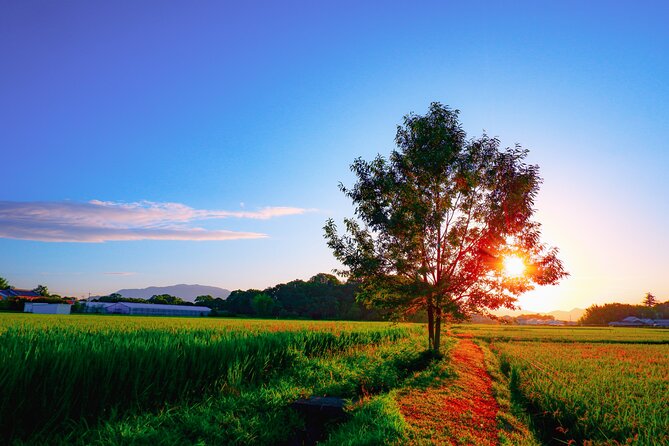
The Ishitera Tea Plantation is a short 30-minute stop, but it may be the visual highlight. The tea rows are planted in clean, repeating patterns that climb the hills. From the right viewpoint, the fields look like broad green waves rising toward the sky.
This is the part of the tour made for photographs. The tea fields are attractive throughout the year, not only during the freshest spring growth. The rows remain carefully shaped and scenic even in winter, when Kyoto’s more familiar garden colors may be subdued.
Thirty minutes is enough for a short walk and photographs, but not for an extended farm visit. The information provided does not promise a tea-picking activity or a meeting with a farmer, so you should think of Ishitera as a scenic stop rather than a hands-on agricultural tour.
The rural setting also gives you something Kyoto’s central temples cannot: open views and a sense of how much of the region is shaped by tea production. You may find the drive between stops almost as rewarding as the stops themselves, with mountain roads, tall Japanese red cedars, and countryside views along the way.
More Green Tea Tours in Kyoto:
- Matcha Green Tea Plantation and Matcha Factory Visit
★ 5.0 · 6 reviews - Family Mitsui House Museum with green tea admission ticket
★ 4.0 · 5 reviews - Experience all of Japanese culture and Japanese food experience classes “origami, udon, Japanese food, green tea, calligraphy” in 4 hours
★ 5.0 · 105 reviews - Uji: Green Tea Tour with Byodoin and Koshoji Temple Visits
★ 4.8 · 72 reviews
Ujitawara, where tea culture took root
The next 30-minute stop is in Ujitawara-cho, one of Japan’s important tea-producing areas. The town is linked with the invention of Japanese green tea and matcha, making it more than a pretty backdrop.
The tour stops at a tea field where you can walk on the farm and take photographs. This is a useful distinction from Ishitera. At Ishitera, you mainly admire the planted hills from a viewpoint. In Ujitawara, you get closer to the field itself.
Because the stop is short, you should not expect a long lesson in farming or a full tea workshop. What you do get is a more direct sense of the plants, the rows, and the scale of the growing area. If you enjoy food and drink for their connection to place, this stop adds context to the cafe visit.
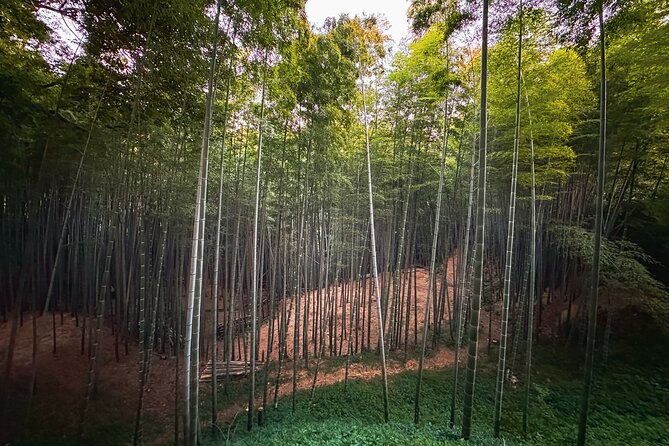
The countryside drive is part of the experience here. Previous outings have included roads through bamboo and cedar groves, and the private format allows the guide to point out rural sights that a fixed bus route would pass without comment. The van also matters on roads that are not well suited to a standard walking itinerary.
Shoju-in and the heart-shaped window
The last listed stop is Shoju-in, with about 90 minutes assigned. This temple sits in the southern Kyoto countryside, roughly an hour from central Kyoto by road. That drive is the main trade-off. It takes time, but the temple gives the afternoon a memorable final image.
Shoju-in is known for a heart-shaped window in its tea room. The window frames the view in a simple, highly recognizable way, and the temple’s setting adds another quiet stop after the busy visual impact of the tea fields.
Admission is not included and costs ¥1,000 per person. The extra fee is significant enough to include in your budget, especially when combined with Byodo-in and cafe spending. If your main goal is tea farming, you may decide the long drive and temple admission are less important. If you enjoy small temples and unusual architectural details, Shoju-in makes the route more varied.
The schedule allows 90 minutes here, but the full route can shift. Closures, road conditions, crowds, or seasonal sights may change the order or the stops. Special courses may also be offered during cherry blossom, plum blossom, or autumn color periods, though you should confirm what is running on your date.
How the private format changes the day
The private setup is the tour’s most useful feature. Only your group participates, so you are not waiting for a large coach to load or trying to hear a guide over a crowd. You can ask questions about tea, Buddhism, Japanese history, and local life as they come up.
Daiki receives repeated praise for his energy, patience, and ability to explain more than the basic facts. That matters during a route with several long drives. The road time becomes part of the conversation rather than empty transit. His willingness to help with photographs is also useful at the tea fields and the heart-shaped window.
Past outings with Daiki have sometimes included bonus shrines or a restaurant drop-off near the end. Those additions are not guaranteed, so do not book this tour expecting an extra meal or an extended eight-hour adventure. They do show that the private format can allow some personal touches when time and routing permit.
The vehicle choice is another plus. A van handles groups of up to six, while a solo guest gets the Mini Cooper convertible. Fuel and highway fees are included, so the listed price does not leave you guessing about major transport costs.
Is $250.38 a fair group price?
The price is $250.38 per group, for up to six people. That makes the value much stronger for a full group than for one person. Split six ways, the base cost is modest for a private vehicle, a five-and-a-half-hour route, pickup, drop-off, and a guide covering several places outside Kyoto.
For two people, it is still a reasonable choice if you value convenience and access to rural sites. Public transport can reach parts of Uji, but this route includes tea fields, Ujitawara, Ishitera, and Shoju-in, all in one afternoon. The cost buys time and direct transport as much as it buys sightseeing.
Solo guests pay the full group price, so the value is harder to judge. The convertible Mini Cooper adds character, but a solo booking is expensive compared with a shared excursion. I would choose it alone only if the private format, the countryside drive, and the tea focus are central to your Kyoto plans.
Add ¥600 for Byodo-in, ¥1,000 for Shoju-in, and money for drinks, sweets, and tea purchases. The tour includes fuel and highway fees, but not these personal expenses.
Who should book this experience?
I would recommend it to you if you have already seen Kyoto’s central temples and want a quieter half-day beyond the usual route. It suits people who care about Japanese tea, food traditions, photography, small temples, and rural scenery.
Families and small groups will get the best financial value. The private van is also helpful if someone in your group dislikes complicated transfers or if you want to finish at a different location from where you started.
Solo guests should think harder about the price, but the Mini Cooper option gives the outing a distinct feel. You will also gain access to places that are difficult to combine independently in one afternoon.
This is not the right choice if you want a long tea-farm workshop, a slow walking tour, or a fully predictable schedule. The day includes substantial driving, and the five-and-a-half-hour window leaves limited time at each rural stop. Short walks and stairs are part of the outing, though most travelers can participate and service animals are allowed.
FAQ
How long is the tour?
The experience lasts approximately five hours and 30 minutes.
What time does the tour start?
The listed start time is 1 p.m.
Is pickup available?
Yes. Pickup and drop-off are offered, and different start and end points can be arranged.
What vehicle is used?
Groups of two to six people ride in an air-conditioned Nissan van. A solo guest rides in a Mini Cooper convertible.
Are fuel and highway fees included?
Yes. Fuel and highway fees are included in the tour price.
Are temple admission fees included?
No. Byodo-in admission is ¥600 per person, and Shoju-in admission is ¥1,000 per person.
Is tea or coffee included?
No. Your own coffee, tea, matcha, desserts, and other cafe purchases cost extra.
Can the itinerary change?
Yes. The route may change because of closures, road conditions, crowd levels, or seasonal conditions. Special courses may be offered during cherry blossom, plum blossom, and autumn color periods.
Should you book this tea-country tour?
Book it if you want Kyoto beyond the polished city center. The strongest reasons are the private transport, Daiki’s personal guiding, the tea fields at Ishitera and Ujitawara, and the chance to connect a famous temple with the countryside that produces Japan’s tea.
I would choose it for a small group, especially one with a shared interest in matcha, photography, and local history. I would be more cautious as a solo guest because the price is per group. Also allow for the two temple fees and your cafe purchases.
If you accept the driving time and want a broad, varied afternoon, this is a smart way to see Kyoto’s tea country without arranging a car yourself.
More Tea Plantation Tours in Kyoto
- From Taipei: Thousand Island Lake and Pinglin Tea Plantation
★ 4.7 · 519 reviews - Active Volcano, Rice Field, Hot Spring, Fruit market, Tea Plantation with Lunch
★ 5.0 · 513 reviews - Furnas: Tea Plantations, Lake and Volcano Guided Tour
★ 4.8 · 511 reviews - São Miguel: Furnas Volcano & Tea Plantation Tour with Lunch
★ 4.9 · 375 reviews
Newly steeped around Kyoto
- Whisk Your Own Matcha: A Zen Matcha Experience at Temple★ 3.6 · 7 reviews
- Kyoto: Authentic Tea Ceremony in a Small Group★ 5.0 · 7 reviews
- Tea ceremony at Kyoto’s Zen Temple Teahouse★ 5.0 · 2 reviews
- Uji Walking Tour – Byodo-in temple and Tea Ceremony from Kyoto★ 3.5 · 3 reviews
- Tea Ceremony Experience in Traditional Kyoto Townhouse★ 5.0 · 19 reviews
- Tea Ceremony in 150 Years Old Townhouse with Tables and Chairs★ 5.0 · 22 reviews
- Sencha-do the Japanese Tea Ceremony Workshop in Kyoto★ 5.0 · 21 reviews
- Silent Beauty of Kyoto Zen Walk and Tea Experience★ 5.0 · 2 reviews
Green Tea Tours, compared.
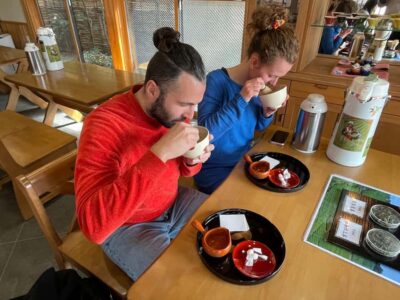
Uji: Green Tea Tour with Byodoin and Koshoji Temple Visits
Read our review →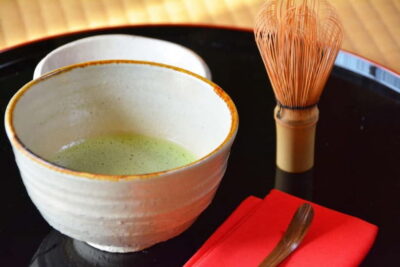
Osaka; Japanese Tea ceremony experience, Macha and Sencha
Read our review →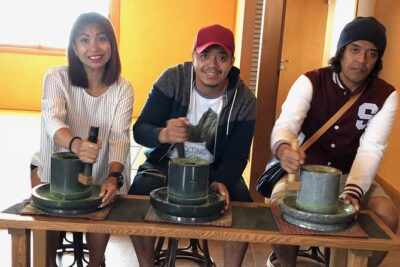
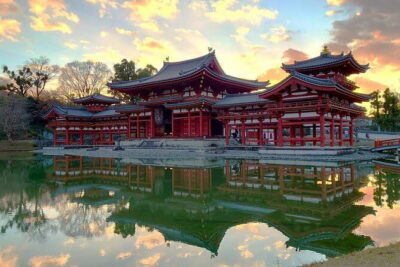
Slow Cycling Tour at Uji’s Matcha Green Tea Fields and Heritage
Read our review →
Sencha-do the Japanese Tea Ceremony Workshop in Kyoto
Read our review →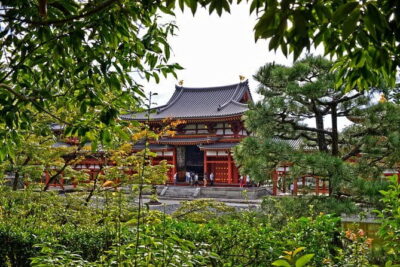
Uji Tea Ceremony and UNESCO Heritage Walking Tour
Read our review →
Authentic Japanese tea tasting: sencha, matcha and gyokuro
Read our review →Browse the lists this tea experience appears in