
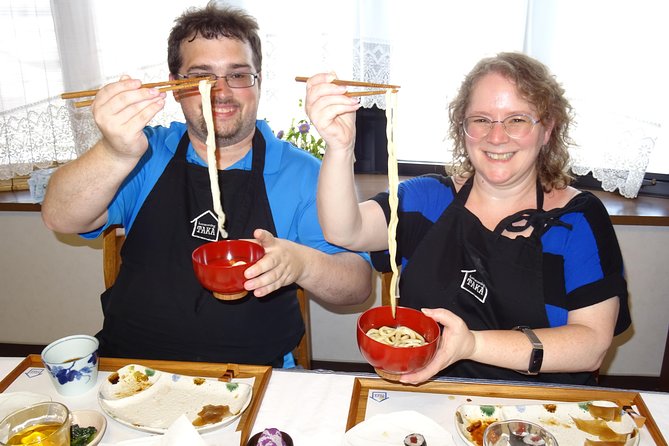
Review · TOKYO
Experience all of Japanese culture and Japanese food experience classes “origami, udon, Japanese food, green tea, calligraphy” in 4 hours
The unusual heart of this Tokyo experience is not a famous sight. It is an invitation into Taka and Keiko’s home, where you fold paper, make noodles, prepare lunch, drink matcha, and talk across cultures. The four-hour schedule has plenty of activity, but the real point is the easy time around the table.
I especially like the hands-on udon lesson and the thoughtful ending, when Keiko writes your name in calligraphy on colored paper. I also like that beer, sake, shochu, and soft drinks are included. The main consideration is simple: this is a personal home visit, not a fast-moving sightseeing tour, so you need to enjoy conversation and a relaxed pace.
Key points at a glance
- Make udon from the beginning: You work with the ingredients and even step on the dough as part of the process.
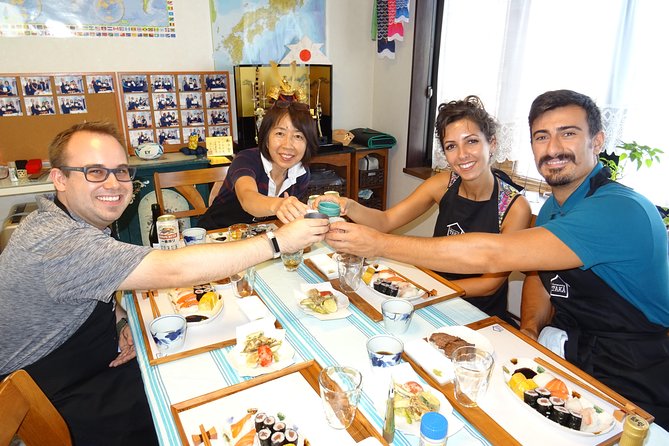
- A full Japanese food session: Sushi and gyoza form the main lunch, with Japanese small plates and, according to the day’s plan, tempura.
- Meet Taka and Keiko at home: The experience feels more like a cultural exchange than a standard cooking class.
- Finish with matcha and calligraphy: You prepare green tea, taste Japanese sweets, and take home your name written in Japanese calligraphy.
- Good for families and mixed ages: Children as young as seven have taken part, and the activities are varied enough to keep younger visitors involved.
- Vegetarian and vegan options are available: Different ingredients can be used for all dishes when arranged for the meal.
A Tokyo home visit near JR Omori Station
Your morning begins at 10:30 am at the central exit of JR Omori Station. Look for someone carrying a bag with the homecoming TAKA logo. From the station, it is about an eight-minute walk to the house, passing a shrine and quiet residential streets along the way.
That short walk matters. You leave behind the big-city feel of central Tokyo and get a glimpse of an ordinary neighborhood in Ota City. There is no major monument on this route, and that is part of the appeal. The experience is about daily life, food, and meeting people rather than collecting another famous photo.
Taka and Keiko host the activity together. Taka handles much of the welcome and instruction, while Keiko prepares food and writes the calligraphy souvenir. Their warm manner is a major part of the experience, so I would choose this outing when you want conversation as much as cooking.
The activity is private, meaning only your group takes part. That makes the setting more comfortable for families, couples, or a small group of friends. It also means the atmosphere may depend on your own group. If everyone wants to ask questions and take part, the four hours can feel wonderfully full. If you prefer to stay quiet and simply watch, this may feel more social than expected.
More Green Tea Tours in Japan
- Authentic Japanese tea tasting: sencha, matcha and gyokuro
★ 5.0 · 12 reviews - Authentic Japanese tea tasting session: sencha, matcha, gyokuro
★ 5.0 · 11 reviews - Ginza Tokyo: Easy Matcha (Green Tea) Experience
★ 5.0 · 7 reviews
Folding an origami crane before lunch
The first activity is origami. You learn to fold a paper crane, a familiar Japanese symbol that gives you an easy start before the cooking begins.
Origami may sound simple, but it sets the tone well. You sit down, work with your hands, and receive patient guidance. It is also a good activity for different ages. Younger children can take pride in finishing a figure, while adults often appreciate the quiet concentration.
Do not expect a long art lesson with a wide range of models. The focus is one crane and the cultural meaning behind the craft. Still, it is a useful opening because nobody needs cooking skills, Japanese language ability, or prior experience.
I would keep your finished crane. It is a small reminder of the day, even though the official take-home souvenir is the calligraphy piece at the end.
Making udon by stepping on the dough
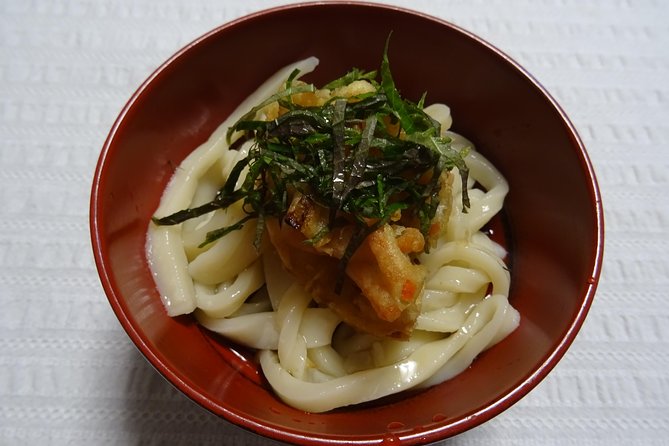
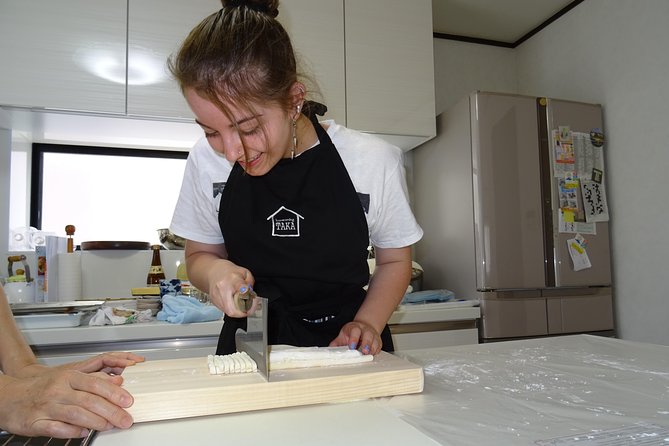
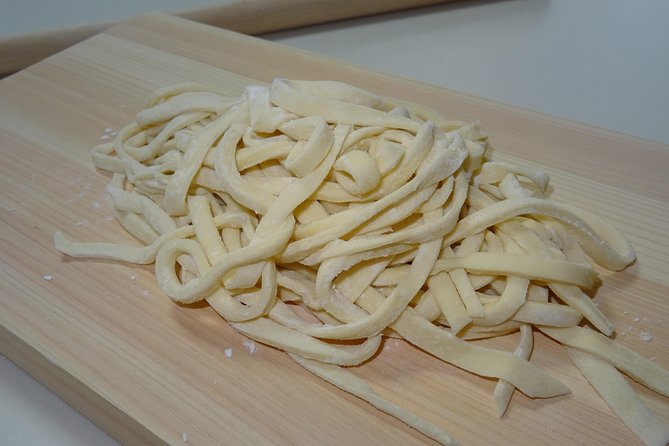
The udon session is one of the most memorable parts of the morning. You start with the ingredients and follow the dough through its preparation, rather than simply receiving noodles that someone else has made.
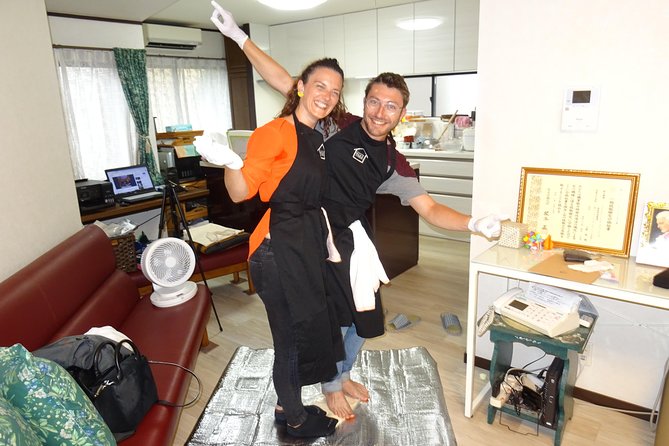
The playful detail is that you step on the material. This helps work the dough and turns a basic cooking task into something children and adults can enjoy together. It also makes the lesson more physical than a typical demonstration. You are not just watching a host stir a bowl. You are helping transform simple ingredients into lunch.
The class is about the process as much as the finished noodles. You see how a familiar Japanese food begins, then enjoy the result later in the meal. If you hope to recreate the dish at home, pay attention to the texture and method, and ask questions while the dough is being prepared.
One practical point: the exact level of instruction may depend on the group and the flow of the day. Four hours sounds generous, but the schedule includes several separate activities. You should expect an approachable introduction rather than a professional culinary course with detailed written training.
Preparing sushi, gyoza, and Japanese side dishes
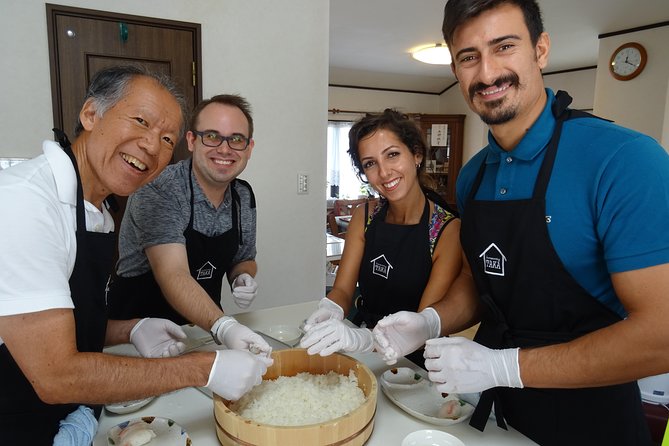
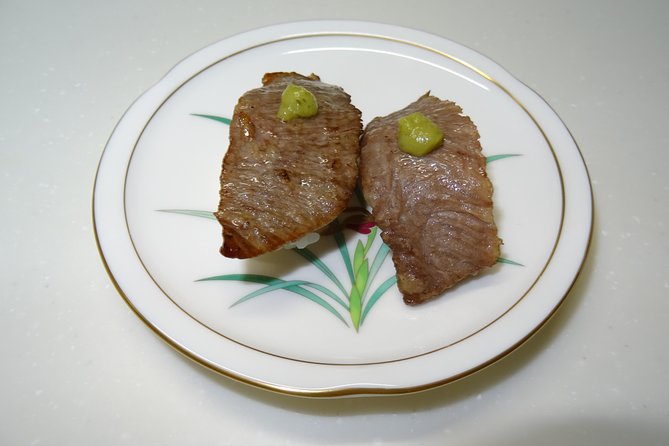
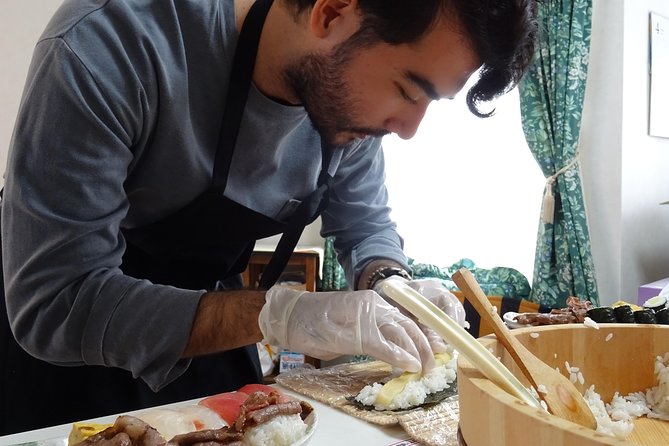
Lunch is the central event. You make sushi and gyoza together, with Japanese small plates prepared by Keiko. The supplied program also includes tempura as part of the cooking experience, so the meal covers several familiar types of Japanese food rather than focusing on one recipe.
This variety gives the class good value. You are not paying only for a bowl of noodles or a single sushi lesson. You take part in several preparations, then sit down to eat what you have made. That combination of instruction and meal makes the experience easy to understand for first-time visitors who want a practical introduction to Japanese food.
Sushi preparation can be especially useful for families because it is visual and hands-on. Gyoza offers a different skill, with folding and shaping involved. Tempura adds another cooking method. Together, the dishes show that Japanese food is not one narrow style.
The meal is made with ingredients from Japan, and drinks are included. Beer, sake, shochu, and soft drinks are available at no additional charge. That is a real advantage at a price of $92.50 per person, particularly if adults plan to enjoy sake or beer with lunch.
I would not treat the menu as fixed in the same way as a restaurant menu. The description names sushi, gyoza, and tempura, but the small plates and exact food choices may vary. If you have allergies or strict dietary needs, contact the hosts before booking rather than relying on a general request at the door.
Vegetarians and vegans can take part in the full meal using different ingredients. That is more useful than a token side dish, since the food activities are adjusted rather than removed. Still, you should state your requirements ahead of time so the hosts can prepare properly.
More Tea and Calligraphy Workshops in Japan
- Osaka: Tea Ceremony, Calligraphy, and Kimono Experience
★ 4.9 · 130 reviews - An Amazing set of Cultural experience: Kimono, Tea Ceremony and Calligraphy
★ 5.0 · 69 reviews - Osaka: Private Tea Ceremony and Calligraphy Experience
★ 5.0 · 50 reviews - Cultural Activities :Kimono, tea ceremony, Calligraphy and Amulet
★ 5.0 · 44 reviews
A long lunch with room for conversation
Once the cooking is finished, you sit down for a relaxed lunch. This is where the experience differs most from a standard cooking class. The meal is not simply the final five minutes after a lesson. Conversation and time at the table are part of the program.
Taka and Keiko aim to welcome you as part of their home. That can lead to talk about Japanese customs, family life, the local area, and your own home country. Several families have found the setting especially useful because children can ask questions and take part instead of being expected to sit still through a lecture.
The hosts also place importance on keeping in touch. Their replies to visitors often refer to future meetings, shared recipes, and even cooking homework. That tells you something about the tone: the relationship is intended to continue beyond the four-hour visit.
This warmth is the strongest feature, but it is also the reason to choose carefully. If you want a private meal with polished restaurant service, this will feel different. The setting is a home, and the pleasure comes from being welcomed into it. You may spend as much time talking as you do learning formal technique.
The activity has earned a perfect five-star rating from 105 ratings, and every listed recommendation is positive. I would read that less as a promise that every person will react identically and more as a clear signal about its main strength: personal hosting is not an extra here. It is the product.
Matcha, Japanese sweets, and a quiet finish
After lunch, you make matcha together and taste it with local Japanese sweets. This is a calm change of pace after the food preparation and the social energy of lunch.
The matcha portion gives you a chance to connect the meal with a more formal side of Japanese culture. You are not simply ordering green tea in a café. You help prepare it and then taste it in the company of your hosts.
The description does not promise a full tea ceremony, so I would set your expectations accordingly. Think of this as a hands-on introduction to matcha rather than an extended traditional ceremony with elaborate rules.
The sweets provide a useful contrast to the savory dishes. They also make this a pleasant section for people who are curious about Japanese flavors but do not want every part of the day to involve cooking.
Your name in Japanese calligraphy
The final activity is calligraphy. Keiko writes your name on colored paper, which you take home as a souvenir.
I like this better than a generic branded gift. The paper is connected to your visit, and your name makes it personal. It is also light and easy to pack, unlike many food or craft souvenirs.
You should not expect to produce a finished calligraphy scroll yourself. The souvenir is prepared by Keiko, although the activity gives you a chance to see this traditional writing style up close. It is a thoughtful closing gesture after a day built around personal contact.
The send-off is also part of the experience. Taka and Keiko walk you back to JR Omori Station, ending where the morning began. Their stated hope is that you will return to their home in the future, which fits the family-style approach of the whole visit.
Is $92.50 a fair price?
At $92.50 per person, this is not the cheapest way to eat lunch in Tokyo. You could buy sushi, udon, sweets, and drinks for less if all you wanted was food.
The value comes from what surrounds the meal. You receive roughly four hours of hosted activities, lunch, alcoholic and nonalcoholic drinks, an apron for the cooking, origami, matcha, Japanese sweets, and the calligraphy souvenir. You also get instruction and a private setting rather than a restaurant table.
For a family, the price can make sense because the day combines several activities that might otherwise require separate admission fees or bookings. For a solo visitor, the value depends more on your interest in conversation and personal exchange. If you want a strong connection with local hosts, the cost is easier to justify. If you want a technical cooking lesson only, you may find a shorter class more suitable.
The activity is often reserved about 107 days ahead. That suggests you should plan early, especially if you need a specific date or are visiting during a busy season. Free cancellation is available up to 24 hours before the 10:30 am start time. Changes or cancellations inside that window are not accepted for a refund.
Who will enjoy this experience most?
I would recommend it most strongly to:
- Families with children who enjoy making things with their hands
- First-time visitors looking for food and culture in the same activity
- Couples who prefer a personal home visit to a large group class
- Solo visitors who are comfortable talking with hosts and learning through conversation
- People who want to understand Japanese food preparation, not just eat it
- Vegetarians and vegans who arrange suitable ingredients in advance
The activity suits children well. One family brought boys aged seven and eight, and the schedule gave them several ways to stay involved. Teenagers can also enjoy the food preparation, calligraphy, and chance to ask questions.
I would hesitate to recommend it to someone who dislikes alcohol being part of a social meal, though soft drinks are included. I would also think twice if you want a tightly timed tour with constant sightseeing. This is one home, one neighborhood, and one long shared meal.
Practical details before you book
Wear clothing that is comfortable for cooking. An apron is included, but the activities involve food preparation and hands-on work.
Arrive at the central exit of JR Omori Station before 10:30 am. The meeting point is at 1 Chome-6 Omorikita, Ota City, Tokyo 143-0016. You will walk about eight minutes to the home, and the activity returns to the same meeting point after Taka and Keiko escort you back.
The experience is near public transportation and uses a mobile ticket. Transfer service is not included, so you need to make your own way to Omori Station.
Because this is a private activity, only your group participates. That is helpful if you want to ask many questions or keep the pace comfortable for children. Confirmation is provided at booking.
Should you book homecoming TAKA?
Book this if you want people and participation, not just sightseeing. The best parts are the udon dough under your feet, the shared preparation of sushi and gyoza, the matcha after lunch, and the personal calligraphy souvenir. But the lasting memory is likely to be Taka and Keiko themselves, welcoming you into their home and treating the meal as a chance to make friends.
At $92.50, it is a solid choice for families and curious food lovers who value four relaxed hours of contact with local hosts. Skip it if you want a professional kitchen, a fixed restaurant menu, or a quick cultural sampler. For everyone else, reserve early and arrive ready to fold, knead, cook, eat, and talk.
FAQ
Where does the experience begin?
It begins at the central exit of JR Omori Station at 10:30 am. Look for a person carrying a bag with the homecoming TAKA logo.
How far is the host’s home from the station?
The home is about an eight-minute walk from JR Omori Station. The route passes a shrine and quiet residential streets.
How long does the activity last?
The experience lasts approximately four hours and ends back at the meeting point near JR Omori Station.
What food will I prepare?
The program includes making udon from scratch, preparing sushi and gyoza, and cooking Japanese food such as tempura. Keiko also serves Japanese small plates with lunch.
Are drinks included?
Yes. Sake, beer, shochu, and soft drinks are included with the experience.
Can vegetarians and vegans take part?
Yes. Vegetarians and vegans can enjoy the dishes with different ingredients.
Is this a private activity?
Yes. Only your group participates in this private activity.
What souvenir do I take home?
Keiko writes your name in Japanese calligraphy on colored paper, which you can take home. Origami is also part of the experience, and an apron is provided.
More Green Tea Tours in Tokyo
- Uji: Green Tea Tour with Byodoin and Koshoji Temple Visits
★ 4.8 · 72 reviews - Scenic Green Tea Fields of Hidden Kyoto & Local Tea Exp (Private)
★ 5.0 · 32 reviews - Osaka; Japanese Tea ceremony experience, Macha and Sencha
★ 4.9 · 29 reviews - Kyoto Matcha Green Tea Tour
★ 4.7 · 28 reviews
More Tea and Calligraphy Workshops in Tokyo
- Beijing Culture: Tea Ceremony, Heritage Instrument & Calligraphy
★ 5.0 · 57 reviews - Samurai dress-up and shows, plus Tea Ceremony & Calligraphy
★ 5.0 · 27 reviews - Premium Kimono Dressing, Tea Ceremony, Calligraphy, Samurai show
★ 5.0 · 18 reviews - Experience Japanese calligraphy & tea ceremony at a traditional house in Nagoya
★ 5.0 · 16 reviews
Newly steeped around Tokyo
- Yokohama : Tea Ceremony with Sweets and Souvenir★ 5.0 · 5 reviews
- Walking Tour: Yanaka,Nezu& Sendagi: Tea Ceremony & Old Tokyo★ 5.0 · 3 reviews
- Private Mochi・Matcha sweets Making Class Near Shibuya Area★ 5.0 · 22 reviews
- 2 Hours Mochi &Nerikiri Making & Matcha Class in Bunkyo★ 5.0 · 21 reviews
- Private Kimono and tea ceremony at local home near Tokyo Disney★ 5.0 · 6 reviews
- Kimono and Tea Ceremony in Asakusa Private Food Tour With Guide★ 5.0 · 4 reviews
- Giant Sushi Cooking Class: Make a 1.5m Sushi Roll in Tokyo★ 5.0 · 9 reviews
- Tokyo: Tea Ceremony & Japanese Sweets Making★ 5.0 · 10 reviews
Tea & Calligraphy Workshops, compared.
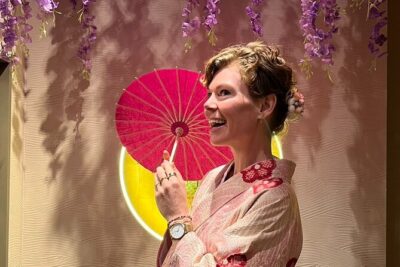
Osaka: Tea Ceremony, Calligraphy, and Kimono Experience
Read our review →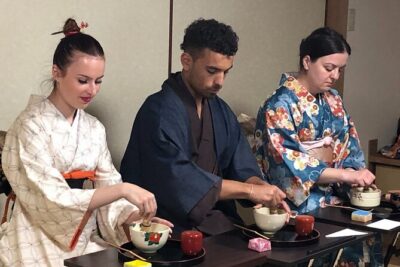
An Amazing set of Cultural experience: Kimono, Tea Ceremony and Calligraphy
Read our review →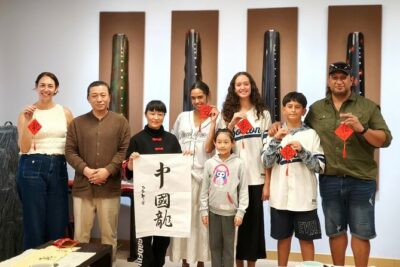
Beijing Culture: Tea Ceremony, Heritage Instrument & Calligraphy
Read our review →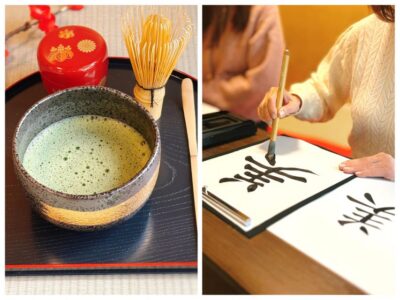
Osaka: Private Tea Ceremony and Calligraphy Experience
Read our review →
Cultural Activities :Kimono, tea ceremony, Calligraphy and Amulet
Read our review →
Samurai dress-up and shows, plus Tea Ceremony & Calligraphy
Read our review →
Premium Kimono Dressing, Tea Ceremony, Calligraphy, Samurai show
Read our review →
Experience Japanese calligraphy & tea ceremony at a traditional house in Nagoya
Read our review →Browse the lists this tea experience appears in