
Review · THAILAND
From Chiang Rai: 3 Temples, Golden Triangle Tour, Tea Plantation
The most striking thing about this Chiang Rai day trip is its sheer range. In about 10 hours, you move from the dazzling White Temple to the dark, unusual art of Baan Dam, then on to the Mekong meeting point of Thailand, Myanmar, and Laos. It is a fast tour, but it gives you a useful first look at the region.
I like the small group limit of 12 and the fact that pickup and drop-off in Chiang Rai are included. I also like the mix of temples, museums, hilltribe culture, tea country, and the Golden Triangle. The trade-off is simple: this is a long day with one hour allotted to each major stop, plus mountain driving time. You will see a lot, but you will not linger everywhere.
Key points at a glance
- Seven very different stops: White Temple, Hall of Opium, Longneck Karen village, Golden Triangle, Blue Temple, Black House, and a tea plantation.
- A shared tour with up to 12 people: Small enough to feel manageable, but not private.
- Strong guide service: Ping, Fido, M, and Yolk are named guides praised for friendly, helpful explanations and careful attention.
- Good-value inclusions: Hotel pickup, air-conditioned transport, buffet lunch, water, insurance, guide, and standard entry fees are included.
- One extra cost to note: The optional boat ride costs THB300 per person.
- A full northern Thailand sampler: You cover temples, art, opium history, border geography, local culture, and tea production in one day.
Why this Chiang Rai day works for first-time visitors
Chiang Rai is spread out, and its best-known sights sit in different directions. Reaching the White Temple, Golden Triangle, tea plantation, and other stops on your own would take planning, transport, and a good sense of distances. This tour puts them together in one moving loop from Chiang Rai.
You start around 8:00 am with hotel pickup. The vehicle is air-conditioned, and the group can include as many as 12 people. That matters on a long day. You get the ease of a shared minibus without the size of a full coach, though pickup times may take a little patience if several hotels are involved.
The price is $82.61 per person. That is not a bargain-basement day out, but it covers a lot: transport, an English-speaking guide, lunch, drinking water, insurance, and standard tickets. Since the tour covers roughly 10 hours and several distant sights, I consider the price fair for anyone who values convenience and wants one organized day rather than several separate trips.
More Tea Plantation Tours in the world:
- From Taipei: Thousand Island Lake and Pinglin Tea Plantation
★ 4.7 · 519 reviews - Active Volcano, Rice Field, Hot Spring, Fruit market, Tea Plantation with Lunch
★ 5.0 · 513 reviews - Furnas: Tea Plantations, Lake and Volcano Guided Tour
★ 4.8 · 511 reviews
White Temple, one hour of white glass and bold ideas
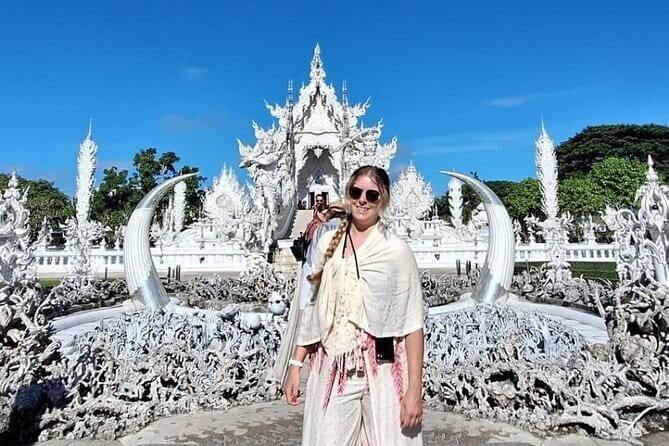
Wat Rong Khun, usually called the White Temple, is the visual opener and one of the strongest stops. Its bright white surfaces and reflective details make it unlike the more traditional temples you may have seen elsewhere in Thailand.
You have about one hour here, enough to walk around, take photographs, and see the main details without feeling rushed. This is a popular sight, so the schedule helps you enjoy it while keeping the day moving.
The temple is also a good reminder that northern Thai religious art is not limited to old buildings and familiar golden roofs. The White Temple has a modern, highly personal style. If you have already seen several temples in Bangkok or southern Thailand, this one still offers something different.
The Hall of Opium gives the border region context
The Hall of Opium Museum is near the Golden Triangle and takes about an hour. Its exhibitions use multimedia and display material to explain opium production, trade, and the effects of the opium trade in the region.
This stop adds substance to what could otherwise be a quick photo stop at the border. You are not just looking at a sign that marks three countries. You get a clearer sense of why this part of northern Southeast Asia mattered and how the drug trade affected communities.
An hour is a useful amount of time, especially for a museum with several sections. You can take in the main exhibits without spending half the day indoors. If museums are not your favorite part of a tour, this may feel like the slower stop, but it gives the Golden Triangle more meaning.
The Golden Triangle is best for the geography
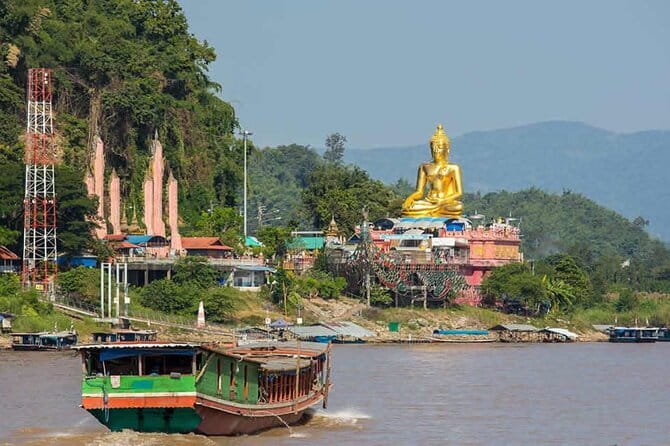
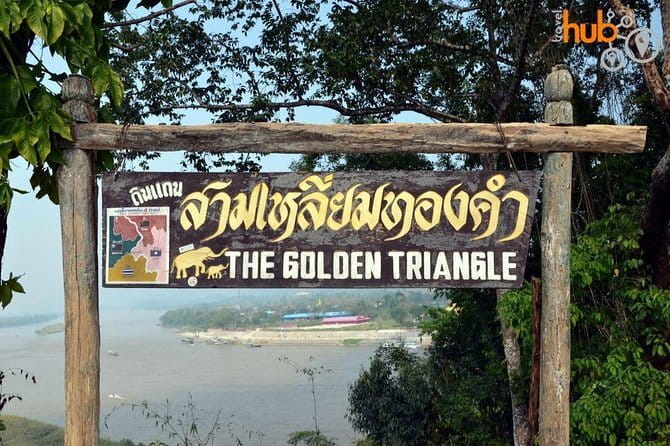
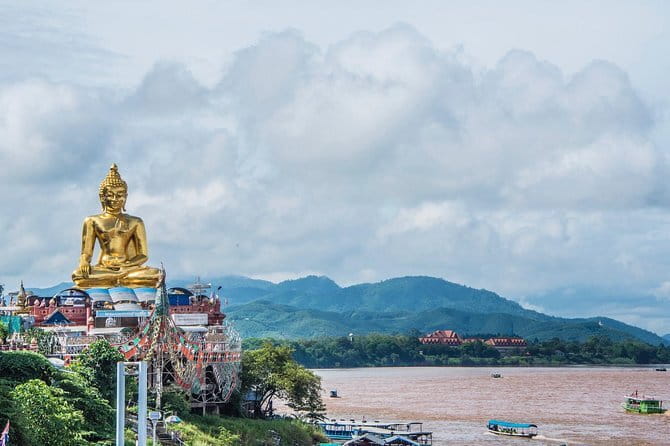
At Sop Ruak, the Golden Triangle brings Thailand, Myanmar, and Laos together around the Mekong region. The appeal is geographic and photographic. You get a clear sense of the border setting and a chance to look across the river toward neighboring countries.
The tour allows about one hour here. A boat ride is available for an additional THB300 per person, but it is not included in the tour price. Keep that extra amount in mind if you want more than the riverside viewpoint.
I like this stop because it breaks up the temples and indoor exhibits. It is also a practical way to visit a famous border area without arranging a separate transfer from Chiang Rai. The downside is that the Golden Triangle itself is a short visual experience. The Hall of Opium supplies the deeper context, while the riverside stop supplies the view.
More Tea Experiences around the world:
- Kyoto: Tea Ceremony in a Traditional Tea House in Kiyomizu
★ 4.9 · 3,519 reviews - London: Afternoon Tea Cruise on the River Thames
★ 4.4 · 3,274 reviews - Kyoto: Tea Ceremony Ju-An at Jotokuji Temple
★ 4.9 · 3,207 reviews - Afternoon Tea Bus Tour in Dublin
★ 5.0 · 2,791 reviews
The Longneck Karen village requires thoughtful expectations
The Longneck Karen village is included as a one-hour stop. The community is associated with the Padaung branch of the Karen people, whose background is linked in the tour information to migration from Yunnan and later movement through the region.
This stop can be interesting for visitors who want to learn about one of the area’s ethnic communities, but it is also the part of the day that deserves the most thought. A short scheduled visit cannot explain every aspect of Karen identity, migration, or daily life. Treat the stop as a brief introduction, listen carefully to the guide, and be respectful with photography and personal space.
The value here depends heavily on the guide. A good guide can give the visit context rather than leaving you with a quick walk-through and photographs. Guides named Ping, Fido, M, and Yolk have been praised for being attentive, friendly, and informative, so the quality of explanation may be one of the strongest reasons to choose this organized tour.
Blue Temple brings a different kind of beauty
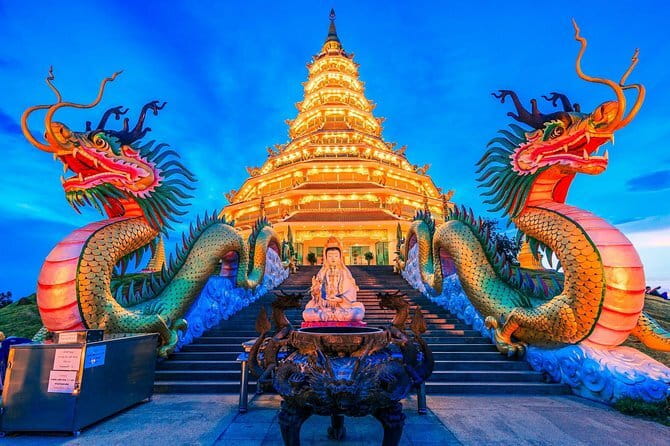
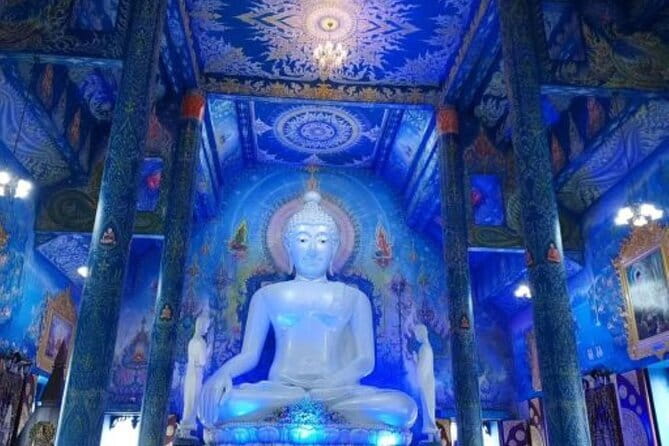
Wat Rong Suea Ten, or the Blue Temple, is located in the Rong Suea Ten community. It was restored by Phutta Kabkaew, also known as Sala Nok, a local Chiang Rai artist and a student of Chalermchai Kositpipat, who is associated with the White Temple.
You get about an hour here. The Blue Temple offers a strong contrast with Wat Rong Khun. Instead of white reflective surfaces, you see a much darker blue color scheme and a more dramatic decorative style.
This pairing is one of the best parts of the day. You can compare two modern northern Thai temple projects without needing a separate lecture on the subject. I would keep your camera ready, but leave enough time to look at the details rather than treating both temples as quick photo stops.
Baan Dam, the Black House, is the most unusual stop
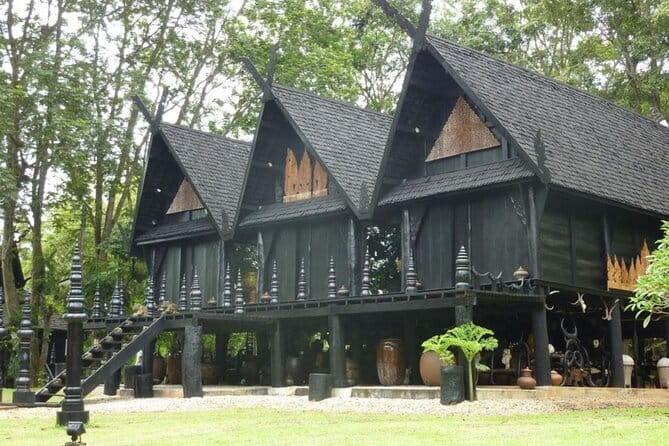
Baan Dam Museum, often called the Black House, is a collection of about 40 buildings, many made from dark teak wood, set among gardens. The buildings contain an art collection that feels very different from the religious spaces earlier in the day.
You have one hour to explore. This is not simply another temple with a new color. It is an art setting with an unusual, sometimes stark atmosphere. The dark timber buildings and distinctive objects make it one of the most memorable places on the route.
The entry fee is listed as not included, so check the current charge when booking or before entering. That small extra cost is worth factoring into your budget. Among the many stops, Baan Dam may be the one that surprises you most, especially if you thought the day would be mainly about temples.
Chui Fong Tea Plantation adds open space and a calmer finish
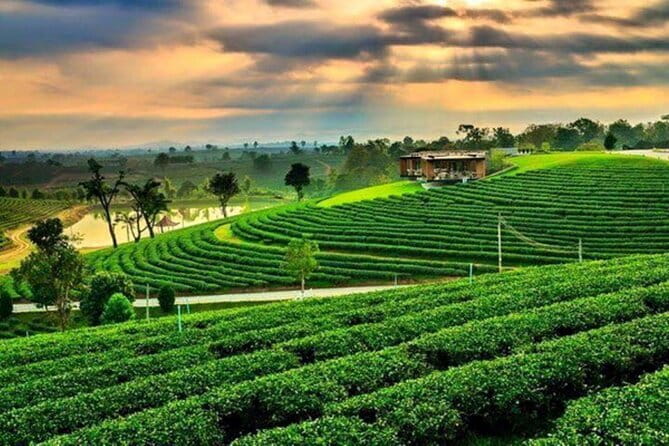
The tea plantation is Chui Fong Tea Plantation, one of northern Thailand’s popular scenic stops. The greenery and orderly rows of tea plants provide a welcome change after several cultural sites, museums, and border stops.
The plantation is especially attractive toward the end of the rainy season and at the beginning of winter. The tour gives you about an hour here, enough to enjoy the setting and take photographs without turning the stop into a long agricultural visit.
This is also where the schedule may feel most generous. The day has a lot of road time, and the tea plantation offers a slower visual break. You might find it less compelling if you want detailed information about tea production, since the tour description focuses more on the plantation visit than on a full tea-making lesson.
Lunch and transport make the long day easier
A buffet lunch is included, served at a designated stop during the day. The food is part of the practical value of the package. You do not need to spend time finding a restaurant while trying to stay with a tight schedule.
Drinking water is included as well. That is a small detail, but useful on a warm day with outdoor walking at the temples, village, Golden Triangle, and tea plantation. The air-conditioned vehicle gives you a place to cool down between stops.
The day is still demanding. The tour notes that the remaining duration includes going up and down the mountain, so not every minute is sightseeing. You should expect long stretches in the vehicle and a schedule built around fixed departure times.
Guide quality can shape the whole experience
The guides named in the information include Ping, Fido, M, and Yolk. Ping is described as organized, warm, and well informed, while Fido is praised for humor, energy, and practical help. Yolk is noted for being caring and positive, including making an extra effort to show part of Laos to the group. M is also described as a strong guide.
Those details matter because this tour crosses several subjects. You need more than directions to a temple entrance. You benefit from someone who can explain the difference between the White Temple and Blue Temple, set the Golden Triangle in context, and help you approach the Longneck Karen village with respect.
The English-speaking guide is included. One person who spoke little English received information through WhatsApp, but you should not assume that this service is guaranteed for every booking. If communication is important, confirm your language needs before departure.
Shared group or private trip?
This is a joint tour, not a private experience. The maximum group size is 12, and one recorded departure had nine people in the minibus. That is a comfortable middle ground for many people.
You will not control the timing as you would on a private trip. The upside is cost. A shared vehicle keeps the $82.61 price reasonable while still giving you hotel pickup, a guide, and a planned route.
I would choose this format if you are in Chiang Rai for a short stay and want to cover the main sights efficiently. I would choose a private tour instead if you want long visits at one or two sites, flexible meal timing, or more control over the village and museum stops.
Who should book this 10-hour Chiang Rai tour?
This is a good fit for first-time visitors, couples, solo visitors, and small groups who want a broad introduction to the area. It is especially useful if you have only one full day available for Chiang Rai’s outer sights.
It also suits people who like variety. In one day, you get religious art, contemporary art, regional history, border geography, local culture, and tea country. The day never settles into one theme for long.
You should think twice if you dislike minibus travel, fixed schedules, or full-day sightseeing. The tour is designed for coverage, not for slow travel. Most people can participate, but the long duration and walking at several stops still call for reasonable stamina.
Booking, cancellation, and the small extras
Pickup begins at about 8:00 am, with return to your Chiang Rai hotel after the final stops. Confirmation is provided at booking, and free cancellation is available up to 24 hours before the start time. Changes or cancellations inside that 24-hour window are not accepted for a refund.
The tour requires good weather. If poor weather causes cancellation, you are offered another date or a full refund. Tips and personal expenses are not included, and the optional boat ride costs THB300 per person.
Should you book it?
Book this tour if you want to see a large slice of Chiang Rai in one day and value having transport, lunch, tickets, and a guide handled for you. The White Temple, Blue Temple, Black House, and tea plantation give the day strong visual variety, while the Hall of Opium helps explain the Golden Triangle beyond the standard photo stop.
Skip it if you want a slow, private day or prefer to spend several hours at one temple. For everyone else, the combination of a small shared group, experienced guides such as Ping, Fido, M, and Yolk, and a wide range of stops makes this a practical first-day introduction to northern Thailand.
FAQ
Is this a private tour?
No. This is a shared tour with a maximum of 12 participants.
What time does the tour start?
Pickup starts at 8:00 am.
Does the tour start and finish in Chiang Rai?
Yes. Pickup is offered from your Chiang Rai hotel, and the tour returns to Chiang Rai.
Is lunch included?
Yes. A buffet lunch is included in the tour price.
Is the boat ride at the Golden Triangle included?
No. The optional boat ride costs THB300 per person.
Is the Black House admission included?
The Black House admission is listed as not included. Standard fees or tickets for the other included stops are covered.
What happens if bad weather cancels the tour?
You can choose another date or receive a full refund if the experience is canceled because of poor weather.
Newly steeped around the world
- York: Private Horse-Drawn Carriage Ride and Afternoon Tea★ 5.0 · 3 reviews
- Yokohama : Tea Ceremony with Sweets and Souvenir★ 5.0 · 5 reviews
- Washington, D.C.: Tea Around Town Bus Tour with Landmarks★ 3.4 · 7 reviews
- Whisk Your Own Matcha: A Zen Matcha Experience at Temple★ 3.6 · 7 reviews
- Yogyakarta: Prambanan Tour, Sukuh Temple & Tea Plantation★ 5.0 · 3 reviews
- Walking Tour: Yanaka,Nezu& Sendagi: Tea Ceremony & Old Tokyo★ 5.0 · 3 reviews
- Wadi Rum: 2-Hour Jeep Tour with Bedouin Tea★ 5.0 · 11 reviews
- Volcano, Hot Spring, Mud Bath & Tea plantation all included★ 5.0 · 5 reviews
Tea Plantation & Farm Tours, compared.
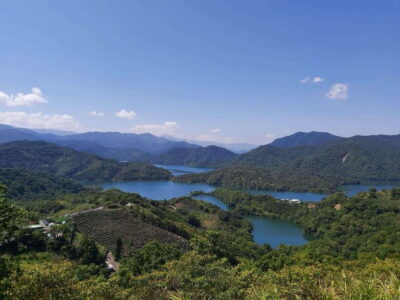
From Taipei: Thousand Island Lake and Pinglin Tea Plantation
Read our review →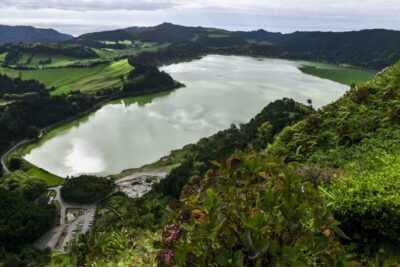
Furnas: Tea Plantations, Lake and Volcano Guided Tour
Read our review →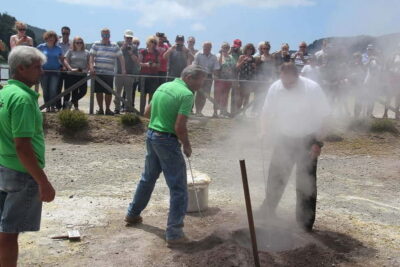
São Miguel: Furnas Volcano & Tea Plantation Tour with Lunch
Read our review →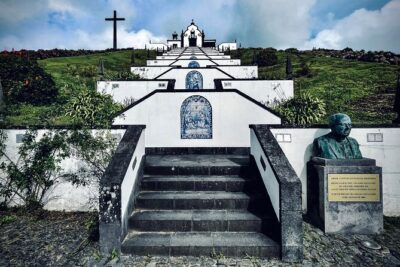
Furnas Volcano & Tea Plantation With Traditional Lunch, East Tour
Read our review →
Furnas: Volcano Wonders, Tea Plantation & Waterfall Tour
Read our review →
Adventure in the Furnas, with volcanoes, lagoons and tea plantations
Read our review →
Bandung: White Crater, Scenic Tea Plantations & Hot Spring
Read our review →Browse the lists this tea experience appears in