
Review · NAIROBI
Tea Farm Experience at Riara Tea Farm And Factory Tour
Riara Tea Farm gives you more than a cup of tea. You get a close look at how tea moves from nursery to factory, with hand-picked leaves, grading, packaging, and tasting all part of the day. The farm sits on fertile volcanic soil and uses rain-fed agriculture, so the visit also shows how farming can support both local jobs and careful water use.
I like the peaceful walk through tea rows, trees, and bird-filled paths, and I like the warm family welcome, including lunch made with ingredients from the garden. The main point to check is the day of your visit: the factory does not operate on Mondays, so you may see the equipment and receive an explanation without watching tea being processed.
Key points to know before you go
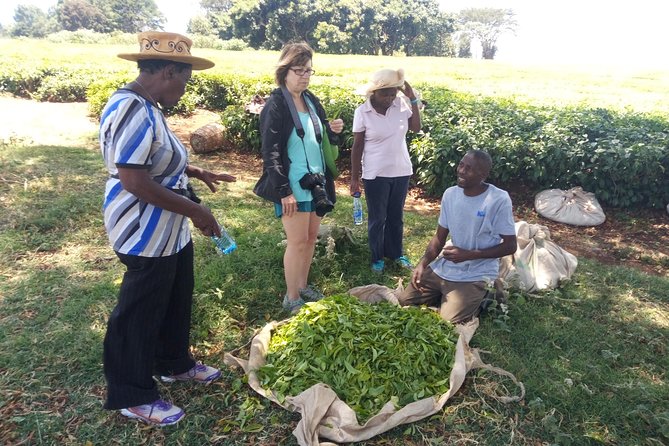
- Hand-picked tea leaves: The farm harvests by hand rather than machine, supporting employment in the local area.
- A working factory visit: You can learn how tea is processed, graded, and packaged, although Monday visits do not include live production.
- Purple tea tasting: The farm grows and serves different tea types, including Kenya’s distinctive purple tea.
- Rain-fed, low-input farming: No pesticides are sprayed on the tea plantation, and rainfall supplies the crop without drawing down underground water.
- Wide Central Kenya views: From the farm, you may see neighboring tea fields, Nairobi, the Ngong Hills, and the Yatta Plateau. On a clear day, Mount Kenya may appear.
- Lunch from the garden: The meal is included, with ingredients grown on the property when available.
A six-hour tea day from Nairobi to Limuru
This is a half-day outing with a full feel. Pickup is provided in Nairobi County, then you head toward Limuru, one of the best-known tea-growing areas near the capital. The drive matters here. You leave the city behind and reach broad farm country, where the scenery opens into rows of tea and distant hills.
The total experience lasts about six hours. Around three hours are spent at the Limuru stop for the farm visit, factory tour, tea, lunch, photographs, and guided activities. The rest of the time allows for the journey from Nairobi and back.
You receive hotel pickup and drop-off, a driver and guide, bottled water, lunch, tea or coffee, and all entrance fees. At $130 per person, this is not the cheapest way to see farmland near Nairobi, but the price makes more sense if you value private transport, a full meal, a guide, and access to both a working farm and factory in one day.
The exact group size is not provided, so I would ask when booking if the number of people matters to you. The tour is conducted in English.
More Tea Factory Tours in Nairobi:
- Tea Farm Experience at Riara Tea Farm And Factory Tour
★ 5.0 · 11 reviews - Kyoto: Tea Museum Tickets and Matcha Grinding Experience
★ 4.9 · 739 reviews - Uva Halpewatte Tea Factory Tour in Ella Sri Lanka
★ 5.0 · 653 reviews
Arriving at a farm owned by a Kenyan national hero
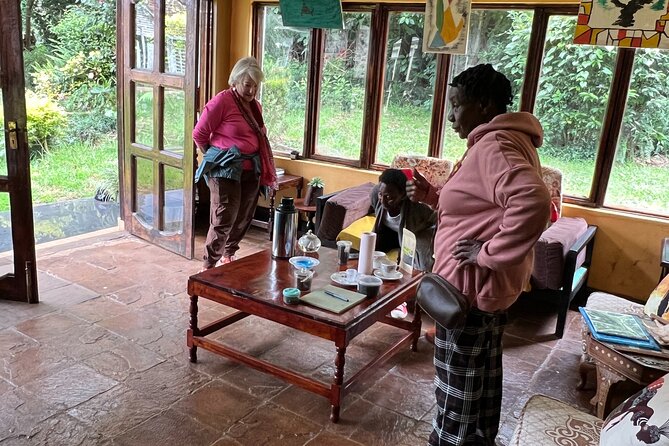
Riara Tea Farm has a personal side that many large agricultural attractions lack. The property is owned by one of Kenya’s national heroes, and the welcome comes with a sense of family pride rather than a polished theme-park routine.
The owner is described as waiting to welcome visitors on arrival. That detail helps set the tone. You are not simply pointed toward a field and left to wander. The visit connects the farm’s story, its people, and its work.
The setting is quiet. As you walk or hike around the property, you may hear birdsong and occasional monkey chatter. Trees cover about 30 percent of the farm, including indigenous species, so the experience is not just rows of tea under an open sky. The wooded sections give the walk shade and a change of pace.
Wear shoes you can walk in. The activity includes touring or hiking around the farm, and the ground may feel uneven in places. No special hiking ability is stated, so you should not expect a demanding trek, but comfortable footwear is still a wise choice.
Seeing how tea is grown by hand

The farm visit follows the crop from its early stage. You can learn about preparation in the nurseries, planting, growth, and harvesting. This makes the experience useful even if you know little about tea beyond the contents of your breakfast cup.
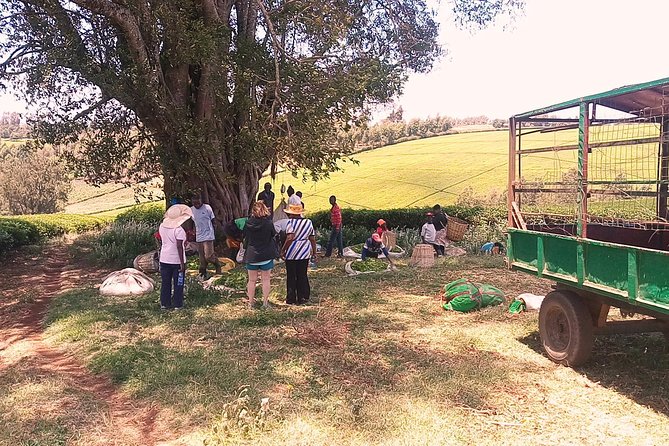
The leaves are hand-picked rather than harvested by machine. That choice takes more labor, but it also helps provide jobs. I find this one of the most worthwhile parts of the visit because it links the finished product to the people who produce it.
The farm also uses rain-fed agriculture. In practical terms, the tea is watered by rainfall rather than a system that draws heavily from underground supplies or disrupts surface water flow. The plantation is not sprayed with pesticides, according to the information provided. You can ask the guide how these methods affect crop care and harvest quality during your visit.
The soil is fertile volcanic earth, another reason the area is well suited to farming. You can see how the land, rainfall, labor, and processing factory all fit together. This is a better lesson than simply hearing that Kenya produces tea. You get a sense of the work behind the label.
Walking through tea rows, trees, and open views
The farm’s setting is one of its strongest features. From the tea fields, you can look across neighboring farms toward Nairobi, the Ngong Hills, and the Yatta Plateau. On a clear day, Mount Kenya may also be visible.
I would keep your expectations sensible. Mountain views depend on weather and visibility, and Mount Kenya is an occasional bonus rather than a guaranteed sight. The views toward the tea farms and Ngong Hills are a safer reason to bring your camera.
The morning light can be especially pleasant for photographs. The tea rows catch the sun, and the broad views give you a clear sense of Central Kenya’s farming country. You will also have time for photographs during the Limuru stop, so you do not need to rush every view.
The walk is not only about scenery. The trees and natural areas give the farm a calmer feel, while birds and monkeys add small signs of life. You may find the quiet more memorable than any single explanation about tea production.
More Tea Plantation Tours in Nairobi:
- Nairobi to Kiambethu Tea Farm Tour
★ 5.0 · 51 reviews - Private Day Trip to Kiambethu Tea Farm in Limuru from Nairobi
★ 5.0 · 31 reviews - Day Tour To Kiambethu Tea Farm in Limuru
★ 5.0 · 22 reviews - Nairobi: Tea Farm Day Trip with Lunch at kiambethu
★ 4.0 · 21 reviews
Inside the factory: processing, grading, and packing
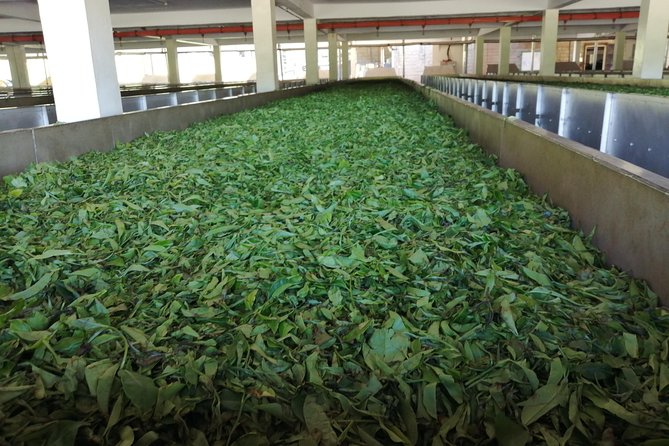
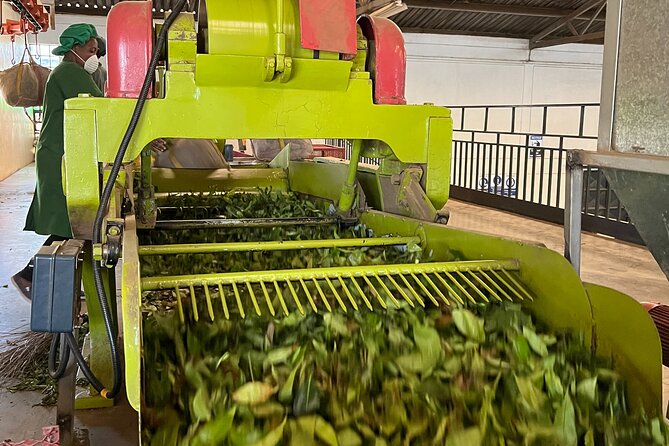
The factory visit explains the part of tea farming that is easy to miss. After the leaves are picked, they must be handled and prepared before they reach a packet or cup. At Riara, you can learn about the full chain, including processing, grading, and packaging.
When the factory is operating, this is the most hands-on part of the experience. You can see how the crop changes from fresh leaf into a product ready for sale. The factory visit also helps explain why tea quality is not decided only in the field. Timing, handling, grading, and packing all matter.
There is one important catch. The factory does not operate on Mondays. You can still receive an explanation from a factory worker, but no tea will be processed that day. If watching the machinery and production steps is central to your plans, avoid Monday or confirm the operating schedule before you pay.
That limitation should not ruin the visit, since the farm walk, tasting, lunch, and farming discussion remain available. Still, the factory is a major reason to choose this experience, so scheduling is worth taking seriously.
Tasting Kenyan tea and purple tea
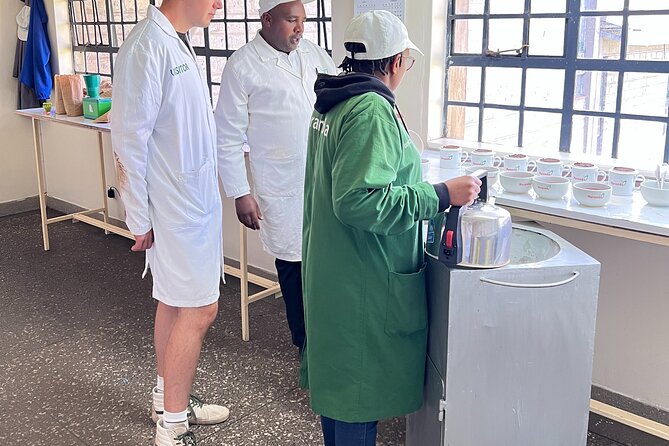
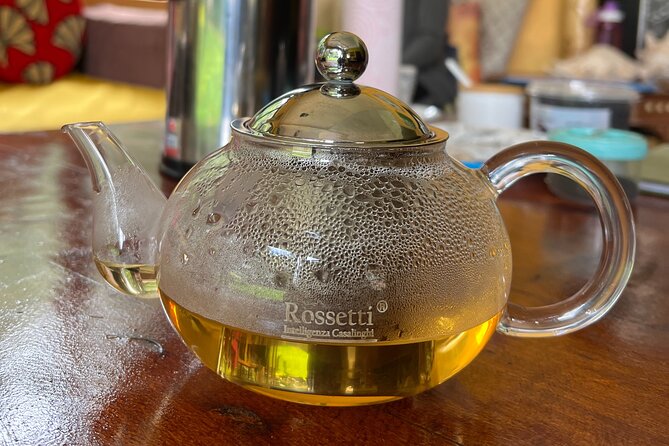
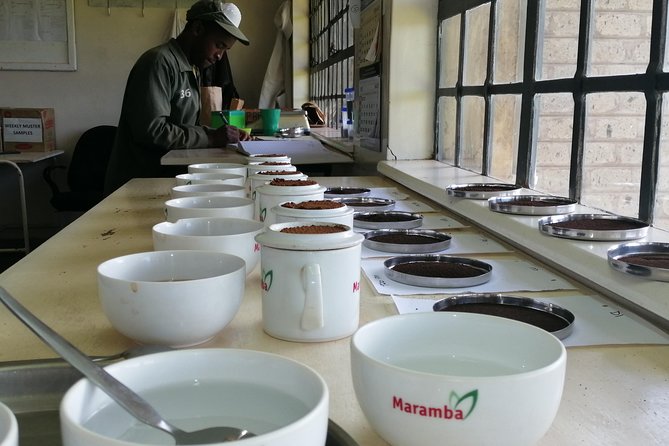
Tea is served during the visit, and the tasting gives you a chance to compare different blends and varieties. Kenyan tea is often associated with a strong, clear cup, but the farm also grows purple tea, an unusual variety that adds interest to the tasting.
Purple tea is a useful reminder that Kenyan tea is not one single product. You can ask about the differences between the varieties, how they are grown, and how the leaves are prepared. The supplied details do not give a full tasting menu, so I would not expect a formal multi-course tasting unless the farm confirms one.
The tea served at the farm is part of the experience, not just a drink included with lunch. You see the plants, learn about the factory, then taste what the work produces. That sequence gives the cup more meaning.
Tea products are not included in the price. If you want to take home a blend or other product, you pay separately at the farm.
A garden lunch in the middle of the visit
Lunch is included, which makes the $130 price easier to assess. The meal uses ingredients from the farm’s garden, adding another link between the property and what appears on your plate.
A meal made with produce from the same property gives the visit a local, grounded quality. It is not simply a restaurant stop added to fill time. The food reflects the farm’s wider approach to production.
One published account described the lunch as very good and singled out the garden ingredients. You should still allow for the usual uncertainty of an included meal, since the exact dishes are not specified. If you have dietary needs, ask ahead because no special menu information is provided.
Tea is served with or around the meal, and the cup may be the day’s simplest pleasure. After walking the farm and hearing about production, you have a better sense of what you are tasting.
How the $130 price works for you
At $130 per person, this experience is best judged as a complete Nairobi day trip rather than a simple farm entrance. The cost includes transportation from Nairobi County, a driver and guide, a professional guide, lunch, bottled water, tea or coffee, and all fees and taxes.
You are paying for convenience as well as access. Arranging separate transport to Limuru, finding a farm, locating a factory, and organizing lunch could take more effort than the price first suggests. The included pickup and drop-off are especially useful if you want a straightforward outing from Nairobi.
The value is strongest for you if you want several elements in one day:
- A guided farm walk
- An explanation of nursery work and harvesting
- A factory visit
- Tea tasting
- Lunch
- Transport from Nairobi
- Wide views and time for photographs
The value is weaker if you only want to see tea fields or buy tea. The products for sale cost extra, and the exact factory activity depends on the day. You also do not get a guaranteed Mount Kenya view.
The experience has a high rating based on two published bookings, but the small number means I would treat that score as encouraging rather than final proof. The detailed feedback points most strongly to punctual pickup, safe driving, a welcoming family, useful tea explanations, a good factory lesson, and a satisfying lunch.
Who will enjoy Riara Tea Farm most
I would recommend this outing to anyone who wants to connect a familiar drink with the people, land, and work behind it. It suits first-time visitors to Kenya who want an easy day beyond Nairobi without committing to a long safari or a demanding hike.
Families may appreciate the mix of open space, animals, views, food, and practical learning. Tea fans will get the most from the nursery, harvesting, processing, grading, packaging, and tasting portions.
It also works well for photographers. You have tea rows, trees, rural views, distant hills, and changing light. Just remember that the clearest mountain views are weather-dependent.
This may not be the best choice if you want a fast factory demonstration with guaranteed machinery in operation. Avoid Monday for that purpose. It is also less suitable if you prefer a tightly timed city attraction, since the journey and farm walk are part of the appeal.
Booking tips for a smoother visit
Choose a non-Monday date if the factory process is your priority. Confirm the factory schedule before departure, since operating days affect what you will see.
Wear practical walking shoes and bring a camera. Bottled water is included, but sensible outdoor clothing is still useful for a farm walk and changing weather.
Ask about the group size if you prefer a quiet, personal visit. The tour has a live English-speaking guide, but no group-size information is provided.
The experience offers free cancellation up to 24 hours before departure for a full refund. You can also reserve now and pay later, which helps if your Nairobi plans are still shifting.
Should you book Riara Tea Farm?
Book this experience if you want a full farm-to-cup day with transport, lunch, scenery, and a personal welcome. The hand-picked tea, rain-fed farming, tree cover, purple tea, and garden meal give the visit more substance than a quick photo stop.
Before booking, check the factory operating day. If you can visit when production is running, the day gives you the fullest picture of Kenyan tea. If Monday is your only option, you can still enjoy the farm, views, lunch, and tasting, but you should accept that the factory will be a talk rather than a live demonstration.
FAQ
Where is Riara Tea Farm located?
Riara Tea Farm is in Limuru, in Central Kenya, with pickup and drop-off available in Nairobi County.
How long does the experience last?
The experience lasts six hours, including the journey between Nairobi and the farm.
What language is the tour conducted in?
The live tour guide speaks English.
Is hotel pickup included?
Yes. Hotel pickup and drop-off in Nairobi County are included.
Is lunch included?
Yes. Lunch is included, along with bottled water and coffee or tea.
Can I see tea being processed at the factory?
You can learn how tea is processed, graded, and packaged. However, the factory does not operate on Mondays, so no tea is processed during a Monday visit.
Does the farm grow purple tea?
Yes. Purple tea is one of the tea varieties discussed and tasted at the farm.
Can I buy tea during the visit?
Tea products are available for sale, but they are not included in the tour price.
Newly steeped around Nairobi
- Purple Tea Farm Tour from Nairobi City – Specialty Tea Tasting★ 4.5 · 12 reviews
- Kiambethu Tea Farm Tour & Lunch From Nairobi★ 5.0 · 7 reviews
- Riara tea farm tour with lunch and tea tasting from Nairobi★ 5.0 · 3 reviews
- Day tour to Kiambethu tea farm in Limuru from Nairobi★ 4.5 · 2 reviews
- Excursion to Kiambethu Tea Farm★ 5.0 · 6 reviews
- Tea Farm Experience at Riara Tea Farm And Factory Tour★ 5.0 · 11 reviews
- Tea Farm Tour From Nairobi (Kiambethu).★ 4.9 · 10 reviews
- Kaimbethu tea farm tour and lunch package★ 4.8 · 14 reviews
Tea Factory Tours, compared.
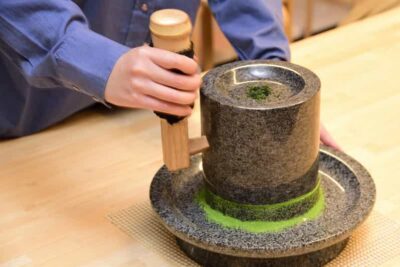
Kyoto: Tea Museum Tickets and Matcha Grinding Experience
Read our review →Uva Halpewatte Tea Factory Tour in Ella Sri Lanka
Read our review →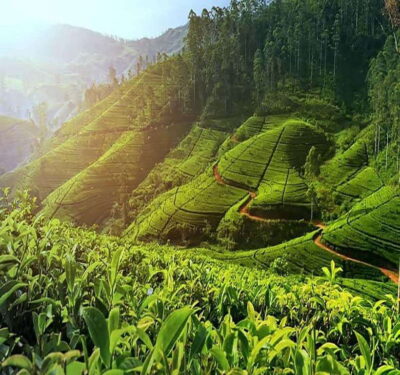
Nuwara Eliya: Tea Factory and Pickle Waterfalls Tuk Tuk Tour
Read our review →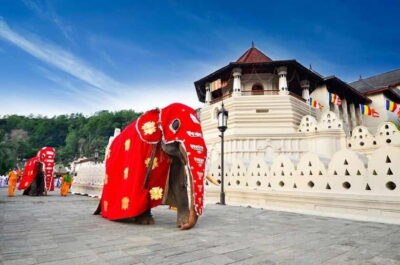
From Colombo: Kandy, Pinnawala and Tea Factory Full-Day Trip
Read our review →
Ella: Tea Factory, Train, and Nine Arch Day Tour with Pickup
Read our review →

Ella Private Day Trip with Train Ride & Tea Factory-All Inclusive
Read our review →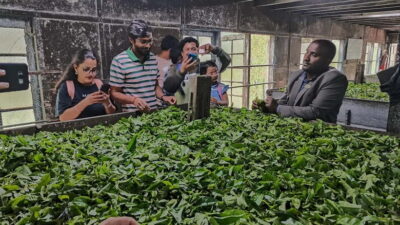
Munnar: Tea trail, Tea Factory, and Tea Tasting Tour
Read our review →Browse the lists this tea experience appears in