
Review · WORLDWIDE
90minutes Tea Preparation and Tasting Experience in Como
The most interesting part of this Como experience is that it treats tea as culture, craft, and food, not just a hot drink. In about two hours, you move from Chinese philosophy and tea history to the practical details of brewing, then sit down for guided tasting and tea-food pairing.
I like the hands-on Gongfu cha practice, based on an ancient Chinese tea service, and the chance to compare how water quality and temperature change the taste. I also like the relaxed food element: several teas are paired with sweets and tea dim sum, giving you a better sense of how tea works at the table.
The main consideration is caffeine. This is not a good fit if you have anemia problems, and anyone sensitive to caffeine should tell the host in advance. Also note the slight timing mismatch in the description: the title says 90 minutes, while the schedule and program describe an experience lasting about two hours.
Key points to know before booking
- Chinese tea is placed in a wider cultural setting: The opening connects tea with Buddhism, Daoism, and Confucianism.
- Six tea families are introduced: You’ll get a useful map of the tea world before tasting begins.
- Gongfu cha is practiced, not just demonstrated: You take part after watching the host.
- Water and heat are part of the lesson: The tasting shows why brewing choices affect flavor.
- Tea is paired with food: The final tasting includes tea dim sum and sweets.
- The private format keeps the session focused: Only your group participates, with a weekday afternoon start in Como.
A quiet afternoon with tea at the center
Lake Como is usually sold through grand villas, boat rides, and mountain views. This activity offers a different kind of afternoon. It gives you a seated cultural experience built around Chinese tea, with enough explanation to make the tasting meaningful.
The meeting point is at Viale per S. Fermo della Battaglia, 11, in Como. The activity begins and ends there, so you do not need to arrange a second pickup point or find your way across town afterward. A mobile ticket is accepted, and the location is near public transportation.
The scheduled time is Monday through Friday from 3:00 PM to 5:00 PM, for the operating period listed from March 25, 2025, through January 21, 2026. That late-afternoon timing works well if you have spent the morning visiting Como or want an alternative to another sightseeing stop.
Because this is a private activity, the host can focus on your group rather than a large room of strangers. The available information does not give a maximum group size, so I would not assume the session is limited to only two or three people. Still, the private format is useful if you want to ask questions or take your time with the brewing practice.
More Tea Tastings in the world:
- Twinings 2-Hour Tea Tasting Masterclass in London
★ 5.0 · 105 reviews - Tea Tasting and Pairing Concept Workshop
★ 5.0 · 57 reviews - Munnar: Tea trail, Tea Factory, and Tea Tasting Tour
★ 4.9 · 47 reviews
The first lesson: tea, Buddhism, Daoism, and Confucianism
The opening ten minutes place tea inside Chinese culture. The host explains how tea developed alongside Buddhism, Daoism, and Confucianism, described as the three main philosophies shaping Chinese culture.
That short introduction matters because it gives you a reason to look beyond color and flavor. Tea can be connected with meditation, balance, conduct, hospitality, and daily ritual. You do not need previous knowledge of Chinese philosophy to follow this section. It is meant as a brief foundation before the practical tasting begins.
I like this approach because it keeps the activity from becoming a simple list of tea names. You learn why preparation can be treated as a careful act, rather than merely a way to get liquid into a cup. The host presents the cultural background in a compact format, so the session does not spend the whole afternoon on history before you taste anything.
The limitation is also clear. Ten minutes cannot explain three major philosophies in detail. If you want an academic lecture on Chinese religion and thought, this will be too short. If you want just enough context to make the ceremony and tasting feel connected, it should do the job.
Six tea families and the move into modern tea
The next section introduces the six main tea families and the evolution of tea in modern times. This gives you a basic system for sorting what you taste later.
For many people, tea begins and ends with black tea, green tea, or perhaps herbal tea. This lesson helps you understand that tea has different processing traditions and flavor profiles. The exact names and examples of every family are not specified in the available information, so you should treat this as a broad introduction rather than a full technical course.
The modern tea section is also useful. Tea is not frozen in an ancient ceremony. It has changed with production methods, contemporary habits, and the way people drink it today. That contrast between old practice and modern use gives the afternoon some balance.
This portion lasts about ten minutes. I would think of it as a road map, not a certification class. You will leave with a better vocabulary for tea tasting, but the real learning comes when the host begins pouring and comparing the teas.
From the tea garden to your cup
After the tea families, the host gives a brief introduction to picking seasons and tea-making procedures. This is where the experience links agriculture and processing with the flavor in your cup.
Picking season can influence the character of tea, while production determines how the leaves are treated before brewing. Even without a long technical demonstration, knowing that tea changes through these stages helps you taste with more attention. You begin to ask what you are noticing: the aroma, the strength, the finish, or the effect of brewing temperature.
The word brief is important here. The program does not promise a visit to a tea plantation or a factory demonstration. You will hear about the process, then move on to the part that can be tested directly, the preparation and tasting.
I appreciate that the lesson does not pretend you can understand tea only through theory. The picking and production explanation sets the stage, but the cup is where the ideas become practical.
More Tea Experiences around the world:
- Kyoto: Tea Ceremony in a Traditional Tea House in Kiyomizu
★ 4.9 · 3,519 reviews - London: Afternoon Tea Cruise on the River Thames
★ 4.4 · 3,274 reviews - Kyoto: Tea Ceremony Ju-An at Jotokuji Temple
★ 4.9 · 3,207 reviews - Afternoon Tea Bus Tour in Dublin
★ 5.0 · 2,791 reviews
Why water and temperature change the flavor
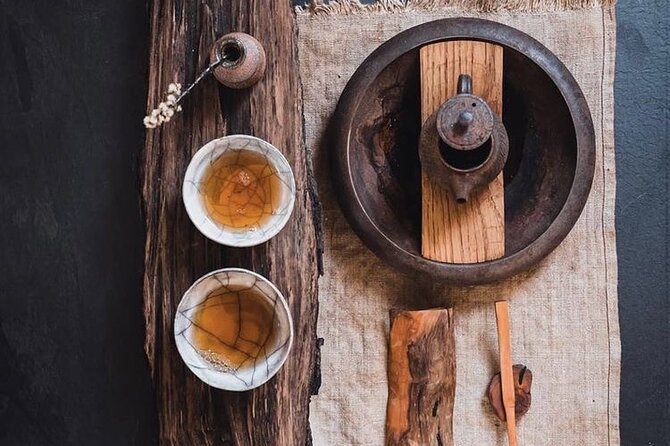
The strongest practical part of the session is the look at tea service and brewing conditions. You compare tea varieties and learn how different water quality and temperatures affect the taste of the finished tea.
This is the sort of detail that can change your habits at home. A tea that tastes harsh or flat may not be poor tea. The water, heat, and brewing time may be working against it. The activity focuses on water quality and temperature, giving you a better sense of why the same leaves can produce different results.
The information provided does not promise a formal scientific water test or a list of exact temperatures for every tea. You should expect guided comparison rather than a lab-style experiment. That is still valuable, especially if you normally pour boiling water over every kind of tea and hope for the best.
The host also discusses the best time to drink tea. This is a practical question, though the supplied program does not state a specific recommended schedule. Expect general guidance as part of the session, not a personalized medical consultation.
Practicing Gongfu cha after the demonstration
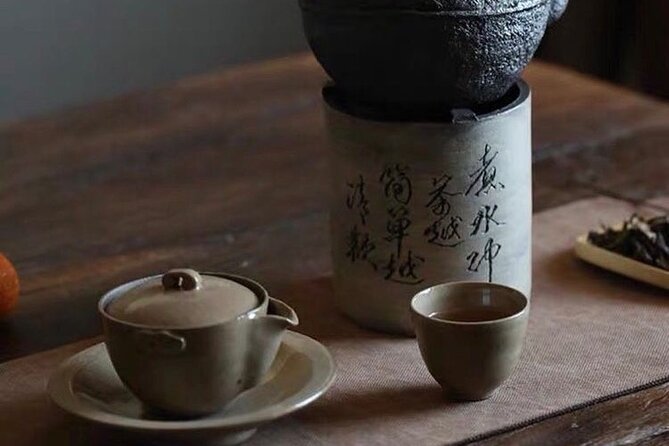
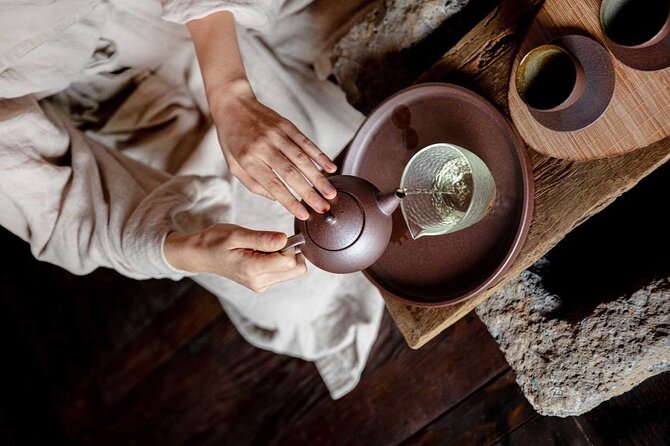
One of the most distinctive features is the chance to practice Gongfu cha after the host demonstrates it. The activity describes this as a 2000-year-old ancient style of tea ceremony.
Gongfu cha is a careful method of preparing and serving tea, with attention to the vessels, pouring, timing, and small movements involved. Here, the point is not to watch a polished ritual from a distance. You get to try the process yourself.
I like this part because practice turns an abstract cultural idea into something physical. You can see how much care goes into a small serving, and you can better understand why tea preparation can feel social and ceremonial at the same time.
Do not book this expecting a performance with elaborate costumes or a staged spectacle. The information describes a demonstration followed by participant practice. The value is in learning the method and handling the process, not in watching a show.
The host’s teaching style is described as informative and beautifully done, but no personal guide name is provided. The experience is offered by Jastea – ling, so that is the provider name you will see when booking.
Tasting three teas with sweets and tea dim sum
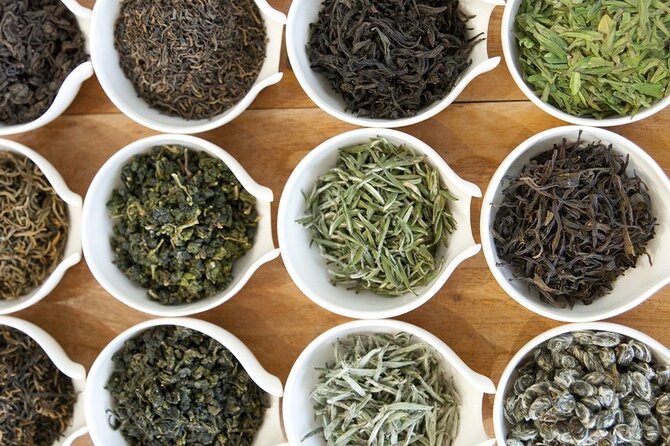
The tasting section brings the lesson together. You will sample tea varieties and learn how to pair different teas with food. The program specifies tea dim sum tasting, and the experience also includes sweets that are matched with the teas.
The available feedback describes three kinds of tea being shared and tasted. That gives you enough range to notice differences without turning the session into an exhausting parade of cups. The food pairings add a useful second layer: a tea can taste different when you take a bite of something sweet or savory alongside it.
This is also where the experience feels most social. You are not simply being told that one tea is lighter, stronger, sweeter, or more aromatic. You can taste the tea with food and decide what pairing works for you.
The food component is a tasting, not a full meal. If you arrive hungry, do not assume the dim sum and sweets will replace lunch or dinner. The supplied information does not list the exact dishes, portion sizes, or dietary accommodations, so ask ahead if you have food allergies or restrictions.
Is $34.70 a fair price?
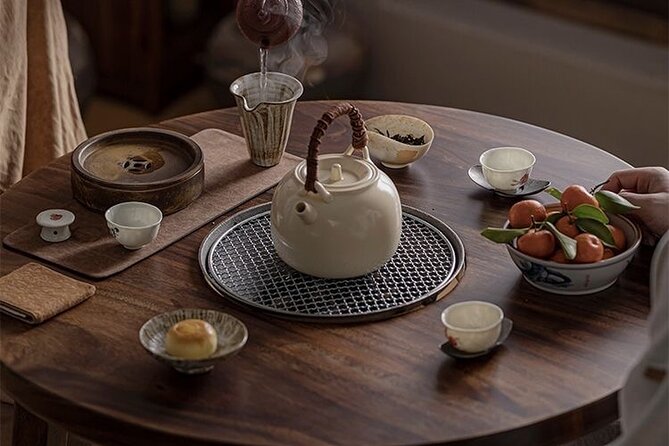
At $34.70 per person, this is priced as an accessible cultural activity rather than a luxury tea ceremony. The value depends on how much you want from the session.
If you only want to drink tea, the price may feel high compared with buying a pot at a cafe. You are paying for the teaching, the private setting, several tastings, the brewing practice, and the food pairings. The cultural background and explanation of processing also make it more than a refreshment stop.
I think the price is reasonable for someone who enjoys guided food and drink experiences. You get roughly two hours of structured content, rather than a quick tasting with little explanation. The private format adds value for couples, families with older children, or small groups who want to ask questions freely.
The value is less clear if you are looking for a major Como attraction or a sweeping sightseeing experience. This activity does not include lake views, transport around the area, a villa visit, or a boat ride. It is a focused indoor-style cultural lesson, with tea as the subject.
Who will enjoy this Como experience?
I would recommend it most strongly to people who already enjoy tea, want to learn how it is made, or like food experiences with a cultural angle. It also suits anyone looking for a calm afternoon activity away from the usual sightseeing route.
The age policy is clear: adults and people aged 14 and older are accepted, with anyone under 18 attending with a parent or adult. Younger children cannot take part.
This is a good choice for:
- Tea drinkers who want to understand more than basic brewing
- Couples looking for a quieter private activity
- Visitors interested in Chinese culture and philosophy
- Food lovers who enjoy tasting menus and pairings
- People who want to practice a traditional preparation method
It is not the right choice if you are caffeine-sensitive and do not want to arrange advance notice, or if you have anemia problems. You should also think twice if you want a large meal, outdoor sightseeing, or a fast-paced schedule.
Timing, transport, and booking details
The activity runs on weekday afternoons, from 3:00 PM to 5:00 PM. Since the program lasts about two hours, plan around the full window rather than the 90-minute wording used in the title. The two-hour schedule is repeated in the program details and fits the number of subjects covered.
You meet at Viale per S. Fermo della Battaglia, 11, 22100 Como CO, Italy, and return to the same place. The meeting point is near public transportation, but the exact route is not provided, so check your own map and allow time to arrive.
Confirmation is normally issued at booking. If you book within two hours of the start time, confirmation may arrive later, subject to availability. I would avoid a last-minute booking if this is important to your day’s plan.
Free cancellation is available up to 24 hours before the local start time for a full refund. Changes or cancellations inside that 24-hour window are not accepted for a refund. The activity also requires good weather and a minimum number of participants. If the host cancels for poor weather or because the minimum is not met, you are offered another date or experience, or a full refund.
The weather condition may seem surprising for a tea session, so keep it in mind when planning a tight itinerary. The policy is part of the booking terms even though the activity itself is described mainly as a tea lesson.
Should you book it?
Book this experience if you want a personal, low-key cultural activity and you like learning through tasting. The mix of Chinese tea culture, six tea families, brewing variables, Gongfu cha practice, and tea dim sum gives the afternoon a clear shape.
I would especially choose it on a weekday when you have already seen Como’s main sights and want something slower. The private format, hands-on ceremony, and food pairing make it more useful than a simple cup of tea, while the $34.70 price keeps it within reach for many budgets.
Skip it if caffeine is a serious concern, if you need a full meal, or if your priority is outdoor scenery. For the right visitor, though, this is a thoughtful way to spend two hours learning how much history and technique can fit into a small teacup.
FAQ
Where does the tea experience begin and end?
It begins at Viale per S. Fermo della Battaglia, 11, 22100 Como CO, Italy, and ends back at the same meeting point.
How long does the activity last?
The program describes an experience of approximately two hours, from 3:00 PM to 5:00 PM. The title refers to 90 minutes, so plan for the full two-hour schedule.
What age group can participate?
Adults and people aged 14 and older can participate. Anyone under 18 must attend with a parent or another adult.
Is this a private activity?
Yes. Only your group participates in the activity.
Can someone with caffeine sensitivity attend?
Yes, but anyone with caffeine sensitivity must inform the host ahead of time. The activity is not recommended for people with anemia problems.
Can I cancel for a refund?
You can cancel at least 24 hours before the local start time for a full refund. Cancellations or changes made less than 24 hours before the start are not accepted for a refund.
Newly steeped around the world
- York: Private Horse-Drawn Carriage Ride and Afternoon Tea★ 5.0 · 3 reviews
- Yokohama : Tea Ceremony with Sweets and Souvenir★ 5.0 · 5 reviews
- Washington, D.C.: Tea Around Town Bus Tour with Landmarks★ 3.4 · 7 reviews
- Whisk Your Own Matcha: A Zen Matcha Experience at Temple★ 3.6 · 7 reviews
- Yogyakarta: Prambanan Tour, Sukuh Temple & Tea Plantation★ 5.0 · 3 reviews
- Walking Tour: Yanaka,Nezu& Sendagi: Tea Ceremony & Old Tokyo★ 5.0 · 3 reviews
- Wadi Rum: 2-Hour Jeep Tour with Bedouin Tea★ 5.0 · 11 reviews
- Volcano, Hot Spring, Mud Bath & Tea plantation all included★ 5.0 · 5 reviews
Tea Tastings, compared.
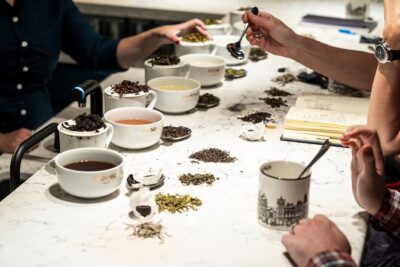
Twinings 2-Hour Tea Tasting Masterclass in London
Read our review →
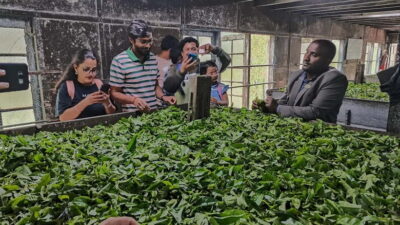
Munnar: Tea trail, Tea Factory, and Tea Tasting Tour
Read our review →
Matcha Experience with of Japanese Tea Tasting in Tokyo
Read our review →
Nara:5 Type of Tea Tasting & Mindful Tea Ceremony
Read our review →
Montmartre Hill French Afternoon Tea Tasting Tour with Crepes and Macarons
Read our review →
Full Day Tour In Uzungol Lake with Turkish Tea Tasting
Read our review →Browse the lists this tea experience appears in