
Review · HONG KONG
Hong Kong: MingCha Tea Tasting and Pairing Workshop
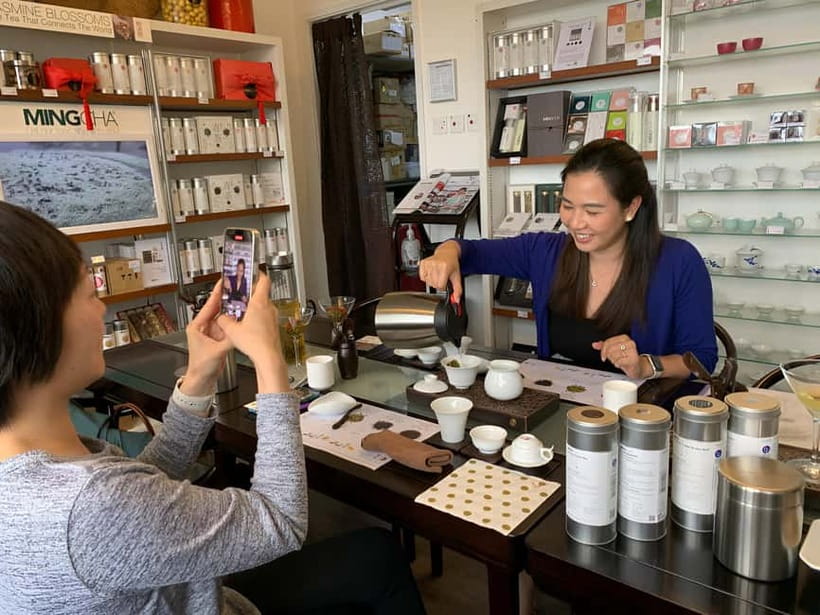
At MingCha Tea House, tea is not just poured into a cup. You study the dry leaves, smell them before and after steeping, listen to the water and brewing sounds, then taste how each tea changes over several rounds. The workshop turns a familiar drink into a small lesson in farming, craft, and Chinese culture.
I especially like the hands-on gaiwan practice, since you do not just watch a tea master work. I also like the smart food pairings, including rose honey toast, which show you how tea can work with texture and sweetness rather than stand alone.
The main consideration is timing. The advertised session lasts 1.5 hours, but one reported visit ran for about three hours, so ask for the expected length when you book. A group of up to 20 people may also feel less personal than a private tasting.
Key points at a glance
- Four to five tea styles: You may taste green, scented green, red, oolong, white, and puer teas, with four premium handcrafted teas included.
- Five to six brews per tea: Repeated steepings let you track how aroma, body, and aftertaste shift.
- Gongfu brewing practice: You use a gaiwan and practice making tea for yourself and others.
- Tea with food: Pairings such as rose honey toast give you useful ideas for serving tea at home.
- Easy Chai Wan access: MingCha is about a five-minute walk from Chai Wan MTR Station, Exit C.
- English, Cantonese, and Mandarin: The workshop can serve visitors with different language needs.
Why this Chai Wan workshop is worth your time
Hong Kong is famous for food, shopping, skyline views, and fast-moving streets. Tea gives you a quieter way to understand the city’s Chinese traditions. At MingCha, you spend your time looking closely and tasting slowly, with a guide explaining why a tea tastes the way it does.
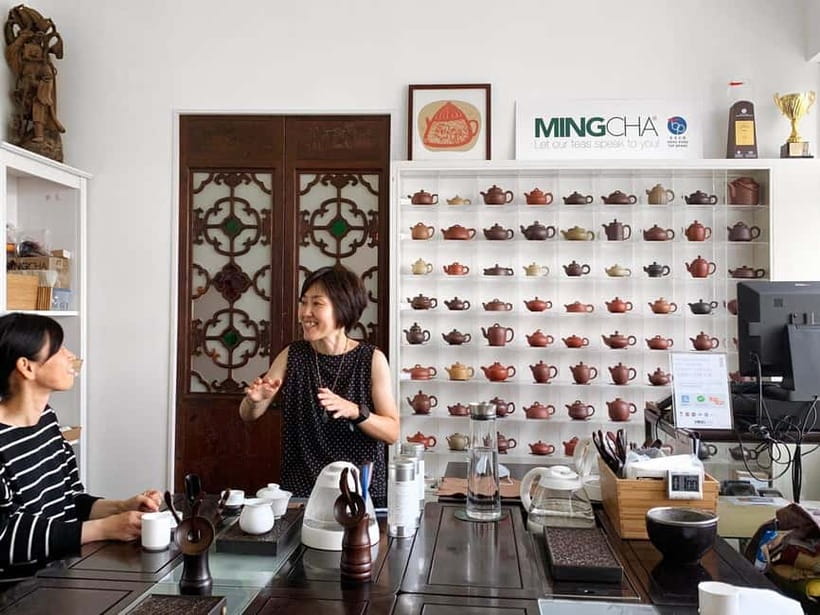
The setting is MingCha Tea House in the Fortune Factory Building. The location feels practical rather than grand, which suits the workshop’s focus on the tea itself. You are not paying for a scenic room or a large cultural show. You are paying for instruction, carefully selected tea, brewing practice, and a chance to ask questions.
MingCha was founded by Vivian Mak, an artist and designer who moved into tea. Her background helps explain the workshop’s attention to appearance, presentation, and unusual food matches. The tea house has received Hong Kong Top Brand recognition and has been named among the world’s best tea shops by FOOD & WINE Magazine.
Those honors do not guarantee that every tea will suit your taste. They do suggest that this is a serious specialist venue rather than a quick tourist stop selling souvenir tins. The strongest part of the experience is the teaching. You leave with a better way to look at tea, not only a pleasant drink.
More Tea Tastings in the world:
- Twinings 2-Hour Tea Tasting Masterclass in London
★ 5.0 · 105 reviews - Tea Tasting and Pairing Concept Workshop
★ 5.0 · 57 reviews - Munnar: Tea trail, Tea Factory, and Tea Tasting Tour
★ 4.9 · 47 reviews
Finding MingCha inside Fortune Factory Building
The tea house is in Block B, 15/F, Unit B2, inside the Fortune Factory Building. This is the sort of address where you should allow a few extra minutes. The building entrance is green and also serves as a parking lot.
Walk in, turn left, and look for Block B, marked by a stainless steel sign. Enter Block B, turn left again, and find the passenger lift. Press 15/F. When you leave the lift, look for the brown door and press the doorbell on the right.
The tea house is about a five-minute walk from Chai Wan MTR Station, Exit C. That makes the workshop easy to connect with other Hong Kong plans, though Chai Wan is not in the middle of the main sightseeing districts. I would not book this as a quick stop between Central and Kowloon without checking your travel time.
The industrial building setting may surprise you. That is not a fault, but it affects expectations. This is a working Hong Kong address, not a polished hotel tea lounge. Bring the directions with you, especially if you are arriving close to the start time.
The opening lesson: five senses and a tea leaf
The session begins with a sensory look at Chinese tea. You consider sight, smell, taste, touch, and sound. That may sound simple, but it gives you a useful system for noticing details that often pass unnoticed.
First, you look at the dry leaves. Shape, color, size, and degree of rolling offer clues about the tea and how it was handled. You then smell the dry leaves before hot water changes them. After steeping, the aroma may become softer, sweeter, grassier, fruitier, or more roasted.
Touch has a role too. You may handle leaves and notice their texture before and after brewing. Sound enters through the water, the pouring, and the small movements of the gaiwan. These details help slow your attention, which is the point of the exercise.
This opening is friendly to beginners. You do not need to arrive knowing tea vocabulary. At the same time, someone who already drinks Chinese tea can pay closer attention to production choices and regional differences.
Four premium teas, tasted through repeated brews
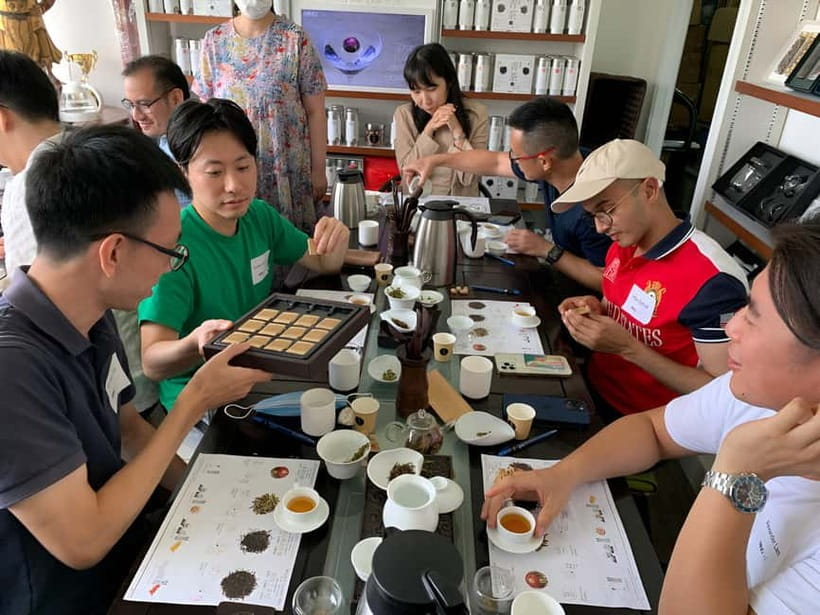
The selection usually includes four or five teas from several broad categories. Possible styles include green, scented green, red, oolong, white, and puer tea. The exact lineup can vary, so you should not book with the expectation of tasting every category in one sitting.
The tea is brewed several times, often five or six rounds per tea. This is one of the best reasons to choose a workshop instead of a simple tea flight. A single cup gives you one impression. Several short brews show how a tea develops.
A green tea may begin with a fresh, clean character. A scented green tea adds fragrance to that base. Red tea, known in much of the West as black tea, can bring a fuller taste. Oolong may show a wider range depending on how it was processed. White tea and puer offer other ways to think about leaf age, handling, and flavor.
You are not expected to identify every tea perfectly. The value comes from comparison. You can notice which tea feels light or full, which aroma lasts longest, and which flavor changes most between the first and later brews.
The instructor connects those tastes to harvest, climate, and production. A tea’s character does not come from a mysterious label alone. Growing conditions and processing choices shape what ends up in your cup.
More Tea Experiences around the world:
- Kyoto: Tea Ceremony in a Traditional Tea House in Kiyomizu
★ 4.9 · 3,519 reviews - London: Afternoon Tea Cruise on the River Thames
★ 4.4 · 3,274 reviews - Kyoto: Tea Ceremony Ju-An at Jotokuji Temple
★ 4.9 · 3,207 reviews - Afternoon Tea Bus Tour in Dublin
★ 5.0 · 2,791 reviews
From botany to production, the useful lesson behind each cup
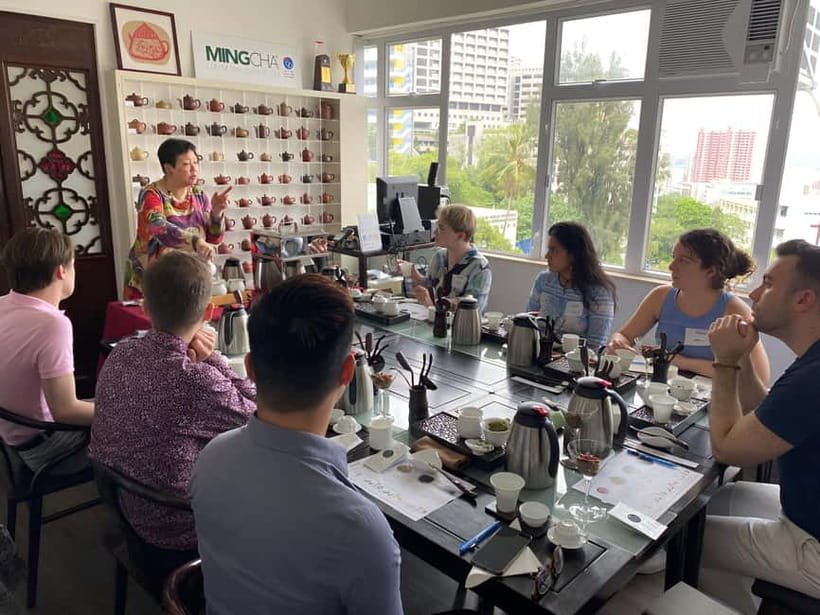
The teaching covers tea botany, classification, history, and production. The botanical side helps explain that different teas come from the same basic tea plant, while processing creates much of the difference between styles.
You learn why harvest timing matters and how climate can affect the leaf. You also hear how withering, heating, rolling, oxidation, drying, or aging can shape the final tea. The point is not to memorize a technical chart. It is to give you a way to make sense of flavor.
This information becomes more useful when you shop for tea later. You can ask better questions about origin, harvest, processing, and storage. You can also avoid assuming that a higher price automatically means a tea is better for you.
The workshop also places tea in a cultural setting. Tea is tied to daily life, hospitality, craft, and careful preparation. MingCha’s approach gives those subjects room without turning the session into a long museum lecture.
The language mix is English, Cantonese, and Mandarin. English is available, and the hosts include Vivian and Vanessa. One session was described as particularly thorough and entertaining, lasting around three hours, so the pace may depend on the group and the presentation that day.
Learning gongfu brewing with a gaiwan
The practical brewing section is the heart of the workshop for many people. You learn the gongfu method, a traditional Chinese approach that uses a small gaiwan, the lidded bowl used to brew and pour tea.
A gaiwan gives you control. You can use a short steep, pour quickly, and repeat the process several times. This suits the high-quality teas used in the tasting because you can follow the leaf from one round to the next.
You practice brewing for yourself and for other people. That small step matters. It turns tea from something demonstrated at a table into something you can repeat at home.
The technique can feel awkward at first. The lid, hot water, quick pour, and small cups require some coordination. That is normal. The session is not about perfect performance. It is about learning enough to brew with confidence and adjust when a tea tastes too weak or too strong.
I would bring curiosity rather than a notebook full of rules. Pay attention to the guide’s timing, pouring motion, and comments about each tea. The repeated practice gives you a practical memory that a lecture alone would not provide.
Rose honey toast and the logic of tea pairing
The food pairing adds a welcome twist. One example is rose honey toast, with a crisp texture and gentle floral sweetness. The snack is not just a treat placed beside the cup. It helps you notice how food changes your perception of tea.
Sweetness can soften bitterness. Crisp texture can contrast with a smooth drink. Floral notes may echo a scented tea, while a richer tea may need a simpler or sweeter bite. These combinations show you how to plan a tea table at home.
Vivian Mak is praised for pairing tea with less expected foods. That approach keeps the workshop from feeling like a formal tasting where you must use the correct words. You can enjoy the pairing first, then work out why it makes sense.
Food is limited to the complementary snacks included in the session. This is not a full meal, so do not arrive expecting lunch or dinner. If you need more food, plan to eat before or after the workshop.
Who will get the most from 90 minutes here
This experience suits tea beginners particularly well. You learn the basic categories, taste several styles, and gain a brewing method without needing prior knowledge. The sensory format also helps if you like learning by doing rather than listening to a long talk.
It works for committed tea drinkers too. The repeated brews and production discussion give you material to think about, while the food pairing may introduce combinations you have not tried.
Culture seekers will appreciate the connection between farming, craft, hospitality, and daily life. The workshop gives you a more grounded look at Chinese tea than buying a decorative tea set in a shop.
It is also a useful rainy-day plan. The entire activity takes place indoors, and its pace gives you a break from Hong Kong’s busy streets. Families and groups should consider the maximum of 20 people. A full session may feel social rather than intimate.
The workshop is less suitable if you want a grand room, a full meal, or a fast introduction under an hour. It also may not be ideal if you dislike repeated tasting of the same tea. The entire method depends on paying attention to small changes.
Is $63 a fair price?
At $63 per person, this costs more than ordering tea at a café. The comparison is not quite fair, because the fee includes four premium handcrafted teas, several rounds of brewing, instruction, hands-on practice, and food pairings.
The value depends on how much you use the teaching. If you simply want a cup of tea, this is expensive. If you want to understand Chinese tea and learn a method you can use at home, the price is easier to justify.
The workshop is also a better value for people who ask questions and take part in the brewing. You are not only consuming the tea. You are learning how to judge leaves, compare steepings, and prepare the drink yourself.
The advertised length is 1.5 hours, which makes the cost reasonable for a focused specialist class. Since one session lasted about three hours, confirm the expected schedule if you have another booking afterward. Free cancellation is available up to 24 hours before the activity, and you can reserve without paying at once, which helps if your Hong Kong plans are still shifting.
Should you book the MingCha tea workshop?
Book it if you want a calm, hands-on cultural experience and you care more about learning than scenery. The combination of repeated tastings, gaiwan practice, and tea with snacks gives you several useful takeaways in one visit.
I would recommend it most strongly to first-time tea learners, serious tea drinkers, and people looking for an indoor Hong Kong activity away from the usual tourist circuit. Vivian Mak’s design-minded approach and the hosts’ clear instruction add personality to the session.
Think twice if you need a fixed 90-minute schedule, a private setting, or substantial food. Confirm the timing and prepare for a possible group of up to 20 people. For everyone else, $63 buys more than a tasting: it gives you a practical way to understand and prepare Chinese tea long after you leave Chai Wan.
FAQ
How long does the MingCha tea workshop last?
The advertised duration is approximately 1.5 hours. One session was reported to last about three hours, so confirm the expected length when booking if your schedule is tight.
Where is MingCha Tea House located?
MingCha Tea House is in Fortune Factory Building, Block B, 15/F, Unit B2, in Chai Wan, Hong Kong.
How do I find the tea house inside the building?
Enter through the green entrance, which is also a parking lot. Turn left, find Block B with its stainless steel sign, enter and turn left again, then take the passenger lift to the 15th floor. The brown door is visible when you exit the lift, and the doorbell is on the right.
How far is MingCha from the MTR?
The tea house is about a five-minute walk from Chai Wan MTR Station, Exit C.
Which languages are used during the workshop?
The workshop is conducted in English, Cantonese, and Mandarin. Hosts or greeters are available in English, Traditional Chinese, and Chinese.
How many teas will I taste?
The experience includes four premium handcrafted teas. The wider tasting selection is generally four to five teas and may include green, scented green, red, oolong, white, and puer varieties.
Will I learn to brew tea myself?
Yes. You practice traditional gongfu brewing with a gaiwan and learn how to brew tea for yourself and other people.
Is food included?
Yes. Complementary snacks are paired with the teas, including rose honey toast as one example. Additional food and drinks outside the pairing are not included.
Newly steeped around the world
- York: Private Horse-Drawn Carriage Ride and Afternoon Tea★ 5.0 · 3 reviews
- Yokohama : Tea Ceremony with Sweets and Souvenir★ 5.0 · 5 reviews
- Washington, D.C.: Tea Around Town Bus Tour with Landmarks★ 3.4 · 7 reviews
- Whisk Your Own Matcha: A Zen Matcha Experience at Temple★ 3.6 · 7 reviews
- Yogyakarta: Prambanan Tour, Sukuh Temple & Tea Plantation★ 5.0 · 3 reviews
- Walking Tour: Yanaka,Nezu& Sendagi: Tea Ceremony & Old Tokyo★ 5.0 · 3 reviews
- Wadi Rum: 2-Hour Jeep Tour with Bedouin Tea★ 5.0 · 11 reviews
- Volcano, Hot Spring, Mud Bath & Tea plantation all included★ 5.0 · 5 reviews
Tea Tastings, compared.
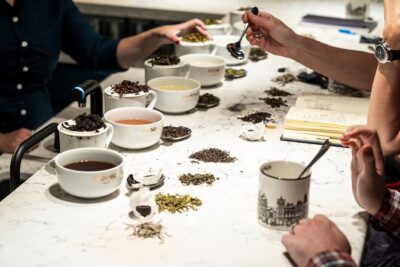
Twinings 2-Hour Tea Tasting Masterclass in London
Read our review →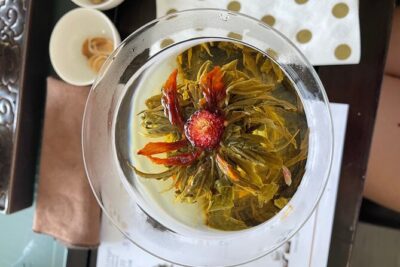
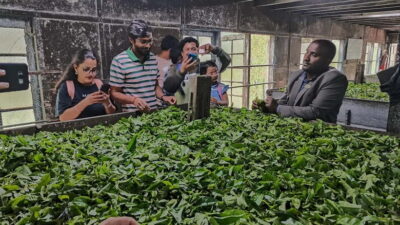
Munnar: Tea trail, Tea Factory, and Tea Tasting Tour
Read our review →
Matcha Experience with of Japanese Tea Tasting in Tokyo
Read our review →
Nara:5 Type of Tea Tasting & Mindful Tea Ceremony
Read our review →
Montmartre Hill French Afternoon Tea Tasting Tour with Crepes and Macarons
Read our review →
Full Day Tour In Uzungol Lake with Turkish Tea Tasting
Read our review →Browse the lists this tea experience appears in