
Review · WORLDWIDE
Pigadia: Agia Kyriaki Guided Hike with Coffee/Tea and Raki
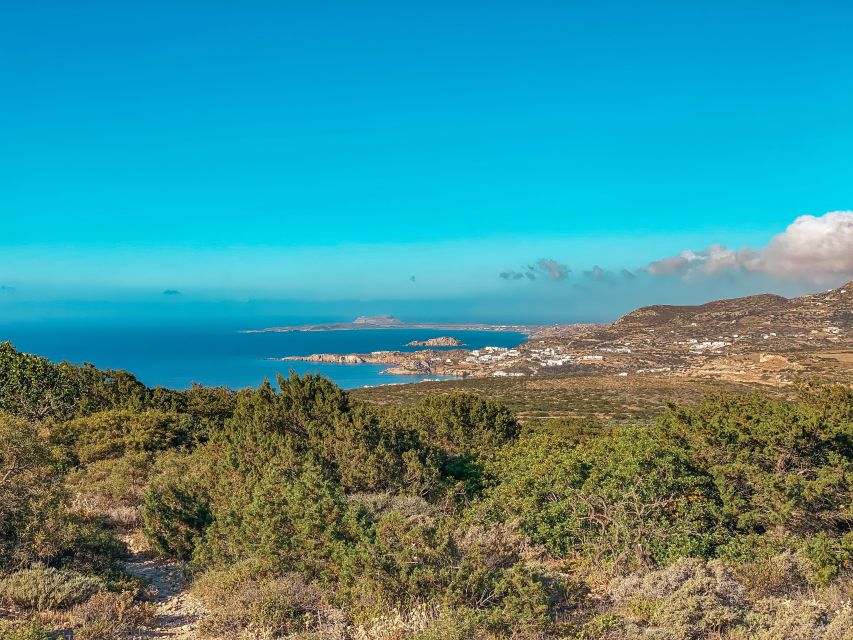
The best part of this three-hour walk is the change of scenery just outside Pigadia. You leave the town behind and climb through olive groves, old barns, and pine-scented paths toward Agia Kyriaki Church, with the Aegean and Karpathos villages opening up below. I like the mix of local farming history and wide coastal views, and I like that coffee or tea is served at the chapel before the final raki toast.
The main catch is the terrain. The pace is calm and the guide stops for photos, but the walk includes uphill and downhill sections and is described as average to challenging. Good shoes, water, sun protection, and steady footing matter here, especially in the heat of a Greek summer.
Key points at a glance
- A rural escape from Pigadia: The route begins near town but soon reaches olive fields, old farm buildings, and quiet paths.
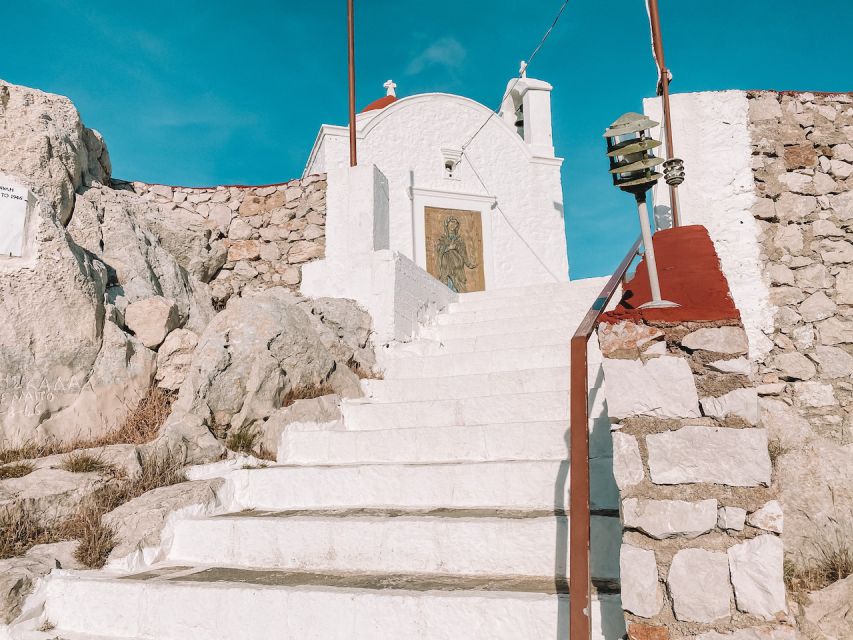
- Panoramic Agia Kyriaki views: The chapel gives you a high viewpoint toward the coast, Pigadia, and southern Karpathos villages.
- A walk with local context: Your English-speaking guide explains the area’s farming past, including old stables and agricultural sites.
- Coffee, tea, and raki included: Take a shaded break at the church, then finish with a shot of local raki.
- A calm pace with real climbs: Frequent photo stops make the walk manageable, but this is not a flat stroll.
- Simple meeting point: Meet near Alpha Bank, close to the water source and two gyro restaurants in Pigadia.
Leaving Pigadia for the Agia Kyriaki trail
You meet your guide at the Alpha Bank near the water source and two gyro places in Pigadia. Look for the guide wearing an Art and Walk T-shirt or tank top and carrying trekking poles. That clear clothing detail should make the meeting point easy to spot, though it is still smart to arrive a few minutes early.
The route starts close to the center, so you do not need a transfer to reach the trail. That saves time and keeps the outing focused on walking rather than transport. Within the first part of the hike, the setting changes from town streets to rural paths outside Pigadia.
The full walking time is about three hours, split into roughly 90 minutes going up and 90 minutes coming down. The timing works well for a half-day plan. You can fit the hike around a meal, a swim, or an afternoon exploring Pigadia, depending on the start time you choose.
The guide keeps the pace calm and stops often for photographs. I see this as a useful balance: you are not rushed past the views, yet the route still includes enough climbing to feel like an active outing rather than a gentle town walk.
More Tea Country Hikes around the world:
- Hiroshima Local guided Hiking Tour&Open-air Tea Ceremony
★ 5.0 · 213 reviews - Hiroshima: Morning Hiking Tour with Open-air Tea Ceremony
★ 4.8 · 58 reviews - Tuk-Tuk Safari Liptons seat,Tea Fields Hike,TeaFactory Tour
★ 4.8 · 46 reviews
Olive groves, old barns, and Karpathos farming life
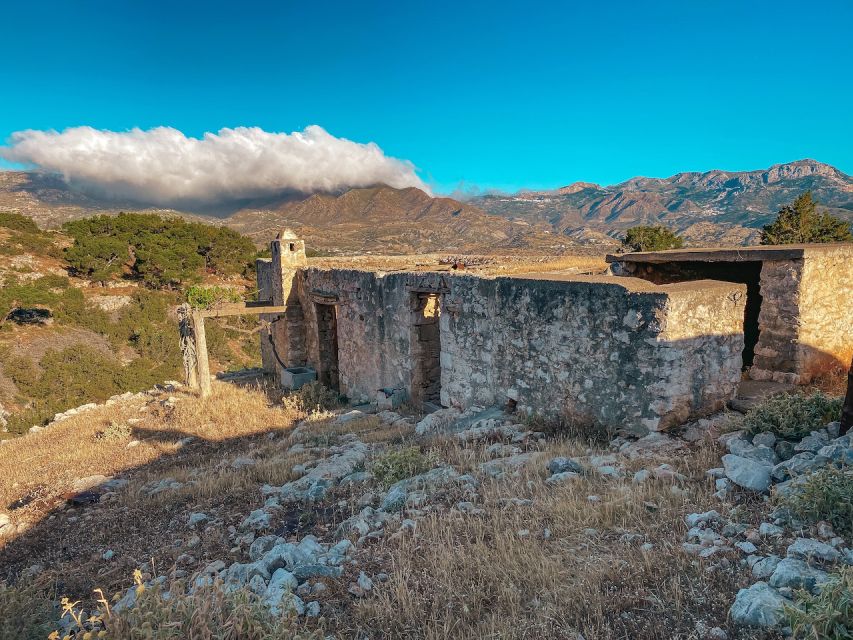
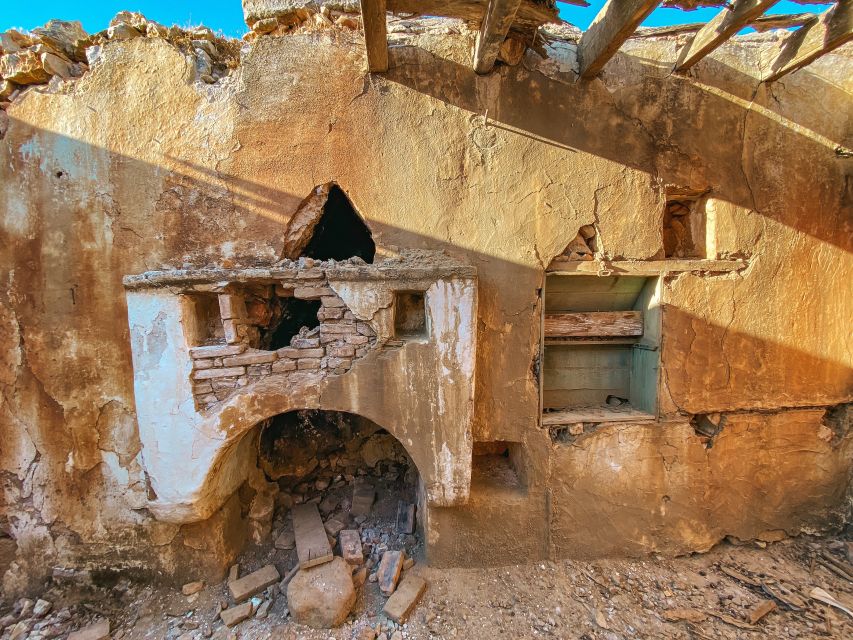
The first section gives the walk its local character. You pass olive fields and old Greek stables, with rural paths leading upward toward the chapel. The area’s agricultural past is part of the story, so this is more than a route chosen only for its view.
Look for the remains and signs of working countryside as you walk. Old barns and stables help explain how people used the land before tourism became such a large part of island life. The guide also points out an ancient temple, adding another layer to the walk without turning it into a formal archaeological tour.
I like this combination because it gives you something to notice at ground level while the coast appears in the distance. The route does not ask you to choose between scenery and local context. You get both, in small pieces, as the path climbs.
You should expect uneven rural footing rather than a paved walking path. Comfortable shoes are listed as essential, and hiking shoes are a better choice if you own them. Bring water and snacks, since food is not included and the walk lasts three hours.
Climbing toward the chapel above Pigadia
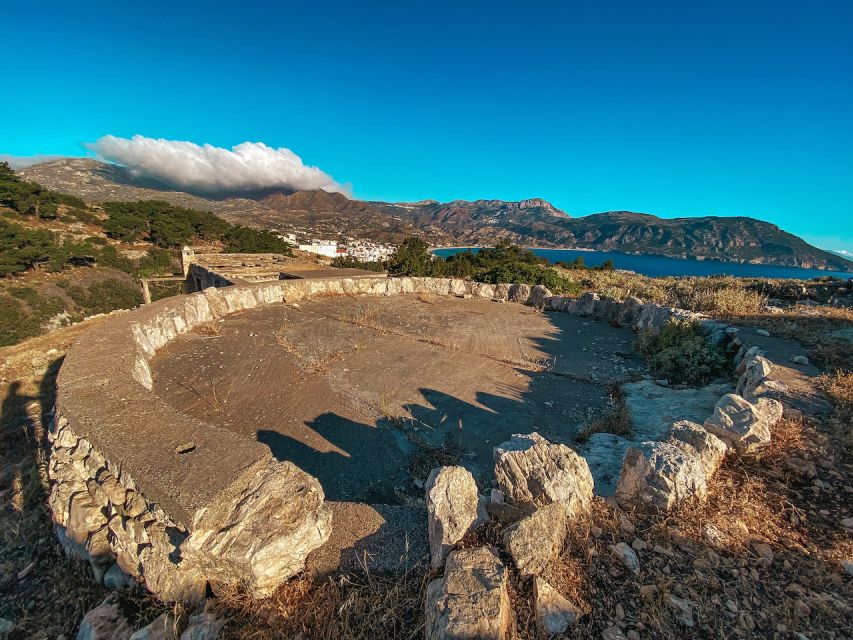
As the path gains height, the views widen. You can look across the Aegean and begin to see the southern villages of Karpathos from above. The climb is the physical heart of the outing, so this is where the average-to-challenging rating matters most.
The walk is not described as fast. Frequent stops for photographs give you natural pauses, and the guide carries trekking poles for the meeting point and walk. Still, a calm pace does not remove the need for effort. Expect some uphill sections on the way to Agia Kyriaki and downhill work on the return.
I would choose this walk if you want a clear sense of place and do not mind working for the view. I would not choose it if you need a completely flat route or prefer sightseeing that involves little exertion.
The guide’s role is especially useful here. A local walking guide can connect the olive groves, stables, temple, and villages into one story rather than leaving you to see them as unrelated details. The guide speaks English, so the background is accessible to English-speaking visitors.
Agia Kyriaki Church and the shaded half-hour break
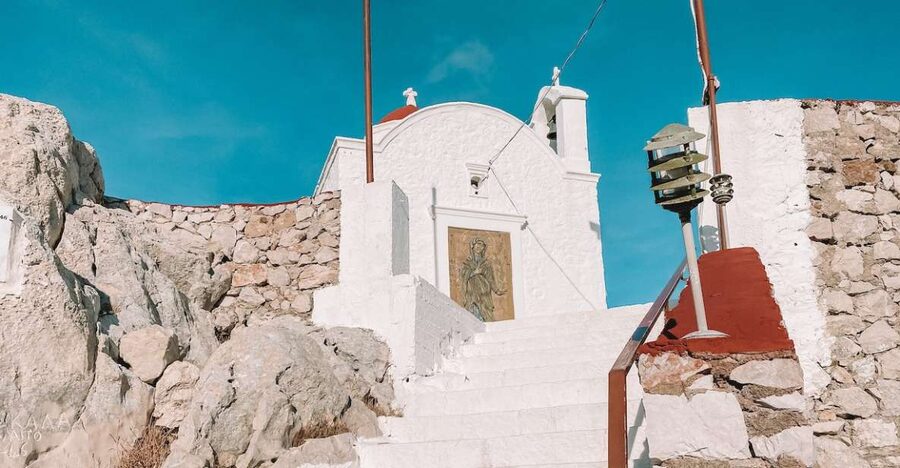
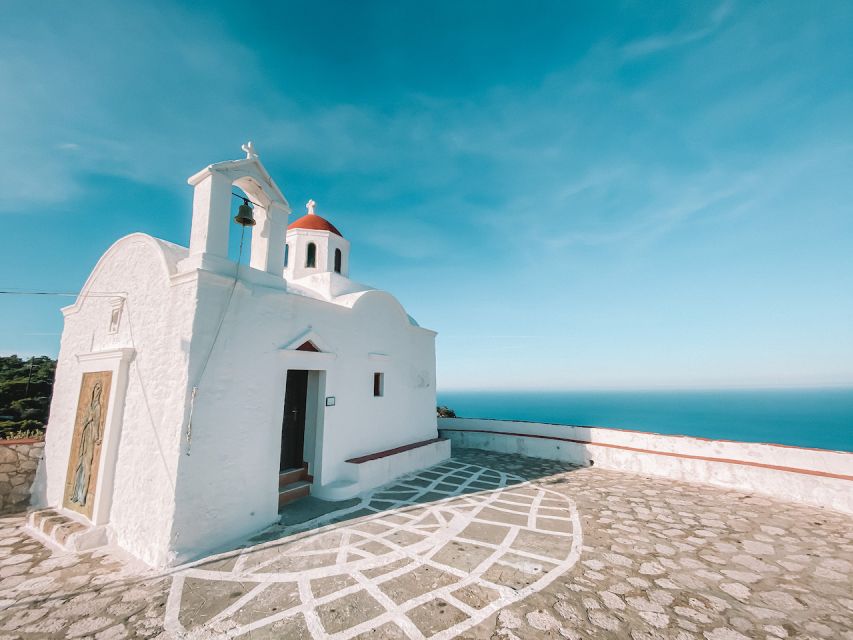
At the high point, you visit Agia Kyriaki Church. The chapel is the destination, but the setting around it is just as important. From here, you can take in broad views of the coast and the villages below, making this the main photo stop of the walk.
The planned break lasts about 30 minutes. You can rest in the shade, enjoy coffee or tea, and take time with the view instead of turning around immediately. That pause gives the climb a clear reward and keeps the outing from feeling like a nonstop workout.
Coffee or tea is included, but food is not. If you are likely to be hungry after the ascent, pack a snack. The suggested items include snacks and water, and both are sensible additions even though the route has a refreshment stop.
The church visit is not presented as a long religious service or a formal museum visit. Think of it as a quiet stop at a small chapel with time for photos, rest, and scenery. That simplicity is part of the appeal. You are visiting a place connected to the local countryside, not moving through a string of major sights.
More Tea Experiences around the world:
- Kyoto: Tea Ceremony in a Traditional Tea House in Kiyomizu
★ 4.9 · 3,519 reviews - London: Afternoon Tea Cruise on the River Thames
★ 4.4 · 3,274 reviews - Kyoto: Tea Ceremony Ju-An at Jotokuji Temple
★ 4.9 · 3,207 reviews - Afternoon Tea Bus Tour in Dublin
★ 5.0 · 2,791 reviews
The return through pine woods
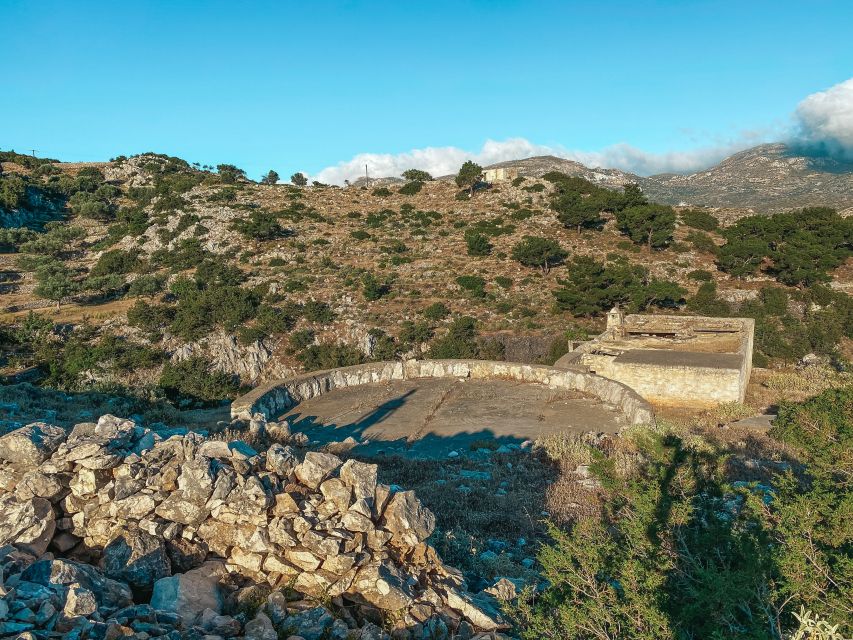
The way down takes a different route in feel, passing through aromatic pine forests. After the open views and exposed olive fields, the scent of pine gives the return a cooler, more enclosed character. You also get another angle on the east coast as Pigadia comes into view below.
The descent can be easier on your lungs but harder on your knees and footing. Take care on uneven sections and use the walking stick if it helps. Sunglasses, a hat, sunscreen, and water remain useful on the return, since shade may vary along the path.
One detail I like is the sense of progression. You begin near the town, climb past working countryside, reach a chapel with a wide outlook, then return through trees toward Pigadia. It feels like a compact tour of several sides of the area rather than a simple out-and-back walk.
At the end of the trail, you return to the original meeting point near Alpha Bank. That makes the logistics easy. You do not need to arrange a taxi from a remote trailhead or figure out where the walk finishes.
The final raki and what the price covers
The $54 price includes the English-speaking guide, walking stick, coffee or tea, and one shot of raki. It does not include food, so the value depends on what you want from a half-day outing.
For me, the price makes more sense if you value interpretation and a planned route. You are paying for a guided walk through rural areas that may be hard to understand on your own, plus the convenience of a clear meeting point and a refreshment stop. The coffee, tea, and raki are small touches, but they give the walk a social finish.
It is not the right choice if you are looking only for a cheap hike. You can walk for free in many places, but you would not necessarily get the same local explanation, organized route, or stop at Agia Kyriaki. The value is in the combination of guide, setting, and structure.
The raki is served at the end, not as a reason to rush through the walk. If you do not drink alcohol, the included coffee or tea is the more important refreshment. The activity information specifies a shot of raki, not a full meal or tasting session.
Who should book this Karpathos hike
This walk suits you if you want an active morning or afternoon away from Pigadia without committing to a full-day excursion. It is a good match for visitors who enjoy views, local history, quiet paths, and a guide who can explain what they are seeing.
It also suits people who prefer a slower walking pace with regular photo stops. The guide has been described as friendly and well prepared, which fits the practical nature of the outing. You get help with the route and context without the structure of a large sightseeing circuit.
You should think twice if you have limited mobility or need wheelchair access. The activity is not suitable for wheelchair users, and the uphill and downhill sections make the terrain unsuitable for anyone looking for a fully accessible route.
Fitness matters more than speed. You do not need to race, but you should be comfortable walking for three hours and handling uneven ground. Hiking shoes, water, sunscreen, and a hat are not needless extras here.
The outing is also a good choice if you have already spent time on Pigadia’s waterfront and want to see the area behind the town. The route shows how quickly Karpathos shifts from an inhabited center to fields, woods, chapels, and high viewpoints.
Practical details before you reserve
The activity runs for three hours, with starting times available according to the booking calendar. Since the meeting point is in Pigadia and the tour returns there, you can plan around it without adding transfer time.
Free cancellation is available up to 24 hours before the activity for a full refund. You can also reserve and pay later, which helps if you are still arranging your Karpathos schedule.
Pack the following:
- Hiking or sturdy walking shoes
- Water
- Snacks
- Sunglasses
- A sun hat
- Sunscreen
Wear clothing suited to sun and movement. The information does not specify a required dress code for the church, so ordinary comfortable hiking clothes are appropriate, with respectful behavior at the chapel.
The route includes frequent photo stops, but you should not mistake that for an effortless walk. The stated difficulty is average to challenging because of the climbing. If you are uncertain about your fitness, ask yourself whether a three-hour walk with uphill and downhill sections sounds manageable in warm weather.
Should you book the Agia Kyriaki walk?
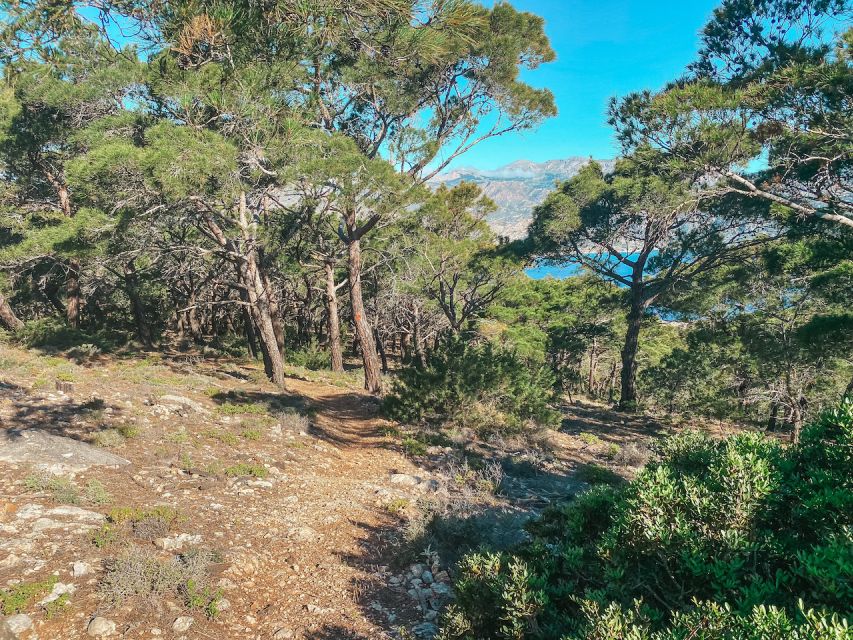
Book it if you want a scenic, active look at Karpathos beyond Pigadia, especially if olive groves, old farm buildings, pine woods, and village views interest you more than a standard sightseeing drive. The calm pace, friendly English-speaking guide, chapel break, and included drink make the outing feel personal without taking a full day.
Skip it if you need flat paths, wheelchair access, or a food-focused tour. Also skip it if you want a very easy stroll. For the right walker, though, the climb to Agia Kyriaki offers a rewarding mix of countryside, local stories, coast views, and a well-earned raki at the end.
FAQ
Where does the Agia Kyriaki hike meet in Pigadia?
Meet at the Alpha Bank near the water source and two gyro restaurants in Pigadia. The guide will wear an Art and Walk T-shirt or tank top and carry trekking poles.
How long does the activity last?
The activity lasts three hours. The schedule includes about 90 minutes of hiking to Agia Kyriaki, a 30-minute stop at the church, and about 90 minutes of hiking back.
What language does the guide speak?
The live guide speaks English.
What is included in the price?
The price includes the guide, a walking stick, coffee and/or tea, and one shot of raki.
Is food included?
No. Food is not included, so bring a snack if you may want something to eat during the three-hour outing.
How difficult is the hike?
The pace is calm and the guide stops often for photos, but the walk is rated average to challenging because it includes uphill and downhill sections.
What should I bring?
Bring comfortable or hiking shoes, sunglasses, a sun hat, sunscreen, water, and snacks.
Is the route suitable for wheelchair users?
No. The activity is not suitable for wheelchair users.
Can I cancel or pay later?
You can cancel up to 24 hours in advance for a full refund. You can also reserve now and pay later, subject to the booking conditions.
Newly steeped around the world
- Yokohama : Tea Ceremony with Sweets and Souvenir★ 5.0 · 5 reviews
- York: Private Horse-Drawn Carriage Ride and Afternoon Tea★ 5.0 · 3 reviews
- Washington, D.C.: Tea Around Town Bus Tour with Landmarks★ 3.4 · 7 reviews
- Whisk Your Own Matcha: A Zen Matcha Experience at Temple★ 3.6 · 7 reviews
- Yogyakarta: Prambanan Tour, Sukuh Temple & Tea Plantation★ 5.0 · 3 reviews
- Walking Tour: Yanaka,Nezu& Sendagi: Tea Ceremony & Old Tokyo★ 5.0 · 3 reviews
- Wadi Rum: 2-Hour Jeep Tour with Bedouin Tea★ 5.0 · 11 reviews
- Volcano, Hot Spring, Mud Bath & Tea plantation all included★ 5.0 · 5 reviews
Hiking & Trekking, compared.
Hiroshima Local guided Hiking Tour&Open-air Tea Ceremony
Read our review →
Hiroshima: Morning Hiking Tour with Open-air Tea Ceremony
Read our review →
Tuk-Tuk Safari Liptons seat,Tea Fields Hike,TeaFactory Tour
Read our review →
NuwaraEliya Tea Factory,Plantation & Water Falls Hike Tour by Car
Read our review →
Tea Plantation, Grass Land and Mountain Hiking in Munnar
Read our review →
Full Day Sreemangal Tea Garden & National Park Hiking Tour
Read our review →
Trekking & Picnic in The Tea Plantation From Ella, Haputale & Bandarawela
Read our review →Browse the lists this tea experience appears in