
Review · HIROSHIMA
Hiroshima Local guided Hiking Tour&Open-air Tea Ceremony
Hiroshima’s best city view may come with a cup of tea in your hand. This three-hour walk climbs the wooded Futaba Mountains from Hiroshima Station, passing sacred shrines before reaching a mountaintop tea setting above the city. The Nodate tea ceremony and the forest pause give this outing a calm, personal feel that you will not get from a standard city tour.
I like two things in particular: the guides, including Nana, Michi, and Naomi, explain Shinto customs in plain terms, and the route gives you a different way to think about Hiroshima’s recovery. I also like the early start, since you can finish by late morning and still have most of the day for Peace Memorial Park and central Hiroshima. The main caution is simple: 500 steps and uneven, steep sections require reasonable fitness, especially in hot weather.
Key points to know before you book
- A mountain walk begins at Hiroshima Station: You reach the forest and shrines without spending time on a long transfer.
- The route includes about 500 steps: Frequent stops make the climb manageable, but this is not a flat sightseeing walk.
- Nodate tea comes with a broad view: The outdoor tea service takes place near Kinko Inari’s Okumiya Shrine.
- Forest bathing slows the pace: You pause among the trees for a guided sensory and meditation exercise.
- Small groups keep the experience personal: The maximum group size is six people.
- Your booking supports conservation: Five percent of the fee goes to Futaba Mountain conservation work.
Why this Hiroshima walk feels different
Most first visits to Hiroshima center on the Peace Memorial Park, the Atomic Bomb Dome, and the museum. Those places matter, but this walk gives you another way to understand the city. You climb through a living religious setting, listen to explanations of Shinto practice, and look down on a city that rebuilt itself after destruction.
I like that the tour does not treat the mountain as a quick photo stop. The shrines, gates, stairs, forest, view, and tea service all connect. You are not simply checking off religious sites. You are learning how local people use these places, how rituals work, and why the mountain still matters.
The group limit of six is important. A guide can stop to explain a shrine detail or help you follow a ritual without holding up a large crowd. Guides named Nana, Michi, and Naomi are praised for being kind, clear, and attentive. Their approach seems especially useful if you know little about Japanese religion and want explanations without a lecture-heavy feel.
More Tea Ceremonies in Japan:
- Kyoto: Tea Ceremony in a Traditional Tea House in Kiyomizu
★ 4.9 · 3,519 reviews - Kyoto: Tea Ceremony Ju-An at Jotokuji Temple
★ 4.9 · 3,207 reviews - Kyoto: 45-Minute Tea Ceremony Lesson Experience
★ 4.3 · 2,378 reviews
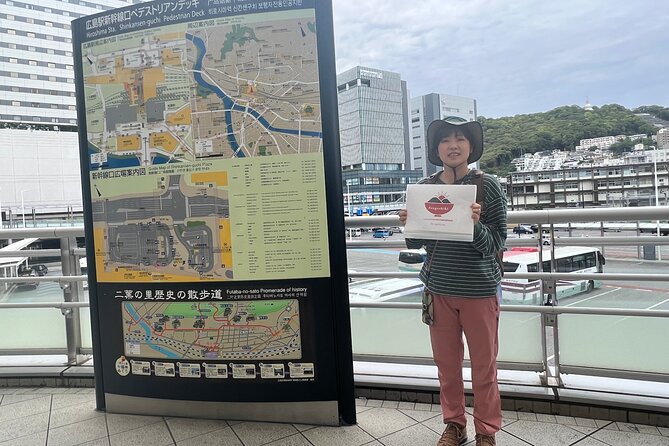
Meeting at Hiroshima Station at 7:30
The meeting point is at the Shinkansen exit of Hiroshima Station. Listed departure times include 7:30, 10:00, and 13:00, so check the time you select when booking. The early departure is the best fit if you want the rest of the day for museums, gardens, or a visit to Miyajima.
Starting at the station makes the tour easy to add to a Hiroshima stay. You do not need to find a remote trailhead, and the activity ends back at the same meeting point. That is useful if you are carrying a small day bag or have plans nearby.
Arrive early. If you are more than 10 minutes late without contacting the provider, the reservation can be canceled with the full fee charged. That rule is strict, so give yourself time to find the correct station exit.
The group then gets acquainted, and the guide explains the route. This first briefing matters because the walk combines shrine visits, a mountain climb, a forest exercise, and a tea service rather than following a simple point-to-point trail.
Hiroshima Toshogu, the first cultural stop
The first major stop is Hiroshima Toshogu Shrine, reached soon after leaving the station. The shrine is connected with the Toshogu tradition dedicated to Tokugawa Ieyasu, and the visit focuses on cultural assets and religious practice.
I would pay attention here to the small actions the guide explains. Japanese shrines can seem familiar after you have seen several, but the meaning of bows, offerings, purification, and prayer is easy to miss when you visit alone. The guide helps turn a quick look at a gate or shrine building into a lesson about how the place is used.
The stop lasts about 30 minutes. That is enough time to look around and ask questions without making the opening of the tour feel rushed. It also gives you a gentle start before the steeper part of the route.
Kinko Inari and the 500-step climb
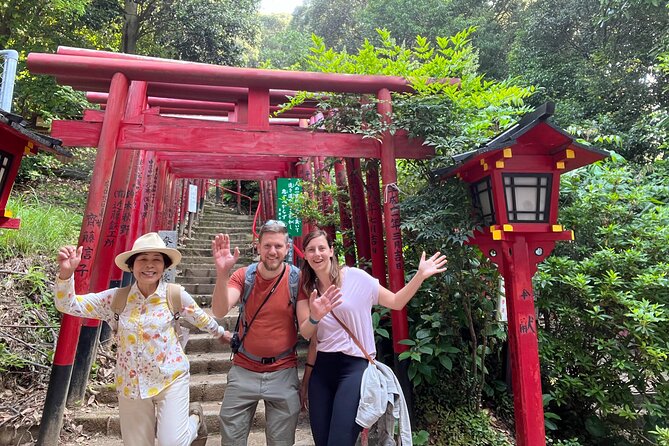
From Toshogu, the route continues toward Kinko Inari Shrine and into Mt. Futaba. This is where the walk becomes a real hike. The stated route includes about 500 steps, with some uneven and steep sections.
The climb is often described as easy to moderate rather than strenuous, largely because the guide makes frequent pauses. Still, do not treat it as a casual stroll. A 54-year-old participant found it manageable but noted that the path could feel challenging, while experienced hikers may find it quite easy. That is a fair way to think about it.
Your pace will depend on the weather and the group. On a very hot day, the climb becomes much harder. One outing took place in heat around 36 degrees Celsius, with the guide arranging regular breaks and reminding the group to drink water. If you visit during Japan’s hot season, bring water, wear light clothing, and expect to sweat.
The shrine visit adds meaning to the climb. You may see the approach as a pilgrimage route rather than just a staircase. The guide explains the customs and may show you how to make an offering or write a wish. This is one of the most useful parts of having a local guide, since you can take part respectfully instead of guessing.
More Tea Country Hikes around Japan:
- Hiroshima: Morning Hiking Tour with Open-air Tea Ceremony
★ 4.8 · 58 reviews - Tuk-Tuk Safari Liptons seat,Tea Fields Hike,TeaFactory Tour
★ 4.8 · 46 reviews - Private Munnar Tea Trek
★ 4.6 · 38 reviews - NuwaraEliya Tea Factory,Plantation & Water Falls Hike Tour by Car
★ 5.0 · 12 reviews
Futabayama Peace Pagoda and the Hiroshima view
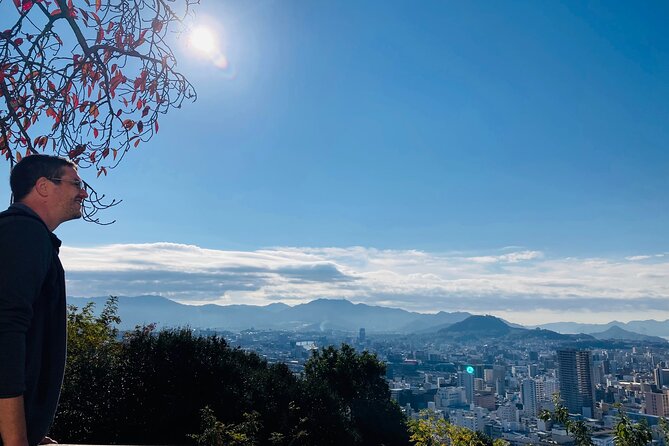
At the Futabayama Peace Pagoda, the reward is a wide view over Hiroshima, the Seto Inland Sea, and Miyajima. On a clear day, this is the visual center of the experience. You can see the city from above and think about its recovery in a way that feels different from reading dates and names in a museum.
The pagoda is also a place to pause after the stairs. The schedule allows time to take in the view, listen to the guide’s explanation, and recover before continuing. Bring a camera if you like, but do not rush through this stop. The point is not only the photograph. It is the contrast between the quiet mountain and the busy city below.
The views can change with weather and haze. You should not book this solely for a guaranteed panorama, since clouds or heat can reduce visibility. Even so, the mountain shrines and woodland remain worthwhile if the horizon is not perfectly clear.
Forest bathing in the Futaba woods
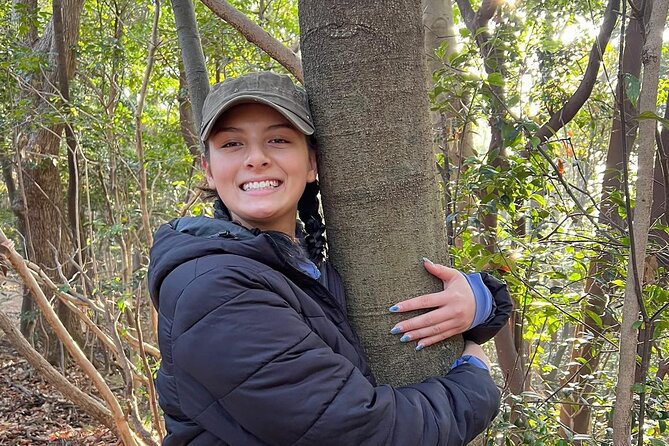
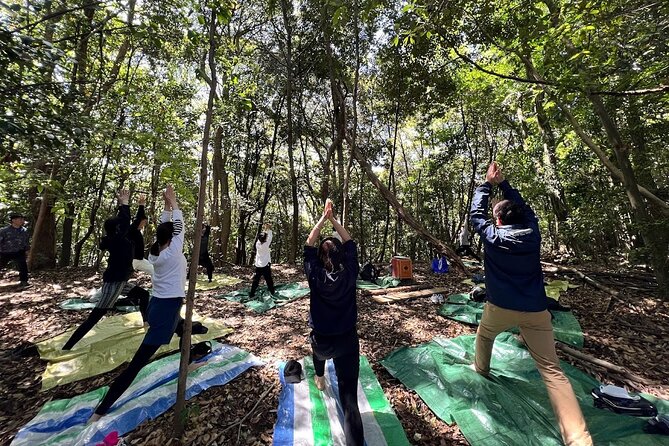
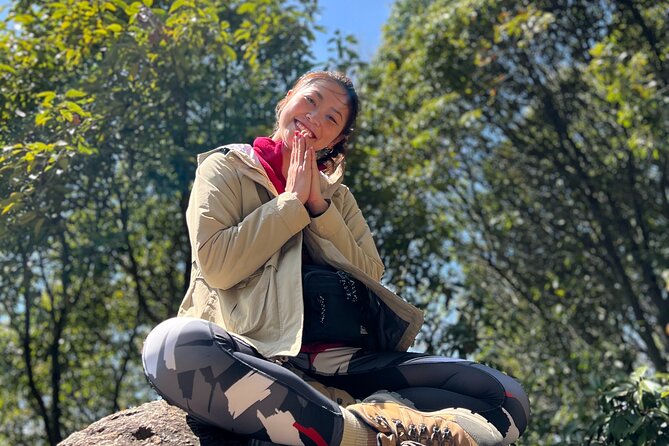
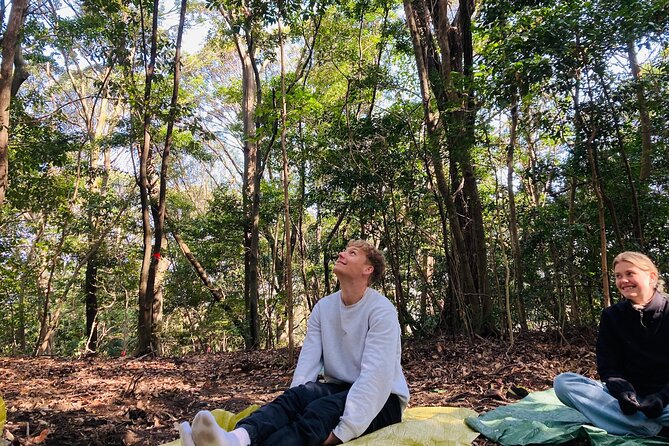
After reaching the upper section, the tour includes a forest-bathing pause, also described as a short meditation. You may sit or stand quietly while the guide directs your attention to your senses and the surrounding trees.
This is not a technical wellness class. It is a simple way to slow down after the climb. I like the timing: the group has already left the city behind, but the walk has not yet finished. The exercise gives you a chance to notice sound, air, texture, and the feel of the forest instead of treating the woods as scenery between stops.
Some people will enjoy this gentle pause more than others. If you prefer constant movement or detailed sightseeing, it may feel a little quiet. If you want a break from crowded streets and a chance to reset, it fits the route well.
Nodate tea at the mountaintop shrine
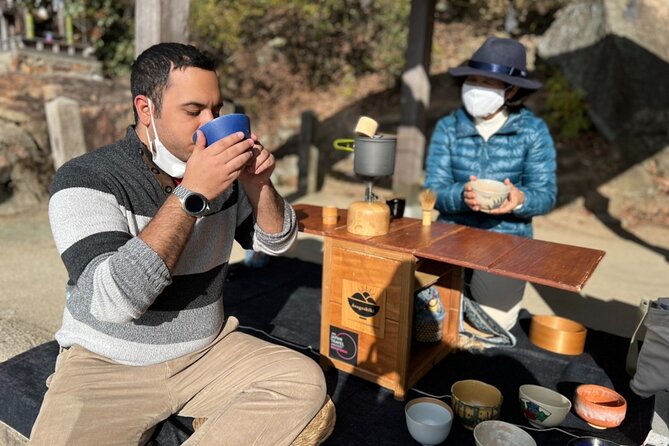
The final major experience is Nodate, an open-air tea ceremony prepared by the guide at or near Kinko Inari’s Okumiya Shrine. The setting is the key. You are not sitting in a formal tearoom. You are having tea outdoors, with Hiroshima and the Seto Inland Sea spread below.
The tea service is described as a highlight for good reason. It brings together the spiritual setting, the forest, the view, and the hospitality of the guide. One guide served cold green tea on an exceptionally hot day, which sounds like exactly the right refreshment after the climb. Other visits included matcha tea.
The ceremony is informal enough for first-time visitors. You do not need prior knowledge of tea customs to enjoy it. Your guide explains what is happening and creates room for questions. This is a cultural encounter rather than a staged performance, so expect something personal and relatively simple rather than a long formal ceremony.
The schedule allows about an hour for the tea experience and the surrounding stop. That generous time is valuable. You can enjoy the drink, take in the view, and talk with the guide without being pushed immediately back onto the trail.
The descent and return to the station
After the tea service, the route returns toward Hiroshima Station, ending at the original meeting point. The listed end times are about 10:30 for the early departure, 13:30 for the 10:00 departure, and 16:30 for the 13:00 departure.
The early tour is the strongest choice for most visitors. You finish with time for lunch and an afternoon at the Peace Memorial Museum or another Hiroshima sight. The later departures may work if your schedule is tight, but they take up much of the day and may leave you walking in stronger afternoon heat.
The descent is easier for many people than the climb, but uneven steps still require care. Wear shoes with a secure sole. The activity is not presented as suitable only for serious hikers, and most people can participate, but the 500 steps should guide your decision.
What the $109.43 price buys you
At $109.43 per person, this is not the cheapest way to see a Hiroshima view. You are paying for a small group, a local guide, shrine interpretation, the forest exercise, and the tea service, not simply transportation to a lookout.
I think the price makes sense if you value explanation and personal contact. A self-guided walk can show you the same general mountain area, but it may not explain the meaning of the shrines, help you follow local customs, or create the tea setting at the top. The maximum of six people also gives the tour a private feel without the cost of a fully private booking.
The conservation contribution adds a practical benefit. Five percent of the fee supports Futaba Mountain conservation activities. That will not transform the value calculation, but it is a worthwhile detail when you are choosing between a standard sightseeing outing and one connected to the care of the place.
Who should book this experience
I would recommend this walk to you if you want to combine nature, religion, history, and a city view in one morning. It suits couples, families with older children, and solo visitors who prefer a guide for cultural context. Children aged 0 to 5 can participate free, though every member of the group still needs to handle the stairs and trail.
It is especially useful after you have seen Hiroshima’s central memorial sites. The mountain does not replace the Peace Memorial Park, but it adds another viewpoint on the city and its recovery. The small group and open-air tea make it feel more personal than a standard bus excursion.
Think twice if you dislike stairs, have difficulty on uneven paths, or want a completely relaxed tea ceremony with no physical effort beforehand. Also consider the season. Hot weather can make the climb uncomfortable, and poor weather may lead to cancellation.
Free cancellation is available up to 24 hours before the start time for a full refund. If bad weather causes the provider to cancel, you can choose another date or receive a full refund. Changes or cancellations inside 24 hours are not refunded, so keep an eye on the forecast.
Should you book the Futaba Mountains hike?
Book it if you want to see a quieter, more local side of Hiroshima and you like the idea of earning your tea with a short mountain climb. The combination of Toshogu, Kinko Inari, the Peace Pagoda, forest bathing, and Nodate tea is unusual and well balanced.
Skip it if your schedule leaves no room for three hours, if 500 steps are a firm no, or if your main goal is a formal indoor tea ceremony. For everyone else, the early departure offers a smart use of a Hiroshima morning, and the view from Futabayama gives the city a setting you cannot get from street level.
FAQ
Where does the tour start?
It starts at Hiroshima Station, at the Shinkansen exit, in Matsubaracho, Minami Ward, Hiroshima.
Where does the tour end?
The activity ends back at Hiroshima Station, at the meeting point.
How long does the tour last?
The tour lasts about three hours.
What departure times are available?
The listed departure times are 7:30, 10:00, and 13:00. Check the selected time when booking.
How many steps are on the hike?
The route requires you to climb about 500 steps.
What places do you visit?
The route includes Hiroshima Toshogu Shrine, Kinko Inari Shrine, Futabayama Peace Pagoda, the Futaba Mountain forest, and the Okumiya Shrine area.
Is the tea ceremony held indoors?
No. Nodate is an open-air tea ceremony held near the mountaintop shrine, with views over Hiroshima.
Can young children join?
Children from 0 to 5 years old can participate free. The 500 steps and uneven trail still apply to everyone in the group.
What happens if the weather is poor?
The activity may be canceled in poor weather. You will be offered a different date or a full refund.
Newly steeped around Japan
- Yokohama : Tea Ceremony with Sweets and Souvenir★ 5.0 · 5 reviews
- Whisk Your Own Matcha: A Zen Matcha Experience at Temple★ 3.6 · 7 reviews
- Walking Tour: Yanaka,Nezu& Sendagi: Tea Ceremony & Old Tokyo★ 5.0 · 3 reviews
- Visit local home for music and tea ceremony near Disney★ 4.9 · 13 reviews
- Trip to Kamakura & Enoshima: Shrines, Seaside, Temples &Tea★ 5.0 · 11 reviews
- Yokohama: Sushi & Gyoza Cooking with Matcha & GreenTea Experience★ 5.0 · 3 reviews
- Kyoto tea town for matcha lovers★ 5.0 · 16 reviews
- Uji: Private immersion into Kyoto’s tea and reglious culture★ 5.0 · 17 reviews
Tea Ceremony Experiences, compared.
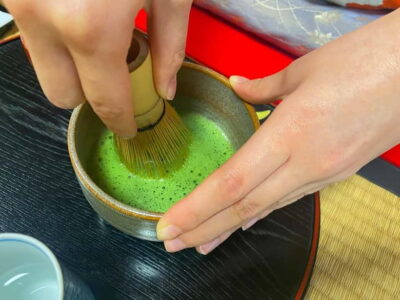
Kyoto: Tea Ceremony in a Traditional Tea House in Kiyomizu
Read our review →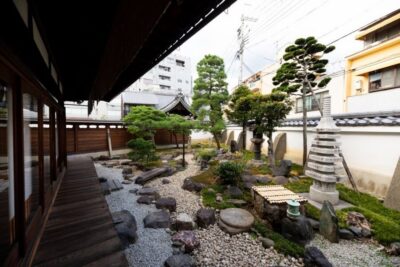
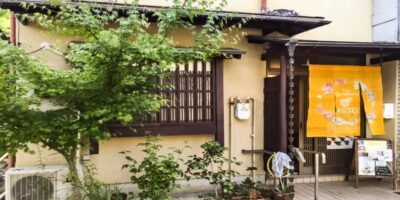
Kyoto: 45-Minute Tea Ceremony Lesson Experience
Read our review →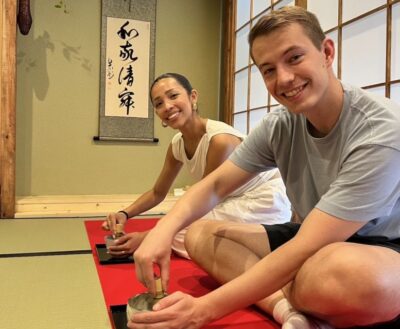
Kyoto: Table-Style Tea Ceremony at a Kyo-Machiya
Read our review →


Browse the lists this tea experience appears in