
Review · SOUTH KOREA
Korean Green Tea Tour – from Boseong to Gangjin (Private)
Boseong’s sweeping tea hills are only half the story on this long day from Gwangju. You also reach Gangjin, a quieter tea region with more than 1,000 years of tea culture, a Joseon-era garden, and a 200-year-old tea tradition. I especially like the three different tea styles built into the day and the mix of famous views with less-visited places.
I also like the private car and the guides, including Veronica and Vicky, who can add useful local context, restaurant advice, and help with transport questions. The main drawback is the pace: nine to ten hours, several hours in the car, and a full schedule of stops. Lunch costs extra, too.
Key points at a glance
- Three kinds of Korean tea: Taste leaf tea, powdered tea, and traditional rice cake tea in different settings.
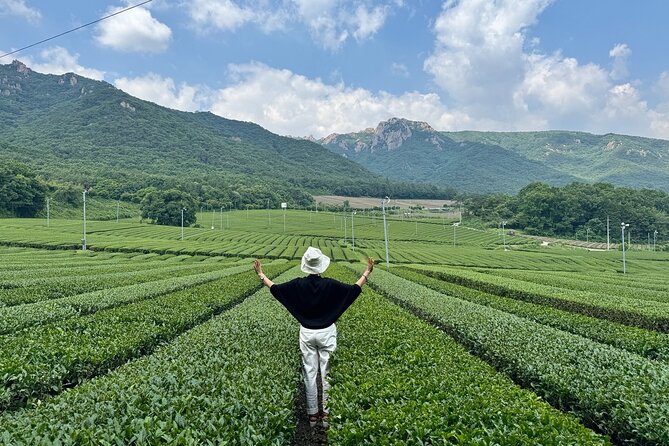
- Boseong’s famous tea hills: Walk through Daehan Dawon and see the rolling rows that made the area Korea’s best-known tea region.
- A real tea lesson: Join a Korean tea ceremony in Boseong rather than simply buying a cup at a farm shop.
- Gangjin’s quieter story: Visit Baegundong Hermitage Garden and learn how tea culture survived and returned to local life.
- Private transport from Gwangju: The route takes about 70 minutes to Boseong, 50 minutes to Gangjin, and 70 minutes back to Gwangju.
- Local food is part of the plan: Choose from town dishes such as stir-fried octopus, then pay the restaurant directly.
Why this tea tour is different
Many day trips from Gwangju would stop at Boseong, take a few pictures, and turn back. This one keeps going south to Gangjin, which gives you a fuller picture of Korean tea.
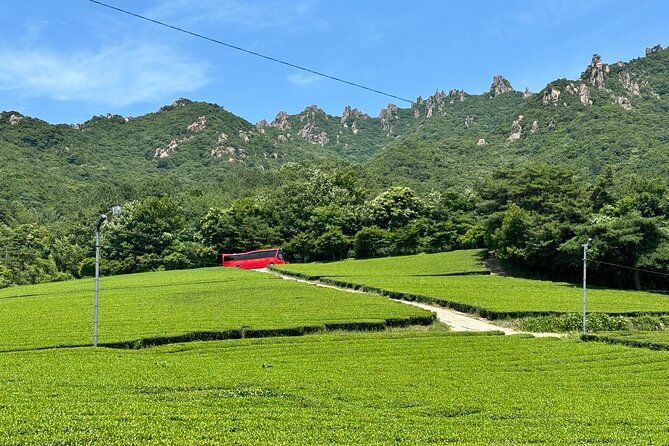
Boseong is the visual star. Its tea farms spread across rounded hills, and the neat rows make a strong first impression. Gangjin is less about postcard views and more about old gardens, local tea makers, and the long thread of Korean tea culture.
I like that the day does not treat tea as one single drink. You encounter loose-leaf tea, powdered green tea, and rice cake tea, each tied to a different custom or place. The result is more useful than a quick tasting because you begin to understand how Korean tea can be grown, prepared, served, and remembered.
The private format matters here. You are not joining a large bus group with a fixed commentary track. Your group has its own transport, and guides such as Veronica and Vicky have been able to adjust explanations and offer practical help beyond the scheduled visits. That can make a long rural day feel much easier.
More Green Tea Tours in the world:
- Experience all of Japanese culture and Japanese food experience classes “origami, udon, Japanese food, green tea, calligraphy” in 4 hours
★ 5.0 · 105 reviews - Uji: Green Tea Tour with Byodoin and Koshoji Temple Visits
★ 4.8 · 72 reviews - Scenic Green Tea Fields of Hidden Kyoto & Local Tea Exp (Private)
★ 5.0 · 32 reviews
Daehan Dawon and Boseong’s rolling tea hills
The first major stop is Daehan Dawon, Boseong’s best-known tea farm. You have about 90 minutes here, with admission included.
Boseong’s climate and soil suit green tea, and the tea grown here is described as organic. The farm’s appeal is simple: broad hills covered with curved lines of tea bushes, fresh air, and an easy setting for walking and photographs.
You should expect some walking on sloped ground. The visit is not only a roadside photo stop, but it is also not a strenuous hike. The time gives you room to see the rows, take in the views, and understand why Boseong attracts so many people who want to see Korea beyond its cities.
This is likely to be the busiest-feeling part of the day, simply because Boseong is a well-known destination. If you want quiet, your best chance is to enjoy the views without rushing and save your questions for the guide.
The included matcha affogato adds a sweet finish to the Boseong portion. It combines powdered green tea with green tea ice cream, so it is a good introduction to the more concentrated flavor of matcha without making the tasting too formal.
Lunch in Boseong-eup, with the bill kept separate
After the main tea field, the tour pauses in Boseong-eup for about an hour. Lunch is not included, and you choose your meal and pay at the restaurant.
The food choices listed include stir-fried nakji, or Korean octopus, along with other local dishes. This arrangement gives you some control over what you eat, which is useful on a long day. It also means you should budget beyond the $195 tour price.
I like that lunch is placed in town rather than treated as an afterthought at a highway stop. You get a chance to try a local dish and take a real break between the outdoor farm visit and the museum.
Still, an hour is not a generous lunch window if you want a slow meal. Tell your guide if you have food concerns or need help choosing. The guides have been especially useful for restaurant suggestions and local food introductions.
The Korea Tea Museum puts the day in context
The Korea Tea Museum gives you about an hour to shift from scenery to explanation. It introduces the tea plant and explains the six kinds of tea that can be made from it.
This stop matters because tea fields alone can blur together. The museum helps explain what happens after the leaves are grown and why processing changes the finished drink. It also covers the history of Korean tea and the development of tea production.
I would give this visit your full attention, especially if you are new to Korean tea. The ceremony and tastings become more meaningful once you understand that green tea is not simply one fixed product.
The museum is also a sensible pause in the middle of the day. You have already been outside in the fields, and the next stops return to farms and gardens. One hour here keeps the tour from becoming a string of similar viewpoints.
More Tea Experiences around the world:
- Kyoto: Tea Ceremony in a Traditional Tea House in Kiyomizu
★ 4.9 · 3,519 reviews - London: Afternoon Tea Cruise on the River Thames
★ 4.4 · 3,274 reviews - Kyoto: Tea Ceremony Ju-An at Jotokuji Temple
★ 4.9 · 3,207 reviews - Afternoon Tea Bus Tour in Dublin
★ 5.0 · 2,791 reviews
Nokcha-ro and Choroknip Tea Farm
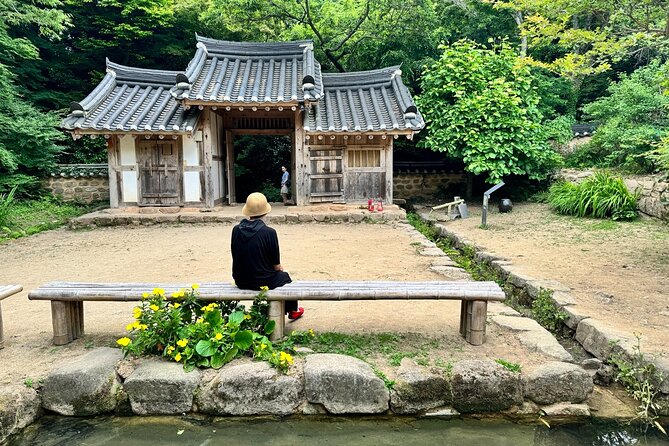
The next stop lasts about 40 minutes at Nokcha-ro. Choroknip tea farm, operated by Boseong Jeda, is known for its viewpoint over the tea fields.
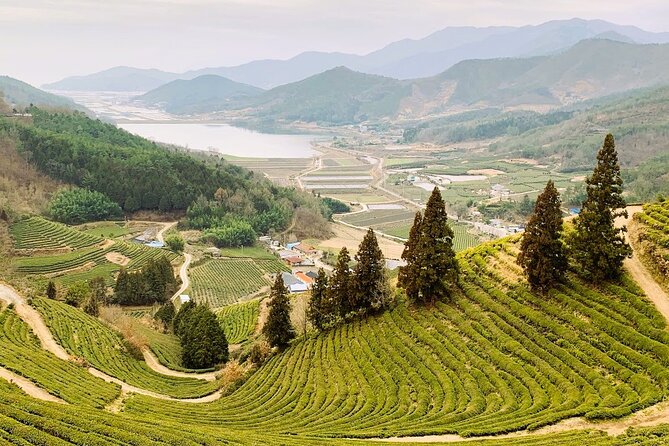
The tea house terrace is the key feature. From there, you can look across the green rows from a different angle than at Daehan Dawon. I like this second view because it shows how much the experience depends on perspective. One farm lets you walk among the bushes, while this stop focuses more on looking out over them.
Forty minutes is enough for the terrace, photos, and a short look around. It is not enough for a long farm visit, so keep your expectations practical. Think of Nokcha-ro as a carefully chosen viewpoint rather than another full attraction.
Gangjin Dawon and the turn toward older tea culture
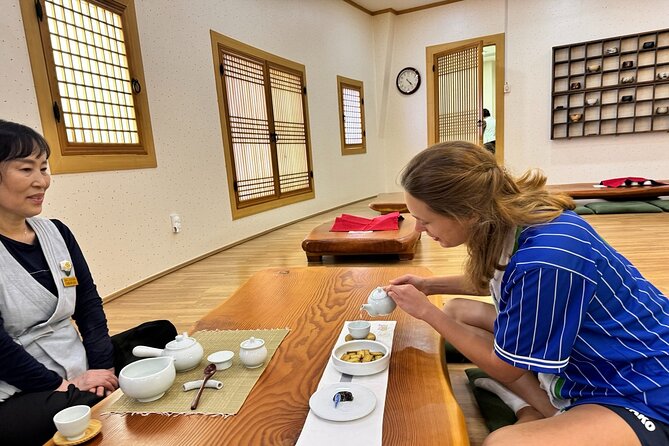
The drive from Boseong to Gangjin takes about 50 minutes. That transfer is one reason this is a full-day outing, but it also takes you from Korea’s best-known tea county into a quieter area.
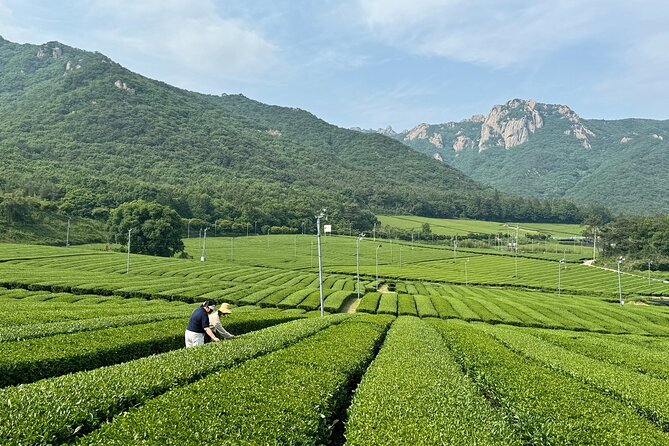
Gangjin Dawon sits at the foot of Mount Wolchulsan. The tea field has been cultivated for green tea production since 1980 by Osulloc, one of Korea’s major tea producers.
The farm is newer than the tea traditions connected to the area. Gangjin’s tea culture reaches back more than 1,000 years, so the stop works as a bridge between modern production and older customs.
You spend about 30 minutes here. That is enough to see the setting and hear the story, but not enough for an extended walk. The short visit also helps keep the day moving toward the historical sites that make Gangjin distinct.
Baegundong Hermitage Garden
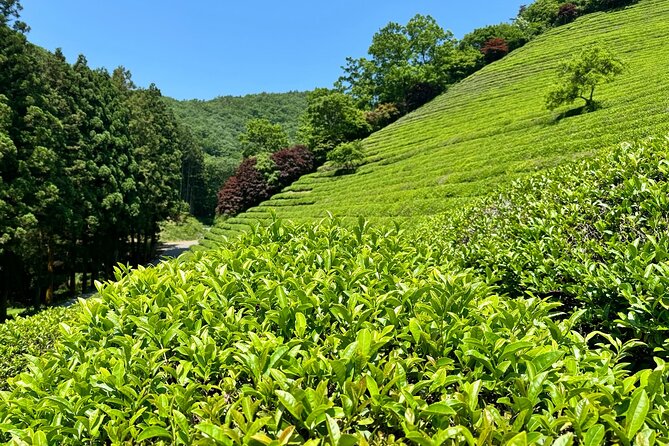
Baegundong Hermitage Garden was built in the late 17th century during the Joseon Dynasty. You have about 40 minutes to see the garden, which was planned to work in harmony with its natural setting.
This is one of the most appealing stops for anyone who wants more than agriculture. The garden connects tea with water, plants, architecture, and quiet reflection. It shows how tea culture lived in cultivated spaces, not just on commercial farms.
The visit is brief, so you will not study every detail. Your guide’s explanation adds real value here. Without context, an old garden can look pleasant but puzzling. With the story of tea revival and the site’s careful design, it becomes easier to understand why this place belongs on the route.
The garden also changes the mood of the day. Boseong gives you wide views and open hills. Baegundong is more enclosed and thoughtful, with a focus on design and place.
Baegun Tea House and historic rice cake tea
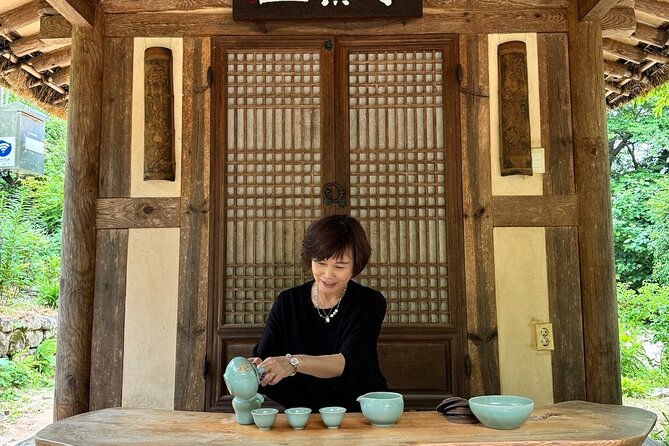
The final scheduled stop is in Seongjeon-myeon at Baegun Tea House. You spend about 40 minutes here.
The tea house honors Baegun Okpan Tea, regarded as Korea’s first tea brand. It was created in the 1920s by Lee Han-young, a descendant of one of Jeong Yak-yong’s disciples. That connection ties the tea house to the intellectual and cultural life of Gangjin.
Here you taste historical rice cake tea, one of the three tea forms included in the experience. This is not simply another cup of green tea. It gives the day a regional and historical finish, showing how tea traditions can be preserved through local families and small tea houses.
The 200-year-old tea tradition mentioned for this part of the tour is a major reason to make the trip to Gangjin. Boseong may be easier to find in a standard South Korea itinerary, but Gangjin gives you a less familiar story.
What the private format adds
The $195 per-person price is not the cheapest way to see Boseong. The value comes from what is bundled into a very long rural route: private transportation, admission fees, a ceremony, the matcha affogato, and the rice cake tea experience.
You also avoid arranging several difficult connections between Gwangju, Boseong, and Gangjin. The driving times alone add up to roughly three hours and ten minutes, before counting travel between the individual stops. A private vehicle turns that into a guided day instead of a transport puzzle.
The tour is private, so only your group participates. That gives you more room to ask questions and adjust the pace within reason. Guides including Veronica and Vicky are noted for clear explanations, local recommendations, and practical assistance when transport problems arise elsewhere in a trip.
The tradeoff is that you are paying for convenience and interpretation, not just entry to a tea farm. If you are comfortable renting a car, reading Korean directions, and finding the tea sites yourself, the price may feel high. If you value a local guide and want both Boseong and Gangjin in one day, the cost is easier to justify.
Who should book this experience
I would recommend this tour most strongly if you:
- Love tea, gardens, rural scenery, or Korean food.
- Are staying in Gwangju and want a full day outside the city.
- Prefer a private vehicle to public transport connections.
- Want historical context instead of only taking photographs.
- Like a guide who can suggest food and adapt explanations to your interests.
- Have enough energy for a nine to ten-hour day.
It may be less suitable if you want a slow, single-site outing. The itinerary has seven stops, several drives, a museum visit, lunch, and two different tea regions. You will see a lot, but you will not linger everywhere.
The tour is also weather-dependent. Poor weather can lead to a different date or a full refund. Since some of the best moments happen outdoors, that policy is sensible, but check the forecast before committing to a tightly planned travel day.
Pickup is offered, the tour begins at 9:30 am, and most people can participate. Service animals are allowed, and the experience is near public transportation, although the private vehicle is the main way to cover this route efficiently.
Should you book the Boseong and Gangjin tea tour?
Book it if you want to understand Korean tea through farms, food, gardens, ceremony, and local stories rather than through one tasting room. The strongest parts are the private transport, the contrast between Boseong and Gangjin, and the chance to try three distinct tea styles.
I would be especially keen to book if I were based in Gwangju without a car. The route is too spread out to feel simple on your own, and a good guide can make the difference between merely visiting tea fields and understanding why these places matter.
Skip it if you want a short activity, dislike long drives, or are trying to keep every meal and admission cost inside the booking price. For tea lovers, garden fans, and curious food-focused visitors, this is a thoughtful and unusually broad day in southwestern Korea.
FAQ
Where does the Korean Green Tea Tour begin?
The tour starts from Gwangju Metropolitan City at 9:30 am.
How long does the tour last?
The full experience lasts approximately nine to ten hours.
How long are the main drives?
The trip from Gwangju to Boseong takes about 70 minutes. Boseong to Gangjin takes about 50 minutes, and Gangjin back to Gwangju takes about 70 minutes.
Is this a private tour?
Yes. Only your group participates, and private transportation is included.
Is lunch included?
No. Lunch is taken in Boseong-eup, but you choose your meal and pay the restaurant directly.
What tea experiences are included?
The tour includes a Korean tea ceremony in Boseong, a matcha affogato, and historical rice cake tea in Gangjin. Across the day, you can taste leaf tea, powdered tea, and rice cake tea.
Can I cancel for a full refund?
You can cancel at least 24 hours before the start time for a full refund. Changes or cancellations made less than 24 hours before the start time are not accepted, and poor weather may lead to a different date or a full refund.
Newly steeped around the world
- York: Private Horse-Drawn Carriage Ride and Afternoon Tea★ 5.0 · 3 reviews
- Yokohama : Tea Ceremony with Sweets and Souvenir★ 5.0 · 5 reviews
- Whisk Your Own Matcha: A Zen Matcha Experience at Temple★ 3.6 · 7 reviews
- Yogyakarta: Prambanan Tour, Sukuh Temple & Tea Plantation★ 5.0 · 3 reviews
- Washington, D.C.: Tea Around Town Bus Tour with Landmarks★ 3.4 · 7 reviews
- Walking Tour: Yanaka,Nezu& Sendagi: Tea Ceremony & Old Tokyo★ 5.0 · 3 reviews
- Wadi Rum: 2-Hour Jeep Tour with Bedouin Tea★ 5.0 · 11 reviews
- Volcano, Hot Spring, Mud Bath & Tea plantation all included★ 5.0 · 5 reviews
Green Tea Tours, compared.
Uji: Green Tea Tour with Byodoin and Koshoji Temple Visits
Read our review →
Scenic Green Tea Fields of Hidden Kyoto & Local Tea Exp (Private)
Read our review →
Osaka; Japanese Tea ceremony experience, Macha and Sencha
Read our review →
Slow Cycling Tour at Uji’s Matcha Green Tea Fields and Heritage
Read our review →
Sencha-do the Japanese Tea Ceremony Workshop in Kyoto
Read our review →
Uji Tea Ceremony and UNESCO Heritage Walking Tour
Read our review →Browse the lists this tea experience appears in