
Review · SHANGHAI
Shanghai: Song Dynasty Tea Ceremony Experience
The most unusual part of this Shanghai experience is the tea itself. Instead of steeping leaves in a pot, you whisk finely powdered tea with hot water until it turns smooth, frothy, and fragrant. It is closer to making a small cup of edible art than ordering a standard brew. Song Dynasty tea gives the session its focus, while the careful whisking adds a quiet, hands-on rhythm.
I like the practical format: you do not just watch a tea master, you handle the bowl, scoop, whisk, and powder yourself. I also like the cultural context, which explains why tea mattered in both everyday life and elite Song society. The main consideration is the price, $78 per person for 90 minutes, and the fact that you must make your own way to the mall meeting point in Putuo District.
Key points to know before booking
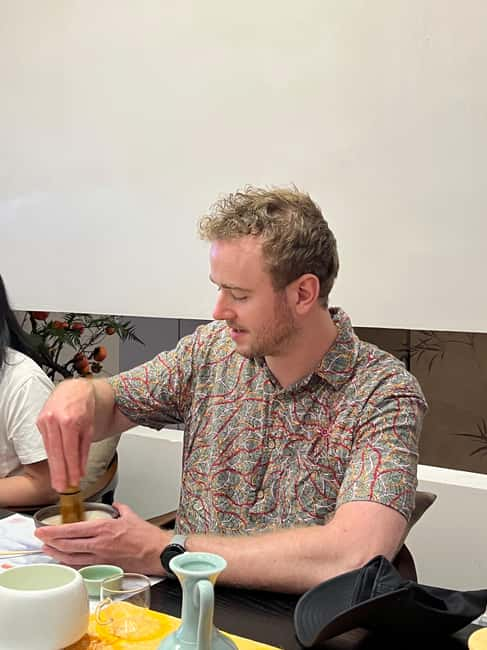
- You whisk your own powdered tea: The central activity is making a frothy cup by hand, using the Song Dynasty method.
- A tea master leads the session: Instruction is available in English, Chinese, Japanese, Korean, Spanish, and Russian.
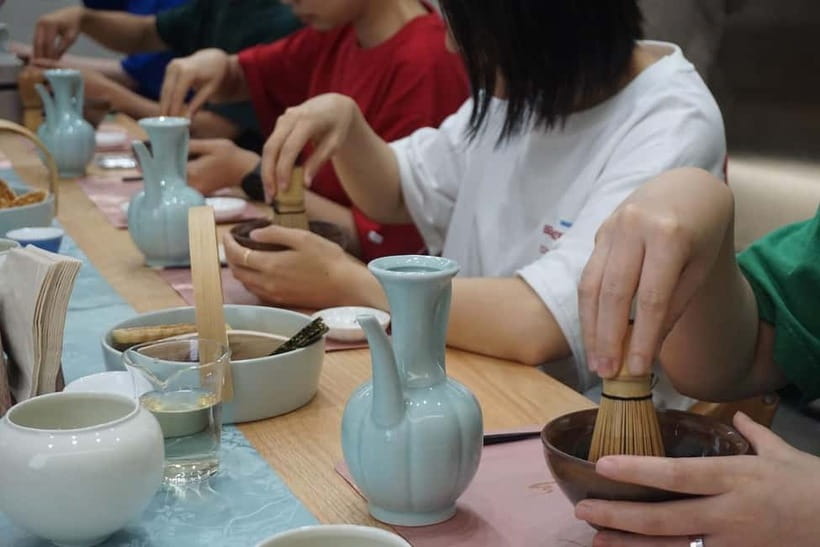
- The setting is designed around traditional aesthetics: Tools include a tea bowl, tea whisk, tea scoop, tray, cloth, and hot-water kettle.
- It is a private-group experience: This works well for couples, families, friends, and small teams who want to participate together.
- You meet at a mall in Putuo District: Look for the guide at the main entrance, wearing a white hat with a red Eto logo.
- The session lasts 1.5 hours: That is enough time for an introduction, demonstration, practice, tasting, and conversation without taking up a full day.
Why Song Dynasty tea feels different
Most tea ceremonies you encounter in China focus on steeped leaves, small cups, and repeated pours. This one takes you back to a much older method in which tea leaves were ground into powder before hot water was added.
During the Song Dynasty, tea was part of ordinary life, formal gatherings, artistic culture, and high society. Preparing it could be a refined social skill. The look of the foam, the quality of the powder, and the grace of the movement all mattered.
That background gives the activity more weight than a simple tasting. You learn why the tools are shaped as they are and why whisking is not rushed. The ceremony connects taste with appearance, movement, and attention.
You do not need to know anything about Chinese tea before you arrive. The format is built for beginners. The tea master introduces the history first, then shows how the tools work, so you can follow the process without feeling lost.
More Tea Ceremonies in China
- Traditional Chinese Tea Ceremony Experience
★ 4.7 · 74 reviews - Beijing Culture: Tea Ceremony, Heritage Instrument & Calligraphy
★ 5.0 · 57 reviews - Chinese Tea ceremony in Beijing Hutong courtyard
★ 4.7 · 26 reviews
Meeting at 168 Aomen Road in Putuo District
The meeting point is the main entrance of the mall at 168 Aomen Road, Putuo, Shanghai, 200071. Your guide should be wearing a white hat marked with a red Eto logo.
This is not a hotel pickup experience. You are responsible for reaching the meeting point, so allow extra time if you are unfamiliar with Putuo District. The exact meeting details are sent through WhatsApp after booking, and WhatsApp support is available if you need help before the session.
That communication system is useful, but it also means you should check your messages before leaving for the activity. Save the address, look for the guide’s clothing, and keep the support contact easy to find. The separate entrance and private-group setup help keep the arrival simple once you are at the mall.
The setting is described as a traditional-style tea environment rather than a basic classroom. Expect the visual side of the ceremony to matter. The bowls, tray, cloth, scoop, whisk, and kettle are part of the experience, not just equipment placed on a table.
The opening history lesson
The first part is a short introduction to tea in Chinese culture, with special attention to the Song Dynasty. This gives you a useful frame before you start handling the tea.
I appreciate this order. If you begin with equipment, the whisk and bowl can seem like attractive objects with no clear purpose. After hearing how tea functioned in Song society, the movements make more sense.
The introduction also covers the ceremonial and meditative side of tea. The point is not to race toward the tasting. You are encouraged to notice the appearance, aroma, texture, and rhythm of preparation.
The history portion is brief enough for people who prefer doing things to listening. It is also a helpful addition for anyone interested in Chinese art, court life, food customs, or traditional rituals. You leave with a clearer idea of why powdered tea was once treated as a serious cultural practice.
Handling the bowl, whisk, scoop, and tray
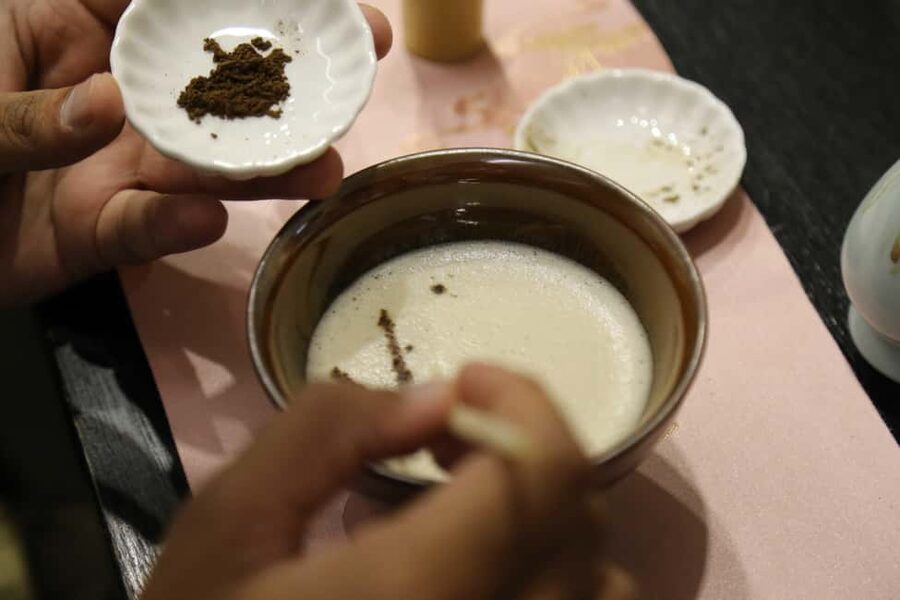
Next, the tea master introduces the tools. The included equipment covers the main parts of the method:
- Tea bowl
- Tea whisk
- Powdered tea
- Tea scoop
- Tea tray
- Hot-water kettle
- Tea cloth
The tea scoop controls the amount of powder. The bowl gives you room to whisk. The cloth helps keep the preparation neat, while the tray brings the separate pieces into one orderly arrangement.
You are shown how to use the whisk rather than left to guess. That matters because the texture depends on the movement of your hand. The goal is a fine foam, not simply a cup of powder mixed with water.
This is also where the activity becomes more social. You can watch how other people approach the task, compare results, and laugh at the first uneven attempt. For families and friends, that shared learning is likely to be more memorable than a formal demonstration where you only sit and observe.
Same leaf, a different ritual:
- One-Day Hangzhou Dragon Well Tea Culture & West Lake Private Tour
★ 5.0 · 98 reviews - Tea Tasting and Pairing Concept Workshop
★ 5.0 · 57 reviews - Biking Real Shanghai& Tea Tasting Experience
★ 4.5 · 45 reviews - Authentic Hangzhou Longjing Tea Culture Experience Tour
★ 5.0 · 32 reviews
Making foam flowers with your own tea
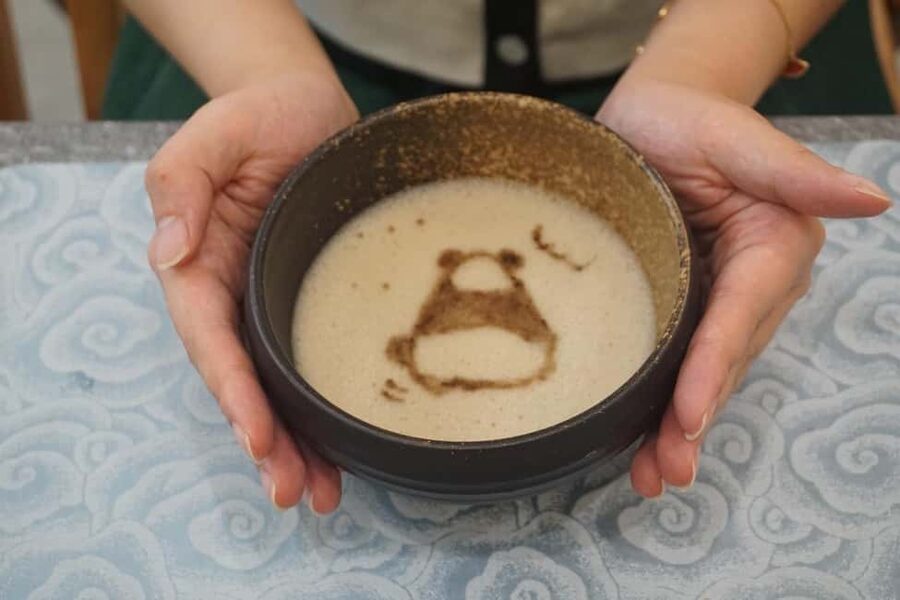
The main event is whisking. The powdered tea is combined with hot water in the bowl, then worked with the tea whisk until a layer of delicate foam forms on top.
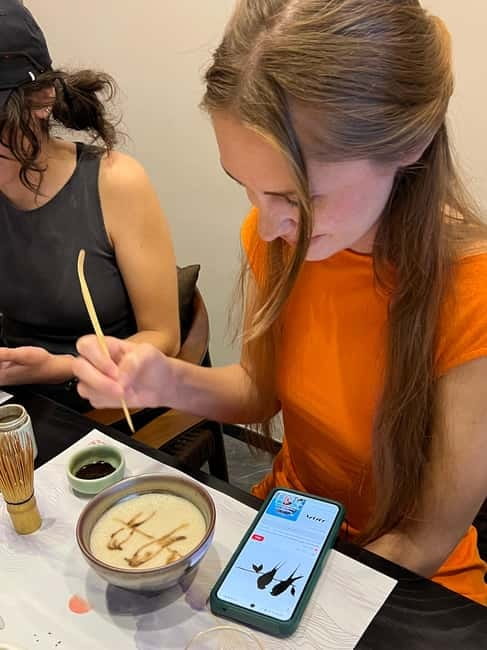
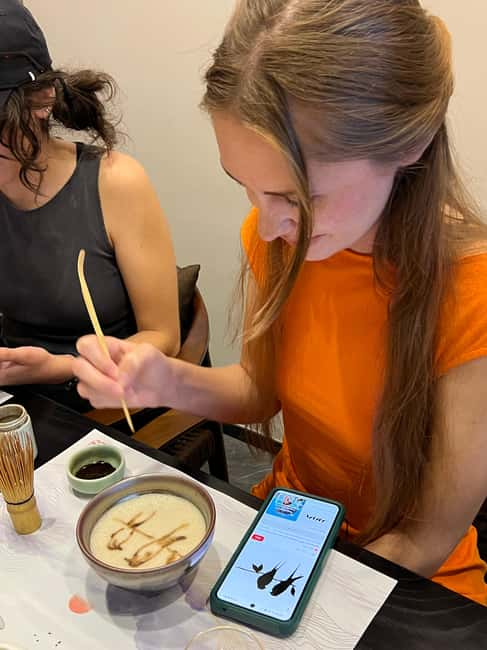
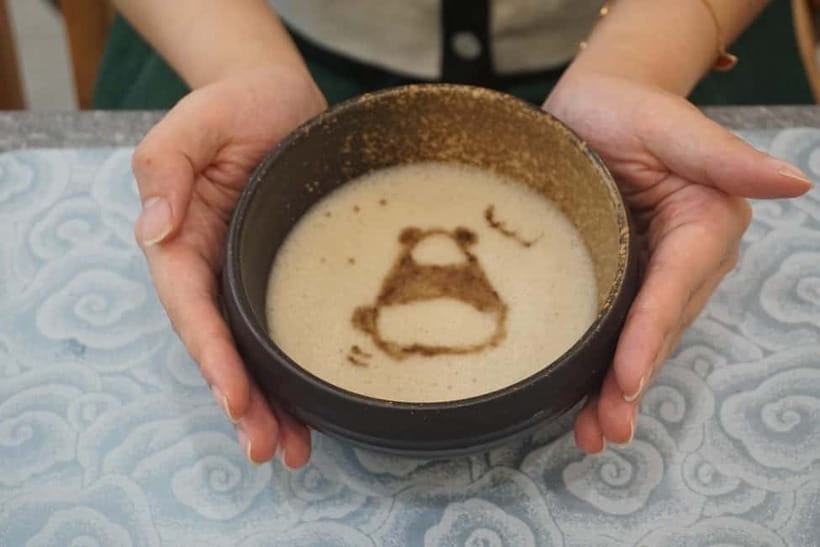
The appeal is partly visual. One participant described watching foam flowers appear across the surface, and that is a good way to understand the charm of the process. The drink changes as you work, moving from powder and water to a pale, aromatic foam.
The motion can feel surprisingly calming. You have to pay attention to the whisk, the liquid, and the texture rather than checking your phone or rushing to the next sight. That meditative quality is one of the strongest reasons to choose this experience.
Do not expect every cup to look perfect on the first try. The fun is in learning the technique. The tea master can adjust your hand position and explain how to create a smoother result.
You then taste the tea you prepared. The flavor is described as rich and smooth, with a distinct aroma. Since the tea is powdered rather than steeped and strained, the mouthfeel will be different from the loose-leaf tea served in many Chinese teahouses.
What makes the private format useful
The experience is designed for a private group rather than a large shared class. That can make a real difference in a hands-on activity.
You have more room to ask questions, repeat a step, or take photos without feeling that you are holding up a crowd. A tea master can focus on the people at the table, which is useful if some members of your group are new to tea rituals or need language support.
The private format also suits different types of groups:
- Couples wanting a quiet cultural activity
- Families looking for something educational and manageable
- Friends who enjoy making photos and trying a new skill
- Small teams seeking a relaxed collaborative exercise
- Tea lovers who want more than a standard tasting
- History enthusiasts interested in Song culture
The session supports English, Chinese, Japanese, Korean, Spanish, and Russian instruction. The exact person leading your booking is not named in the available information, so you should not expect to request a particular tea master.
A calm activity with plenty of photo opportunities
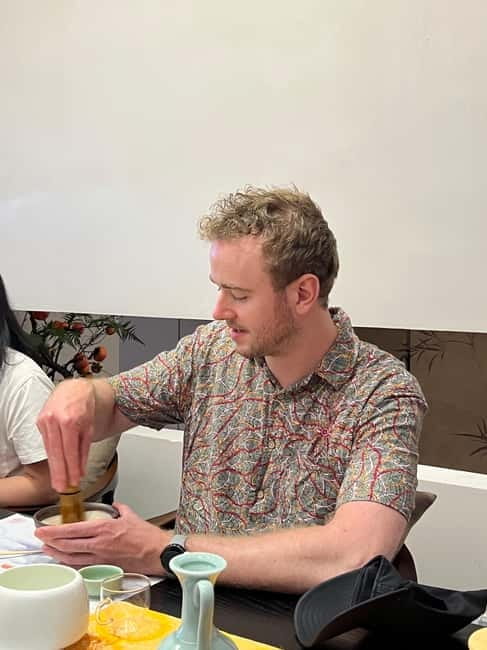
The ceremony is designed to look good as well as taste good. The bowl, whisk, foam, tray, cloth, and powdered tea create clear visual steps. You can photograph the tools, the preparation, and the finished surface.
One session also included painting favorite symbols and a small gift to take home. Those extras may depend on the particular arrangement, so I would confirm them through WhatsApp if they matter to you. The guaranteed inclusions are experience photos, the tea master, the tea equipment, and the powdered tea.
The photos are a useful inclusion because the process has several moments worth saving. You may want a picture of the bowl before whisking, the foam as it forms, or your group practicing together.
Still, the strongest part is not the photo. It is the chance to slow down and pay attention to a small ritual. If you only want a quick drink, this will feel too structured. If you enjoy learning through touch and repetition, the pace should suit you.
Is $78 per person fair?
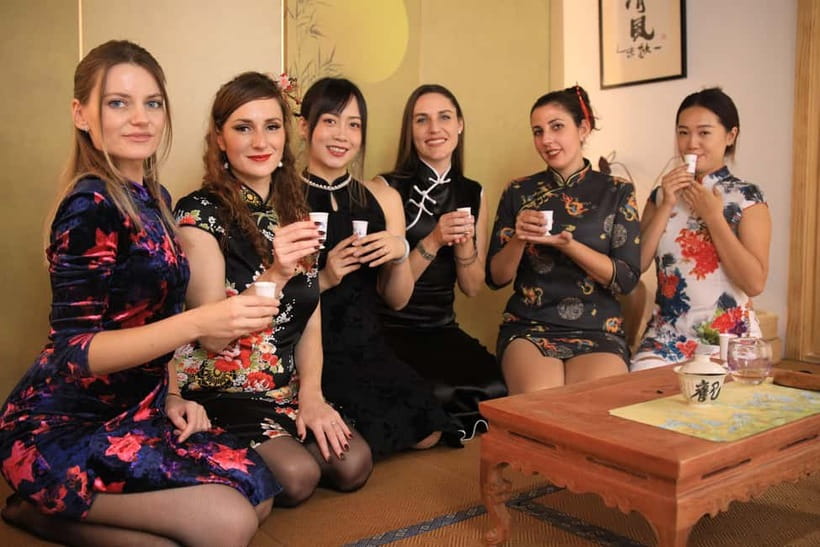
At $78 per person, this is not a cheap tea stop. You are paying for a 90-minute private activity, an expert tea master, multilingual instruction, the tea and tools, photos, and a setting built around the ceremony.
The value depends on what you want from your Shanghai itinerary. If you are comparing it with buying a cup of tea, the price is high. If you are comparing it with a private cultural lesson that includes equipment, instruction, tasting, and group attention, the cost is easier to justify.
I would especially consider it if you are traveling with three or four friends. The activity becomes a shared project, and the private format means your group can set the pace. Families may also find the price worthwhile if everyone wants to take part rather than simply watch.
The short duration helps. You can fit the tea ceremony between other Shanghai plans, and you are not committing an entire afternoon. There is no hotel pickup or drop-off, however, so transportation costs and travel time are separate.
Tipping is not included. Keep that in mind when setting your activity budget.
Practical details that affect your choice
The experience lasts 1.5 hours, with starting times available according to the booking calendar. It is wheelchair accessible, and the private format can make the setting more comfortable for people who need a little extra space or time.
Free cancellation is available up to 24 hours before the start for a full refund. You can also reserve now and pay later, which helps if your Shanghai schedule is still changing.
The address and final meeting instructions arrive by WhatsApp after confirmation. Since there is no hotel transfer, I would book this only after checking how you will reach the mall entrance.
The guide’s white hat and red Eto logo should make the meeting easier. Even so, arrive with the address open on your phone and your WhatsApp account working.
Who should book this tea ceremony?
I would recommend it to anyone who enjoys learning by doing. You will get more from the experience if you are happy to repeat a technique, ask questions, and notice small details in taste and texture.
It is a particularly good choice for tea lovers who have already tried standard Chinese tea service and want something different. The powdered method, foam, and whisking make it unlike a typical pot-and-cup tasting.
History fans should also enjoy the link to the Song Dynasty. The activity does not treat history as a long lecture. Instead, it uses the preparation method to show how culture, aesthetics, and daily habits came together.
Families and friend groups have a strong reason to choose it. Everyone receives a role, and the shared task gives the session an easy social flow. The activity is educational, but it does not feel like a museum lesson.
I would be less likely to book it if you have only a short stop in Shanghai, dislike scheduled activities, or mainly want to drink tea without explanation. The price also makes it a poor match for a tight budget.
Should you book the Song Dynasty tea ceremony?
Book it if you want a focused cultural activity that lets you make something with your own hands. The powdered tea, foam-making, traditional tools, and Song Dynasty background give it a clear identity, and the private format is a real advantage for small groups.
Think carefully about the $78 price and the mall meeting point. There is no pickup, and the experience occupies only 90 minutes, so its value comes from the quality of the teaching and the personal participation rather than from a long sightseeing program.
For tea lovers, history enthusiasts, and groups seeking a quiet break from city sightseeing, I would put this high on the list. You will leave with a new tea-making skill, a better sense of Chinese tea culture, and perhaps a smoother whisking technique than you expected.
FAQ
How long does the Song Dynasty tea ceremony last?
The experience lasts 1.5 hours.
Where does the activity meet?
Meet at the main entrance of the mall at 168 Aomen Road, Putuo, Shanghai, 200071. Look for a guide wearing a white hat with a red Eto logo.
How will I receive the final meeting details?
The address and meeting information are sent through WhatsApp after your booking is confirmed. WhatsApp support is also available for assistance.
What languages are available?
Instruction is available in English, Chinese, Japanese, Korean, Spanish, and Russian.
Is this a private activity?
Yes. The experience is offered for a private group.
Is the experience wheelchair accessible?
Yes. The activity is wheelchair accessible.
What is included in the price?
The price includes WhatsApp live support, experience photos, an expert tea master, tea bowl, tea whisk, powdered tea, tea scoop, tea tray, hot-water kettle, and tea cloth. Hotel pickup, hotel drop-off, and tipping are not included.
Can I cancel or pay later?
You can cancel up to 24 hours in advance for a full refund. Reserve now and pay later is also available.
Newly steeped around China
- Full-day Tour: Spectacular Sunrise, Tea Plantation & Sunset★ 5.0 · 3 reviews
- Shanghai Mahjong Experience in Local Tea Bar★ 5.0 · 4 reviews
- Unlock Chinese Tea: Culture, Science, Tasting & Hands-on Brewing★ 5.0 · 12 reviews
- Chinese Tea Ceremony Experience★ 5.0 · 3 reviews
- Private Tour Hangzhou West Lake and Tea Fields Discovery★ 5.0 · 3 reviews
- Hangzhou West Lake and Tea Plantation Half Day Tour★ 5.0 · 4 reviews
- Private Hangzhou Day Tour to West Lake, Lingyin Temple, Tea Village, Old Pagoda★ 5.0 · 17 reviews
- Half-Day Hangzhou Tianzhu Buddhist Mountain Hiking Tour with Green Tea Village★ 5.0 · 2 reviews
Tea Ceremony Experiences, compared.
Kyoto: Tea Ceremony in a Traditional Tea House in Kiyomizu
Read our review →
Kyoto: 45-Minute Tea Ceremony Lesson Experience
Read our review →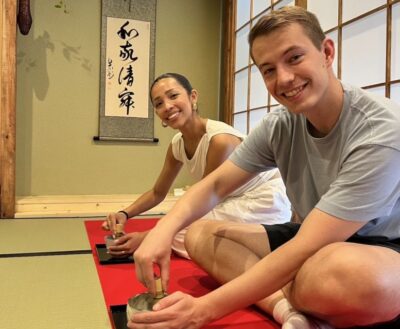
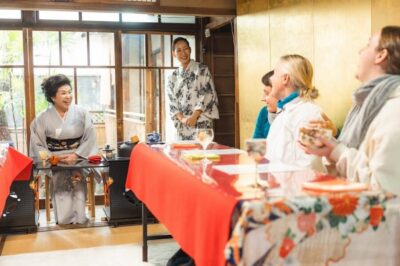
Kyoto: Table-Style Tea Ceremony at a Kyo-Machiya
Read our review →


Browse the lists this tea experience appears in