
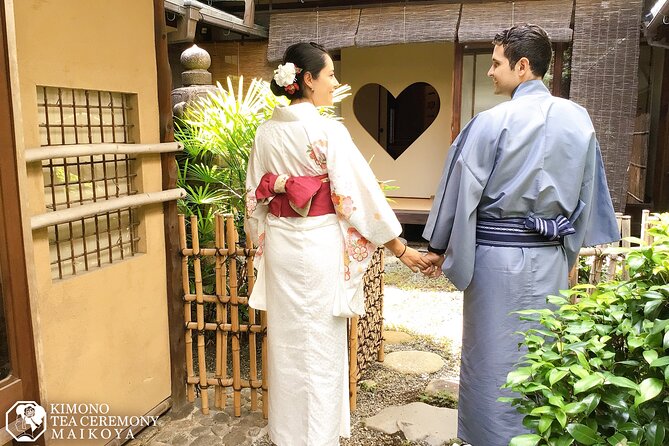
Review · KYOTO
Kimono Tea Ceremony at Kyoto Maikoya, NISHIKI
The most appealing part of this Kyoto activity is that it combines kimono dressing and a tea ceremony in one easy visit. You choose your outfit, have your hair arranged, pose for pictures, then sit on tatami as the host explains the ritual and shows you how to whisk matcha.
I like the hands-on format. You are not just watching a ceremony, you make your own tea and taste wagashi sweets. I also like the central Nishiki location and the choice of morning or afternoon times. The main consideration is that the experience can feel less private when several parties are scheduled together, and sitting Japanese-style on the floor may not suit everyone.
- Kimono and hairstyling: Choose from a selection of traditional outfits, with simple hair arranging included for women.
- Guided tea ritual: Learn the purpose of the utensils, movements, and customs from a tea master.
- Make your own matcha: Prepare green tea with high-quality matcha powder under instruction.
- Nishiki location: Meet at Maikoya Nishiki in central Kyoto and return to the same place afterward.
- Short but full program: Allow about 90 minutes for dressing, photographs, instruction, tea, and sweets.
- Strong value for a first visit: The $65.66 price covers the kimono, hair arrangement, tea, utensils, and snacks.
Choosing a Kimono at Maikoya Nishiki
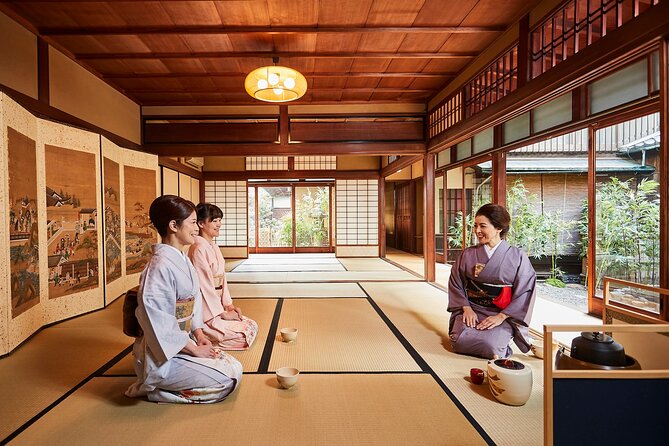
The activity begins at Kimono Tea Ceremony Maikoya Nishiki, at 329 Ebiyacho on Gokomachi-dori, just south of Sanjo in central Kyoto. You make your own way there, so you will want to allow time to find the entrance and arrive ready for the scheduled start.
The first stage is choosing a kimono. The selection gives the experience its visual appeal, but it also has a practical purpose. Wearing the outfit changes the way the ceremony feels. You become part of the setting rather than simply sitting in ordinary clothes for a demonstration.
Staff help you put the kimono on correctly and provide accessories, including a small purse for valuables. The dressing process is not a quick costume change. Proper kimono layers and fastening take time, which is why the full activity lasts about an hour and a half.
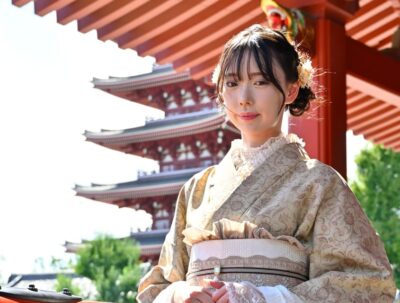
For women, simple hairstyling is included. Hair is pinned up and decorated with accessories that match the outfit. Several people particularly enjoy this part because it gives you a finished look for photographs before the ceremony begins.
The clothing is one of the strongest parts of the value here. A separate kimono rental and tea ceremony could take more planning and cost more when booked apart. Here, the dressing, hair arrangement, ceremony, and refreshments are bundled together.
Time for Photos Before the Tea Begins
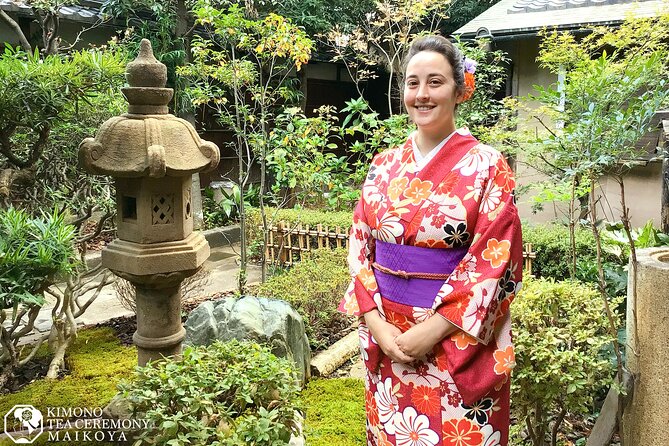
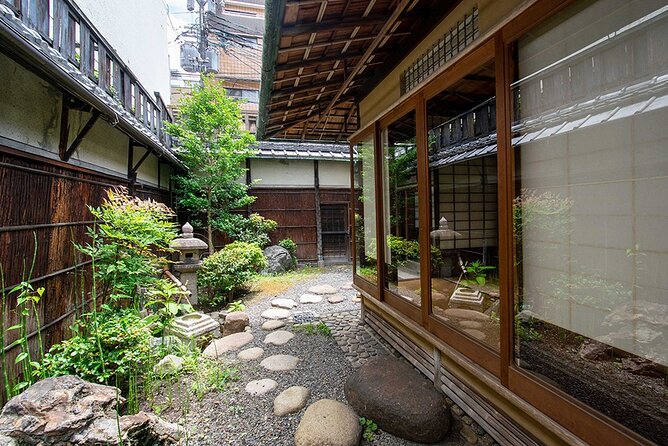
Once dressed, you have a chance to take photographs. The experience includes time in a garden area, and staff may help take pictures for you. This is useful if you are traveling without someone who can take a good full-length photo.
Bring a little patience during this stage. The dressing area works on a schedule, especially when several sessions are running. The staff are there to help, but the process is organized around moving each group through the same steps.
The photo time also gives you a chance to enjoy the kimono before sitting on the tatami floor. If pictures matter to you, choose your outfit with that in mind. Bright colors and decorative accessories can look striking, while simpler patterns may feel closer to everyday traditional dress.
The activity is designed to be cultural first and photographic second. You will get pictures, but this is not presented as a full-day photo shoot or a private fashion session. The focus soon shifts to the tea ritual.
More Kimono and Tea Ceremonies in Kyoto
- Kyoto: Kimono Tea Ceremony at Orizuruya Gion
★ 4.9 · 618 reviews - KYOTO Tea Ceremony with kimono near by Imamiya Jinjya Shrine
★ 5.0 · 343 reviews - Kyoto: Kimono and Tea Ceremony Experience at Cultural Asset
★ 4.3 · 306 reviews
Learning the Meaning Behind the Tea Ritual
After changing, you sit Japanese-style on tatami for the ceremony. The host explains the background and significance of the ritual, along with the role of the utensils and the order of the movements.
The quality of the explanation matters here. A tea ceremony can seem slow or mysterious if you do not know why each gesture is being made. The guide gives the movements a clear purpose, so you can follow what is happening rather than simply watch someone prepare a drink.
Several hosts have been praised for being warm, easy to understand, and well informed. Sono is specifically named as a strong presenter, with a friendly style and clear explanations. Another host included a brief meditation segment, adding a quiet pause before the tea preparation.
You should not expect a long academic lecture. This is an introductory cultural activity, not specialist training in tea ceremony schools. You will learn the basic customs, history, tools, and sequence in a welcoming format suited to someone seeing the ritual for the first time.
That balance is useful. The ceremony keeps its formal character, but the host explains enough to make it approachable. Questions are part of the experience, and the teaching style is aimed at helping you take part without worrying about every small mistake.
Whisking Matcha and Eating Wagashi
The most hands-on moment comes when you make your own matcha. The host demonstrates how to use the utensils and matcha powder, then guides you through preparing your tea.
Matcha has a distinct taste, often stronger and more bitter than the sweetened green tea many people know. The wagashi sweets served at the end provide a gentle contrast. These small Japanese sweets are part of the ceremony rather than a large snack, so do not arrive expecting a meal.
The activity includes green tea, utensils, and snacks in the price. That makes the $65.66 cost easier to assess. You are paying not only for the drink, but also for the kimono, dressing assistance, hair arrangement, instruction, room, and staff time.
I see this as fair value for someone who wants a single, organized introduction to two Japanese traditions. The price is less compelling if your only goal is to taste matcha, since you could do that much more cheaply elsewhere. It makes better sense if you want the complete presentation and the chance to participate.
The ceremony also gives you a quiet change of pace from Kyoto sightseeing. After busy streets and crowded temples, sitting on the tatami and following a set sequence can feel calm. The small sweets and tea mark the end of the formal portion without turning the activity into a rushed tasting.
Group Size and the Feel of the Room
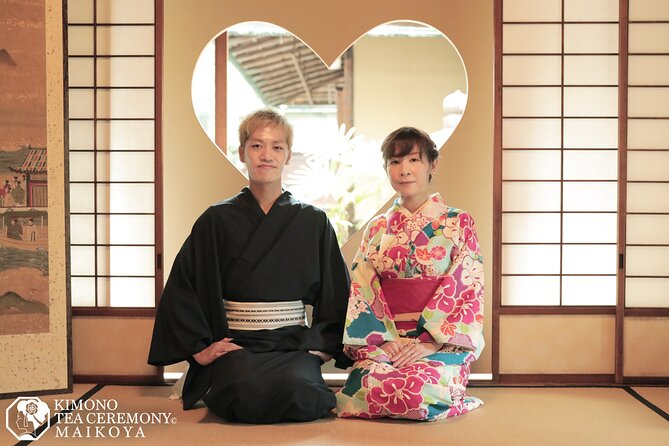
The booking information says a maximum of two people can be reserved through Viator, while other booking arrangements can bring additional participants into the same experience. The supplied details also describe the activity as having a maximum of two travelers, yet one account describes a ceremony with around eight to ten people and another mentions 10 to 12.
The practical lesson is simple: do not assume you are booking a private ceremony. The exact number can depend on how the reservation is made and how sessions are combined. The experience can feel personal when the group is small, but a larger gathering will make the room less quiet and reduce individual attention.
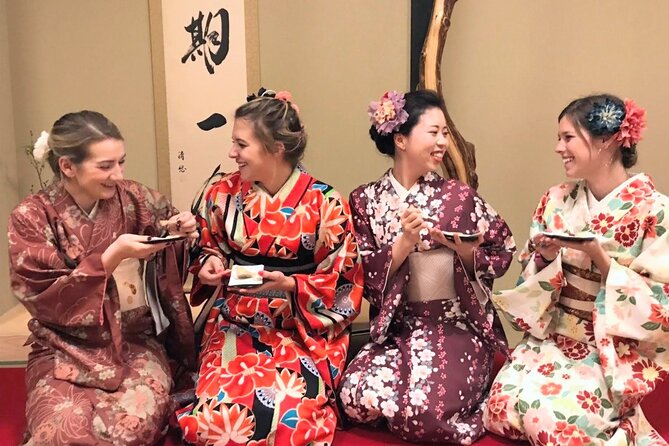
A group setting has one clear benefit. You share the ceremony with people from different countries, which adds a friendly social side to the experience. It also means the host can explain the ritual to a range of first-time participants at once.
If privacy is important, ask about the expected group size before booking. If you are happy with a shared cultural activity, the group format is part of the appeal and keeps the price within reach.
More Tea Ceremonies in Kyoto
- Kyoto: Tea Ceremony in a Traditional Tea House in Kiyomizu
★ 4.9 · 3,519 reviews - Kyoto: Tea Ceremony Ju-An at Jotokuji Temple
★ 4.9 · 3,207 reviews - Kyoto: 45-Minute Tea Ceremony Lesson Experience
★ 4.3 · 2,378 reviews - Kyoto: Table-Style Tea Ceremony at a Kyo-Machiya
★ 4.9 · 1,211 reviews
What the Ninety Minutes Actually Include
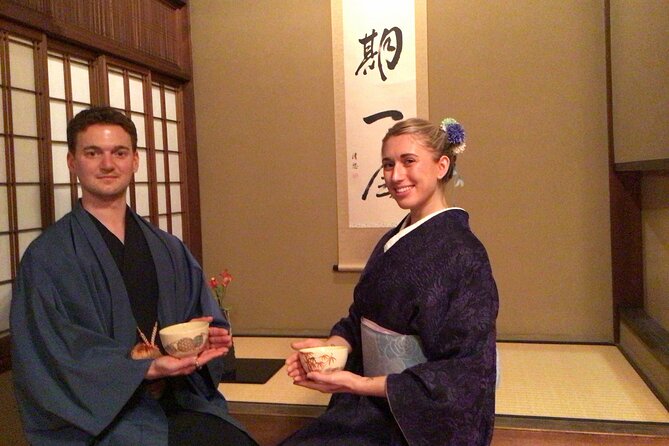
The advertised duration is about 1 hour and 30 minutes. That time includes several distinct stages:
- Arrival and selection of a kimono
- Assistance with dressing and accessories
- Simple hairstyling for women
- Time for photographs, including use of the garden area
- Seating on tatami for the ceremony
- An explanation of the ritual, utensils, and customs
- Guided preparation of your own matcha
- Green tea and wagashi sweets
This is a well-filled schedule. You will not spend the whole 90 minutes watching tea being prepared, and you should not expect a long period to wander around in the kimono afterward. The clothing and ceremony are part of one compact program.
Morning and afternoon start times make it easier to fit the activity around Kyoto sightseeing. A morning session can begin a day around Nishiki Market and central Kyoto. An afternoon session can work after a temple visit or before an evening meal, though you will need to plan your own transport and timing.
The activity ends back at the meeting point. Hotel pickup and drop-off are not included, so this is best for people comfortable navigating Kyoto independently.
Practical Details Before You Book
The meeting point is near public transportation in central Kyoto, but transportation itself is not included. Use the full address, Kimono Tea Ceremony Maikoya Nishiki, 329 Ebiyacho, Gokomachi-dori Sanjo sagaru, Nakagyo Ward, Kyoto 604-8076, when checking your route.
Children under seven cannot enter the tea ceremony venue. If anyone in your party is younger than seven, the reservation cannot be made for the group. Older children can take part, and one account describes a 10-year-old enjoying the history lesson, matcha preparation, and a brief meditation session.
The tatami seating is an important comfort point. You sit Japanese-style on the floor during the ceremony, so anyone with knee, hip, or mobility concerns should consider this before booking. The supplied details do not promise chair seating or a private adjustment.
A mobile ticket is provided, and confirmation arrives when you book. Free cancellation is available up to 24 hours before the start time for a full refund. Changes or cancellations inside that 24-hour window are not accepted for a refund. The activity also requires good weather, and if poor weather causes cancellation, you will be offered another date or a full refund.
Who Will Get the Most From This Experience
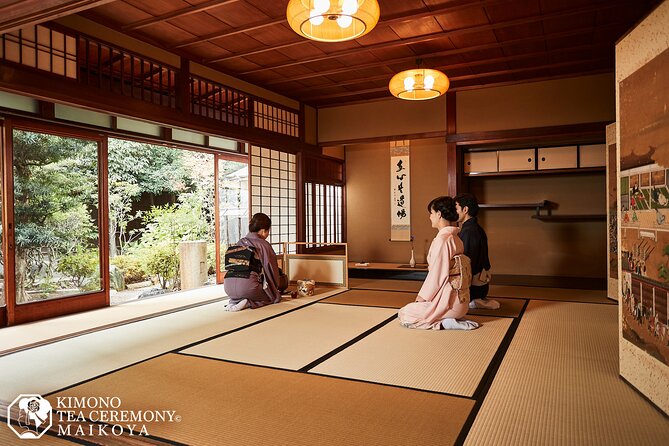
This is a strong choice for a first visit to Kyoto when you want an easy introduction to Japanese customs. You do not need prior knowledge of tea ceremony etiquette, and the host guides you through the process one step at a time.
It suits couples, families with older children, solo visitors, and small groups of friends. The kimono and hair styling make it especially appealing if you want photographs, while the explanations give the activity substance beyond dressing up.
It may not suit you if you dislike floor seating, want a private ceremony, or prefer a long, highly formal tea-school lesson. It is also not a good option for a party that includes a child under seven, since the venue does not permit young children to enter.
The experience is best viewed as an accessible cultural introduction. It gives you enough context to understand the ceremony and enough participation to remember it, without requiring a full day or advanced etiquette.
Is the $65.66 Price Worth It?
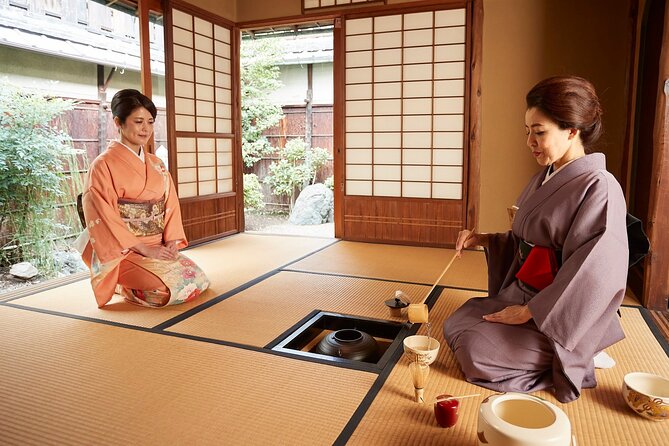
At $65.66 per person, the cost is reasonable for the number of elements included. You receive the kimono, dressing help, simple hairstyling, accessories, tea, utensils, sweets, instruction, and use of the traditional tea room.
The strongest value comes from combining services. Booking a kimono experience and tea ceremony separately would take extra time and planning. Here, the staff handle the transition from dressing to ceremony in one place.
The price is less attractive if you care only about drinking matcha or if you have already completed a detailed tea ceremony elsewhere. It is also worth checking the likely group size if you are comparing this with a more private, higher-priced option.
For most first-time visitors, I would treat the kimono and the teaching as the main purchase. The tea itself is part of the ritual, but the lasting value comes from understanding why the host prepares it in a particular way and taking part yourself.
Should You Book the Maikoya Nishiki Tea Ceremony?
Book it if you want a compact, photo-friendly introduction to Kyoto culture with real participation. The kimono selection, simple hairstyling, garden photographs, matcha preparation, and clear explanations create a fuller experience than a quick tea tasting.
I would also recommend it for families with children aged seven and over, couples who want a shared cultural activity, and anyone who wants help with the etiquette rather than trying to figure it out alone. Sono and the other hosts are described as friendly and clear, which matters when the ceremony is unfamiliar.
Think twice if you need private space, chair seating, or a strictly traditional lesson with no group rotation. Also confirm the expected group size if that will affect your decision.
For a first Kyoto visit, the combination is hard to beat for convenience. You dress in a kimono, learn the reason behind the ritual, prepare your own matcha, and finish with wagashi, all in about 90 minutes at a central location.
FAQ
How long does the Kimono Tea Ceremony at Kyoto Maikoya take?
The experience lasts approximately 1 hour and 30 minutes.
Where does the experience begin and end?
It begins and ends at Kimono Tea Ceremony Maikoya Nishiki, 329 Ebiyacho, Gokomachi-dori Sanjo sagaru, Nakagyo Ward, Kyoto 604-8076, Japan.
Is transportation included?
No. You make your own way to the Nishiki meeting point, and hotel pickup and drop-off are not included.
What does the price include?
The price includes a kimono costume, green tea, tea utensils, simple hairstyling, and snacks.
Can I choose a morning or afternoon time?
Yes. Morning and afternoon timings are available.
Can children under seven attend?
No. Children under seven cannot enter the tea ceremony venue, and a group with a child under seven cannot make a reservation.
Will I make my own matcha?
Yes. The host explains the utensils and guides you as you prepare your own matcha green tea.
What is the cancellation policy?
You can cancel up to 24 hours before the start time for a full refund. Cancellations or changes made less than 24 hours before the experience are not accepted for a refund. If poor weather causes the activity to be canceled, you will be offered another date or a full refund.
Newly steeped around Kyoto
- Whisk Your Own Matcha: A Zen Matcha Experience at Temple★ 3.6 · 7 reviews
- Uji Walking Tour – Byodo-in temple and Tea Ceremony from Kyoto★ 3.5 · 3 reviews
- Kyoto: Authentic Tea Ceremony in a Small Group★ 5.0 · 7 reviews
- Tea ceremony at Kyoto’s Zen Temple Teahouse★ 5.0 · 2 reviews
- Tea Ceremony Experience in Traditional Kyoto Townhouse★ 5.0 · 19 reviews
- Tea Ceremony in 150 Years Old Townhouse with Tables and Chairs★ 5.0 · 22 reviews
- Sencha-do the Japanese Tea Ceremony Workshop in Kyoto★ 5.0 · 21 reviews
- Silent Beauty of Kyoto Zen Walk and Tea Experience★ 5.0 · 2 reviews
Kimono & Tea Ceremony, compared.

KYOTO Tea Ceremony with kimono near by Imamiya Jinjya Shrine
Read our review →
Kyoto: Kimono and Tea Ceremony Experience at Cultural Asset
Read our review →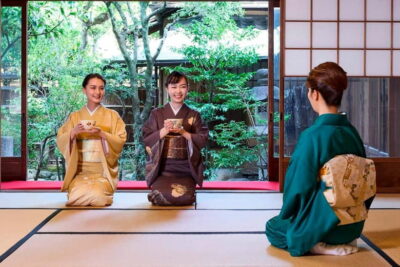
Kyoto: Kimono Tea Ceremony with Matcha and Sweet
Read our review →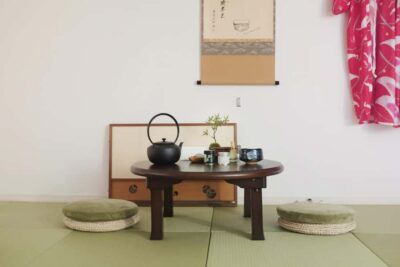
Tokyo: Asakusa Kimono Dressing and Matcha Experience
Read our review →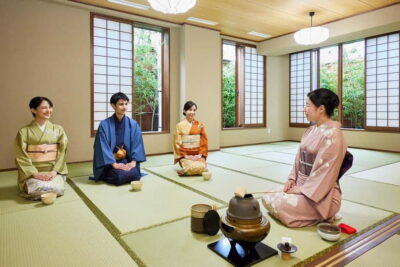
Asakusa: Kimono Tea Ceremony with Matcha and Sweet
Read our review →Browse the lists this tea experience appears in