
Review · WORLDWIDE
Agro-Tourism Tea Workshop in Nandi Hills
The unusual part of this day is its close look at the full tea-making chain. You begin among the tea trees with the harvest, then follow the leaves to a weighing point and finally into a working factory. I like that the experience connects a quiet farm visit with the practical mechanics of Kenyan tea production.
I also like the chance to meet tea pluckers and see their speed and stamina at a job that is repetitive but essential. Lunch at the cottage, a private vehicle, and a final tasting make this feel like a full day rather than a quick plantation stop. The main drawback is the long schedule and early start, and the day may feel too focused for anyone who wants only scenic sightseeing.
Key points to know before booking
- A full farm-to-cup day: You follow tea from harvesting and weighing through transport, factory processing, and tasting.
- A rare specialist activity: It is presented as the only tea-production workshop of its kind in the Highlands.
- Real contact with tea workers: You meet tea pluckers and see the skill needed to maintain a steady harvest.
- Nandi County factory visit: One of the county’s 19 tea factories shows how fresh leaves become a finished product.
- Private transport and lunch included: Your group travels by private vehicle, with lunch provided at the cottage.
- A 10-hour commitment: The tour begins in the 5:00 AM to 9:00 AM window and returns to the same meeting point in Iten.
Following Kenyan tea from leaf to cup
This is not just a plantation photo stop. The day is built around the working process of tea, from the first pluck to the drink in your cup. That makes it a useful choice if you like seeing how local food and drink are produced, rather than simply looking at attractive fields.
The setting is Nandi Hills in Kenya’s Rift Valley Province. The area provides the natural backdrop, but the focus stays on people and production. You will see tea trees, meet the workers who harvest them, watch the weighing process, and then visit a factory where the leaves are turned into a finished product.
I find that structure appealing because each stage answers a different question. How is the tea picked? How is the amount recorded? How does it reach the factory? What happens inside the factory? What does the finished tea taste like? By the end, you have a much clearer idea of what sits behind a simple cup of Kenyan tea.
The provider, The Safari Side, organizes the day as a private activity. Only your group participates, which matters if you want to ask questions at your own pace or avoid being folded into a large sightseeing group. It also gives the experience a more personal feel, though the price is higher than a basic shared outing.
More Tea-Making Classes around the world:
- London: Traditional English Scone Making and Tea Workshop
★ 5.0 · 702 reviews - London Traditional English Scone Making and Tea Workshop
★ 5.0 · 271 reviews - Marrakech: Moroccan Pastries and Tea Class with a Local
★ 4.7 · 84 reviews
Starting among the tea trees
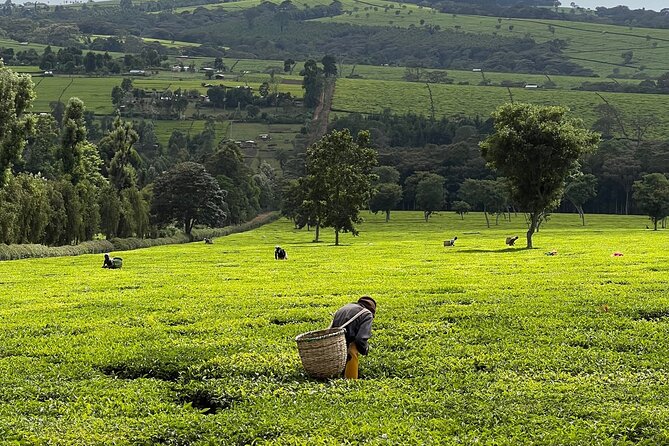
The morning begins with an explanation of how the harvest is conducted. This is the point where you learn what the workers are doing before watching the task itself. The introduction helps you read the scene properly, since tea harvesting can otherwise look like a simple matter of picking leaves.
You then meet the tea pluckers. Their work is repetitive, fast, and physically demanding, and the activity gives you a direct look at the skill involved. This human part of the day is one of its strongest features. A factory can show you machinery, but meeting the people who keep the supply moving gives the process a more grounded meaning.
The tea pluckers’ proficiency is worth paying attention to. You are not simply seeing people in a field. You are seeing a practiced routine that must be repeated across the harvest. The visit also gives you a chance to appreciate the effort behind a product that is often consumed without much thought.
The description does not promise a hands-on picking session, so you should expect to watch and learn rather than assume you will harvest tea yourself. That distinction is useful when setting expectations. The value comes from access and explanation, not from turning the morning into a novelty activity.
The tour’s scenic appeal is also strongest here. The tea-growing area offers calm surroundings and the shade of the tea trees, with Nandi Hills providing the sense of place. If you enjoy quiet rural settings, this part may be the emotional high point of the day.
Seeing the modern weighing stage
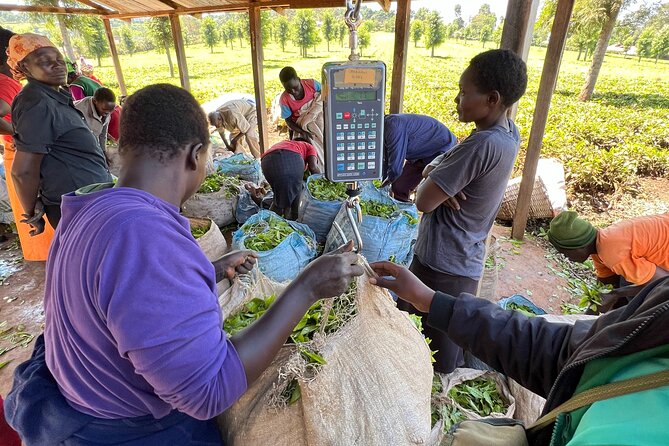
After the harvest, you witness the weighing of the tea. This is an important but easy-to-miss stage in the journey from farm to factory. The tea must be measured before it moves onward, and the weighing system has recently been modernized.
That update gives the stop a useful contrast. You see a traditional agricultural task, the hand harvesting, followed by a more modern method of recording the crop. It shows that tea production is not frozen in the past. The work may begin with people and plants, but the operation also depends on accurate systems.
For you, this is one of the moments that separates the workshop from a simple scenic visit. The weighing stage explains how the harvest becomes trackable and organized. It also helps connect the work of individual pluckers with the larger operation that receives and processes the leaves.
You may find this part less visually dramatic than the tea trees or the factory machines. Still, it is a practical detail that makes the full process easier to understand. I would pay attention here, especially if you are curious about farming, supply chains, or how a regional crop is handled before processing.
Lunch at the cottage
After the morning activities, you return to the cottage for lunch. This break divides the day neatly. You have time to pause after the farm visit before moving on to the factory section in the afternoon.
Lunch is included in the $137.46 price, so you do not need to plan a separate meal during the activity. Personal expenses are not included, however, so you should budget separately for anything beyond the provided lunch.
The cottage stop also gives the day a more local rhythm. You are not rushing from one attraction to another. The schedule allows the farm experience to breathe before the next stage. For some people, that slower pace will be a major benefit. For others, the 10-hour length may feel substantial, especially if tea production is only one small interest among many.
The available details do not specify the menu, so it is best not to book this expecting a particular dish. What you can count on is that lunch is part of the planned day and takes place at the cottage before the factory visit.
More Tea Experiences around the world:
- Kyoto: Tea Ceremony in a Traditional Tea House in Kiyomizu
★ 4.9 · 3,519 reviews - London: Afternoon Tea Cruise on the River Thames
★ 4.4 · 3,274 reviews - Kyoto: Tea Ceremony Ju-An at Jotokuji Temple
★ 4.9 · 3,207 reviews - Afternoon Tea Bus Tour in Dublin
★ 5.0 · 2,791 reviews
Inside one of Nandi County’s tea factories
In the afternoon, you visit one of the 19 tea factories in Nandi County. This is where the leaves become a finished product. The factory visit gives the morning’s work a clear destination and explains what happens after the tea leaves leave the farm.
The key benefit is continuity. You will already have seen the harvest and weighing, so the factory is not an isolated stop. You can connect the machinery and production stages to the leaves you encountered earlier in the day.
The information provided does not list each machine or processing stage, so you should not expect a detailed technical tour of every piece of equipment. The promise is a visit focused on the production of tea leaves into a finished product. That is enough to make the factory a meaningful part of the day, but exact access and explanations may depend on operating conditions.
The factory also adds scale. At the farm, the work feels personal and close. At the factory, you see how a regional crop is handled as a larger commercial product. Those two views work well together, giving you both the human and industrial sides of tea.
I especially like that the factory is not presented as a replacement for the farm visit. You get both. If you have visited tea plantations before but never seen the processing side, this activity fills an obvious gap. If factory visits are not your thing, this portion may feel more functional than scenic.
Ending with a Kenyan tea tasting
The final activity is a tea tasting. It is a simple but fitting way to close the day. After following the leaves through harvesting, weighing, transport, and processing, you finally get to judge the finished drink for yourself.
The tasting gives the workshop a culinary edge. One of the most appealing parts of tea is that it links agriculture, industry, and everyday food culture. Here, the cup is not an abstract product. You have just seen the people and places involved in making it.
If you are already a fan of chai or Kenyan tea, this ending may be especially satisfying. It also gives you a chance to think about how processing affects the final drink. The details do not specify how many teas are served or how the tasting is conducted, so you should see it as a concluding tasting rather than assume a large formal flight.
The tasting is also a good reason to avoid treating the day as only a factory tour. The experience moves from work to food and drink, which makes the subject easier to remember. You leave with a practical understanding of tea production and a final sensory moment to tie it together.
What the $137.46 price covers
At $137.46 per person, this is not a low-cost half-day excursion. The price makes more sense when you look at what is bundled into the full day: private transportation, all fees and taxes, a farm visit, lunch, and a tea factory visit.
Private transport is a meaningful part of the value. You start and finish at The Swiss Side ItenFriends Bar in Iten, and the day is arranged around your group rather than a shared vehicle. This is useful if you are staying in Iten and want a planned outing without arranging separate transport to Nandi Hills.
The price also pays for access to a specialized experience. You are not merely visiting a scenic area. You are getting a structured explanation of production, contact with tea pluckers, a look at modern weighing, a factory visit, and a tasting. For someone with a strong interest in tea or local agriculture, that makes the cost easier to justify.
The value is weaker if you only want views or a short cultural stop. Ten hours is a long time, and some of that time is necessarily spent moving between stages or observing work. If your main goal is a broad sightseeing day, a tour with several different attractions may suit you better.
For a tea enthusiast, food-focused visitor, or someone based in Iten for a running camp, the price can be reasonable because it combines transport, meals, and a rare subject in one private outing. The activity has also worked well as part of a wider Kenya trip that includes safari, lake visits, cycling, and hikes, but the tea workshop itself remains a focused day rather than a general sampler.
Timing, meeting point, and practical planning
The meeting point is The Swiss Side ItenFriends Bar in Iten, Kenya. The activity ends back at that same meeting point, which makes planning simpler if you are staying nearby. It is also near public transportation.
The listed operating window runs from October 4, 2023, through June 18, 2026, with departures available Monday through Sunday between 5:00 AM and 9:00 AM. Since the total duration is about 10 hours, you should be prepared for an early start and a full day away from your accommodation.
Mobile ticketing is available. Confirmation is normally received at booking, although bookings made within four hours of departure are confirmed as soon as possible and remain subject to availability.
The activity requires good weather. If poor weather forces cancellation, you are offered another date or a full refund. It also requires a minimum number of participants, even though the activity itself is private and limited to your group. If that minimum is not reached, you are offered another date, another experience, or a full refund.
You can cancel for a full refund up to 24 hours before the start time. Changes or cancellations made less than 24 hours ahead are not accepted for a refund, so keep the local cut-off time in mind.
Who will enjoy this day most
I would choose this activity if you want to understand Kenyan tea beyond the label on a box. It suits you if you enjoy meeting local workers, seeing production methods, and giving one subject an entire day.
It is also a good fit for visitors staying in Iten who want a cultural outing beyond running and outdoor activities. The day adds a different side of the Rift Valley Province, with tea production at its center.
Food and drink enthusiasts should find plenty to appreciate. The final tasting gives the day a clear purpose, while the farm and factory visits explain how the drink came to be.
The tour may be less suitable if you dislike early starts, long scheduled outings, or industrial visits. It is also not the best choice if you want a packed day of unrelated attractions. The experience is strongest when you are genuinely curious about tea.
Should you book the Nandi Hills tea workshop?
Book it if the idea of following tea from hand harvesting to a finished cup sounds more interesting than simply taking plantation photographs. The strongest features are the meeting with tea pluckers, the modern weighing stage, the factory visit, and the way lunch and tasting turn the day into a complete experience.
Think carefully before booking if you have limited time in Kenya or prefer a faster sightseeing pace. Ten hours is a serious commitment, and the activity is focused on tea rather than a mix of major sights.
For tea fans, curious eaters, and people already based in Iten, I think the private format and farm-to-cup structure give this outing a clear purpose. For everyone else, book only if you want a slower, practical look at how one of Kenya’s best-known drinks is made.
FAQ
Where does the tea workshop start?
It starts at The Swiss Side ItenFriends Bar in Iten, Kenya.
Where does the activity finish?
The activity ends back at the same meeting point in Iten.
How long does the experience last?
The experience lasts approximately 10 hours.
What time can the activity begin?
The listed opening hours allow starts from 5:00 AM to 9:00 AM, Monday through Sunday.
Is transportation included?
Yes. Private transportation is included, and the activity is private for your group.
Is lunch included?
Yes. Lunch at the cottage is included in the price.
What does the tea workshop include?
It includes a farm visit, an explanation of harvesting, tea weighing, a visit with tea pluckers, a visit to a tea factory, and a tea tasting.
Can I cancel for a refund?
Yes. You can cancel up to 24 hours before the start time for a full refund. Cancellations made less than 24 hours before the start time are not refunded.
Newly steeped around the world
- York: Private Horse-Drawn Carriage Ride and Afternoon Tea★ 5.0 · 3 reviews
- Yokohama : Tea Ceremony with Sweets and Souvenir★ 5.0 · 5 reviews
- Washington, D.C.: Tea Around Town Bus Tour with Landmarks★ 3.4 · 7 reviews
- Whisk Your Own Matcha: A Zen Matcha Experience at Temple★ 3.6 · 7 reviews
- Yogyakarta: Prambanan Tour, Sukuh Temple & Tea Plantation★ 5.0 · 3 reviews
- Wadi Rum: 2-Hour Jeep Tour with Bedouin Tea★ 5.0 · 11 reviews
- Walking Tour: Yanaka,Nezu& Sendagi: Tea Ceremony & Old Tokyo★ 5.0 · 3 reviews
- Volcano, Hot Spring, Mud Bath & Tea plantation all included★ 5.0 · 5 reviews
Tea Making & Blending Classes, compared.

London: Traditional English Scone Making and Tea Workshop
Read our review →
Marrakech: Moroccan Pastries and Tea Class with a Local
Read our review →
Moroccan Hands on traditional pastries & Tea class in Marrakech
Read our review →
Istanbul: World Teas & Turkish Tea Brewing, Tasting Workshop
Read our review →
Discover Japanese Tea Blending Techniques in Osaka
Read our review →

Experience Chengdu: Private Tea-Making Day Tour of Mengdingshan Tea Plantation
Read our review →Browse the lists this tea experience appears in