
Review · KYOTO
Kyoto Tea Ceremony & Kiyomizu-dera Temple Walking Tour
Kiyomizu-dera is the star here, but the tea ceremony gives this walk its real character. You’ll move from Kyoto’s old lanes to a temple stage high above the trees, then slow down for matcha, sweets, and the careful gestures of Japanese hospitality.
I like two things right away: the group size is capped at six, and the guide helps you make sense of places that can otherwise blur together. Guides such as Hide explain Shinto and Buddhism in plain language, take photos, and keep the mood relaxed with a little humor. The main drawback is the price, $109.39 per person, plus a steep, crowded walk through Kyoto’s most popular temple streets.
Key points to know before booking
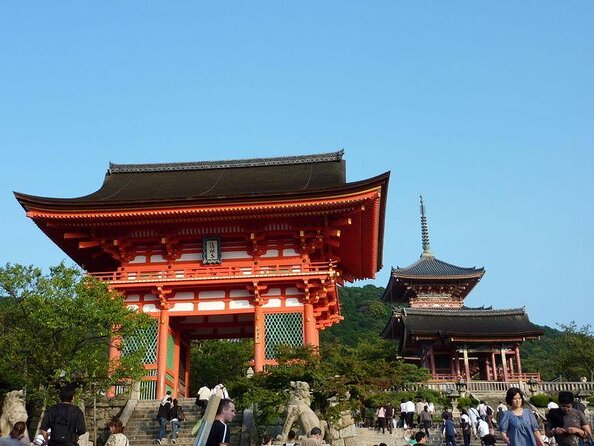
- Kiyomizu-dera and Otowa Waterfall: Visit one of Kyoto’s best-known temples, then choose one of three streams of sacred water.
- A small group of six: You get room to ask questions without the feel of a large bus tour.
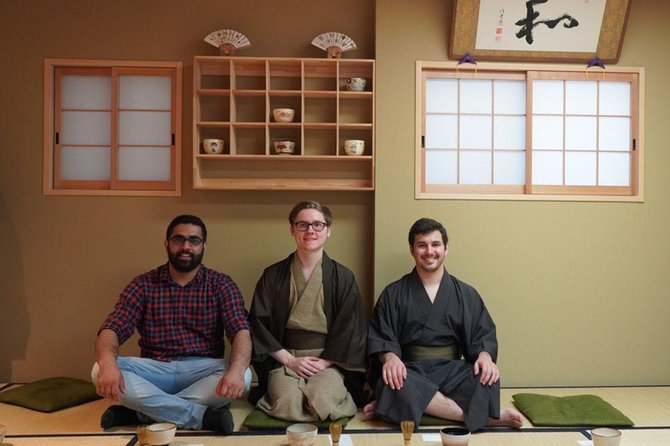
- Tea ceremony with matcha: Learn the formal movements of a traditional ceremony and enjoy included snacks.
- Old Kyoto streets: Walk Kiyomizu-zaka, Sannenzaka, and Ninenzaka, with shops selling sweets, pickles, souvenirs, and yatsuhashi.
- A useful first-day tour: The route introduces Gion and eastern Kyoto while helping you understand temple customs.
- Three hours on foot: Wear comfortable shoes, carry water in summer, and expect slopes and busy lanes.
Why this three-hour Kyoto walk works
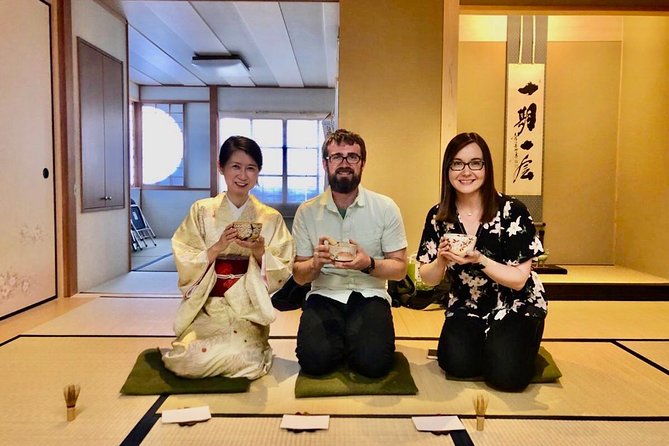
This experience joins three pieces of Kyoto that are easy to visit separately but more useful together: a major temple, old shopping streets, and a tea ceremony. You get the big view at Kiyomizu-dera, the small details of daily Kyoto along the lanes, and a quiet cultural activity at the end.
The walk begins at 9:00 a.m. at the western tower gate of Yasaka Shrine. That early start matters. Kyoto’s famous eastern temple district becomes crowded as the day goes on, so meeting in the morning gives you a better chance to enjoy the first part of the route at a calmer pace.
The group limit is six people. I like that number for a walking tour. You can hear the guide clearly, stop for photos without holding up a crowd, and ask questions about customs, architecture, or religion. It also makes the tea ceremony feel more personal than a large organized demonstration.
The experience is recommended by 97 percent of participants and has a 4.9 rating from 115 reviews. Those numbers do not tell you everything, but they fit the tour’s strongest features: friendly guiding, clear explanations, and a good mix of sightseeing and cultural activity.
More Tea Ceremonies in Kyoto
- Kyoto: Tea Ceremony in a Traditional Tea House in Kiyomizu
★ 4.9 · 3,519 reviews - Kyoto: Tea Ceremony Ju-An at Jotokuji Temple
★ 4.9 · 3,207 reviews - Kyoto: 45-Minute Tea Ceremony Lesson Experience
★ 4.3 · 2,378 reviews
Meeting at Yasaka Shrine
Yasaka Shrine is a practical starting point in Gion, one of Kyoto’s best-known areas. You meet at the Nishiromon Gate, also called the Western Tower Gate, at 625 Gionmachi Kitagawa.
The meeting instructions deserve attention. One person arrived in a panic because the meeting place needed more explanation, even though the tour itself went very well once it began. I would allow extra time to find the correct gate and keep the mobile ticket ready on your phone.
From Yasaka Shrine, your guide helps you get oriented before heading toward the Kiyomizu district. That makes this a useful choice for your first full day in Kyoto. Instead of trying to decode a map while walking, you can focus on the buildings, lanes, and customs around you.
The activity ends back at the same meeting point. There is no separate transfer to arrange at the finish, which is helpful if you plan to continue exploring Gion afterward.
Kiyomizu-zaka and the old Kyoto streets
The route moves through Kiyomizu-zaka, a group of traditional streets leading toward Kiyomizu-dera. The atmosphere changes as you walk uphill. Old teahouses, Japanese sweets shops, souvenir stores, pickle sellers, and shops with sundried foods line the route.
This is where a local guide adds real value. Kyoto’s old streets can look beautiful without explanation, but it is easy to miss what makes them distinctive. Your guide can point out the role of the slope, the design of the shops, and the way the road has long served people heading to the temple.
You may also see people dressed as maiko or geisha in this part of town. The streets have a strong old-Kyoto appearance, but they are not a film set. Shops still serve visitors, and the route can become crowded, especially near the temple entrance.
One colorful stop is Yasaka Koshindo, known for its bright decorations. It gives the walk a visual change before the larger temple grounds. The stop is brief, but it helps break up the uphill route and gives you a good photo opportunity.
The shopping streets are part of the experience, not just filler between major sights. You can see Kyoto sweets, yatsuhashi, pickles, and small gifts that connect to local food traditions. Extra purchases are not included, so treat the shops as places to browse unless you want to spend more.
Reaching Kiyomizu-dera’s wooden stage
Kiyomizu-dera was founded on the site of Otowa Waterfall about 1,200 years ago. Its name comes from the waterfall’s pure water, and the temple remains one of Kyoto’s most important sights.
The highlight is the large wooden stage, built about 13 meters above the ground. From here, you can look across the surrounding cherry and maple trees toward Kyoto. In spring and autumn, the trees add seasonal color, while the view remains worthwhile at other times of year.
The temple is a UNESCO World Heritage Site, but the title is not the reason to visit. The pleasure comes from the combination of the wooden construction, the hillside setting, the city view, and the sense that this has been a destination for worshippers for centuries.
Your guide explains the temple’s history and points out how people worship here. That context is useful because Kiyomizu-dera has several buildings and customs, and a first visit can otherwise become a quick photo stop.
The walk to the temple is uphill, and parts of the approach are crowded. Anyone with limited tolerance for slopes or uneven walking should keep that in mind. The tour is listed as suitable for most people, but it is still a walking activity rather than a seated sightseeing trip.
Same leaf, a different ritual:
- Kyoto: Table-Style Tea Ceremony at a Kyo-Machiya
★ 4.9 · 1,211 reviews - Kimono Tea Ceremony at Kyoto Maikoya, NISHIKI
★ 5.0 · 911 reviews - Arashiyama Bamboo, Temple, Monkeys, or Secret Sake Brewery
★ 4.8 · 886 reviews - Kyoto: Arashiyama Bamboo Forest, Monkeys, Matcha & Temple Tour
★ 5.0 · 759 reviews
Choosing water at Otowa Waterfall
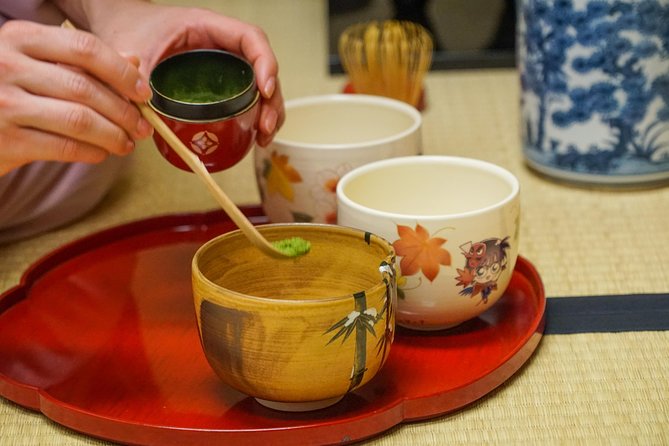
Otowa Waterfall is one of the most memorable parts of the visit. Its water is divided into three streams, and each stream is associated with a different benefit. You use a cup attached to a long pole to drink from the stream you choose.
The guide helps explain the custom and the proper way to take part. This is a small action, but it gives you a direct connection to Japanese temple practice rather than leaving you as a spectator.
The three streams are part of the charm, though you should avoid treating the ritual as a guarantee. Think of it as a traditional act of hope and good fortune. You choose one benefit, drink the water, and move on without turning the moment into a contest.
The area can be busy, so patience helps. The guide’s presence is useful here because you do not have to work out the process alone or worry about missing the group while trying to understand what to do.
Walking Sannenzaka and Ninenzaka
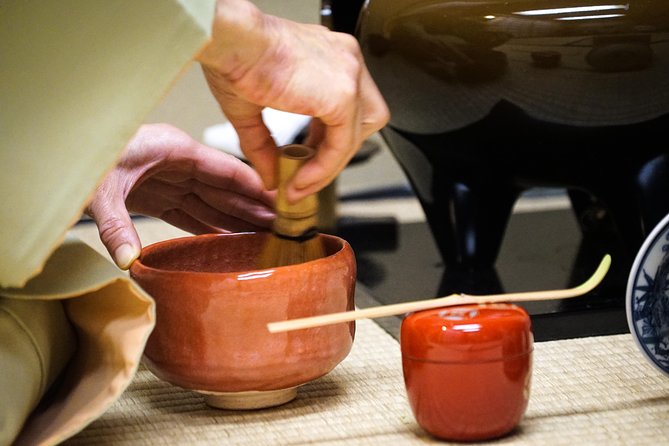
The route passes along Sannenzaka and Ninenzaka, two of the most atmospheric streets near Kiyomizu-dera. Sannenzaka is a historic slope, and its name is linked to the third year of the Daido period in 808, though several explanations exist.
The best-known story says that falling on Sannenzaka means you will die within three years, or lose three years from your life. The tale is usually understood as a warning to watch your step on the slope, not as a reason to panic. The road is uneven in places, so the practical advice is sound.
These lanes are lined with souvenir shops and small food stores. You can browse Kyoto sweets, pickles, yatsuhashi, ceramics, and other gifts. The area is photogenic, but it is also one of the busiest parts of the route. Your guide can help you keep moving while still allowing time for pictures.
The one-kilometer approach to the temple has the feel of a pilgrimage route. That matters because the walk is not simply a shopping excursion. It shows how the temple district developed around people coming to worship, buy small offerings, eat, and take home reminders of the visit.
Slowing down for the tea ceremony
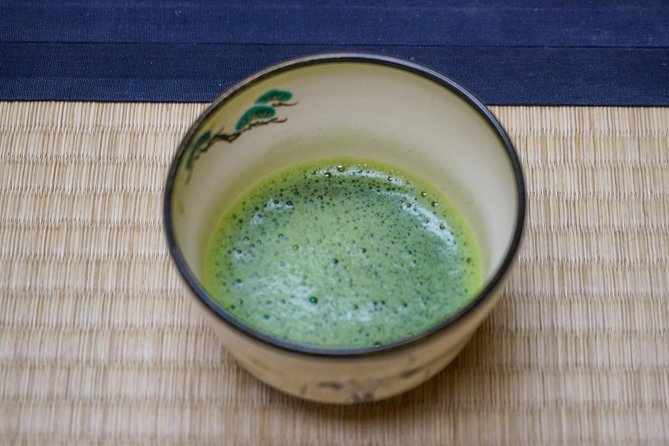
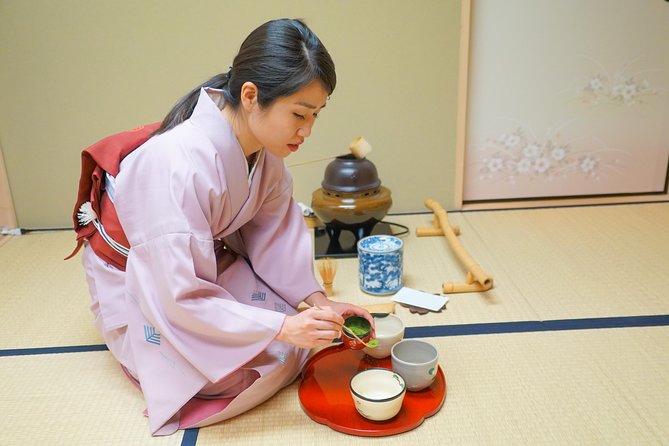
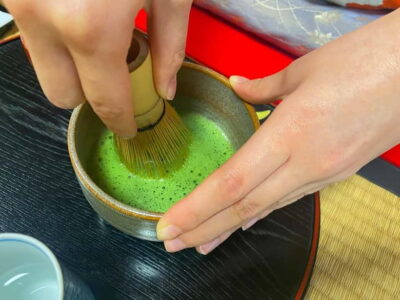
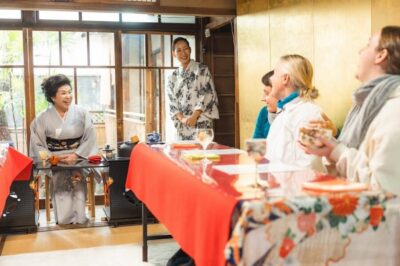
The tea ceremony is the tour’s most distinctive feature. After the slopes and crowds, you sit down and watch a careful sequence of movements built around matcha preparation and hospitality.
You are not expected to arrive as an expert. The value is in seeing the details: the preparation of the tea, the handling of utensils, and the respectful rhythm of the ceremony. A host named Haruki has been praised for being gentle and entertaining, while another ceremony has been led by a woman whose skill and precise movements made a strong impression.
The ceremony is more than drinking green tea. It gives you a short lesson in how Japanese culture can place meaning on simple actions, from serving a guest to holding a cup. The pace is calm, which makes a good contrast with the busy streets outside.
Matcha and snacks are included. A few food samples are also part of the experience, but additional food and drinks cost extra. If you have allergies or dietary restrictions, take the warning seriously. The food is prepared in kitchens outside the tour company’s control, substitutions may not be possible, and allergy-free preparation cannot be guaranteed.
This is also the section where you should expect a cultural demonstration rather than a long formal class. You receive an experience of the ceremony and its customs, with a chance to appreciate the skill involved. If you want a full tea-school lesson with extended practice, this may feel brief.
What the guides add to the walk
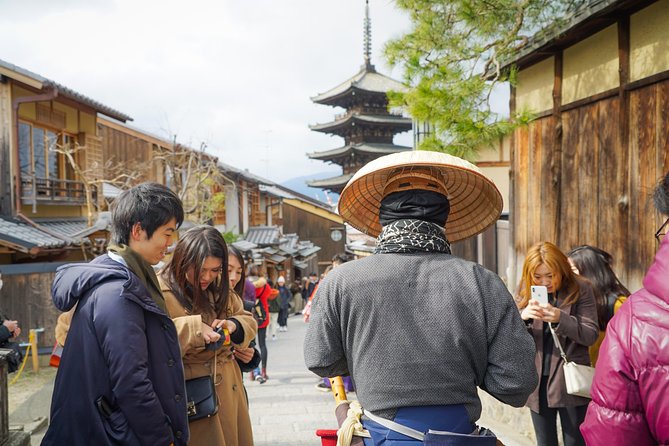
Guide quality matters a great deal on a route like this. The streets and temple are easy to photograph, but the cultural background is what turns the outing into a useful introduction to Kyoto.
Hide has led this experience and is noted for explaining Shinto and Buddhism clearly. He also keeps conversation relaxed, adds humor, and can talk about subjects as varied as baseball. That blend works well for a first visit because the tour does not feel like a lecture.
Photos are another practical touch. Hide has taken pictures during the walk, which means you do not have to choose between taking a picture of the view and appearing in it. The exact guide can vary, but the small-group format gives the guide room to offer this kind of help.
The best questions to ask are simple ones. Ask why a gate has a certain color, how to behave at a shrine, what the water ritual means, or how Shinto and Buddhism appear together in Kyoto. You will get more from the walk if you treat the guide as a local interpreter, not just a person leading the way.
Is $109.39 a fair price?
At $109.39 per person, this is not a bargain walk. The price includes the Kiyomizu-dera entrance fee, the tea ceremony, matcha, snacks, food samples, photos, and three hours with a local guide.
You are paying for several pieces at once. If you planned to visit Kiyomizu-dera independently, buy your own snacks, and book a separate tea activity, the combined cost and planning could approach the tour price. The small group also matters. A group of six offers a more personal experience than a standard sightseeing outing with dozens of people.
The value is strongest if you want cultural context and a simple morning plan. It is weaker if you prefer to move at your own pace, spend a long time shopping, or skip guided explanations. Independent visitors can enter the temple and walk the streets without paying for a guide, but they will need to research the customs and find the tea experience separately.
I would think of the price as paying for convenience, interpretation, and a compact introduction to eastern Kyoto. It is a fair spend for a short visit, especially if this is your first time in the city and you want help making sense of the area.
Timing, weather, and what to wear
The tour starts at 9:00 a.m. and lasts about three hours. Wear shoes that handle slopes comfortably. Kiyomizu-zaka, Sannenzaka, and Ninenzaka are not difficult for most people, but they are not flat city sidewalks.
Summer in Japan can be very hot and humid. Bring water and wear a hat to reduce the risk of heat illness. You will be outside for much of the route, and the uphill sections can feel harder in humid weather.
A mobile ticket is provided, and confirmation arrives when you book. The tour is near public transportation, though the experience itself is on foot. Children under six are not allowed.
Free cancellation is available if you cancel at least 24 hours before the 9:00 a.m. start time. Cancellations or changes made less than 24 hours before the start are not accepted for a refund.
Who should book this Kyoto experience?
I would choose this tour if you want a guided first look at Gion and Kiyomizu-dera, enjoy learning the meaning behind local customs, and like the idea of pairing a major temple with a tea ceremony.
It suits couples, solo visitors, and small families with children over six. The maximum of six people makes it easier to ask questions and keep the pace comfortable. It is also a good fit if you want someone else to handle the route through the old streets.
I would hesitate if you dislike uphill walking, have strict dietary restrictions, or want a long, formal tea lesson. The food cannot be guaranteed free of allergens, and the three-hour schedule leaves enough time for an introduction, not an extended study of tea.
Should you book it?
Book this experience if you want Kiyomizu-dera, old Kyoto streets, Otowa Waterfall, and matcha in one well-planned morning. The guide, small group, and cultural explanations add real value, especially on a first day in Kyoto.
Skip it if you prefer complete independence or think $109.39 is too much for a short walking tour. For most visitors seeking an easy introduction to Kyoto’s eastern temple district, the mix is strong: one major sight, several historic lanes, a hands-on ritual, local snacks, and enough time to leave you oriented rather than worn out.
FAQ
Where does the tour begin?
The tour begins at the Yasaka Shrine Nishiromon Gate, also called the Western Tower Gate, at 625 Gionmachi Kitagawa in Kyoto’s Higashiyama Ward.
What time does the tour start?
The start time is 9:00 a.m.
How long does the experience last?
The tour lasts approximately three hours and ends back at the meeting point.
What is included in the price?
The price includes Kiyomizu-dera’s entrance fee, a tea ceremony, matcha, snacks, a few food samples, photos during the tour, and three hours with a local guide.
How large is the group?
The activity has a maximum of six participants.
Are children and visitors with food allergies allowed?
Children under six are not allowed. The tour cannot guarantee allergy-free food or accommodate every dietary restriction because food is prepared in kitchens outside the tour company’s control.
Newly steeped around Kyoto
- Whisk Your Own Matcha: A Zen Matcha Experience at Temple★ 3.6 · 7 reviews
- Uji Walking Tour – Byodo-in temple and Tea Ceremony from Kyoto★ 3.5 · 3 reviews
- Kyoto: Authentic Tea Ceremony in a Small Group★ 5.0 · 7 reviews
- Tea ceremony at Kyoto’s Zen Temple Teahouse★ 5.0 · 2 reviews
- Tea Ceremony Experience in Traditional Kyoto Townhouse★ 5.0 · 19 reviews
- Tea Ceremony in 150 Years Old Townhouse with Tables and Chairs★ 5.0 · 22 reviews
- Sencha-do the Japanese Tea Ceremony Workshop in Kyoto★ 5.0 · 21 reviews
- Silent Beauty of Kyoto Zen Walk and Tea Experience★ 5.0 · 2 reviews
Tea Ceremony Experiences, compared.
Kyoto: Tea Ceremony in a Traditional Tea House in Kiyomizu
Read our review →
Kyoto: 45-Minute Tea Ceremony Lesson Experience
Read our review →
Kyoto: Table-Style Tea Ceremony at a Kyo-Machiya
Read our review →


Browse the lists this tea experience appears in