
Review · KYOTO
Tea Ceremony Experience in Traditional Kyoto Townhouse
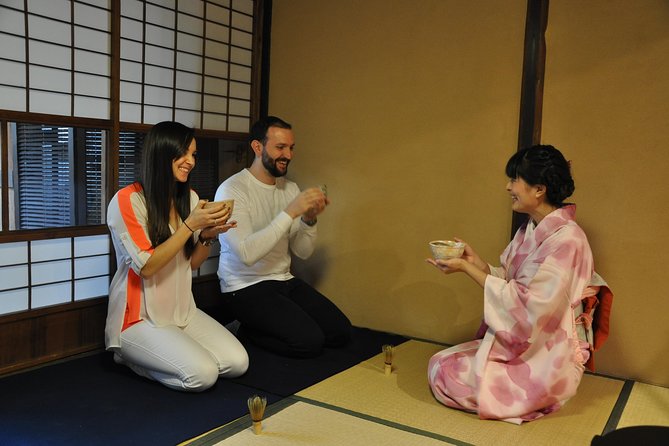
Kyoto’s tea culture makes far more sense when you see it in a real machiya, not only in a polished tourist venue. This one-hour experience takes you into an 80-year-old wooden townhouse, where you learn how to prepare matcha, watch a full demonstration, and then make a bowl yourself.
I like the small six-person limit, which should give the session a more personal feel. I also like the useful mix of background and practice: you hear about the tea ritual’s links to monks and samurai, then put the lesson to work with matcha from an organic farm and Kyoto sweets.
The main limitation is time. One hour is enough for a focused introduction, but not a long study of tea ceremony etiquette or Kyoto architecture. There is also no hotel pickup, so you need to reach the meeting point at 605 Nishidacho in Shimogyo Ward on your own.
Key points to know before booking
- An 80-year-old machiya: You get inside one of Kyoto’s remaining traditional wooden townhouses rather than visiting only a modern classroom.
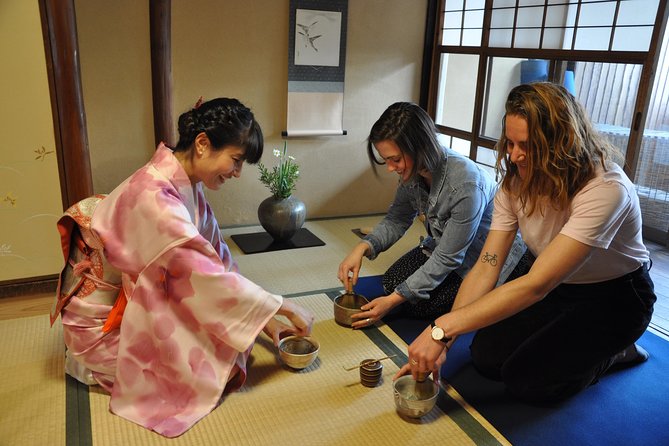
- You make your own matcha: The session includes instruction in preparing a bowl, not just watching a formal ritual.
- A small group of six: The capped size should allow for clearer explanations and more individual attention.
- A full one-hour format: The compact schedule works well when you want a cultural activity between sightseeing stops.
- Organic matcha and Kyoto sweets: Your tasting includes one bowl of tea and Japanese confectionery.
- Easy cancellation terms: You can receive a full refund if you cancel at least 24 hours before the start time.
Entering an 80-year-old Kyoto machiya
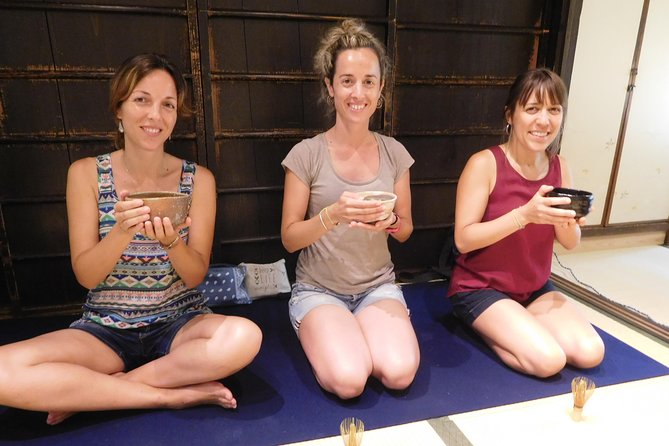
The setting is the first reason to consider this experience. A machiya is a traditional Kyoto townhouse, built with a narrow wooden frontage and living space extending back from the street. This particular house is about 80 years old, and the session gives you time inside a building type that once filled much more of the city.
That matters because tea ceremony is closely tied to place. The room, the quiet pace, and the simple wood construction help explain why the ceremony developed as an art of attention rather than a quick way to prepare a drink. You are not simply being told that Kyoto has old customs. You are sitting in one of the city’s older domestic spaces while learning how the tea is made.
I would not book this mainly as an architecture tour. The available information does not promise a detailed house tour or a long explanation of the building. Instead, the machiya functions as the atmosphere for the tea lesson. You get a rare look inside, but the matcha workshop remains the main event.
The meeting point is 605 Nishidacho, in Kyoto’s Shimogyo Ward, postal code 600-8397. The location is near public transportation, but hotel transfers are not included. Plan your route before setting out, and allow enough time to find the correct entrance.
More Tea Ceremonies in Kyoto
- Kyoto: Tea Ceremony in a Traditional Tea House in Kiyomizu
★ 4.9 · 3,519 reviews - Kyoto: Tea Ceremony Ju-An at Jotokuji Temple
★ 4.9 · 3,207 reviews - Kyoto: 45-Minute Tea Ceremony Lesson Experience
★ 4.3 · 2,378 reviews
Understanding the tea ceremony before making tea
The introduction places matcha in a wider cultural setting. You learn about the history of the tea ceremony and its association with Buddhist monks and samurai. That short background helps turn the activity from a craft lesson into a look at one of Japan’s most carefully shaped cultural practices.
The word ceremony can make the experience sound intimidating. Here, the format is also hands-on. You are not expected to remain silent while an expert performs every step. The purpose is to explain the method clearly enough for you to prepare your own tea.
That balance is useful for first-time visitors. A formal ceremony can be beautiful but hard to follow if you do not know why the host moves, pauses, or handles each item in a certain way. The demonstration gives you a model, while the preparation portion lets you ask questions through action.
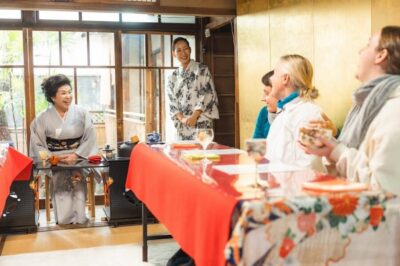
The hosts have been praised for being kind and professional, with explanations described as clear and simple. That is especially helpful for families and mixed-age groups. One account describes parents and children enjoying both the demonstration and the chance to make tea, so you do not need a prior interest in Japanese culture to take part.
Kimi is the named contact associated with the experience. The available information does not provide a full list of instructors, so you should not expect a particular guide beyond the host assigned on the day. Still, the emphasis on straightforward explanations suggests a welcoming format rather than a highly academic lecture.
Making a bowl of matcha yourself
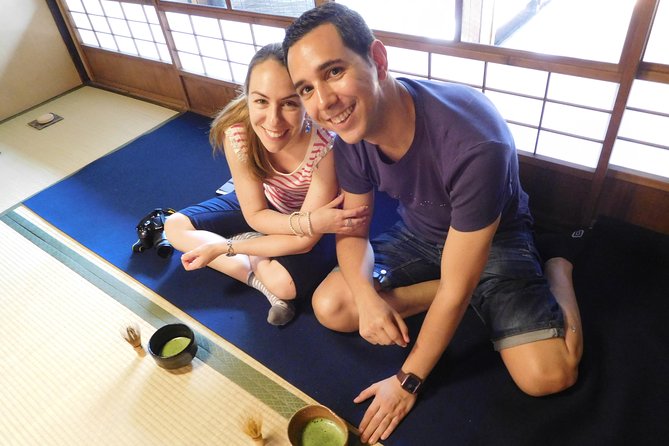
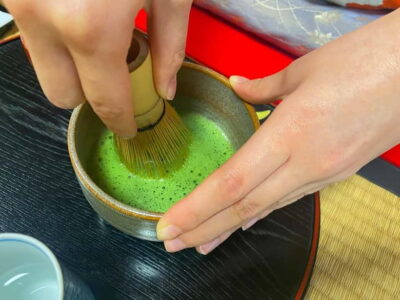
The most practical part of the session is the preparation. You learn how to brew matcha, then make tea with your own hands. The experience includes matcha sourced from an organic farm, which gives the tasting a clear focus on the tea itself rather than treating it as a decorative prop.
Matcha is powdered green tea, so it is prepared differently from leaf tea. Instead of steeping leaves and removing them, you mix the powder directly with hot water. The texture, strength, and foam depend on how you combine the ingredients, which is why a demonstration is useful.
The lesson is described as personalized, with thorough instruction before you try the process. I like this format because it gives you something to remember after leaving Kyoto. You may not master every detail in a single hour, but you will understand the basic motions and the care needed to produce a good bowl.
The included serving is one bowl of matcha per person, along with Japanese sweets. The sweets are sourced from a famous Kyoto confectionary, adding a traditional pairing to the tea rather than a generic snack. Their role is practical as well as enjoyable: a small sweet helps balance matcha’s strong, earthy taste.
Do not expect a full meal. The food is a tasting element, and the experience is too short to function as lunch or afternoon tea in the Western sense. Eat beforehand if you need something substantial, then enjoy the sweets as part of the ceremony.
What the one-hour schedule gives you
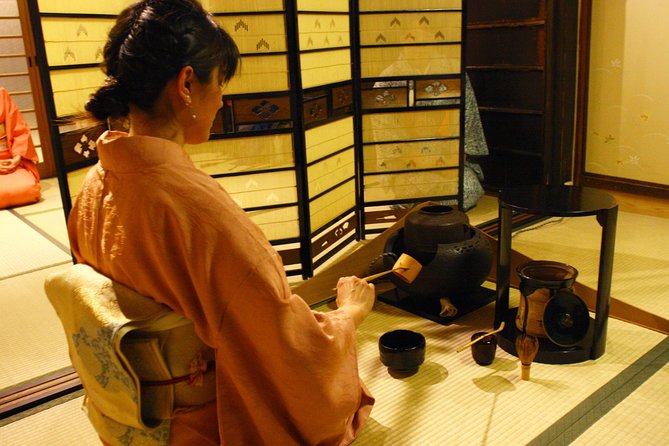
An hour is a sensible length for this activity. It is long enough to cover the background, watch a demonstration, prepare your own tea, and enjoy the sweets. It is also short enough to fit around visits to temples, markets, and museums across Kyoto.
The trade-off is depth. You will get an introduction, not specialist training. The session is unlikely to cover every form of tea etiquette, the full range of tea schools, or the detailed design of a traditional tea room. Those subjects need much more time.
I would choose this format if you want a clear first step into matcha culture. It suits a morning or afternoon gap in your itinerary, especially if you want a cultural activity that does not consume half a day. It also works well when your group includes people with different levels of interest.
The group size is limited to six. That is a useful detail, not just a booking note. A small group should make it easier to hear the explanation in the townhouse and easier to follow the preparation. It also reduces the risk of the activity feeling like a large demonstration where you only watch from the back.
The exact amount of individual coaching can depend on the group and the host. The experience promises personalized demonstrations, but the supplied details do not specify a private lesson. Think of it as a small-group workshop rather than a one-to-one appointment.
Same leaf, a different ritual:
- Kyoto: Table-Style Tea Ceremony at a Kyo-Machiya
★ 4.9 · 1,211 reviews - Kimono Tea Ceremony at Kyoto Maikoya, NISHIKI
★ 5.0 · 911 reviews - Arashiyama Bamboo, Temple, Monkeys, or Secret Sake Brewery
★ 4.8 · 886 reviews - Kyoto: Arashiyama Bamboo Forest, Monkeys, Matcha & Temple Tour
★ 5.0 · 759 reviews
Is $27.59 a fair price?
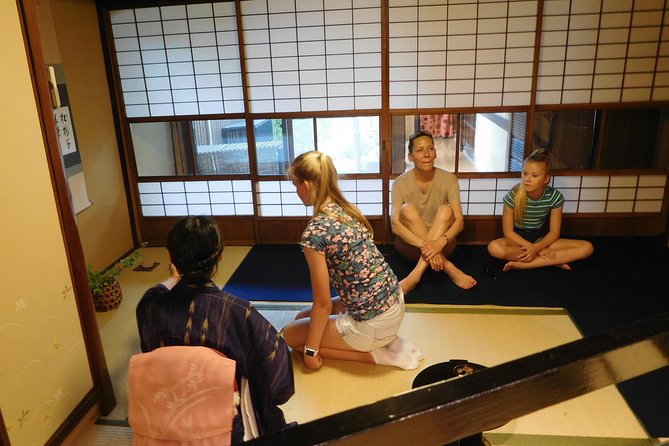
At $27.59 per person, the value rests on three elements: the use of a traditional machiya, the practical matcha lesson, and the included tea and sweets. If you only want to drink a cup of green tea, this is more than you need. If you want context and participation, the price is reasonable for a one-hour cultural activity in Kyoto.
The workshop gives you more than a staged photo opportunity. You receive an explanation of the ritual, watch a demonstration, prepare tea yourself, and taste sweets from a Kyoto confectionary. Those details make the cost easier to justify, particularly for a first visit.
You should also account for the time and transport expense because hotel pickup is not provided. The meeting point is near public transportation, but getting there is your responsibility. The activity ends where it begins, so you can continue sightseeing from the same part of Kyoto afterward.
I see this as good value for couples, families, and small groups who want a compact cultural experience. It is less compelling for a dedicated tea student seeking advanced technique, a long formal ceremony, or an extensive discussion of tea schools.
Who will get the most from this experience?
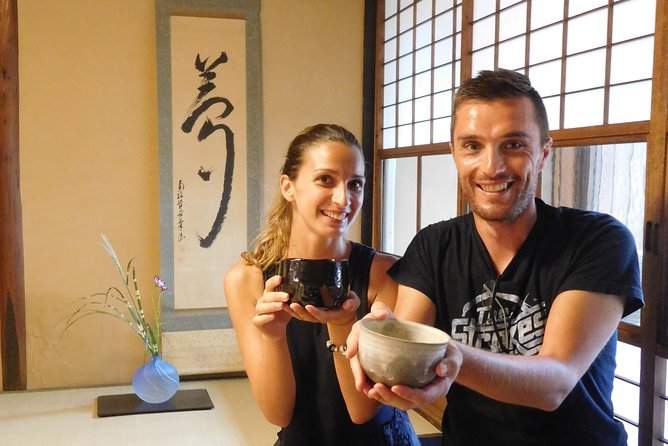
This session is a strong match for first-time visitors who want to understand matcha without committing to a full-day class. The simple explanations and hands-on format make the subject approachable.
Families may also find it practical. Most people can participate, and the activity does not require specialist knowledge. Making the tea gives younger participants something active to do, while the historical background offers enough substance for adults.
It suits anyone who values old buildings and local customs. The machiya is not just a backdrop for photographs. It gives the session a sense of place and connects the tea lesson to Kyoto’s older residential culture.
You may want something else if you are looking for an elaborate, highly formal ceremony. The experience includes a genuine ceremony element, but it is presented alongside teaching and personal preparation. That makes it accessible, though less focused on strict observation than a ceremonial performance alone.
The small group also helps people who prefer a quieter activity. With a maximum of six participants, the setting should feel more manageable than a large cultural show. Still, the experience is shared, not private, unless your booking happens to fill the group.
Practical details for a smooth visit
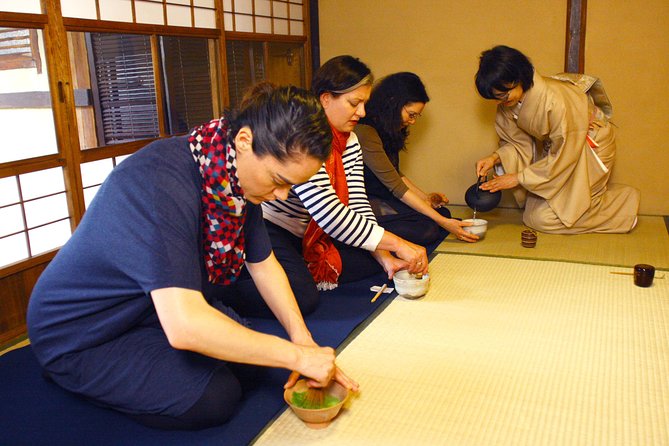
Confirmation is sent within 48 hours of booking, subject to availability. Since the experience is often booked about 19 days ahead, reserve early if the timing matters to your Kyoto plans. That lead time is especially useful during busy travel periods.
The ticket is mobile, so you can use your phone for entry. Keep the booking information ready when you arrive, and check the address carefully: 605 Nishidacho, Shimogyo Ward, Kyoto, 600-8397, Japan.
The experience starts and ends at the same meeting point. There is no hotel pickup or drop-off, so connect it with nearby sightseeing rather than assuming transport will be arranged for you.
Most participants can take part. The supplied details do not describe specific accessibility features, so contact the provider before booking if you have mobility or other access needs that require precise arrangements.
Cancellation is flexible if you plan ahead. You can cancel for a full refund up to 24 hours before the local start time. Cancellations or changes made within 24 hours are not accepted for a refund.
Should you book the machiya tea ceremony?
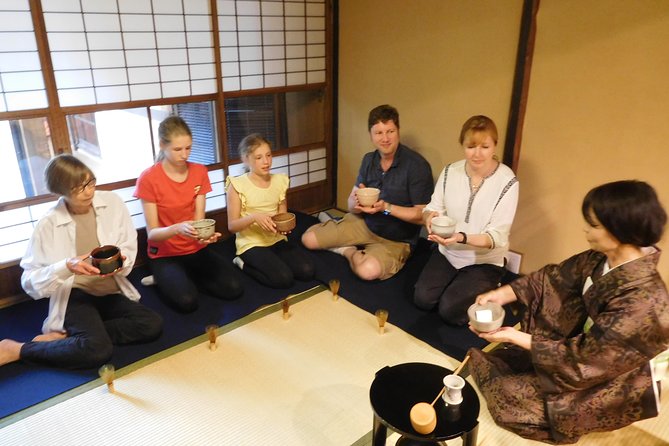
I would book this if you want a short, hands-on introduction to matcha in a real Kyoto townhouse. The strongest reasons are the small group, the chance to prepare your own bowl, the clear teaching style, and the included Kyoto sweets.
I would skip it if you want an advanced tea course, a long formal ceremony, or a full architectural tour of a machiya. One hour gives you a well-shaped introduction, but it cannot cover every layer of Japanese tea culture.
For most visitors, the $27.59 price is fair because you are paying for participation, instruction, a traditional setting, and refreshments rather than tea alone. Build in travel time to the Shimogyo Ward meeting point, arrive ready to listen and practice, and you will get a useful taste of Kyoto’s tea tradition without giving up most of your day.
FAQ
How long does the tea ceremony experience last?
The experience lasts approximately one hour.
Where does the activity begin?
It begins at Ami Kyoto, located at 605 Nishidacho, Shimogyo Ward, Kyoto, 600-8397, Japan.
Where does the activity end?
The experience ends back at the meeting point.
What is included in the price?
The experience includes one bowl of matcha green tea and Japanese sweets.
Is hotel pickup included?
No. Hotel pickup and drop-off are not included.
How many people can join?
The activity has a maximum of six participants.
Can beginners take part?
Yes. Most people can participate, and the session includes clear explanations, a tea ceremony demonstration, and hands-on matcha preparation.
Can I cancel for a full refund?
Yes. You can cancel at least 24 hours before the local start time for a full refund. Cancellations or changes made less than 24 hours before the start time are not accepted for a refund.
Newly steeped around Kyoto
- Whisk Your Own Matcha: A Zen Matcha Experience at Temple★ 3.6 · 7 reviews
- Uji Walking Tour – Byodo-in temple and Tea Ceremony from Kyoto★ 3.5 · 3 reviews
- Kyoto: Authentic Tea Ceremony in a Small Group★ 5.0 · 7 reviews
- Tea ceremony at Kyoto’s Zen Temple Teahouse★ 5.0 · 2 reviews
- Tea Ceremony in 150 Years Old Townhouse with Tables and Chairs★ 5.0 · 22 reviews
- Sencha-do the Japanese Tea Ceremony Workshop in Kyoto★ 5.0 · 21 reviews
- Silent Beauty of Kyoto Zen Walk and Tea Experience★ 5.0 · 2 reviews
- Traditional Tea Ceremony in Kyoto★ 4.5 · 3 reviews
Tea Ceremony Experiences, compared.
Kyoto: Tea Ceremony in a Traditional Tea House in Kiyomizu
Read our review →
Kyoto: 45-Minute Tea Ceremony Lesson Experience
Read our review →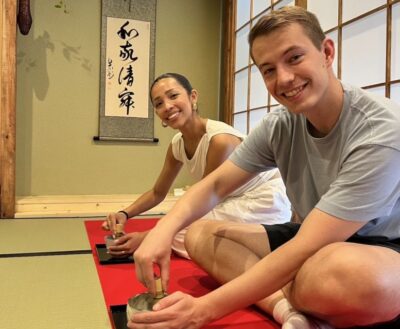
Kyoto: Table-Style Tea Ceremony at a Kyo-Machiya
Read our review →


Browse the lists this tea experience appears in