
Review · KYOTO
Arashiyama Bamboo, Temple, Monkeys, or Secret Sake Brewery
Arashiyama is one of Kyoto’s prettiest districts, but its famous bamboo grove is only the beginning. This five-hour walking tour adds a private garden, Zen temple, shrine, river views, and a steep climb to see macaques in their natural setting. I especially like the green tea stop at Okochi Sanso Garden and the way guides such as Karim, Tom, Francis, and Toru add cultural context without turning every pause into a lecture.
I also like the flexible feel of the route, with time for snacks, photographs, rest, and questions. The main drawback is simple: this is a long walking tour, and the final climb to Monkey Park takes 15 to 20 minutes on a steep path. If your knees dislike hills, or if Kyoto is hot and humid, you should think carefully before booking.
Key points to know before booking
- The bamboo grove comes early: You begin with Arashiyama’s most famous sight, then move on before the day becomes a blur of photographs.
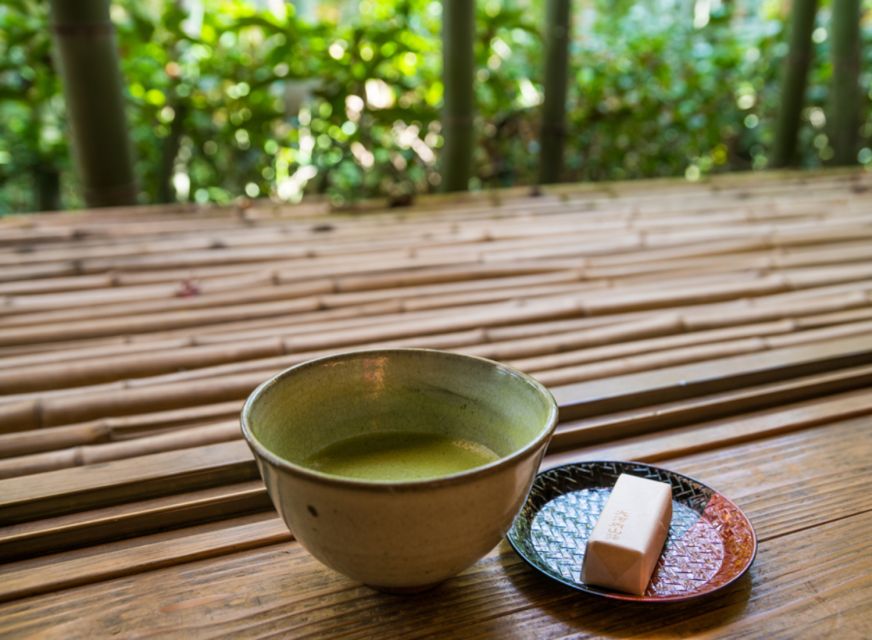
- Okochi Sanso includes a drink: Your admission covers the garden and a beverage in the former tea-house rest area.
- Tenryuji adds real cultural depth: You visit the Zen temple grounds, pond, gardens, and koi rather than simply passing by.
- Monkey Park requires effort: The macaques are reached by a steep 15 to 20 minute walk, but the hilltop view over the Katsura River is excellent.
- There are two tour styles: Option A continues through the shopping street, Kimono Forest, Togetsukyo Bridge, and Monkey Park. Option B replaces that section with a local lunch and sake tasting at Tanzan Brewery.
- The guide makes a big difference: Past departures have included Karim, Tom, Francis, Toru, Alice, Kevin, and others, with frequent praise for clear explanations, patience, humor, and practical help.
Why this Arashiyama tour works well
Arashiyama can be handled independently, but the district is spread across several separate sights. It is easy to see the bamboo grove, take a few photographs, and then miss the garden, shrine details, temple grounds, or the best river viewpoint.
This tour gives you a sensible route from Saga-Arashiyama Station. You walk from one stop to the next, with no sightseeing bus and no hotel pickup. That matters because the district’s character is found along the connecting streets and paths, not only inside the headline attractions.
The guide also helps turn a series of beautiful places into a coherent morning. You can ask how to pray at a shrine, learn why a Zen temple garden is arranged as it is, and get practical advice about where to find a snack, water, or a quieter photograph.
The format is usually social but not enormous. The standard shared group can reach 12 people, while some departures have been much smaller, including groups of four or five. A private option is available if you want more control over the pace or the people in your group.
Other places to pour a cup around Kyoto:
- Kyoto: Tea Ceremony in a Traditional Tea House in Kiyomizu
★ 4.9 · 3,519 reviews - Kyoto: Tea Ceremony Ju-An at Jotokuji Temple
★ 4.9 · 3,207 reviews - Kyoto: 45-Minute Tea Ceremony Lesson Experience
★ 4.3 · 2,378 reviews
Starting at Saga-Arashiyama Station
The meeting point is by the map beside the vending machines on the north side of JR Saga-Arashiyama Station. After leaving the station gates, turn right and go downstairs. Look for a guide wearing a red polo shirt or jacket marked JTA, short for Japan Tour Adventure.
Arrive 15 minutes early. This is worth taking seriously because arriving after the official start time counts as a no-show, with no refund. The station meeting point is convenient, but you do not want to be searching for the map at the last minute.
From the station, you walk about 15 minutes to the bamboo grove. Use that first stretch to settle into the pace. You are walking for most of the next five hours, so comfortable shoes are not optional.
Walking beneath Arashiyama’s bamboo
The bamboo grove is the visual opening act, and it earns its fame. Tall green stalks rise on both sides of the path, filtering the light and creating a narrow corridor that feels very different from central Kyoto.
The scheduled stop inside the grove lasts about 25 minutes. That is enough for photographs and an introduction to the area, but it is not a long private pause. You should enjoy the view, listen for the guide’s explanation, and accept that this is a popular public path rather than a silent woodland.
The timing makes sense. The grove is often the busiest part of Arashiyama, so the tour does not linger until everyone has seen every possible angle. Your guide can also point out better places for photographs and help prevent the stop from becoming an aimless shuffle through the crowd.
From there, you walk about five minutes to Nonomiya Shrine.
Nonomiya Shrine and a useful cultural pause
Nonomiya Shrine is a small but important stop near the bamboo route. You have roughly 15 minutes for photographs, sightseeing, and an explanation of shrine customs.
This is where the tour’s cultural guidance becomes useful. You can learn how to approach a shrine and how to pray, rather than treating the entrance gate and offering box as decoration. The stop is short, but it gives meaning to practices you will see again elsewhere in Japan.
After the shrine, the group walks for about 10 minutes to Okochi Sanso Garden. The route itself helps break up the major attractions and keeps the morning from feeling like a series of isolated ticket checks.
Same leaf, a different ritual:
- Kyoto: Table-Style Tea Ceremony at a Kyo-Machiya
★ 4.9 · 1,211 reviews - Kimono Tea Ceremony at Kyoto Maikoya, NISHIKI
★ 5.0 · 911 reviews - Kyoto: Arashiyama Bamboo Forest, Monkeys, Matcha & Temple Tour
★ 5.0 · 759 reviews - Kyoto: Kimono Tea Ceremony at Orizuruya Gion
★ 4.9 · 618 reviews
Okochi Sanso Garden is the quiet reward
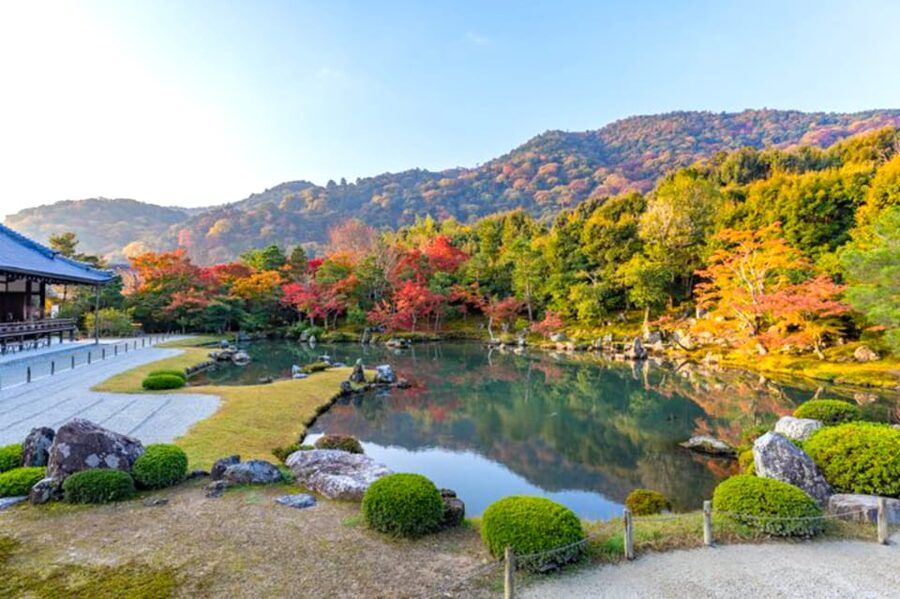
Okochi Sanso Garden is one of the strongest parts of the tour. It was once the home of actor Denjiro Okochi, and the grounds offer carefully arranged paths, greenery, hillside views, and quiet corners away from the main bamboo corridor.
You have about 40 minutes here, including free time and a drink at the rest area, a former tea house. The admission ticket and green tea are included, which makes the stop feel like more than a quick look around.
I like this part because it changes the mood. The bamboo grove is narrow and photograph-heavy. Okochi Sanso gives you space to slow down, sit, look outward, and notice how Kyoto’s hills and river valley fit together.
The garden does involve walking on paths and slopes. It is not difficult in the same way as Monkey Park, but anyone with mobility concerns should remember that the entire tour includes uneven ground, stairs, and a steady amount of walking.
Tenryuji Temple and its koi pond
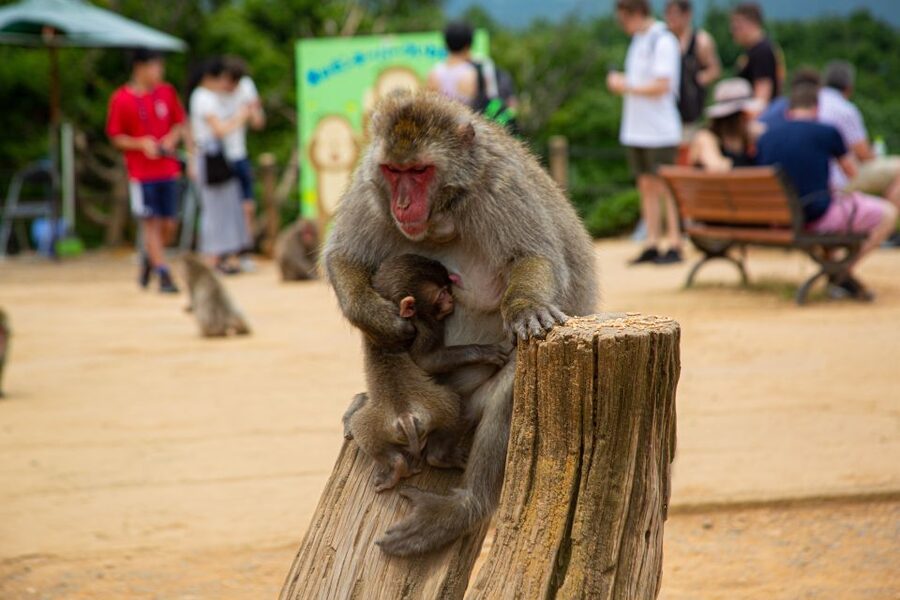
After another short five-minute walk, you reach Tenryuji Temple, one of Arashiyama’s major Buddhist sites. The visit lasts around 30 minutes and includes time for sightseeing, a self-guided look around, and photographs.
The temple grounds combine architecture, garden design, and a pond filled with koi. Your guide can explain Buddhist customs and the ideas behind the temple spaces, while you get time to look at the details without being hurried from one photo stop to another.
Tenryuji is especially useful for visitors who want more than scenery. Arashiyama is easy to remember as bamboo and monkeys, but the temple provides the religious and artistic center of the district. If you are interested in Kyoto’s traditions, this is one of the places where the tour earns its price.
The schedule allows a little independence here. You do not spend every minute shoulder to shoulder with the guide. You can use the time to take photographs, view the pond, or browse around the grounds.
Choosing between the shopping route and sake brewery option

After Tenryuji, the experience can split into two formats. Confirm which option applies to your booking, since they are not the same afternoon.
Option A: shopping street, bridge, and monkeys
The standard route takes you through Arashiyama’s shopping street for about 30 minutes. This is a chance to sample regional food, buy a snack, and browse shops. Lunch is not included, so plan to pay separately for anything you eat.
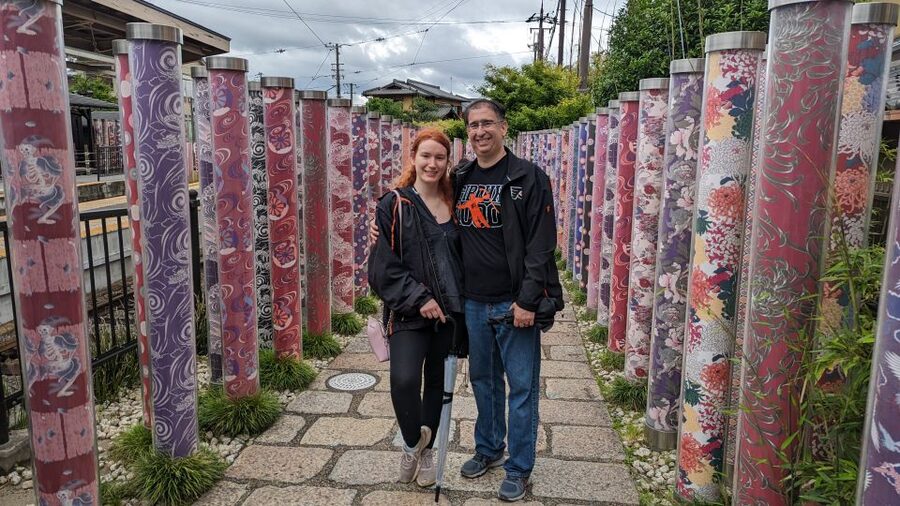
You then see the Kimono Forest, a colorful installation of kimono-patterned pillars at the station area. It is a brief 10-minute stop, but it adds a lively visual contrast after the temple and bamboo.
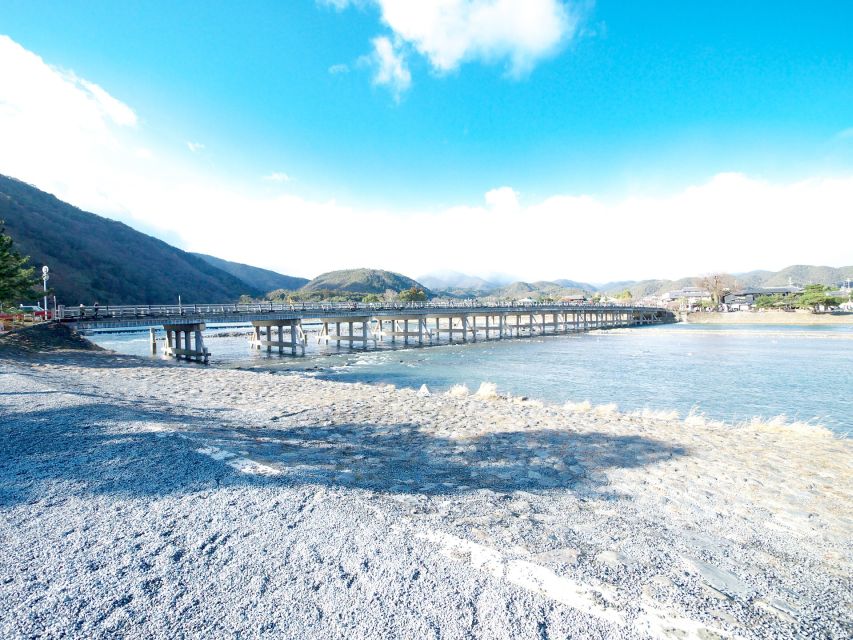
The group continues to Togetsukyo Bridge for photographs and river views. The stop itself is only about five minutes, followed by a 10-minute walk to Iwatayama Monkey Park.
Option B: local lunch and Tanzan Brewery
The alternate plan returns to the station for a short mountain train ride. You then have lunch among local residents, in an area described as having very few tourists, followed by a visit to Tanzan Brewery with sake tasting included.
This option is appealing if you have already seen Kyoto’s main shopping streets or prefer food and drink to another major attraction. It also offers a different window into the area, but the provided schedule does not include the Monkey Park section for this choice. Ask before booking if seeing the macaques is essential to you.
The climb to Iwatayama Monkey Park
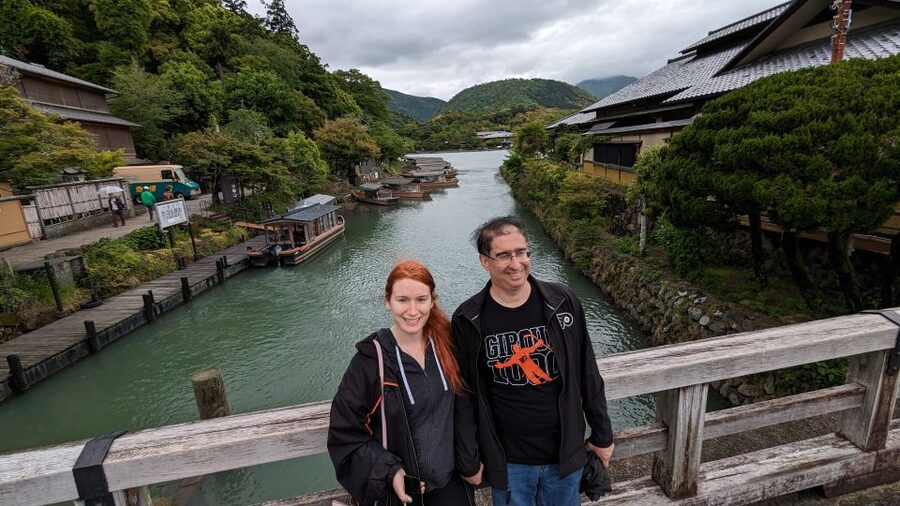
Option A ends at the entrance to Iwatayama Monkey Park. The tour officially finishes at the park, and your guide gives you the ticket and explains how to continue. You then make the final climb independently, taking as much time as you need.
The path to the top takes about 15 to 20 minutes and is steep. In hot weather, this is the part that can turn a pleasant walk into hard work. Bring water, wear shoes with a secure sole, and be realistic about your fitness.
At the top, you can see Japanese macaques in their habitat and look out over Kyoto, the Katsura River, and the surrounding hills. The view is one of the tour’s best payoffs, especially because you have earned it with your legs.
The monkeys are not a petting-zoo attraction. Follow the park rules and listen to the guide’s instructions before heading up. Once you reach the site, you can leave whenever you wish. A drop-off point is listed at Monkey Park, with Saga-Arashiyama Station as another possible end point.
What the guides add
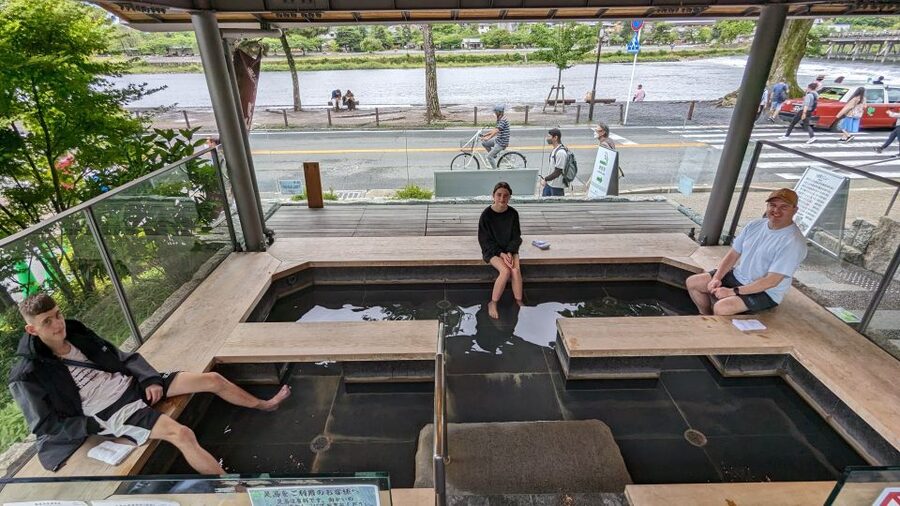
The route is good, but the guide is the part that shapes the experience. Karim has been praised for an easygoing manner, good photography spots, and the ability to adjust the pace. Tom has a reputation for humor, cultural explanations, and keeping families engaged, even in extreme heat. Francis is noted for clear English, friendly conversation, and stories about Japanese customs.
Toru is another name that appears often in connection with detailed explanations of Kyoto’s history and traditions. Alice has been especially good at practical details such as when to buy water, where to find a bathroom, and how to adjust the route for the group.
Guide assignments can change, so you cannot book a particular person unless the operator confirms it. The reliable expectation is an English-speaking guide. French, German, and Spanish may be available, but you must contact the company before booking to confirm the language for your date. It is not guaranteed on a shared tour.
Price, pace, and practical value
At $87 per person, this is not the cheapest way to walk through Arashiyama. You could visit several of these places independently, and lunch or snacks still cost extra.
The value comes from the number of admissions included: Okochi Sanso Garden, Tenryuji Temple, and Monkey Park are covered, along with green tea and souvenir photographs. You also get five hours of route planning, cultural explanation, and help connecting places that are easy to visit badly on your own.
I consider the price fair if you want a full introduction to Arashiyama and prefer not to manage tickets, directions, and shrine etiquette yourself. It is less attractive if you only want a quick bamboo photograph or already know the district well.
The tour runs rain or shine. Kyoto’s summer heat can be serious, and several people have found the walking demanding even when the guide added shade breaks and drink stops. Bring cash, water money, comfortable shoes, sun protection, and a passport or ID card.
Single guests can book, but the tour requires at least two participants to operate. A solo booking may be canceled, rescheduled, or refunded if no second guest joins.
Who should book this experience
I would choose this tour for a first Kyoto visit, families with older children or teenagers, couples who want a guided introduction, and anyone who likes combining gardens, temples, food, wildlife, and views in one outing.
The tour also suits you if cultural explanations matter. Several of the stops are easy to photograph without a guide, but a good guide helps you understand how to behave at a shrine, why the temple garden matters, and what you are seeing beyond the surface.
I would hesitate if you have mobility problems, dislike hills, or want a slow morning with little structure. The route is friendly and flexible, but it is still a five-hour walk. The Monkey Park climb is the clearest physical test.
FAQ
Where does the Arashiyama tour meet?
Meet by the map beside the vending machines on the north side of JR Saga-Arashiyama Station. After leaving the gates, turn right and go downstairs. The guide wears a red polo shirt or jacket with the JTA company logo.
How long does the tour last?
The tour lasts five hours, or 330 minutes. You should arrive 15 minutes before the scheduled departure time.
Is this a bus tour?
No. This is a walking tour. The route includes several walks between attractions, plus a steep 15 to 20 minute climb to the top of Iwatayama Monkey Park.
Are the attraction tickets included?
Yes. Admission to Okochi Sanso Garden, Tenryuji Temple, and Monkey Park is included. Green tea and souvenir photographs are also included.
Is lunch included?
Lunch is not included on Option A. Option B includes a local lunch stop and a sake tasting at Tanzan Brewery, but you should confirm which option applies to your booking.
Can I take the tour in French, German, or Spanish?
Some guides speak French, German, or Spanish, but a language other than English is not guaranteed on a shared tour. Contact the operator before booking to confirm availability for your chosen date.
Should you book it?
Book this tour if you want Arashiyama explained as a complete district rather than reduced to one bamboo path. The combination of bamboo, shrine, garden, temple, shopping street, bridge, and monkeys gives you a strong first look at Kyoto’s nature and culture.
Choose the brewery option if food, local life, and sake appeal more than the monkey park. Choose the standard route if the macaques and hilltop view are high on your list.
The main question is not the price. It is whether you are ready to walk for five hours and climb a steep hill. If the answer is yes, this is a well-organized and good-value way to see Arashiyama, especially with a guide who can keep the pace comfortable and make the stops mean more.
Newly steeped around Kyoto
- Whisk Your Own Matcha: A Zen Matcha Experience at Temple★ 3.6 · 7 reviews
- Kyoto: Authentic Tea Ceremony in a Small Group★ 5.0 · 7 reviews
- Tea ceremony at Kyoto’s Zen Temple Teahouse★ 5.0 · 2 reviews
- Uji Walking Tour – Byodo-in temple and Tea Ceremony from Kyoto★ 3.5 · 3 reviews
- Tea Ceremony in 150 Years Old Townhouse with Tables and Chairs★ 5.0 · 22 reviews
- Tea Ceremony Experience in Traditional Kyoto Townhouse★ 5.0 · 19 reviews
- Sencha-do the Japanese Tea Ceremony Workshop in Kyoto★ 5.0 · 21 reviews
- Silent Beauty of Kyoto Zen Walk and Tea Experience★ 5.0 · 2 reviews
Japan Tea Tours, compared.
Kyoto: Tea Ceremony in a Traditional Tea House in Kiyomizu
Read our review →
Kyoto: 45-Minute Tea Ceremony Lesson Experience
Read our review →
World Heritage Kyoto & Nara Uji Authentic Matcha Experience
Read our review →
Kyoto: Table-Style Tea Ceremony at a Kyo-Machiya
Read our review →

Browse the lists this tea experience appears in