
Review · JAPAN
Best of Nagasaki with Japanese Tea Ceremony 4 hours Car Tour
Nagasaki’s most moving sights and a quiet Japanese tea ceremony make an unusual but worthwhile pair. In four hours, you go from the Peace Park and atomic bomb hypocenter to hillside homes, Christian heritage, and matcha prepared with careful ritual.
I especially like the private car transport, which saves energy on Nagasaki’s hills and keeps the route workable in uncertain weather. I also like the balance of serious history and living culture, with time for both the Atomic Bomb Museum and a traditional tea ceremony. The main concern is pace: four hours leaves little room for lingering, and Glover Garden, Oura Church, and the tea stop may feel brisk.
Key points to know before booking
- The Peace Park and Atomic Bomb Museum anchor the tour, giving you a clear understanding of Nagasaki’s wartime history.
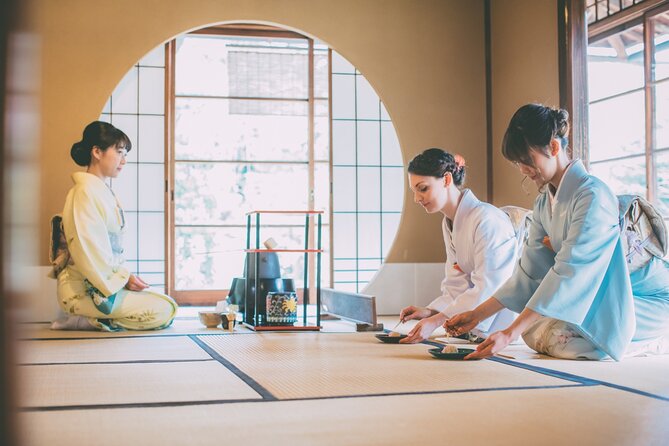
- A 45-minute tea ceremony in Shindaikumachi adds a hands-on cultural moment to the sightseeing.
- Private transport or a taxi reduces the strain of hills, long walks, and changing weather.
- Glover Garden provides harbor views and a look at nineteenth-century Western-style residences.
- Entrance fees and transportation are included, which makes the $221.12 price easier to assess.
- The tour is private, so only your own group takes part, with pickup offered.
Why this four-hour route works in Nagasaki
Nagasaki is not a city you understand from one postcard view. Its story includes the atomic bombing, foreign trade, Christianity, hillside neighborhoods, and the everyday rituals of Japanese life. This tour fits several of those pieces into a single half-day.
The car matters more here than it would on a flat city tour. You can visit sites spread across different parts of Nagasaki without spending much of your limited time finding transport or recovering from steep streets. Depending on vehicle availability, the ride may be in a private car or a taxi, but the purpose is the same: keep the route comfortable and efficient.
At $221.12 per person, this is not a budget sightseeing outing. The value comes from what is bundled into the price: private transportation, entrance fees, pickup, and the tea ceremony. If you are visiting from a cruise ship, have limited stamina, or want a guide to handle the route, the cost may be reasonable. If you are happy using public transport and walking on your own, you can see some of these places for less.
The four-hour length is both a strength and a limit. It is short enough to fit a half-day port visit, but the schedule asks you to keep moving. You will get a useful overview rather than a slow, detailed study of every site.
More Tea Ceremonies in Japan:
- Kyoto: Tea Ceremony in a Traditional Tea House in Kiyomizu
★ 4.9 · 3,519 reviews - Kyoto: Tea Ceremony Ju-An at Jotokuji Temple
★ 4.9 · 3,207 reviews - Kyoto: 45-Minute Tea Ceremony Lesson Experience
★ 4.3 · 2,378 reviews
Peace Park and the atomic bomb hypocenter
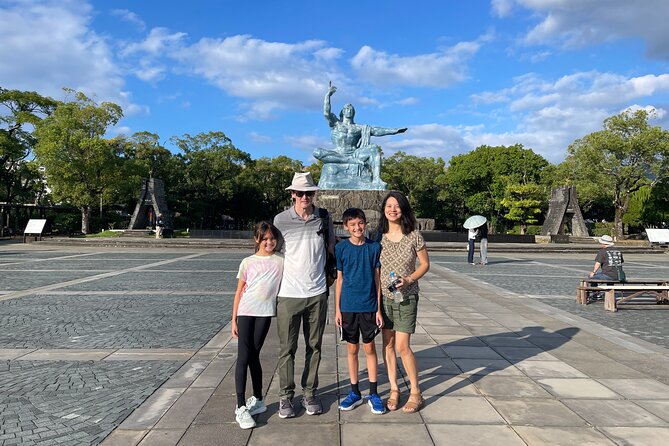
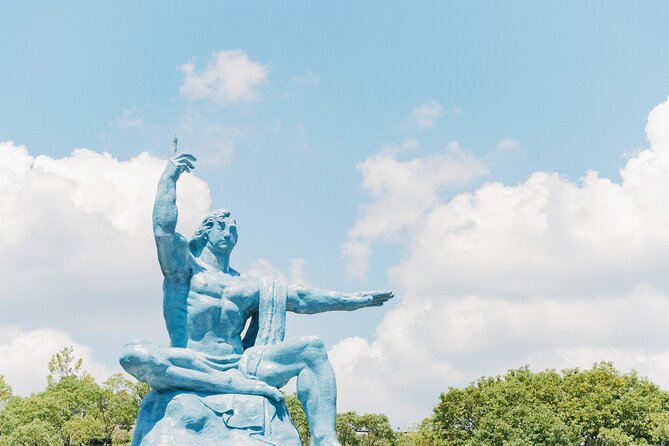
The first two stops give the tour its emotional center. At Nagasaki Peace Park, you walk among memorials and sculptures dedicated to the people who died in the atomic bombing. The Peace Statue is the best-known landmark here, and the open setting gives you room to pause rather than simply pass through another museum room.
Allow yourself a quiet few minutes. This is not a place to rush for photographs. The tour gives about 20 minutes at the park, enough to see the main memorial area and hear an introduction, though not enough for a long, unhurried visit to every sculpture.
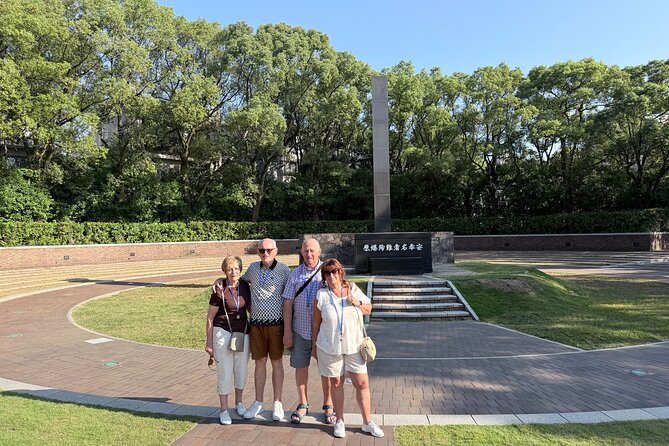
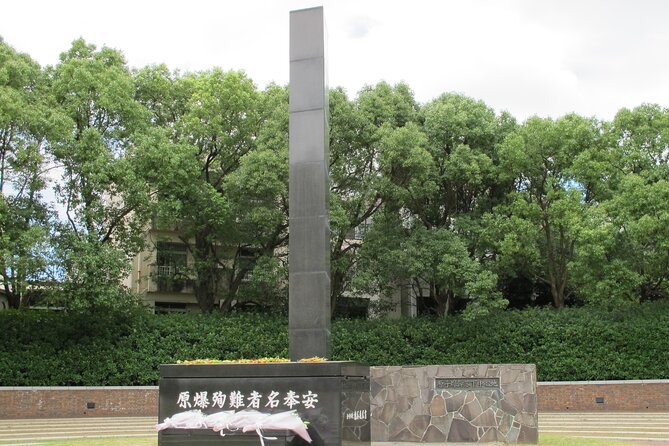
The nearby Hypocenter Park marks the exact point where the atomic bomb exploded on August 9, 1945. That fact can be difficult to take in because the site itself is calm and carefully maintained. A monument marks the location, turning an abstract historical event into a specific place on the ground.
You get another 20 minutes here. The short stop works if your guide explains the setting clearly, but you may want more time if you prefer to read every plaque or reflect at length. The route is strongest when you listen closely to the guide rather than treating these stops as quick photo calls.
Guides named in the tour’s published material include Akihiro, Moeurn, Hiro, and Vichka. The comments attached to the experience place particular emphasis on clear English, professional handling, and passionate explanations of Nagasaki’s story. That is important at the Peace Park, where context and tone matter as much as the monument itself.
The Atomic Bomb Museum in a focused 30 minutes
The Nagasaki Atomic Bomb Museum follows the outdoor memorials with photographs, artifacts, and personal accounts of August 9, 1945, and its aftermath. It is a serious museum, and the exhibits ask for attention. You will see material that explains both the destruction and the human cost.
Thirty minutes is enough to grasp the main story, especially if your guide helps you understand what you are seeing. It is not enough for a slow reading of every display. If museums are a major reason you visit Nagasaki, you may find this portion too short. If you want a clear introduction before exploring more on your own, the timing is useful.
The sequence of Peace Park, Hypocenter Park, and the museum is well chosen. You first see the broad memorial setting, then the exact blast point, then the museum’s evidence and personal stories. That progression gives the history a shape without separating facts from the place where they happened.
This part can feel heavy, so the later tea ceremony serves as a thoughtful change of pace. The tour does not pretend the two subjects are the same. Instead, it puts Nagasaki’s difficult past beside a living cultural practice.
A 45-minute Japanese tea ceremony in Shindaikumachi
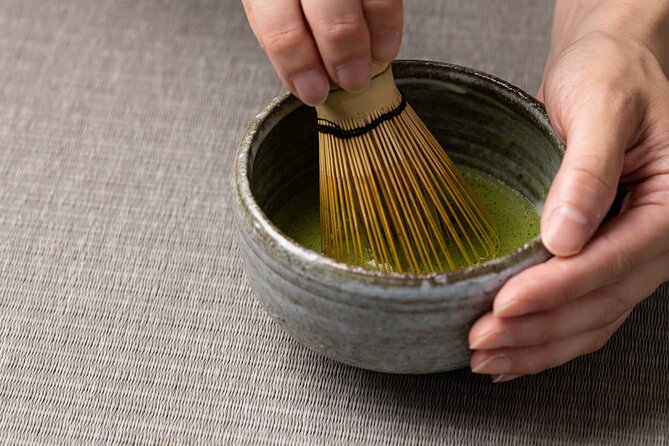
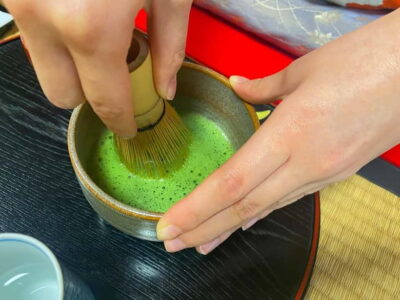
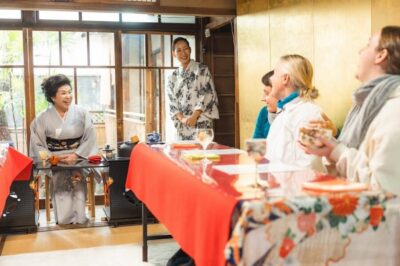
The tea ceremony is what makes this tour different from a standard Nagasaki highlights drive. In Shindaikumachi, you watch matcha being prepared with measured movements and learn about omotenashi, the Japanese idea of hospitality and care for the guest.
The ceremony lasts about 45 minutes, a useful amount of time for seeing the process without turning the experience into an all-day lesson. You can expect to watch the preparation, enjoy tea and sweets, and gain some sense of why each movement is deliberate.
This is not simply a refreshment break. The value lies in the change in attention. At the memorial sites, you are absorbing large historical events. At the tea ceremony, you focus on small actions, manners, and presentation. That contrast gives the afternoon a more rounded feel.
The tour information does not list an extra admission charge for this stop, and the tea ceremony is included. Meals are not included, so do not treat this as a substitute for lunch. It is a cultural tasting and demonstration, not a full meal.
The ceremony may be especially appealing if you have not visited a tea room elsewhere in Japan. It also gives you an experience that is difficult to reproduce by simply touring Nagasaki independently. The one limitation is that a traditional ceremony can feel formal if you prefer active sightseeing. You will be watching and learning more than doing.
More Tea Experiences around Japan:
- World Heritage Kyoto & Nara Uji Authentic Matcha Experience
★ 5.0 · 1,573 reviews - Osaka: Tea Ceremony Experience
★ 4.9 · 1,426 reviews - Kyoto: Table-Style Tea Ceremony at a Kyo-Machiya
★ 4.9 · 1,211 reviews - Kanazawa: Kenrokuen Tea Ceremony Experience
★ 4.8 · 1,139 reviews
Oura Church and Nagasaki’s Christian past
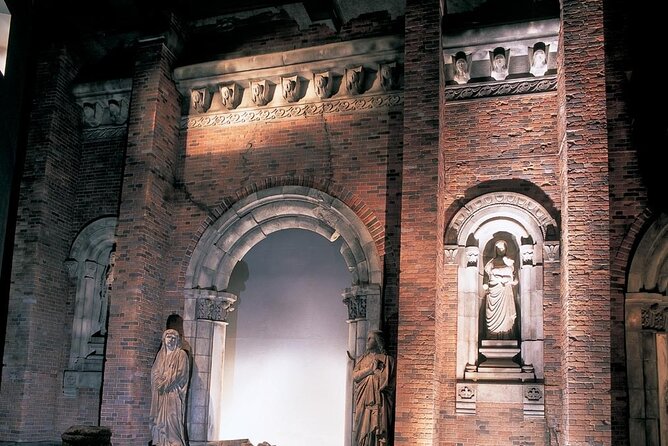
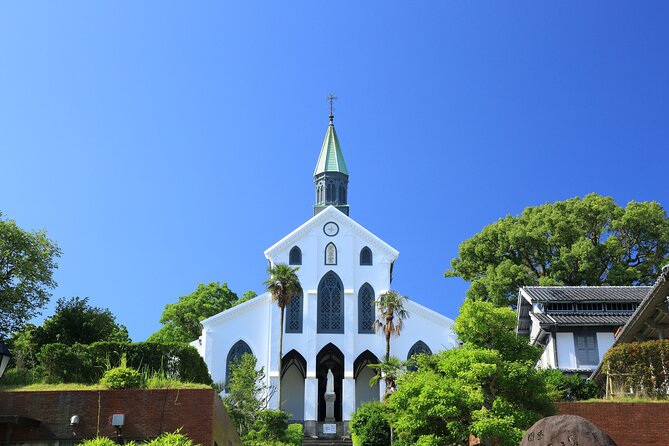
Oura Church brings another part of Nagasaki’s story into the route. It is identified as Japan’s oldest Christian church and is part of a UNESCO World Heritage Site connected to the history of Christianity in Japan.
The church offers a sharp contrast to the Peace Park and the tea ceremony. Here, you are looking at the long relationship between Japan and foreign religious communities, along with the buildings and traditions that grew from that history. The stop also helps explain why Nagasaki has a different historical character from many other Japanese cities.
The available schedule does not give a separate duration or confirm a separate admission arrangement for Oura Church. That is worth noting before you book, since the four-hour timetable is already full. You should expect a visit that fits between the other listed stops rather than a long architectural study.
If the church is a priority, ask for the exact timing when you arrange the tour. The private format should make it easier to clarify the day’s order, though the total duration still limits how long you can stay.
Glover Garden and the harbor view
Glover Garden is the final major sightseeing stop listed, with about 30 minutes and admission included. Set on a hillside above Nagasaki Harbor, it contains Western-style residences from the nineteenth century and gardens with broad city views.
The site reflects the foreign merchants and communities that helped shape modern Nagasaki. The houses give you a look at architecture and daily life from the period when international trade was opening new doors for Japan. The elevated setting also makes this one of the tour’s most scenic stops.
Half an hour is enough to walk through the main area and take in the harbor outlook. It is not enough to explore every building at leisure. The hillside setting may also require some walking, even though the car reduces the amount of walking between attractions. If you have limited stamina, wear comfortable shoes and use the available time carefully.
Glover Garden works well near the end because it is lighter in mood than the memorial sites. You finish with architecture, gardens, and a view rather than another difficult museum display. Still, the stop will feel quick if you want detailed time inside each residence.
What the guide and private format add
The guide is a major part of the value. The published comments give special credit to Akihiro and Moeurn for clear English and to Hiro and Vichka for being helpful and attentive. The descriptions also point to guides who explain Nagasaki with care rather than simply driving you from one entrance to the next.
Because this is a private activity, only your own group participates. That gives you more freedom to ask questions and adjust the rhythm within the fixed four-hour window. It also avoids the delays that can come from gathering a large group at several stops.
Pickup is offered, and the tour is suitable for most people. The car helps if long walks or steep streets are a concern, but it does not remove every bit of walking. Peace Park, the museum, the church, and Glover Garden still require you to get out and visit each site on foot.
The air-conditioned vehicle is another practical advantage, especially when the weather is hot or unsettled. The tour’s description specifically presents the car as a way to avoid fatigue and weather worries. That is a sound reason to choose it over a long walking route.
Price, timing, and who gets the best value
At $221.12 per person, the price makes the most sense for a small private group that values convenience. You are paying for a dedicated route, transportation, guide service, included admission to the Atomic Bomb Museum and Glover Garden, and the tea ceremony.
The price is easier to justify when you have only a few hours in port. Missing a train, taking a wrong turn, or spending too long getting between sites can cost more than money when your ship departure is fixed. This tour gives you a planned route and a driver or taxi arrangement.
It is also a practical choice for anyone with limited stamina. You still walk at each attraction, but you avoid making the entire day a test of hills and transfers. Families, older visitors, and anyone traveling in uncertain weather may appreciate that balance.
You should think twice if your main goal is slow museum time. Thirty minutes at the Atomic Bomb Museum and 30 minutes at Glover Garden are useful introductions, but neither is generous. Independent visitors who want to read everything may prefer a longer custom tour or a separate visit.
The experience is booked an average of 112 days ahead, which suggests that advance planning is sensible. Free cancellation is available when you cancel at least 24 hours before the start time. Changes or cancellations inside that window are not accepted for a refund.
Should you book this Nagasaki car tour?
Book it if you want a well-rounded half-day route that combines Nagasaki’s key memorial sites, foreign heritage, harbor views, and a traditional tea ceremony. It is particularly strong for cruise passengers, first-time visitors, and anyone who prefers private transport to a long walking day.
Do not book it expecting a leisurely study of every attraction. The schedule is tight, and the museum, church, and Glover Garden all receive limited time. The best reason to choose this tour is the combination: difficult history, hillside city views, and a quiet cultural ceremony in one organized outing.
FAQ
How long does the Nagasaki car tour last?
The tour lasts approximately four hours.
What attractions are included?
The route includes Nagasaki Peace Park, Hypocenter Park, the Nagasaki Atomic Bomb Museum, a Japanese tea ceremony in Shindaikumachi, Oura Church, and Glover Garden.
Is transportation included?
Yes. Private transportation is included. Depending on vehicle availability, transport may be provided by private car or taxi.
Is the tea ceremony included in the price?
Yes. The Japanese tea ceremony is included and lasts about 45 minutes.
Are entrance fees included?
Yes. Entrance fees are included. The listed admission includes the Nagasaki Atomic Bomb Museum and Glover Garden.
Is this a private tour?
Yes. Only your group participates in the activity.
Is pickup available?
Yes. Pickup is offered.
What is included in the price besides transportation?
The price includes entrance fees, the Japanese tea ceremony, and private transportation. Meals, souvenirs, and personal expenses are not included.
Newly steeped around Japan
- Yokohama : Tea Ceremony with Sweets and Souvenir★ 5.0 · 5 reviews
- Whisk Your Own Matcha: A Zen Matcha Experience at Temple★ 3.6 · 7 reviews
- Walking Tour: Yanaka,Nezu& Sendagi: Tea Ceremony & Old Tokyo★ 5.0 · 3 reviews
- Visit local home for music and tea ceremony near Disney★ 4.9 · 13 reviews
- Trip to Kamakura & Enoshima: Shrines, Seaside, Temples &Tea★ 5.0 · 11 reviews
- Yokohama: Sushi & Gyoza Cooking with Matcha & GreenTea Experience★ 5.0 · 3 reviews
- Kyoto tea town for matcha lovers★ 5.0 · 16 reviews
- Uji: Private immersion into Kyoto’s tea and reglious culture★ 5.0 · 17 reviews
Tea Ceremony Experiences, compared.
Kyoto: Tea Ceremony in a Traditional Tea House in Kiyomizu
Read our review →
Kyoto: 45-Minute Tea Ceremony Lesson Experience
Read our review →
Kyoto: Table-Style Tea Ceremony at a Kyo-Machiya
Read our review →


Browse the lists this tea experience appears in