
Review · NARA
World Heritage Kyoto & Nara Uji Authentic Matcha Experience
Nara’s deer and the Great Buddha get most of the attention, but the Uji matcha session is what gives this full-day trip its personality. You move from grand temple gates and shrine paths to a historic tea shop, where you whisk your own bowl of matcha and learn how it is traditionally prepared and drunk.
I like the efficient route from Kyoto. You cover Nara Park, Kasuga Taisha, Todai-ji, the old palace site, Uji, and Byodoin Temple without piecing together several train trips. I also like the balance of guided visits and free time, a feature guides such as Nanami, Yuta, Mai, At-chan, and Ciel have handled particularly well.
The trade-off is the pace. This is an eight-and-a-half-hour group tour with a maximum of 38 people, plenty of walking, stairs, hills, and some longer stretches between the coach and the sights. On a hot day, or for anyone with limited mobility, it may feel like too much.
Key points at a glance
- A full Kansai day from Kyoto: Visit major Nara and Uji sights without arranging separate transport.
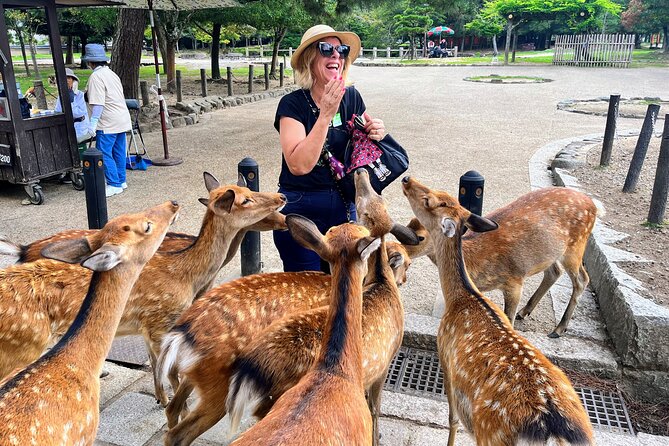
- The deer are close, not decorative: Nara Park’s deer may bow for crackers, but they can also nip when food is withheld.
- Todai-ji is the anchor visit: Enter one of the world’s largest wooden buildings and see Nara’s Great Buddha.
- Uji adds a hands-on element: Make matcha at a tea shop with more than 500 years of tradition.
- Lunch is optional: Choose a Japanese set meal, with vegetarian arrangements possible if requested at least two days ahead.
- The walking matters: Expect stairs, hills, and long walks from parking areas to historic sites.
Why this Nara and Uji combination works
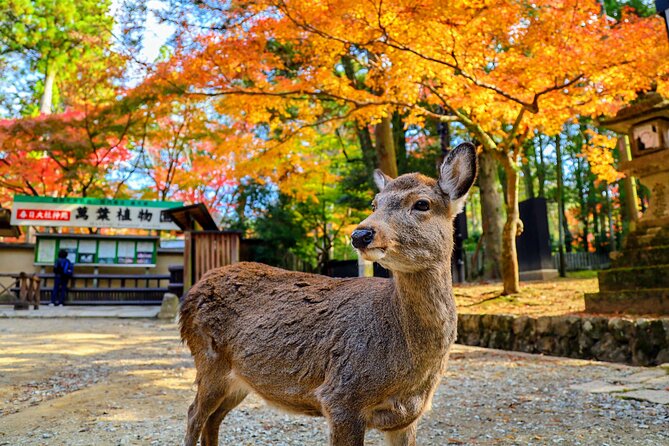
Nara and Uji are close enough to pair, but they offer different moods. Nara gives you imperial-era monuments, broad parkland, shrine paths, and free-roaming deer. Uji turns toward tea culture, river views, sweets, and one of Japan’s most recognizable Buddhist buildings.
That contrast makes the day feel varied. You are not spending eight hours moving from one similar temple to another. Instead, the schedule shifts from outdoor sightseeing in Nara to a more focused cultural activity in Uji.
The air-conditioned coach is a real advantage. Kyoto, Nara, and Uji are easy to connect by public transport, but doing all these stops independently would require careful timing and several changes. Here, the bus takes care of the larger movements while the guide keeps the day on track.
The group can include up to 38 people, so this is not a private tour. Still, the strongest part of the experience is the human guidance. Nanami is repeatedly praised for her lively explanations and attention to the group. Yuta is noted for history, cultural context, and helping people stay together. Mai, At-chan, Ciel, Den, and other guides have also been singled out for friendliness and useful commentary.
Guide assignments can change, of course. The practical promise is an English-speaking guide, supported by multilingual audio on the bus in English, Spanish, French, Italian, German, Portuguese, and Ukrainian.
More Matcha Experiences in Japan:
- Kyoto: Arashiyama Bamboo Forest, Monkeys, Matcha & Temple Tour
★ 5.0 · 759 reviews - Matcha Making Class in Tokyo with Authentic Japanese Sweets Set
★ 5.0 · 744 reviews - Kyoto: Tea Museum Tickets and Matcha Grinding Experience
★ 4.9 · 739 reviews
Meeting in Kyoto before the 7:50 start
The tour begins at Tully’s Coffee inside Kyoto Avanti, near Kyoto Station, at 7:50 in the morning. The exact address is Kyoto Avanti, 1st floor, 31 Higashikujo Nishisannocho, Minami Ward.
You need to arrive on time. Late arrivals are not accepted, and joining the group halfway through is not considered practical. There is no hotel pickup or drop-off, so allow enough time to reach the meeting point on your own.
The coach includes air conditioning and Wi-Fi. Some buses may also have outlets, a detail that can help on a long day, though you should not rely on every vehicle having the same setup. The itinerary may change order because of traffic, weather, or operating conditions.
Nara Park and the deer: charming, lively, and slightly pushy
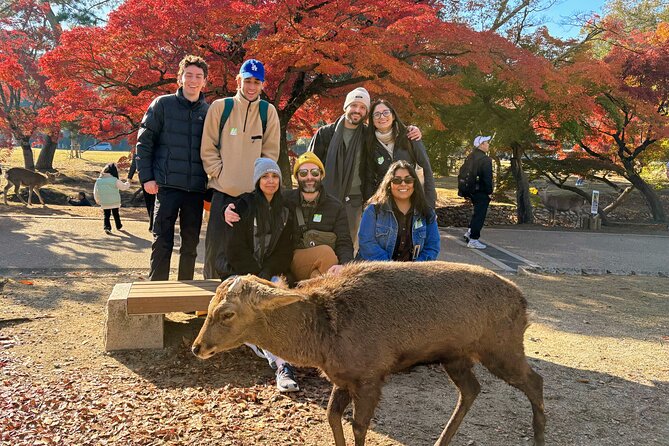
Nara Park is more than a deer stop. It is the open setting around several of Nara’s major religious and historic sites, and it helps explain why this city feels different from central Kyoto.
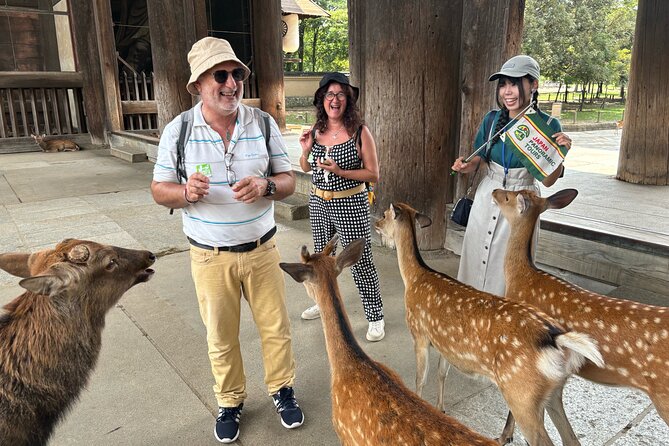
About 1,400 deer live around the park. You can buy deer crackers locally if you want to feed them, but keep your hands moving once the crackers are gone. The deer are generally calm, yet one may give you a forceful nip if you tease it with food or ignore it while holding a biscuit.
I would treat the deer as wild animals with good manners, not as tame pets. Keep food away until you are ready, feed one deer at a time, and watch your clothing and belongings. The close encounters are memorable, especially when a deer bows, but the moment works best when you respect the animal’s space.
The scheduled park visit is about 30 minutes. That is enough for a look around and a few photographs, but not enough for a long, wandering exploration of every corner. You will also be walking between the coach parking area and the major sights, so the actual time on your feet can be longer than the stop lengths suggest.
Kasuga Taisha and Nandaimon’s grand entrance
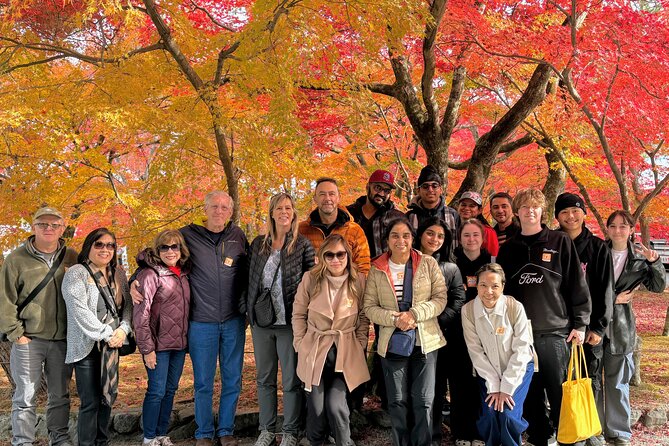
Kasuga Grand Shrine is one of Nara’s best-known Shinto shrines. The visit lasts about 30 minutes and gives you time to see its setting and learn about its role from the guide.
The shrine visit is paired with Nara’s broad park spaces and Todai-ji area, so the day moves between natural surroundings and monumental architecture. The schedule does not offer a long private exploration of Kasuga Taisha, but the guided stop works well if you want a first look at one of Nara’s defining sites.
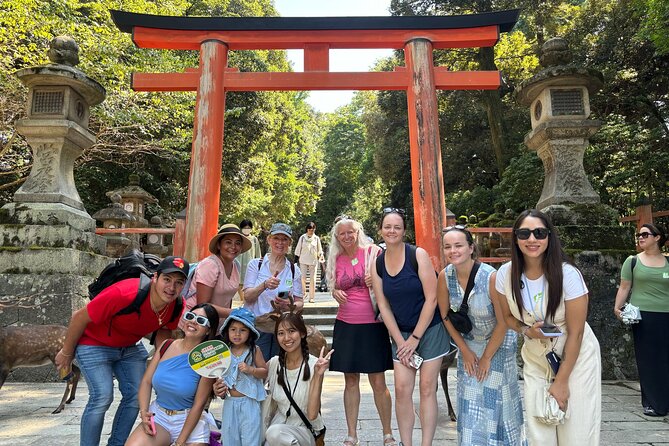
Nandaimon, Todai-ji’s Great South Gate, receives a shorter stop of about five minutes. That may sound brief, but the gate is an imposing sight and a natural approach to the temple. It is also an excellent place for photographs.
Do not read the five-minute listing as the whole experience of reaching Todai-ji. The route involves walking, and one detailed account cautions that the walk from the coach parking area to the historic sites can take more than 15 minutes. Wear shoes you can comfortably use on uneven paths and do not save all your water for later.
More Heritage Visits with Tea around Japan:
- Uji: UNESCO Heritage & Tea Ceremony Walking Tour
★ 4.6 · 54 reviews - Slow Cycling Tour at Uji’s Matcha Green Tea Fields and Heritage
★ 5.0 · 25 reviews - Uji Tea Ceremony and UNESCO Heritage Walking Tour
★ 5.0 · 20 reviews - Cycling Tour at Uji’s Matcha Green Tea Fields and Heritage
★ 5.0 · 10 reviews
Todai-ji and the Great Buddha
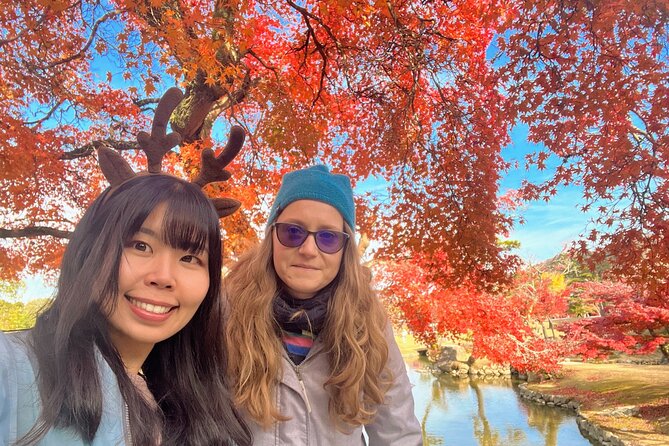
Todai-ji is the major architectural stop in Nara. The temple houses the Great Buddha and occupies one of the world’s largest wooden buildings. Admission is included, so you do not need to arrange a separate ticket.
The scheduled visit is about 40 minutes. That gives you time to enter, take in the scale of the hall, listen to the guide’s explanation, and look around at your own pace. This is one of those places where scale does the talking. Even if you have already seen many Japanese temples, the size of the wooden structure and Buddha image make Todai-ji a different sort of experience.
The guide’s role is useful here. A large temple can become a blur of rooflines, statues, and ritual details if you are on your own. An English-speaking guide can give the building a clear place in Nara’s story without asking you to read every sign.
The visit also comes with practical limits. Todai-ji can be crowded, and the schedule is fixed. You are seeing the temple as part of a wider day, not spending a quiet morning there. If Todai-ji is your main reason for coming to Nara, a separate visit would allow more time.
The old palace site and Nara’s imperial past
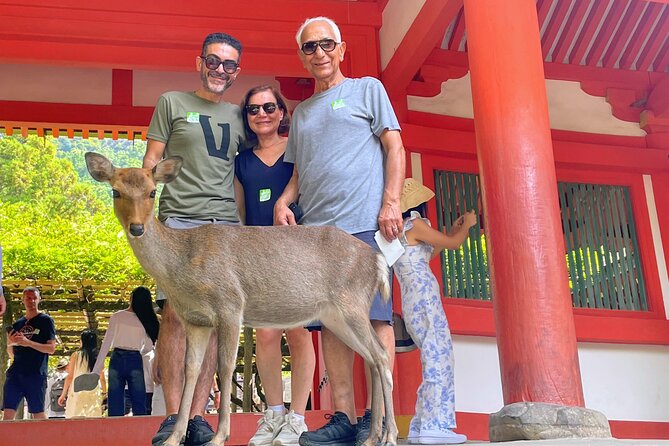
The palace site is included as one of Nara’s World Heritage sites. The supplied schedule gives less detail about the stop than it does for Todai-ji, Kasuga Taisha, or Uji, and the exact timing may vary with traffic and the day’s operation.
Its value is context. Nara was once Japan’s capital, and the palace grounds help connect the religious monuments with the city’s political past. You are not seeing only temples and deer. You are also seeing the remains of a former center of government.
Because the route covers several major places, expect an overview rather than an archaeological deep read. The guide’s explanation is likely to be more useful than trying to reconstruct the site alone in a short visit.
Japanese lunch beside the Uji River
Lunch is an optional part of the booking. If selected, you receive a traditional Japanese set meal at a restaurant along the Uji River, and a vegetarian option is available if you request it in the booking notes.
Vegetarian arrangements must be made up to two days before the tour date. Last-minute bookings receive the regular meal, so do not wait until the morning of the trip to raise dietary needs.
The lunch adds value because it removes another decision from a tightly timed day. You do not need to search for a restaurant after arriving in Uji, and the meal gives you a seated break between Nara sightseeing and the afternoon tea activities.
The restaurant may change for operational reasons. I would choose the lunch if you want convenience and a traditional set meal. Skip it only if you have a specific restaurant in mind or prefer to control what and when you eat.
Byodoin Temple and the 10-yen coin
Byodoin Temple is one of Uji’s signature sights. Its Phoenix Hall appears on the Japanese 10-yen coin, making this a place many people recognize before they arrive.
Admission is included, and the visit is scheduled for about 50 minutes. That is enough time to see the temple grounds and appreciate the famous hall in its setting. The site gives the Uji portion a strong historical focus before the more hands-on matcha activity begins.
The move from Nara to Uji also changes the pace. Nara’s main appeal is the combination of open parkland and enormous religious buildings. Uji feels more closely linked to tea, river scenery, and a compact historic town.
Making matcha at a 500-year-old tea shop
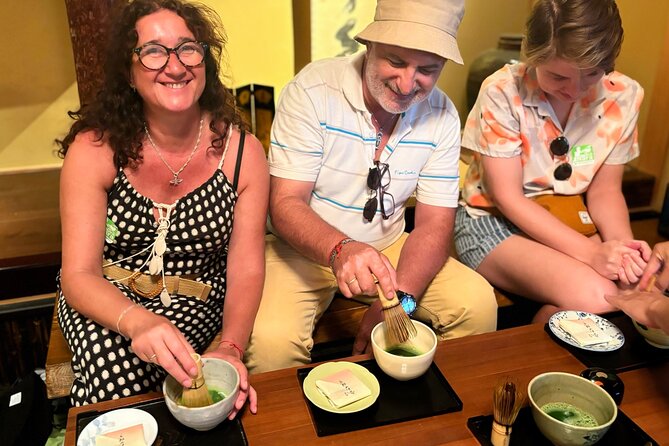
The matcha activity is the most distinctive feature of this tour. At a historic tea shop with more than 500 years of tradition, you prepare your own bowl of matcha and learn the proper traditional way to drink it.
This is not simply a tea tasting where someone else does all the work. You take part in whisking the tea, then sample what you have made. The activity lasts about 30 minutes, so it is accessible even if you have never handled matcha before.
I like this stop because it turns an abstract cultural idea into something you do with your own hands. You leave with a clearer sense of how matcha is prepared, not just how it tastes in a café dessert.
The atmosphere can depend on the instructor and the size of the group. With up to 38 people on the tour, this is a shared demonstration and activity rather than a private tea ceremony. Still, the shop’s long tradition and the practical preparation make it more memorable than a quick cup served on a bus.
Byodoin Omotesando and matcha sweets
The final listed stop is Byodoin Omotesando, a street where you can walk around and sample matcha sweets. The scheduled time is about 30 minutes.
This is a good place for a final look at Uji’s tea identity. You can browse, taste, and take in the local shopping street after learning how matcha is made. It also gives you a lighter ending after the temples and formal sites.
Do not expect an extended shopping session. Thirty minutes passes quickly, especially if the group must meet the bus at a fixed time. Keep an eye on the clock and follow the guide’s meeting instructions.
The tour returns to the original Kyoto meeting point. Depending on traffic, the finish time can vary, so avoid booking a tight evening reservation immediately afterward.
Price, group size, and what you receive
At $129.25 per person, this is not the cheapest way to reach Nara. Its value comes from the amount packed into one day: transportation from Kyoto, an English-speaking guide, bus Wi-Fi, audio support, admission to Todai-ji and Byodoin, the matcha-making activity, and optional lunch.
You also avoid the mental work of planning a route through several places. For a first visit to the Kansai region, that can be worth a lot. The tour connects sites that are easy to visit separately but less simple to combine in one day without careful timing.
The price is less compelling if you prefer slow temple visits, independent meals, or long stretches in one town. A maximum of 38 people means the group can feel large, and a fixed coach schedule limits your freedom.
The high overall rating and 99 percent recommendation figure suggest that the format works well for most people, but those numbers should not hide the one serious complaint in the supplied feedback: a participant described being left behind at an early stop after confusion over the meeting place. That appears to be an isolated account among many positive experiences, but it is a useful reminder. Listen closely to the meeting instructions, confirm the exact reunion point, and stay alert to the guide’s flag or group marker.
Who should book this day trip?
I would choose this tour if you have limited time in Kyoto and want a broad first look at Nara and Uji. It suits you if you like a mix of famous sights, light cultural activities, guided explanation, and comfortable transport.
Families may find the deer and matcha activity appealing. One family specifically found the day suitable for a four-year-old, though the walking still needs to be considered. You should also be comfortable with a full day outdoors, stairs, hills, and changing weather.
This is not the right choice if you cannot walk long distances, need frequent unscheduled rests, or want to linger at one site. It may also disappoint serious tea students who want a formal, quiet tea ceremony rather than a short group lesson.
Free cancellation is available up to 24 hours before the start time. Changes or cancellations within 24 hours are not accepted for a refund.
Should you book the Kyoto, Nara, and Uji tour?
Book it if you want maximum coverage in one organized day and like the idea of finishing with a hands-on matcha lesson rather than another temple. The combination of deer, Todai-ji, Byodoin, Japanese food, and tea culture gives you a strong introduction to this part of Japan.
I would skip it if your priorities are solitude, flexible timing, or a slow study of Nara’s temples. For most first-time visitors with good walking stamina, the included transport and admissions make the $129.25 price reasonable, especially when lunch and matcha are part of your plan.
FAQ
Where does the tour begin?
It begins at 7:50 am at Tully’s Coffee inside Kyoto Avanti, on the first floor at 31 Higashikujo Nishisannocho, Minami Ward, Kyoto.
Does the tour return to Kyoto?
Yes. The activity ends back at the original meeting point.
Is hotel pickup included?
No. You must make your own way to the Kyoto Avanti meeting point, and no extra pickup or drop-off service is provided.
Is lunch included?
Lunch is included only if you select that option when booking. The meal is a traditional Japanese set meal at a restaurant along the Uji River.
Can I request a vegetarian meal?
Yes, but vegetarian arrangements must be requested up to two days before the tour date. Last-minute bookings receive the regular meal.
What admissions and activities are included?
Admission to Todai-ji and Byodoin Temple is included, along with the Uji matcha-making experience. Air-conditioned transportation, Wi-Fi on board, multilingual audio guidance, and an English-speaking guide are also included.
How much walking is involved?
The tour includes substantial walking, stairs, and hills at the various sites. It is not recommended for anyone unable to walk long distances, and a moderate level of physical fitness is advised.
Newly steeped around Japan
- Yokohama : Tea Ceremony with Sweets and Souvenir★ 5.0 · 5 reviews
- Whisk Your Own Matcha: A Zen Matcha Experience at Temple★ 3.6 · 7 reviews
- Walking Tour: Yanaka,Nezu& Sendagi: Tea Ceremony & Old Tokyo★ 5.0 · 3 reviews
- Visit local home for music and tea ceremony near Disney★ 4.9 · 13 reviews
- Trip to Kamakura & Enoshima: Shrines, Seaside, Temples &Tea★ 5.0 · 11 reviews
- Yokohama: Sushi & Gyoza Cooking with Matcha & GreenTea Experience★ 5.0 · 3 reviews
- Kyoto tea town for matcha lovers★ 5.0 · 16 reviews
- Uji: Private immersion into Kyoto’s tea and reglious culture★ 5.0 · 17 reviews
Matcha Experiences, compared.

Matcha Making Class in Tokyo with Authentic Japanese Sweets Set
Read our review →
Kyoto: Tea Museum Tickets and Matcha Grinding Experience
Read our review →
Kyoto: Tea Ceremony Meditation – Make Matcha with Tea Master
Read our review →
Tokyo: Matcha Making Experience with Mochi Sweets in Asakusa
Read our review →
Kyoto: Kimono Tea Ceremony with Matcha and Sweet
Read our review →
Tokyo: Asakusa Kimono Dressing and Matcha Experience
Read our review →Browse the lists this tea experience appears in