
Review · UJI
Uji: UNESCO Heritage & Tea Ceremony Walking Tour
Uji is where Japan’s tea culture and sacred architecture meet, and this tour gives you both in one compact morning or afternoon. The strongest part is the contrast between the grand Byodoin Temple and the quiet, carefully ordered tea ceremony at Taihoan. I like the thoughtful route, which links temples, shrines, bridges, and food rather than treating Uji as just a quick matcha stop. I also like the small group, limited to nine people, since guides such as Yuko, Katsuhiko, and Nobumasa Miyake can answer questions without turning the walk into a speech.
The main consideration is pace. You cover several sites in three hours, with about 50 minutes at Byodoin and shorter visits at the two shrines. The route includes bridges and walking, and the tour is not designed for people with mobility, heart, respiratory, or pregnancy-related concerns. The tea ceremony is conducted in Japanese, with your English-speaking guide translating.
Key points to know before booking
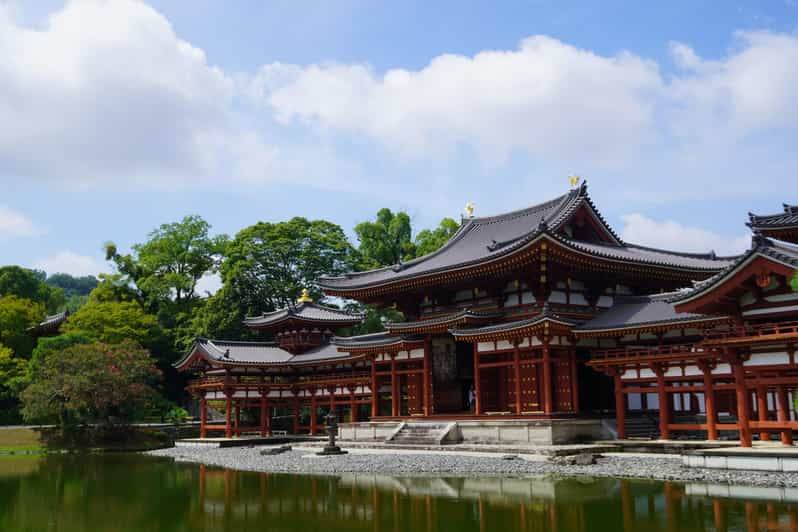
- Byodoin receives the longest visit: You get about 50 minutes at Uji’s famous UNESCO-listed temple, including entrance.
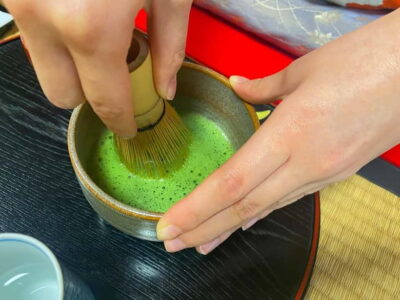
- The tea ceremony is hands-on: Taihoan provides a traditional setting where you learn how the ceremony works and may prepare tea yourself.
- The group stays small: A maximum of nine participants makes it easier to hear explanations and ask questions.
- The route mixes sacred sites and local life: Uji Shrine, Ujigami Shrine, Uji Bridge, matcha shops, and local snacks all fit into the walk.
- The guides earn strong praise: Yuko, Katsuhiko, Katsu, and Nobumasa Miyake are noted for clear English, cultural explanations, patience, and friendly conversation.
- Bring cash and good shoes: You will walk for most of the three hours, and personal purchases are not included.
Starting at South Exit, Uji Station
The tour begins at the south exit of JR Uji Station. Your guide waits in a TripGuru shirt or holds a TripGuru sign, so look for that rather than wandering around the station searching for a temple guide.
Arrive at least 10 minutes early. Uji is easy to reach in theory, but the operator warns that morning traffic can vary sharply from the time shown in navigation apps. That warning matters most if you are coming by road or connecting from another part of Kyoto. Build in extra time instead of making your guide and small group wait.
Uji works well as a half-day outing because the route begins and ends in different places. You start near the station and finish at Uji Bridge, giving you a chance to continue exploring or head back by train without retracing the entire route.
The tour is priced at $66 per person. That is not the cheapest way to walk around Uji, but the price includes an English-speaking guide, admission to Byodoin, and the tea ceremony. You are paying mainly for interpretation: someone to explain the difference between a Buddhist temple and a Shinto shrine, show you what to notice, and translate during a ceremony that otherwise takes place in Japanese.
More Tea Ceremonies in Uji:
- Uji Tea Ceremony and UNESCO Heritage Walking Tour
★ 5.0 · 20 reviews - Kyoto: Tea Ceremony in a Traditional Tea House in Kiyomizu
★ 4.9 · 3,519 reviews - Kyoto: Tea Ceremony Ju-An at Jotokuji Temple
★ 4.9 · 3,207 reviews
Byodoin, Uji’s grand first stop
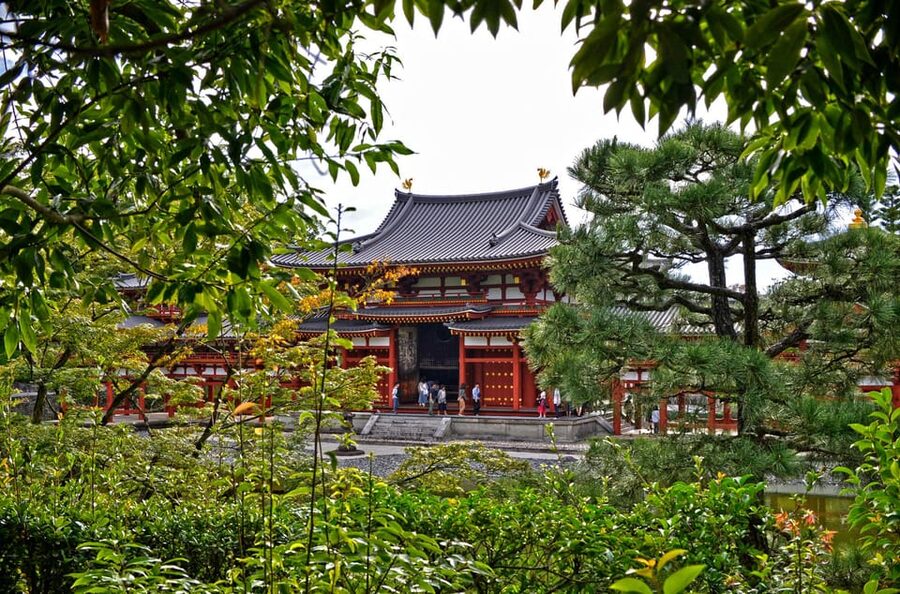
Byodoin receives the biggest block of time, about 50 minutes, and rightly so. This is the architectural centerpiece of the outing and a UNESCO World Heritage Site. The temple is known for its elegant design and long connection with Japanese religious culture.
A guided visit is more useful here than a quick photograph from outside. Your guide can place the building, its symbolism, and its Buddhist setting into context. Several guides praised in the supplied feedback, including Yuko and Katsuhiko, are particularly good at explaining Japanese traditions in plain English. That matters when a building looks beautiful but its meaning is not obvious.
You should expect this section to feel more structured than the later walk. The guide leads the group through the site and gives you time to take in the details. Bring your camera for the temple and surrounding views, but keep in mind that photography rules change later during the tea ceremony.
Byodoin can be the busiest part of a Uji visit, especially because it is the destination most people already know. The tour’s advantage is that you do not have to work out the historical context on your own. The tradeoff is that 50 minutes is enough for a focused visit, not a slow, museum-style examination of every corner.
Learning the etiquette of tea at Taihoan
The tea ceremony lasts roughly 30 to 40 minutes, depending on how the schedule is counted. The booking details list 30 minutes as included, while the itinerary assigns 40 minutes to the ceremony, so plan on about half an hour to forty minutes rather than expecting a long formal performance.
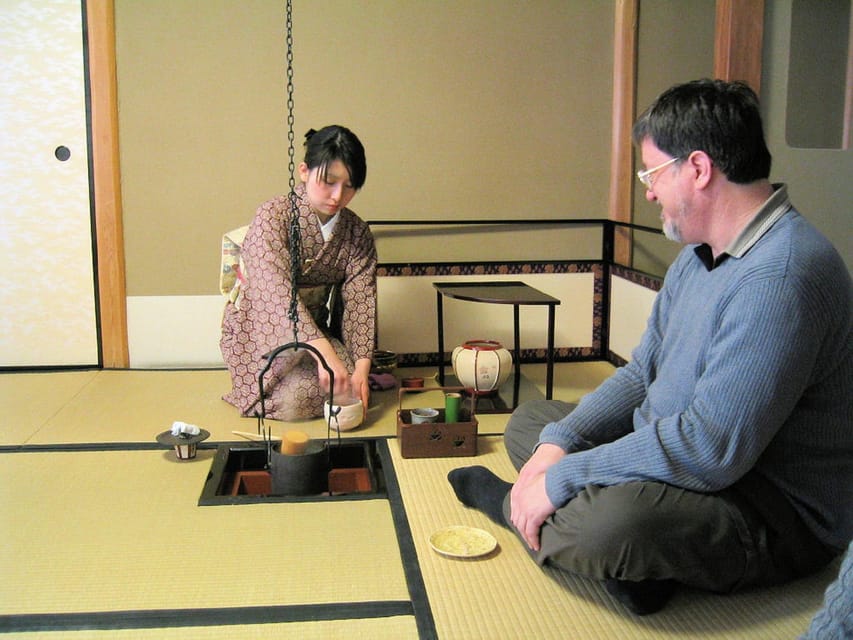
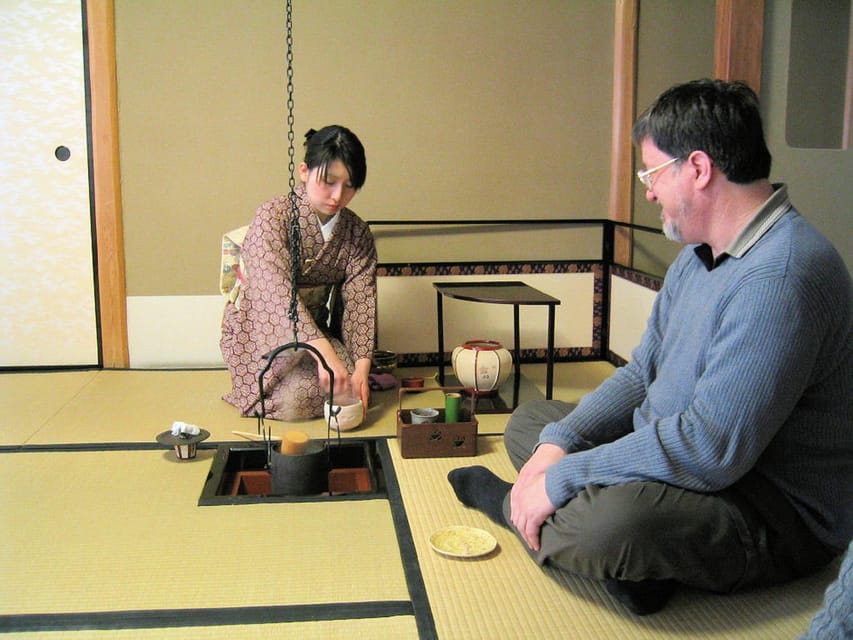
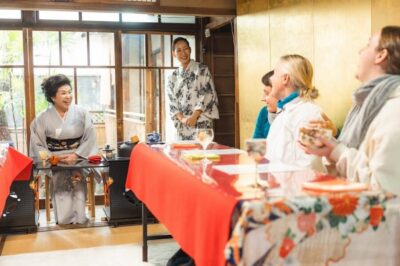
This is the heart of the tour for many people. Uji is famous for green tea, but buying matcha sweets does not tell you much about the customs behind the drink. At Taihoan, you learn how a traditional ceremony is conducted, how to behave, and why each movement is deliberate.
The host conducts the ceremony in Japanese. Your guide translates and explains what is happening, which lets you follow the meaning instead of simply watching a sequence of unfamiliar gestures. The experience is formal, but the supplied comments make clear that the atmosphere is welcoming and forgiving when someone gets an instruction slightly wrong.
You may also get to prepare the tea yourself. That small moment changes the experience from a demonstration into participation. You are not expected to arrive with knowledge of tea etiquette. The point is to pay attention, follow the instructions, and enjoy the calm rhythm of the ceremony.
There are two important rules. Photography and video recording are prohibited during the ceremony, and you should plan to put your camera away. Also, do not expect the ceremony to be delivered in English. Translation from your guide is part of the experience.
Crossing Tachibara and Asagiri bridges

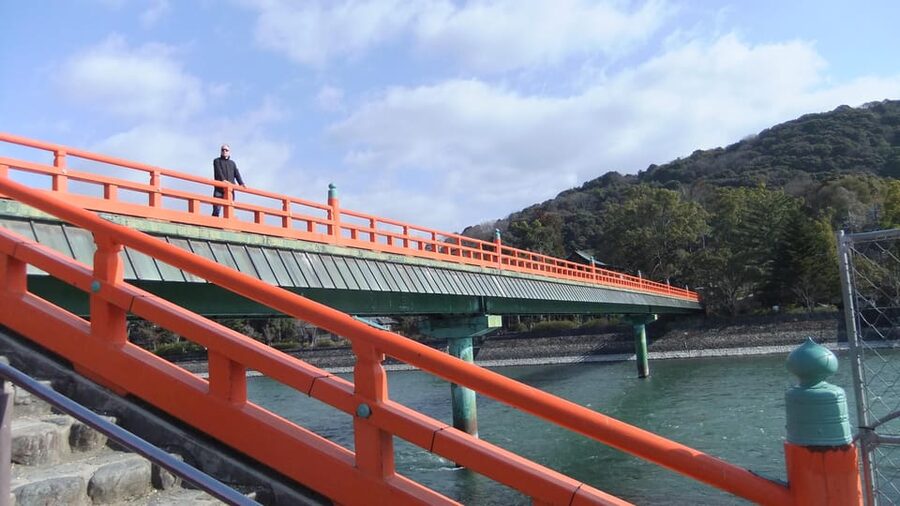
After the tea ceremony, the route continues on foot for about 10 minutes before reaching the shrine section. The walk includes the Tachibara and Asagiri suspension bridges, which provide a change of mood after the stillness of Taihoan.
These bridges give you open views of the Uji River area and the surrounding scenery. They are also a reminder that this is a walking tour, not a series of indoor visits linked by a bus. You will be moving between stops, so comfortable shoes are essential.
The bridges are useful photographic points, but the best reason to cross them is the sense of place they provide. At Byodoin, you focus on architecture. At Taihoan, you focus on ritual. On the bridges, you get a broader view of Uji and the water that has shaped the city.
The route may feel brisk if you want to stop often for photographs. Tell your guide if you need a moment, but remember that the group has timed visits ahead. This is one reason the small group helps: it is easier to communicate than it would be with a large coach party.
More Heritage Visits with Tea around Uji:
- Slow Cycling Tour at Uji’s Matcha Green Tea Fields and Heritage
★ 5.0 · 25 reviews - World Heritage Kyoto & Nara Uji Authentic Matcha Experience
★ 5.0 · 1,573 reviews - Beijing Culture: Tea Ceremony, Heritage Instrument & Calligraphy
★ 5.0 · 57 reviews - Tea and Doughnuts: Historic Walking Food Tour of Southwark
★ 4.6 · 14 reviews
Uji Shrine and Ujigami Shrine
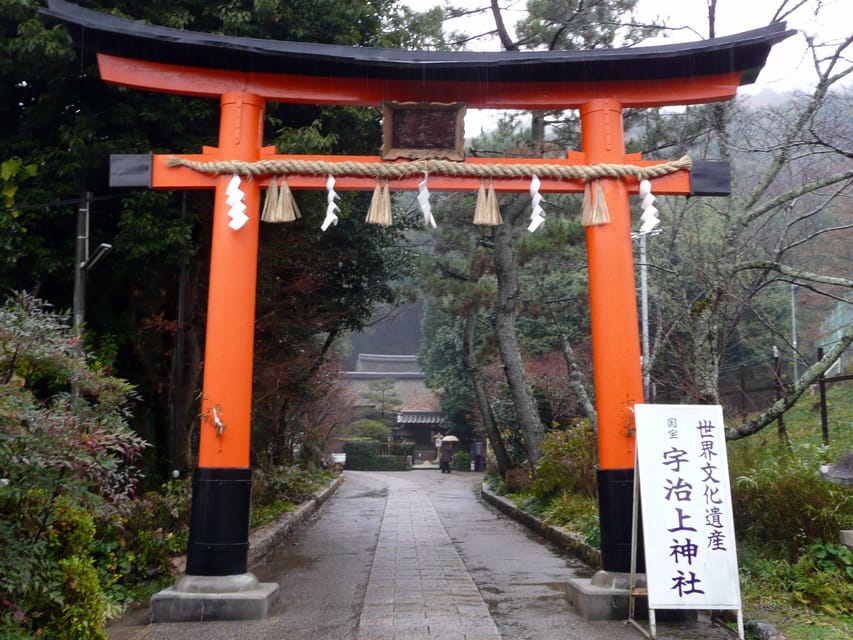
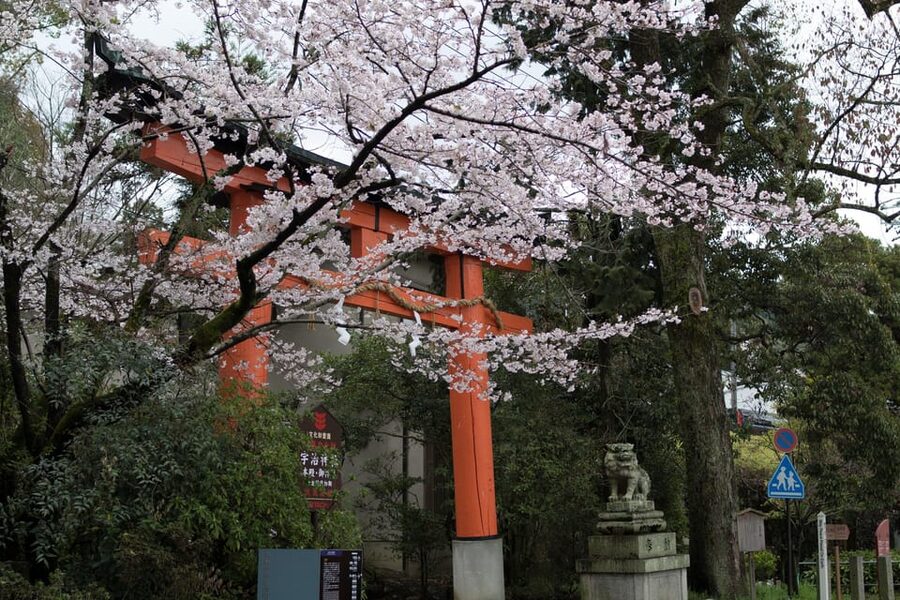
The tour then visits Uji Shrine for about 20 minutes and Ujigami Shrine for another 20 minutes. These stops give you a useful comparison between Shinto sacred spaces and the Buddhist setting at Byodoin.
Your guide explains how to approach the shrines and what you are seeing. That instruction can be especially helpful if you are new to Japanese customs. You may already know a few basic rules, but a guide can explain the local details without making you feel awkward for asking simple questions.
Ujigami Shrine is especially important within Uji’s cultural story, while Uji Shrine adds another layer to the city’s religious identity. The two visits are short, so do not expect an exhaustive study of either site. Instead, think of them as focused introductions that build on the explanations you received earlier.
The guides receive their strongest praise for this cultural side of the tour. Yuko is described as patient and clear, while Katsuhiko and Katsu are praised for making the subject easy to understand. Nobumasa Miyake is also noted for adding cultural knowledge and accommodating the group. Guide quality can vary from one departure to another, but the available guide names show the sort of personal, conversational approach you can expect.
Matcha, sweets, and the walk to Uji Bridge
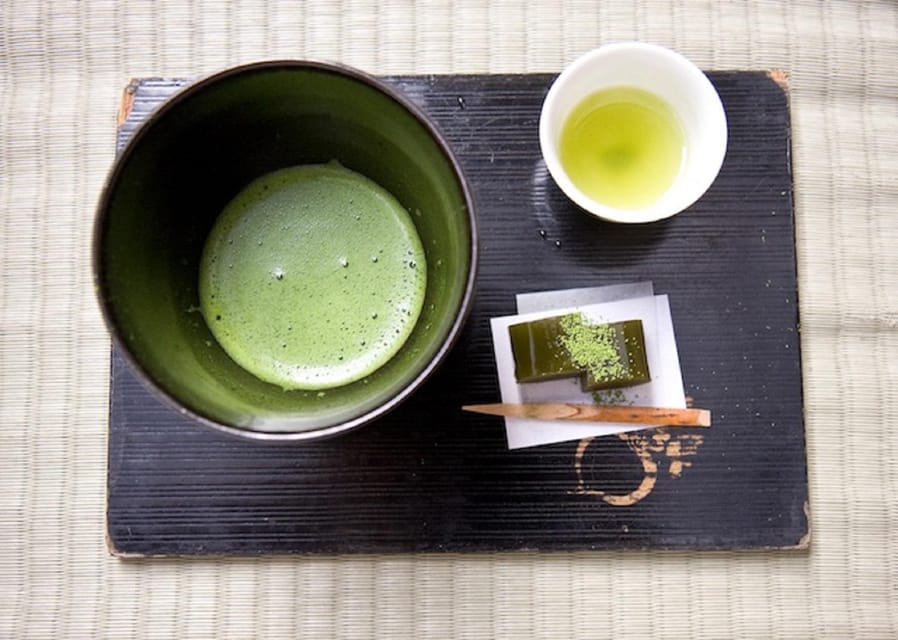
The final 40 minutes are set aside for local snacks and the walk toward Uji Bridge. This is where Uji’s famous tea culture becomes something you can taste rather than simply discuss.
Expect opportunities to try local green tea products and culinary treats. Specific purchases are not included, so bring cash if you want matcha sweets, mochi, or other snacks. One practical benefit of having a guide is getting suggestions for matcha shops, restaurants, and mochi shops in town. If you want to take something home, this is a useful time to ask what travels well.
The food stop is not a full meal, so eat beforehand if you need lunch. It is better understood as a tasting and shopping section. You can sample local flavors, ask questions about Uji tea, and decide what deserves space in your suitcase.
The tour ends at Uji Bridge, a fitting finish because it brings the route back to the river and the city’s everyday side. You are not returned to the station, so note where you finish before making onward plans. The end point also gives you flexibility to continue walking or make your own way back.
What $66 buys you in practical terms
The value depends on how much interpretation you want. If you are happy to visit Byodoin, the shrines, and the tea shops alone, you can spend less by planning independently. You would then need to organize the route, pay separate entry costs, and learn the tea ceremony etiquette without a guide translating it.
For $66, you get three hours of local context, admission to Byodoin, a small group, and the tea ceremony. The guide is the biggest part of the value. The highly praised guides do more than point at buildings. They explain Shinto and Buddhist customs, answer questions about Japanese culture, and offer practical suggestions for food and shopping.
The tour is also a good choice if you have limited time in Kyoto or Osaka and want a clear introduction to Uji without spending a full day planning. You see the major cultural stops, walk through different parts of town, and finish with food suggestions.
The price is less attractive if you dislike fixed schedules or want to linger at one site. The itinerary moves from stop to stop, and the short shrine visits leave limited time for independent wandering. You are buying a guided overview, not an open-ended day in Uji.
Who will enjoy this three-hour walk
I would recommend this tour to first-time visitors who want help understanding Japanese customs. It suits anyone interested in architecture, religion, tea, and local food, especially if you prefer a guide who can connect those subjects rather than treating them as unrelated stops.
It also works well for solo visitors and couples who like small groups. With no more than nine participants, you should have a better chance to hear the explanations and speak with the guide. The English-language service is useful, but remember that the ceremony itself remains in Japanese.
You should think twice if you have mobility concerns or do not enjoy walking. The tour includes bridges, shrine approaches, and movement between several sites. It is specifically listed as unsuitable for pregnant women and people with mobility, heart, or respiratory problems.
Bring comfortable shoes, a camera for the outdoor sections, and cash for personal expenses. Leave the camera packed away during the tea ceremony. A little preparation makes the day much easier.
Should you book the Uji tea and temple tour?
Book it if you want more than a quick matcha stop. The best parts are the clear cultural explanations, the chance to take part in a traditional tea ceremony, and the well-planned mix of Byodoin, shrines, bridges, and local food.
I would be especially comfortable booking this for a first visit to Uji, when the differences between Buddhism, Shinto, and tea etiquette may not yet be clear. The tour gives you a useful framework for exploring on your own afterward.
Skip it if you want a slow, private visit with no timetable, or if walking is difficult. For everyone else, $66 is a fair price for a small-group introduction that combines Uji’s major sights with a cultural experience you would be unlikely to understand fully from photographs alone.
FAQ
Where does the Uji walking tour begin?
It begins at JR Uji Station, South Exit. Your guide will wear a TripGuru shirt or hold a TripGuru sign.
Where does the tour finish?
The tour finishes at Uji Bridge. Hotel pickup and drop-off are not included.
How long does the tour last?
The tour lasts three hours. Starting times vary, so check availability when booking.
Is the tour conducted in English?
Yes. The tour has a live English-speaking guide, and the group is limited to nine participants.
Is admission to Byodoin Temple included?
Yes. Entrance to Byodoin is included in the tour price.
Is the tea ceremony included?
Yes. The tea ceremony is included. The schedule allows about 30 to 40 minutes, with 30 minutes specifically listed among the inclusions.
Is the tea ceremony conducted in English?
No. The ceremony is conducted in Japanese, and your English-speaking guide translates and explains it.
Can I take photographs during the tea ceremony?
No. Photo and video recording are prohibited during the tea ceremony.
What should I bring?
Bring comfortable shoes, a camera for the outdoor parts of the tour, and cash for personal expenses and local treats.
Who should not take this tour?
The experience is not suitable for pregnant women or people with mobility impairments, heart problems, or respiratory issues.
Newly steeped around Uji
- Kyoto tea town for matcha lovers★ 5.0 · 16 reviews
- Uji: Private immersion into Kyoto’s tea and reglious culture★ 5.0 · 17 reviews
- Uji and Wazuka Matcha Farm Half Day Private Guided Tour★ 5.0 · 21 reviews
- Utilising upcycled Matcha! Creating matcha incense (Uji, Kyoto)★ 5.0 · 6 reviews
- Kyoto Matcha Green Tea Tour★ 4.5 · 23 reviews
- Uji Tea Ceremony and UNESCO Heritage Walking Tour★ 5.0 · 20 reviews
- 7 Hours Private Guided Tour Uji and Wazuka Matcha Farm★ 5.0 · 2 reviews
- Half Day Matcha Tour in Uji, home of culture, with a local★ 4.8 · 14 reviews
Tea Ceremony Experiences, compared.
Kyoto: Tea Ceremony in a Traditional Tea House in Kiyomizu
Read our review →
Kyoto: 45-Minute Tea Ceremony Lesson Experience
Read our review →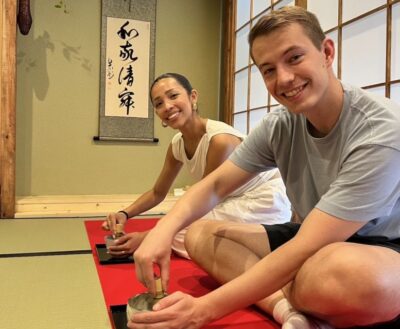
Kyoto: Table-Style Tea Ceremony at a Kyo-Machiya
Read our review →


Browse the lists this tea experience appears in