
Review · KYOTO
Kyoto Gion Tea ceremony & Wabi-sabi Walking Tour
Kyoto’s tea ceremony is less about drinking quickly and more about noticing small things: the bowl, the sweets, the room, the season, and the quiet act of preparing tea. This tour connects that ritual to wabi-sabi, the Japanese appreciation of simplicity, age, imperfection, and natural beauty.
I like the walk through Gion because it gives the ceremony a setting, not just a 45-minute activity in a room. I also like the mix of Kennin-ji, pottery, paintings, and a dry garden, which helps you understand the ideas before the tea is served.
The main drawback is the strict schedule. The tour lasts three and a half hours, and one reported booking problem involved an incorrect start time that caused a participant to miss the tea ceremony entirely. Check your meeting time carefully and arrive early.
Key points to know before booking
- The tea ceremony comes after the walking tour, so you first learn about wabi-sabi through temples, art, pottery, and Gion.
- Kennin-ji is the oldest Zen temple in Kyoto, and the visit includes time for a guide-led explanation.
- The tea ceremony includes matcha and a small seasonal snack, with a tea bowl selected according to season and taste.
- The group is limited to seven people, making it easier to hear the English-speaking guide and ask questions.
- The tour includes entrance fees to two temples, guide service, and photos taken during the walk.
- The route is not suitable for wheelchair users, and some locations cannot accommodate wheelchairs or strollers.
Why the wabi-sabi idea matters here
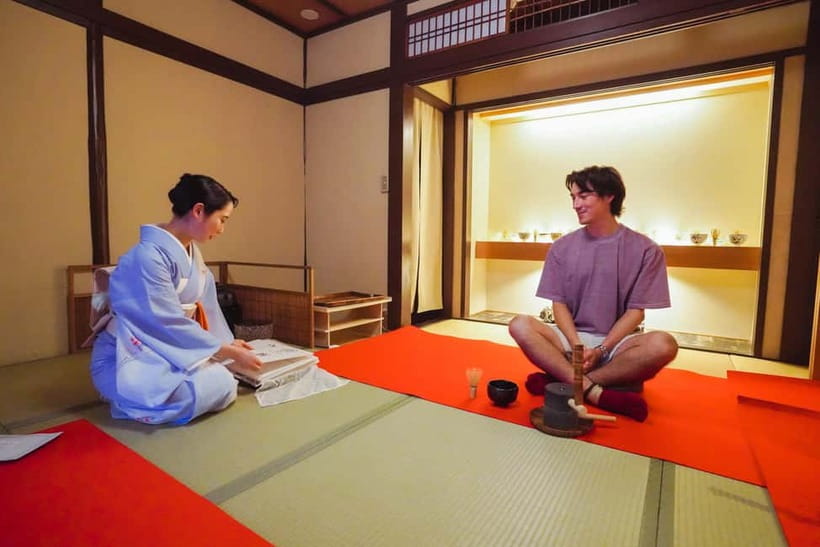
Many Kyoto tea ceremonies offer matcha, a sweet, and a few instructions. This experience tries to give you the ideas behind the ritual before you sit down with the tea master.
That distinction matters. Without context, a tea bowl can look like a simple ceramic cup. After hearing about wabi-sabi, you may notice its uneven shape, muted glaze, hand-made marks, or signs of age. The point is not polished perfection. The point is to pay attention to what is quiet, natural, and imperfect.
The tour presents tea ceremony as a way of sensing beauty from within rather than judging beauty only by outward appearance. That can sound abstract at first, but the stops make it more practical. You see old architecture, Zen art, a dry garden, and traditional pottery before using a tea bowl yourself.
I like this order. The walk gives you time to slow down and observe, while the final ceremony gives the ideas a clear ending. You are not simply told what wabi-sabi means. You are given several examples and then asked to notice it in the tea setting.
More Tea Ceremonies in Kyoto
- Kyoto: Tea Ceremony in a Traditional Tea House in Kiyomizu
★ 4.9 · 3,519 reviews - Kyoto: Tea Ceremony Ju-An at Jotokuji Temple
★ 4.9 · 3,207 reviews - Kyoto: 45-Minute Tea Ceremony Lesson Experience
★ 4.3 · 2,378 reviews
Meeting at Gion-Shijo Station
The tour begins in front of the Izumo no Okuni Statue, directly outside Exit 5 of Gion-Shijo Station on the Keihan Line. Look for a guide holding an orange Magical Trip signboard.
Arrive early. This is not a flexible hop-on activity. The group is expected to leave on time, and missing the start can mean losing the entire tour without a refund or rescheduling. A booking problem reported for this experience involved a participant receiving the wrong start time and arriving with only enough time for part of the walk.
I would check the start time twice: once when booking and again before leaving your hotel. The meeting point is specific, but Gion-Shijo has several exits and busy streets around it. Giving yourself extra time will make the first few minutes much less stressful.
The small group limit is seven people. That is a useful size for a walking tour in Gion, where narrow streets and temple entrances can make a large group awkward. It also gives you a better chance to hear the guide’s explanations and ask about tea customs, temples, or Japanese art.
Gion, where Kyoto’s tea culture meets daily life
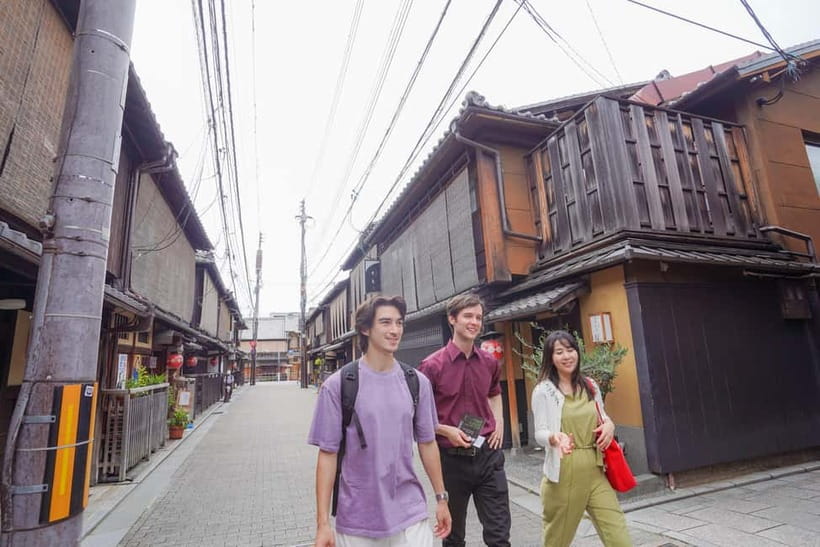
The first 30 minutes are spent walking through Gion. This famous district is closely linked with Kyoto’s traditional arts, tea houses, and geisha culture, but the value of this stop is not simply taking photographs of old-looking streets.
Your guide sets the tea ceremony in its local setting. You begin to see why tea, architecture, seasonal objects, and hospitality are tied together in Kyoto. The walk also gives you time to adjust to the pace of the activity before the more formal temple visits.
The route includes a well-known matcha shop. That stop helps connect the drink in your cup with the wider tea culture of Kyoto. The tour is not only about the final bowl of matcha. It is about the objects, places, and habits surrounding it.
Gion can be busy, so do not expect every moment to feel quiet or private. You are walking through a working district, not entering a museum set aside only for this group. That contrast is useful. It shows you traditional culture within a living part of the city.
Kennin-ji and the foundations of Zen tea culture
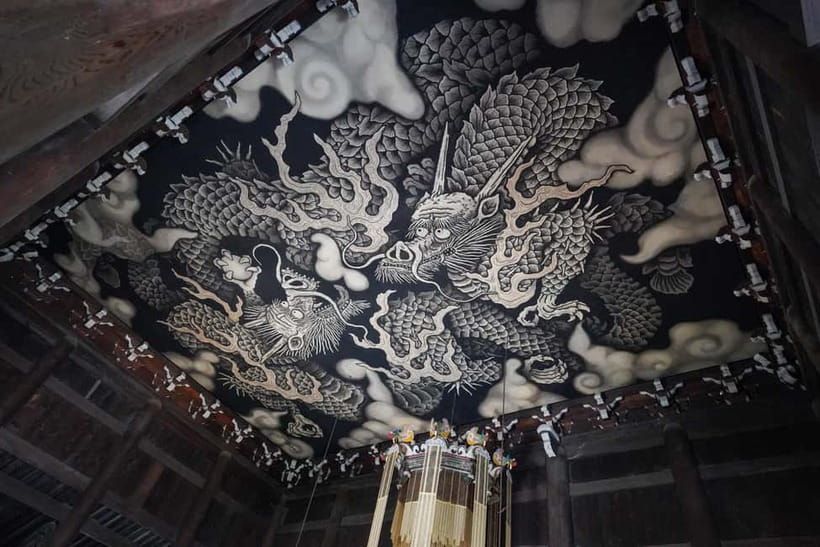
The visit to Kennin-ji lasts about 30 minutes. It is described as the oldest Zen temple in Kyoto, and it gives the guide a strong place to explain the background of tea ceremony.
Zen and tea are often discussed together because both place value on attention, restraint, and awareness of the present moment. The temple visit does not turn you into a tea scholar in half an hour, but it gives you a clearer frame for what follows.
Expect a guided visit rather than free time to explore every corner. The guide explains the connection between the temple and tea culture, helping you read the setting rather than simply pass through it.
Kennin-ji is also one of the more substantial stops on the route, so the 30 minutes feel useful. Still, the tour moves through several places in one afternoon. If you prefer long, unhurried temple visits, this may feel brisk. If you want a focused introduction tied to one theme, the timing works well.
Same leaf, a different ritual:
- Kyoto: Table-Style Tea Ceremony at a Kyo-Machiya
★ 4.9 · 1,211 reviews - Kimono Tea Ceremony at Kyoto Maikoya, NISHIKI
★ 5.0 · 911 reviews - Arashiyama Bamboo, Temple, Monkeys, or Secret Sake Brewery
★ 4.8 · 886 reviews - Kyoto: Arashiyama Bamboo Forest, Monkeys, Matcha & Temple Tour
★ 5.0 · 759 reviews
Higashiyama pottery and the beauty of imperfect objects
Several short stops in Higashiyama follow the temple visit. One includes a traditional pottery shop where you can admire tea bowls connected with wabi-sabi.
This is one of the most helpful parts of the experience because pottery makes the idea visible. A tea bowl may have an irregular form, a subdued finish, or small variations that would be treated as flaws in mass-produced tableware. Here, those marks can be part of the object’s character.
The stop is listed as both shopping and sightseeing, so you may have a chance to look at traditional pieces. The available information does not promise a purchase or specify prices, so treat it mainly as a cultural stop rather than a shopping goal.
You should also expect short visits rather than a long pottery lesson. The Higashiyama portions are listed at about 10 minutes each. That keeps the full tour moving, but it means you will need to listen closely and use your time well.
Japanese paintings and a dry Zen garden at Entoku-in
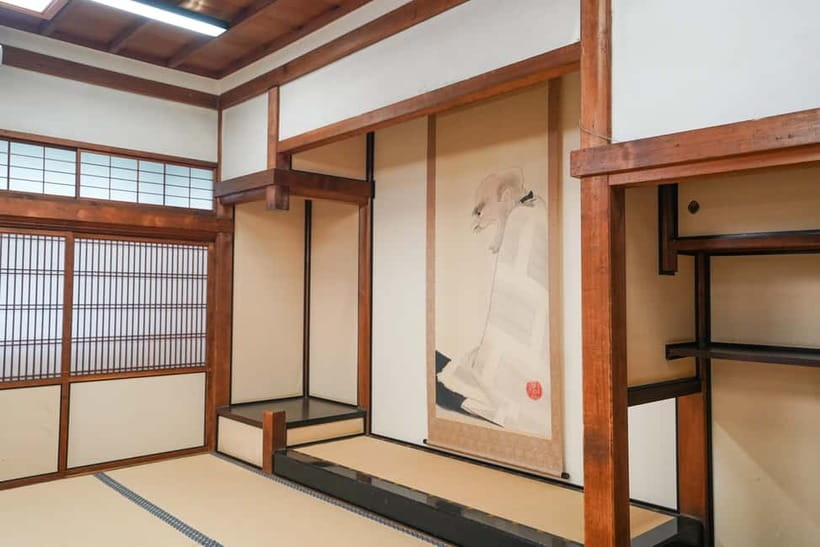
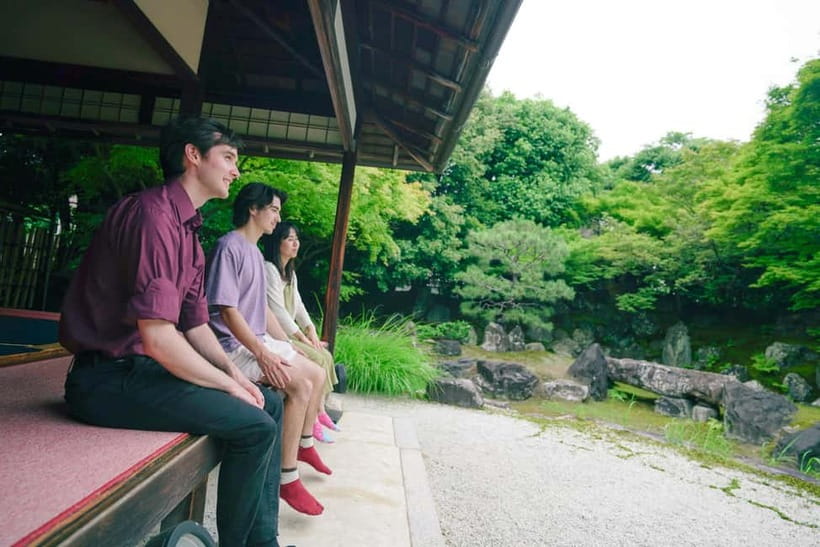
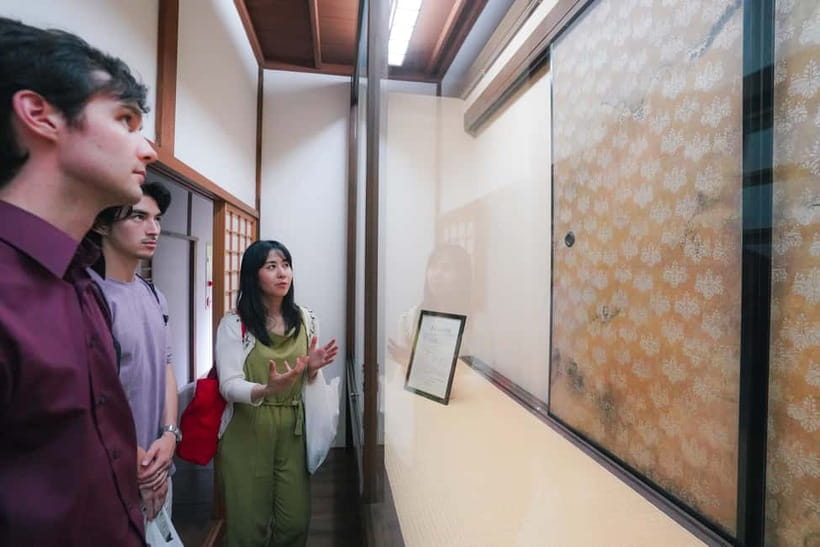
Entoku-in receives about 30 minutes of guided attention. Here you can view Japanese paintings and a karesansui, or dry landscape Zen garden.
The garden gives you another way to understand the tour’s central theme. Instead of filling a space with plants, water, and color, a dry garden uses rocks, gravel, open space, and careful arrangement. Its effect depends on restraint and the way you look at it.
The paintings add another layer. You are not only drinking tea. You are seeing how Japanese artistic traditions use empty space, natural subjects, and controlled detail. The guide’s explanation is important here, especially if you do not already know how to read a Zen garden or traditional Japanese art.
Entoku-in is a quieter counterpoint to Gion. That change of mood is part of the design. The tour moves from city streets to temples, from objects in a shop to art in a religious setting, and finally to the tea room.
The final 45 minutes: matcha, sweets, and the tea master
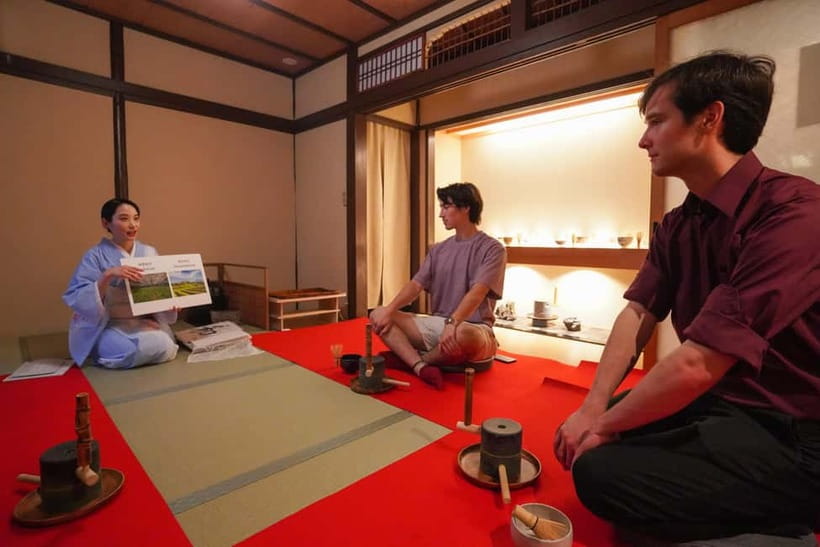
The tea ceremony is the payoff, but it works better because it comes last. By this point, you have heard about tea culture, seen pottery, and considered wabi-sabi in temples and art.
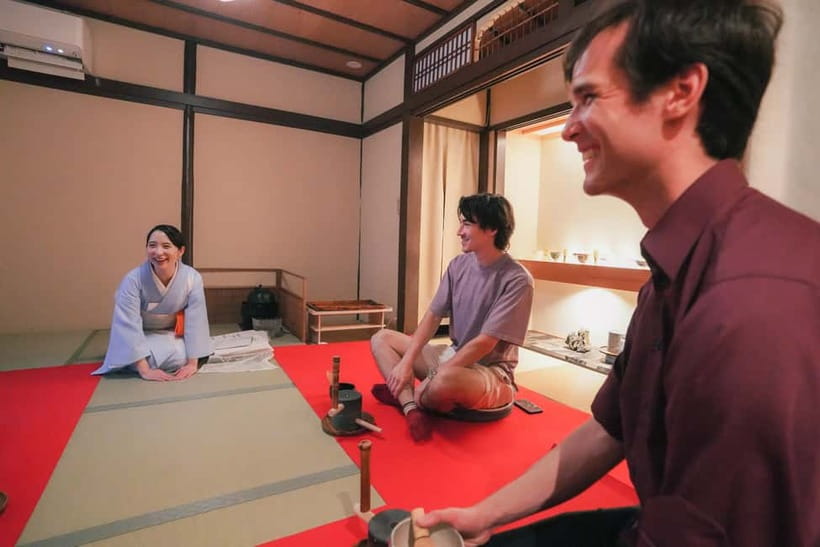
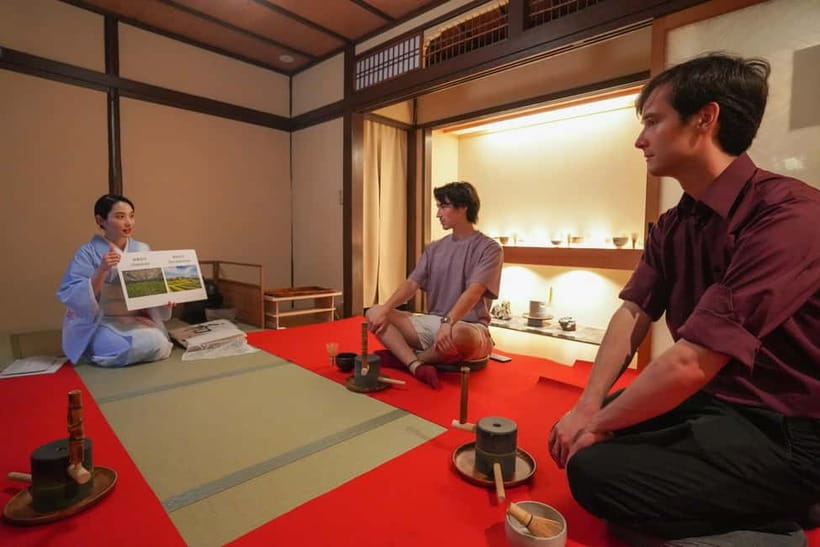
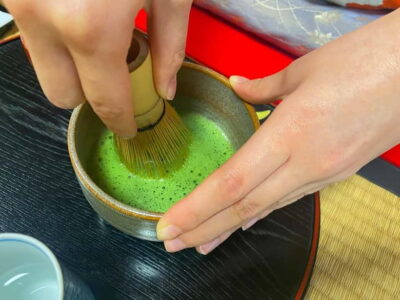
Under the direction of a tea master, you take part in an authentic tea ceremony. You drink matcha with a small seasonal Japanese sweet. The snack is not just a snack in the ordinary sense. Japanese tea service often pairs the sweetness of the confection with the bitter taste of matcha.
You also choose a tea bowl according to the season and your taste. That detail gives you a personal role in the ceremony. Instead of receiving an anonymous cup, you pay attention to the object in your hands and its connection to the time of year.
The ceremony lasts about 45 minutes. That is long enough to do more than take a quick photograph and sip green tea, but it is not an extended formal training session. The guide explains the essential parts, while the tea master leads the actual ritual.
You may find the pace calm and precise. The ceremony asks you to watch, listen, and follow the process. It is not the place to rush through the matcha or treat each step as a photo opportunity. The quiet is part of the experience.
The tea ceremony can accommodate participants aged six and older. Younger children may come on the tour, but one adult must remain outside the facility with them during the ceremony. Families should plan for that split before booking.
What the English-speaking guide adds
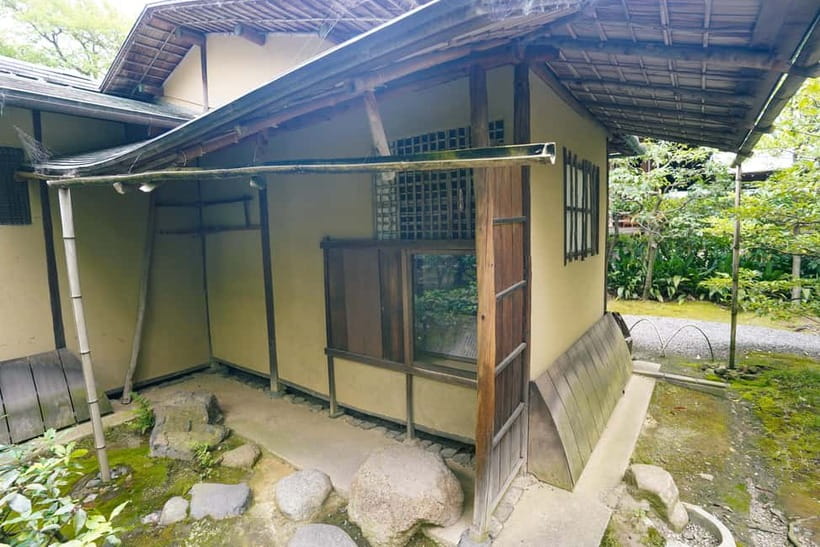
The guide is central to the experience because the tour depends on explanation. Gion, a Zen temple, a pottery shop, a dry garden, and a tea ceremony can feel like separate attractions without a clear thread.
The guide connects them. You learn why the bowl matters, how tea relates to Zen, and why simplicity can be valued more than flawless decoration. The most useful comments are likely to come during the quieter stops, when you can look at an object while hearing its cultural meaning.
One guide named in the feedback is Masa. He was described as friendly and helpful, and another participant appreciated the many details about the tea ceremony and temples. The feedback also points to an enjoyable, relaxed group experience with time for shrine and temple stamp books.
Guiding quality can vary from one departure to another, as with any activity using different staff. Still, the design gives the guide plenty to work with. This is not just a transfer to a tea room. The tour relies on local explanation at nearly every stop.
Is $92 a fair price?
At $92 per person, this is not the cheapest way to drink matcha in Kyoto. You can find simple tea experiences for less, especially if you only want the beverage and a sweet.
The price makes more sense if you want the full three-and-a-half-hour program. It includes an English-speaking guide, the tea ceremony, matcha, a seasonal snack, entrance fees to two temples, and photos during the tour. You are also paying for a small group and for the structure that links the walk to the ceremony.
I see the value in the combination. A temple visit on its own may not explain tea culture. A tea ceremony on its own may not explain wabi-sabi. This tour brings the two together, then adds pottery, paintings, and a Zen garden.
The value is weaker if you already have detailed Kyoto temple tours booked or if you mainly want to sample matcha. In that case, the walking portion may feel like extra time and cost. If you want cultural context and a guided introduction, the package is easier to justify.
Weather, walking, and practical comfort
The tour lasts 210 minutes and includes outdoor walking through Gion and Higashiyama. Kyoto’s weather can be severe, with summer highs listed as high as 40°C and winter lows as low as -5°C.
Dress for the forecast. Summer heat can make a temple walk tiring, while winter cold can be sharp when you are outside between indoor stops. Comfortable walking shoes are sensible, though the route includes places that are not accessible to wheelchair users or strollers.
The tour may be cancelled for unsafe weather. If that happens, the activity information provides for free cancellation or rescheduling up to 24 hours before the start time under the stated policy. The same 24-hour window applies if you need to cancel for a full refund.
You do not need to pay for the guide’s food or drinks. The group may include other participants, even though it is limited to seven people.
Who should book this Kyoto tea tour?
I would recommend it to you if you want more than a quick matcha tasting and prefer a guide to explain what you are seeing. It suits first-time visitors who want a focused introduction to Kyoto’s tea culture, Zen connections, and wabi-sabi in one afternoon.
It is also a good fit for art and temple fans. The pottery, paintings, dry garden, and tea bowl give you several ways to approach the subject. You do not need prior knowledge, and the activity does not assume that you already understand formal tea ceremony rules.
Families with children aged six and older can take part in the ceremony, but parents of younger children need to plan for one adult to stay outside during that portion.
I would hesitate if you need step-free access, want a slow independent temple visit, or have trouble with strict start times. The schedule is fixed, the route includes inaccessible places, and missing the departure can mean missing the ceremony and losing your payment.
Should you book it?
Book this tour if you want the tea ceremony to make cultural sense, not just taste good. The strongest feature is the sequence: Gion first, then Zen, pottery, art, and finally matcha with a tea master.
At $92, it is best value for someone who wants several connected experiences in a small group. Check the start time carefully, arrive early at Exit 5 of Gion-Shijo Station, and dress for the season. If you do those things, this offers a thoughtful and practical introduction to one of Kyoto’s most recognizable traditions.
FAQ
Where does the tour meet?
Meet in front of the Izumo no Okuni Statue, directly outside Exit 5 of Gion-Shijo Station on the Keihan Line. The guide will hold an orange Magical Trip signboard.
How long does the experience last?
The tour lasts 210 minutes, or three and a half hours.
What language is the tour conducted in?
The tour has a live English-speaking guide.
How many people can join the group?
The group is limited to seven participants, though other participants may join your departure.
What does the tea ceremony include?
The ceremony includes matcha, a small seasonal snack, and a tea bowl selected according to season and taste. A tea master leads the ceremony.
Which temples are included?
The route includes Kennin-ji and Entoku-in. Entrance fees for two temples are included.
Can children join the tea ceremony?
Children aged six and older can take part in the tea ceremony. Younger children may join the walking tour, but one adult must accompany them outside the facility during the ceremony.
Is the tour suitable for wheelchair users?
No. The route includes locations that are not accessible by wheelchair or stroller, and the activity is not suitable for wheelchair users.
What happens if I need to cancel?
You can cancel up to 24 hours before the starting time for a full refund. Free rescheduling is also available until 24 hours before the tour.
Newly steeped around Kyoto
- Whisk Your Own Matcha: A Zen Matcha Experience at Temple★ 3.6 · 7 reviews
- Kyoto: Authentic Tea Ceremony in a Small Group★ 5.0 · 7 reviews
- Tea ceremony at Kyoto’s Zen Temple Teahouse★ 5.0 · 2 reviews
- Uji Walking Tour – Byodo-in temple and Tea Ceremony from Kyoto★ 3.5 · 3 reviews
- Tea Ceremony Experience in Traditional Kyoto Townhouse★ 5.0 · 19 reviews
- Tea Ceremony in 150 Years Old Townhouse with Tables and Chairs★ 5.0 · 22 reviews
- Traditional Tea Ceremony in Kyoto★ 4.5 · 3 reviews
- Sencha-do the Japanese Tea Ceremony Workshop in Kyoto★ 5.0 · 21 reviews
Tea Ceremony Experiences, compared.
Kyoto: Tea Ceremony in a Traditional Tea House in Kiyomizu
Read our review →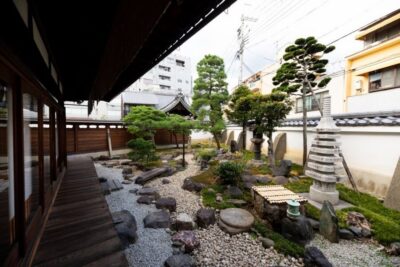
Kyoto: 45-Minute Tea Ceremony Lesson Experience
Read our review →
Kyoto: Table-Style Tea Ceremony at a Kyo-Machiya
Read our review →


Browse the lists this tea experience appears in