
Review · KYOTO
Kyoto Ninenzaka: Tea Ceremony in Old Townhouse with Chairs
Kyoto’s tea ceremony is less about drinking tea than learning to notice small things: the bowl, the season, the guest, and each careful movement. This 50-minute session takes place in a 150-year-old townhouse near Kiyomizu Temple, with chairs and tables instead of floor seating. I like the quiet, small-group setting and the chance to prepare your own premium Uji matcha. I also like that the wagashi comes from a long-established Kyoto confectioner.
The main consideration is that this is a lesson and cultural presentation, not a quick photo stop. The room is upstairs, the stairs are narrow and steep, filming is not allowed, and the ceremony asks you to put away phones and other distractions. That seriousness is part of its appeal, but it will not suit every sightseeing style.
Key points to know before you book
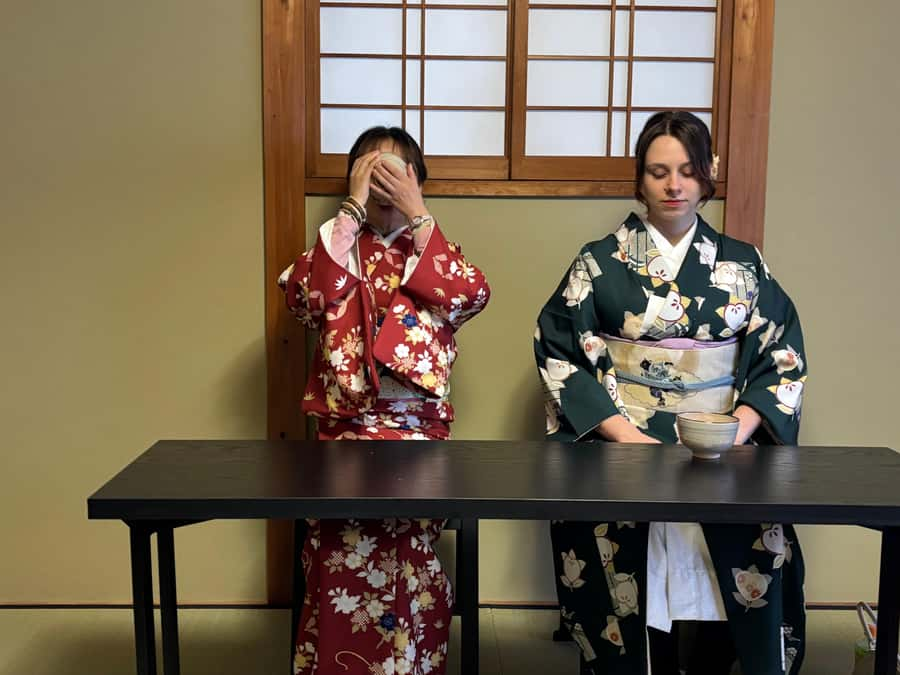
- A standing-style ceremony with chairs: You can take part without sitting on the floor, a useful detail for anyone with stiff knees or limited comfort.
- A 150-year-old townhouse: The traditional building has been renovated but keeps its old Kyoto character, with small rooms and low ceilings.
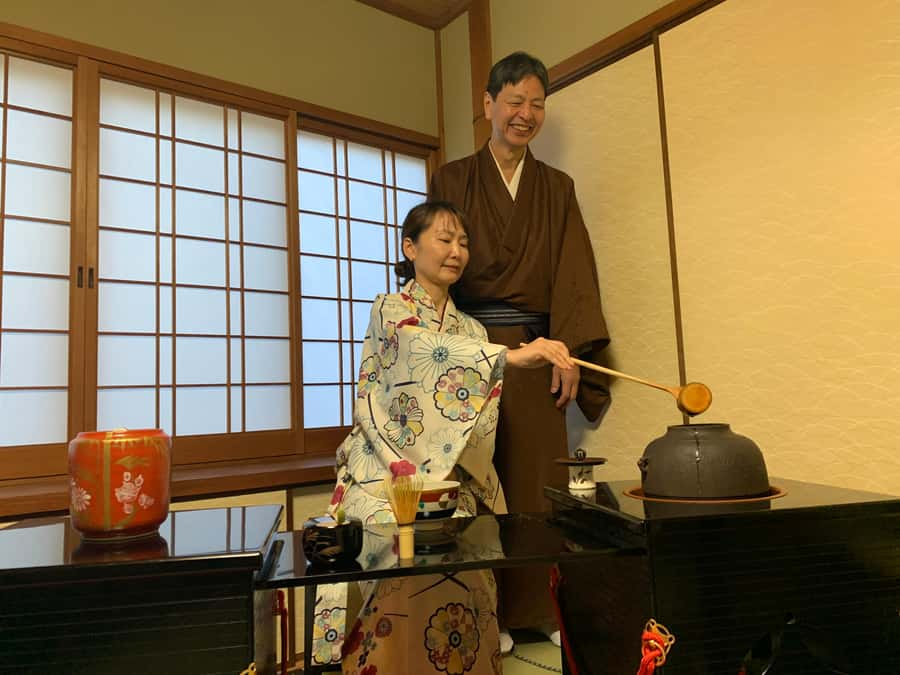
- Two servings of matcha: You watch the tea master prepare tea, then whisk your own matcha with traditional utensils.
- Uji tea and Kyoto wagashi: The matcha comes from a family tea farm with roots reaching back to the Bunsei era, while the sweets come from a long-established confectionery.
- A serious cultural lesson: Expect history, etiquette, utensil care, Zen ideas, seasonal hospitality, and time for questions.
- A few firm rules: Wear socks, remove large jewelry, avoid perfume, and leave cameras, video equipment, drinks, and large bags behind.
Entering an old townhouse beside Ninenzaka
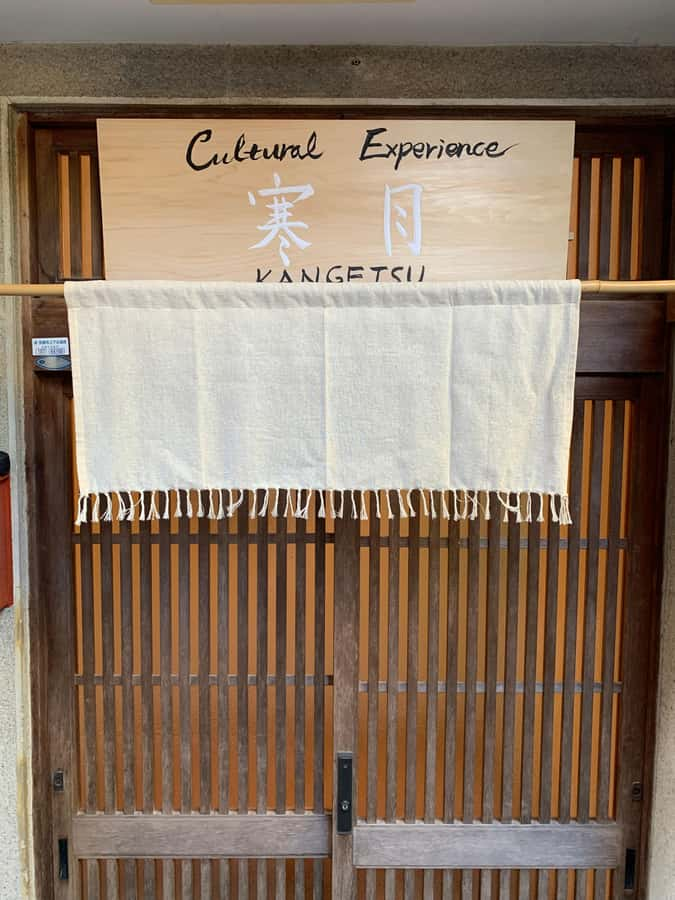
The meeting point is near Kiyomizu Temple, at the end of the alley beside the Starbucks on Ninenzaka. That places the experience right in one of Kyoto’s most visited areas, so it fits neatly into a morning or afternoon around Kiyomizu Temple, Ninenzaka, and Sannenzaka.
The location can be tricky to find. Written directions are provided, but the map pin has reportedly led some people to another experience provider. I would allow extra time and follow the written directions closely rather than relying only on the map application. In the narrow lanes around Ninenzaka, a few spare minutes can save a rushed arrival.
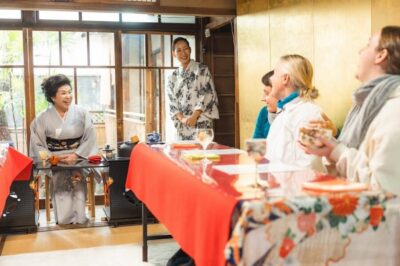
Inside, you find a traditional Japanese townhouse built about 150 years ago. The interior has been renovated, but the original feel remains. Rooms are small, ceilings are low, and an upstairs staircase is narrow and steep. This is not a polished hotel event room. The building itself helps explain how traditional arts were practiced in Kyoto homes.
You remove your shoes before entering, and socks are required. Bare feet are not accepted, and socks can be purchased for 500 yen if needed. Large necklaces, rings, and bracelets should also come off because they may damage a valuable tea bowl. If you have long hair, tying it back is wise, since loose hair can fall toward the tea.
More Tea Ceremonies in Kyoto
- Kyoto: Tea Ceremony in a Traditional Tea House in Kiyomizu
★ 4.9 · 3,519 reviews - Kyoto: Tea Ceremony Ju-An at Jotokuji Temple
★ 4.9 · 3,207 reviews - Kyoto: 45-Minute Tea Ceremony Lesson Experience
★ 4.3 · 2,378 reviews
Why chairs change the experience
Traditional tea ceremonies often involve sitting on the floor in a formal posture. That can be uncomfortable, especially after a full day of walking Kyoto’s hills and temple approaches. Here, the tea ceremony uses a stand, tables, and chairs, allowing you to remain upright while still taking part in the formal sequence.
This makes the activity suitable for people who find floor sitting difficult. It does not, however, make the building fully accessible. The narrow staircase means the experience is not suitable for wheelchair users, and anyone with mobility concerns should think carefully before booking.
The brighter classroom has been arranged to feel more open than a traditional tea room. That is practical for an English-language lesson and lets you see the utensils and hand movements clearly. It also means the setting is not exactly the tiny, dark tea room some visitors may picture. If you want an austere, private ceremony in a historic tea house, this may feel more instructional than ceremonial.
The opening lesson: tea, Zen, and seasonal attention
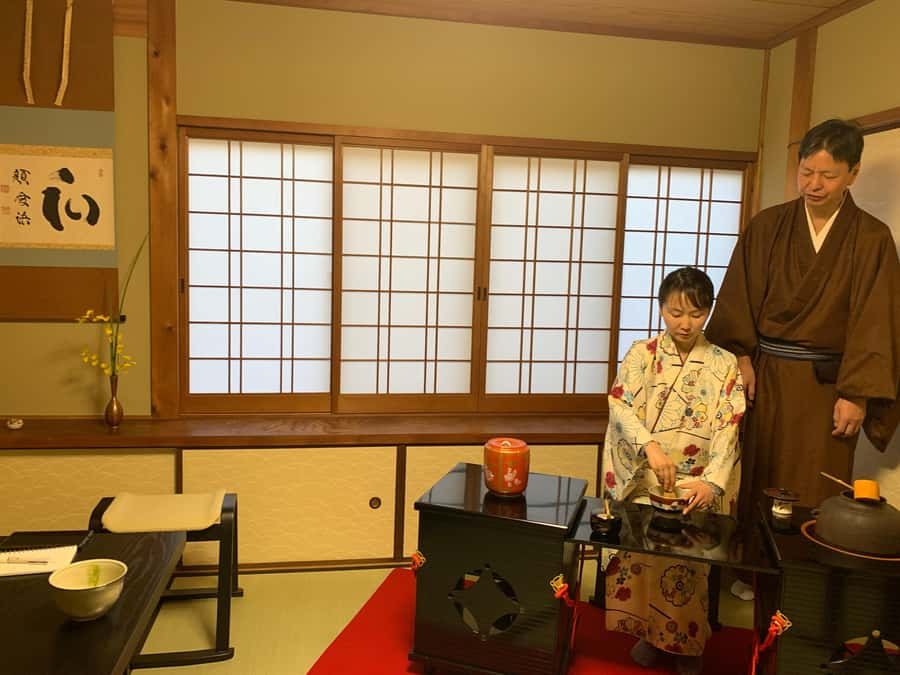
The session begins with an explanation of the tea ceremony’s cultural meaning. You learn about its relationship with Zen practice and the idea that tea is a complete act of hospitality, not simply a beverage served in a bowl.
The instructors explain the history of the ceremony, the role of the host and guest, and the reason each movement is controlled. The point is not speed. It is attention. You are encouraged to notice the room, the utensils, the sweet, the season, and the person serving you.
English instruction is provided. The teaching team can include a Japanese tea master with an English-speaking assistant or translator. Sakura has been praised for clear explanations and patient answers, and one session included an Australian professor who added useful context alongside the Japanese tea master. The exact staff may vary, but you should expect an English-supported lesson rather than an entirely silent demonstration.
The English is generally easy to follow, though some explanations may feel less exact during translation. That is a minor trade-off for an experience that gives you plenty of time to ask questions. If you want to understand why a guest turns a bowl, how an object is handled, or what a particular gesture means, this is the kind of setting where you can ask.
Meeting the utensils before making tea
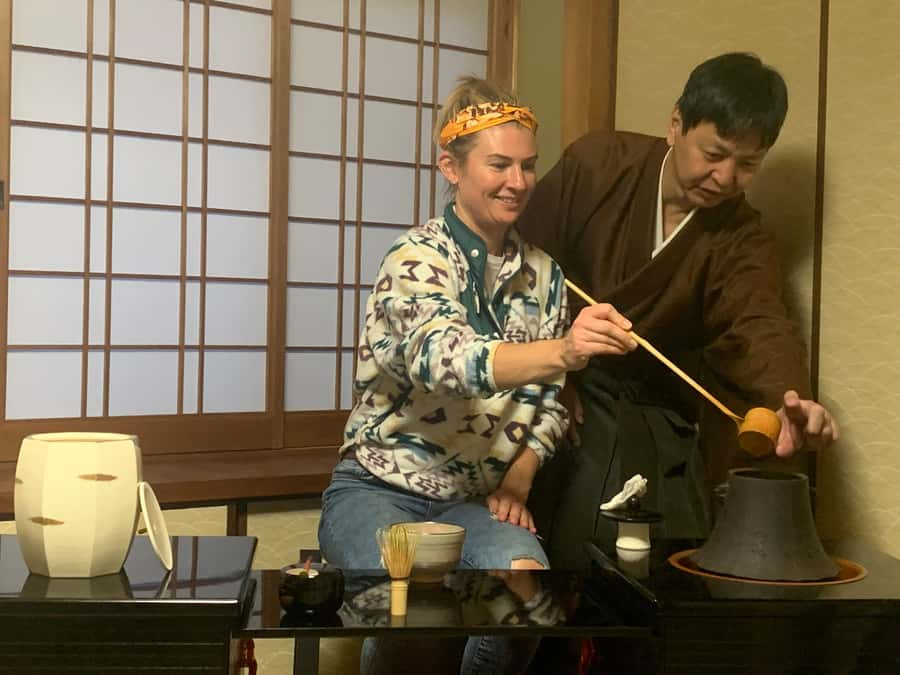
A strong part of the experience is the introduction to the tea tools. You see the bowl, whisk, scoop, and other utensils, then learn what each one does and how it should be handled and cared for.
This section gives the ceremony a human scale. Instead of seeing a series of mysterious gestures, you understand the practical reason behind them. The bowl is not just a cup. The whisk is not just a kitchen tool. The host’s actions show respect for the objects and for the person receiving the tea.
You also learn proper etiquette and serving techniques. The instructions are detailed but designed for beginners, so you do not need previous experience with Japanese tea. The atmosphere is formal, yet the teaching style is not meant to intimidate you. It is possible to take the ritual seriously while still asking basic questions.
The range of tea bowls is another appealing detail. Different shapes and designs can help you notice how much attention Japanese tea places on texture, season, and appearance. You may not become an expert in a single visit, but you will leave with a better eye for the objects used in the ceremony.
Same leaf, a different ritual:
- Kyoto: Table-Style Tea Ceremony at a Kyo-Machiya
★ 4.9 · 1,211 reviews - Kimono Tea Ceremony at Kyoto Maikoya, NISHIKI
★ 5.0 · 911 reviews - Arashiyama Bamboo, Temple, Monkeys, or Secret Sake Brewery
★ 4.8 · 886 reviews - Kyoto: Arashiyama Bamboo Forest, Monkeys, Matcha & Temple Tour
★ 5.0 · 759 reviews
Watching the tea master perform the ceremony
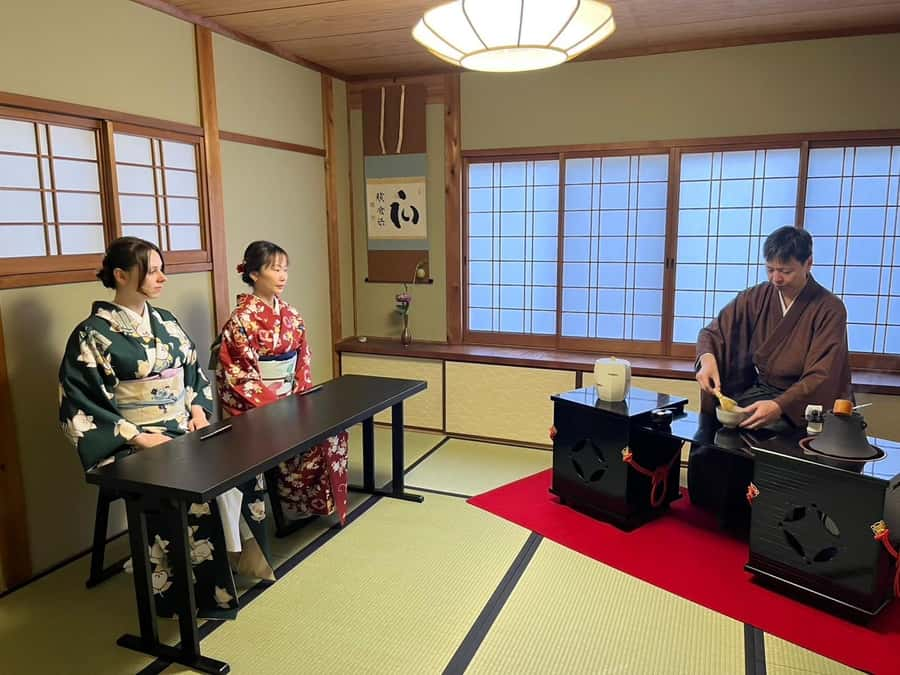
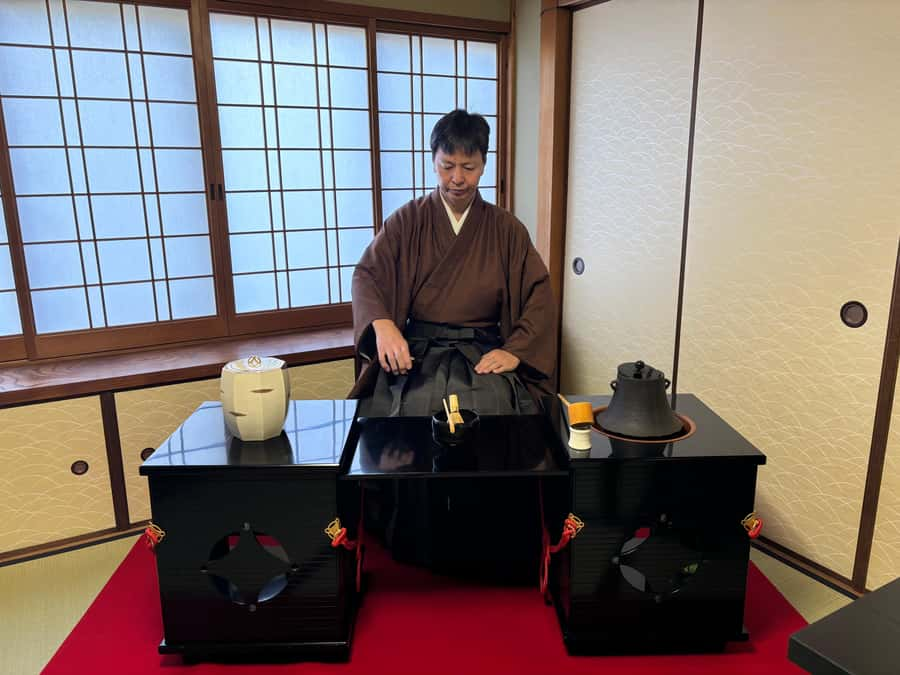
The tea master then demonstrates the ceremony’s movements. Watch for the deliberate rhythm: preparing the utensils, handling the bowl, adding the matcha, whisking the tea, and presenting it with care.
This is the most meditative part of the session. The room is kept quiet, and outside distractions are set aside so you can focus on what is happening. There is no background entertainment and no running commentary from phones. The stillness may feel unusual at first, particularly if your Kyoto schedule has been packed with crowds and temple visits.
The demonstration also shows why the ceremony takes time. The host is not simply mixing green powder with hot water. Each action has a place in a larger pattern of hospitality. Seasonal awareness matters too, from the choice of sweet to the arrangement of the room and the utensils in use.
The experience is designed to be close to a real ceremony, but it remains an educational session for international visitors. One person found it less fully traditional than expected, which is worth keeping in mind. You receive clear explanations and a chance to participate, but you are not entering a private ceremony conducted only for experienced practitioners.
Whisking your own Uji matcha
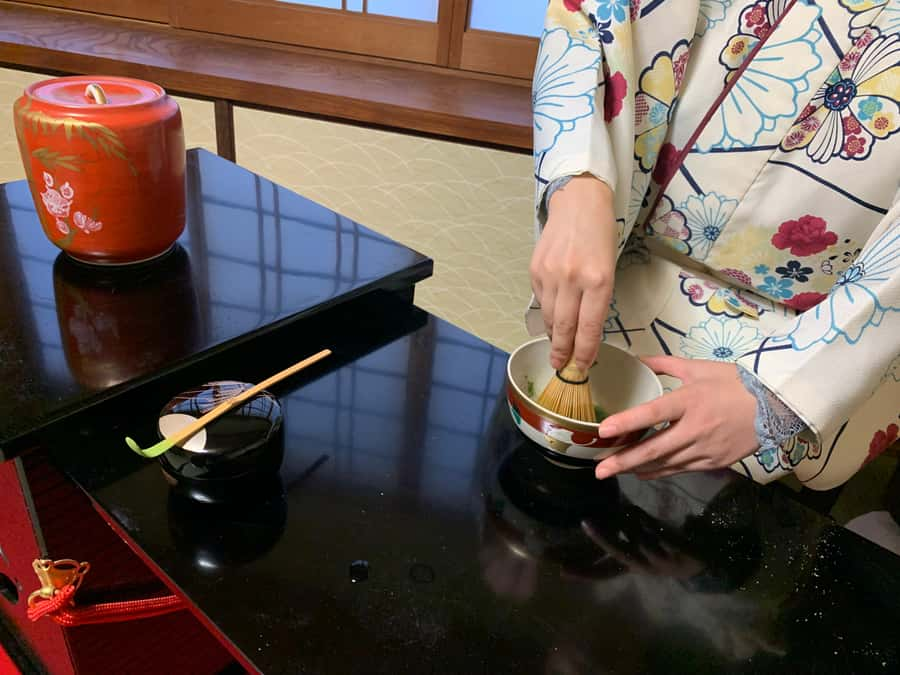
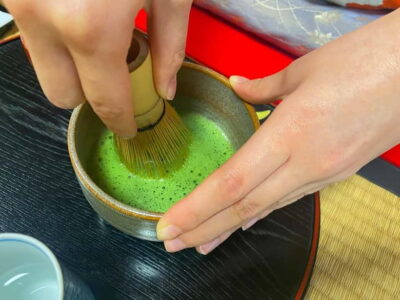
After watching the demonstration, you prepare matcha yourself. The instructors guide you through the process, including how to hold the whisk and create the proper texture.
The activity includes two cups of matcha. One is prepared as part of the demonstration, and you make your own during the practical portion. The taste is a useful lesson in itself. Authentic matcha can be grassy, bitter, and intense compared with sweetened green-tea drinks sold in cafés. If you appreciate the flavor of real matcha, this is a pleasure. If you prefer mild or sugary drinks, approach it with an open mind.
The matcha used here is Uji matcha sourced directly from a tea farmer whose family has cultivated tea since the Bunsei era, from 1818 to 1831. That detail matters because Uji, near Kyoto, is one of Japan’s best-known tea-producing areas. You are not simply whisking an anonymous powder bought for a tourist demonstration.
Making the tea yourself also changes your understanding of the ceremony. A demonstration can look effortless, but using the whisk shows how much control is needed. You learn through your hands, not only through a spoken explanation.
Tasting Kyoto wagashi with the tea
The sweet is served with the tea, as it traditionally helps balance matcha’s bitterness. You receive seasonal Japanese wagashi made by a long-established Kyoto confectionery that belongs to the Kyoto Prefectural Confectionery Association.
Wagashi is often delicate in shape, color, and flavor. It may look almost too fine to eat, but it is meant to be part of the tea experience. The sweet prepares your palate for the strong tea and adds another way to notice the season.
This is one of the better details for visitors who want more than a generic cultural demonstration. The tea and sweet are selected with care, and both connect the activity to Kyoto’s long food traditions. You are not stopping for a full meal, so arrive having eaten if you need something substantial. Meals and transportation are not included.
A calm setting with strict limits
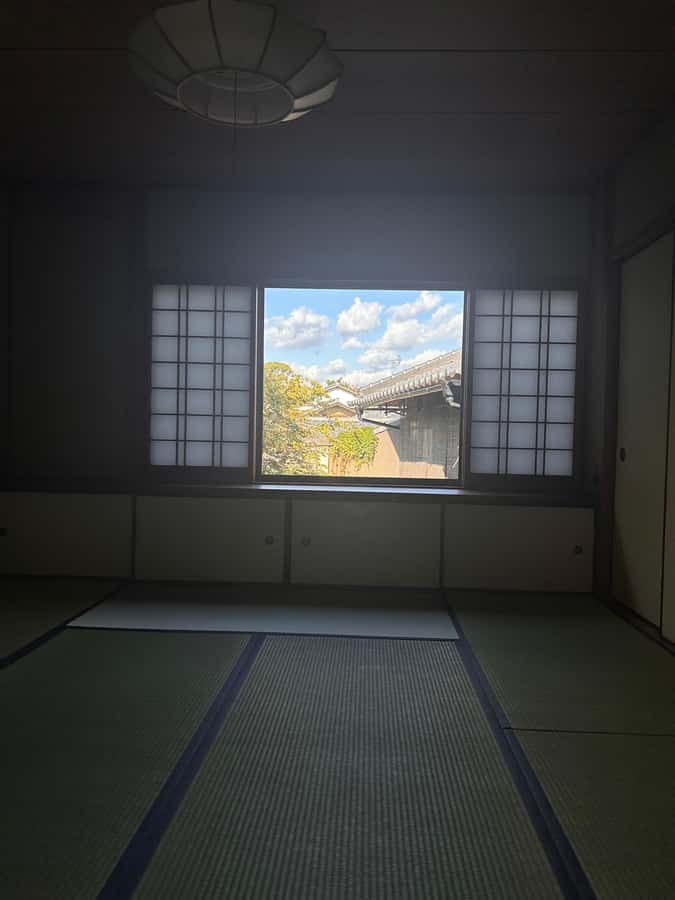
The quiet is deliberate. Perfume and strongly scented products are discouraged because incense, matcha, and sumi ink have subtle smells that are part of the setting. Removing heavy fragrance lets you notice the room and the tea more clearly.
The rules are strict by ordinary sightseeing standards. Hats, large bags, oversized luggage, drinks, chewing gum, alcohol, smoking, vaping, and electronic devices are not allowed. Video recording, audio recording, flash photography, and professional cameras are also prohibited.
That may frustrate you if your main goal is to document every step. It is also the reason the session can feel calm. You are asked to take part instead of watching through a screen. A photo opportunity may be available at the end, and kimono rental can be arranged separately at the venue, but a kimono is not included in the $21 price.
Children under 10 are not accepted, and the setting is intended to remain quiet. Party groups and noisy behavior do not fit the tone. Guests with a cold are also asked not to attend.
What the $21 price really buys
At $21 per person, this is a good-value cultural activity if you want instruction rather than a quick taste of matcha. The fee includes experienced instructors, detailed guidance, a standing tea ceremony setup, an original booklet, two cups of matcha, and seasonal Japanese sweets.
The value comes from the teaching time. In less than an hour, you receive a demonstration, background on Zen and tea history, an introduction to utensils, etiquette instruction, hands-on preparation, and a question-and-answer period. You also get ingredients selected for their origin and quality.
The short duration is both a strength and a limit. Fifty minutes fits easily between other Kyoto sights, but it does not allow for a long formal ceremony or extended conversation. If you want to study tea practice in depth, you will need more than one session. If you want a focused introduction that does not consume half a day, the timing works well.
Free cancellation is available up to 24 hours before the start time, and you can reserve now and pay later. Same-day and day-before reservations may not be handled exactly as requested, so earlier booking is the safer choice.
Who will appreciate this most
I would choose this for you if you care about Japanese aesthetics, traditional arts, and the meaning behind ordinary objects. It is especially suitable if you want a quiet break from Kyoto’s crowded streets and prefer asking questions to posing for photographs.
It also works well for anyone who cannot comfortably sit on the floor. The chairs remove one common barrier, though the staircase remains a concern. Couples, small groups, and families with children aged 10 or older can all take part, provided everyone is comfortable with the quiet rules.
I would skip it if you want a casual activity with lots of pictures, a sweetened matcha drink, or a loose schedule. The no-phone policy, no-filming rule, fragrance limits, and formal tone are central to the experience, not minor footnotes.
Should you book the Ninenzaka tea ceremony?
Book it if you want to understand why Japanese tea ceremony matters, not just see someone whisk green tea. The combination of a historic townhouse, a real tea master, Uji matcha, Kyoto wagashi, and hands-on practice gives you plenty for the modest price.
Before booking, plan your route carefully, wear socks, remove bulky jewelry, and leave large bags behind. If the steep stairs or strict no-recording policy will cause trouble, choose a more casual tea tasting instead. For everyone else, this is a focused and thoughtful way to spend 50 minutes near Kiyomizu Temple.
FAQ
How long does the Kyoto Ninenzaka tea ceremony last?
The experience lasts 50 minutes.
How much does the experience cost?
The listed price is $21 per person.
Is floor sitting required?
No. The ceremony uses a standing style with tables, chairs, and a stand, making it suitable for people who find sitting on the floor difficult.
What is included?
The experience includes experienced instructors, detailed guidance, a standing tea ceremony setup, an original tea ceremony booklet, two cups of matcha, and seasonal Japanese sweets.
Do I need to bring anything?
You must bring and wear socks. Bare feet are not allowed, though socks may be purchased at the venue for 500 yen.
Can children attend?
Children under 10 years old are not accepted.
Newly steeped around Kyoto
- Whisk Your Own Matcha: A Zen Matcha Experience at Temple★ 3.6 · 7 reviews
- Kyoto: Authentic Tea Ceremony in a Small Group★ 5.0 · 7 reviews
- Tea ceremony at Kyoto’s Zen Temple Teahouse★ 5.0 · 2 reviews
- Uji Walking Tour – Byodo-in temple and Tea Ceremony from Kyoto★ 3.5 · 3 reviews
- Tea Ceremony in 150 Years Old Townhouse with Tables and Chairs★ 5.0 · 22 reviews
- Tea Ceremony Experience in Traditional Kyoto Townhouse★ 5.0 · 19 reviews
- Sencha-do the Japanese Tea Ceremony Workshop in Kyoto★ 5.0 · 21 reviews
- Silent Beauty of Kyoto Zen Walk and Tea Experience★ 5.0 · 2 reviews
Tea Ceremony Experiences, compared.
Kyoto: Tea Ceremony in a Traditional Tea House in Kiyomizu
Read our review →
Kyoto: 45-Minute Tea Ceremony Lesson Experience
Read our review →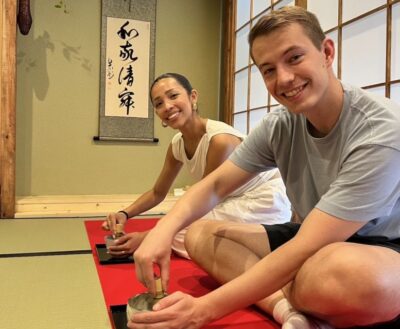
Kyoto: Table-Style Tea Ceremony at a Kyo-Machiya
Read our review →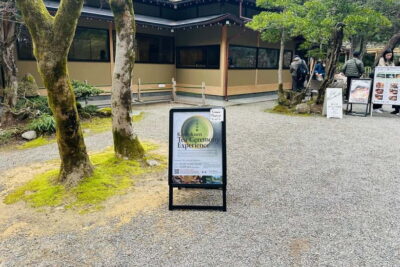


Browse the lists this tea experience appears in