
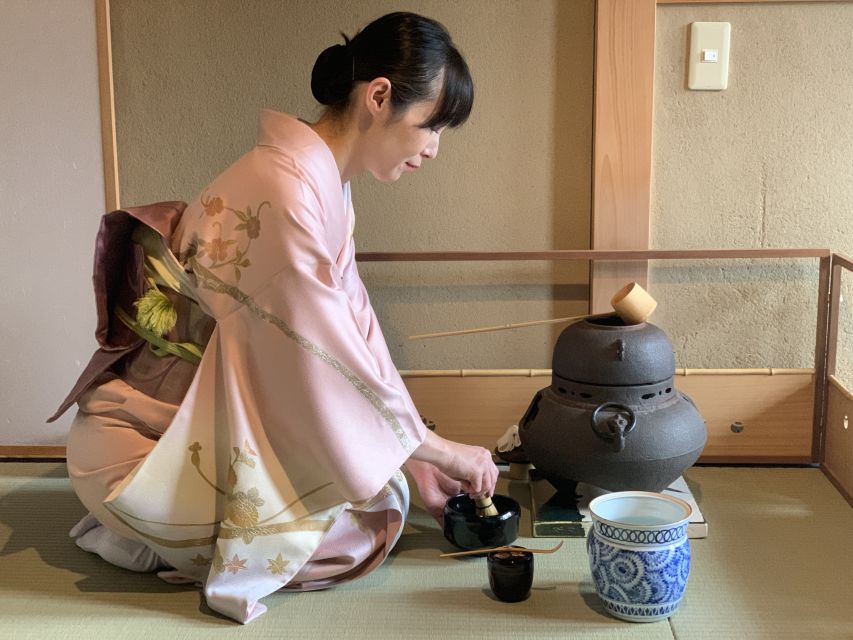
Review · KYOTO
Kyoto: Tea Ceremony Experience
Kyoto’s tea ceremony is not simply a lesson in making green tea. It is a compact lesson in attention, courtesy, and restraint, held in a traditional tearoom near Ninenzaka. You watch the host handle each utensil with care, taste a seasonal sweet, then whisk your own bowl of Kyoto matcha.
I like the clear balance between demonstration and participation. You are not left watching in silence for 45 minutes. I also like the setting, close to Kiyomizu-dera and Gion, so this fits neatly into a day of sightseeing. The main drawback is that the floor seating can become uncomfortable, and this is an introduction to the ceremony rather than full tea-master training.
Key points
- A 45-minute Kyoto introduction: Learn the meaning of the ceremony without giving up half a day of sightseeing.
- You make your own matcha: The host guides you as you whisk a frothy bowl and taste it yourself.
- A traditional Higashiyama setting: The tearoom sits down a narrow alley near Ninenzaka and the Park Hyatt.
- Seasonal sweets are included: A small sweet balances matcha’s strong, pleasantly bitter flavor.
- English guidance is central: Hosts explain the utensils, room layout, gestures, and tea traditions in clear English.
- Good flexibility for different needs: Private sessions, small groups, chairs, tables, and an accessible Garden Teahouse are available under the stated conditions.
A quiet ritual in the middle of Higashiyama
The Camellia Tea Ceremony takes place in Kyoto’s Higashiyama district, one of the city’s most atmospheric sightseeing areas. You reach the teahouse down an alley branching off Ninenzaka, near the Park Hyatt hotel and opposite a Studio Ghibli store.
That location is useful, but the alley is easy to miss. Head for the Park Hyatt, find the Studio Ghibli shop across from it, and look for the lane just to the left. Clear directions are important here, and the arrival instructions include enough detail to prevent the usual Kyoto alleyway confusion.
Once inside, the pace changes. Ninenzaka can be crowded with shoppers and people heading toward Kiyomizu-dera, but the tearoom gives you a quieter hour. The ceremony offers a welcome pause in a busy sightseeing day, especially if you schedule it after visiting the temple district.
The experience is rated 4.8 out of 5 from 511 verified bookings. The strongest pattern is not flashy entertainment. It is the friendly English instruction, the calm presentation, and the chance to take part rather than simply observe.
More Tea Ceremonies in Kyoto
- Kyoto: Tea Ceremony in a Traditional Tea House in Kiyomizu
★ 4.9 · 3,519 reviews - Kyoto: Tea Ceremony Ju-An at Jotokuji Temple
★ 4.9 · 3,207 reviews - Kyoto: 45-Minute Tea Ceremony Lesson Experience
★ 4.3 · 2,378 reviews
What happens during the first few minutes
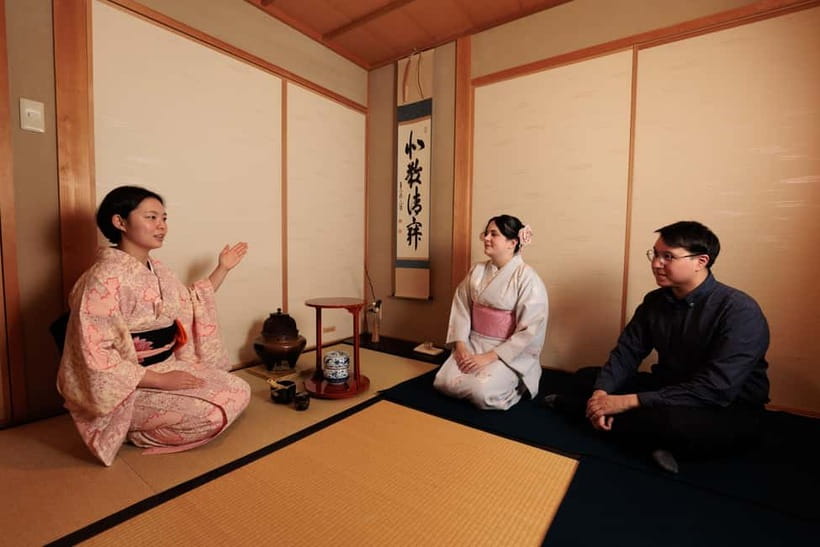
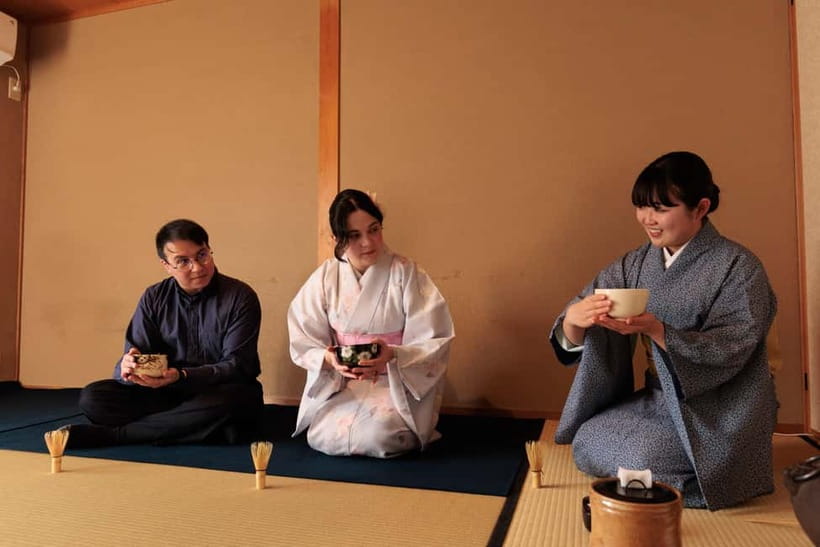
Your host begins with a short introduction to matcha and the tea ceremony. This is the useful foundation. Instead of expecting you to understand every movement through guesswork, the instructor explains what the utensils are for, how the room is arranged, and why decoration matters.
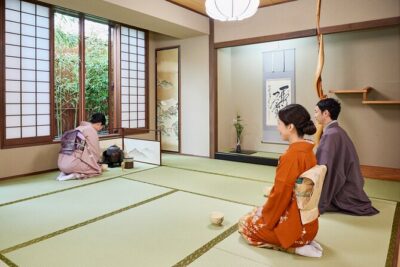
You learn that the tearoom is not a random room with a few attractive objects. Its layout, flowers, scrolls, utensils, and seasonal details all help create the mood for the gathering. The ceremony is built around deliberate actions, and the room gives those actions a setting.
You can ask about the three main schools of tea ceremony and other parts of Japanese culture. The session is structured, but it is not stiff. Hosts answer questions and adjust the explanation to the group. Ikuko is singled out for explaining the ceremony clearly and patiently, while other hosts are praised for fluent English, warmth, and a good sense of humor.
This opening section is especially useful if you have seen tea ceremonies online but never understood what you were looking at. You will not become a tea master in 45 minutes, but you will know why the host turns, wipes, places, and lifts each item with such care.
Watching the ceremony and tasting the sweet
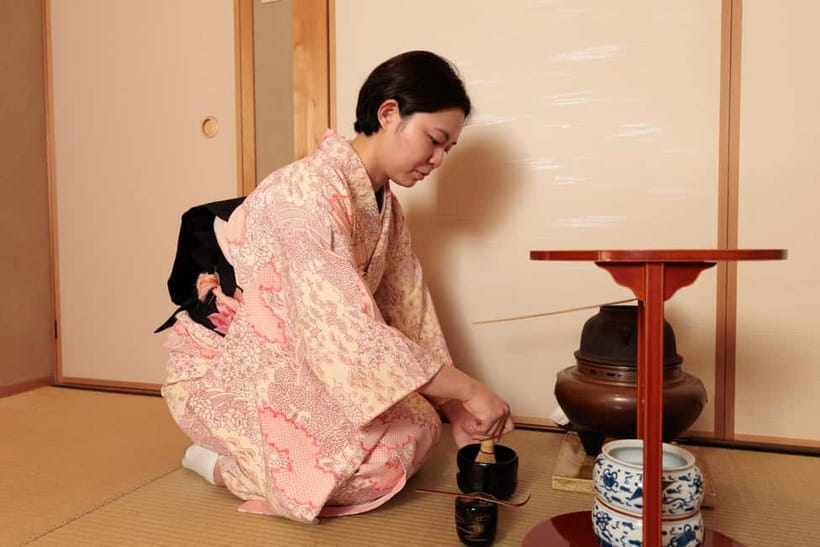
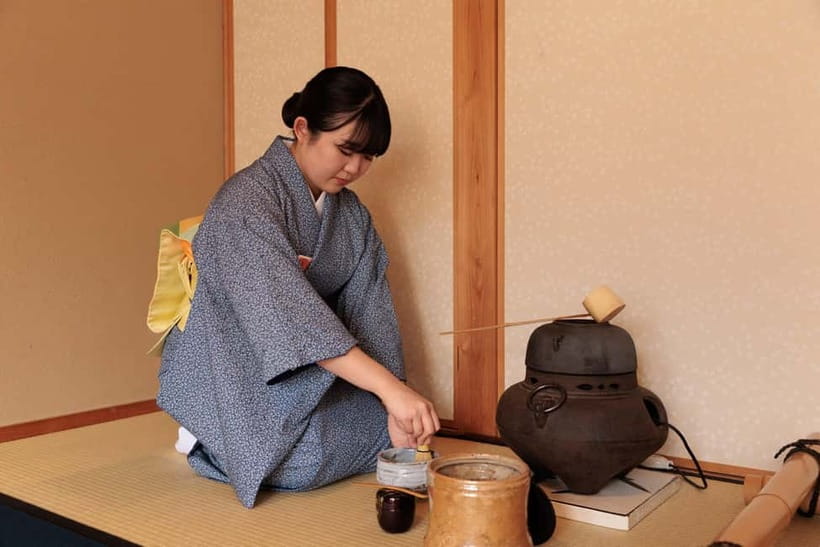
After the introduction, the host performs the ceremony. The demonstration lasts about 10 minutes, giving you time to watch the precise movements without making the entire session a long formal performance.
The appeal is in the rhythm. The host prepares the tea with measured gestures, and you begin to notice details that would otherwise pass quickly. The placement of each utensil matters. The handling of the bowl matters. Even the pauses have a purpose.
You are served matcha with a traditional seasonal sweet. This small sweet is not just a snack. Its sweetness helps soften matcha’s grassy, bitter edge and lets you understand why the two are served together.
Matcha is not like a mild cup of brewed green tea. It is powdered tea whisked into water, so you drink the whole leaf rather than steeping and removing it. The flavor can be intense, particularly if this is your first taste. That is part of the lesson, and the sweet makes the experience more approachable.
The demonstration is peaceful without demanding perfect silence. You can chat with the host and ask questions at the right moments. That informal touch makes this a good first encounter with the ceremony. You see the formal structure, but you are not expected to arrive already knowing how to behave.
Making your own bowl of Kyoto matcha
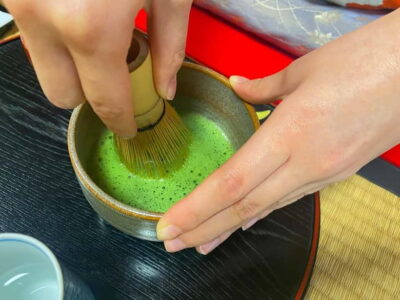
The most valuable part for many people comes after the demonstration. You receive the utensils and guidance needed to prepare your own bowl of matcha.
Your host walks you through the process and helps you create the froth. The aim is not to test you. It is to let you feel the difference between hearing an explanation and handling the whisk yourself.
The movements take practice. You learn how much effort goes into producing a smooth, foamy surface, and you get an immediate sense of why the host’s actions looked so controlled. Even with help, your bowl may not look quite like the demonstration. That is fine. The point is the hands-on connection.
This section also makes the $32 price easier to justify. You are paying for a small-group cultural lesson with an instructor, tea, a seasonal sweet, and the chance to prepare the drink yourself. It is not the cheapest cup of matcha in Kyoto, but it is far more useful than buying one at a café if your goal is to understand the ritual.
One caution: the listing describes making matcha, not learning every movement of a complete tea ceremony. The full procedure is far more involved than this short workshop. If you want formal training, this is too brief. If you want a clear and friendly introduction during a sightseeing day, the format works well.
Same leaf, a different ritual:
- Kyoto: Table-Style Tea Ceremony at a Kyo-Machiya
★ 4.9 · 1,211 reviews - Kimono Tea Ceremony at Kyoto Maikoya, NISHIKI
★ 5.0 · 911 reviews - Arashiyama Bamboo, Temple, Monkeys, or Secret Sake Brewery
★ 4.8 · 886 reviews - Kyoto: Arashiyama Bamboo Forest, Monkeys, Matcha & Temple Tour
★ 5.0 · 759 reviews
Why the setting matters
The tea ceremony gains much of its effect from the room. In a café, you would focus on the taste. In a traditional tearoom, you notice the relationship between the utensils, the floor, the arrangement of the room, and the host’s movements.
That setting also gives the lesson a strong sense of place. You are not learning about Kyoto tea culture in a generic classroom. You are in Higashiyama, near some of the city’s best-known historic sites, surrounded by the lanes and wooden architecture that make this part of Kyoto so popular.
The location makes the experience easy to pair with Kiyomizu-dera, Kodai-ji, Yasaka-jinja, Maruyama Park, Chion-in, and Gion. You can walk to many of these sights. Kiyomizu-dera and the nearby shopping streets are about a 15-minute walk from the teahouse according to one practical account, while central Kyoto is roughly 25 minutes away on foot through Gion.
Buses run along Higashi Oji, about 10 minutes from the teahouse. That gives you a simple way to continue across the city after the ceremony, though you should allow time to find the main road and account for Kyoto traffic.
Floor seating, photos, and comfort
Traditional tea rooms often use floor seating, and this is the main physical consideration. Some people find sitting on the floor for around 40 minutes uncomfortable, particularly around the knees or lower back.
You are not required to sit formally on your knees. The hosts encourage you to make yourself comfortable, and chairs and tables are available for people who have difficulty sitting on the floor. Tell the staff what you need rather than trying to endure an uncomfortable position for the sake of appearances.
The tearooms are upstairs. If you have mobility limitations, ask for the Garden Teahouse, which is wheelchair accessible. This detail matters because the standard rooms may not work for every visitor.
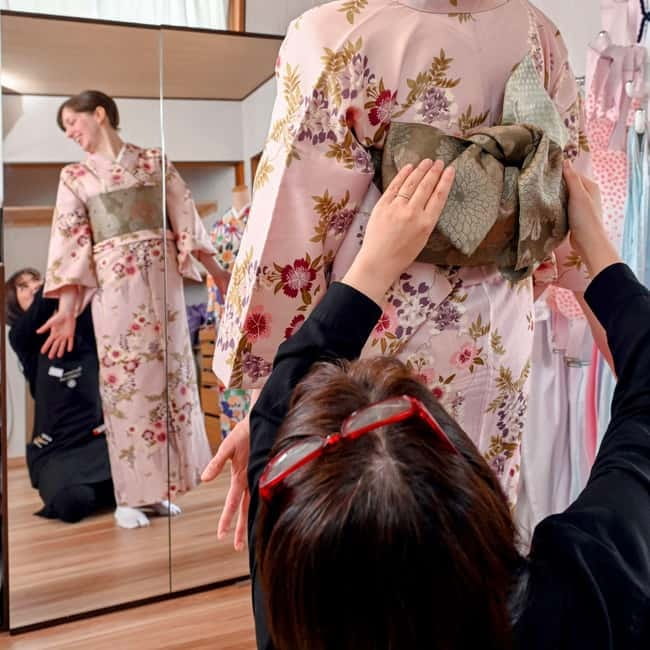
Still photography without flash is allowed, so you can take a few quiet photographs. Video recording is not permitted. If you want photos of yourself in a kimono, arrange that separately and make sure the clothing rental happens before the ceremony. A nearby kimono rental shop can be convenient, but it is easy to miss if you arrive at the last moment.
An accompanying guide may wait in the waiting room, where Wi-Fi and refreshments are available. If you plan to bring an interpreter, book a private ceremony so the translation does not interrupt a small group. Families with a baby or infant under three should also book a private ceremony at the Garden Teahouse.
Small groups, private sessions, and the English instruction
The experience is offered privately or in a small group. Group size affects how much you can ask and how directly the host can help with your own bowl.
A small group keeps the cost at $32 per person and gives the session a little social energy. You watch the same demonstration, then prepare your matcha with guidance. A private session costs more if priced differently at booking, but it makes sense for families, interpreters, couples wanting more questions, or anyone bringing a very young child.
English is the stated language. The quality of the explanation is one of the experience’s strongest features. The hosts explain the ceremony in a way that works for first-time visitors, and the instruction is generally described as clear, friendly, and well paced.
The 45-minute length also deserves credit. Kyoto offers plenty of long cultural programs, but a short session is easier to fit between temples, meals, and transport. You get the main ideas, the demonstration, and the practical activity without sacrificing an entire afternoon.
Is $32 a fair price?
At $32, the experience sits in a sensible range for a structured cultural activity in central Kyoto. The cost includes matcha, a seasonal sweet, tea-making utensils, and a personal host or instructor.
The value comes from the explanation and access to the setting, not from the quantity of food. This is not a meal, and you should not book it expecting a large tasting. The sweet is a modest accompaniment, and the tea is the center of the experience.
I would consider the price fair for first-time visitors who want cultural context. You are paying for someone to explain why the ceremony works as it does, show you the movements, answer questions, and help you prepare your own bowl.
The value is weaker if you only want to drink matcha. Kyoto has many cafés where you can do that for less. It is also less suitable if you want an advanced lesson in the complete ceremony. For a concise cultural introduction in a prime sightseeing district, however, $32 is reasonable.
Cancellation is free up to 24 hours before the activity for a full refund, and you can reserve now and pay later. Starting times vary, so check availability before planning the rest of your Higashiyama day.
Who will enjoy this most
I would recommend this to first-time visitors to Japan, tea drinkers, couples, families with older children, and anyone who wants a calm activity between major sights. It is also a good choice for solo visitors because the host provides the structure and can take questions throughout the session.
The experience suits people who enjoy learning how everyday objects carry meaning. If you like design, ritual, food traditions, or Japanese culture, you will find plenty to notice in the utensils and room arrangement.
It is less suitable for someone who dislikes floor seating, although chairs and tables are available. It is also not the right choice for a person seeking a fully formal, silent ceremony or serious professional instruction.
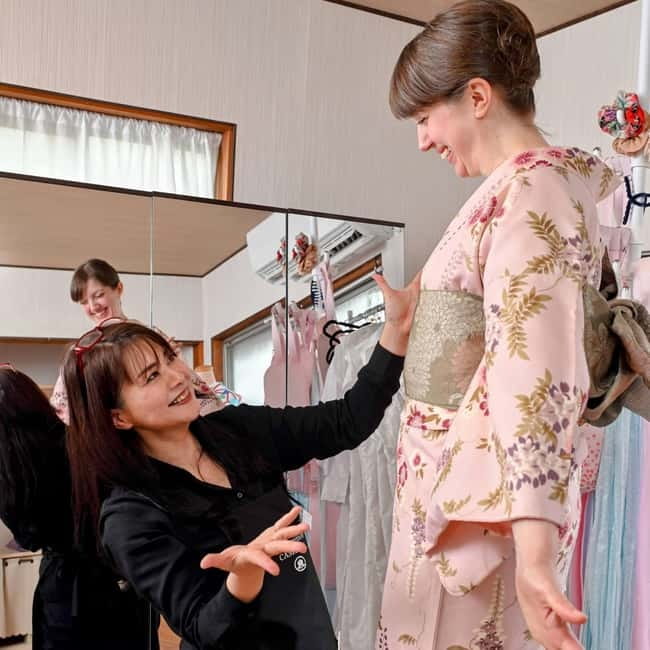
If you are considering a kimono, plan ahead. Kimono rental is not included, but a nearby shop makes the pairing possible. The clothing can make the occasion feel more special, though the tea ceremony itself does not depend on wearing one.
Should you book the Camellia Tea Ceremony?
Book it if you want a clear, well-paced introduction to Kyoto’s matcha tradition and you like the idea of making the tea yourself. The combination of demonstration, seasonal sweet, hands-on whisking, and a traditional Higashiyama setting gives you more than a simple tasting.
Skip it if your schedule is already packed, floor seating is a serious problem, or you want a complete tea-master lesson. For most visitors, though, 45 minutes is an excellent trade: enough time to understand the ritual, short enough to fit around Kiyomizu-dera, Gion, and the rest of Kyoto.
FAQ
How long does the Kyoto tea ceremony experience last?
The activity lasts 45 minutes. It includes an introduction, a tea ceremony demonstration, a seasonal sweet, and time to make your own matcha.
How much does the experience cost?
The listed price is $32 per person.
What is included in the price?
Matcha, traditional seasonal sweets, tea-making utensils, and a personal instructor or host are included.
Is the activity conducted in English?
Yes. English is the stated language for the experience.
Where is the meeting point?
The teahouse is down an alley branching from Ninenzaka in Higashiyama. It is near the Park Hyatt hotel, opposite a Studio Ghibli store, with the alley to the left of that store.
Can I make my own matcha?
Yes. After watching the host’s demonstration, you prepare your own bowl of matcha with guidance.
Is kimono rental included?
No. Kimono rental is not included. A rental shop is located nearby, so you can arrange it separately before the ceremony.
Can I take photographs or record video?
Non-flash still photography is permitted. Video recording is not allowed.
Is the tearoom accessible for people who cannot sit on the floor?
Chairs and tables are available for people who find floor seating difficult. The standard tearooms are upstairs, while the Garden Teahouse is wheelchair accessible.
Newly steeped around Kyoto
- Whisk Your Own Matcha: A Zen Matcha Experience at Temple★ 3.6 · 7 reviews
- Kyoto: Authentic Tea Ceremony in a Small Group★ 5.0 · 7 reviews
- Tea ceremony at Kyoto’s Zen Temple Teahouse★ 5.0 · 2 reviews
- Uji Walking Tour – Byodo-in temple and Tea Ceremony from Kyoto★ 3.5 · 3 reviews
- Tea Ceremony Experience in Traditional Kyoto Townhouse★ 5.0 · 19 reviews
- Tea Ceremony in 150 Years Old Townhouse with Tables and Chairs★ 5.0 · 22 reviews
- Sencha-do the Japanese Tea Ceremony Workshop in Kyoto★ 5.0 · 21 reviews
- Silent Beauty of Kyoto Zen Walk and Tea Experience★ 5.0 · 2 reviews
Tea Ceremony Experiences, compared.
Kyoto: Tea Ceremony in a Traditional Tea House in Kiyomizu
Read our review →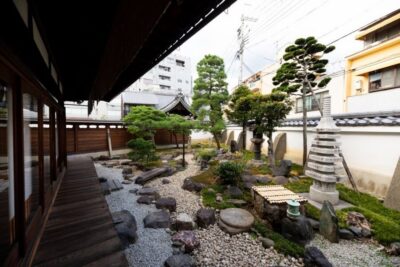
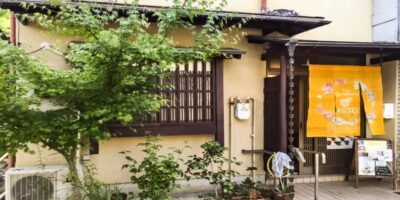
Kyoto: 45-Minute Tea Ceremony Lesson Experience
Read our review →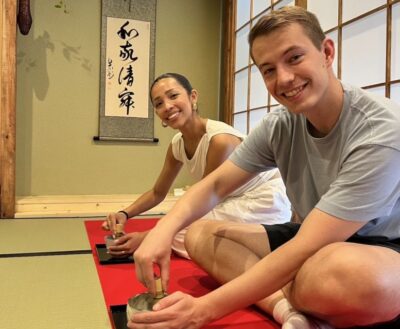
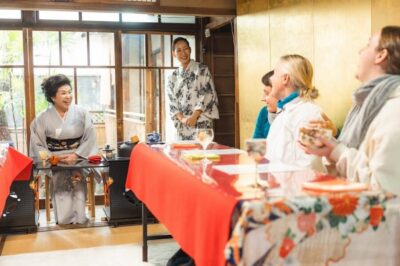
Kyoto: Table-Style Tea Ceremony at a Kyo-Machiya
Read our review →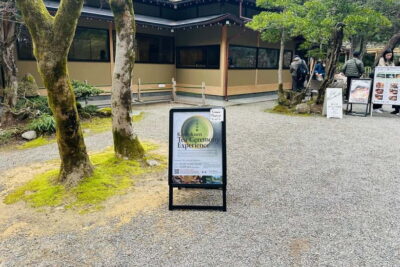

Browse the lists this tea experience appears in