
Review · KYOTO
Kyoto: Tea Ceremony with Maiko
Kyoto’s geisha world can feel distant, expensive, and hard to enter. This short program brings a maiko close enough for a real conversation, then lets you prepare matcha under her guidance. I like the direct Q&A and the chance to receive a Senjafuda lucky charm, rather than simply watching a staged performance.
I also like the location, just one minute from Gojo Station, and the modest $28 price. You get tea, two ohigashi sweets, a photo, and about 45 minutes with a maiko or geiko. The main caution is that this is held in a building, not a traditional ochaya or old Kyoto house, and English interpretation depends on availability.
Key points to know before booking
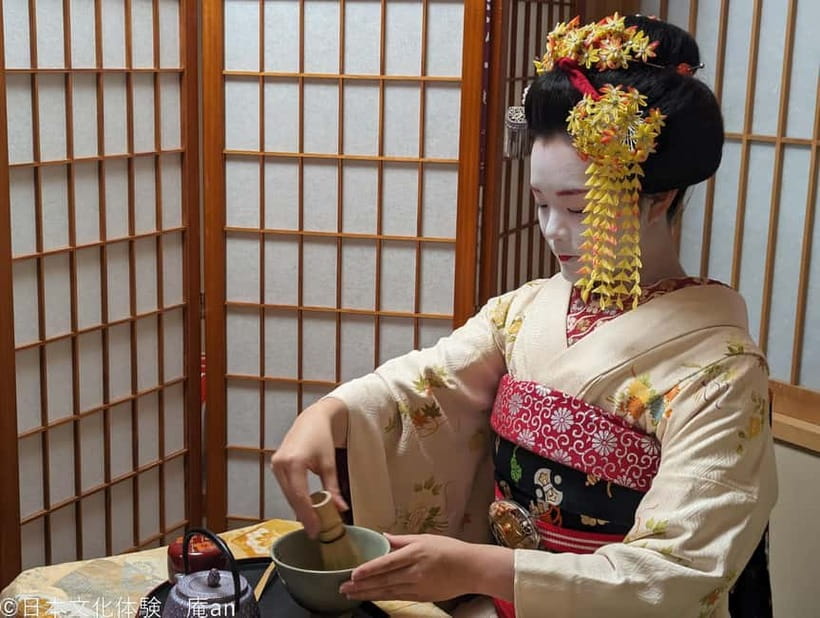
- You make your own matcha: The maiko demonstrates the process, then you whisk your tea yourself.
- The Q&A is central: Ask about daily life, training, and the path from maiko to geiko.
- You stand beside her for photos: A commemorative picture is part of the program, not an extra purchase.
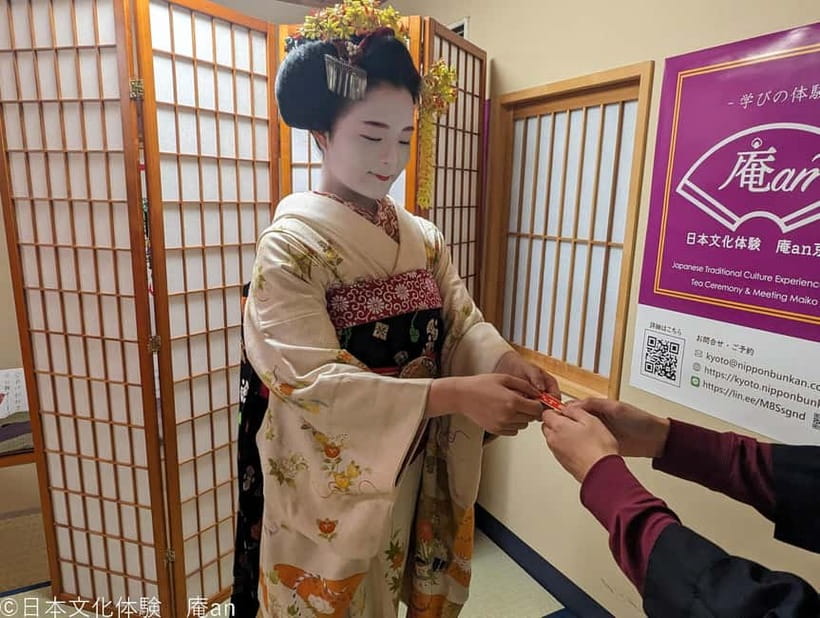
- You receive a Senjafuda: This small paper charm is presented as a keepsake at the end.
- Gojo Station is the practical advantage: Exit 1 is about a one-minute walk from the venue.
- Allow extra time for stairs: The building has no elevator, and late arrivals cannot be accommodated.
A close look at Kyoto’s maiko tradition
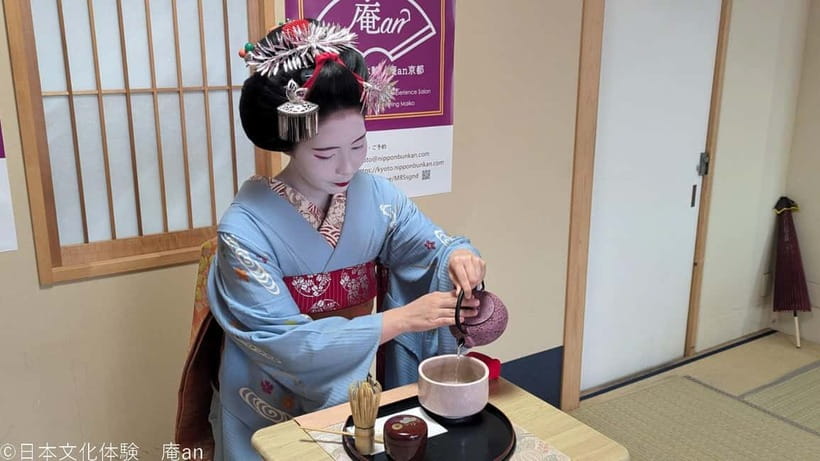
A maiko is an apprentice geisha, known for elaborate dress, traditional makeup, and formal entertainment arts. A geiko is an established professional. This experience may feature either one, depending on the date, so check the booking details if meeting a maiko specifically matters to you.
That distinction gives the program more substance than a simple costume photo stop. You can ask about the work behind the appearance, the route toward becoming a geiko, and the routines that shape this unusual profession. Masaya San has hosted sessions where she answered questions in Japanese while an interpreter helped everyone follow along.
I value that format. A short lecture gives you the basic frame, but the questions are where the encounter becomes personal. You can ask directly instead of relying on a guide’s prepared explanation. Since the activity is conducted in Japanese, request English translation when booking or before the session begins. Help is provided as much as possible, but it should not be treated as a fully English-led tour.
More Tea Ceremonies in Kyoto
- Kyoto: Tea Ceremony in a Traditional Tea House in Kiyomizu
★ 4.9 · 3,519 reviews - Kyoto: Tea Ceremony Ju-An at Jotokuji Temple
★ 4.9 · 3,207 reviews - Kyoto: 45-Minute Tea Ceremony Lesson Experience
★ 4.3 · 2,378 reviews
The 45-minute schedule, minute by minute
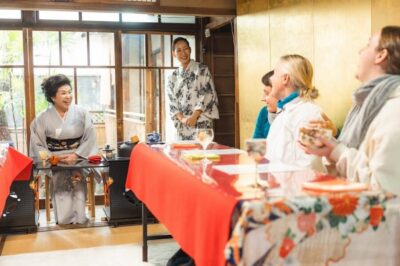
The program begins with a greeting from the maiko or geiko. The opening is brief, which is useful if you have only a few hours in central Kyoto. This is not a half-day cultural program. It is a compact introduction that fits before a train, lunch, or another sightseeing stop.
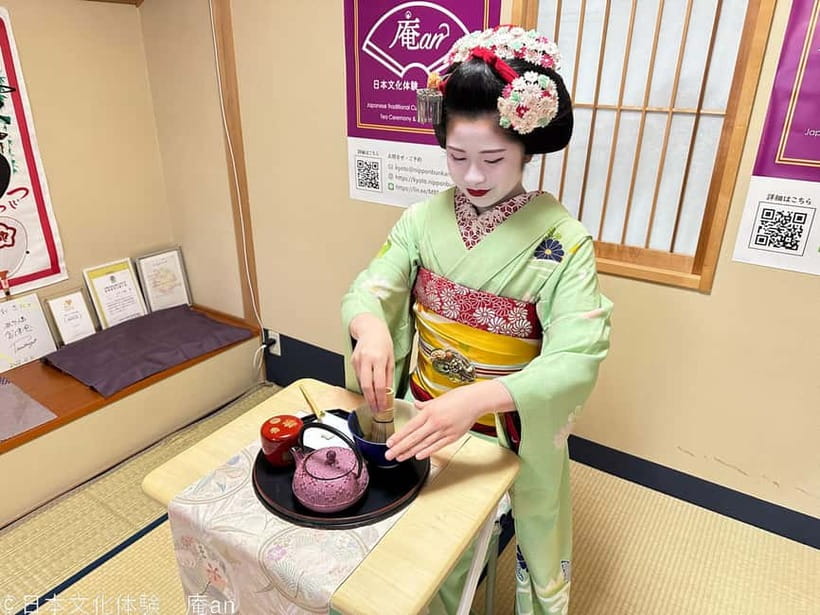
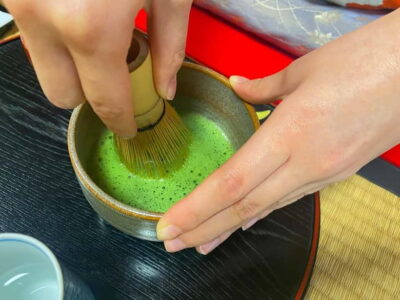
The tea portion follows. The host explains how to prepare matcha and demonstrates the proper method. You then make your own cup. That hands-on step matters. Watching a tea ceremony can be graceful but passive, while whisking the tea gives you a small physical connection to the custom.
You are served two dried Japanese sweets called ohigashi with the matcha. Their dry texture and measured sweetness suit the slightly bitter tea. They are small, so this is a tasting rather than a meal. If you are expecting a full tea service or a substantial snack, plan to eat elsewhere.
At roughly the 30-minute point, the group moves into questions. This is one of the strongest parts of the activity. You can ask about the maiko’s lifestyle and the process of becoming a geiko. The conversation also helps explain why the costume, makeup, and formal behavior are more than photo props.
The final part is the photo opportunity. You can take a commemorative picture beside the maiko or geiko, then receive a Senjafuda. The host leaves after this part, while you depart the room at about 45 minutes.
The timing is clear and efficient, though it also means the experience does not leave much room for long conversation. If your group has many questions, the available time can pass quickly.
Making matcha instead of only watching
The tea lesson is simple enough for first-time participants. You do not need special preparation, and the staff presents the process in a friendly, relaxed way. The point is not to turn you into a tea master in one sitting. It is to show you the basic movements and let you prepare a cup with your own hands.
I like this balance because it avoids making the ceremony feel intimidating. You can take part without knowing Japanese tea etiquette in advance. The sweets give you a traditional pairing, while the maiko’s demonstration provides the cultural setting.
Keep your expectations measured. This is a short introductory tea experience, not a formal tea-school lesson or a visit to a historic tea house. The venue is inside a building, and the room has a relaxed atmosphere rather than the polished silence of an old machiya or ochaya.
That can be a benefit for many people. You are less likely to worry about making a mistake, and the staff is there to explain how the program works. Families and first-time visitors may find this easier than a stricter ceremony.
Questions that turn a photo opportunity into a real meeting
The maiko encounter works best if you arrive with two or three questions ready. You might ask about the training period, daily life, the transition to geiko, or what visitors often misunderstand about the profession. The supplied information specifically presents the Q&A as a major part of the program, so it deserves more attention than a quick photo at the end.
English support can make a large difference. Some sessions have included an interpreter who explained the maiko’s answers clearly. Still, the instructor language is Japanese, and translation is offered as much as possible rather than promised as a fully dedicated English guide.
That is the most important communication point when deciding. If you want a detailed discussion and do not speak Japanese, contact the operator to request English help. If your priority is seeing the costume, preparing tea, and getting a photo, limited translation may be less of a concern.
The experience also gives you a respectful way to meet a maiko. You are not trying to spot one in Kyoto’s streets or interrupt someone on the way to work. The meeting is arranged, and the questions take place in a setting intended for cultural exchange.
Same leaf, a different ritual:
- Kyoto: Table-Style Tea Ceremony at a Kyo-Machiya
★ 4.9 · 1,211 reviews - Kimono Tea Ceremony at Kyoto Maikoya, NISHIKI
★ 5.0 · 911 reviews - Arashiyama Bamboo, Temple, Monkeys, or Secret Sake Brewery
★ 4.8 · 886 reviews - Kyoto: Arashiyama Bamboo Forest, Monkeys, Matcha & Temple Tour
★ 5.0 · 759 reviews
Photos, the Senjafuda, and what you actually take home
The photo is taken beside the maiko or geiko near the end of the session. It is a useful souvenir because the meeting is the focus of the program, not an incidental picture taken from a distance. The activity includes the opportunity, so you do not need to budget for a separate photo package.
You also receive a Senjafuda. Traditionally, senjafuda are small name or prayer slips associated with temples, shrines, and Japanese cultural practice. Here, it is presented as a lucky charm from the maiko. It is lightweight and easy to pack, but it carries more meaning than a generic printed souvenir.
You should still remember that the photo setup may be shared with other participants. The supplied details do not promise private time or a private room for each booking. The program may also be held alongside people having lunch or dinner, so the setting may feel more social than ceremonial.
Is $28 good value for 45 minutes?
At $28 per person, this is priced as a short cultural activity rather than a luxury evening with a geisha. The included elements are useful: a maiko or geiko greeting, matcha preparation, two sweets, questions, a photo opportunity, and a Senjafuda gift.
I consider the price fair if you want a compact introduction and are already planning to be near central Kyoto. You are paying for access to a meeting that would be difficult to arrange independently, plus a hands-on tea activity. The low cost also makes it easier to add to a busy Kyoto schedule.
The value drops if you expect a long performance, a historic tea-house setting, a private conversation, or a full meal. The stated program lasts 45 minutes, and the core experience is a demonstration, your own cup of matcha, questions, and a photo.
Children who need their own seat pay the standard per-person rate. Children under two who sit on a parent’s lap are free. This is a practical point for families comparing the total cost.
Finding the venue near Gojo Station
The meeting point is one minute from Exit 1 of Gojo Station on the Subway Karasuma Line. The entrance faces Gojo-dori, the main street. That central position is one of the activity’s best features, especially if you are using the subway rather than crossing Kyoto by bus.
The entrance can be easy to miss. One useful approach is to leave through Exit 1, walk straight, cross a small street, and continue until you find the location above the Carnival supermarket. You then go upstairs.
The building has no elevator, so you need to use stairs to reach the venue. This is important for anyone carrying a stroller, using a wheelchair, or avoiding stairs. The supplied information does not describe an elevator or an alternative accessible entrance.
Give yourself a buffer before the start time. The program cannot be held for late arrivals, and latecomers do not receive a refund. Kyoto’s stations and streets can take longer than expected, even when a venue is close on the map.
Who will enjoy this short Kyoto experience?
I would recommend it most strongly to first-time visitors who want an introduction to maiko culture without committing to an expensive dinner or a long evening program. It also suits you if your Kyoto schedule is tight and you want an activity close to the station network.
It is a good match for people who enjoy asking questions, not just taking pictures. The Q&A gives the experience its strongest cultural value. Prepare a few questions in advance and request English assistance if needed.
Families can join, provided they account for the seating charge for children who need their own place. The relaxed room and straightforward tea lesson make it approachable for beginners.
You may want a different experience if your main goal is an old wooden house, a formal private tea ceremony, or a lengthy artistic performance. This program takes place in a building with a casual atmosphere. Depending on the date, the host may be a geiko rather than a maiko, so confirm that detail if it is essential.
Practical booking advice
Operating hours are 10:00 AM to 5:00 PM, and reservations received after 5:00 PM are processed the next day. The activity itself runs for 45 minutes, with the main program ending around the 30-minute mark and the room departure around 45 minutes.
The cancellation policy allows a full refund when you cancel at least eight days in advance. Changes to the date or time within seven days of booking incur a fee, and cancellation charges can apply for other changes. Read the exact terms before booking, especially if your Kyoto schedule is unsettled.
The provider is B.B.Advisors Inc. AN KYOTO. The instructor language is Japanese, with English translation available as much as possible upon request. No special clothing or preparation is required.
Should you book the maiko tea ceremony?
Book it if you want an affordable, compact meeting with a maiko or geiko, especially near Gojo Station. The strongest reasons are the hands-on matcha preparation, the direct Q&A, and the chance to receive a Senjafuda rather than only watching from a distance.
Skip it if you need a traditional-house setting, guaranteed English interpretation, or a long private performance. For most visitors with realistic expectations, $28 buys a pleasant and unusual 45-minute glimpse into Kyoto culture, with a keepsake and a photo to carry onward.
FAQ
How long does the tea ceremony with a maiko last?
The full experience lasts 45 minutes. The main program reaches its end at about 30 minutes, followed by photos, the Senjafuda presentation, and room departure around 45 minutes.
How much does the experience cost?
The price is $28 per person.
What is included in the activity?
The activity includes the tea ceremony with a maiko or geiko, two dried Japanese sweets, matcha, a photo opportunity, and a Senjafuda gift.
Will the host always be a maiko?
No. Depending on the date, the experience may be hosted by a geiko instead of a maiko.
Can I make my own matcha?
Yes. The host demonstrates how to prepare the tea, then you make your own cup.
Are English explanations available?
English translation is provided as much as possible if requested. The instructor language is Japanese, so contact the operator if you would like English assistance.
Where is the meeting point?
The venue is a one-minute walk from Exit 1 of Gojo Station on the Subway Karasuma Line. The entrance faces Gojo-dori.
Is there an elevator at the venue?
No. The building has no elevator, and you must use stairs to reach the venue.
Are children charged the full price?
Children who require their own seat pay the same fee as one person. Children under two who sit on a parent’s lap are free.
Can I cancel for a full refund?
You can cancel up to eight days in advance for a full refund. Changes or cancellations within the stated restricted period may incur fees, so check the cancellation terms before booking.
Newly steeped around Kyoto
- Whisk Your Own Matcha: A Zen Matcha Experience at Temple★ 3.6 · 7 reviews
- Uji Walking Tour – Byodo-in temple and Tea Ceremony from Kyoto★ 3.5 · 3 reviews
- Kyoto: Authentic Tea Ceremony in a Small Group★ 5.0 · 7 reviews
- Tea ceremony at Kyoto’s Zen Temple Teahouse★ 5.0 · 2 reviews
- Tea Ceremony Experience in Traditional Kyoto Townhouse★ 5.0 · 19 reviews
- Tea Ceremony in 150 Years Old Townhouse with Tables and Chairs★ 5.0 · 22 reviews
- Sencha-do the Japanese Tea Ceremony Workshop in Kyoto★ 5.0 · 21 reviews
- Silent Beauty of Kyoto Zen Walk and Tea Experience★ 5.0 · 2 reviews
Tea Ceremony Experiences, compared.
Kyoto: Tea Ceremony in a Traditional Tea House in Kiyomizu
Read our review →
Kyoto: 45-Minute Tea Ceremony Lesson Experience
Read our review →
Kyoto: Table-Style Tea Ceremony at a Kyo-Machiya
Read our review →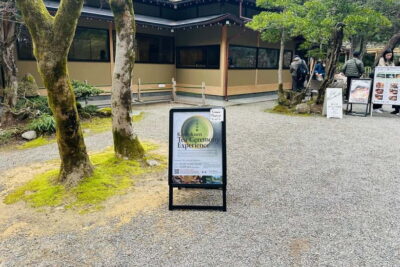


Browse the lists this tea experience appears in