
Review · JAPAN
Tea Ceremony in a Century-old Japanese Town House
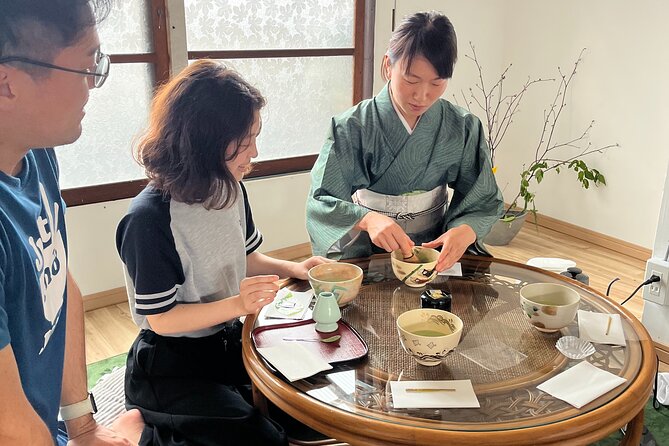
Beppu’s tea ceremony lesson pairs a local instructor in kimono with an English-speaking interpreter, so you are not left guessing why each bow, movement, or utensil matters. The setting is a century-old Japanese townhouse, though its interior has been modernized for use as a community space.
I like the patient, hands-on teaching and the chance to make your own matcha instead of only watching. I also like the small sweet served with the tea, since it shows how Japanese sweets balance matcha’s bitter edge.
The main caution is value. At $45.61 per person for about an hour and one cup of tea, this may feel brief if you expect a formal ceremony in a traditional tatami room or several teas to taste.
Key points at a glance
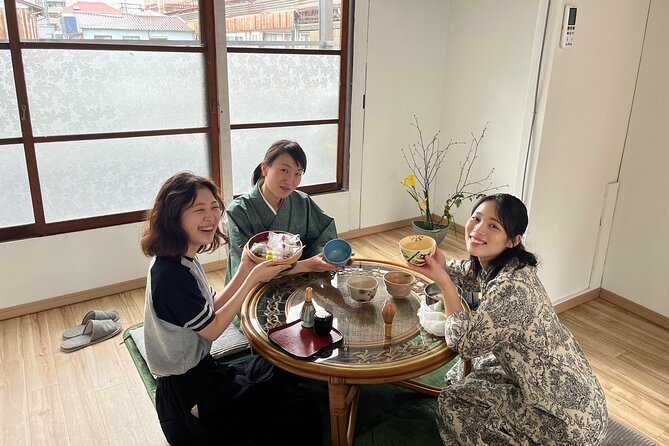
- A century-old Beppu townhouse: The building gives the experience a local setting, although the interior has been recently modernized.
- A kimono-clad local instructor: You watch a professional demonstrate the ceremony before trying the process yourself.
- English interpretation throughout: An interpreter explains the history, etiquette, and cultural meaning step by step.
- One hands-on matcha preparation: You make your own cup after the demonstration, then drink it with a Japanese sweet.
- Private participation: Only your group takes part, which makes it easier to ask questions and laugh through mistakes.
- A compact one-hour activity: It fits neatly into a Beppu sightseeing day, but the short length limits how much tea culture you can cover.
Entering Space Beppu in central Beppu
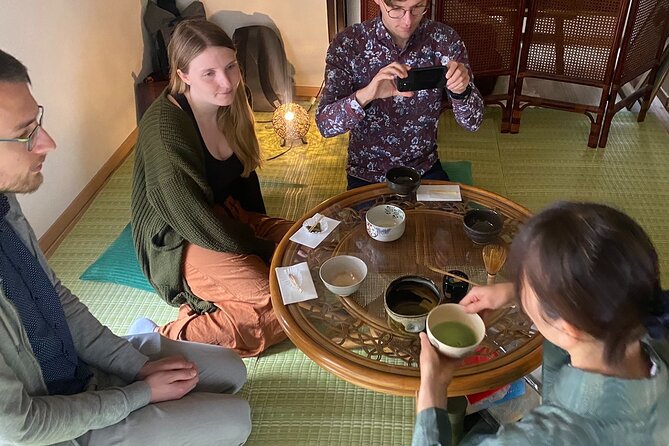
The activity begins and ends at Space Beppu, at 12-9 Chiyomachi, Beppu, Oita 874-0942. The meeting point is near public transportation, so you can fit it into a day of exploring Beppu without arranging a separate excursion outside the city.
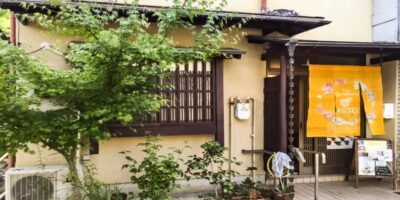
The address is part of the experience. You are not being sent to a large hotel ballroom or a purpose-built cultural center. Space Beppu occupies a townhouse more than a century old, now adapted for community use. That age gives the lesson a sense of place, even though you should not picture an untouched historic tea house.
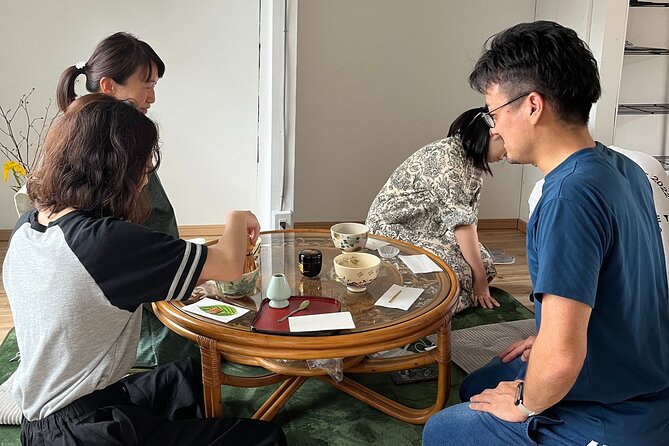
The modernized interior is an important detail. If you want a highly formal room with old furnishings, tatami, and a quiet atmosphere built around ceremony alone, this may not match the picture in your head. The space is practical and updated, which helps with interpretation and teaching but softens the traditional feel.
I would arrive early. Late arrival can disrupt the demonstration, and arriving without advance notice may lead to a cancellation charge of up to 50 percent of the activity fee. You have only about an hour, so even a small delay takes away from the part where you actually prepare tea.
More Tea Ceremonies in Japan:
- Kyoto: Tea Ceremony in a Traditional Tea House in Kiyomizu
★ 4.9 · 3,519 reviews - Kyoto: Tea Ceremony Ju-An at Jotokuji Temple
★ 4.9 · 3,207 reviews - Kyoto: 45-Minute Tea Ceremony Lesson Experience
★ 4.3 · 2,378 reviews
An interpreter turns etiquette into a story
Tea ceremony can look simple from the outside. A person cleans a utensil, scoops powder, adds hot water, and whisks. The meaning sits in the order, gestures, posture, and respect shown to the host and other people in the room.
The English-speaking interpreter explains those details as you go. You learn about the ceremony’s history, etiquette, and cultural importance rather than copying movements without context. That makes a real difference for first-time visitors. A bow or hand movement that seems fussy at first becomes easier to understand when you know what it communicates.
The format also gives you room to make mistakes. The teaching is patient, and the tone is not severe. You can expect some laughter when your technique is not perfect, while still learning that the steps have purpose. This balance is one of the strongest reasons to choose this activity over a demonstration where you simply sit and watch.
Because the session is private for your group, you should have a more personal setting than a large public class. You can ask questions through the interpreter and take your time with the parts you find confusing. The private format is especially useful for families, couples, or friends who want to learn together rather than perform in front of strangers.
Watching the professional demonstration
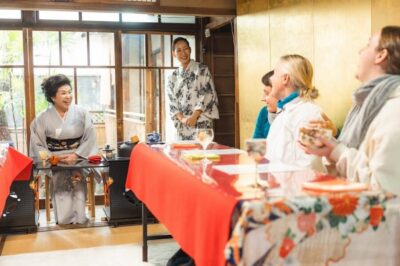
The lesson begins with a demonstration by a local professional dressed in traditional kimono. Watch the order of the movements closely. The demonstration is not just a performance before the real activity begins. It gives you a model for the preparation you will later try yourself.
The instructor’s clothing adds a visual link to Japanese tradition, even though the room itself is modern. You see the contrast clearly: a traditional craft taught in an old building that has been given a new public role. That combination makes the experience feel connected to present-day Beppu rather than staged as a museum display.
The demonstration also sets expectations. Japanese tea ceremony is not about gulping down a drink or sampling a menu of teas. Matcha is normally served as the central tea, and the ceremony focuses on preparation, attention, and hospitality. If you arrive expecting multiple varieties, a tea flight, or a long tasting, you may find the program too limited.
I recommend watching the hands rather than trying to take photographs throughout. The process moves in an orderly way, and the later hands-on section is more useful if you have paid attention to the sequence.
Making one bowl of your own matcha
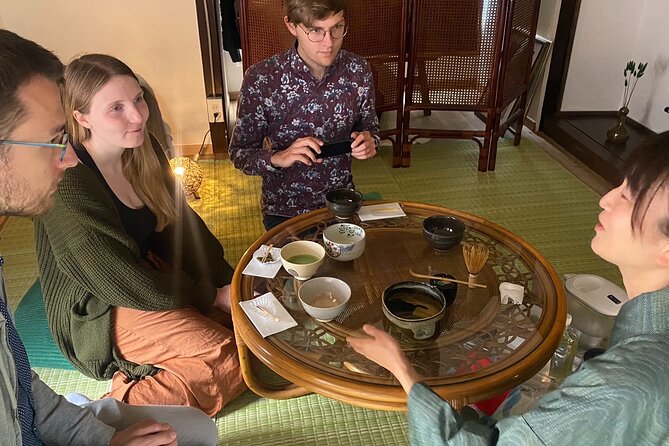
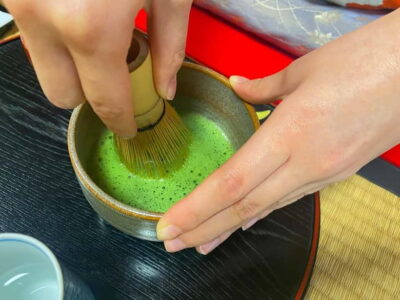
After the demonstration, you get to prepare your own cup of matcha. This is the moment that turns the lesson from a cultural talk into a practical activity. You handle the preparation yourself, follow the instructor’s directions, and then taste what you made.
The lesson is not designed as a full tea-making workshop with repeated attempts. You should expect one cup rather than several rounds. That limitation is worth knowing before you book. One cup gives you a clear introduction, but it may not satisfy you if your main goal is to practice whisking until your technique improves.
The hands-on approach works well for beginners. You do not need prior knowledge of tea ceremony etiquette, and the interpreter helps you follow the steps. If you make an error, the instructor can guide you through it instead of letting you worry that you have ruined the activity.
Matcha has a strong, earthy bitterness that can surprise people who expect ordinary green tea. A Japanese sweet is served alongside it, and the sweetness helps balance the tea. This pairing is not just a snack added for comfort. It shows how the food and tea are meant to work together.
The tasting is therefore focused rather than broad. You learn how one type of tea fits into the ceremony, rather than comparing matcha with several loose-leaf teas or flavored blends. I see that as a good point for anyone interested in traditional practice, but a weak point for anyone seeking variety.
More Tea Experiences around Japan:
- World Heritage Kyoto & Nara Uji Authentic Matcha Experience
★ 5.0 · 1,573 reviews - Osaka: Tea Ceremony Experience
★ 4.9 · 1,426 reviews - Kyoto: Table-Style Tea Ceremony at a Kyo-Machiya
★ 4.9 · 1,211 reviews - Kanazawa: Kenrokuen Tea Ceremony Experience
★ 4.8 · 1,139 reviews
What the townhouse setting adds, and what it does not
A century-old building is a meaningful part of the experience. In Japan, older urban townhouses are not always easy to preserve, so entering one gives you a glimpse of a type of local architecture that differs from modern hotels and shopping streets.
Still, the building has been recently modernized. I would treat it as an old structure adapted for today’s community use, not as a preserved tea room frozen in time. The setting supports the lesson, but the instructor and explanation carry much of the cultural content.
That distinction matters when you judge the price. The $45.61 fee pays for a private, interpreted lesson, a professional demonstration, your own matcha preparation, and the sweet served with it. It does not buy a long ceremony, a full meal, several teas, or an elaborate historic-room setting.
For some people, that is fair value. You receive direct instruction and a cultural experience that is difficult to recreate on your own. For others, the one-hour length and single serving may make the price feel high. I would book it for the teaching and personal interaction, not for quantity.
Why the private format can work well
Only your group participates, which changes the mood. You can ask questions without worrying about holding up a large class, and you can share the activity with the people you are traveling with. A private session can also make it easier to laugh at small mistakes without feeling self-conscious.
The private arrangement may suit travelers who want a gentle introduction rather than a strict ceremonial presentation. It is also useful if your group has mixed levels of interest. One person can focus on the history, another on the utensils and movements, and everyone still takes part in making tea.
Group discounts are available, though the exact reduction is not provided. If you are traveling with several people, check the final price for your party before booking. The private format and any group saving may improve the value for a family or small group.
The short duration is another advantage. You can place the experience between other Beppu plans instead of committing half a day. The tradeoff is that the session will not cover every layer of tea ceremony culture. Think of it as a focused introduction.
Who will get the most from this Beppu activity
I would recommend this experience to you if you want three things: clear English explanation, a chance to participate, and a local setting with some historical character. It is especially suitable if you have never attended a tea ceremony and want to understand the basic customs without signing up for a longer formal program.
It also suits visitors who prefer cultural activities with a human element. The instructor guides you through the steps, and the interpreter helps turn unfamiliar etiquette into something you can follow. The atmosphere allows for mistakes, which makes the lesson less intimidating than a silent ceremony where you are expected to know the rules.
You may want to choose another activity if your priority is a grand traditional room, several types of tea, or a longer meal-style event. The setting is modernized, the session lasts about an hour, and the focus is one matcha preparation with one sweet.
Families and small groups should find the format manageable, though the available information does not specify a minimum age or particular child arrangements. If you are booking with young children, confirm that the pace and seating setup suit your group.
Planning the hour without rushing
Confirmation is sent within 48 hours of booking, subject to availability. The activity is usually booked well ahead, with an average booking lead time of about 41 days. I would reserve early if your Beppu dates are fixed, particularly if you want a specific day or are traveling in a group.
You receive a mobile ticket, and the meeting point is close to public transportation. The activity returns to the same location, so you do not need to arrange a separate end point. Build in enough time to find Space Beppu and arrive before the scheduled start.
The cancellation terms are friendly if your plans change early. You can receive a full refund when you cancel at least 24 hours before the start time. Cancellations or changes inside that window are not accepted for a refund, and late arrival without notice can result in a charge of up to half the activity price.
The experience is offered as a private activity, but group discounts may be available. Since the total time is only about an hour, plan your next activity with a little breathing room rather than scheduling it immediately afterward.
Is the $45.61 price fair?
I would call the price reasonable for a private, interpreted introduction, but not a bargain for tea alone. The real value comes from the combination of an English-speaking interpreter, a local instructor, a kimono demonstration, hands-on preparation, and access to a century-old community space.
You are paying for understanding as much as for the drink. Without an interpreter, the ceremony’s gestures could be easy to copy but hard to grasp. Without the hands-on portion, you might leave with photographs but no sense of how the whisking and etiquette feel in practice.
The price becomes harder to justify if you judge the activity by volume. You receive one cup of matcha and one sweet, and the session is about an hour. There are no stated tastings of multiple teas, and the modernized room may not provide the formal atmosphere some people expect.
My advice is simple: book it if you value context and participation. Skip it if you mainly want to sample tea or see an untouched traditional interior.
Should you book the Space Beppu tea ceremony?
I would book this for a first introduction to Japanese tea ceremony in Beppu, especially if you appreciate patient instruction and want to take part instead of sitting through a performance. The interpreter, kimono-clad instructor, private group format, and matcha preparation give the hour a clear purpose.
I would hesitate only if you expect a lavish setting, several cups, or a broad tea tasting. The experience is compact and focused, with a modernized interior and one serving.
For the right visitor, the best part is not the amount of tea. It is learning why the preparation matters, then trying the movements yourself in a relaxed setting. If that sounds like the kind of cultural lesson you want in Beppu, the price can make sense.
FAQ
Where does the tea ceremony take place?
It takes place at Space Beppu, located at 12-9 Chiyomachi, Beppu, Oita 874-0942. The activity ends back at the same meeting point.
How long does the experience last?
The tea ceremony lasts approximately one hour.
Is the activity conducted in English?
An English-speaking interpreter explains the history, etiquette, and cultural importance of the tea ceremony throughout the activity.
Do I get to make my own matcha?
Yes. After watching the local instructor’s demonstration, you are invited to prepare your own cup of matcha.
Is the activity private?
Yes. Only your group participates in the private tour or activity.
Can I cancel for a full refund?
Yes, if you cancel at least 24 hours before the scheduled start time. Cancellations or changes made less than 24 hours before the start are not accepted for a refund.
Newly steeped around Japan
- Yokohama : Tea Ceremony with Sweets and Souvenir★ 5.0 · 5 reviews
- Whisk Your Own Matcha: A Zen Matcha Experience at Temple★ 3.6 · 7 reviews
- Walking Tour: Yanaka,Nezu& Sendagi: Tea Ceremony & Old Tokyo★ 5.0 · 3 reviews
- Visit local home for music and tea ceremony near Disney★ 4.9 · 13 reviews
- Trip to Kamakura & Enoshima: Shrines, Seaside, Temples &Tea★ 5.0 · 11 reviews
- Yokohama: Sushi & Gyoza Cooking with Matcha & GreenTea Experience★ 5.0 · 3 reviews
- Kyoto tea town for matcha lovers★ 5.0 · 16 reviews
- Uji: Private immersion into Kyoto’s tea and reglious culture★ 5.0 · 17 reviews
Tea Ceremony Experiences, compared.
Kyoto: Tea Ceremony in a Traditional Tea House in Kiyomizu
Read our review →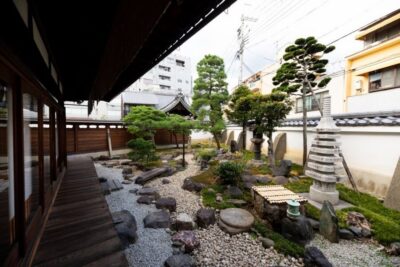
Kyoto: 45-Minute Tea Ceremony Lesson Experience
Read our review →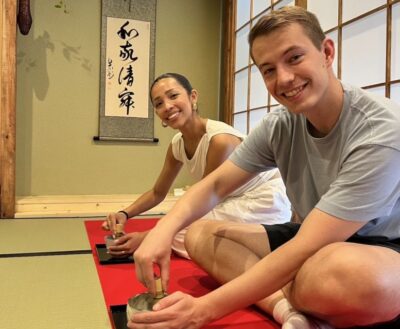
Kyoto: Table-Style Tea Ceremony at a Kyo-Machiya
Read our review →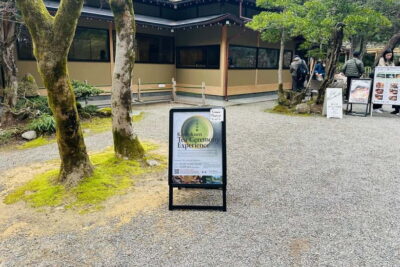


Browse the lists this tea experience appears in