
Review · SHANGHAI
Afternoon Tea and Dessert Tour on the Huaihai Road in Shanghai
Shanghai’s sweet side comes into focus on this three-hour walk along Huaihai Road, where mooncakes, fragrant tea, and Cantonese puddings tell a more personal story than a standard sightseeing stop. You move from pastry shops to a tea house, then finish with chilled desserts in the Former French Concession.
I like the small-group format, which keeps the tea ceremony easy to follow and gives you room to ask questions. I also like the range of tastes: savory and sweet mooncakes, pu-erh and jasmine tea, then mango purée, almond tofu, and milk pudding with purple sticky rice. The main drawback is that this is a walking and tasting tour, not a full meal, and the $82 price is high if you mainly want a quick snack.
Key points at a glance
- Mooncakes at two pastry shops: Compare fillings and learn why the round cakes symbolize family reunions.
- A proper tea ceremony: Taste pu-erh, ginseng oolong, jasmine, and Fujian black tea while learning about cups, water temperature, and serving customs.
- A relaxed three-stop route: The tour links Huaihai Road, Xintiandi, and the Former French Concession.
- Desserts beyond the usual bakery fare: Expect milk pudding, purple sticky rice, mousse cake, papaya, mango purée, and almond tofu.
- A compact afternoon schedule: Meet at 2:00 p.m. and finish after about three hours, with no hotel pickup or drop-off.
- Small-group attention: Bookings are limited to 10 people, while the activity information gives a maximum of 15 overall.
Why this Huaihai Road food walk works
I see this as a gentle introduction to Shanghai food culture rather than a race from one famous shop to the next. The route gives each part of the afternoon a clear job. The mooncakes introduce seasonal pastry traditions, the tea house explains the drink that accompanies them, and the Cantonese dessert stop shows how Chinese sweets can be cool, soft, fragrant, and much less sugary than many Western desserts.
That order also makes practical sense. You taste pastry first, then slow down for tea, and end with cold desserts. The afternoon begins at 2:00 p.m., a useful time if you have spent the morning touring Shanghai’s major sights and want something calmer.
The tour is conducted in a small group, with a stated booking limit of 10 people. Another activity limit lists a maximum of 15, so group size may vary by departure, but you should expect a fairly intimate outing rather than a large bus tour. Guides such as Jim have been singled out for clear explanations and enthusiasm, especially during the tea preparation.
More Afternoon Tea in China:
- Shanghai 3-Hour Afternoon Tea Tasting and Dessert Tour
★ 4.9 · 15 reviews - 3-hour Morning/Afternoon Tea Tasting on Maliandao Street & Dimsum
★ 5.0 · 7 reviews - Classic Afternoon Tea Voyage in Hong Kong for 4 Pax
★ 4.0 · 4 reviews
Starting among the shops of Huaihai Road
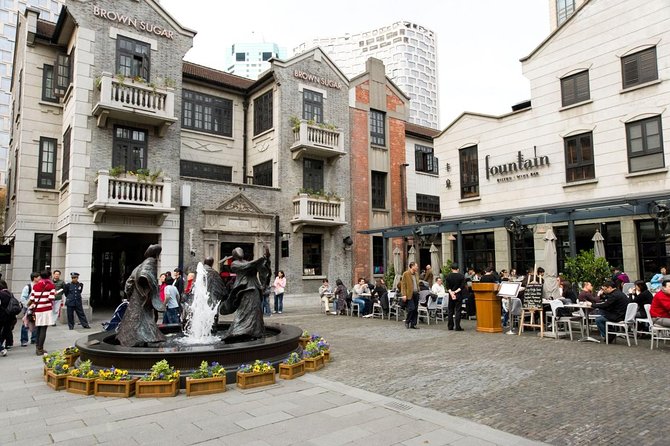
You meet your guide at 333 Huai Hai Zhong Lu at 2:00 p.m. Huaihai Road is one of central Shanghai’s best-known shopping and food streets, so the opening walk gives you a sense of the city as it is lived today. This is not a tour built around grand monuments. Its subject is the everyday pleasure of buying something sweet, putting the kettle on, and sharing food.
The first tasting takes place at two pastry shops. The focus is on mooncakes, the round pastries traditionally associated with the Mid-Autumn Festival. Their shape represents family reunion, and they are commonly served with tea.
This is one of the better details of the tour because mooncakes are not simply generic cakes. Their fillings can be sweet or savory, and the pastry coating gives each one a compact, rich texture. Sampling them at two shops lets you compare styles instead of accepting a single example as the whole story.
You should not expect a full bakery crawl. The tour description does not promise a large number of pastries, and the emphasis is on learning how mooncakes fit into Chinese food customs. If you have a sweet tooth, this opening portion should be satisfying. If you prefer a substantial lunch, eat beforehand.
Mooncakes with a bit of cultural context
A good food tour explains why a dish matters, and mooncakes provide plenty to discuss. You learn why they are linked with the Mid-Autumn Festival, how tea is served alongside them, and why round food carries such a strong family meaning.
I like that the explanation is tied to what you are eating. Cultural information can feel dry when delivered in a lecture, but a pastry in your hand gives the subject a practical anchor. You can notice the filling, the pastry, and the way tea changes the experience.
The timing also matters. Mooncakes are especially associated with the Mid-Autumn Festival, but this tour gives you a chance to taste them outside that holiday period as well. The information is useful if you later see mooncakes in a bakery or gift shop and want to understand what you are looking at.
Dietary needs should be reported when you book. The supplied details do not identify specific vegetarian, dairy-free, nut-free, or gluten-free alternatives, so you should not assume substitutions will be available.
The tea house near Xintiandi
After the pastry stops, you sit down at a tea house near the dessert shops in the Xintiandi area. This is the central part of the experience, lasting about an hour, and it changes the pace from walking and sampling to watching and tasting.
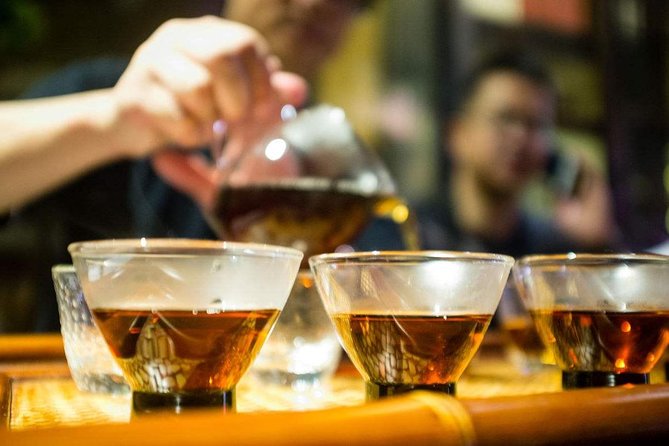
The tea ceremony introduces several varieties, including pu-erh, ginseng oolong, jasmine tea, and black tea from Fujian. These are not interchangeable cups of hot liquid. Each has its own aroma, strength, and serving approach, and tasting them side by side helps you notice the difference.
The guide explains the role of cup size and water temperature. That may sound like a small technical point, but it is exactly the sort of detail that improves your experience in China. Tea is not always brewed with boiling water and poured into one large mug. Different leaves call for different treatment, and the serving vessels are part of the ritual.
You also hear about China’s long tea tradition and the way tea drinking gained favor in the West during the 1800s. The historical material supports the tasting without taking over the afternoon. I would pay close attention here, since the tea house portion offers the clearest sense of etiquette and technique.
Several strong guide comments focus on this part of the tour. Jim is described as passionate and informative, and the tea master demonstration has been especially useful for showing how flavors change through repeated rinses and refills. That is a practical lesson you might miss if you simply order one cup at a café.
More Tea Experiences around China:
- One-Day Hangzhou Dragon Well Tea Culture & West Lake Private Tour
★ 5.0 · 98 reviews - Traditional Chinese Tea Ceremony Experience
★ 4.7 · 74 reviews - Beijing Culture: Tea Ceremony, Heritage Instrument & Calligraphy
★ 5.0 · 57 reviews - Tea Tasting and Pairing Concept Workshop
★ 5.0 · 57 reviews
What the tea ceremony adds
The tea ceremony is more than a pause between snacks. It gives you a way to understand the relationship between drink, hospitality, and food. A mooncake can taste heavy on its own. Tea cuts through that richness and changes how you notice the filling and pastry.
I also appreciate the slower rhythm. Shanghai can be an intense city, with traffic, crowds, tall buildings, and a long list of sights. Sitting for an hour with several teas gives you a quiet break without wasting an afternoon.
The experience is not designed for someone who wants to rush in, take a photo, and leave. You need to be willing to watch the preparation and listen to explanations. If tea is already a major interest, this is likely the strongest part of the tour. If you are mainly looking for dessert, the ceremony still gives useful context, but it occupies a large share of the three-hour schedule.
Cantonese sweets in the Former French Concession
The final stop is a Cantonese dessert restaurant in the Former French Concession area. The tasting lasts about 45 minutes and shifts from warm tea and pastry to chilled sweets.
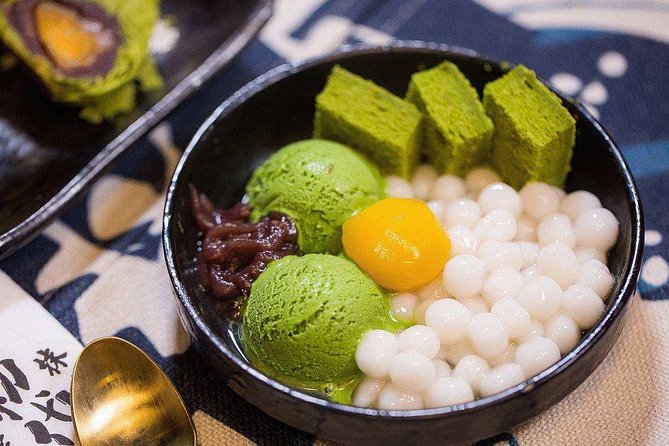
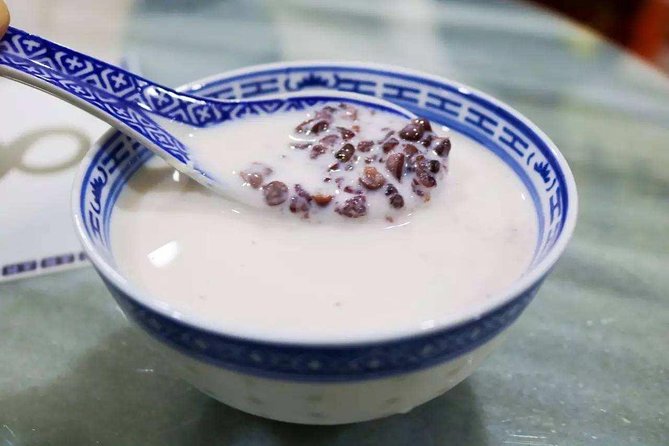
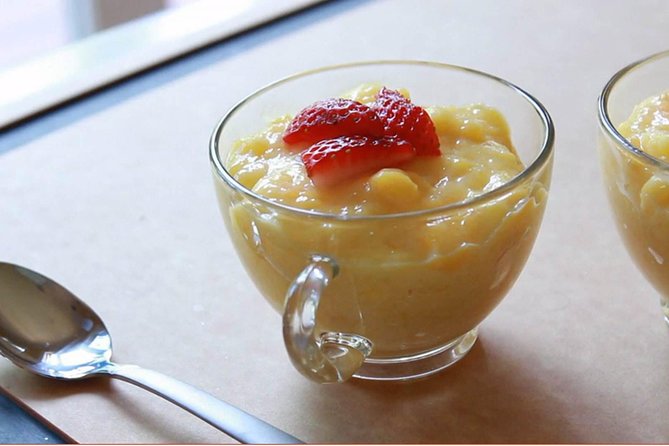
The listed desserts include milk pudding with purple sticky rice, jellied mousse cake, papaya, mango purée, and almond tofu. This selection gives you several textures to compare. Some are creamy, some soft and jelly-like, and others bring fruit or a mild nutty flavor.
Mango purée and almond tofu should appeal to you if you prefer desserts that are fragrant rather than aggressively sweet. Milk pudding with purple sticky rice adds a more filling, chewy element. Papaya brings a simple fruit note, while mousse cake provides a familiar pastry texture in a Cantonese dessert setting.
Calling this a Cantonese dessert stop is important. It is not simply a Western-style cake shop, and you should expect Chinese preparations, textures, and flavor combinations. If you have only tried mooncakes and bubble tea in China, this final tasting broadens the picture.
The tour ends in the area after dessert, in or near the Former French Concession. Hotel transportation is not included, so you will need to arrange your own way back. The stated endpoint is in Xuhui District, while the meeting point is in Huangpu District. Keep that in mind when planning your evening.
Is $82 a fair price?
At $82 per person, this is not a bargain snack tour. The value comes from having several elements arranged for you: a local guide, tastings at two pastry shops, a tea ceremony, multiple tea varieties, and a Cantonese dessert stop.
You are also paying for interpretation. Without a guide, you could buy a mooncake, order tea, and visit a dessert restaurant on your own. What you would miss is the connection between the foods, the explanation of tea etiquette, and the chance to see a tea master prepare several kinds of tea.
The price makes the most sense if you value structure and cultural explanation. It is less attractive if you are comfortable navigating Shanghai’s food scene independently or if you want a large quantity of food. This is a tasting and learning experience, not a replacement for lunch and dinner.
The average booking lead time is 29 days, which suggests you should reserve ahead if the 2:00 p.m. timing fits your plans. Free cancellation is available up to 24 hours before the start time. Changes or cancellations inside that window are not accepted for a refund.
Walking, weather, and practical planning
You should wear comfortable walking shoes. The tour moves through commercial streets and several neighborhoods, with roughly 45 minutes at Huaihai Road, an hour at the tea house, and 45 minutes at the dessert restaurant. The exact walking distance is not stated, but this is clearly not a sit-down-only activity.
The tour operates in all weather conditions, so dress for Shanghai’s forecast. A rainy afternoon will not automatically cancel the experience, and comfortable shoes matter more than polished sightseeing clothes.
The meeting point is near public transportation, but hotel pickup and drop-off are not included. Plan extra time to reach 333 Huai Hai Zhong Lu and confirm your route before leaving your hotel.
Children must be accompanied by an adult. Children under 3 can join free, and most people can participate. Service animals are allowed. If you have specific dietary requirements, tell the operator when booking rather than waiting until the first pastry stop.
Who should book this afternoon?
I would recommend this tour to you if you want an easy introduction to Chinese tea customs and prefer food experiences with explanation. It suits first-time visitors who want to connect a few tastes with local traditions, as well as repeat visitors who have already seen the major landmarks.
It is particularly useful for people who enjoy trying unfamiliar textures. Almond tofu, purple sticky rice, milk pudding, and jellied desserts are different from a standard Western afternoon tea, and the guide helps put them in context.
The tour is also a good fit if you appreciate small groups. A compact group makes it easier to hear the guide, see the tea preparation, and ask about ingredients or etiquette. The experience has received a 5 out of 5 rating from 19 reviews, with all recommendation feedback positive, and the most praised points are the guides, tea instruction, and relaxed pace.
I would hesitate to book it for a large family group seeking a filling meal, anyone who dislikes sweet foods, or a visitor with a tightly packed afternoon schedule. The route ends in a different district from the meeting point, and you must handle your own transportation afterward.
Should you book this Shanghai tea and dessert tour?
Book it if you want a calm, well-organized afternoon that links mooncakes, tea culture, and Cantonese sweets. The tea ceremony is the main reason to choose it, while the two pastry shops and final dessert tasting add variety.
Skip it if your priority is quantity, bargain pricing, or independent food hunting. At $82, the tour earns its price through guidance and access to a structured tasting rather than through a large meal. For an intimate introduction to Shanghai’s tea customs and lesser-known desserts, it is a sensible choice, especially if you can reserve early and arrive ready to walk.
FAQ
How long does the afternoon tea and dessert tour last?
The tour lasts approximately three hours. The listed schedule allows about 45 minutes on Huaihai Road, one hour at the tea house, and 45 minutes at the Cantonese dessert restaurant.
What time does the tour begin?
The tour begins at 2:00 p.m.
Where does the tour start?
You meet at 333 Huai Hai Zhong Lu, Huang Pu Qu, Shanghai, China, 200021.
Where does the tour end?
The tour ends in the Former French Concession area of Xuhui District, Shanghai, China, 200031.
What foods and drinks are included?
The experience includes mooncakes from two pastry shops, an afternoon tea ceremony, several Chinese teas, and Cantonese desserts. Tea varieties include pu-erh, ginseng oolong, jasmine tea, and Fujian black tea. Desserts include milk pudding with purple sticky rice, mousse cake, papaya, mango purée, and almond tofu.
Is hotel pickup included?
No. Hotel pickup and drop-off are not included.
How large is the group?
Bookings are limited to 10 people. The activity information also gives a maximum of 15 people overall.
Can I cancel for a full refund?
Yes. You can cancel at least 24 hours before the local start time for a full refund. Cancellations or changes made less than 24 hours before the start time are not accepted for a refund.
Newly steeped around China
- Full-day Tour: Spectacular Sunrise, Tea Plantation & Sunset★ 5.0 · 3 reviews
- Unlock Chinese Tea: Culture, Science, Tasting & Hands-on Brewing★ 5.0 · 12 reviews
- Shanghai Mahjong Experience in Local Tea Bar★ 5.0 · 4 reviews
- Chinese Tea Ceremony Experience★ 5.0 · 3 reviews
- Private Tour Hangzhou West Lake and Tea Fields Discovery★ 5.0 · 3 reviews
- Hangzhou West Lake and Tea Plantation Half Day Tour★ 5.0 · 4 reviews
- Private Hangzhou Day Tour to West Lake, Lingyin Temple, Tea Village, Old Pagoda★ 5.0 · 17 reviews
- Half-Day Hangzhou Private Tour with Green Tea Village and Lingyin Temple★ 5.0 · 3 reviews
Afternoon Tea Experiences, compared.
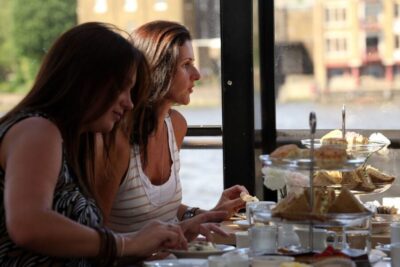
London: Afternoon Tea Cruise on the River Thames
Read our review →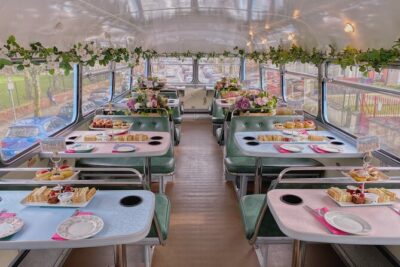
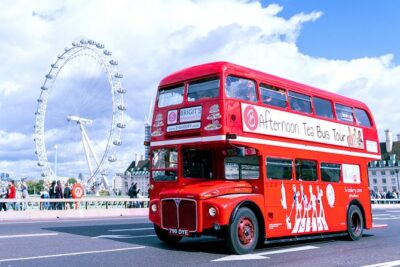
London: Afternoon Tea Bus Tour – 1960s Routemaster Bus
Read our review →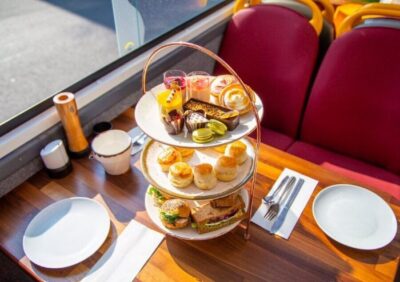
London: Afternoon Tea Bus with a Glass of Prosecco
Read our review →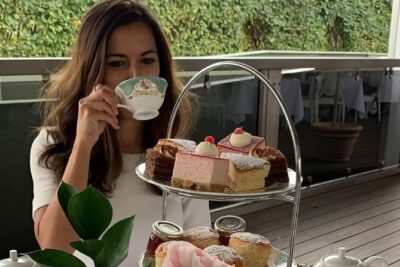

Browse the lists this tea experience appears in