
Review · YOKOHAMA
Japanese Tea Ceremony at Private Home in Yokohama, suburban Tokyo
The most unusual part of this 90-minute tea workshop is the charcoal procedure, where the tea master adds charcoal to heat the water. Even many Japanese people rarely see this traditional step. You also sit in a private home’s tatami room, not a staged attraction, and learn how to act as a guest while eating handmade seasonal sweets.
I like the patient, personal format, and I like that you make your own matcha after watching the demonstration. The main consideration is location: this is in suburban Yokohama, not central Tokyo, and you must bring socks to enter the tatami room.
Key points
- Rare charcoal procedure: Watch water being heated with charcoal, a traditional step seldom seen today.
- Private Kono family home: Take part in the ceremony in a real Japanese home, with only your group attending.
- Two bowls of matcha: Drink one bowl prepared by the tea master, then whisk and drink another yourself.
- Seasonal handmade wagashi: Taste sweets such as nerikiri, gyuhi, or manjyu, depending on the season.
- More than 40 years of tea study: The tea master has practiced Japanese tea ceremony for over four decades and taught for more than 15 years.
- Easy add-on nearby: The Yokohama Ramen Museum around Azamino can fit into the same day, with about 15 minutes between Azamino and Shin-Yokohama by subway.
A real tea room in suburban Yokohama
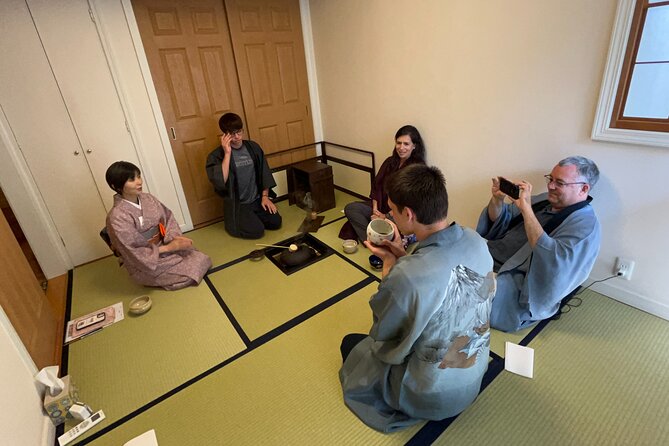
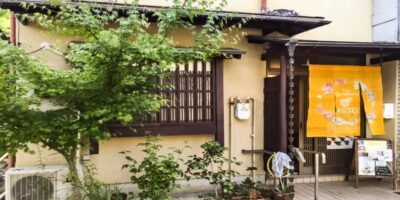
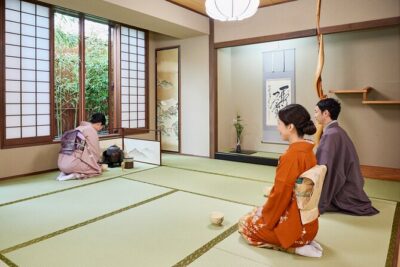
This experience takes place at the Kono family’s private home in Aoba Ward, Yokohama. That setting matters. You are not simply watching a short cultural show in a tourist district. You enter a traditional tatami tea room and learn the basic behavior expected of a guest.
The meeting point is at Dorese Azamino Gardens, in Ōbachō, Aoba Ward. Pickup is offered, but the published meeting point remains important, so confirm the exact arrangement after booking. The activity ends back at the meeting point.
You should allow extra time to reach suburban Yokohama from central Tokyo. The experience lasts about an hour and a half, making it easy to fit into a half-day plan, but it is not a quick stop beside Tokyo Station or Shibuya. If you prefer activities that stay in the center, this location may feel out of the way. If you want a quieter local setting, the trip is part of the appeal.
Bring socks. You remove your shoes before entering the tatami room, and bare feet are not appropriate for this setting. It is a small practical detail, but one worth handling before you leave your hotel.
More Tea Ceremonies in Japan:
- Kyoto: Tea Ceremony in a Traditional Tea House in Kiyomizu
★ 4.9 · 3,519 reviews - Kyoto: Tea Ceremony Ju-An at Jotokuji Temple
★ 4.9 · 3,207 reviews - Kyoto: 45-Minute Tea Ceremony Lesson Experience
★ 4.3 · 2,378 reviews
Meeting the tea master and learning the setting
The tea master has studied Japanese tea ceremony for more than 40 years and has taught students for more than 15 years. No first name is provided, but the host family is identified as the Kono family. Their role is more than simply preparing tea: they explain the ceremony, answer questions, and guide you through the customs of being a guest.
You begin with a demonstration. Watch carefully rather than worrying about memorizing every movement. Japanese tea ceremony gives meaning to small gestures, from how tea is presented to how you receive it. The point of this workshop is not to turn you into a tea master in 90 minutes. It is to help you understand the behavior, care, and order behind the ritual.
The private format is particularly useful here. Only your group participates, so you can ask questions without holding up a larger class. The experience also received a perfect 5 rating from 32 reviews, with 100 percent recommending it. That does not make the activity right for everyone, but it does support the idea that the warm, personal atmosphere is one of its strongest features.
A review describes an enjoyable visit with the Kono family, including conversation and a baby. That detail is useful for families: the tone appears personal and welcoming rather than stiff. Still, the ceremony takes place in a tatami room, so anyone with difficulty sitting on the floor should think about comfort before booking.
The charcoal procedure is the rare part
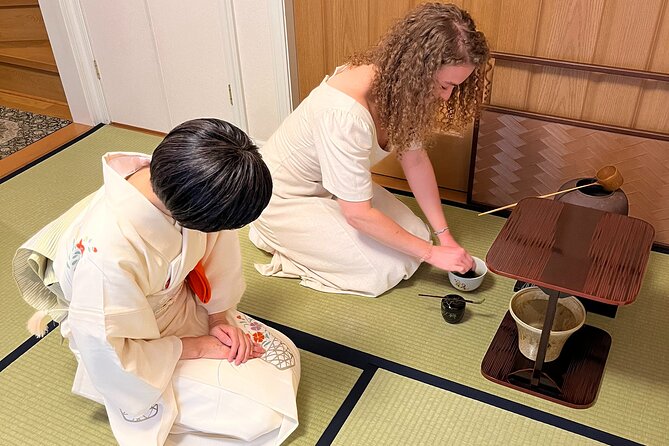
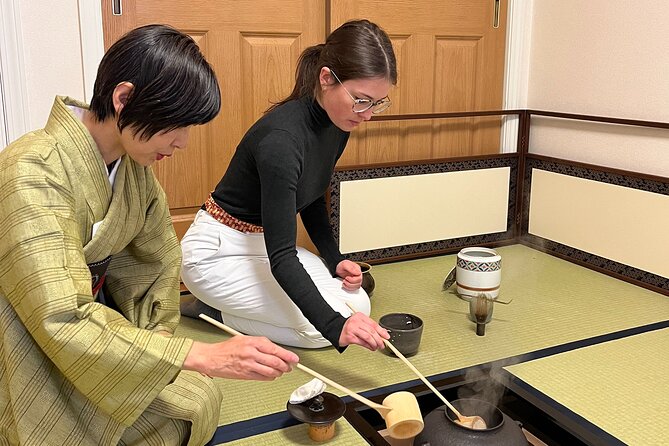
The most distinctive section is the charcoal procedure. The tea master adds charcoal to boil the water used for the tea. This is not just a practical cooking step. It shows an older method and gives you a clearer sense of how much of the ceremony is tied to fire, water, timing, and careful preparation.
You may have seen matcha made with an electric kettle at a café or a modern workshop. This is different. The charcoal procedure lets you see the heat source and the preparation process as part of the ceremony itself. According to the experience details, it is rare even for Japanese people to watch this procedure.
Pay attention to the pace. Tea ceremony is not built around rushing from one item to the next. The charcoal, the hot water, the utensils, the sweets, and the movements all have their place. The quiet rhythm may be the most valuable lesson, especially if your usual Tokyo itinerary is packed with trains, shops, and crowded streets.
The trade-off is that the charcoal procedure takes time within a 90-minute session. If your only goal is to drink matcha, you may find the formal process longer than expected. If you want to understand how traditional tea is prepared, this is precisely the part that makes the class worthwhile.
Seasonal wagashi before the tea
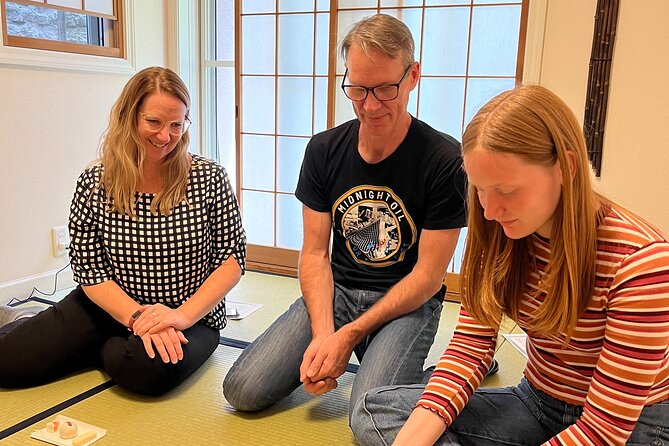
The tea master prepares handmade wagashi, the sweets traditionally served with matcha. The exact sweet depends on the season. Possible examples include nerikiri, gyuhi, and manjyu, along with dried Japanese sweets.
These are not just snacks added to fill out the booking. Sweetness balances the bitterness of matcha, preparing your palate for the tea. The seasonal choice also connects the food to the time of year, an important idea in Japanese tea culture.
Nerikiri is often shaped into delicate seasonal forms. Gyuhi is a soft mochi-style sweet, while manjyu is a filled steamed confection. You may not receive all of these types, since the tea master chooses what to serve. That changing menu is a nice touch, but it also means you should not book expecting a specific sweet.
The included snacks are described as suitable for vegan and gluten-free diets. If this matters to you, confirm your needs when arranging the activity, since the exact seasonal selection can change. The experience also includes dried Japanese sweets, so you receive more than a single bite with your tea.
More Tea Experiences around Japan:
- World Heritage Kyoto & Nara Uji Authentic Matcha Experience
★ 5.0 · 1,573 reviews - Osaka: Tea Ceremony Experience
★ 4.9 · 1,426 reviews - Kyoto: Table-Style Tea Ceremony at a Kyo-Machiya
★ 4.9 · 1,211 reviews - Kanazawa: Kenrokuen Tea Ceremony Experience
★ 4.8 · 1,139 reviews
Making and drinking two bowls of matcha
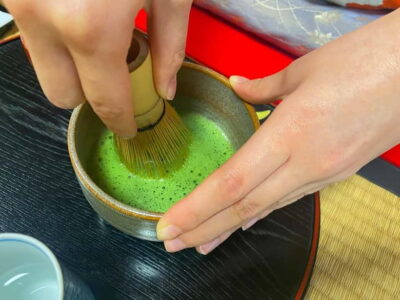
During the demonstration, the tea master prepares matcha for you. You learn how to behave as a guest while eating the wagashi and drinking the tea. After watching, you get to whisk matcha yourself.
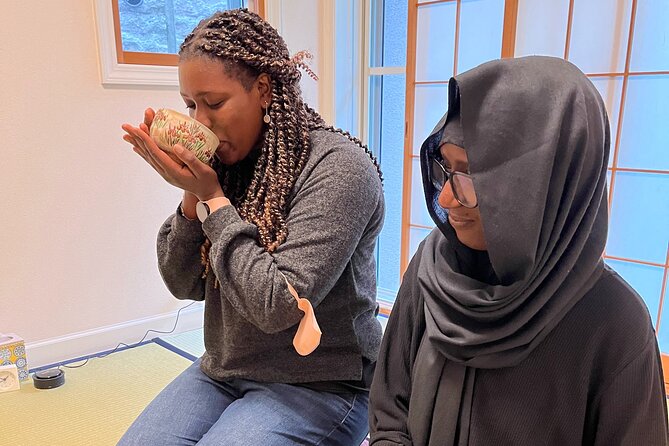
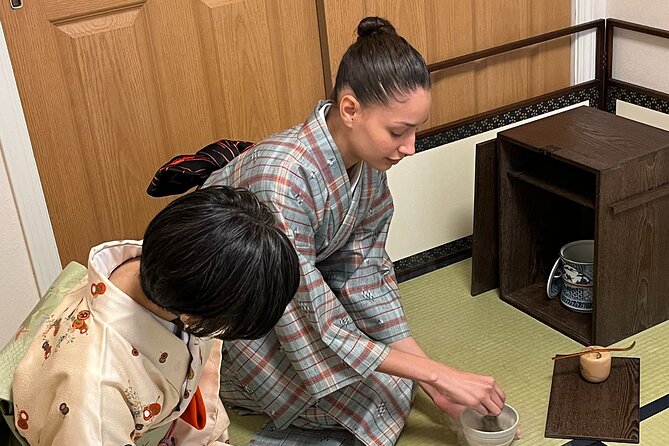
The activity includes two bowls of matcha in total. The first is prepared for you, allowing you to focus on the taste and the correct guest manners. The second gives you a chance to handle the preparation yourself. You will be shown how to mix the powdered tea, then drink what you make.
That hands-on step gives the workshop a good balance. A demonstration alone can feel passive, while making tea without context can feel like a simple craft class. Here, you first see the ceremony, learn some background, and then try the basic action yourself.
Do not expect café-style matcha sweetened with syrup or milk. Traditional matcha is whisked with water and has a strong, earthy bitterness. The wagashi is served for a reason, since its sweetness helps balance the tea. If you already enjoy unsweetened green tea, you may appreciate the direct flavor. If you do not, the sweet is an important part of the experience.
History, questions, and the value of a private lesson
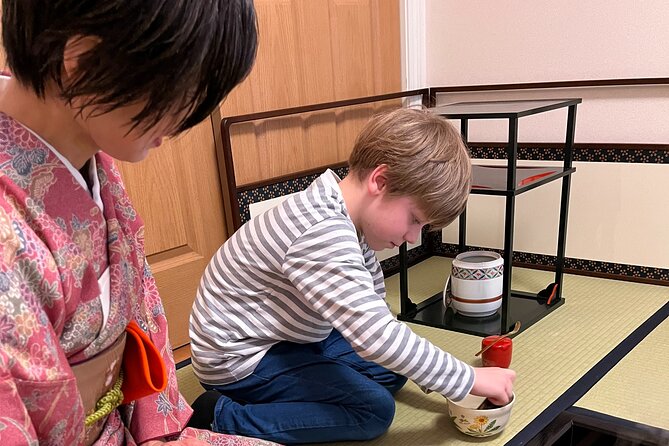
The tea master explains the history of Japanese tea ceremony and leaves time for questions. This is where the private setting earns its price. You can ask about the meaning of a gesture, the purpose of an object, or the difference between watching and participating.
At $52.71 per person, the activity costs more than simply buying a matcha drink. That comparison misses the point. Your fee covers a private 90-minute lesson, handmade sweets, two bowls of matcha, a demonstration, the charcoal procedure, and direct access to an experienced tea teacher.
The value is strongest for people who want context. You are not only consuming tea. You are learning why the room, the movements, the sweets, and the water preparation matter. The private format also means your questions can shape the discussion.
The value is weaker if you want a quick, low-cost taste of matcha or a central Tokyo activity. You will spend time reaching Aoba Ward, and the formal customs may feel slow if you have little interest in Japanese culture. I would choose this over a short tourist demonstration, but only if you are willing to give the ceremony your full hour and a half.
Planning the Yokohama connection
The location can work well with a Yokohama day. The information provided suggests visiting the Yokohama Ramen Museum around Azamino. Azamino Station is about 15 minutes from Shin-Yokohama Station by Yokohama Subway, so you can pair tea with a ramen-themed stop if your route suits it.
Treat this as a planning suggestion, not part of the tea workshop. The ramen museum is not included, and the tea activity begins and ends at the Yokohama meeting point. Check your train route and leave a buffer, especially if you are coordinating pickup or traveling with children.
The suburban location gives the experience a different feel from a temple visit or a commercial cultural center. You will not be combining it with a major central Tokyo sight in a few minutes. Instead, you are setting aside part of the day for a home-based lesson.
That choice suits an itinerary with room to breathe. I would not schedule this immediately before an important airport transfer or a tightly timed reservation. The session itself is about 1.5 hours, but city transport and finding the meeting point add to the total time.
Who will enjoy this tea ceremony most
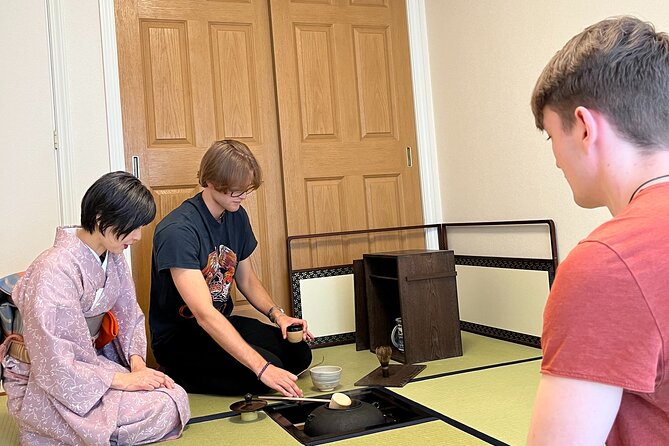
I would recommend this experience to you if you enjoy learning how a tradition works rather than simply taking a photo. It suits first-time visitors who want a clear introduction, as well as people already interested in Japanese tea, wagashi, or traditional etiquette.
It is also a good fit for small private groups. Since only your group participates, the pace can feel more personal, and you can ask questions freely. The warm exchange with the Kono family makes it appealing if you value meeting local people in a home setting.
Families may also consider it. A review specifically describes an enjoyable visit with a baby, which suggests the family atmosphere can be comfortable. Still, children should be ready for a quiet session with formal movements and floor seating.
You may want to skip it if you dislike sitting on tatami, cannot comfortably manage the room’s seating arrangement, or want an activity with constant movement. The tea ceremony asks you to slow down. That is its strength, but it will not suit every touring style.
Practical details before you book
Confirmation is sent within 48 hours, subject to availability. The activity is near public transportation, and pickup is offered. Since the stated start point is Dorese Azamino Gardens, confirm the pickup details and exact meeting instructions before setting out.
The tour has a mobile ticket, which is useful when you are moving around Japan with a phone rather than carrying printed paperwork. Free cancellation is available if you cancel at least 24 hours before the local start time. Cancellations or changes made inside that period are not refunded or accepted.
The most important preparation is simple:
- Bring clean socks for the tatami room.
- Allow time to reach suburban Yokohama.
- Tell the host about dietary needs when arranging the visit.
- Keep your schedule flexible enough for the full 90-minute workshop.
- Remember that the exact wagashi depends on the season.
These steps remove most of the small worries and let you focus on the tea.
Should you book the Kono family tea workshop?
Book it if you want a personal lesson in a real home, seasonal sweets, and a rare look at charcoal-heated tea preparation. The experienced tea master, private format, and chance to make your own matcha give this more substance than a quick tasting.
Think twice if your Tokyo schedule is tight or if reaching Aoba Ward feels like too much effort for a 90-minute activity. The location is the main drawback, not the content.
For me, the deciding question is simple: do you want to understand Japanese tea ceremony, or do you only want to drink matcha? If you want the first, the $52.71 price is fair for the time, instruction, sweets, and private attention. Bring socks, leave room in your schedule, and treat the journey to Yokohama as part of the cultural outing.
FAQ
Where does the tea ceremony take place?
It takes place at a private Japanese home in Yokohama’s Aoba Ward. The stated meeting point is Dorese Azamino Gardens, Ōbachō, Yokohama.
How long does the activity last?
The workshop lasts approximately 1 hour and 30 minutes.
How much does the experience cost?
The listed price is $52.71 per person.
How many people participate?
This is a private activity, so only your group participates.
Do I need to bring anything?
You need to bring socks to enter the tatami room.
How much matcha will I drink?
You drink two bowls of matcha. The tea master prepares one, and you make one yourself.
What sweets are included?
The experience includes handmade wagashi and dried Japanese sweets. Seasonal examples include nerikiri, gyuhi, and manjyu.
Is the food suitable for vegan or gluten-free diets?
The included wagashi and snacks are described as suitable for vegan and gluten-free diets. The exact sweets depend on the season.
Can I cancel for a full refund?
Yes. You can cancel for a full refund up to 24 hours before the experience start time. Cancellations or changes made less than 24 hours in advance are not refunded or accepted.
Newly steeped around Japan
- Yokohama : Tea Ceremony with Sweets and Souvenir★ 5.0 · 5 reviews
- Whisk Your Own Matcha: A Zen Matcha Experience at Temple★ 3.6 · 7 reviews
- Walking Tour: Yanaka,Nezu& Sendagi: Tea Ceremony & Old Tokyo★ 5.0 · 3 reviews
- Visit local home for music and tea ceremony near Disney★ 4.9 · 13 reviews
- Trip to Kamakura & Enoshima: Shrines, Seaside, Temples &Tea★ 5.0 · 11 reviews
- Yokohama: Sushi & Gyoza Cooking with Matcha & GreenTea Experience★ 5.0 · 3 reviews
- Kyoto tea town for matcha lovers★ 5.0 · 16 reviews
- Uji: Private immersion into Kyoto’s tea and reglious culture★ 5.0 · 17 reviews
Tea Ceremony Experiences, compared.
Kyoto: Tea Ceremony in a Traditional Tea House in Kiyomizu
Read our review →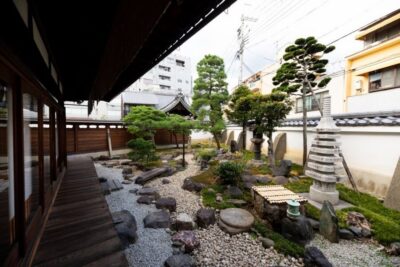
Kyoto: 45-Minute Tea Ceremony Lesson Experience
Read our review →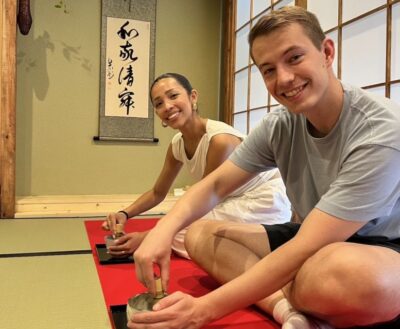
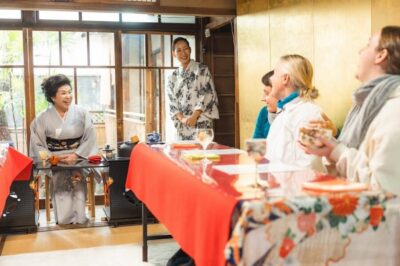
Kyoto: Table-Style Tea Ceremony at a Kyo-Machiya
Read our review →

Browse the lists this tea experience appears in