
Review · KYOTO
Kyoto Newly Opened Tea Ceremony – Sanjo Chasuian
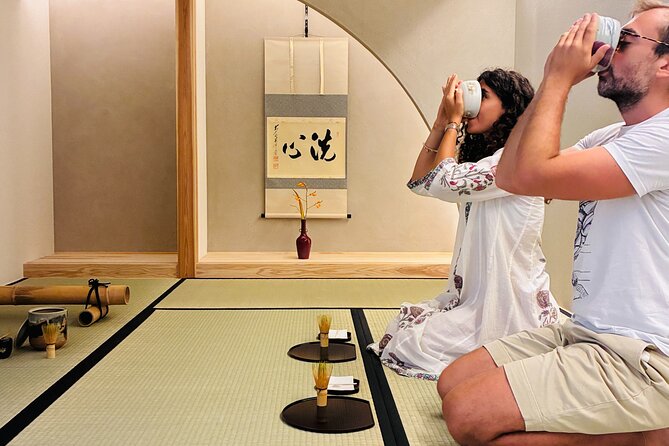
The most engaging part of this Kyoto tea ceremony is the chance to cross through a nijiriguchi, the small crawl-in entrance traditionally used to leave the outside world behind. Inside, you watch the host prepare matcha, then whisk your own bowl and drink both versions with a seasonal Japanese sweet.
I like the hands-on format and the calm, friendly teaching. You are not only asked to sit quietly while someone performs; you learn what the movements mean and get a real turn with the whisk. I also like the two-cup setup, since you can compare the host’s smooth preparation with your own first attempt.
The main consideration is timing. The room becomes quiet once the ceremony starts, and the door is locked at the start time. Even arriving one minute late means you cannot join, so allow extra time to find the venue and remember to bring or wear socks.
Key Points
- Two bowls of Kyoto matcha: One is prepared by the host and one is whisked by you or a companion.
- A real hands-on lesson: You choose a tea bowl, copy the host’s movements, and learn practical matcha-making skills.
- Seasonal sweets included: The confectionery comes from a Kyoto sweet shop with more than 100 years of history.
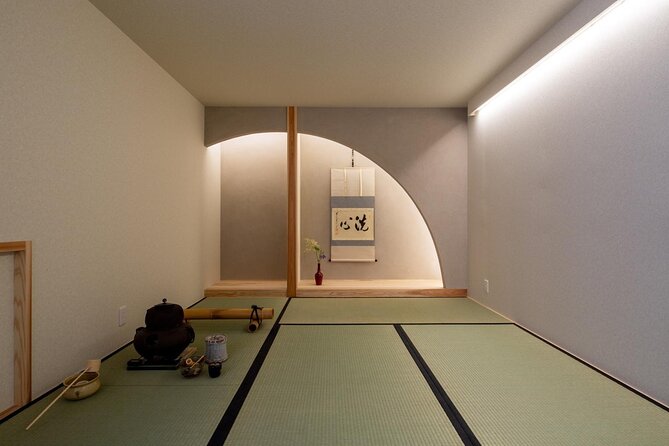
- A traditional nijiriguchi: The crawl-in doorway adds a meaningful architectural touch to the setting.
- Small-group atmosphere: The maximum group size is 10, keeping the lesson personal and easy to follow.
- One-hour cultural stop: It fits neatly into a Kyoto sightseeing day, especially if you are staying near central Kyoto or Nijo Castle.
Why This One-Hour Tea Ceremony Works
Kyoto has no shortage of cultural activities, but a tea ceremony can be hard to understand if you only watch from a distance. Sanjo Chasuian solves that problem with a simple pattern: explanation, demonstration, tasting, and practice.
The session lasts about one hour. That is long enough to give the ceremony proper attention without taking over your day. I see this as a good length for first-time visitors, families, and anyone curious about matcha but unsure about committing to a longer formal session.
The setting is deliberately quiet. This is not a loud demonstration with a running commentary over other groups. The host explains each stage, then allows the room to settle while the tea is prepared. That change of pace is part of the appeal. Kyoto sightseeing can become a series of crowded streets and busy temples, so an hour of stillness feels useful.
The experience is also designed for people who know little about tea ceremony. You do not need to understand the rules in advance. The host gives step-by-step guidance and answers questions, with English instruction available. One English-language guide, Yuko, is praised for explaining both the practical movements and the reasons behind them in a warm, accessible way.
More Tea Ceremonies in Kyoto
- Kyoto: Tea Ceremony in a Traditional Tea House in Kiyomizu
★ 4.9 · 3,519 reviews - Kyoto: Tea Ceremony Ju-An at Jotokuji Temple
★ 4.9 · 3,207 reviews - Kyoto: 45-Minute Tea Ceremony Lesson Experience
★ 4.3 · 2,378 reviews
Entering Through the Nijiriguchi
The nijiriguchi is one of the most memorable details here. This low entrance requires you to crouch or crawl in, depending on your height and comfort. Traditionally, this design encouraged everyone to enter with humility, leaving status and the outside world at the door.
You do not need to treat it as a physical stunt. It is a symbolic doorway, and the host explains its place in tea culture. If you have limited mobility, or if getting down low is difficult, pay attention to how you feel about this feature before booking.
Once inside, the room is clean and modern-looking while retaining traditional touches. The tea bowls, whisk, sweets, and formal movements create the proper sense of occasion. Chairs are available, which matters if sitting on the floor is uncomfortable. Still, some parts of the session may involve a traditional floor-based arrangement, so ask for a chair rather than assuming the entire event uses Western seating.
You are also asked to bring or wear socks. This is a small rule, but an important one for a tea room. Pack a clean pair in your day bag if you are wearing sandals.
Watching the Host Prepare the First Bowl
The ceremony begins with an explanation of tea ceremony customs, background, and the meaning behind the steps. This context keeps the ritual from feeling like a string of unexplained hand movements.
The host then prepares the first bowl of matcha. Watch the way the tea bowl is handled, how the whisk is used, and how each action follows a set order. The point is not speed. The movements are controlled and attentive, which helps create the calm mood of the room.
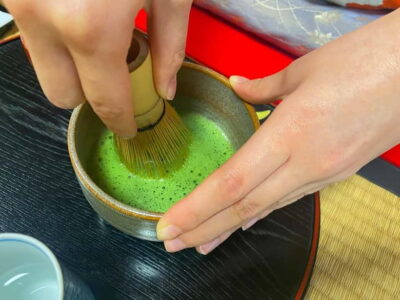
This first serving is made for you by the host. It gives you a chance to taste properly prepared matcha before trying the technique yourself. For someone tasting matcha for the first time, this is helpful. You get a clear idea of the smooth, foamy texture the whisk is meant to produce.
The host also explains why the steps matter. That may include the relationship between preparation, respect, attention, and hospitality. You are learning about the ceremony as a form of communication, not merely how to mix powdered tea and hot water.
The English may have a slight accent, but the teaching is described as clear enough to follow. You should feel comfortable asking questions during the explanation and discussion periods.
Making Your Own Matcha
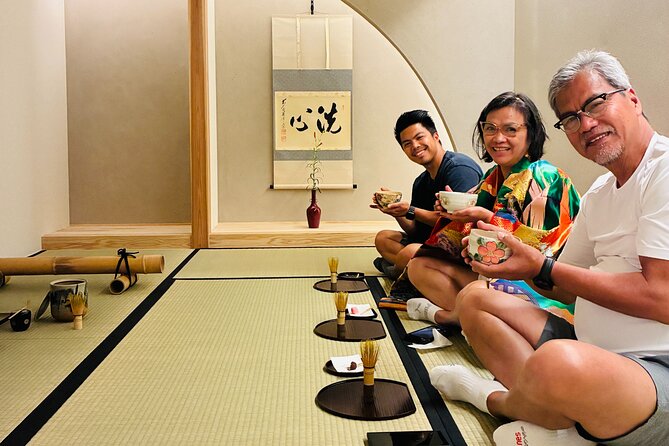
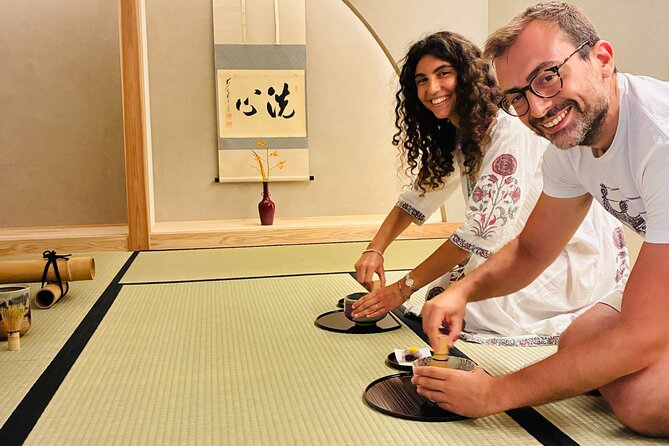
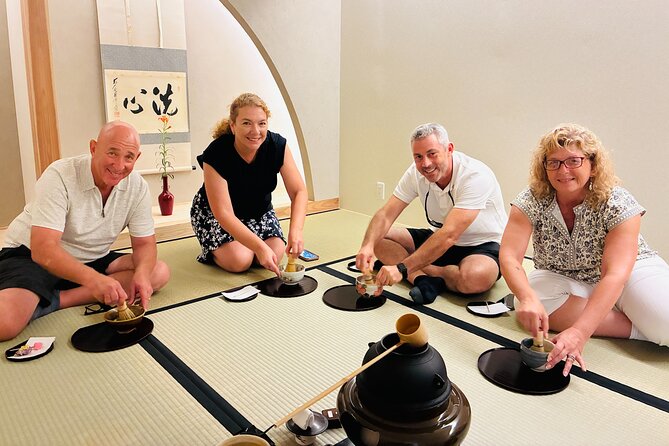
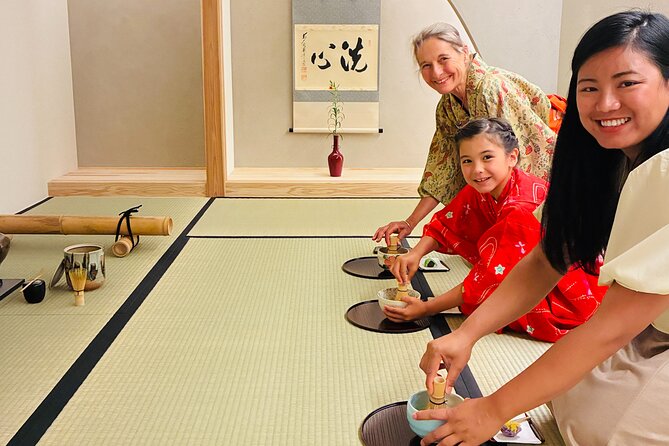
After watching the demonstration, you choose a tea bowl and prepare a second serving yourself. Depending on your booking party, you may whisk your own tea or prepare it with a companion.
This is the most useful part of the session for anyone who wants to take something home beyond photographs. The host shows you how to hold the whisk and how to copy the rhythm. You will probably not produce a professional bowl on the first try, and that is exactly why the activity works. The process turns a formal tradition into something you can understand through your hands.
The practical lesson also makes the ceremony less intimidating. You are allowed to make mistakes, and the host guides you without making the moment feel like a test. Families and first-time matcha drinkers should find this especially approachable.
You receive two cups in total: one made by the host and one made by you. That is good value for a short activity because you are tasting, observing, and practicing rather than simply watching a performance.
Matcha can taste grassy, bitter, or surprisingly gentle depending on your expectations and preparation. The host’s bowl gives you a useful reference point. Your own bowl becomes part of the fun, even if your foam is uneven.
Same leaf, a different ritual:
- Kyoto: Table-Style Tea Ceremony at a Kyo-Machiya
★ 4.9 · 1,211 reviews - Kimono Tea Ceremony at Kyoto Maikoya, NISHIKI
★ 5.0 · 911 reviews - Arashiyama Bamboo, Temple, Monkeys, or Secret Sake Brewery
★ 4.8 · 886 reviews - Kyoto: Arashiyama Bamboo Forest, Monkeys, Matcha & Temple Tour
★ 5.0 · 759 reviews
Seasonal Sweets From a Kyoto Confectioner
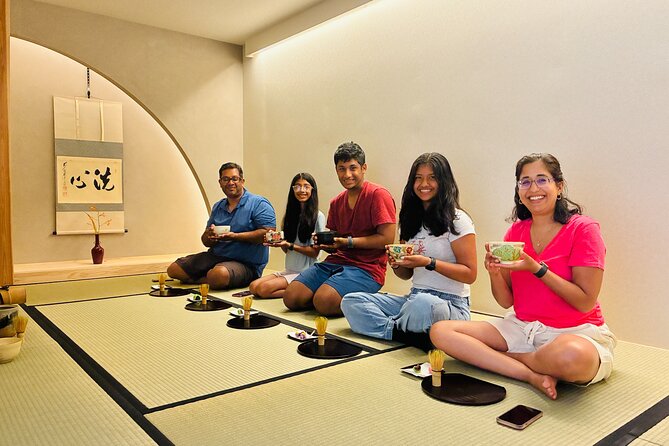
The matcha is served with a traditional seasonal Japanese confection. These sweets are chosen for appearance as well as taste, and they provide a pleasant balance to the tea.
The confectionery comes from a Kyoto sweet shop with more than 100 years of history. That detail adds meaning to the tasting, since the sweet is not a generic snack added at the last minute. It reflects the long relationship between Japanese tea and carefully made seasonal sweets.
Expect something delicate and decorative rather than a large dessert. The sweet is meant to be enjoyed alongside the tea, with its flavor and texture helping soften the bitterness of matcha.
The presentation is part of the lesson. Japanese confectionery often reflects the season through color and shape, and the host can explain how the sweet fits the ceremony. For many visitors, this becomes one of the most photogenic moments of the hour.
If you are bringing children, explain that the sweets are small and formal rather than a full snack. The activity includes the confectionery, but not additional food or drinks beyond the tea described.
A Small Group With Room for Questions
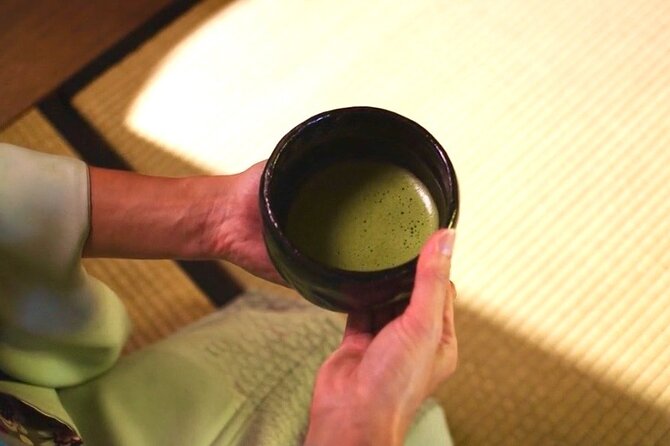
The maximum group size is 10 people. That is small enough for the host to watch your technique and answer questions without turning the session into a private lesson.
A group of this size can still feel shared rather than isolated. You observe the same demonstration as everyone else, then have your own turn. For families of three, this arrangement works well because each person gets to prepare matcha.
The intimate format also protects the quiet mood. A larger room with several dozen people would make it harder to hear the explanation or appreciate the ceremonial movements. Here, the small scale supports the purpose of the activity.
The session is suitable for adults, older children, and anyone interested in Japanese customs. It also works for people who are not regular tea drinkers, since the main value is the cultural lesson and the chance to take part.
If you want a private ceremony with only your own party, this is not described as a private booking. The group limit is 10, but other participants may be present.
Location, Timing, and Finding the Door
The meeting point is Tea Ceremony & Sake Tasting Kyoto, Sanjo Chasuian, at 324-2 Sanjōchō in Nakagyo Ward, Kyoto. The activity begins and ends at this same location, so there is no hotel pickup or private transportation.
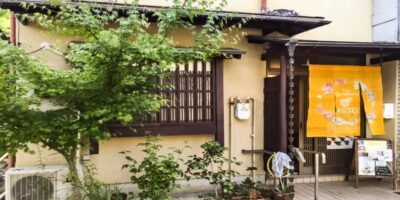
The venue is near public transportation, and one useful navigation tip is to stay on the main street if a map app directs you toward a smaller street at the corner. Look for the green matcha ice cream cone outside. That landmark can save you from circling the block.
Entry is allowed from five minutes before the start time. Do not cut this close. The door is locked when the session starts, and no refund is offered for arriving late, even by one minute.
Plan to arrive early enough to find the entrance, use the restroom if needed, put on socks, and settle into the room. This is especially important if you are visiting from Nijo Castle or another nearby sight and are navigating on foot.
The one-hour duration makes the activity easy to pair with other plans. You might schedule it between sightseeing stops rather than giving it a full half-day. Just leave a buffer, since the start time is strict.
Is the Price of $32.77 Fair?
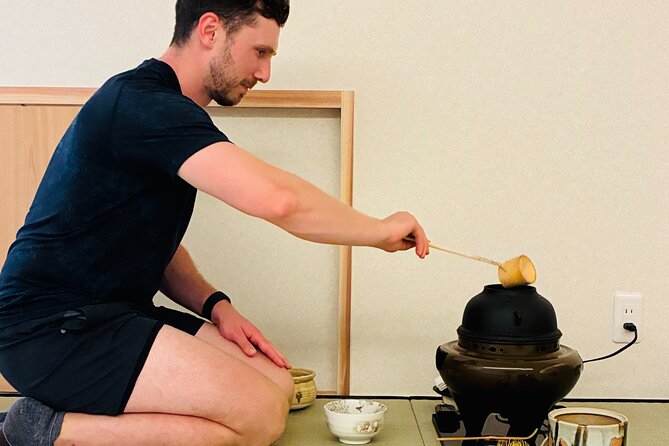
At $32.77 per person, this is a reasonable price for a short cultural activity in Kyoto. You receive two bowls of matcha, seasonal confectionery, an explanation of tea ceremony customs, a demonstration, and hands-on instruction.
The value comes from participation. A cheaper tea stop might give you a bowl of matcha and a sweet, but this session adds a structured lesson and your own preparation. You are paying for access to the setting, the host’s instruction, the utensils, and the chance to understand what you are seeing.
The two-cup format is another reason the price works. The host prepares one bowl, then you make another. Many simple tea tastings stop after a single serving, while this one gives you both the polished version and the beginner’s attempt.
The price may feel less attractive if you only want to drink matcha or if you have already taken a detailed tea ceremony class elsewhere. For a first introduction, though, the combination of history, ritual, sweets, and practice is well balanced.
Tea bowls, matcha, and selected items are available for purchase after or around the session. The supplied information does not give prices for those items, so treat them as optional extras rather than part of the advertised cost.
Who Should Book This Experience?
I would point first-time Kyoto visitors toward this activity, especially those who want cultural context without spending several hours in a formal class. The host explains the meaning behind the ceremony, and the hands-on portion keeps the hour lively without losing its quiet mood.
Families can also make good use of it. A family of three can each prepare matcha, and the host is described as patient and accommodating. Children should be comfortable with a calm setting and a few minutes of focused attention.
This is also a good fit if you want a break from sightseeing. The atmosphere is serene, and the ceremony offers a pause from walking and city noise. It is not a party-style activity, though the presentation can still be friendly and light-hearted.
You may want to reconsider if floor sitting is a serious problem, if you cannot wear socks, or if arriving exactly on time is difficult. Chairs are available, but the traditional room and nijiriguchi remain part of the experience.
People interested in photography should appreciate the tea bowls, seasonal confectionery, and formal clothing options. There is an option to wear a formal uchikake, which is more ceremonial than an ordinary kimono, but the supplied details do not say how much this costs or how long dressing takes.
Booking, Cancellation, and Practical Fit
A mobile ticket makes the booking simple, and confirmation is provided at the time of booking. Free cancellation is available if you cancel at least 24 hours before the local start time.
Inside 24 hours, cancellations and changes are not accepted, and the payment is not refunded. That strict rule makes early planning important, particularly during a packed Kyoto itinerary.
The activity has a 100 percent recommendation rate and a five-star score from 76 ratings, which fits the strongest features of the session: clear teaching, a pleasant room, a hands-on format, and a friendly host. I would place the greatest weight on the practical details, though. The experience is only a good fit if you can arrive early, follow the quiet-room rules, and take part in the floor-based traditions as comfortably as possible.
Should You Book Sanjo Chasuian?
Book it if you want an approachable introduction to Kyoto tea ceremony with real participation. The host-prepared bowl, your own whisked tea, seasonal sweet, and nijiriguchi give the hour more substance than a quick matcha tasting.
I especially recommend it for first-time visitors, families, and anyone who wants cultural explanation in clear English. The price is fair for the amount included, and the small group keeps the lesson personal.
Skip it if you want a long, highly formal ceremony, a private session, or a casual drop-in with flexible arrival. For everyone else, arrive early in socks, follow the green matcha cone, and give yourself one quiet hour to learn how tea becomes a shared act of attention.
FAQ
How long does the tea ceremony last?
The activity lasts approximately one hour.
Where does the tea ceremony take place?
It takes place at Tea Ceremony & Sake Tasting Kyoto, Sanjo Chasuian, at 324-2 Sanjōchō, Nakagyo Ward, Kyoto, 604-8205, Japan.
Does the activity include matcha?
Yes. You receive two cups of Kyoto matcha, one prepared by the host and one prepared by you or with a companion.
Do I get to make matcha myself?
Yes. You choose a tea bowl and whisk your own matcha after watching the host’s demonstration.
Are Japanese sweets included?
Yes. A traditional seasonal Japanese confection from a Kyoto sweet shop with more than 100 years of history is included.
How many people can join the session?
The maximum group size is 10 people.
Are chairs available?
Yes. Chairs are available, although the tea room includes traditional elements and some parts may involve sitting on the floor.
Do I need to wear socks?
You should bring or wear socks for the experience.
What happens if I arrive late?
Entry is allowed from five minutes before the start time. Once the session begins, the door is locked, and even one minute of lateness means you cannot join. No refund is provided for late arrival.
Can I cancel for a full refund?
Yes, if you cancel at least 24 hours before the local start time. Cancellations within 24 hours are not refunded, and changes within that period are not accepted.
Newly steeped around Kyoto
- Whisk Your Own Matcha: A Zen Matcha Experience at Temple★ 3.6 · 7 reviews
- Kyoto: Authentic Tea Ceremony in a Small Group★ 5.0 · 7 reviews
- Tea ceremony at Kyoto’s Zen Temple Teahouse★ 5.0 · 2 reviews
- Uji Walking Tour – Byodo-in temple and Tea Ceremony from Kyoto★ 3.5 · 3 reviews
- Tea Ceremony Experience in Traditional Kyoto Townhouse★ 5.0 · 19 reviews
- Tea Ceremony in 150 Years Old Townhouse with Tables and Chairs★ 5.0 · 22 reviews
- Sencha-do the Japanese Tea Ceremony Workshop in Kyoto★ 5.0 · 21 reviews
- Silent Beauty of Kyoto Zen Walk and Tea Experience★ 5.0 · 2 reviews
Tea Ceremony Experiences, compared.
Kyoto: Tea Ceremony in a Traditional Tea House in Kiyomizu
Read our review →
Kyoto: 45-Minute Tea Ceremony Lesson Experience
Read our review →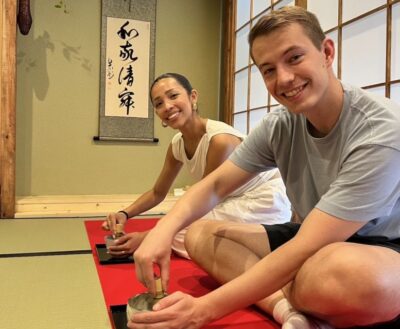
Kyoto: Table-Style Tea Ceremony at a Kyo-Machiya
Read our review →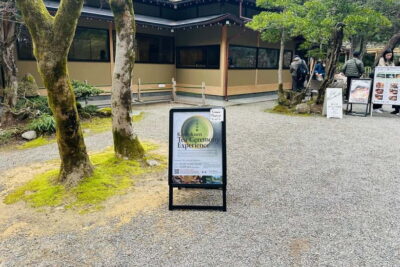


Browse the lists this tea experience appears in