
Review · KYOTO
Kyoto: Newly Opened Tea Ceremony – Sanjo Chasuian
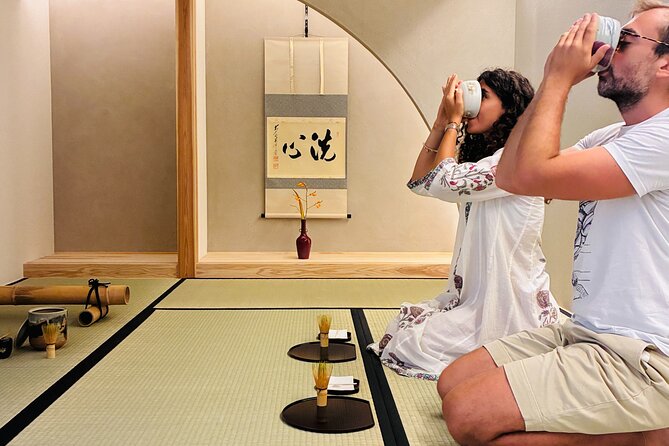
Sanjo Chasuian gives you something many tea experiences skip: you make your own bowl of matcha after watching the host prepare one. The calm, carefully explained format makes the ceremony easier to understand, not just admire from a distance. You also get a seasonal wagashi sweet from a Kyoto confectioner with more than a century of history.
I especially like the central location, just five minutes from Karasuma Oike subway station, and the chance to enter through a nijiriguchi, the low crawl-in doorway traditionally used to leave the outside world behind. The main consideration is timing: the door locks when the session begins, and even a one-minute delay means no entry or refund.
Key points at a glance
- Two bowls of matcha: One is prepared by the host, and the second is whisked by you or your companion.
- A real tea-room detail: The nijiriguchi crawl-in entrance gives the ceremony a strong sense of place.
- Seasonal Kyoto sweets: A traditional wagashi confection from a long-established Kyoto shop is included.
- English guidance: Hosts such as Yuko and Reina explain the history, etiquette, and meaning in English.
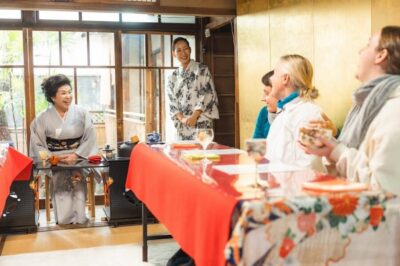
- Small shared session: The group is limited to 10 people, though you may be joined by other visitors.
- Easy to reach: Sanjo Chasuian is about a five-minute walk from Karasuma Oike Station.
Why making your own matcha matters
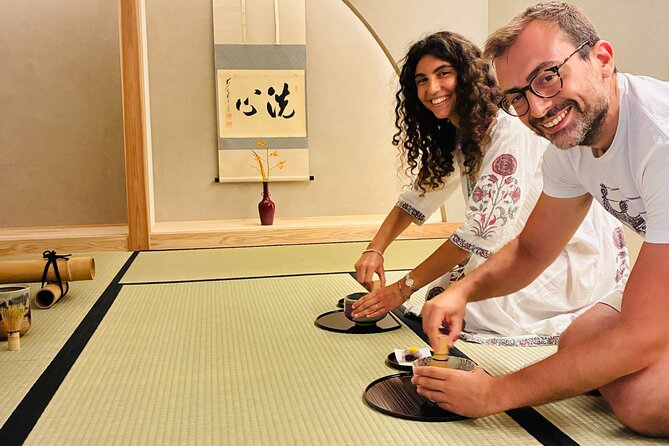
A tea ceremony can be beautiful but hard to follow if you only watch. Sanjo Chasuian solves that problem by giving you two different perspectives in one hour.
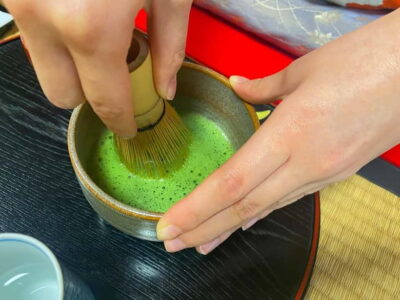
First, the host prepares matcha for you. You can watch the measured movements, the handling of the bowl, and the quiet rhythm of whisking without worrying about your own technique. Then the focus shifts to you. You choose a tea bowl, add the matcha and hot water with guidance, and whisk the drink yourself or with a companion.
That second bowl is the useful part. You quickly see that making matcha is simple in theory but requires a light, steady motion and some concentration. Several hosts, including Yuko and Reina, are praised for giving clear instructions and taking time with questions. You are not expected to arrive knowing tea etiquette.
The experience also gives you a chance to compare the two bowls. The host’s preparation shows the polished form of the practice. Your own bowl shows how much care goes into a drink that may otherwise look like an ordinary cup of green tea.
More Tea Ceremonies in Kyoto
- Kyoto: Tea Ceremony in a Traditional Tea House in Kiyomizu
★ 4.9 · 3,519 reviews - Kyoto: Tea Ceremony Ju-An at Jotokuji Temple
★ 4.9 · 3,207 reviews - Kyoto: 45-Minute Tea Ceremony Lesson Experience
★ 4.3 · 2,378 reviews
The one-hour schedule at Sanjo Chasuian
The session begins with an introduction to matcha and the history of the Japanese tea ceremony. This part gives useful context for the silence, gestures, utensils, and order of service that follow.
The aim is not to turn you into a tea expert in an hour. It is to help you understand why the host moves slowly, why each object is handled with care, and why the room itself matters. English explanations are provided throughout, so you can ask questions before the quieter part of the ceremony begins.
The host then prepares and serves the first bowl of matcha, along with a seasonal Japanese sweet. This order is practical. You learn by watching first, taste the tea and wagashi, and only then try the process yourself.
Afterward, you prepare your own bowl. The host guides your hand movements and explains what to do at each stage. Hosts may also take photographs or short videos while you whisk, which is useful if you want a record of the experience without interrupting the ceremony yourself.
The session closes after the second bowl. At roughly one hour, it fits neatly before dinner, between sightseeing stops, or early in a Kyoto itinerary when you want a slower introduction to local customs.
Entering through the nijiriguchi
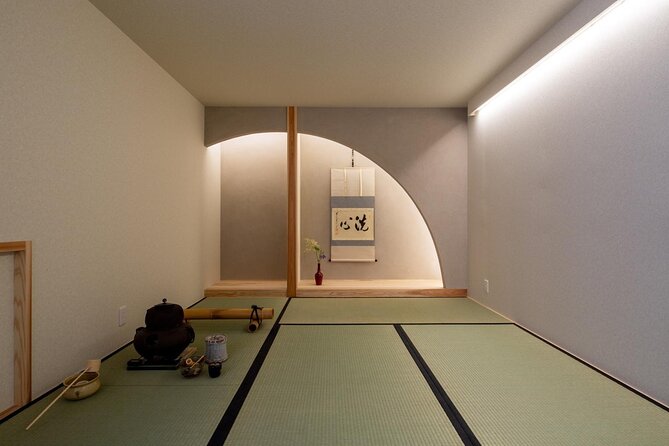
The nijiriguchi is one of the most distinctive details here. It is a low, crawl-in entrance leading into the tea room.
Traditionally, this kind of doorway encouraged everyone to bow and enter with humility. Its small size also created a clear break between ordinary life and the tea room. At Sanjo Chasuian, it gives you a physical way to understand the ceremony’s idea of leaving outside concerns behind.
You do not need to treat the doorway as a theatrical prop. It is a modest architectural detail, but one that adds meaning to the hour. You move through it differently than you would through a normal doorway, and that change helps set the tone before the tea is served.
Chairs are available if sitting in the usual tea-room position is difficult. The experience is not suitable for wheelchair users, and the stated age restriction is children under six. Children under five cannot join the shared plan and must be booked on a private plan, along with anyone who requires an interpreter.
A sweet from a Kyoto confectioner
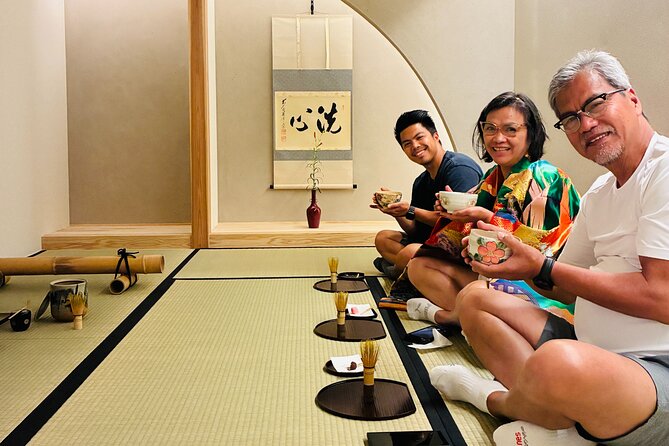
The wagashi is more than a snack beside the tea. Traditional Japanese sweets are often shaped and selected to reflect the season, giving you another way to notice how Japanese food culture connects taste, appearance, and time of year.
The sweet served here comes from a Kyoto confectioner with more than 100 years of history. The exact design changes with the season, so you should expect a small confection chosen for the date rather than a fixed menu item.
Its sweetness also has a practical role. Matcha can taste grassy, bitter, or strong if you are not used to it. The wagashi balances that flavor and makes the first bowl easier to enjoy. You receive one sweet as part of the experience, along with both servings of matcha.
Same leaf, a different ritual:
- Kyoto: Table-Style Tea Ceremony at a Kyo-Machiya
★ 4.9 · 1,211 reviews - Kimono Tea Ceremony at Kyoto Maikoya, NISHIKI
★ 5.0 · 911 reviews - Arashiyama Bamboo, Temple, Monkeys, or Secret Sake Brewery
★ 4.8 · 886 reviews - Kyoto: Arashiyama Bamboo Forest, Monkeys, Matcha & Temple Tour
★ 5.0 · 759 reviews
A calm lesson rather than a costume show
Sanjo Chasuian focuses on the tea ceremony itself. Standard kimono rental and dressing are not included.
An optional uchikake, a coat-style kimono, may be available for ¥1,500 including tax. You request it on the day, with no advance reservation, and supplies are limited. This is a small extra rather than a central part of the activity, so I would choose it only if you want a traditional layer for photographs.
The absence of full kimono dressing keeps the one-hour schedule focused. You spend your time learning the ceremony, tasting the tea, and making matcha instead of using much of the session for changing clothes. If wearing traditional clothing is your main goal, another Kyoto activity may suit you better.
What the hosts do well
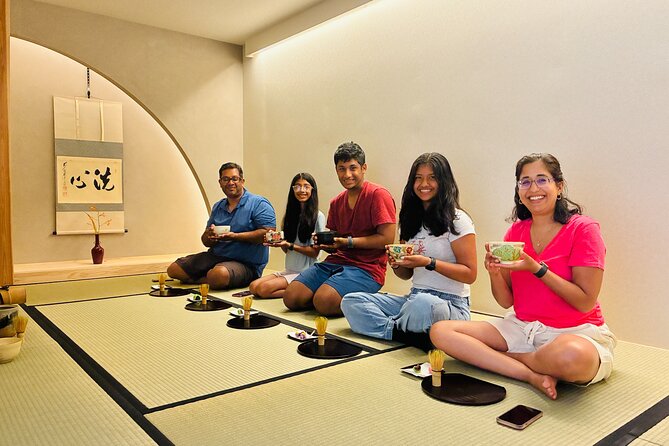
The hosts are the heart of this experience. Yuko, Reina, and Renna are named by attendees as warm English-speaking instructors who explain both the practical steps and the meaning behind them.
That distinction matters. A host who simply demonstrates whisking can teach a recipe. A host who explains why the ceremony values attention, respect, and quiet gives you a better sense of the culture behind the movements.
The teaching style appears gentle and structured. You first receive background information, then watch the host, then try the process. This sequence reduces the awkwardness that can come with participating in an unfamiliar ritual.
You should still expect some variation in English pronunciation or speaking style. One attendee found the guide’s pronunciation difficult at times, although the ceremony itself was well organized. If you have detailed questions, ask them early, while the host is explaining the process and before the quiet portion begins.
Shared plan, group size, and atmosphere
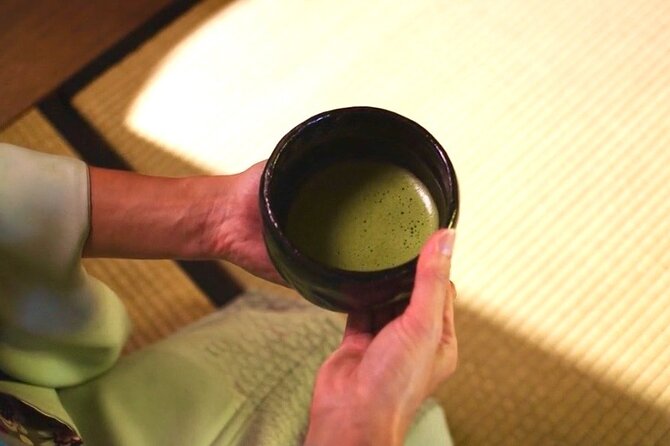
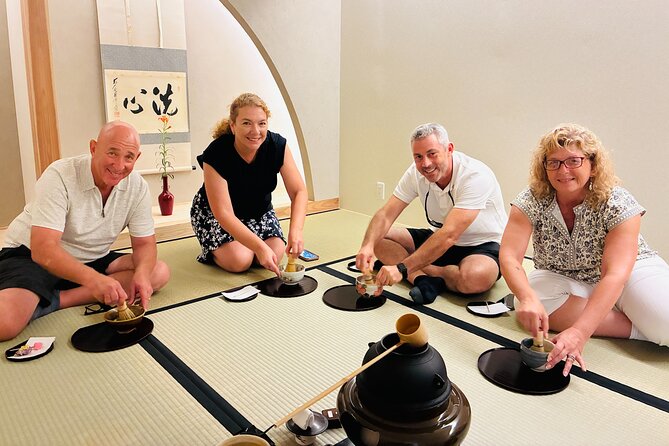
The shared plan allows up to 10 participants. You may attend with a companion, but you could also sit with people you have not met. That format keeps the price reasonable at about $31 per person and makes the session more social than a private tea appointment.
A small group is a good fit for this activity. You can see the host’s movements and receive help with your own matcha without the room feeling crowded. The tradeoff is that you will not control every moment of the session, and questions may need to be shared with the group.
The atmosphere is intentionally quiet once the ceremony begins. The host explains the sequence beforehand so conversation does not need to continue during the formal movements. That structure is one of the strongest parts of the experience. You understand what is happening, then get a short period of stillness instead of a running tour commentary.
If you want a lively food tour or a long cultural lecture, this will feel restrained. If your Kyoto schedule has been full of temples, trains, and busy streets, the hour offers a welcome pause.
Location near Karasuma Oike
Sanjo Chasuian is about a five-minute walk from Subway Karasuma Oike Station, making it one of the easier cultural activities to fit into a Kyoto day.
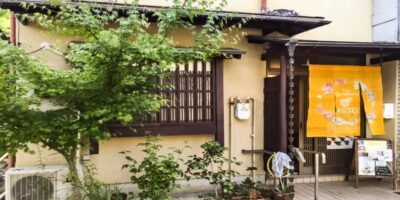
The meeting point is the facility itself. Look for the large plate bearing the Sanjo Chasuian logo and name, open the door, and staff will welcome you. No hotel transfer is included, and you arrange your own trip to the venue.
The location also works well with sightseeing in central Kyoto. One attendee noted that it was not far from Nijo Castle. The exact route and timing depend on your schedule, but the subway access means you do not need to build a complicated transportation plan around a one-hour activity.
Arrive at least five minutes before the start. Entry is permitted from five minutes before the session, and the door locks once the ceremony begins. This is not the place to cut a subway connection close. Give yourself extra time to find the building, especially if you are coming from a large hotel or making a transfer.
Is $31 a fair price?
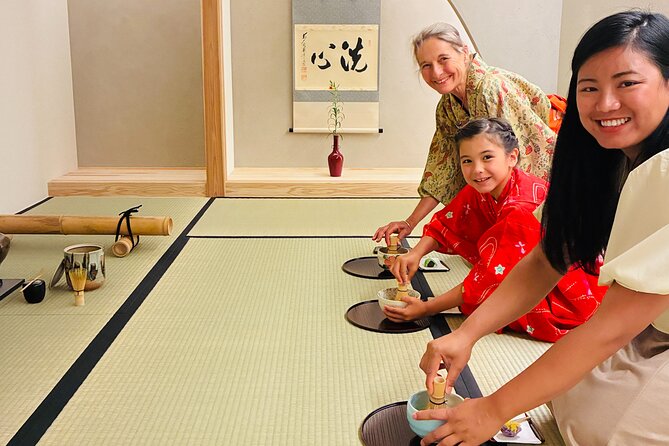
At $31 per person, the value is good if you want more than a demonstration. You receive two bowls of Kyoto matcha, a seasonal wagashi, English instruction, a small group setting, and a hands-on lesson in preparing the tea.
The most important value comes from participation. A shorter presentation with one bowl might be enough for someone who only wants a photograph and a taste. Here, the second bowl gives you an actual skill to take home. You may also purchase matcha, tea bowls, and selected tea items afterward, but buying is optional and not presented as a required part of the visit.
A grand opening discount was offered through September 15. Since that date may have passed, check the current price before booking rather than assuming the introductory rate still applies.
The activity has free cancellation up to 24 hours before the start time, and a reserve-now, pay-later option is available. Those terms help if your Kyoto plans are still shifting, but they do not protect you from arriving late. The no-entry rule after the start time is strict.
Who will enjoy this experience most?
I would choose Sanjo Chasuian if you want a first introduction to matcha that combines explanation with practice. It suits couples, friends, solo visitors, and anyone curious about Japanese customs but unsure how formal a tea ceremony might be.
It is especially useful for you if:
- You want an English-language introduction with time for questions.
- You prefer doing an activity rather than only watching.
- You like traditional architecture and small cultural details such as the nijiriguchi.
- You want a calm break from a packed Kyoto sightseeing schedule.
- You appreciate seasonal food and would like to try wagashi with your tea.
- You are staying near central Kyoto or can easily reach Karasuma Oike Station.
I would be more cautious if you need wheelchair access, are bringing a child under six, require an interpreter, or hope for a full kimono dressing service. The optional uchikake is limited and is not the same as a standard kimono rental.
Practical tips before you book
Wear or bring socks. This is a simple requirement, but it is easy to overlook when packing for warm weather. The tea-room setting requires them.
Choose a start time you can reach comfortably. Being five minutes early is not excessive here. The strict late-entry rule means a delayed train, a wrong turn, or a slow checkout can cost you the entire session.
If you want photographs, the hosts may help by taking pictures or videos while you make matcha. Ask before the formal portion begins so the process remains quiet and respectful.
You can ask about the optional uchikake when you arrive. It costs ¥1,500 including tax, cannot be reserved ahead, and is available only while supplies last.
Finally, remember that the shared plan includes other people. For children under five or anyone requiring an interpreter, book the private plan instead. A mistaken shared booking does not allow participation or a refund.
Should you book Sanjo Chasuian?
Yes, if you want a focused and approachable tea ceremony with real participation. The strongest combination is the host’s first bowl, your own second bowl, the seasonal sweet, and the nijiriguchi entrance, all within a convenient one-hour visit.
I would book it early in your Kyoto stay if you want the history and etiquette to inform later visits to temples, gardens, or tea shops. I would also choose it after a busy morning, when the quiet pace will feel useful rather than slow.
Skip it if you want full kimono dressing, a private setting without advance planning, or a longer formal ceremony. For most visitors who want to understand matcha and try making it themselves, the $31 price is sensible, the location is easy, and the strict start-time rule is the only major trap.
FAQ
Where is Sanjo Chasuian located?
The facility is about a five-minute walk from Subway Karasuma Oike Station in Kyoto. Look for the large plate showing the Sanjo Chasuian logo and name.
How long does the tea ceremony last?
The experience lasts one hour. Starting times vary, so check availability when selecting a date.
How many bowls of matcha are included?
Two bowls are included. The host prepares the first, and you prepare the second yourself or with a companion.
Is the experience offered in English?
Yes. The guidance and explanations are provided in English, including the history, process, and meaning of the tea ceremony.
Do I need to bring anything?
You need to bring or wear socks. Hotel transfers and transportation to the venue are not included.
Can children or wheelchair users attend?
The experience is not suitable for wheelchair users or children under six. Children under five and anyone requiring an interpreter must book the private plan rather than the shared plan.
Newly steeped around Kyoto
- Whisk Your Own Matcha: A Zen Matcha Experience at Temple★ 3.6 · 7 reviews
- Kyoto: Authentic Tea Ceremony in a Small Group★ 5.0 · 7 reviews
- Tea ceremony at Kyoto’s Zen Temple Teahouse★ 5.0 · 2 reviews
- Uji Walking Tour – Byodo-in temple and Tea Ceremony from Kyoto★ 3.5 · 3 reviews
- Tea Ceremony Experience in Traditional Kyoto Townhouse★ 5.0 · 19 reviews
- Tea Ceremony in 150 Years Old Townhouse with Tables and Chairs★ 5.0 · 22 reviews
- Traditional Tea Ceremony in Kyoto★ 4.5 · 3 reviews
- Sencha-do the Japanese Tea Ceremony Workshop in Kyoto★ 5.0 · 21 reviews
Tea Ceremony Experiences, compared.
Kyoto: Tea Ceremony in a Traditional Tea House in Kiyomizu
Read our review →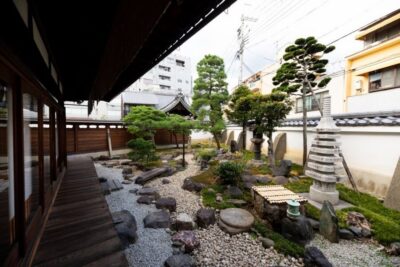
Kyoto: 45-Minute Tea Ceremony Lesson Experience
Read our review →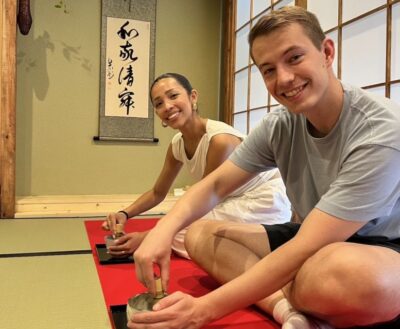
Kyoto: Table-Style Tea Ceremony at a Kyo-Machiya
Read our review →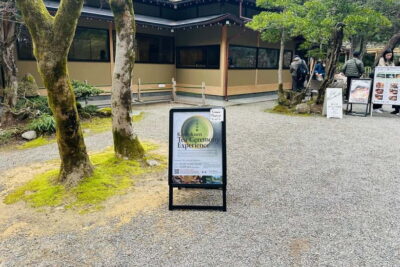


Browse the lists this tea experience appears in