
Review · KYOTO
Kyoto: Quiet and Graceful Tea Ceremony
Kyoto’s quiet tea ceremony offers something many sightseeing stops cannot: a short pause with no crowds, no hurried transfers, and no need to know Japanese customs beforehand. A tea master prepares premium matcha with measured movements, explains the meaning behind the tools and gestures, and then lets you take part.
I like the small maximum group of eight, which keeps the room calm and gives you a fair chance to ask questions. I also like the simple pairing of strong matcha and seasonal Japanese sweets. It feels focused rather than padded with shopping or theatrical extras.
The main consideration is the setting. This takes place in a private tea master’s house, not a grand tea pavilion, and kimono rental is not included. Photos are allowed before and after the ceremony, but not during the tea performance.
Key points at a glance
- A 45-minute introduction: A compact format that fits neatly into a busy Kyoto day.
- Tea made in front of you: Watch the host prepare matcha according to formal Japanese tea customs.
- You prepare your own cup: After the demonstration, you get to make tea yourself.
- Seasonal sweets included: Traditional Japanese sweets balance the bitterness of matcha.
- Small and personal: The stated maximum is eight people, with private small-group sessions available.
- Quiet, plain setting: Expect a private tea room, not costumes, staged photography, or a lavish tea-house production.
A calm introduction to Kyoto’s tea tradition
A tea ceremony is not simply a way to drink matcha. It is a lesson in attention. The host handles each utensil with care, sets everything in its place, and moves at a pace that can feel almost startling after a day of Kyoto sightseeing.
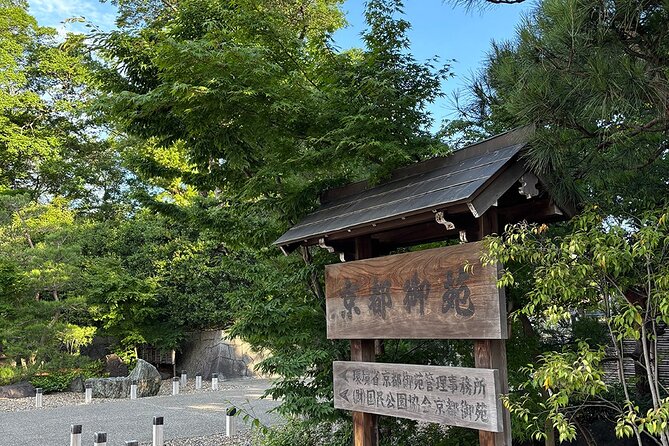
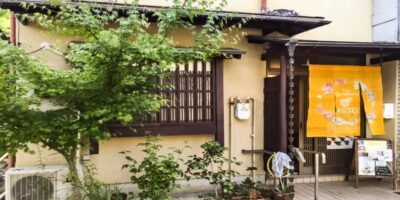
That calm is the heart of this experience. The ceremony is held at Omotenashi Tea Ceremony 南茶道教室, at 450-1 Sanbongichō in Kyoto’s Nakagyo Ward. The listed meeting point is 南総合会計事務所, so check the address closely on your phone rather than assuming you are heading to a large, clearly marked attraction.
The activity lasts about 45 minutes. That is long enough to see a complete demonstration, hear an explanation of the customs, taste the sweets and matcha, and prepare tea yourself. It is not long enough for an extended study of tea schools, utensils, or Japanese aesthetics. Think of it as a well-focused first introduction.
More Tea Ceremonies in Kyoto
- Kyoto: Tea Ceremony in a Traditional Tea House in Kiyomizu
★ 4.9 · 3,519 reviews - Kyoto: Tea Ceremony Ju-An at Jotokuji Temple
★ 4.9 · 3,207 reviews - Kyoto: 45-Minute Tea Ceremony Lesson Experience
★ 4.3 · 2,378 reviews
Entering the private tea room
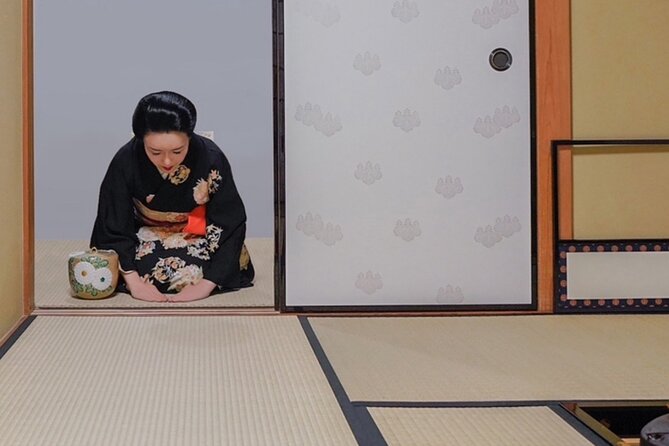
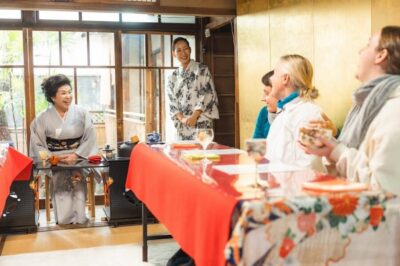
The setting matters here. You are entering a tea master’s private home, specially designed for tea ceremony, rather than a formal public tea house with a polished visitor center. That gives the experience an everyday, personal quality.
Some people will find this exactly right. The room is quiet, the scale is small, and the host can give attention to questions. A solo participant can still feel comfortable, and couples or families do not get lost in a large crowd.
Others may find the setting too plain for the price. If you picture lacquered halls, gardens, hired musicians, or an elaborate costume package, this is not that kind of outing. The focus is on the ritual itself, not on visual spectacle.
You may also find the room cool in November. One person specifically found the house cold during a late-autumn visit. That is a useful practical warning: dress for comfort, since sitting quietly in a tatami room can feel cooler than walking around Kyoto.
Watching the host prepare matcha
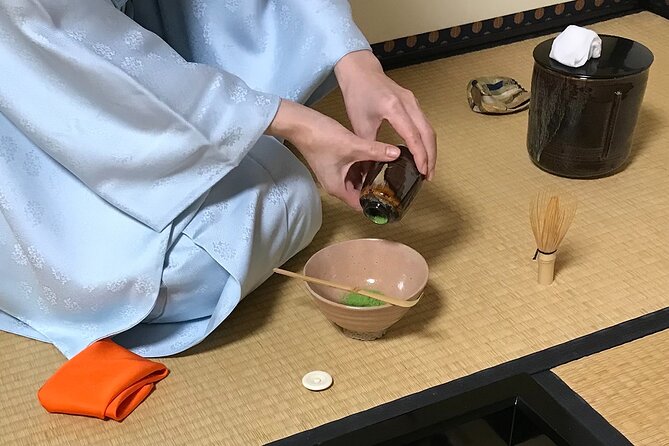
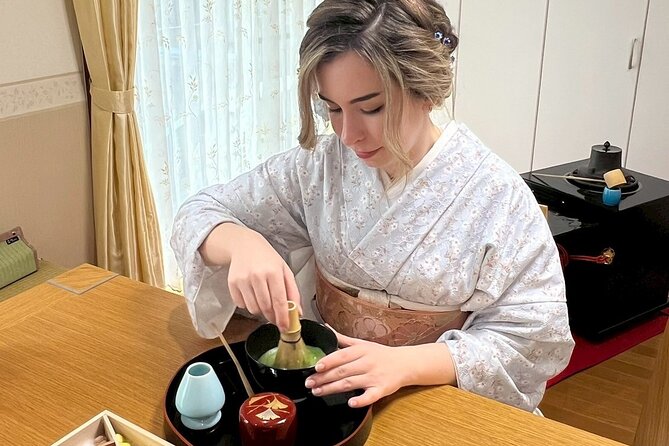
The first major part of the session is observation. The tea master lays out the equipment and prepares the matcha in a deliberate sequence. The value is in seeing the process at close range, where you can notice the order of the actions and the care given to each utensil.
The host explains proper etiquette for entering the room and sitting. You do not need prior knowledge, and you are not expected to perform perfectly. The guidance is intended to make you comfortable with the customs rather than test you on them.
Mai has received especially warm praise for her graceful manner, clear explanations, and ability to put families at ease. Other hosts are also described as patient and open to questions. Since staff may vary, do not book expecting one particular person unless your confirmation names Mai.
The silence during preparation is part of the experience. It may feel unusual at first, especially if you are used to guided activities filled with constant commentary. Here, the pauses let you watch the movement itself. The effect can be relaxing, but it also means the ceremony may feel less lively than a conventional cooking or craft class.
Matcha, sweets, and your turn with the whisk
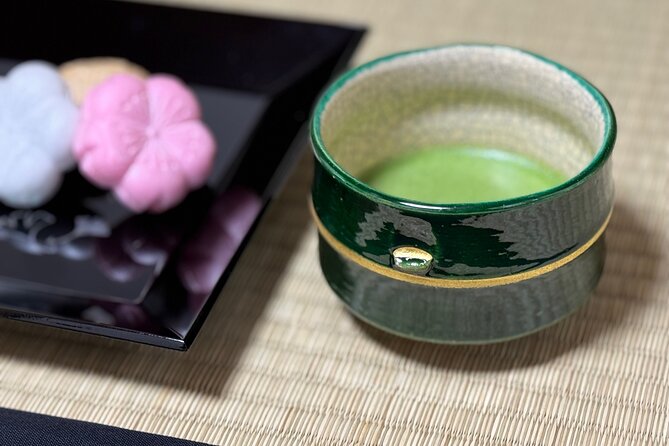
Traditional Japanese sweets are served to accompany the tea. Their sweetness is not just a snack between explanations. It helps balance the bitter, grassy taste of matcha and gives you a small lesson in the way Japanese food is often arranged around season and contrast.
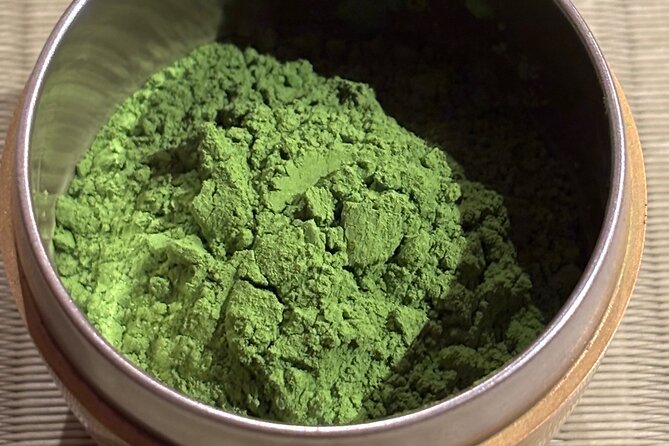
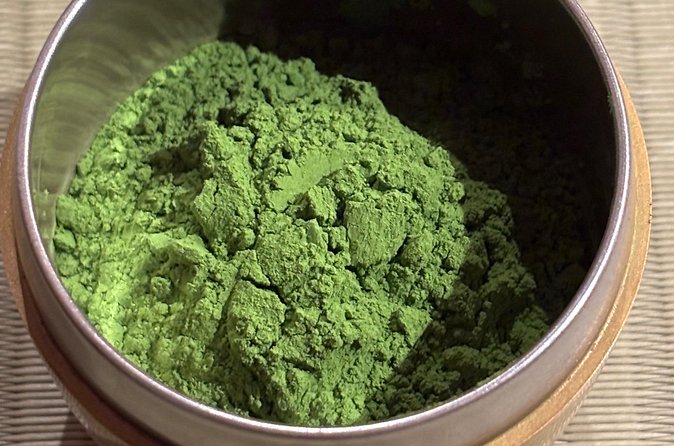
The exact sweet can vary, but the experience includes a traditional seasonal Japanese sweet and premium matcha sourced from Kyoto producers. If you are new to matcha, expect a flavor that is stronger and more vegetal than ordinary green tea. The sweet makes the pairing easier for many first-time drinkers.
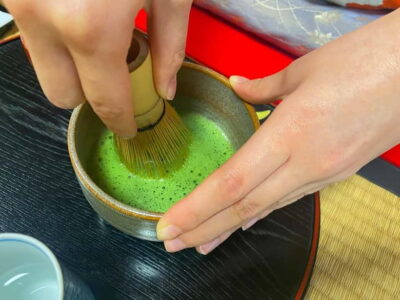
After watching the demonstration, you get to prepare your own tea. This is one of the strongest parts of the session because it changes you from a spectator into a participant. You can try the technique, ask questions as you work, and see how simple tools produce a drink that is central to the ceremony.
The activity suits beginners particularly well. You do not have to memorize a long series of rules. The host shows you what to do, explains the reason for the main actions, and allows you to take part without pressure.
Families can also find this section engaging. Children may enjoy the hands-on task more than the quiet demonstration. One family found the children liked making tea, and the host even brought Oreos when they did not care for the sweet. That is a small detail, but it suggests a flexible and caring approach to family visitors. It should not be treated as a guaranteed part of every booking.
Same leaf, a different ritual:
- Kyoto: Table-Style Tea Ceremony at a Kyo-Machiya
★ 4.9 · 1,211 reviews - Kimono Tea Ceremony at Kyoto Maikoya, NISHIKI
★ 5.0 · 911 reviews - Arashiyama Bamboo, Temple, Monkeys, or Secret Sake Brewery
★ 4.8 · 886 reviews - Kyoto: Arashiyama Bamboo Forest, Monkeys, Matcha & Temple Tour
★ 5.0 · 759 reviews
Why the small group changes the experience
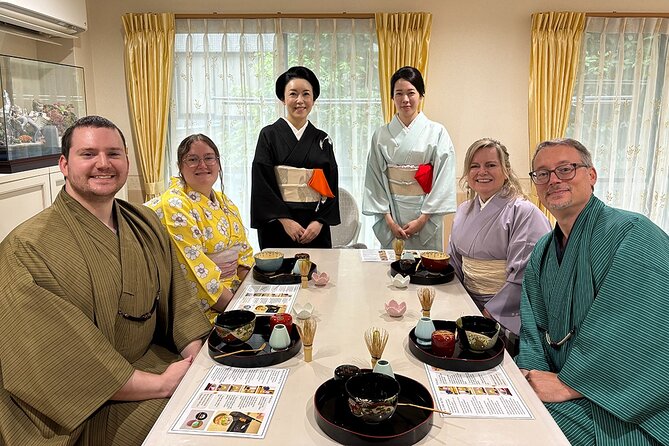
The maximum group size is eight people. That is small enough for the host to answer questions and show the preparation clearly, while still allowing you to share the ritual with a few others.
A small room can also make the ceremony feel more personal. You hear the utensils, see the host’s hands, and have a better chance of following the explanation. For a cultural activity built around quiet gestures, that matters more than a large room with a grand interior.
The tradeoff is that a private-home setting has less space and fewer visitor services. If someone arrives too early or the timing around the start is awkward, the quiet mood can be interrupted. One account describes an interruption from people arriving early, so arriving at the stated time rather than well ahead of it is sensible.
The description refers to private small groups of up to ten, while the additional booking information gives a maximum of eight. I would rely on the stated maximum of eight when deciding how intimate the session is likely to be.
What the ceremony does not include
This experience does not include kimono rental or dressing. That point matters because many Kyoto tea activities advertise a costume element. Here, you come in your own clothes and focus on the tea customs.
Photos and videos are not allowed during the actual tea performance. The restriction protects the quiet of the room and keeps phones from becoming part of the ritual. You can take photos before and after the ceremony, including during the portion when you are making your own matcha, according to the host’s response to this concern.
For some people, this is a benefit. You can pay attention to the ceremony rather than trying to record every movement. For others, it will be a genuine drawback, especially if the main reason for booking is a series of kimono photographs.
The experience also does not appear designed as a lavish meal, a full tea-school course, or a long historical lecture. You receive sweets and tea, not a substantial lunch. The emphasis is on atmosphere, etiquette, preparation, and participation.
Is $56.49 a fair price?
At $56.49 per person, this is not the cheapest way to taste matcha in Kyoto. You can find simple tea service at cafés for far less. The price makes more sense if you want instruction, a formal demonstration, and a chance to prepare tea yourself in a small group.
The 45-minute duration keeps the cost from becoming a major time commitment. You can place it between visits to central Kyoto sights without sacrificing half a day. That is useful when your schedule includes temples, markets, and evening plans.
Still, value depends on what you expect. If you want a polished tea house, a kimono, a garden, or extensive photography, the price may feel high because those elements are not included. If you value a quiet room, direct instruction, and a less commercial tone, the cost is easier to justify.
I would compare it with other Kyoto ceremonies on one key question: are you paying for costumes and photographs, or for the tea ritual itself? This activity clearly leans toward the second option.
Who will enjoy this most
I would choose this for a first-time visitor who wants a manageable introduction to Japanese tea culture without committing to a long formal course. The host’s explanations are designed for beginners, and the chance to make your own tea gives the session a clear payoff.
It also suits couples looking for a peaceful break, solo visitors who want a welcoming cultural activity, and families with older children who can sit quietly and follow instructions. The small group helps keep the experience personal.
People who enjoy design, ritual, food traditions, and small details will get the most from it. You will notice the arrangement of utensils, the order of movements, and the contrast between the sweet and the tea.
I would hesitate if your priority is dressing in a kimono, taking photos throughout, or visiting a grand historic tea house. I would also think twice if you dislike bitter tea, though the sweet helps soften the experience.
Practical advice before you go
Confirm the exact meeting address and allow enough time to locate the building. The meeting point is in Nakagyo Ward and is near public transportation, but the supplied address may not look like a typical tourist attraction.
Bring a mobile ticket and keep your phone available for directions, but plan to put it away once the ceremony begins. Since photography is restricted during the performance, you will enjoy the session more if you accept that the memory will mainly be your own.
Wear comfortable clothing. You do not need a kimono, and none is supplied. If you are visiting in a cool month, bring an extra layer because the tea room may feel chilly while you are sitting still.
The activity allows service animals and confirmation is provided at booking. Free cancellation is available until 24 hours before the start time. Inside that 24-hour window, changes and refunds are not accepted.
The quiet strength of this Kyoto experience
The best feature here is not a fancy room or a long list of inclusions. It is the chance to watch a practiced host perform a precise ritual, then try part of it yourself without feeling foolish.
That balance of ceremony and participation works well. You observe first, taste matcha with a seasonal sweet, learn the basic etiquette, and then handle the tools. The session is short, but the structure gives it a clear beginning, middle, and end.
The experience is not flawless for every taste. The private home can feel plain, the room may be cold, and the absence of kimono rental or ceremony photography will disappoint anyone expecting a staged cultural package. Some people may also find the pace rushed, especially if they hoped for a longer conversation.
For the right visitor, those limits are part of the appeal. This is a quiet, sincere introduction to tea ceremony, with fewer distractions and more attention to the ritual itself.
Should you book it?
Book this tea ceremony if you want a calm, small-group lesson with matcha, seasonal sweets, and hands-on preparation. It is especially well suited to first-time visitors, couples, solo participants, and families who want a cultural activity that fits into 45 minutes.
Skip it if your main goal is a kimono, extensive photographs, a grand tea-house setting, or a full meal. At $56.49, the value rests on personal instruction and atmosphere, not on a long itinerary or elaborate extras.
For a quiet Kyoto pause that asks you to slow down and pay attention, this is a solid choice. Arrive at the correct address, bring an open mind, and expect a private tea room rather than a theatrical production.
FAQ
How long does the tea ceremony last?
The activity lasts approximately 45 minutes.
Where does the tea ceremony meet?
It meets at 南総合会計事務所, 450-1 Sanbongichō, Nakagyo Ward, Kyoto, 604-0871, Japan. The activity ends back at the meeting point.
How many people can join?
The stated maximum is eight people. The experience is also presented as suitable for private small groups.
Is kimono rental included?
No. Kimono rental and dressing are not included in this tea ceremony.
Can I take photos during the ceremony?
Photos and videos are not allowed during the tea performance. Photos are allowed before and after the ceremony, including during the portion when you make your own matcha.
What is included with the tea?
The experience includes premium matcha and traditional Japanese seasonal sweets. You also watch the preparation and have an opportunity to prepare tea yourself.
Newly steeped around Kyoto
- Whisk Your Own Matcha: A Zen Matcha Experience at Temple★ 3.6 · 7 reviews
- Uji Walking Tour – Byodo-in temple and Tea Ceremony from Kyoto★ 3.5 · 3 reviews
- Kyoto: Authentic Tea Ceremony in a Small Group★ 5.0 · 7 reviews
- Tea ceremony at Kyoto’s Zen Temple Teahouse★ 5.0 · 2 reviews
- Tea Ceremony Experience in Traditional Kyoto Townhouse★ 5.0 · 19 reviews
- Tea Ceremony in 150 Years Old Townhouse with Tables and Chairs★ 5.0 · 22 reviews
- Sencha-do the Japanese Tea Ceremony Workshop in Kyoto★ 5.0 · 21 reviews
- Silent Beauty of Kyoto Zen Walk and Tea Experience★ 5.0 · 2 reviews
Tea Ceremony Experiences, compared.
Kyoto: Tea Ceremony in a Traditional Tea House in Kiyomizu
Read our review →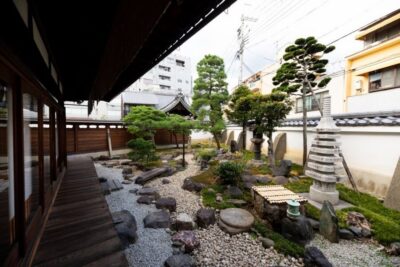
Kyoto: 45-Minute Tea Ceremony Lesson Experience
Read our review →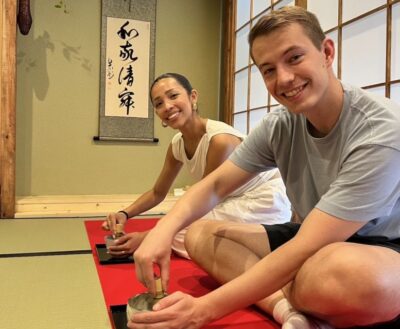
Kyoto: Table-Style Tea Ceremony at a Kyo-Machiya
Read our review →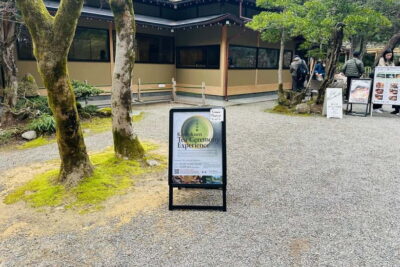


Browse the lists this tea experience appears in