
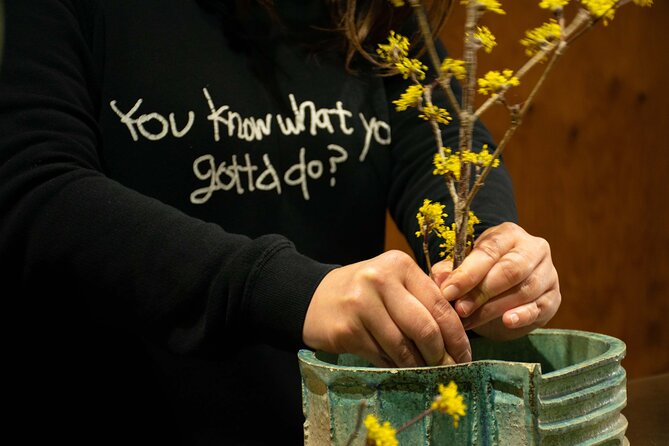
Review · KYOTO
Kyoto Tea ceremony with Japanese Flower Arrangement Ikebana
The most memorable part of this Kyoto class is the switch from choosing flowers in a shop to placing your own arrangement in the tokonoma, the alcove of a traditional Japanese room. You are not just watching Ikebana and tea ceremony. You make something, then see how it belongs in the setting.
I like the small group limit of six, which should make it easier to ask questions and receive hands-on help. I also like the warm, family-style setting in a renovated townhouse on a quieter street, rather than a large staged cultural center. The main consideration is time: at about 90 minutes, this is a compact introduction, not a full course in either art.
Key points to know
- Choose your own seasonal flowers at the flower shop before beginning the arrangement.
- Work in a roughly 100-year-old townhouse near Kinkaku-ji and Daitoku-ji.
- Display your Ikebana in the tea-room alcove, giving your work a real place in the ceremony.
- Watch a tea master and try the role yourself if you wish.
- Take your floral arrangement to your hotel after the class if you prefer.
- Expect a maximum of six participants, with beginners welcome.
Choosing Flowers in a Kyoto Townhouse
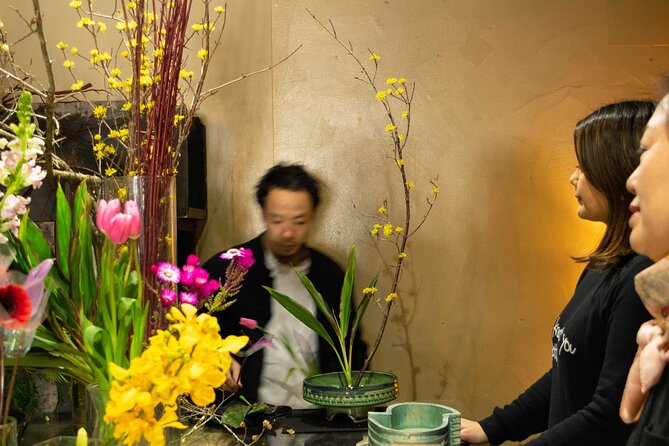
The experience begins at 44-4 Murasakino Kamimonzenchō in Kyoto’s Kita Ward. The address places you near two major cultural sights, Kinkaku-ji and Daitoku-ji, so this class can fit neatly into a day in northern Kyoto.
You first select flowers from the shop. This is a useful detail, not a minor shopping stop. Ikebana is built around the character of the plant, and choosing the flowers gives you an immediate connection to the material in front of you. Seasonal color and shape become part of the decision before any cutting or arranging begins.
The flower shop occupies a renovated traditional townhouse about 100 years old. That setting changes the mood of the class. Instead of entering a modern studio designed only for lessons, you begin in a home-like space with a sense of age and daily use.
The tone is informal and personal. One published comment describes the street as less geared toward tourism and the class as family-like. If you want polished spectacle, this may feel modest. If you prefer a quiet cultural activity with a local feel, the setting is a strong part of the appeal.
More Tea Ceremonies in Kyoto
- Kyoto: Tea Ceremony in a Traditional Tea House in Kiyomizu
★ 4.9 · 3,519 reviews - Kyoto: Tea Ceremony Ju-An at Jotokuji Temple
★ 4.9 · 3,207 reviews - Kyoto: 45-Minute Tea Ceremony Lesson Experience
★ 4.3 · 2,378 reviews
Learning Ikebana Without Previous Experience
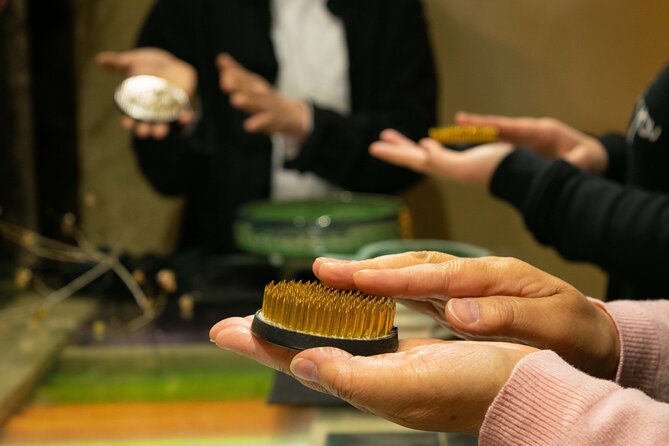
The Ikebana portion introduces the history and art of Japanese flower arrangement, then moves into your own work. Beginners are welcome, so you do not need to know the names of formal schools or arrive with an artistic plan.
The instructor’s approach is slightly different from strict classic forms. The focus is on bringing out the beauty of each plant while respecting its natural shape. The result may feel closer to a simple, wabi-sabi style than to a perfectly symmetrical bouquet.
That distinction matters. You are not simply packing a vase with flowers. You are asked to notice line, space, balance, and the way a stem bends. The open space around the flowers matters as much as the flowers themselves.
The activity description presents Ikebana as a form of quiet reflection. That does not mean you must treat the session as a formal meditation class. It means the arranging process gives you a calm task, with enough time to pay attention to what is in front of you.
I would expect the instructors to guide you through the process rather than leave you to guess. The available feedback repeatedly highlights patience and clear instruction, which is especially useful if you are worried that your arrangement will look wrong.
There is also a personal side to the art. The workshop presents your arrangement as an expression shaped by your past and present. That may sound lofty, but the practical point is simple: your work does not need to copy a model exactly. You have room to respond to the flowers in your own way.
Giving Your Arrangement a Place in the Tea Room
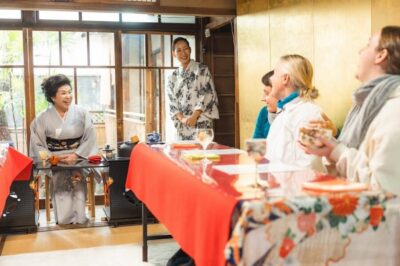
After the flower workshop, you move into a traditional Japanese room for the tea ceremony. Your arrangement is placed in the tokonoma, the decorative alcove that helps set the tone of the room.
This is one of the best choices in the experience. Your Ikebana is not treated as a craft project that disappears into a bag as soon as the lesson ends. You see how it functions in a room designed for careful attention to objects, space, and season.
The arrangement also becomes part of the tea setting. You can look at it from a different angle and understand why restraint matters. A few stems placed with care can have more presence than a crowded display.
The tea-room transition gives the 90-minute class a clear rhythm. First, you work with flowers. Then, you step back and see how the arrangement relates to a traditional ceremony. The two arts make more sense together than they would as separate demonstrations.
Watching Tea Ceremony and Trying the Tea Master’s Role
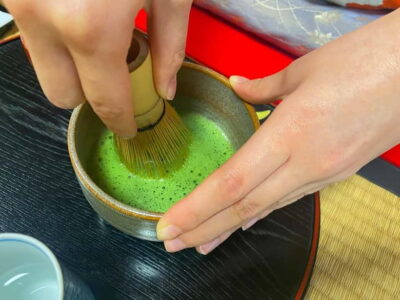
In the tea ceremony portion, you see how a tea master conducts the ritual. If you wish, you can also take a turn as the tea master.
The chance to participate is important. Watching a ceremony can be beautiful, but it can also leave you unsure about what each gesture means. Taking a role gives you a more direct sense of the care and order involved.
You should not expect a full apprenticeship in tea ceremony during this visit. The session is short, and its purpose is an introduction. Still, the combination of demonstration and participation gives you more to remember than a presentation alone.
The instructors are described as informative and patient, which should help if you are unfamiliar with the etiquette. You can ask questions while learning, rather than trying to decode every movement from a distance.
The tone appears respectful without being stiff. That balance suits visitors who want contact with Japanese tradition but do not want to feel tested on rules they have never learned.
Same leaf, a different ritual:
- Kyoto: Table-Style Tea Ceremony at a Kyo-Machiya
★ 4.9 · 1,211 reviews - Kimono Tea Ceremony at Kyoto Maikoya, NISHIKI
★ 5.0 · 911 reviews - Arashiyama Bamboo, Temple, Monkeys, or Secret Sake Brewery
★ 4.8 · 886 reviews - Kyoto: Arashiyama Bamboo Forest, Monkeys, Matcha & Temple Tour
★ 5.0 · 759 reviews
What Makes the Small Group Size Matter
The maximum group size is six people. That is a meaningful advantage for an activity built around individual flower arrangements.
With a large class, you might spend much of the session watching other people work or waiting for help with your stems. A group of six gives the instructors a better chance to see each arrangement and offer guidance.
It also supports the calm mood. Ikebana involves concentration, and tea ceremony works best when the room does not feel crowded. The small group should make the townhouse and tea room feel more intimate.
The tradeoff is that availability may be limited. Confirmation is sent within 48 hours of booking, subject to availability. If your Kyoto schedule is tight, you should book with enough room to handle a possible scheduling issue.
The class suits solo visitors particularly well. The setting is described as warm and private-feeling, and the group size gives a person traveling alone a natural way to take part without needing a companion.
The $61 Price and What You Receive
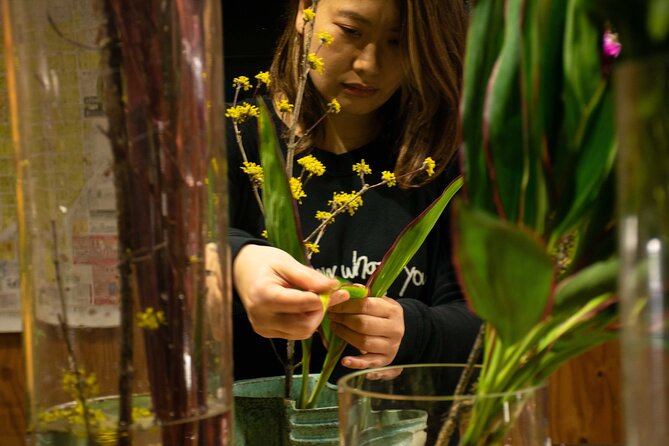
At $61, this is not the cheapest way to spend 90 minutes in Kyoto. You are paying for instruction, flowers, use of two traditional spaces, and a guided introduction to two Japanese arts.
The value improves if you care about participation. You are not only watching a tea ceremony. You select flowers, create an arrangement, display it in the alcove, and may try the tea master’s role.
The option to take the floral creation back to your hotel adds practical value. You receive a physical reminder of the class, and it can bring a small piece of the day into your room. You will want to confirm the best way to carry it safely during the session, since the supplied details do not explain packaging or transport.
The price also reflects the small class size. A larger group might cost less, but it would likely give you less direct attention. If you want a private-feeling cultural lesson rather than a quick photo stop, $61 is a reasonable price.
If your main goal is to see a famous Kyoto sight, spend the money on the temple visit instead. If you want to make something and learn through doing, this class gives you more substance than a short demonstration.
Fitting the Class Into a Kyoto Day
The meeting point is near Kinkaku-ji and Daitoku-ji, and the area is served by public transportation. The activity returns to the same meeting point, so you do not need to arrange a separate end location.
That makes planning straightforward. You can pair the class with nearby sightseeing, but you should allow enough time to reach the townhouse without rushing. The experience depends on a calm start, and arriving flustered works against the mood.
Because the session lasts about one hour and 30 minutes, it can fit into a morning or afternoon plan. The exact order of your day will depend on the class time, which is not provided here.
I would avoid booking it between two fixed appointments with no margin. Confirmation depends on availability, and the class includes a move from the flower shop area into the tea room. The end is at the original meeting point, which helps, but you still need time for transport afterward.
The location is useful for a northern Kyoto day, especially if you already plan to visit Kinkaku-ji or Daitoku-ji. The activity itself is quieter than those major sights, giving you a change of pace from temple crowds and photo stops.
Who Will Enjoy This Experience Most
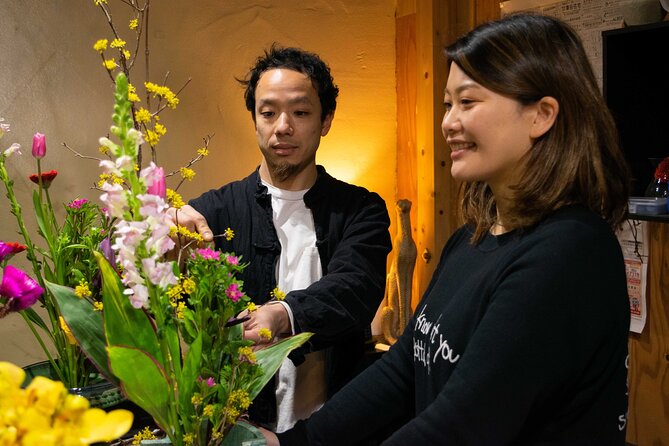
I would choose this for you if you want a cultural activity that asks you to take part. It suits first-time visitors who want an approachable introduction to Ikebana and tea ceremony, not a technical course in either discipline.
It is also a good choice for solo visitors. The small group and family-style atmosphere can make the activity feel more welcoming than a large group tour.
Couples and friends may enjoy comparing their flower choices and arrangements, though the class does not turn into a competition. The focus is on the natural form of the plants and your own response to them.
This may not be right for you if you want a fast, highly scripted attraction with constant explanation. The quiet pauses are part of the point. Some people will find that peaceful; others may prefer a longer guided temple visit or a more energetic workshop.
The class is suitable for most participants, and service animals are allowed. Beginners can join, so you do not need previous experience with flowers, Japanese arts, or tea ceremony.
Booking, Cancellation, and Practical Details
You receive confirmation within 48 hours of booking, subject to availability. The experience uses a mobile ticket, which keeps entry simple once your place is confirmed.
Free cancellation is available if you cancel at least 24 hours before the local start time. Cancel within 24 hours, or request changes during that period, and you will not receive a refund.
The meeting point is:
44-4 Murasakino Kamimonzenchō
Kita Ward, Kyoto 603-8217, Japan
The activity ends back there. Since the class is near public transportation, you can continue to another Kyoto sight without arranging a transfer through the activity provider.
Should You Book the Ikebana and Tea Ceremony Class?
I would book this if you want a quiet, hands-on Kyoto experience with a small group and a strong sense of place. The best features are the seasonal flower selection, the traditional townhouse, and the chance to display your own work in the tea-room alcove.
The class is especially good for solo visitors, beginners, and anyone tired of simply looking at cultural sights. It gives you a task, a setting, and a little time to slow down.
I would skip it if you want a long, technical lesson or if your schedule cannot spare a relaxed 90 minutes. At $61, the value rests on your interest in participation and atmosphere.
For most visitors seeking a personal introduction to Japanese arts, this is a thoughtful choice. You leave with a better sense of how flowers, space, season, and ceremony work together, and you may leave with an arrangement for your hotel as well.
FAQ
Where does the Ikebana and tea ceremony experience take place?
It takes place at 44-4 Murasakino Kamimonzenchō in Kyoto’s Kita Ward, near Kinkaku-ji and Daitoku-ji.
How long does the experience last?
The activity lasts approximately one hour and 30 minutes.
What happens during the Ikebana workshop?
You choose seasonal flowers from the flower shop and create your own arrangement with guidance from the instructors.
Can beginners participate?
Yes. Previous Ikebana or tea ceremony experience is not required, and beginners are welcome.
What happens after the flower arrangement?
You move to a traditional Japanese room, display your arrangement in the tokonoma alcove, and take part in the tea ceremony experience.
Can I try being the tea master?
Yes. After watching the tea master, you may take on the role yourself if you wish.
Can I take my flower arrangement with me?
Yes. You are welcome to take your floral creation back to your hotel.
What is the cancellation policy?
You can cancel for a full refund up to 24 hours before the local start time. Cancellations or changes made within 24 hours are not refunded or accepted.
Newly steeped around Kyoto
- Whisk Your Own Matcha: A Zen Matcha Experience at Temple★ 3.6 · 7 reviews
- Kyoto: Authentic Tea Ceremony in a Small Group★ 5.0 · 7 reviews
- Tea ceremony at Kyoto’s Zen Temple Teahouse★ 5.0 · 2 reviews
- Uji Walking Tour – Byodo-in temple and Tea Ceremony from Kyoto★ 3.5 · 3 reviews
- Tea Ceremony Experience in Traditional Kyoto Townhouse★ 5.0 · 19 reviews
- Tea Ceremony in 150 Years Old Townhouse with Tables and Chairs★ 5.0 · 22 reviews
- Traditional Tea Ceremony in Kyoto★ 4.5 · 3 reviews
- Sencha-do the Japanese Tea Ceremony Workshop in Kyoto★ 5.0 · 21 reviews
Tea Ceremony Experiences, compared.
Kyoto: Tea Ceremony in a Traditional Tea House in Kiyomizu
Read our review →
Kyoto: 45-Minute Tea Ceremony Lesson Experience
Read our review →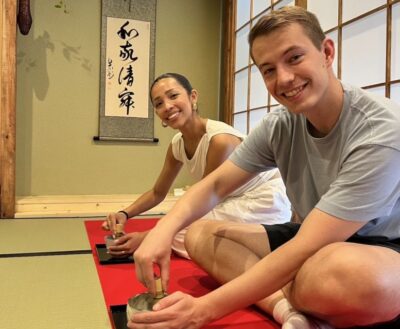
Kyoto: Table-Style Tea Ceremony at a Kyo-Machiya
Read our review →


Browse the lists this tea experience appears in