
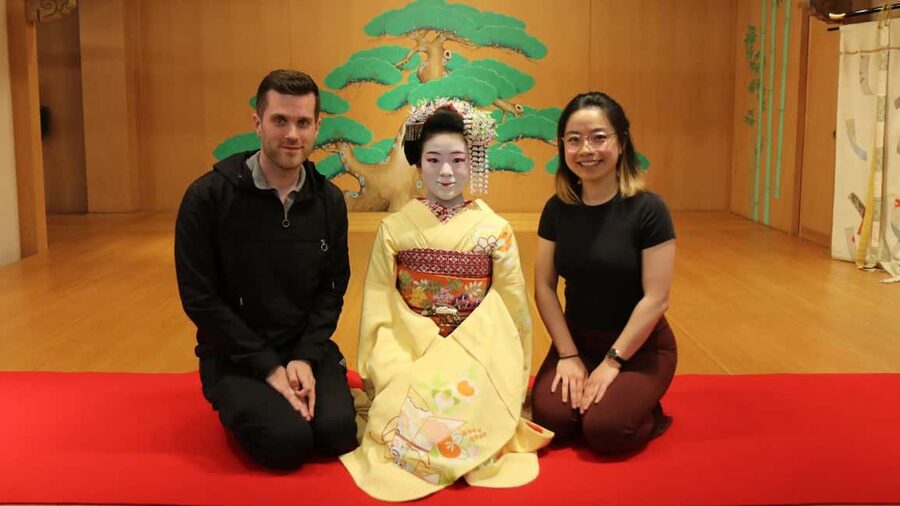
Review · KYOTO
Maiko Dance and Tea Ceremony on a Noh Stage in Kyoto
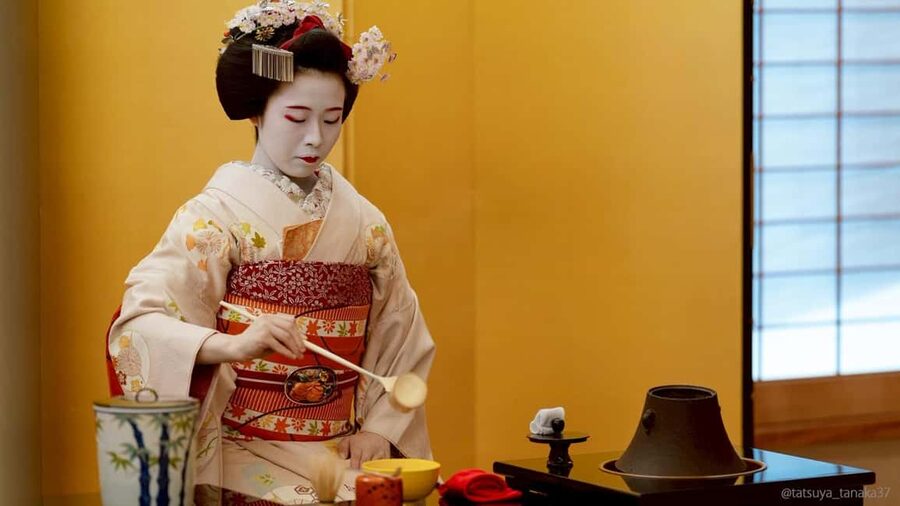
A maiko dance on a real Noh stage is the heart of this Kyoto experience. You watch an apprentice geisha perform in a quiet, formal setting, then see her prepare matcha with careful movements. It is a compact way to encounter two Japanese arts without rushing between sights.
I like the seasonal sweets and freshly made matcha, which give the tea ceremony a hands-on, sensory quality. I also like the chance to take photos and speak with the maiko, with an English-speaking interpreter helping you follow the customs and conversation.
The main drawback is the short running time. At about one hour to 90 minutes, this is an introduction rather than a full study of maiko culture, and the meeting point can vary by booking option.
Key points to know before booking
- A real Noh stage provides the setting: The performance takes place indoors at Kurochiku Tensho-kan in Kyoto.
- The maiko performs and prepares tea: You see a graceful dance and a formal matcha preparation during the same visit.
- Seasonal sweets are included: The sweets pair with the matcha and change with the season.
- English help is available: A professional English interpreter guide works alongside the Japanese-speaking staff.
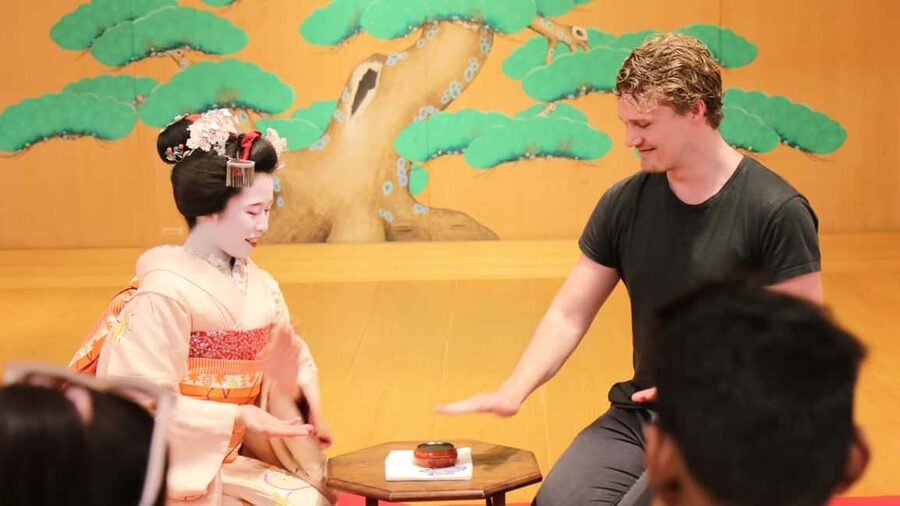
- Photos and conversation are part of the visit: You have time to interact with the maiko in an intimate setting.
- Plan for bare feet only if you forget: Shoes come off indoors, so bring socks.
Why the Noh stage changes the experience
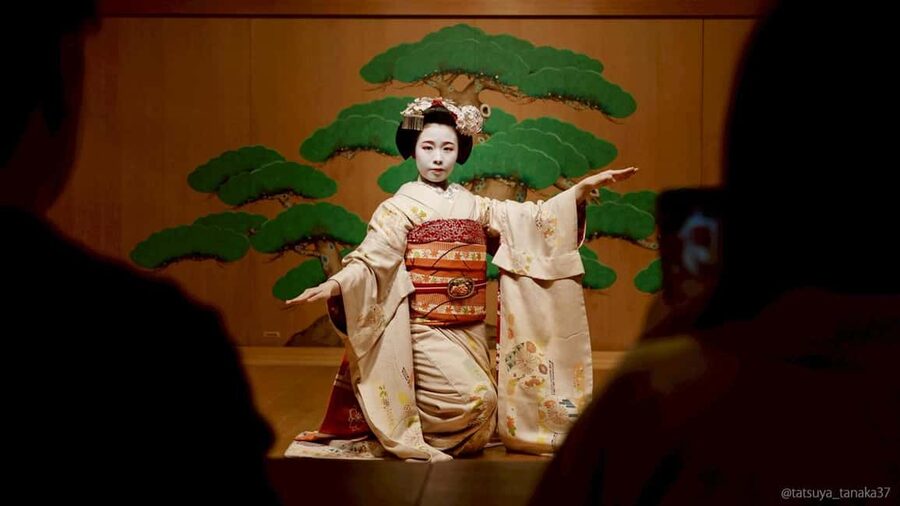
The location does much of the quiet work here. A Noh stage is designed for controlled movement, formal presentation, and close attention to gesture. Watching a maiko dance in that setting gives the performance more weight than it would have in a noisy restaurant or a large theater.
You are not simply checking off a cultural show. You are seeing a traditional performance in a space made for traditional performance. The result should appeal to you if you notice small details: the position of the body, the pace of the dance, the shape of a sleeve, and the way silence becomes part of the presentation.
The venue is Kurochiku Tensho-kan, and you should arrive at the first-floor reception at least 15 minutes before your booked start time. The meeting point may differ depending on the option you select, so check your confirmation carefully rather than assuming every booking begins in exactly the same place.
The visit takes place indoors, which makes it a useful choice in Kyoto rain or summer heat. You remove your shoes before entering the activity area, so socks are required. Comfortable seating is arranged, allowing you to watch without standing for the full program.
More Tea Ceremonies in Kyoto
- Kyoto: Tea Ceremony in a Traditional Tea House in Kiyomizu
★ 4.9 · 3,519 reviews - Kyoto: Tea Ceremony Ju-An at Jotokuji Temple
★ 4.9 · 3,207 reviews - Kyoto: 45-Minute Tea Ceremony Lesson Experience
★ 4.3 · 2,378 reviews
The maiko dance, graceful and close at hand
The dance is the visual center of the visit. A maiko is an apprentice geisha, and her performance reflects a tradition in which controlled movement matters more than speed or spectacle. You should expect grace, restraint, and a formal mood rather than a loud stage show.
That distinction is important when deciding if this suits you. If you want a fast cultural demonstration with constant action, the measured pace may feel too quiet. If you enjoy watching a performance unfold through small gestures, the setting gives you room to pay attention.
The authentic Noh stage also gives you a sense of occasion. You are seated in a traditional theater space, not watching a casual presentation in a hotel room. Since the event lasts only 60 to 90 minutes, the dance fits into a busy Kyoto day without taking over your schedule.
Photography is allowed as part of the experience, and you have a chance to chat with the maiko. The supplied details do not specify how long the conversation lasts or whether every question can be answered through the interpreter, so keep your expectations sensible. You will have an opportunity for interaction, but this is still a structured cultural program.
The tea ceremony and the meaning of matcha
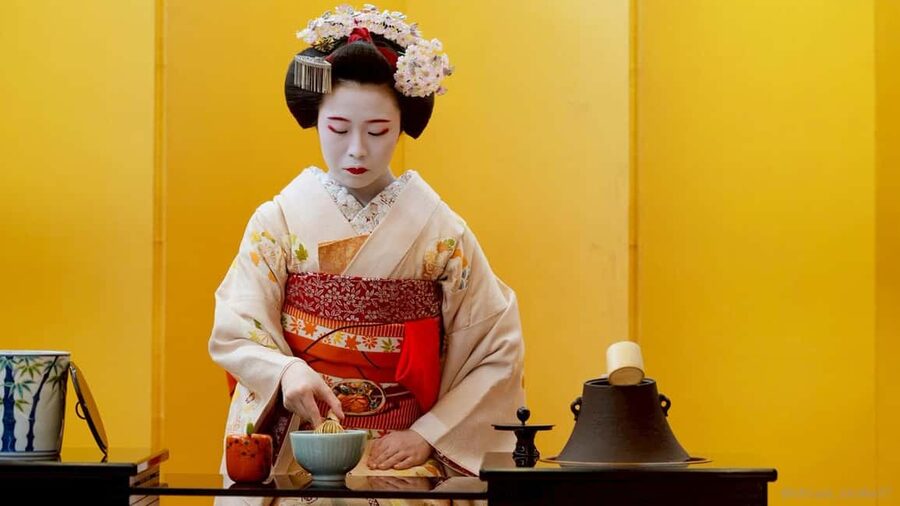
After or around the dance, the maiko prepares matcha for you. The value is in watching the method as much as in drinking the tea. The movements are deliberate, and the ceremony shows how Japanese hospitality can be expressed through preparation, timing, and attention.
You receive freshly prepared matcha and seasonal Japanese sweets. The sweet is not an extra purchase or a decorative side item. It is part of the tea experience, balancing the strong, earthy taste of matcha and giving you a small connection to the changing seasons.
I find this pairing especially helpful if you have never attended a tea ceremony. A cup of matcha by itself can seem unfamiliar, but seeing it prepared in a formal setting gives the drink a clear cultural context. You are using your eyes, hands, taste, and hearing during a short ceremony that asks you to slow down.
The experience is not described as a full lesson in tea ceremony procedure. You should expect to watch and take part in a welcoming, guided way, rather than train to become a tea practitioner. English interpretation helps you understand what is happening, but the ceremony itself remains rooted in Japanese language and custom.
What the interpreter adds
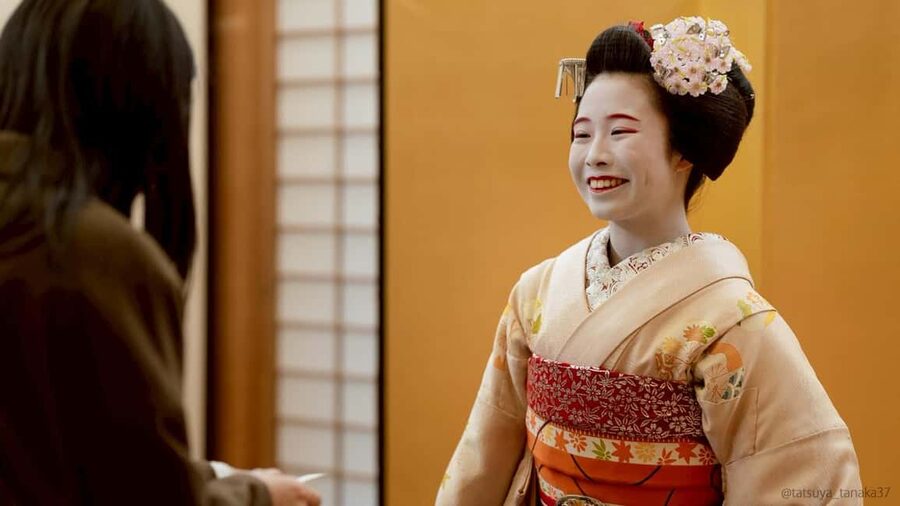
A professional English interpreter guide is included, and live guidance is available in English and Japanese. This matters because the dance and tea ceremony depend on details that can be easy to miss when you do not speak Japanese.
The interpreter can help place the actions in context and support the conversation with the maiko. That makes the event more approachable for first-time visitors who want more than a silent performance. You can focus on the presentation instead of trying to guess what each step means.
The provided information does not name the interpreter or the maiko, so you should not book this expecting a specific performer. Staff and performers may vary. The important point is that English assistance is part of the arrangement, not something you need to organize separately.
The atmosphere is described as dignified and serene. That usually means you should keep your voice low, follow staff instructions, and allow the ceremony to proceed at its own pace. This is not the place for constant movement or casual interruptions.
Same leaf, a different ritual:
- Kyoto: Table-Style Tea Ceremony at a Kyo-Machiya
★ 4.9 · 1,211 reviews - Kimono Tea Ceremony at Kyoto Maikoya, NISHIKI
★ 5.0 · 911 reviews - Arashiyama Bamboo, Temple, Monkeys, or Secret Sake Brewery
★ 4.8 · 886 reviews - Kyoto: Arashiyama Bamboo Forest, Monkeys, Matcha & Temple Tour
★ 5.0 · 759 reviews
Photos, conversation, and the human side
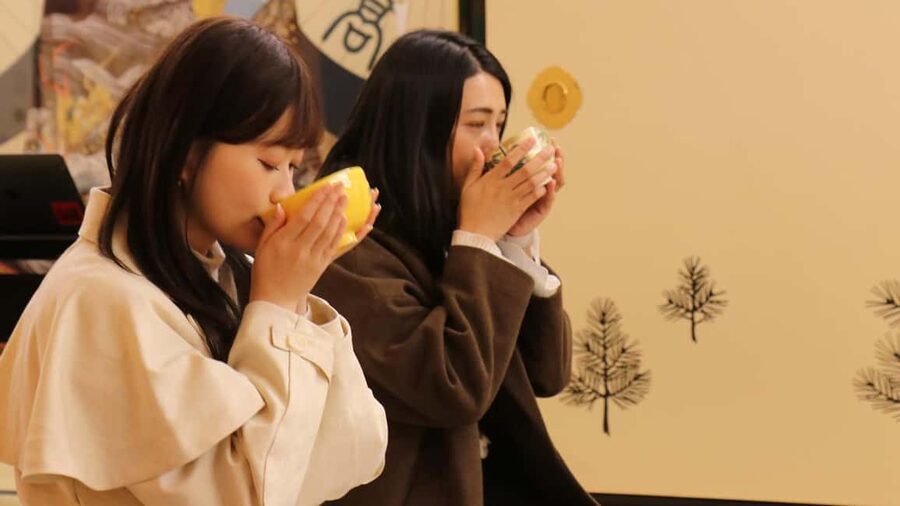
The chance to take photos and talk with the maiko adds a personal element to the formal program. The dance shows one side of the tradition, while conversation lets you connect with the person performing it.
Photos are useful here because the Noh stage and the maiko’s formal presentation create a distinctive setting. Still, follow any instructions from staff about when photography is suitable. The supplied details confirm that photos are part of the experience, but they do not promise unlimited photography during every moment of the dance or tea preparation.
The conversation also has practical limits. A professional interpreter is available, but the event lasts no longer than 90 minutes. If you have a long list of questions about training, daily life, costumes, or Kyoto’s geisha districts, you may need to choose only a few.
I would prepare two or three thoughtful questions in advance. That helps you use the limited interaction time well, especially if several people are attending the same session. The setting is intimate, but it is still a scheduled group activity rather than a private interview.
Price and value at $141
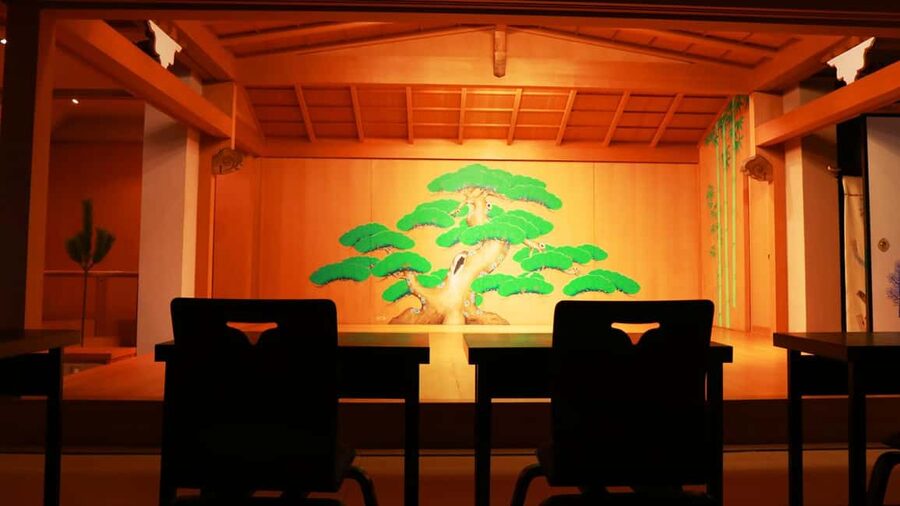
At $141 per person, this is not a low-cost sightseeing stop. The price makes more sense when you consider what is bundled: a maiko performance, use of a Noh stage, matcha, seasonal sweets, an English interpreter, the maiko dispatch fee, and a traditional handkerchief for each participant.
You are paying for access to a carefully arranged cultural encounter, not just a cup of tea. The stage, performer, interpreter, and ceremony all require advance planning. For you, the value is strongest if you want a polished introduction to Japanese performing arts and hospitality in one booking.
The value is weaker if you mainly want to sample matcha or see a short dance at the lowest possible price. Kyoto offers many inexpensive food and cultural stops, but this activity combines elements that are not usually found together in a brief visit.
Transportation is not included. You arrange your own way to the venue, and the meeting point can vary by the option booked. Add that time and cost when comparing this with an activity that includes hotel pickup or a longer neighborhood tour.
Who should book this Kyoto experience
I would recommend it to first-time Kyoto visitors who want cultural context without committing to a half-day program. It also suits you if you prefer indoor activities, appreciate formal arts, or want a memorable setting for photographs.
Families with older children may find the compact length helpful, though the quiet mood may not hold the attention of very young children. The arranged seating is useful for anyone who prefers not to stand for a performance.
This is also a good pick for couples, solo visitors, and small groups who want a refined cultural appointment. It gives you a clear start and finish, and the reserve-now-pay-later option can help you keep your schedule flexible.
I would think twice if you dislike ceremonial settings, do not want to remove your shoes, or expect a long, detailed lesson. You also need advance reservations, and the program can be canceled if there are too few participants or operational problems. In that case, alternative dates or a refund are provided.
Practical planning for the day
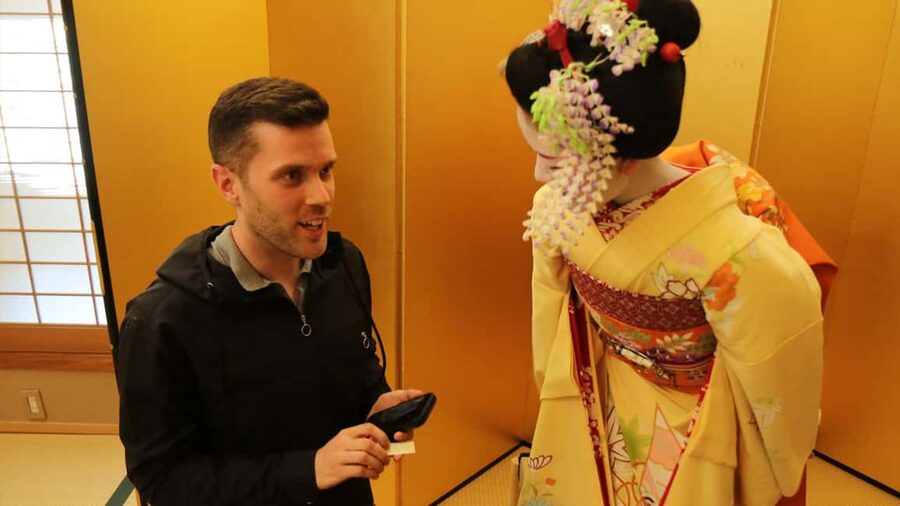
Wear or bring socks. You remove your shoes indoors, and the instruction is specific enough that you should not treat it as optional. Comfortable clothing will also make the seated portion easier.
Arrive at least 15 minutes early at the first-floor reception of Kurochiku Tensho-kan. Do not cut this close. The exact meeting point may vary with your booking option, and an early arrival gives you time to confirm the location and prepare for the indoor setting.
Allow 90 minutes in your schedule even if the session may last only one hour. That gives you room for arrival, seating, the dance, tea preparation, photos, and conversation without placing another reservation immediately afterward.
Cancellation is free up to 24 hours before the activity for a full refund. You can also reserve now and pay later, which is useful if your Kyoto plans are still shifting. Advance reservations are required, so do not expect to walk in and find a spare place.
How this fits into a Kyoto itinerary
The compact format lets you pair the visit with other Kyoto plans, but I would avoid scheduling a distant attraction immediately afterward. The event has a calm rhythm, and rushing out to catch a train or timed admission would undercut the point.
Because transportation is not included, plan your route before the day begins. Check the specific meeting point attached to your option, then allow extra time for finding the first-floor reception.
The experience works especially well on a day when you want a cultural pause between more active sightseeing stops. You receive a performance, a tea ceremony, sweets, conversation, and a small handkerchief keepsake without needing to organize each part yourself.
Should you book it?
Book this if you want a polished, short introduction to maiko performance and Japanese tea culture, especially in a traditional setting. The combination of a real Noh stage, seasonal sweets, English interpretation, and time for photos gives the $141 price a reasonable purpose.
Skip it if you are seeking a cheap tea tasting, a long cultural workshop, or a fully private encounter. For the right audience, this is an elegant Kyoto experience with clear structure and strong cultural focus. Plan for socks, arrive early, and give the quiet ceremony your full attention.
FAQ
How long does the maiko dance and tea ceremony last?
The activity lasts about one hour to 90 minutes. Check availability for the exact starting times and schedule.
Where does the experience take place?
It takes place indoors on a Noh stage at Kurochiku Tensho-kan in Kyoto. The meeting point may vary depending on the option booked.
Is an English guide available?
Yes. A professional English interpreter guide is included, and live guidance is available in English and Japanese.
What is included in the tea ceremony?
Matcha and seasonal Japanese sweets are included. The maiko prepares the matcha during the ceremony.
Can I take photos and speak with the maiko?
Yes. The experience includes time to take photos and chat with the maiko. An interpreter can assist with communication.
What should I bring?
Bring socks because you remove your shoes before taking part indoors.
Can I cancel the booking?
You can cancel up to 24 hours in advance for a full refund. If the activity is canceled because of insufficient participants or operational reasons, alternative dates or refunds are provided.
Newly steeped around Kyoto
- Whisk Your Own Matcha: A Zen Matcha Experience at Temple★ 3.6 · 7 reviews
- Uji Walking Tour – Byodo-in temple and Tea Ceremony from Kyoto★ 3.5 · 3 reviews
- Kyoto: Authentic Tea Ceremony in a Small Group★ 5.0 · 7 reviews
- Tea ceremony at Kyoto’s Zen Temple Teahouse★ 5.0 · 2 reviews
- Tea Ceremony Experience in Traditional Kyoto Townhouse★ 5.0 · 19 reviews
- Tea Ceremony in 150 Years Old Townhouse with Tables and Chairs★ 5.0 · 22 reviews
- Sencha-do the Japanese Tea Ceremony Workshop in Kyoto★ 5.0 · 21 reviews
- Silent Beauty of Kyoto Zen Walk and Tea Experience★ 5.0 · 2 reviews
Tea Ceremony Experiences, compared.
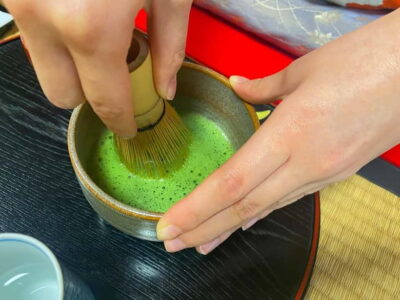
Kyoto: Tea Ceremony in a Traditional Tea House in Kiyomizu
Read our review →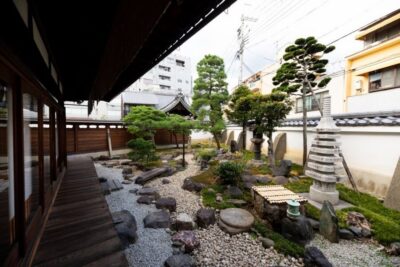
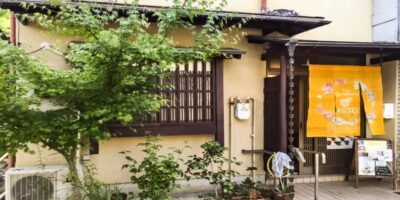
Kyoto: 45-Minute Tea Ceremony Lesson Experience
Read our review →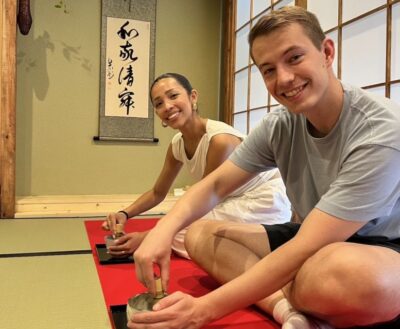
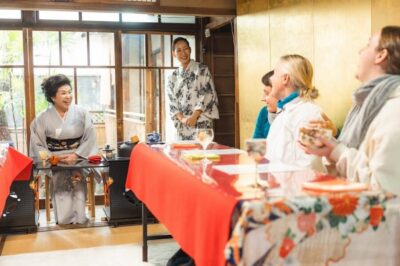
Kyoto: Table-Style Tea Ceremony at a Kyo-Machiya
Read our review →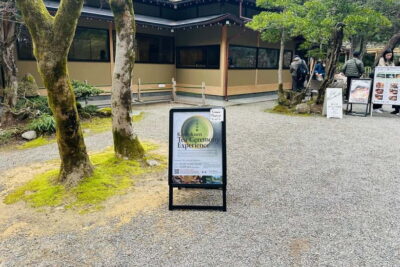


Browse the lists this tea experience appears in