
Review · KYOTO
Tea ceremony by the tea master in Kyoto SHIUN AN
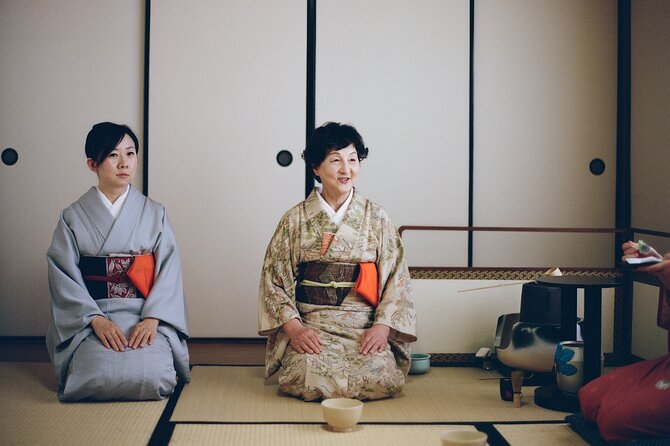
Kyoto’s tea ceremony is less about having a cup of tea than learning how every movement, object, and room detail fits together. At SHIUN AN, a qualified tea master leads a quiet 45-minute session near Daitoku-ji, with an English translator helping you follow the meaning behind the ritual. I like the small group size and the chance to prepare your own matcha, not just watch someone else do it.
I also like that you receive two bowls of matcha and two Japanese sweets, along with the utensils needed for the lesson. The main drawback is location: this is in a residential area north of central Kyoto, and several people have found the house or its stairs difficult to manage.
Key points to know before booking
- Near Daitoku-ji: You are close to one of Kyoto’s important Zen temple areas and about four bus stops from Kinkaku-ji, the Golden Pavilion.
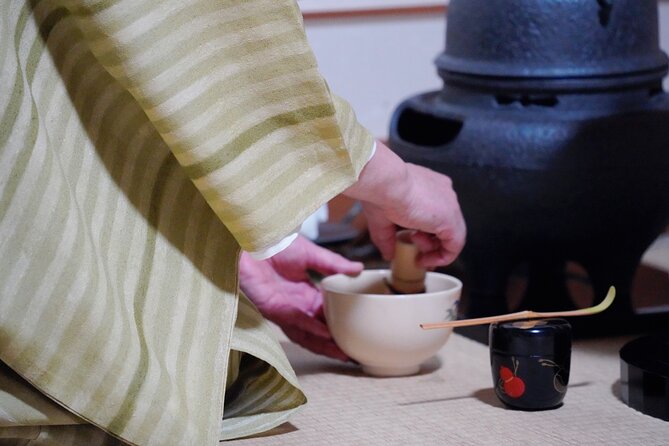
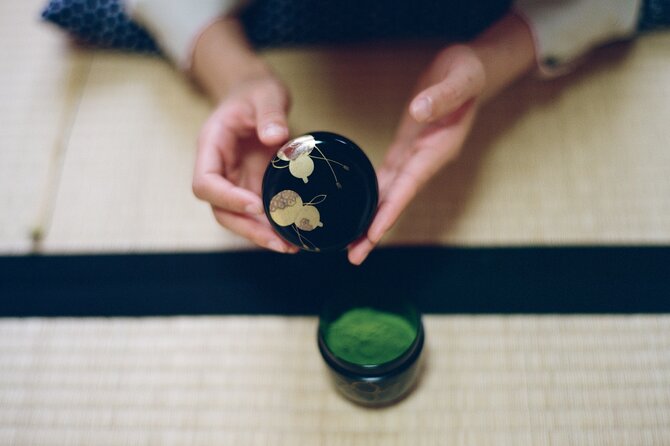
- Hands-on matcha lesson: You watch the tea master first, then make your own bowl with a whisk, scoop, bowl, and tea container.
- Small group setting: Sessions usually hold no more than six people, increasing to eight during busy seasons.
- Two teas and two sweets: The price includes two bowls of matcha and two types of traditional Japanese sweets.
- English help is provided: An interpreter explains the ceremony, utensils, history, and answers questions.
- Plan your route carefully: The home-style setting can be hard to find, and the activity does not include pickup or drop-off.
A traditional tea room near Daitoku-ji
SHIUN AN gives you a tea ceremony away from Kyoto’s busiest sightseeing streets. The meeting point is at 955-1 Idacho in Kamigyo Ward, in a quieter residential part of the city. That setting is part of the appeal. You are not entering a large tourist venue with a constant flow of people. You are visiting a small tea room where the pace can stay calm and deliberate.
The location also gives the ceremony useful cultural context. Daitoku-ji is a Zen Buddhist monastery with a long connection to tea culture. Many important priests studied there, and the temple complex helped shape the relationship between Zen practice, Japanese aesthetics, and the tea ceremony.
Kinkaku-ji is also nearby by Kyoto standards. The Golden Pavilion is about four bus stops away, so you can pair this activity with a visit to the famous temple. Do not treat the two stops as if they are next door, though. You still need to allow time for local transportation and finding the tea house.
The address is precise, but the setting can be tricky to locate. I would leave early, especially if you are unfamiliar with Kyoto’s bus system. One useful approach mentioned for this area is taking the subway toward the nearest practical station and then using a taxi or Uber for the final stretch. The short ride from a station may cost about 1,000 yen, though the exact fare depends on where you start.
More Tea Ceremonies in Kyoto
- Kyoto: Tea Ceremony in a Traditional Tea House in Kiyomizu
★ 4.9 · 3,519 reviews - Kyoto: Tea Ceremony Ju-An at Jotokuji Temple
★ 4.9 · 3,207 reviews - Kyoto: 45-Minute Tea Ceremony Lesson Experience
★ 4.3 · 2,378 reviews
What happens during the 45-minute ceremony
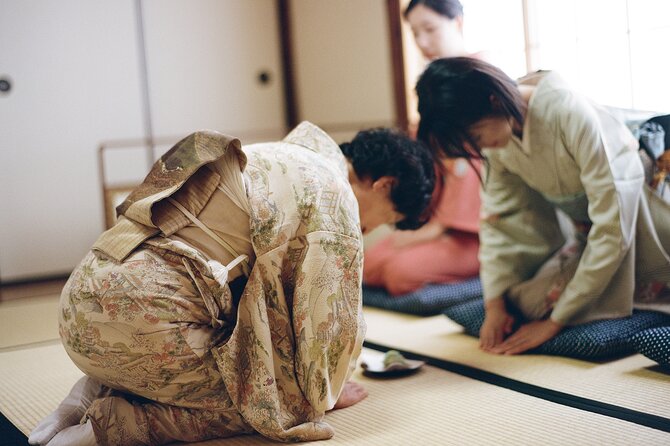
The session begins when the host brings you into the tea room. Before the tea is served, you have time to notice the hanging scroll and flower arrangement. These are not random decorations. Their placement and seasonal character are part of the room’s message, and the host explains why the setting matters.
The tea master then introduces the basic steps of the ceremony. You learn about the utensils, the order of actions, and the care taken with each movement. This explanation is important because the ceremony can seem mysterious if you only watch it from the outside. Once you understand the purpose of the bowl, scoop, whisk, and container, the precision begins to make sense.
You then watch the tea master prepare matcha. A seasonal Japanese sweet accompanies the tea. The sweetness balances the slightly bitter flavor of matcha, and the pairing is a central part of the experience rather than a small snack added at the end.
The ceremony includes two bowls of matcha and two kinds of sweets. One bowl is prepared for you, and later you take part in making your own. That structure works well for first-time visitors. You can watch carefully before trying the technique yourself.
At the end, each person receives instruction on preparing matcha. You handle the tea bowl and whisk, follow the demonstrated method, and make your own bowl. You should not expect your first attempt to match the tea master’s result. That contrast is useful. It shows how much control and practice go into producing a smooth, balanced bowl.
Why the tea master and translator matter
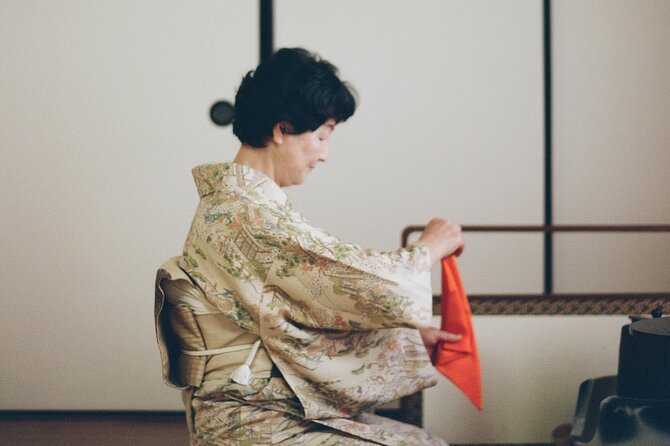
The tea masters at SHIUN AN hold a Tea Name, described as a qualification equivalent to a full professor level in the tea tradition. That gives the ceremony more substance than a quick demonstration designed only for photographs.
The English translator also plays an important role. The tea ceremony contains many small actions that are easy to miss, and a translation helps connect those actions to Japanese customs and ideas. The interpreter explains the process, provides historical context, and helps answer questions after the demonstration and hands-on lesson.
The spiritual side is introduced without forcing the experience into a religious lesson. Tea is presented as a learned practice connected with Zen ideas, including the search for insight through direct experience. You do not need prior knowledge of Zen or Japanese tea schools to take part. The point is to pay attention, learn the steps, and see how the ceremony links discipline with hospitality.
This is also a good activity for someone who wants cultural context rather than a simple matcha tasting. You are not only drinking powdered green tea. You are learning why the room is arranged as it is, why the host moves carefully, and why seasonal sweets and flowers are included.
The quiet setting is part of the experience
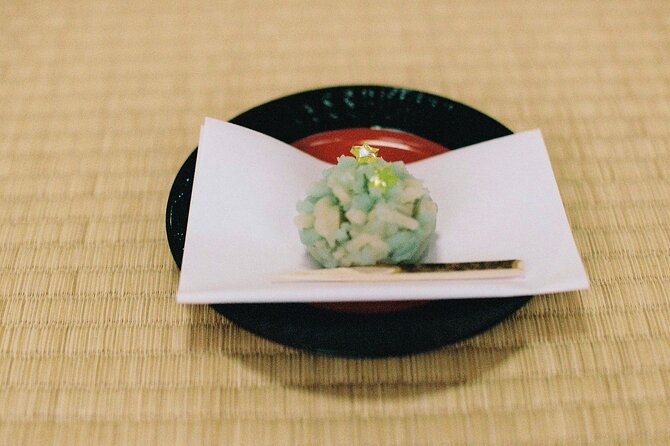
The residential location changes the mood. After a day around Kyoto’s major temples, a small tea room in a quiet neighborhood can feel like a useful pause. The ceremony itself is peaceful, and the 45-minute format is long enough to explain the tradition without taking half a day from your sightseeing plan.
The small group also helps. Six people is the normal maximum, though peak periods may bring the number to eight. That is still intimate enough for each person to see the demonstration and receive help during the matcha-making portion.
Some sessions may be even smaller. A single-person booking has taken place, creating a very quiet lesson with plenty of room for questions. You should not count on having the tea room to yourself, but the usual group size is far removed from a large bus tour.
The staff are described as warm and welcoming, and the formal setting does not prevent questions. The atmosphere is serious in the right way, but it is not meant to intimidate you. You can arrive with no experience and still follow the ceremony.
Same leaf, a different ritual:
- Kyoto: Table-Style Tea Ceremony at a Kyo-Machiya
★ 4.9 · 1,211 reviews - Kimono Tea Ceremony at Kyoto Maikoya, NISHIKI
★ 5.0 · 911 reviews - Arashiyama Bamboo, Temple, Monkeys, or Secret Sake Brewery
★ 4.8 · 886 reviews - Kyoto: Arashiyama Bamboo Forest, Monkeys, Matcha & Temple Tour
★ 5.0 · 759 reviews
Sitting on tatami and managing the stairs
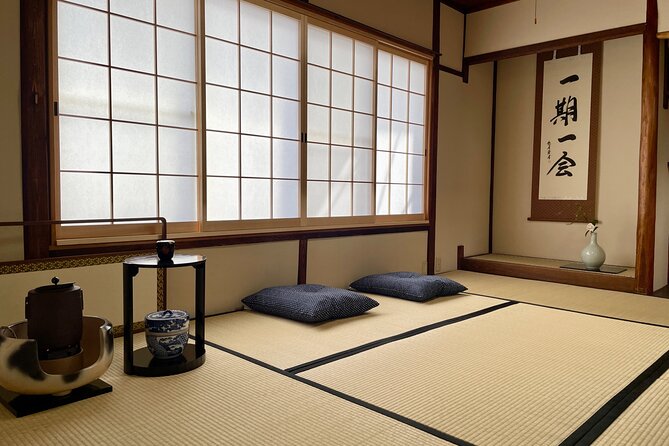
There are a few physical details to consider before you reserve. The ceremony takes place in a traditional room, and sitting on the floor may be part of the expected posture. One person was unable to sit in the preferred position for the full period and was still made comfortable. Another participant who could no longer sit on the floor was accommodated and included.
That flexibility is reassuring, but the space is still traditional rather than fully adapted. A review of the experience specifically points to difficult stairs, so you should contact the operator if stairs or floor sitting may be a problem for you. The activity provides white socks for the tatami floor, which is a thoughtful practical touch.
A folding fan is also included. It is part of the traditional tea setting and helps you feel prepared when you enter the room. The provided tea bowls, tea container, scoops, and whisks are used during the demonstration and your own practice.
Service animals are allowed. If you have food allergies, tell the operator in advance because Japanese sweets are included.
Is $33.03 good value?
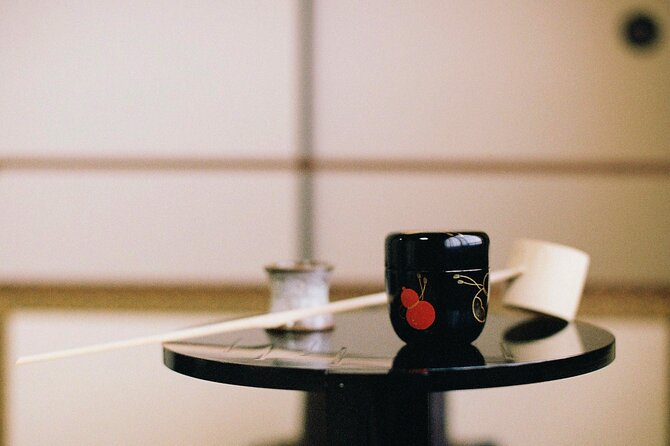
At $33.03 per person, this is a fairly modest price for a guided cultural activity in Kyoto. The value comes from the quality of the instruction and the amount included, not from the length alone.
You receive a formal tea ceremony, an explanation of the utensils and room design, two bowls of matcha, two kinds of sweets, and a hands-on lesson. You also have an interpreter to make the explanation useful to English-speaking visitors. A short demonstration with no participation could feel thin, but making your own bowl gives the session a clear payoff.
The setting adds value for people seeking a more personal experience. This is not in central Gion, and that may be a disadvantage if you want to move quickly between famous sights. But the quieter neighborhood and connection to Daitoku-ji make the trip worthwhile for visitors interested in the cultural setting of tea.
I would compare this experience with larger tea events mainly on group size and instruction. If your goal is a quick costume photograph or a cup of matcha with minimal explanation, another venue may suit you. If you want to understand the ceremony and try the method yourself, the price is sensible.
Who will enjoy SHIUN AN most?
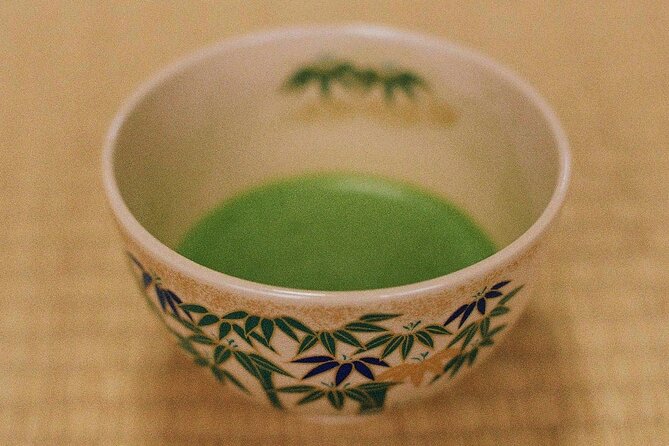
This activity suits first-time visitors to Japan who want a clear introduction to tea ceremony customs. You do not need to know the correct gestures or terminology in advance. The tea master demonstrates the process, and the interpreter fills in the meaning.
It is also a strong choice for visitors who prefer smaller groups and quieter surroundings. The activity works for couples, families, and solo visitors. Children who are interested in Japanese culture can take part, though the calm pace and formal setting may suit older children better than very young ones.
Matcha fans will enjoy the tasting, but you should remember that traditional matcha has a distinct grassy and bitter flavor. The sweets help balance it, and the second bowl gives you a chance to notice the difference between the tea master’s preparation and your own.
Photography is possible, and some people have enjoyed taking pictures of the tea master’s kimono and the room. The ceremony itself should remain your main focus. A few minutes of stillness will give you more from the experience than trying to record every movement.
This may not suit you if you want an activity directly in Gion, need a venue with no stairs, or dislike sitting in a traditional room. It is also not a good choice for a tight sightseeing schedule if you have not allowed extra time for the journey.
How to fit it into a Kyoto day
The easiest pairing is with Daitoku-ji or Kinkaku-ji. Daitoku-ji is especially fitting because of its connection to Zen and tea culture. Kinkaku-ji is about four bus stops away, but you should still check your route and timing before the day begins.
Do not schedule the ceremony immediately after a distant attraction with no buffer. The meeting point is not in the main Gion sightseeing zone, and the house may take time to find. Arriving late would also mean missing the opening explanation about the scroll, flowers, and utensils.
A useful plan is to visit nearby northern Kyoto sights first, then attend the ceremony, or schedule the tea session before a relaxed meal. One nearby restaurant was described as very good, but the exact restaurant is not part of the activity, so treat that only as a general suggestion rather than a planned stop.
The activity ends back at the meeting point. There is no hotel pickup or drop-off, so you remain responsible for getting there and continuing to your next stop.
Booking details and cancellation
Your mobile ticket and booking confirmation are provided at the time of reservation. The activity requires a minimum number of participants, so an insufficient number can lead to cancellation and an offered alternative date or experience, or a full refund.
You can cancel for a full refund up to 24 hours before the start time. Changes or cancellations inside that 24-hour window are not accepted, and the local Kyoto time controls the cutoff.
The stated normal maximum is six people, with up to eight during peak seasons. If group size matters to you, check the expected date and book outside the busiest periods when possible.
Should you book this Kyoto tea ceremony?
I would book SHIUN AN if you want a small, instructional tea ceremony rather than a quick tourist performance. The tea master’s formal qualification, the English interpretation, two sweets, two bowls of matcha, and the chance to prepare tea yourself make this a well-priced introduction to an important Kyoto tradition.
The main decision comes down to location and mobility. You need to reach a residential address near Daitoku-ji, and the stairs and floor seating may not suit everyone. If you plan ahead, allow extra travel time, and tell the operator about physical or dietary needs, this is a thoughtful way to spend 45 minutes in Kyoto.
FAQ
How long does the tea ceremony last?
The experience lasts approximately 45 minutes.
Where does the activity take place?
It starts and ends at 955-1 Idacho, Kamigyo Ward, Kyoto, 602-8302, Japan, near Daitoku-ji Temple.
How many people can join each session?
The usual maximum is six people. During peak seasons, the group may increase to eight.
What is included in the price?
The activity includes tea bowls, tea containers, tea scoops, tea whisks, white socks, a folding fan, matcha tea, and Japanese sweets. You receive two bowls of matcha and two kinds of sweets.
Is an English translator provided?
Yes. An interpreter helps explain the ceremony, utensils, customs, and history, and assists with questions.
Can I cancel for a full refund?
Yes. You must cancel at least 24 hours before the experience start time for a full refund. Cancellations or changes made less than 24 hours in advance are not accepted.
Newly steeped around Kyoto
- Whisk Your Own Matcha: A Zen Matcha Experience at Temple★ 3.6 · 7 reviews
- Kyoto: Authentic Tea Ceremony in a Small Group★ 5.0 · 7 reviews
- Tea ceremony at Kyoto’s Zen Temple Teahouse★ 5.0 · 2 reviews
- Uji Walking Tour – Byodo-in temple and Tea Ceremony from Kyoto★ 3.5 · 3 reviews
- Tea Ceremony Experience in Traditional Kyoto Townhouse★ 5.0 · 19 reviews
- Tea Ceremony in 150 Years Old Townhouse with Tables and Chairs★ 5.0 · 22 reviews
- Traditional Tea Ceremony in Kyoto★ 4.5 · 3 reviews
- Sencha-do the Japanese Tea Ceremony Workshop in Kyoto★ 5.0 · 21 reviews
Tea Ceremony Experiences, compared.
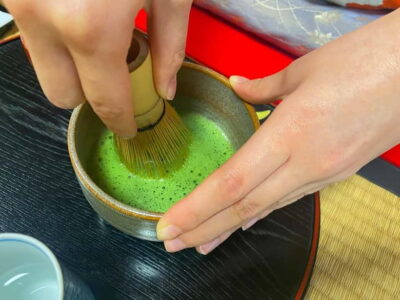
Kyoto: Tea Ceremony in a Traditional Tea House in Kiyomizu
Read our review →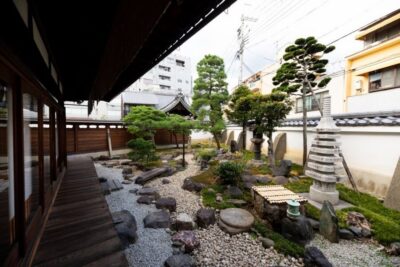
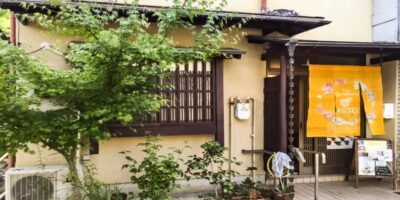
Kyoto: 45-Minute Tea Ceremony Lesson Experience
Read our review →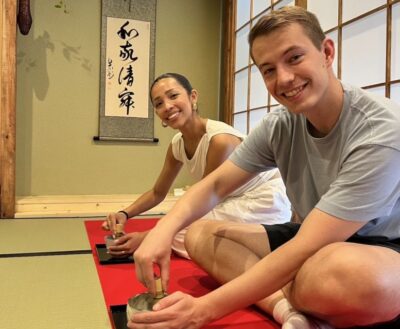
Kyoto: Table-Style Tea Ceremony at a Kyo-Machiya
Read our review →


Browse the lists this tea experience appears in