
Review · JAPAN
Tea Ceremony Experience
The best thing about this 30-minute tea experience is its low-pressure approach. You get a short introduction, watch how matcha is ground, prepare your own cup, and enjoy it with a Japanese sweet. It gives you a useful taste of tea culture without taking half a day from sightseeing in Nagoya.
I like the single-origin matcha and the chance to make the drink yourself, rather than simply watching someone perform a ritual. I also like the price: at $7 per person, this is an easy cultural stop near Nagoya Station. The main consideration is the setting. It is a simple third-floor venue, not a grand traditional tea room, and one recent visitor felt the activity moved too quickly.
Key points at a glance
- Single-origin matcha: Taste a special matcha rather than an unnamed powdered tea.
- Hands-on preparation: You make your own cup after a brief explanation and demonstration.
- Ohigashi included: Traditional Japanese dry sweets accompany the tea.
- Easy Nagoya location: The venue is one minute from Kokusai Center Station and 13 minutes from Nagoya Station.
- Short and affordable: The 30-minute program costs $7 per person, making it easy to fit into a busy day.
- English support available: The instructor teaches in Japanese, but English translation can be provided as much as possible if requested.
A quick matcha lesson near Nagoya Station
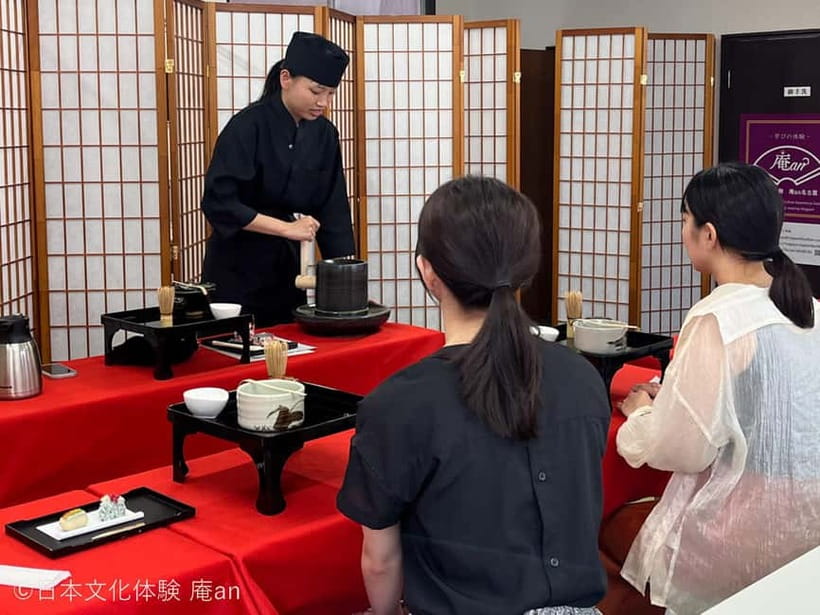
This is a compact introduction to Japanese tea culture, designed for people who want to try matcha without committing to a long formal ceremony. The experience takes place at AN Japanese Culture Experience, operated by B.B.Advisors Inc. AN NAGOYA, in central Nagoya on Honshu.
You will spend roughly 30 minutes in the venue. The program combines explanation, demonstration, practice, photographs, and time to eat and drink. That short format is useful if you are sightseeing around Nagoya Station, changing trains, or looking for a calm break between larger attractions.
The activity is called a tea ceremony experience, but you should set your expectations carefully. You are not signing up for an elaborate, highly formal performance lasting an hour or more. The emphasis is on learning the basic process and enjoying matcha in a friendly, accessible way.
That makes it a good first encounter with matcha. You can ask for English assistance in advance, and several people have found the explanations clear, including one participant who specifically praised the guide’s English and learned a great deal about matcha. Still, the official teaching language is Japanese, so English support should be requested rather than assumed.
More Tea Ceremonies in Japan:
- Kyoto: Tea Ceremony in a Traditional Tea House in Kiyomizu
★ 4.9 · 3,519 reviews - Kyoto: Tea Ceremony Ju-An at Jotokuji Temple
★ 4.9 · 3,207 reviews - Kyoto: 45-Minute Tea Ceremony Lesson Experience
★ 4.3 · 2,378 reviews
What happens during the 30-minute program
The schedule is simple and easy to follow. At the start, the instructor explains the tea and sets the context for what you are about to do. This short lesson gives you a little more than a quick drink at a café. You learn what matcha is and how it fits into the activity.
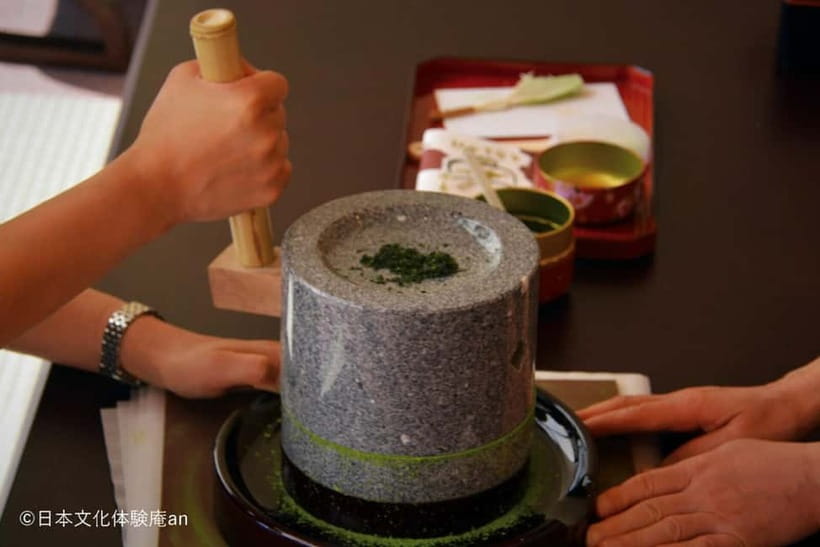
Next comes a matcha grinding demonstration. The demonstration is included in the booking price, and it helps show how the powder used for the tea is prepared. Since the experience uses single-origin special matcha, this part gives the drink a stronger sense of place and care than an ordinary instant preparation.
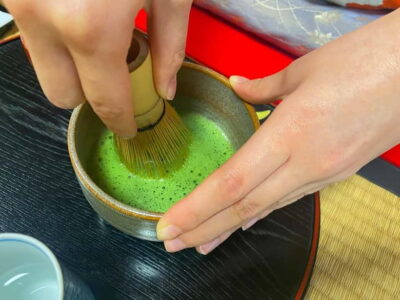
You then make your own matcha. The experience is meant to be casual, so you do not need to arrive with prior knowledge or special skills. The point is to take part, not to perform every movement with the precision of a tea master.
After preparing the tea, you have picture time. This is a small but useful feature for anyone who wants a record of the experience, especially if you are visiting Japan for the first time or traveling with family and friends.
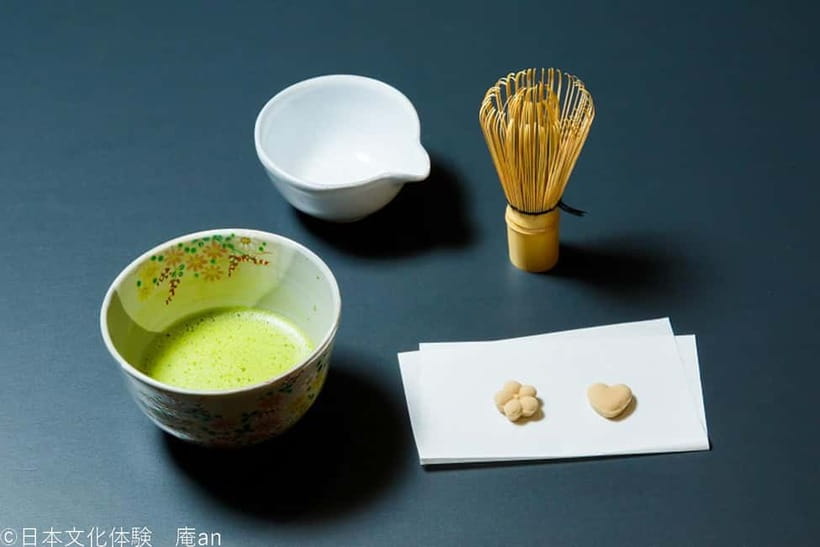
The formal part ends at about 20 minutes. The remaining time is for eating and drinking, bringing the full visit to around 30 minutes. You can enjoy the matcha with ohigashi, a Japanese sweet traditionally served with tea. Ohigashi are dry sweets, so they offer a different texture and style from the cakes and filled sweets often found in cafés.
Why the single-origin matcha matters
The phrase single-origin tells you that the matcha is presented as a distinct product rather than a generic powder with no stated source. For a short experience, that is a worthwhile detail. You are not only learning how to whisk green tea. You are also being given a chance to notice the character of a particular matcha.
Matcha can taste unfamiliar if you have only had sweetened green tea drinks. It is powdered tea, and the flavor can be direct and concentrated. The ohigashi helps balance the experience by adding sweetness alongside the tea.
I like this pairing because it gives you a small lesson in how Japanese tea is enjoyed. The sweet is not an afterthought. It is part of the rhythm of the serving, and it helps make the matcha easier for first-time drinkers.
The activity does not promise a long tasting session or a technical lesson in tea cultivation. You should book it for the chance to try a special matcha, learn the basic preparation, and enjoy a traditional sweet in a short sitting.
A relaxed activity, not a strict formal ceremony
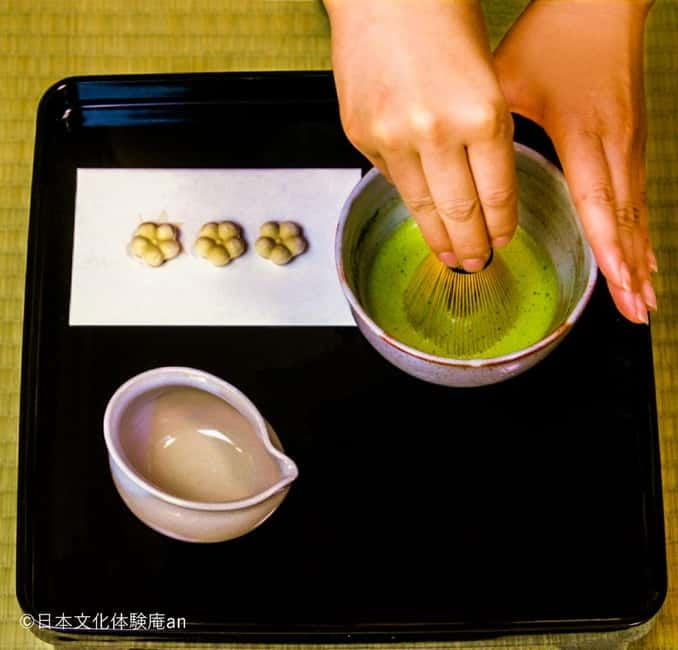
The program is deliberately casual. You can attend alone or as part of a group, and the stated format is intended to be easy for everyone. That is helpful if you are curious about Japanese customs but worry that a formal ceremony might feel intimidating.
The instructor gives a brief lecture before you prepare the tea. This means you are not left to guess what to do with the equipment or how the steps fit together. The experience also keeps the explanation short enough for children and busy sightseers, although children under two are only free when sitting on a parent’s lap.
The casual approach has a tradeoff. One participant who attended in a very small group felt the room did not match the image of a traditional tea ceremony and that the activity ended too quickly. That criticism is worth taking seriously. If you want quiet formal gestures, a historic tearoom, or a slow ceremonial performance, this may feel more like a practical cultural workshop.
If you want to make matcha yourself, ask a few questions, and have a cup without spending much time or money, the relaxed format works well. The difference is mainly one of purpose: this is an introduction and tasting, not a full ceremonial presentation.
More Tea Experiences around Japan:
- World Heritage Kyoto & Nara Uji Authentic Matcha Experience
★ 5.0 · 1,573 reviews - Osaka: Tea Ceremony Experience
★ 4.9 · 1,426 reviews - Kyoto: Table-Style Tea Ceremony at a Kyo-Machiya
★ 4.9 · 1,211 reviews - Kanazawa: Kenrokuen Tea Ceremony Experience
★ 4.8 · 1,139 reviews
The venue and the walk from Nagoya transport
The meeting point is convenient. It is one minute on foot from Exit 3 of Kokusai Center Station on Nagoya’s Sakura-dori Line. From the Sakura-dori side of Nagoya Station, the walk takes about 13 minutes.
That location makes the activity easy to place before or after time around Nagoya Station. You do not need to plan a long trip across the city just to reach it. The coordinates provided are 35.1715323, 136.891893, which can help if you are using a map app.
The venue is on the third floor, and there is no elevator. You need to be comfortable using stairs to reach the room. This is an important practical point for anyone carrying heavy luggage or traveling with mobility concerns.
Because the program is short, arriving early matters. The event cannot be held for late arrivals, no matter the reason. Give yourself enough time to find Exit 3, walk to the building, and climb to the third floor. A 30-minute booking leaves little room for getting lost.
English help and the instructor
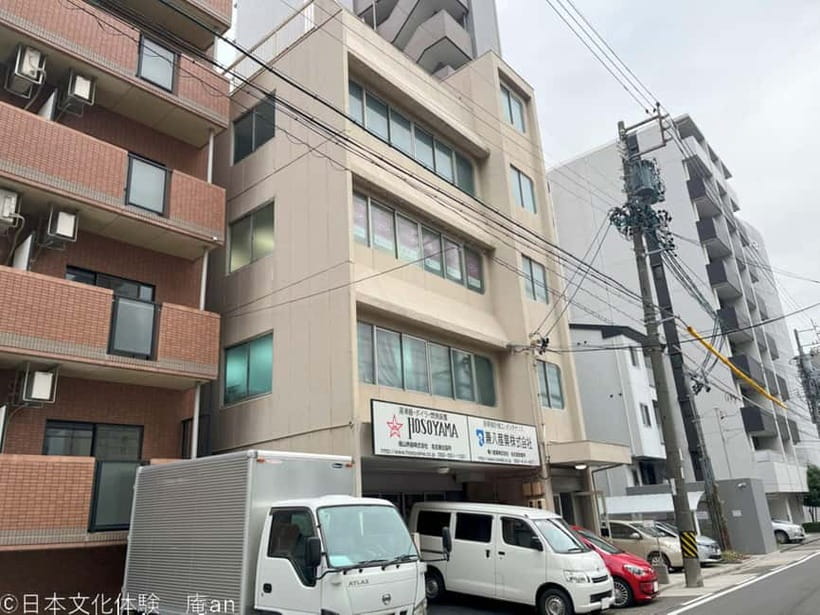
The official language is Japanese. English translation can be provided as much as possible if you contact the operator and request it. I would make that request before arriving, especially if understanding the explanation is a major reason you are booking.
The available feedback on instruction is encouraging but mixed with an important qualification. Several people found the explanation very good, and one person specifically described the guide’s English as strong. Another praised the calm atmosphere and said they would do the activity again. A Spanish-speaking participant also found the explanation and hands-on practice very good.
There are no instructor names provided, so you cannot request a particular teacher. The best plan is to book with realistic expectations: Japanese is the working language, but English help may be arranged. If you need every detail translated, send a message in advance instead of relying on translation at the door.
This kind of short activity benefits from a clear explanation. You want to understand how to prepare the matcha, but you do not need a long lecture on every school of tea. The compact format keeps the lesson focused.
Is $7 good value?
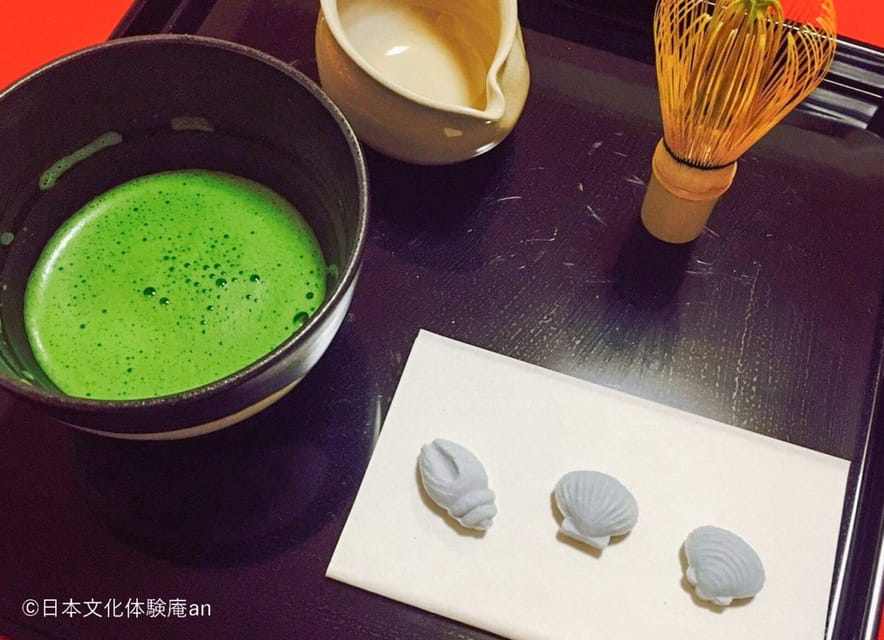
At $7 per person, this is an inexpensive way to add a Japanese cultural activity to your Nagoya schedule. The fee includes the tea ceremony experience, the matcha grinding demonstration, the hands-on preparation, and the matcha served with ohigashi.
The price is especially appealing because the program takes only 30 minutes. Many cultural activities require a large block of time, but this one can fit between meals, shopping, or train connections. You are paying for participation rather than just admission to a room.
The value depends on what you want from the word ceremony. If you expect a formal setting, a long performance, and a carefully staged traditional atmosphere, the price should warn you that this is a simpler experience. One person felt the room was not suitable for a tea ceremony and that the session was rushed.
I see the $7 fee as fair for a short, hands-on introduction. You get to prepare a real cup, taste single-origin matcha, see how it is ground, and eat ohigashi. It is not the right choice if you want a major cultural event, but it is an excellent low-cost addition for a first taste.
A completion certificate is available for an extra 300 Japanese yen. If you want a certificate with your name on it, provide the names in advance. Otherwise, the name area will be left blank.
Who will enjoy this experience most?
This activity suits first-time visitors to Japan who want a simple way to try matcha. You do not need previous tea experience, and the short schedule keeps the commitment small.
It also works for solo visitors and groups. The program specifically accepts both one person and groups, so you do not need to find a large party to make the activity worthwhile.
Families should note the rule for very young children. Children under two can attend free when they sit on a parent’s lap. The information does not give a broader child policy, so older children should be included in the reservation as required.
I would also recommend it to anyone with a tight Nagoya itinerary. The nearby station and 30-minute duration make this easier to schedule than a longer cultural class. You can have a quiet break while still learning something connected to Japan.
You may want to choose another activity if your main goal is a historic or highly formal tea-room setting. The practical room, stairs, Japanese-language instruction, and fast format may not match that aim.
Timing, cancellation, and simple planning tips
The operating hours are 10:00 to 17:00. Reservations received after 17:00 are processed the next day, so late-night booking requests may not receive an immediate response.
You can cancel up to 24 hours before the activity for a full refund. After the cancellation fee applies, changing the date or time can also bring an additional specified charge. If you cancel, the operator does not cover your travel costs to the venue.
The booking system allows you to reserve now and pay later. That helps if your Nagoya schedule is still changing, although the cancellation terms still matter.
My practical advice is straightforward:
- Choose a starting time that gives you a buffer for the walk and stairs.
- Ask for English support before the day of the activity.
- Include the certificate request and names at the time of booking if you want one.
- Do not expect the event to wait if your train or sightseeing runs late.
- Reserve for everyone who plans to participate, since nonparticipants cannot enter.
These details matter more here than on a long tour. A half-hour program moves quickly, and a late arrival can take away much of the experience.
Should you book the Nagoya matcha experience?
Book it if you want an affordable, short, hands-on introduction to matcha near Nagoya Station. The single-origin tea, grinding demonstration, homemade cup, and ohigashi give you several worthwhile elements for $7.
I would especially recommend it to first-time matcha drinkers, solo visitors, families with young children who can sit comfortably, and anyone fitting small cultural stops into a busy day. The strongest praise centers on the clear explanations, calm pace, and chance to practice what you learn.
Think twice if you want an elegant traditional room or a slow, highly formal ceremony. The venue is basic, the instructor teaches in Japanese, English support must be requested, and one person found the session too quick.
For most visitors, the best way to view this is as a friendly matcha workshop with tea-ceremony elements. Keep that expectation, arrive early, and you will get a useful and inexpensive taste of Japanese tea culture.
FAQ
Where does the tea ceremony experience take place?
It takes place in Honshu, Japan, at AN Japanese Culture Experience in Nagoya. The venue is one minute from Exit 3 of Kokusai Center Station on the Sakura-dori Line and about 13 minutes on foot from the Sakura-dori side of Nagoya Station.
How long does the experience last?
The full experience lasts 30 minutes. The formal portion ends at about 20 minutes, followed by eating and drinking time before departure.
How much does the experience cost?
The price is $7 per person. A completion certificate costs an additional 300 Japanese yen.
Is matcha included?
Yes. The experience includes matcha, a matcha grinding demonstration, and Japanese sweets called ohigashi.
Do I make my own matcha?
Yes. After a brief explanation and the grinding demonstration, you prepare your own matcha during the tea ceremony experience.
What language is used?
The instructor’s language is Japanese. English translation can be provided as much as possible if you contact the operator and request it.
Is the venue accessible by elevator?
No. The venue is on the third floor, and there is no elevator.
Can I cancel for a full refund?
You can cancel up to 24 hours in advance for a full refund. Cancellation fees apply after that point, and changing the date or time after a fee has been incurred may bring another specified charge.
Can children attend for free?
Children under two years old can attend free when they sit on their parent’s lap. The provided information does not state a general free admission policy for older children.
Newly steeped around Japan
- Yokohama : Tea Ceremony with Sweets and Souvenir★ 5.0 · 5 reviews
- Whisk Your Own Matcha: A Zen Matcha Experience at Temple★ 3.6 · 7 reviews
- Walking Tour: Yanaka,Nezu& Sendagi: Tea Ceremony & Old Tokyo★ 5.0 · 3 reviews
- Visit local home for music and tea ceremony near Disney★ 4.9 · 13 reviews
- Trip to Kamakura & Enoshima: Shrines, Seaside, Temples &Tea★ 5.0 · 11 reviews
- Yokohama: Sushi & Gyoza Cooking with Matcha & GreenTea Experience★ 5.0 · 3 reviews
- Kyoto tea town for matcha lovers★ 5.0 · 16 reviews
- Uji: Private immersion into Kyoto’s tea and reglious culture★ 5.0 · 17 reviews
Tea Ceremony Experiences, compared.
Kyoto: Tea Ceremony in a Traditional Tea House in Kiyomizu
Read our review →
Kyoto: 45-Minute Tea Ceremony Lesson Experience
Read our review →
Kyoto: Table-Style Tea Ceremony at a Kyo-Machiya
Read our review →


Browse the lists this tea experience appears in