
Review · KYOTO
Visiting to Katsura Imperial villa and tea ceremony experience
Katsura Imperial Villa is the star here: a carefully preserved imperial retreat with a circular garden and elegant Sukiya-style tea houses, largely unchanged for 400 years. You’ll visit with owner Tokusaburo Miyagawa, then return to his family’s shop to wear an antique kimono and learn the basics of matcha in a 100-year-old traditional house.
I like the hard-to-get villa admission arrangement and the short transfer from the shop. I also like the personal kimono fitting, since Tokusaburo’s family has worked with kimono for four generations. The main caution is value: at $169.90 per person, this is a costly package, and the villa portion may be led by a Japanese-speaking guide with recorded English audio rather than by Tokusaburo himself.
Key points at a glance
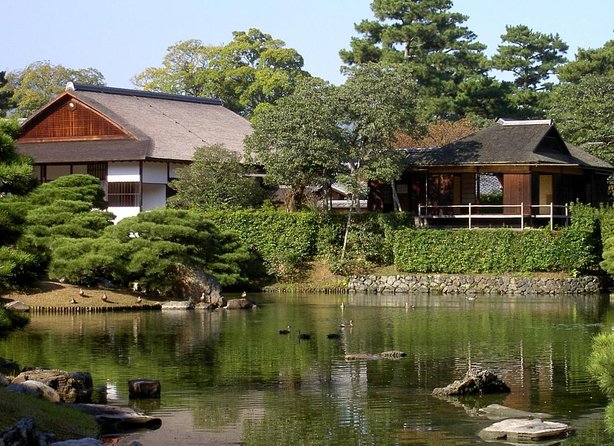
- Katsura’s 400-year-old garden: See one of Kyoto’s most carefully preserved imperial gardens, with a famous circular walking route and Sukiya-style tea houses.
- Antique kimono fitting: Choose a kimono and obi with advice from fourth-generation shop owner Tokusaburo Miyagawa, then receive professional dressing.
- Quiet tea setting: Return to a 100-year-old traditional Japanese house away from Kyoto’s busiest central streets.
- Two cups of matcha: Learn how to drink and prepare matcha, watch a demonstration, and enjoy Japanese sweets from a local Katsura confectioner.
- Private booking, shared villa visit: Your booking is private for your group, but the imperial villa visit itself follows its official admission system and may include other people.
- Three hours, with transport included: Round-trip transportation from Miyagawa Tokusaburo Shoten to the villa is arranged, and the activity ends back at the shop.
Why Katsura Imperial Villa deserves the afternoon
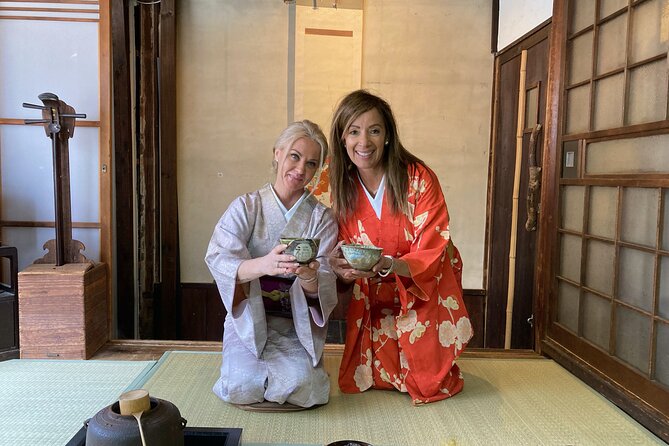
Katsura Imperial Villa gives you a different view of Kyoto. It is not a grand castle packed with rooms, paintings, and crowds. Its appeal lies in proportion, restraint, and the way buildings, paths, water, stones, and plants work together.
The villa was built in 1615 as an imperial retreat. It has been renovated over time, yet the overall design remains remarkably close to its original form. The garden follows a circular route, allowing you to move from one carefully framed view to the next. The tea houses are part of the design, not decorations added later. They show how tea shaped Japanese ideas about space, movement, and hospitality.
This is also the place associated with praise from German architect Bruno Taut, who admired Katsura’s clean lines and careful use of materials. You do not need to be an architecture expert to appreciate it. The visit is valuable because it trains your eye to notice small choices: a doorway placed to control a view, a path that makes you slow down, or a simple tea house that feels complete without grand ornament.
The villa is open only to people with permission and numbered admission tickets during limited visiting hours. That arrangement is a major practical reason to consider this tour. You avoid handling the villa application process yourself, and the provider arranges same-day admission as part of the package.
Still, keep your expectations clear. This is not a private after-hours visit. The official villa visit follows its own rules and may be conducted as a group experience. The operator accompanies you, but the formal explanation inside may come from a Japanese-speaking guide using recorded audio in English.
More Tea Ceremonies in Kyoto
- Kyoto: Tea Ceremony in a Traditional Tea House in Kiyomizu
★ 4.9 · 3,519 reviews - Kyoto: Tea Ceremony Ju-An at Jotokuji Temple
★ 4.9 · 3,207 reviews - Kyoto: 45-Minute Tea Ceremony Lesson Experience
★ 4.3 · 2,378 reviews
Getting started at Miyagawa Tokusaburo Shoten
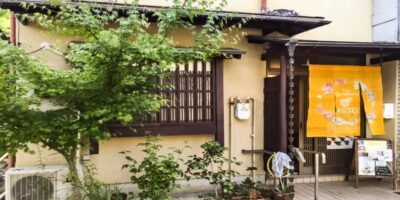
The activity begins at 1 p.m. at Miyagawa Tokusaburo Shoten, at 32-4 Katsuranozatocho in Kyoto’s Nishikyo Ward. The shop is about five minutes by car from Katsura Imperial Villa, which makes the schedule practical and keeps the outing focused on the villa rather than long transfers across Kyoto.
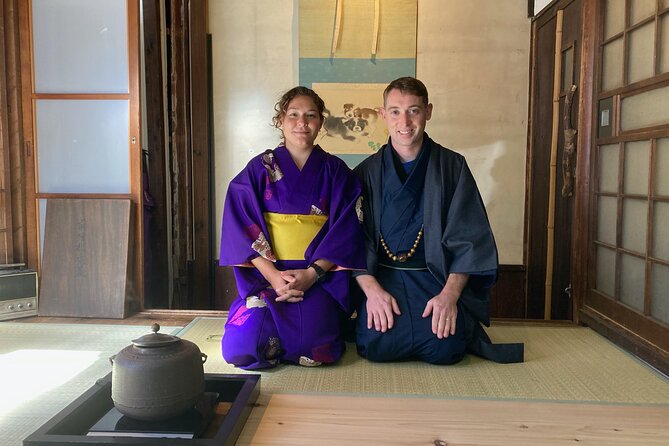
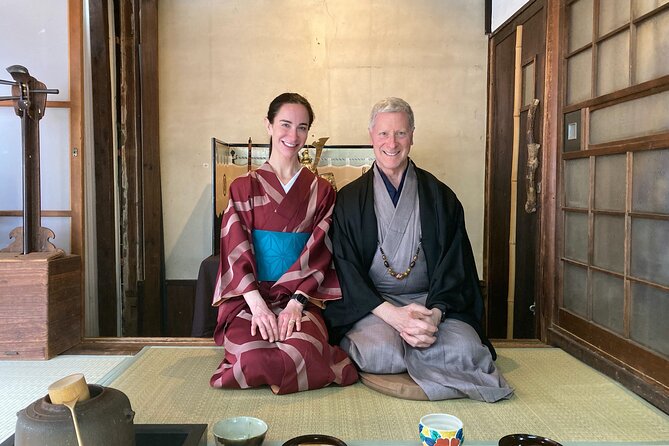
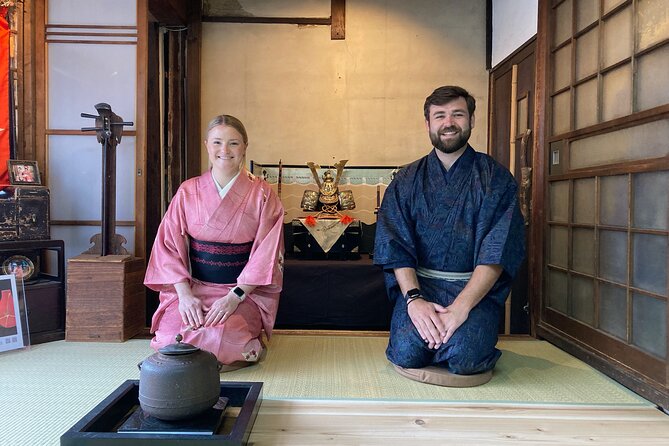
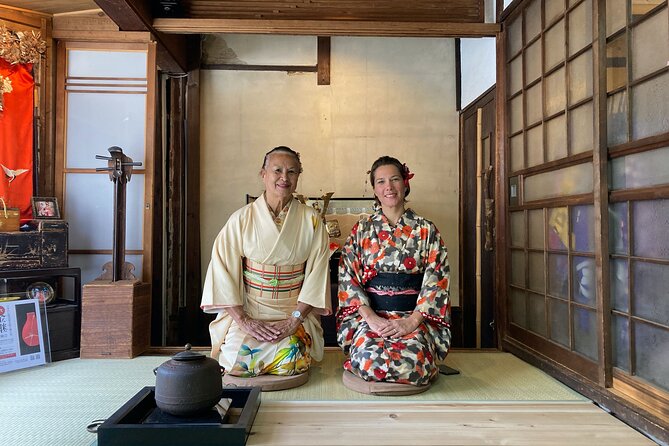
Tokusaburo Miyagawa, the fourth-generation owner, helps you select an antique kimono and obi. This is more than choosing a bright outfit for photographs. You learn about kimono design, how pieces are coordinated, and the occasions when people traditionally wear them.
The kimonos come from the early Showa period, so they have a different feel from the simple rental garments commonly used for quick costume sessions. The package includes the kimono rental and dressing, saving you from the difficult task of arranging layers and ties yourself.
Allow time for the fitting to feel unhurried. A kimono changes how you walk, sit, and move your arms. That matters during a garden visit with paths and outdoor walking. Comfortable shoes are worth considering, although the supplied details do not specify footwear or any clothing restrictions.
The fitting also creates an important decision point. If your main goal is to see Katsura’s architecture and garden, the kimono is an attractive extra. If your main goal is having carefully styled photographs in a traditional setting, the kimono portion may be the part that justifies the price for you.
The Katsura garden visit and its audio guide
After the dressing, transportation takes you from the shop to Katsura Imperial Villa. The round trip is included, and the owner accompanies you during the outing.
Inside, the main attraction is the circular garden. The route presents a series of changing views rather than one single grand vista. The pleasure comes from the pacing. You see a tea house, a pond, a path, or a garden composition, then move on before the scene becomes familiar.
Katsura is especially useful for understanding the link between garden design and tea ceremony. Tea culture values attention, simplicity, and the sense that each meeting happens only once. The villa’s spaces reflect that idea. A plain structure can feel special because of where it sits and how it is approached.
One point needs careful attention when you book. The English information may be delivered through recorded headsets rather than through a live English-speaking guide from the tour provider. A Japanese-speaking guide leads the formal villa visit, while the audio supplies the English explanation. That arrangement can provide accurate information, but it is less personal than having Tokusaburo explain every feature himself.
Tokusaburo does accompany the group, which helps with the practical side of the visit. You should not assume, however, that he is the person conducting the official villa interpretation at every stop. If live, detailed English commentary is your top priority, this limitation could affect your decision.
The villa visit is also the part of the day most shaped by official rules. The operator can arrange your admission, but cannot turn the imperial property into a flexible private tour. Stay with the set route and follow instructions from the villa staff.
Returning to a 100-year-old tea house
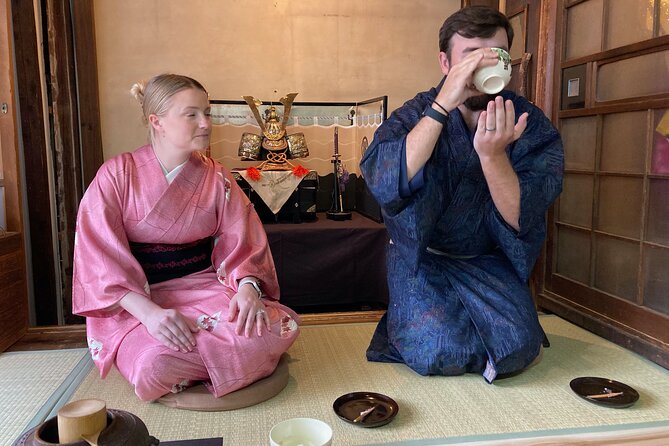
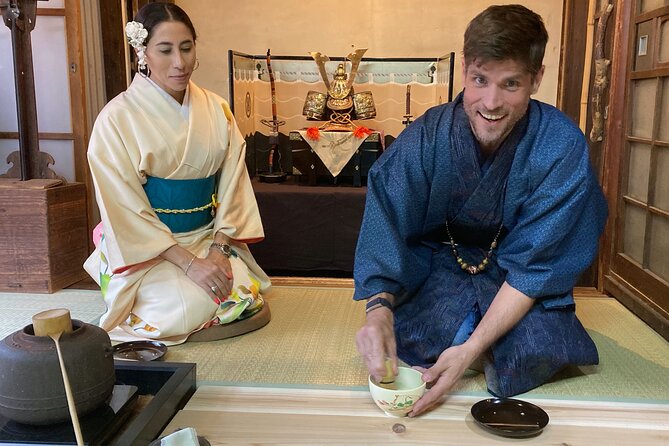
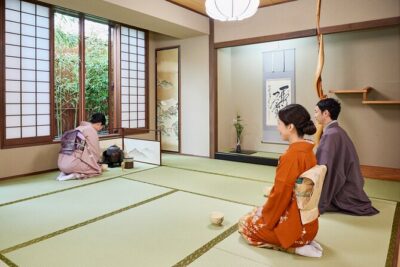
After Katsura, you return to the shop for the tea ceremony. The setting is a 100-year-old traditional Japanese house, and its quieter location gives the experience a calmer feel than many tea activities in central Kyoto.
That setting matters. Tea ceremony is not simply a lesson in holding a bowl. The room, the clothing, the sweets, the movements, and the silence all work together. Wearing an antique kimono gives the ceremony a stronger connection to the material culture of Japan than a short demonstration in a modern storefront.
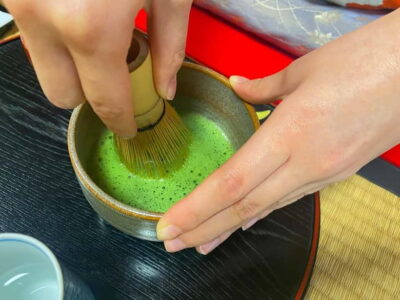
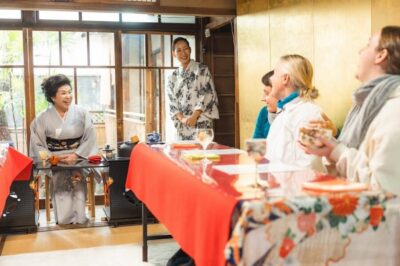
The owner demonstrates the ceremony, then teaches you the proper way to drink and prepare matcha. You receive two cups of matcha and Japanese sweets made by a local confectioner in Katsura. The sweets balance the bitter tea and give you a small taste of a local food tradition.
You should expect an introduction rather than professional tea-school training. The experience is designed for visitors who want to understand the basic gestures and meaning of tea preparation. It does not claim to turn you into a tea master in one afternoon.
The personal scale is a strength. Tokusaburo’s family connection to the kimono trade gives him a natural way to explain clothing, design, and the place of kimono in Japanese life. The tea lesson then connects those ideas to hospitality and ceremony.
The tone may not suit everyone. Some people will enjoy the unusual, hands-on quality of the session. Others may find the transition from formal villa visit to tea activity a little loose or less polished than a highly scripted cultural show. Go in ready to take part, ask questions, and accept a personal presentation rather than a museum-style lecture.
Same leaf, a different ritual:
- Kyoto: Table-Style Tea Ceremony at a Kyo-Machiya
★ 4.9 · 1,211 reviews - Kimono Tea Ceremony at Kyoto Maikoya, NISHIKI
★ 5.0 · 911 reviews - Arashiyama Bamboo, Temple, Monkeys, or Secret Sake Brewery
★ 4.8 · 886 reviews - Kyoto: Arashiyama Bamboo Forest, Monkeys, Matcha & Temple Tour
★ 5.0 · 759 reviews
What the $169.90 price really covers
The listed price is $169.90 per person. That is expensive if you compare it only with the basic admission cost for Katsura Imperial Villa. One past price comparison put villa admission at about 3,000 yen per person, making clear that the ticket itself is not the main reason for the package cost.
You are paying for several services around that ticket:
- Same-day admission arrangements for a restricted villa visit
- Round-trip transportation from the shop
- Antique kimono rental and dressing
- Guidance from a four-generation kimono-shop owner
- A tea ceremony with matcha and local sweets
- A small-group, private booking for your party
The value depends on what you would otherwise arrange yourself. If you are comfortable handling the villa application, arranging transport, finding a kimono fitting, and booking a separate tea ceremony, the price may feel hard to defend. If you want those pieces joined together, the fee buys convenience and access as much as it buys activities.
The villa ticket arrangement is the most practical part of the package. Limited admission can make Katsura harder to fit into a short Kyoto stay. The provider takes responsibility for the application and numbered tickets, which reduces the chance of building your day around a visit you cannot enter.
The kimono and tea ceremony make the price easier to accept for some people, especially if you want one substantial cultural activity rather than several separate bookings. For others, the tour will feel overpriced because the villa visit remains an official group experience and the English explanation may be recorded.
I would compare this with your priorities before booking. Pay for it if you value convenience, the antique clothing, and direct time with Tokusaburo. Skip it if your budget is tight or if you mainly want a live English architectural tour.
How the three-hour timing works
The total duration is about three hours, beginning at 1 p.m. and ending back at the tea shop. The exact balance between fitting, transport, villa time, and tea depends on the day’s admission schedule, so you should not treat each section as an equal one-hour block.
The afternoon start is useful if you have a busy morning elsewhere in Kyoto. It also gives you time to reach the shop without rushing from a distant sightseeing area. Since the meeting point is near public transportation, you can plan your arrival without relying entirely on a taxi, though the supplied information does not specify a particular station or bus route.
The five-minute car transfer to Katsura is a real advantage. Kyoto’s major sights can consume hours in transit, but this outing keeps the shop and villa together. The activity ends where it starts, so you can collect your belongings and continue with your evening plans from the same point.
The experience requires good weather. If poor weather cancels it, you are offered another date or a full refund. For normal cancellations, you receive a full refund if you cancel at least 24 hours before the start time. Changes or cancellations inside that window are not accepted for a refund.
Who will enjoy this experience most
I would choose this tour if you want a close look at Japanese aesthetics and prefer a personal cultural lesson to a long list of famous sights. It suits couples, families, and small private groups who enjoy dressing up, learning by doing, and taking time with one place.
It is particularly appealing if Katsura Imperial Villa is high on your Kyoto list but you do not want to handle the admission process alone. The included transport also helps if you are not confident navigating between the villa and a separate tea house.
Photography-minded visitors may like the kimono and garden combination. The villa offers a beautiful setting, but remember that this is a cultural visit first. You should follow the property’s rules and avoid treating the imperial garden as a private photo studio.
I would be more cautious if you need polished English interpretation from start to finish. The formal villa visit may rely on a recorded headset, and the tea ceremony is presented by the shop owner rather than a large professional tour team. That can feel warm and authentic, but it can also feel less organized.
The private format means only your group participates in the booked activity. The villa itself is still governed by its admission process, so private booking does not mean exclusive access to the imperial grounds.
Should you book Katsura Imperial Villa and the tea ceremony?
Book this experience if you want three things in one afternoon: a difficult-to-arrange villa visit, an antique kimono fitting, and a tea lesson in a traditional house. The best parts are the setting, the clothing, the short transfer, and the personal connection to Tokusaburo Miyagawa’s four-generation family business.
Think twice if you are mainly buying a ticket to Katsura Imperial Villa. The admission is only one part of the cost, and the villa explanation may come through recorded English audio rather than a live English guide. At $169.90 per person, the package needs to deliver more than entry, and its value rests on how much you want the kimono and tea ceremony.
For the right visitor, this is a memorable cultural afternoon with genuine local texture. For a strict budget traveler or an architecture enthusiast seeking detailed live commentary, a simpler villa visit may be the better fit.
FAQ
Where does the experience begin?
It begins at Miyagawa Tokusaburo Shoten, 32-4 Katsuranozatocho, Nishikyo Ward, Kyoto, 615-8073, Japan.
What time does the activity start?
The start time is 1 p.m.
How long does the activity last?
The experience lasts approximately three hours and ends back at the meeting point.
Is transportation included?
Yes. Round-trip transportation from the shop to Katsura Imperial Villa is included.
Is the Katsura Imperial Villa admission ticket included?
Yes. The package includes the villa entrance fee and the arrangement of the same-day admission ticket.
What is included in the tea ceremony?
You receive an antique kimono rental with dressing, a tea ceremony with matcha and Japanese sweets, two cups of matcha, a demonstration, and instruction in drinking and preparing matcha.
Can I cancel for a full refund?
Yes. You can cancel at least 24 hours before the local start time for a full refund. Cancellations or changes made less than 24 hours before the activity are not accepted for a refund. If poor weather causes cancellation, you are offered another date or a full refund.
Newly steeped around Kyoto
- Whisk Your Own Matcha: A Zen Matcha Experience at Temple★ 3.6 · 7 reviews
- Kyoto: Authentic Tea Ceremony in a Small Group★ 5.0 · 7 reviews
- Tea ceremony at Kyoto’s Zen Temple Teahouse★ 5.0 · 2 reviews
- Uji Walking Tour – Byodo-in temple and Tea Ceremony from Kyoto★ 3.5 · 3 reviews
- Tea Ceremony Experience in Traditional Kyoto Townhouse★ 5.0 · 19 reviews
- Tea Ceremony in 150 Years Old Townhouse with Tables and Chairs★ 5.0 · 22 reviews
- Sencha-do the Japanese Tea Ceremony Workshop in Kyoto★ 5.0 · 21 reviews
- Silent Beauty of Kyoto Zen Walk and Tea Experience★ 5.0 · 2 reviews
Tea Ceremony Experiences, compared.
Kyoto: Tea Ceremony in a Traditional Tea House in Kiyomizu
Read our review →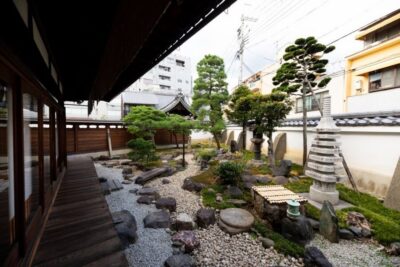
Kyoto: 45-Minute Tea Ceremony Lesson Experience
Read our review →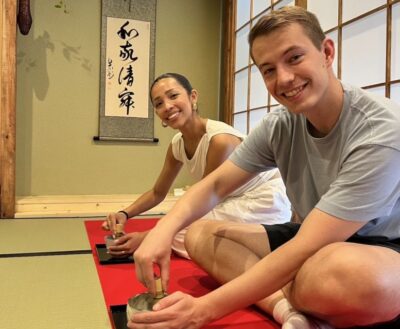
Kyoto: Table-Style Tea Ceremony at a Kyo-Machiya
Read our review →

Browse the lists this tea experience appears in