
Review · KYOTO
The Way of Tea: Kyoto Crafts, Hidden Temples & Wabi-Sabi Walk
Kyoto’s best moments often come in small rooms and quiet lanes, not only at its grandest temples. This tour links Gion’s tea culture with Kennin-ji, a lesser-known temple and garden, craft shops, and a hands-on matcha ceremony in a traditional house. You finish with a better sense of how wabi-sabi, the Japanese appreciation of simplicity and imperfection, shapes tea and craft.
I like the maximum group size of seven, which gives you a fair chance to ask questions as you walk. I also like the tidy package: admission to two temples, an English-speaking guide, matcha, and photos are included. The main drawback is that the quality of the explanation depends heavily on your guide. One published account found the guide’s English too soft to hear clearly and felt some site information was thin, so you should be comfortable asking for repetition.
Key points to know before booking
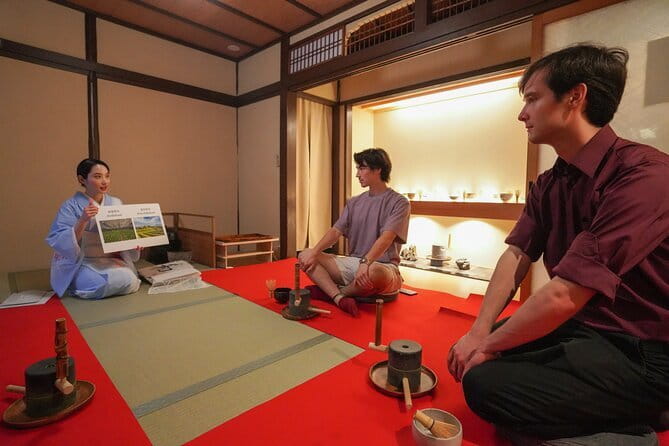
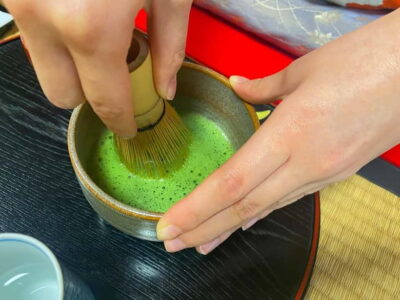
- The tea ceremony is the tour’s anchor: You receive instruction from a tea master and prepare matcha in a traditional Japanese house.
- The route connects several small experiences: Gion, Kennin-ji, craft shops, a hidden temple garden, and a raku tea bowl shop all fit into one afternoon or morning.
- The group is capped at seven: This is a useful size for questions, photographs, and closer contact with the guide.
- Two temple admissions are included: You do not need to budget extra for the temples on the route.
- The tour ends near Kiyomizu: It starts at Gion Shijo Station and finishes at the tea experience in the Kiyomizu area, so it is not a round trip.
- Arrive early: The group leaves on time, and missing the start means no joining later, refund, or rescheduling.
Why this Kyoto walk works
At $94.45 per person, this is not a cheap stroll. But the price covers roughly three and a half hours, a local English-speaking guide, two temple admissions, a tea ceremony, matcha, and photographs taken during the experience. If you planned to visit a temple, browse tea-related shops, and arrange a ceremony separately, the combined cost and planning could easily become more awkward.
The bigger value is the connection between the stops. You do not simply look at a temple, then sit down for tea with no context. The walk introduces tea in Gion, shows you the materials and shops connected with the custom, and leads into the tea ceremony at the end. That order gives the final hour more meaning.
The route also keeps you moving through eastern Kyoto rather than pinning you to one venue. You should expect neighborhood streets, temple grounds, shops, and a final indoor session. This is a good fit if you want a compact introduction to several parts of Kyoto’s traditional culture without spending a full day on a single major attraction.
The overall rating is 4.9 out of 5 from 41 ratings, with 98 percent recommending the experience. Those numbers suggest a strong general response, but they should not make you ignore the communication issue. A soft-speaking guide can make a walking tour frustrating, especially when the value depends on explanations. Stay near the guide and ask politely for louder or repeated explanations if needed.
More Tea Experiences around Kyoto:
- Kyoto: Tea Ceremony in a Traditional Tea House in Kiyomizu
★ 4.9 · 3,519 reviews - Kyoto: Tea Ceremony Ju-An at Jotokuji Temple
★ 4.9 · 3,207 reviews - Kyoto: 45-Minute Tea Ceremony Lesson Experience
★ 4.3 · 2,378 reviews
Meeting at Gion Shijo Station
Your meeting point is the Statue of Izumo-no-Okuni, directly outside Exit 5 of Gion Shijo Station on the Keihan Line. The guide holds an orange Magical Trip Tour signboard, making the meeting point easier to identify than a vague street address.
This location is practical for a walking route through Gion. It also gives you a clear transit target, but you still need to allow time to find Exit 5 and reach the statue. The tour does not wait for late arrivals. Since no refund or rescheduling is available when you miss the start, I would aim to arrive early rather than cutting it close.
Bring comfortable walking shoes. The schedule includes several stops, and the route finishes in a different part of Kyoto. Your ending point is 4-chome-172-7 Kiyomizu, in the Kiyomizu area, after the tea experience. You should not plan on returning to Gion immediately unless you arrange your own transport.
Gion and the first taste of matcha culture
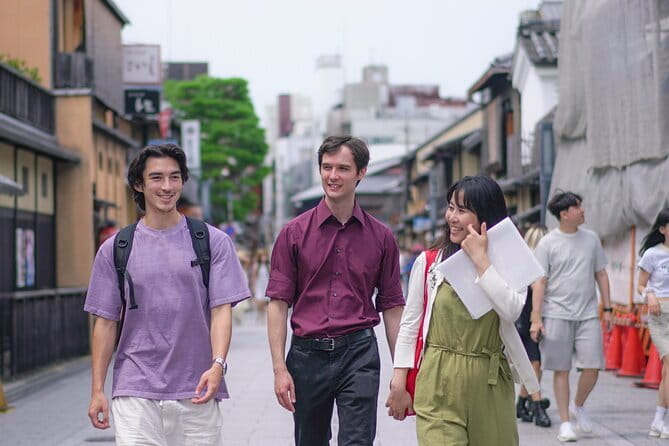
The first stop lasts about 30 minutes and introduces Japanese tea and the way matcha is made. You stroll through historic Gion and visit a well-known matcha shop, with the admission listed as free.
This opening works well because it puts tea into a real neighborhood setting before you sit down for the ceremony. Gion is strongly associated with traditional Kyoto, and walking here helps you see tea as part of daily commerce and craft, not only as a formal performance in a special room.
Do not expect a long tasting menu or a food tour. Additional food and drinks are not included. The focus is the story of tea, the matcha shop, and the cultural setting. If you want a snack or another drink, budget for it separately.
The 30-minute timing also tells you what kind of visit this is. You will get an introduction, not an extended study of tea production or a long shopping stop. I see that as a sensible trade for a tour that must also cover temples and crafts.
Kennin-ji and the value of a guided temple visit
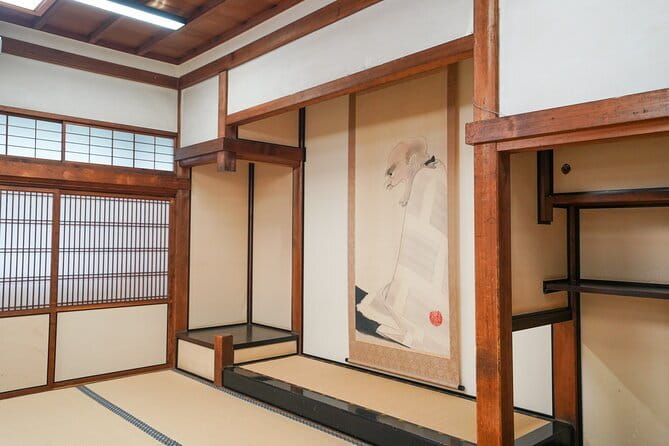
Kennin-ji receives another 30-minute stop. It is a historic temple that has stood for centuries, and admission is included as part of the experience.
Thirty minutes is enough for an introduction and a look around, but not enough for a slow, detailed visit to every corner. That matters if you are the kind of person who likes to sit in temple gardens, read every sign, and photograph each architectural detail. You will need to accept a set pace.
The benefit is that the guide can give the temple a place in the wider tea story. Rather than arriving alone, wondering which buildings matter, you have someone leading you through the visit. The group size helps here. With no more than seven people, you should be able to stay close and ask a question without shouting across a crowd.
Keep your expectations focused. This is one stop in a route, not a full Kennin-ji tour. If Kennin-ji is a major priority for you, return on your own later and give it more time. If you want a useful first look while combining it with tea and crafts, the half-hour stop makes sense.
Same leaf, a different ritual:
- Kyoto: Table-Style Tea Ceremony at a Kyo-Machiya
★ 4.9 · 1,211 reviews - Kimono Tea Ceremony at Kyoto Maikoya, NISHIKI
★ 5.0 · 911 reviews - Arashiyama Bamboo, Temple, Monkeys, or Secret Sake Brewery
★ 4.8 · 886 reviews - Kyoto: Arashiyama Bamboo Forest, Monkeys, Matcha & Temple Tour
★ 5.0 · 759 reviews
Craft shops and the quiet temple garden
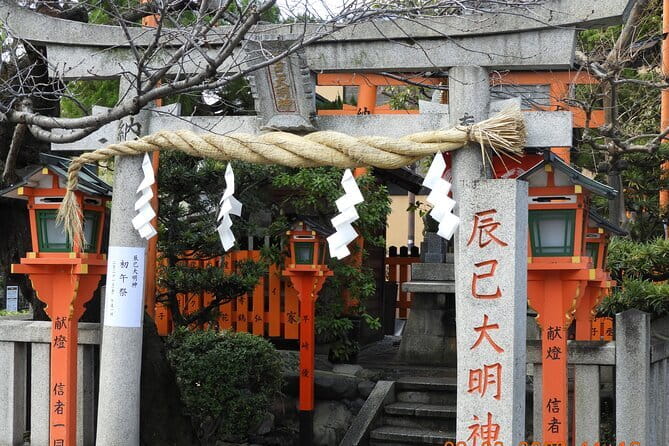
The next parts of the walk turn toward Kyoto’s handmade traditions. One 30-minute stop includes craft shops, followed by a visit to a hidden temple and garden. The exact shop selection is not specified, so you should think of this as a guided introduction rather than a guaranteed shopping list.
This portion adds variety. Temples can blur together during a busy Kyoto visit, while craft shops show the objects that support traditional life. You might find pieces that appeal to you, but purchases are your responsibility, and the tour does not promise a dedicated shopping session.
The quiet temple and garden offer a change of pace. The wabi-sabi idea introduced during the walk is tied to simplicity, age, irregularity, and the beauty of things that are not perfectly uniform. A garden visit gives you a visual way to consider that idea before the tea ceremony.
Again, the stop lasts about 30 minutes. That is enough for a guided look and a few photographs, but you may feel rushed if you want extended quiet time. The tour’s strength is its range. Its limitation is that every place receives a short visit.
Raku tea bowls and the meaning of imperfection
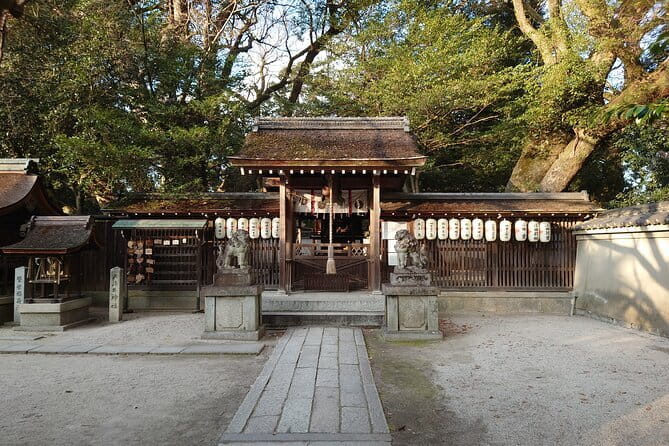
The route includes a tea bowl shop where raku ceramics receive special attention. Your guide explains how each cup has its own character, history, and meaning. This is one of the more distinctive parts of the walk because it gives you a physical object through which to understand wabi-sabi.
A raku bowl is not meant to look like a factory-perfect cup. Its shape, surface, and small irregularities are part of its identity. That idea becomes more useful when you later hold a bowl and prepare tea yourself. You are not simply being told that imperfection matters. You are seeing how the principle appears in a working tea object.
The shop stop is also a reminder that Kyoto’s tea tradition includes design, pottery, architecture, movement, and attention to small details. The tea ceremony is the final activity, but the bowl helps prepare you for it.
As with the other stops, this is not advertised as a full ceramics workshop. You will learn about the bowls and the craft, not make one. If you are keen on Japanese pottery, you may want to note the shop and return at your own pace after the tour.
The final hour in a traditional Japanese house
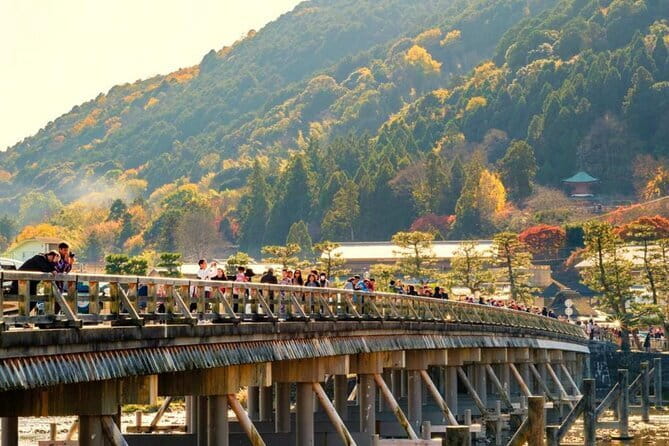
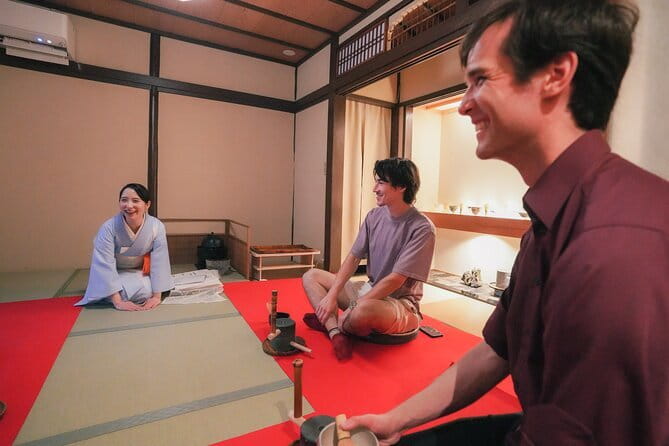
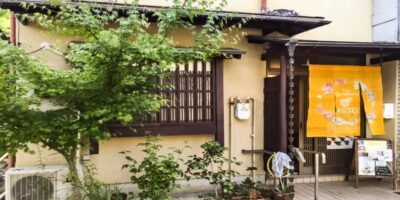
The tea ceremony takes about one hour and is held at Chayu, in a real tea house inside a traditional Japanese house. You receive instruction from a tea master and take part in making matcha. Tea is included, and this is the only stop specifically marked as having an included admission.
This hands-on finish is the strongest reason to choose the experience. Watching a ceremony can be beautiful, but making the tea gives you a direct role. You learn the basic movements under instruction rather than trying to copy a formal ceremony from across the room.
The ceremony also brings the earlier stops together. Gion introduced matcha culture. Kennin-ji and the gardens gave you a sense of quiet space. The craft shops and raku bowl added the importance of handmade objects. At Chayu, those ideas become part of one focused activity.
The tea ceremony can accommodate children aged six and older. Younger children may come on the tour, but one adult must remain outside the facility with them during the ceremony. That rule makes this a less convenient choice for families with very young children, especially because the final hour is the main attraction.
You should also prepare for the climate. Kyoto summers can reach 40°C, while winter temperatures can fall to -5°C. Much of the route is outdoors, and the weather may affect comfort even though the tea ceremony takes place inside. The activity can be cancelled for unsafe weather, so keep your plans flexible.
Group size, guide quality, and photographs
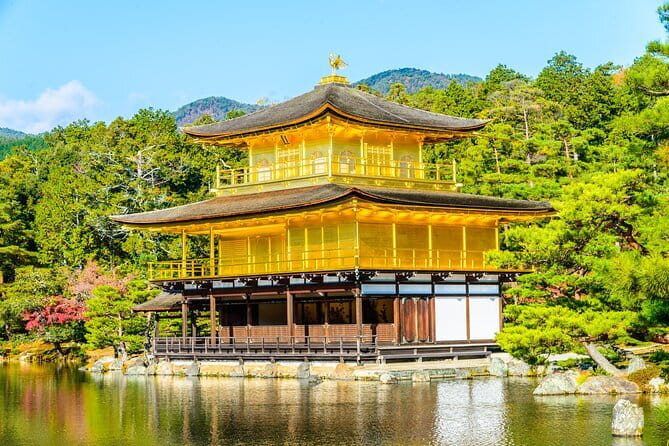
The group maximum is seven people. That is small enough for a more personal walk and large enough to keep the experience social. You should have a better chance of hearing the guide and asking questions than on a large bus tour, but the group can still include other participants.
The guide’s role matters greatly here. The route contains several places where a short explanation can make the difference between a pleasant stop and a meaningful one. One account described a guide who spoke very softly and whose English was difficult to understand, with some site explanations feeling incomplete. The guide was trying to help, but the communication problem affected the experience.
I would stay close to the guide, especially at busy street crossings and temple entrances. If you cannot hear, ask the guide to speak up early rather than waiting until the whole walk has passed. This is a practical concern, not a reason to reject the tour outright, but it is worth keeping in mind.
Photographs taken during the tour are included. That is useful if you want pictures of the walk without constantly stopping to manage your phone. You should still ask before photographing people or private areas, particularly during the tea ceremony.
Who will get the most from this experience
I would recommend this tour to you if you want a short, structured introduction to Kyoto tea culture and prefer a guide to handle the route. It suits first-time visitors who want Gion, temples, crafts, and a ceremony in one outing.
It also works well if you care more about cultural context than about spending hours at one major temple. The connections between tea, ceramics, gardens, and wabi-sabi give the tour a clear theme.
You may want another option if you need a slow pace, have limited tolerance for outdoor heat or cold, or want a detailed study of Kennin-ji. The 30-minute stops are efficient, but they leave little time for lingering.
The price makes the most sense for someone who values convenience and participation. If you only want to see a temple and buy a cup of matcha, $94.45 is high. If you want a guided route, two temple admissions, a small group, a full tea ceremony, and photos, the package is more reasonable.
Free cancellation is available until 24 hours before the start time. Changes or cancellations inside that window are not accepted, so check your schedule and the weather before the deadline.
Should you book the Way of Tea walk?
Book it if you want a carefully timed half-day built around tea, with a real ceremony as the finish. The small group, included admissions, and movement from Gion to Kiyomizu give you a lot of cultural variety in three and a half hours.
Skip it if your main goal is a long visit at Kennin-ji, independent shopping, or a ceremony with no walking between stops. Also think twice if you will be traveling in extreme heat or cold and do not enjoy outdoor sightseeing.
For the right reader, this is a useful Kyoto sampler with a genuine hands-on centerpiece. Arrive early, wear sensible shoes, keep your schedule flexible, and stay near the guide so you can hear the explanations.
FAQ
Where does the tour begin?
It begins at the Statue of Izumo-no-Okuni, directly outside Exit 5 of Gion Shijo Station on the Keihan Line. The guide holds an orange signboard marked Magical Trip Tour.
Where does the tour end?
The tour ends at the tea experience location at 4-chome-172-7 Kiyomizu, in Kyoto’s Higashiyama Ward.
How long does the experience last?
The tour lasts approximately three hours and 30 minutes. The tea ceremony itself takes about one hour.
Is temple admission included?
Yes. Admission to two temples is included in the experience.
Is the tea ceremony included?
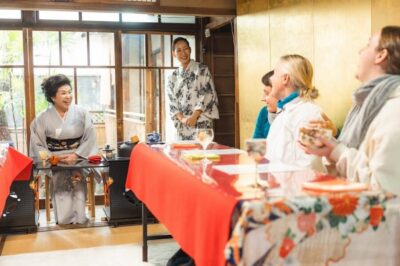
Yes. The experience includes a matcha tea ceremony in a traditional Japanese house, with instruction from a tea master.
Can children join the tea ceremony?
Children aged six and older can take part in the tea ceremony. Younger children may join the wider tour, but one adult must accompany them outside the tea ceremony facility.
What happens if I arrive late?
The tour starts on time. If you miss the group, you cannot join later, receive a refund, or reschedule. Free cancellation and rescheduling are available until 24 hours before the start time.
Newly steeped around Kyoto
- Whisk Your Own Matcha: A Zen Matcha Experience at Temple★ 3.6 · 7 reviews
- Kyoto: Authentic Tea Ceremony in a Small Group★ 5.0 · 7 reviews
- Tea ceremony at Kyoto’s Zen Temple Teahouse★ 5.0 · 2 reviews
- Uji Walking Tour – Byodo-in temple and Tea Ceremony from Kyoto★ 3.5 · 3 reviews
- Tea Ceremony Experience in Traditional Kyoto Townhouse★ 5.0 · 19 reviews
- Tea Ceremony in 150 Years Old Townhouse with Tables and Chairs★ 5.0 · 22 reviews
- Sencha-do the Japanese Tea Ceremony Workshop in Kyoto★ 5.0 · 21 reviews
- Silent Beauty of Kyoto Zen Walk and Tea Experience★ 5.0 · 2 reviews
Japan Tea Tours, compared.
Kyoto: Tea Ceremony in a Traditional Tea House in Kiyomizu
Read our review →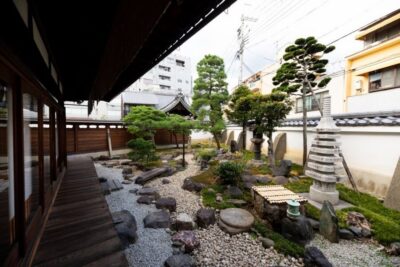
Kyoto: 45-Minute Tea Ceremony Lesson Experience
Read our review →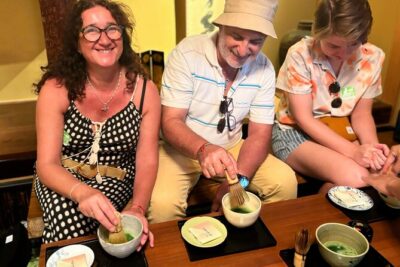
World Heritage Kyoto & Nara Uji Authentic Matcha Experience
Read our review →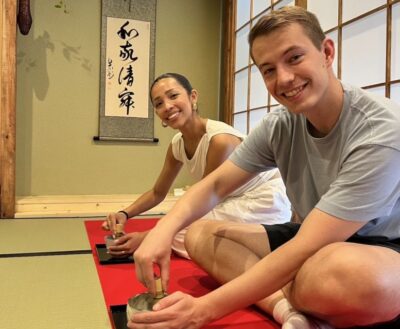
Kyoto: Table-Style Tea Ceremony at a Kyo-Machiya
Read our review →

Browse the lists this tea experience appears in