
Review · KYOTO
Kyoto Tea Ceremony and Samurai Photo Session
Kyoto’s tea tradition becomes much more interesting when you stop watching and start whisking. In this small-group class, you learn to prepare matcha, taste seasonal wagashi, make a creamy matcha latte, and pose in samurai armor inside a 100-year-old machiya.
I like the hands-on format, especially the jump from formal tea to a modern latte you can recreate at home. I also like the warm teaching style of Maya, who explains the history and mindfulness behind the ceremony with humor and clear English.
The main consideration is timing. The core tea activity is described as about 50 minutes, while the overall experience lasts approximately 1 hour 20 minutes. If you want a long, formal tea ceremony, this is too brief. If you want an accessible introduction with photos and a little fun, it fits nicely.
Key points at a glance
- Whisk your own matcha: You take part in the preparation instead of simply watching a demonstration.
- Taste seasonal wagashi: Traditional Japanese sweets balance the earthy flavor of the tea.
- Make a Kyoto-style latte: The modern portion gives you a recipe to try at home.
- Learn inside a machiya: The 100-year-old townhouse adds a traditional setting without requiring a full day.
- Pose in samurai armor: The photo session gives the class a playful finale and a memorable souvenir.
- Small groups only: The activity accepts a maximum of 10 people, making hands-on instruction more practical.
Entering a 100-year-old Kyoto machiya
The experience begins at Samurai Gyoza Factory Kyoto, at 230-1 Kamimyōkakujichō in Nakagyo Ward. The setting is a traditional Kyoto townhouse, or machiya, said to be 100 years old.
That setting matters. Tea culture can feel abstract when you encounter it only in a museum display or a formal performance. Here, the old wooden townhouse gives the lesson a physical sense of place. You are not just hearing about Japanese customs. You are sitting in a building designed around older ways of living and hosting people.
The location is near public transportation, which makes it practical to fit into a day of sightseeing. Still, I would leave enough time to find the address. Kyoto’s smaller streets can be confusing, and arriving calmly is better than rushing into a quiet tea setting.
The activity ends where it begins. That is useful if you have another booking afterward, since you do not need to arrange a separate return transfer.
More Tea Ceremonies in Kyoto
- Kyoto: Tea Ceremony in a Traditional Tea House in Kiyomizu
★ 4.9 · 3,519 reviews - Kyoto: Tea Ceremony Ju-An at Jotokuji Temple
★ 4.9 · 3,207 reviews - Kyoto: 45-Minute Tea Ceremony Lesson Experience
★ 4.3 · 2,378 reviews
Maya’s introduction to tea ceremony
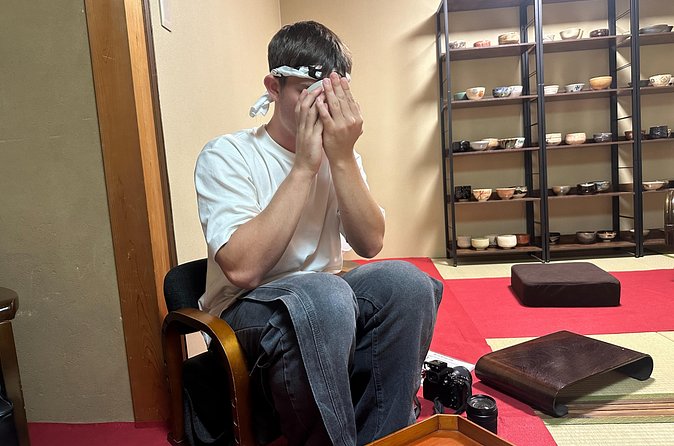
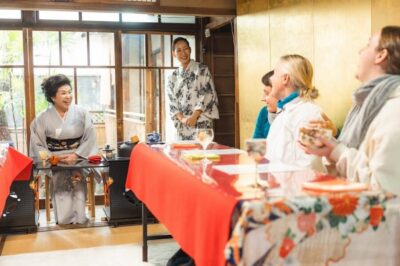
The first part sets the scene. Maya explains the background of the tea ceremony, including its history and the role of mindfulness. Her style, based on the available descriptions of the class, is friendly and lighthearted rather than stiff or overly formal.
That balance suits first-time visitors. Japanese tea ceremony has rules and gestures that can seem intimidating if you do not know what they mean. A good explanation turns those movements into a story about care, attention, and the value of the moment.
Maya also demonstrates how the ceremony is performed before asking you to try it yourself. This is an important detail. You get to see the proper sequence first, then repeat the process with guidance.
The instruction is in clear English, which makes the session useful for international visitors. Several details make the class especially approachable: the teacher encourages you to try, explains the steps carefully, and uses humor to keep the mood relaxed.
I would not expect the solemn pace of a private tea gathering hosted by a tea master. This is a short cultural workshop for a small group. The advantage is that you can ask questions and participate without feeling you must already understand the etiquette.
Making traditional matcha by hand
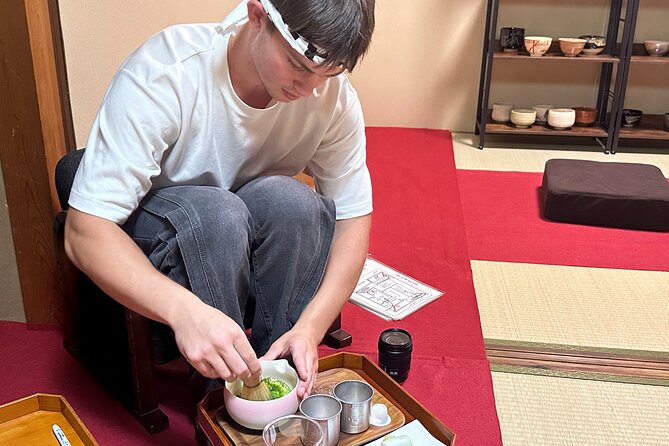
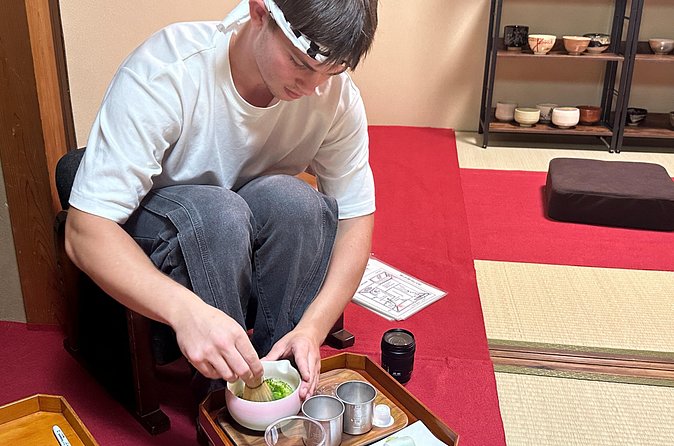
The central activity is preparing your own matcha. You learn how to handle the tea and whisk it in the traditional manner, with the instructor guiding the process.
For many people, this is the most useful part of the experience. Matcha is not simply green tea poured from a pot. The powder is whisked directly into water, creating a drink with a stronger flavor and a different texture from ordinary brewed tea.
The class uses good-quality matcha, according to the information provided, and the preparation is explained step by step. That helps you notice the difference between a carefully made bowl and an overly bitter or poorly mixed one.
You also get to drink the matcha you prepare. The taste can be grassy and pleasantly sharp, especially if you are new to it. The wagashi helps soften that edge.
There is a nice lesson here in the Japanese idea of paying attention to small actions. Measuring, whisking, serving, and tasting all become part of the experience. You do not need prior tea knowledge, and beginners are the main audience for this type of introduction.
Seasonal wagashi with your tea
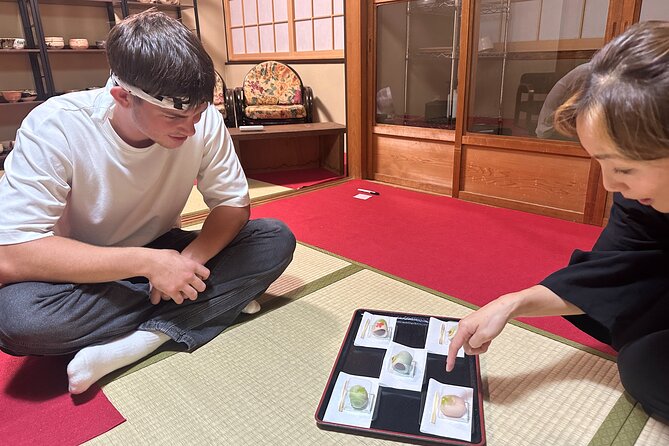
The matcha is served with seasonal wagashi, traditional Japanese sweets. These small treats are not just decoration. Their sweetness works as a counterpoint to matcha’s more powerful flavor.
Wagashi also gives you a glimpse of how Japanese food can reflect the time of year. The exact sweets may change by season, so you should not expect one fixed item on every visit. That changing element is part of the appeal.
I like that the food portion remains focused. This is not a meal, and you should not book it expecting a full lunch or dessert course. It is a small serving designed to accompany tea and keep the attention on the ceremony.
For families, couples, and friends, the wagashi adds a simple tasting moment without making the session feel like a cooking class. If you have a serious sweet tooth, the portion may seem modest, but it is appropriate for the format.
Same leaf, a different ritual:
- Kyoto: Table-Style Tea Ceremony at a Kyo-Machiya
★ 4.9 · 1,211 reviews - Kimono Tea Ceremony at Kyoto Maikoya, NISHIKI
★ 5.0 · 911 reviews - Arashiyama Bamboo, Temple, Monkeys, or Secret Sake Brewery
★ 4.8 · 886 reviews - Kyoto: Arashiyama Bamboo Forest, Monkeys, Matcha & Temple Tour
★ 5.0 · 759 reviews
From formal matcha to a Kyoto-style latte
The class then shifts from tradition to a more modern drink: a creamy Kyoto-style matcha latte. This is where the activity becomes more than a formal demonstration.
You get to make the latte yourself, and the instructor explains the method. A recipe is provided so you can practice at home. That practical takeaway adds value, especially if you already enjoy matcha drinks or want an easy memory of Kyoto that does not sit in a suitcase.
The latte section also makes the class appealing to people who may not love traditional matcha on its own. You can compare the stronger, more direct flavor of whisked tea with the softer and creamier modern version.
This change of pace keeps the 50-minute core session lively. You begin with history and ceremony, move into hands-on preparation, then finish with a drink that feels familiar to many café customers.
I would consider this a cultural tasting class rather than a technical barista lesson. You learn the basic process, not every possible variation. But the recipe and guided practice mean you leave with something you can actually repeat.
Samurai armor and the final photographs
The activity finishes with the chance to wear authentic samurai armor for photographs. This is a sharp change from the calm tea portion, and that contrast is part of the fun.
The photos give the experience a clear finale. You are not simply drinking tea and leaving. You get a visual souvenir that connects with another famous part of Japanese culture.
The armor session may be especially appealing to families, groups of friends, and anyone who enjoys costume photography. It also gives you a way to mark the occasion without buying a large souvenir.
I would keep expectations sensible. This is a short photo opportunity attached to a tea experience, not a full samurai training session or a historical reenactment. The value is in trying on the armor and taking memorable pictures.
There is also a slight thematic leap from tea ceremony to samurai costume. These are different parts of Japanese culture, and the transition is playful rather than historically rigorous. That will suit you if you want variety. If you prefer a single subject treated with academic depth, the combination may feel broad.
How the 1-hour-20-minute format works
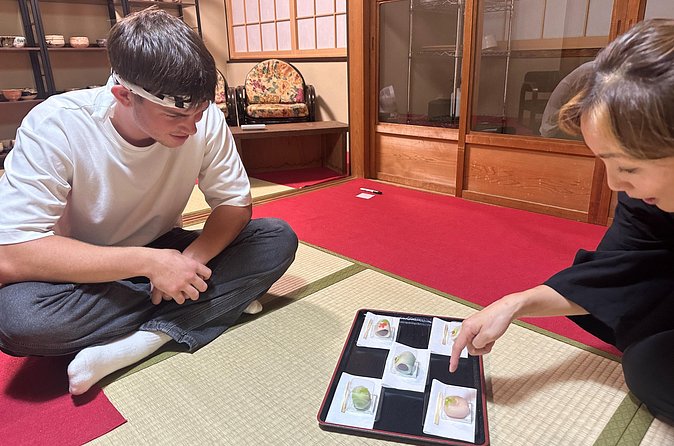
The total duration is approximately 1 hour 20 minutes. The main tea portion is described as lasting about 50 minutes, with the remaining time allowing for the latte activity, photos, and the natural movement of a small group through the experience.
This is a useful length for a Kyoto itinerary. You get a substantial cultural stop without giving up half a day. I could place it between major sights, though I would not schedule a tight reservation immediately afterward.
The maximum group size is 10 people. That is small enough for the instructor to watch your preparation and answer questions, while still allowing the class to feel social.
A small group also matters during the photo session. You should have more room to participate than you would in a large, assembly-line attraction. Exact time for each person is not specified, so I would expect the amount of photo time to depend on the group and the pace of the session.
The experience comes with a mobile ticket, and confirmation is provided at booking. Those details make it easy to carry on your phone, though I would still check the meeting address before leaving your hotel.
Is $71.74 a fair price?
At $71.74 per person, this is not a bargain snack stop. It is a paid cultural activity that combines several parts: a lesson in tea ceremony, matcha tasting, wagashi, a handmade latte, instruction in English, and samurai armor photos.
I think the price is reasonable if you value participation and a structured introduction. You are paying for more than a cup of tea. The instructor’s guidance, the traditional setting, the ingredients, the costume session, and the small group all add to the package.
The value is strongest for first-time visitors. You do not need to arrange a separate tea ceremony, matcha workshop, and costume photo session. The experience brings those elements together in one compact booking.
It is less compelling if you only want to drink matcha cheaply, or if you already have a formal tea ceremony booked elsewhere. In that case, the latte and armor photos may feel repetitive or less essential.
The fact that people book it around 72 days in advance suggests that popular dates can fill early. I would reserve ahead if you have limited time in Kyoto or need a particular day.
Who will enjoy this most?
I would recommend this experience to:
- First-time visitors who want a simple introduction to tea ceremony
- People who prefer doing something rather than watching a performance
- Matcha fans who want to learn a traditional method and make a latte
- Families and friends looking for a relaxed group activity
- Visitors who want photographs in samurai armor
- Anyone with an interest in Japanese food, customs, and everyday mindfulness
It may not be right for you if you want a long, highly formal ceremony with strict etiquette. The session is designed to be friendly, interactive, and entertaining.
It may also disappoint you if you expect a full meal. The food element is seasonal wagashi served with tea, not a restaurant course.
Practical booking advice for Kyoto
The meeting point is Samurai Gyoza Factory Kyoto, 230-1 Kamimyōkakujichō, Nakagyo Ward, Kyoto, postal code 604-0025. The activity returns to this same point.
Use the mobile ticket and keep the address easy to find on your phone. Since the exact route from your hotel is not provided, check public transportation before setting out. The location is near transit, but that does not eliminate the need to allow time for Kyoto’s streets and station exits.
The activity is suitable for beginners, and the teaching is delivered in clear English. The maximum group size is 10, so booking early is wise if you are visiting during a busy period.
Free cancellation is available until 24 hours before the start time for a full refund. Cancellations or changes made less than 24 hours before the start time are not accepted for a refund, and the cut-off follows local Kyoto time.
Should you book the Kyoto tea ceremony and samurai photo session?
I would book it if you want a compact, friendly introduction to matcha culture with something unusual at the end. The strongest features are the hands-on preparation, Maya’s clear and cheerful instruction, the seasonal wagashi, and the recipe you can use after returning home.
The samurai armor photographs make it more playful than a standard tea class. That will appeal to many people, though visitors seeking a quiet and strictly traditional ceremony should choose a longer, more formal option instead.
At $71.74, the activity earns its price by combining instruction, tasting, a historic townhouse setting, a latte workshop, and photos in one stop. For a first Kyoto visit, it is a practical way to meet Japanese tea culture without giving up an entire day.
FAQ
Where does the Kyoto tea ceremony and samurai photo session begin?
It begins at Samurai Gyoza Factory Kyoto, located at 230-1 Kamimyōkakujichō, Nakagyo Ward, Kyoto, 604-0025, Japan.
Where does the activity end?
The activity ends back at the meeting point.
How long does the experience last?
The overall experience lasts approximately 1 hour 20 minutes. The main tea ceremony portion is described as taking about 50 minutes.
How many people can join?
The activity has a maximum of 10 travelers.
Is the experience suitable for beginners?
Yes. The activity is designed for beginners and curious visitors, with instruction covering tea ceremony history, matcha preparation, and latte making.
Is the experience offered in English?
The available information describes clear English instruction, and Maya is specifically noted as having excellent English.
Can I cancel for a full refund?
Yes. You can cancel at least 24 hours before the experience start time for a full refund. Cancellations or changes made less than 24 hours before the start time are not accepted for a refund.
More Photo Sessions around Kyoto
- Kyoto: Tea Ceremony with Kimono and Photoshoot
★ 4.9 · 90 reviews - Tea Ceremony with Kimono and Professional Photoshoot in Kyoto
★ 5.0 · 44 reviews - Tokyo:Genuine Tea Ceremony, Kimono Dressing, and Photography
★ 5.0 · 33 reviews - Private Tour in Kamakura: Matcha Tea Tasting & Photo Session
★ 5.0 · 6 reviews
Newly steeped around Kyoto
- Whisk Your Own Matcha: A Zen Matcha Experience at Temple★ 3.6 · 7 reviews
- Kyoto: Authentic Tea Ceremony in a Small Group★ 5.0 · 7 reviews
- Tea ceremony at Kyoto’s Zen Temple Teahouse★ 5.0 · 2 reviews
- Uji Walking Tour – Byodo-in temple and Tea Ceremony from Kyoto★ 3.5 · 3 reviews
- Tea Ceremony Experience in Traditional Kyoto Townhouse★ 5.0 · 19 reviews
- Tea Ceremony in 150 Years Old Townhouse with Tables and Chairs★ 5.0 · 22 reviews
- Traditional Tea Ceremony in Kyoto★ 4.5 · 3 reviews
- Sencha-do the Japanese Tea Ceremony Workshop in Kyoto★ 5.0 · 21 reviews
Tea Ceremony Experiences, compared.
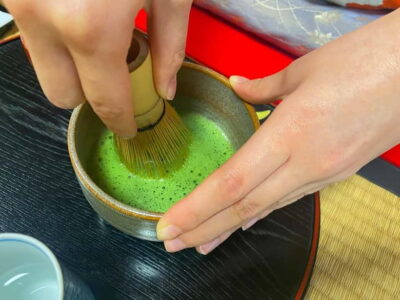
Kyoto: Tea Ceremony in a Traditional Tea House in Kiyomizu
Read our review →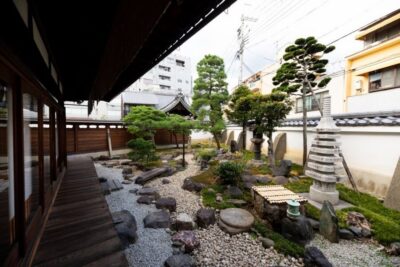
Kyoto: 45-Minute Tea Ceremony Lesson Experience
Read our review →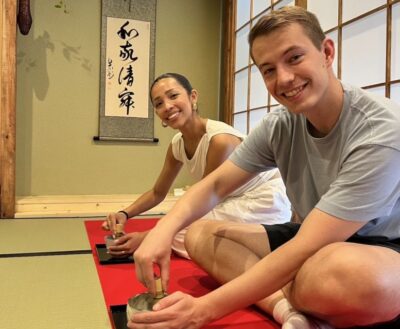
Kyoto: Table-Style Tea Ceremony at a Kyo-Machiya
Read our review →


Browse the lists this tea experience appears in