
Review · KYOTO
Kyoto: Authentic Tea Ceremony in a Small Group
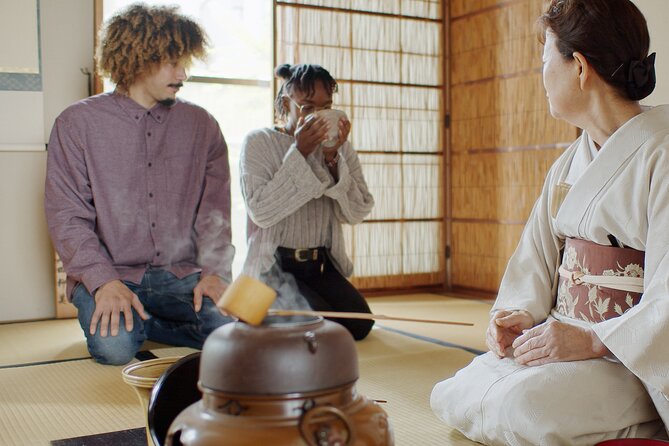
Kyoto’s best tea experiences are not about gulping down a green drink. They slow you down. This one places you in an elegant tea room in Uzumasa, where you watch the Urasenke procedure, learn why the utensils matter, and then whisk your own bowl of matcha.
I like two things right away: the use of Marukyu Koyamaen matcha and sweets from a long-established Kyoto wagashi shop, plus the intimate private setting for groups of up to six. The main consideration is cost. At $586.38 per group for about one hour, it offers better value with four to six people than with one or two.
Key points
- Premium tea and sweets: Marukyu Koyamaen matcha is paired with carefully selected Kyoto wagashi.
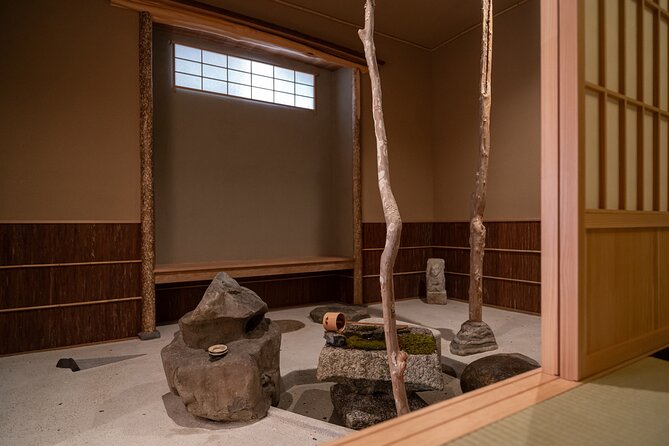
- A miniature garden in the tea room: You are invited to study a small, meticulously arranged garden as part of the experience.
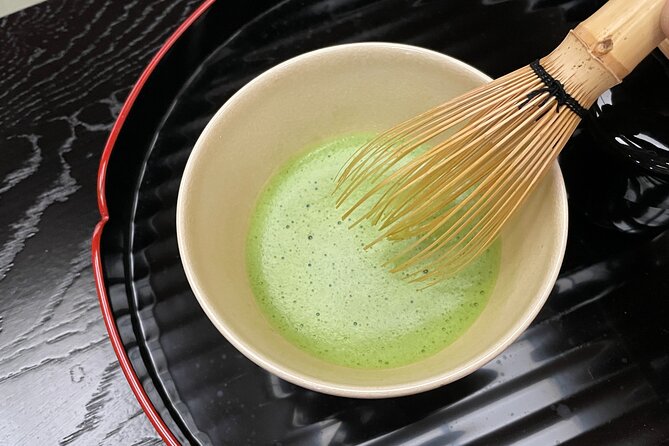
- Hands-on matcha making: After watching the formal procedure, you whisk your own bowl of tea.
- Traditional haori included: You wear a kimono-style jacket during the ceremony.
- Private group format: Only your group participates, with a maximum of six people.
- Uzumasa setting: The tea room is at Chanoyu The KYOTO Uzumasa, near public transportation.
A quiet tea room in Kyoto’s Uzumasa district
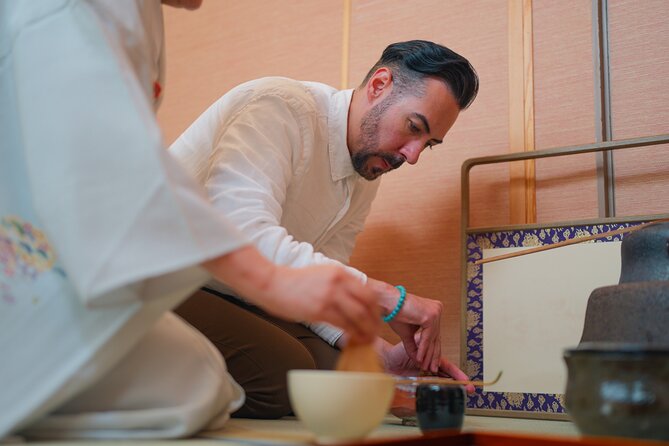
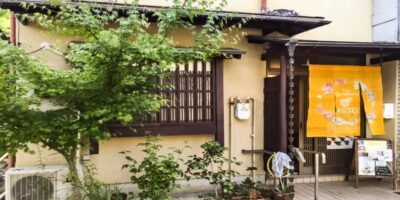
This experience begins at Chanoyu The KYOTO Uzumasa, at 19 Kita 1st Floor, Uzumasa Izumishikibucho, in Kyoto’s Ukyo Ward. The location is in the historic Uzumasa district, an area associated with old Kyoto and the refined culture of earlier periods.
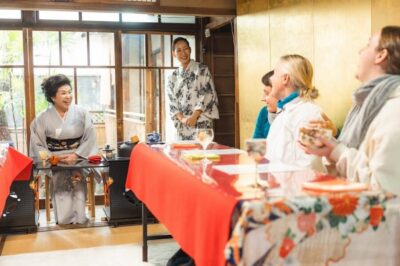
The setting matters. You are not being ushered through a large attraction with a crowd waiting behind you. This is a private activity, so only your own group takes part. That gives the host room to explain the tea utensils, the background of chanoyu, and the movements of the ceremony at a calmer pace.
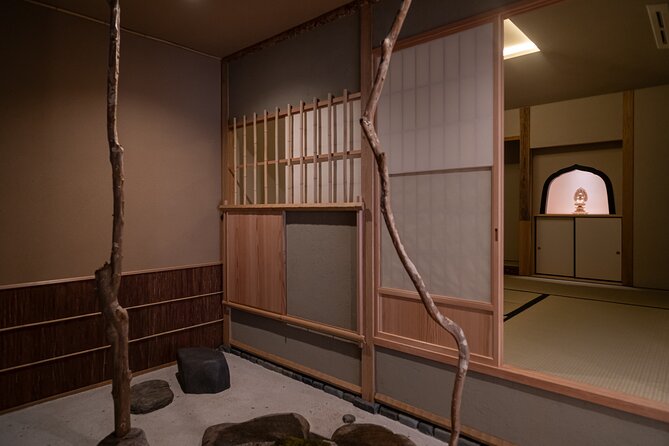
The venue combines a stylish interior with a traditional tea room and a carefully arranged garden. The contrast is part of its appeal. You first enter a polished, modern-feeling space, then find the quieter details that make the ceremony feel rooted in Kyoto.
You should plan on about one hour. That is long enough to cover the main ideas and practice making matcha, but not long enough for a broad lesson in every school of Japanese tea. Think of it as a focused introduction, not a full-day cultural course.
More Tea Ceremonies in Kyoto
- Kyoto: Tea Ceremony in a Traditional Tea House in Kiyomizu
★ 4.9 · 3,519 reviews - Kyoto: Tea Ceremony Ju-An at Jotokuji Temple
★ 4.9 · 3,207 reviews - Kyoto: 45-Minute Tea Ceremony Lesson Experience
★ 4.3 · 2,378 reviews
Wearing a haori and reading the room
One of the first touches is the chance to wear a traditional haori, a kimono-style jacket. It gives the occasion a sense of ceremony without requiring you to dress in a full kimono or learn complicated clothing customs before you arrive.
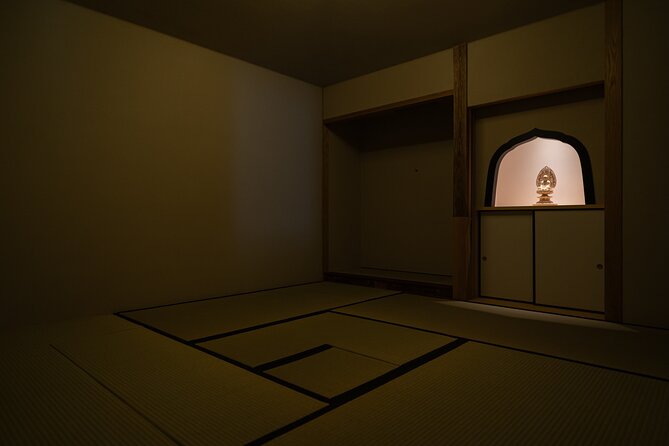
The host also invites you to look closely at the tea room and its miniature garden. This is not just decoration placed in the corner. In chanoyu, the room, utensils, seasonal sweets, flowers, and garden-like elements help create the mood. Even a small feature can guide your attention toward simplicity and careful arrangement.
I like this part because it gives you something to do before the tea is served. You are not simply waiting for a demonstration. You are encouraged to notice the space and understand that the tea room itself is part of the experience.
The description does not specify how much time is spent discussing the garden, so expect a short introduction rather than a formal garden tour. Still, this small feature may be especially appealing if you enjoy Japanese design, architecture, or the details of traditional rooms.
Watching the Urasenke tea procedure
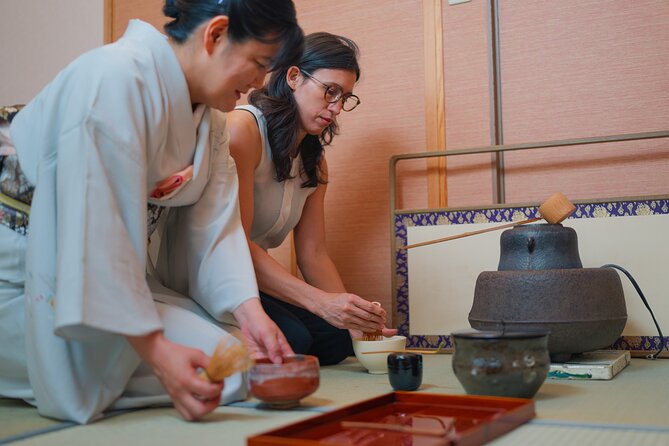
The central demonstration follows the Urasenke style of tea preparation. The movements are graceful and deliberate. Bowls, scoops, whisks, and other tools are handled with care, and the order of each step has meaning.
For a first-time visitor, this demonstration helps make sense of what can otherwise seem like a series of mysterious gestures. The host explains the history and culture behind chanoyu, along with the traditional utensils used during the ceremony.
The value here is not just visual. You begin to see tea preparation as a form of hospitality. The host is paying attention to the guest, the room, the season, and the objects being used. That idea, often called chado, or the Way of Tea, is one of the key cultural lessons in the hour.
The ceremony is formal, but the experience is intended for beginners. You do not need prior knowledge of Japanese tea. The explanation is presented as part of the visit, and the small-group format gives you a better chance to ask questions than you would have in a large demonstration.
One practical note: Urasenke is one specific tea tradition, so this is not a general survey of every tea school in Japan. If you are mainly interested in seeing a recognizable tea ceremony and learning the basic cultural ideas behind it, the focused format works well.
Kyoto wagashi and Marukyu Koyamaen matcha
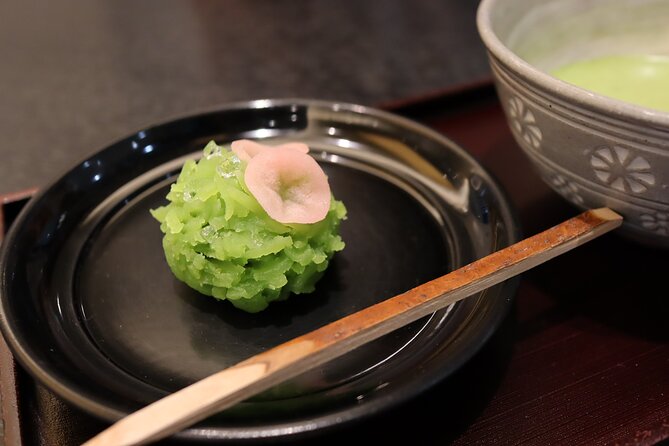
The food and tea are a major reason to consider this activity. You receive traditional Kyoto sweets from a long-established wagashi shop, paired with high-grade matcha from Marukyu Koyamaen.
Wagashi are not ordinary snacks. Their color, shape, texture, and sweetness are designed to complement bitter matcha. The sweet is generally eaten before the tea, preparing your palate for the stronger flavor of the powdered green tea.
That pairing is especially useful if you have tried matcha before and found it sharp or unpleasant. The quality of the tea and the sweetness of the wagashi are meant to work together rather than compete. The experience places as much attention on the food as it does on the preparation.
You receive traditional sweets during the demonstration, then enjoy a second sweet with the matcha you prepare yourself. The exact shapes and flavors are not specified, so do not book expecting a particular seasonal confection.
The tea comes from Marukyu Koyamaen, a respected Kyoto tea producer. The experience provider makes a clear point of using carefully selected matcha, sweets, and utensils. That focus on ingredients is one of the strongest reasons this is priced above a basic tourist demonstration.
Same leaf, a different ritual:
- Kyoto: Table-Style Tea Ceremony at a Kyo-Machiya
★ 4.9 · 1,211 reviews - Kimono Tea Ceremony at Kyoto Maikoya, NISHIKI
★ 5.0 · 911 reviews - Arashiyama Bamboo, Temple, Monkeys, or Secret Sake Brewery
★ 4.8 · 886 reviews - Kyoto: Arashiyama Bamboo Forest, Monkeys, Matcha & Temple Tour
★ 5.0 · 759 reviews
Making your own bowl of matcha
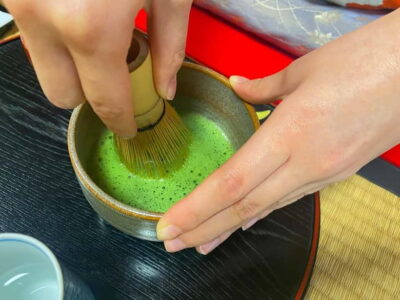
After watching the host prepare tea, you get your own turn. You whisk a bowl of matcha and drink it with the second traditional sweet.
This hands-on step makes the activity more useful than a ceremony where you only sit and observe. You get a simple understanding of how the whisk feels, how the powder mixes with water, and how much care goes into producing a smooth bowl.
Do not expect to leave as a tea master after one attempt. The point is not technical mastery. It is to connect the formal movements you have just seen with your own hands.
For many people, this will be the most memorable section. It turns an abstract cultural lesson into something physical and personal. You see the host’s practiced method first, then try to reproduce the basic action yourself.
The experience description does not provide the exact step-by-step instructions or the amount of time given to each person. If everyone in your group wants a turn, the private format is helpful, but a group of six will naturally have less individual attention than a group of two.
Why the private format affects the price
The listed cost is $586.38 per group, with up to six people included. That works out to about $97.73 per person if six people attend. For three people, the effective cost is about $195.46 each, and for two it is about $293.19 each.
That is expensive for a one-hour activity, especially if you are booking for one or two people. It becomes more reasonable when shared by a full group, particularly for families or friends who want a private cultural activity and prefer not to join strangers.
The price includes the matcha, Kyoto sweets, haori, garden viewing, utensil introduction, cultural explanation, and hands-on preparation. It does not include transportation. Since the venue is near public transportation and the activity ends where it starts, you can combine it with other plans in the area.
I would not choose this experience solely as a cheap way to taste matcha. There are less costly tea demonstrations in Kyoto. I would consider it if you care about the quality of the tea and sweets, want a quiet room, and value having the session reserved for your own party.
The small group also matters for families. Children may enjoy putting on the haori and whisking the tea, although the information provided does not state a minimum age or specific child policy. If you are booking with young children, confirm those details before paying.
Who will get the most from this experience
This is a good fit if you want a first introduction to chanoyu without committing half a day. The hour covers the basic structure: entering the space, appreciating the garden, watching the Urasenke procedure, learning about the utensils, tasting a sweet and tea, and preparing your own bowl.
It also suits you if you enjoy quiet cultural activities. The emphasis is on careful movement, refined surroundings, and the flavor of the matcha and wagashi. It is not a loud, fast-moving attraction.
You may appreciate it even more if you have already seen a large tea performance and want something more personal. The private format lets you focus on the host’s explanation and the objects in front of you.
This may not be the right choice if you want a long lesson, a full kimono dressing session, a large garden visit, or extensive transportation from your hotel. None of those are included. The haori is a simple kimono-style jacket, not a complete dressing experience.
It is also less attractive if your main goal is a broad tour of Kyoto. The venue is the focus, and the activity remains at the meeting point. You will need to arrange your own way there and back.
Practical details before you book
Confirmation is provided when you book, and a mobile ticket is available. The meeting point and end point are the same: Chanoyu The KYOTO Uzumasa.
The activity runs for approximately one hour. Allow extra time to find the address and arrive ready to begin, but do not expect the booking to fill an entire morning or afternoon.
There is no private transportation included. The location is near public transportation, which is useful if you are planning your own route through Kyoto. The supplied details do not identify a specific train station or bus stop, so check the exact route before leaving.
The booking allows free cancellation up to 24 hours before the starting time for a full refund. Changes or cancellations inside that 24-hour window are not accepted for a refund, and the cut-off follows local Kyoto time.
The experience is private for your group, with a maximum of six people. That is one of its clearest advantages, but the same fixed group price means smaller parties pay more per person.
How this compares with a basic tea tasting
A basic tea tasting may give you a cup of matcha and a sweet, perhaps with a short explanation. This experience adds several layers: a traditional jacket, a miniature garden, the Urasenke procedure, utensil history, cultural context, and your own preparation of tea.
The difference is not simply the number of inclusions. The structure helps you understand why the ceremony looks and feels the way it does. You first see the host’s careful method, then try a small part of it yourself.
The use of premium matcha and Kyoto wagashi also separates this from a casual café stop. You are tasting products chosen for a tea ceremony, not simply ordering a green beverage.
Still, the experience is only about an hour. If you want a detailed study of tea schools, a longer practice session, or a full explanation of Japanese seasonal aesthetics, you will need a more extensive class. This one gives you a polished introduction with a strong focus on setting and taste.
Should you book this Kyoto tea ceremony?
Book it if you want a private, polished introduction to chanoyu and you are willing to pay for quality ingredients and an elegant setting. It is especially good for a group of four to six, when the price becomes easier to justify.
I would also choose it for a special occasion, a first visit to Kyoto, or a day when you want one calm hour away from busy sightseeing. The strongest features are the Marukyu Koyamaen matcha, Kyoto wagashi, the miniature garden, and the chance to whisk your own tea after watching the Urasenke procedure.
Think twice if you are alone or traveling as a couple on a tight budget. The one-hour duration and high group price may not compare well with cheaper tea activities. For the right group, though, this offers a thoughtful look at Japanese hospitality in a refined Uzumasa tea room.
FAQ
Where does the tea ceremony take place?
It takes place at Chanoyu The KYOTO Uzumasa, located at 19 Kita 1st Floor, Uzumasa Izumishikibucho, Ukyo Ward, Kyoto, Japan 616-8101.
How long does the experience last?
The tea ceremony lasts approximately one hour.
How many people can participate?
The activity is private and can accommodate up to six people in one group.
Is transportation included?
No. Transportation is not included, but the venue is near public transportation.
Where does the activity end?
The experience ends back at the meeting point, Chanoyu The KYOTO Uzumasa.
What kind of tea is served?
The experience uses high-quality matcha from Marukyu Koyamaen.
Are Kyoto sweets included?
Yes. Kyoto sweets are included, with a traditional sweet served alongside the matcha.
Do I get to prepare matcha myself?
Yes. After watching the Urasenke tea procedure, you whisk your own bowl of matcha.
Can I cancel for a full refund?
Yes. You can cancel at least 24 hours before the start time for a full refund. Cancellations or changes made less than 24 hours before the experience are not accepted for a refund.
Newly steeped around Kyoto
- Whisk Your Own Matcha: A Zen Matcha Experience at Temple★ 3.6 · 7 reviews
- Tea ceremony at Kyoto’s Zen Temple Teahouse★ 5.0 · 2 reviews
- Uji Walking Tour – Byodo-in temple and Tea Ceremony from Kyoto★ 3.5 · 3 reviews
- Tea Ceremony Experience in Traditional Kyoto Townhouse★ 5.0 · 19 reviews
- Tea Ceremony in 150 Years Old Townhouse with Tables and Chairs★ 5.0 · 22 reviews
- Traditional Tea Ceremony in Kyoto★ 4.5 · 3 reviews
- Sencha-do the Japanese Tea Ceremony Workshop in Kyoto★ 5.0 · 21 reviews
- Silent Beauty of Kyoto Zen Walk and Tea Experience★ 5.0 · 2 reviews
Tea Ceremony Experiences, compared.
Kyoto: Tea Ceremony in a Traditional Tea House in Kiyomizu
Read our review →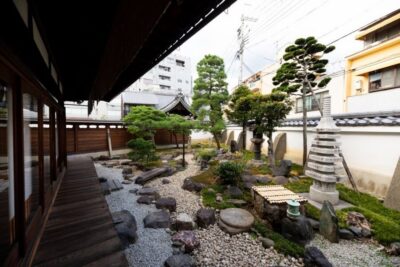
Kyoto: 45-Minute Tea Ceremony Lesson Experience
Read our review →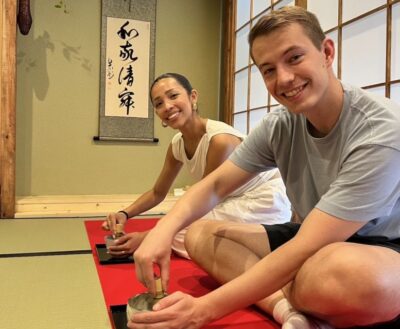
Kyoto: Table-Style Tea Ceremony at a Kyo-Machiya
Read our review →


Browse the lists this tea experience appears in