
Review · JAPAN
Shared Matcha Tour and Matcha Making Experience in Nishio
Nishio’s matcha story becomes much clearer when you see the tea fields, watch the leaves being prepared, and then whisk a cup yourself. I like the small group size, which can make the guide’s explanations easier to follow, and I like the mix of field, factory, and tea ceremony rather than a single indoor demonstration. The main consideration is that this is a look at tea production, not a tea-picking activity.
I also like that the tour gives you time to wear a traditional tea outfit for photos and includes sweets with the finished tea. At $62.80 per person, it is not a bargain-basement attraction, but the two-hour format covers several parts of Nishio’s tea trade in one stop. You must also arrive on time: being more than 15 minutes late without contact can cancel the booking.
Key points to know before booking
- See Nishio’s tea fields in traditional picking clothes: You can take photos in the outfit, though actual tea picking is not included.
- Follow the leaves from field to factory: A short factory visit shows how harvested leaves are dried and prepared.
- Learn the story before making tea: A roughly 10-minute video and guide explanation set up the rest of the visit.
- Make and drink your own matcha: The final 45-minute session covers preparation, tea etiquette, tasting, and sweets.
- Keep the group manageable: The experience accepts 2 to 14 people and includes an English-speaking guide.
- Plan around a fixed 10 a.m. start: Meet at Aoi Seicha in Nishio, then return there at the end.
Why Nishio is a good place to learn about matcha
Nishio sits in south-central Aichi Prefecture and is one of Japan’s major matcha-producing areas, alongside Uji and Kyoto proper. That gives this experience a useful setting. You are not only hearing about matcha in a city shop. You are visiting a town known for producing the powder.
That local setting matters because matcha is not simply ordinary green tea ground into powder. The visit helps you connect the finished drink with the fields and factory work behind it. The opening video gives you a quick starting point, then the guide adds the local history of Nishio matcha.
I would not book this expecting a long agricultural tour or a full-day visit. The whole program lasts about two hours, so each section is fairly focused. That is a plus if you have limited time in Aichi, but it also means the factory and field portions are introductions rather than exhaustive technical tours.
More Matcha Experiences in Japan:
- World Heritage Kyoto & Nara Uji Authentic Matcha Experience
★ 5.0 · 1,573 reviews - Kyoto: Arashiyama Bamboo Forest, Monkeys, Matcha & Temple Tour
★ 5.0 · 759 reviews - Matcha Making Class in Tokyo with Authentic Japanese Sweets Set
★ 5.0 · 744 reviews
Starting at Aoi Seicha at 10 a.m.
The experience begins at Aoi Seicha, at 7-1 Kamiyashiki, Kamimachi, Nishio, Aichi 445-0894. The activity ends back at this same meeting point, so you do not need to arrange a separate return transfer.
The start time is 10 a.m., and punctuality matters. If you are more than 15 minutes late without contacting the operator, the booking can be canceled automatically. I would allow extra time to find Aoi Seicha and get settled, especially if you are arriving by public transport.
The activity is described as being near public transportation, but pickup and drop-off are not included. That means you need to make your own way to Nishio and to the meeting point. The mobile ticket is useful for keeping the booking details on your phone, though it does not replace the need to plan the route.
A 10-minute introduction to matcha production
The first section uses a video to explain the matcha production process. It lasts about 10 minutes, which is enough to give you the basic sequence before you head outside.
This short introduction is more useful than it may sound. Without some background, a factory visit can become a blur of machinery and unfamiliar terms. Here, you get a simple outline first, then see parts of that process in person.
The guide also explains the history of Nishio matcha. The strongest part of the experience is the way the explanation carries through the day. You begin with the broad story, then look at the fields, see how the leaves are handled, and finish by making tea yourself.
Tea fields and the traditional outfit
The tea field visit takes about 25 minutes. You can wear the traditional tea picking outfit and take photos among the fields. This is one of the most memorable parts for many people because it gives the visit a clear sense of place.
The outfit is for the experience and photographs. Actual tea picking is not included, so you should not expect to harvest leaves by hand. That distinction is important if you are looking for farm work rather than a cultural visit.
The field stop also provides a visual break from the indoor parts of the tour. You get to see where the tea begins, rather than thinking of matcha only as a bright green drink in a bowl. I would bring a phone or camera, since photography is specifically part of this portion.
The supplied information warns that tea leaves may cause irritative dermatitis depending on your skin sensitivity. If you know your skin reacts to plants or tea leaves, take that note seriously and ask the guide what contact is expected before proceeding.
More Tea Experiences around Japan:
- Kyoto: Tea Ceremony in a Traditional Tea House in Kiyomizu
★ 4.9 · 3,519 reviews - Kyoto: Tea Ceremony Ju-An at Jotokuji Temple
★ 4.9 · 3,207 reviews - Kyoto: 45-Minute Tea Ceremony Lesson Experience
★ 4.3 · 2,378 reviews - Osaka: Tea Ceremony Experience
★ 4.9 · 1,426 reviews
Inside the matcha factory for about 30 minutes
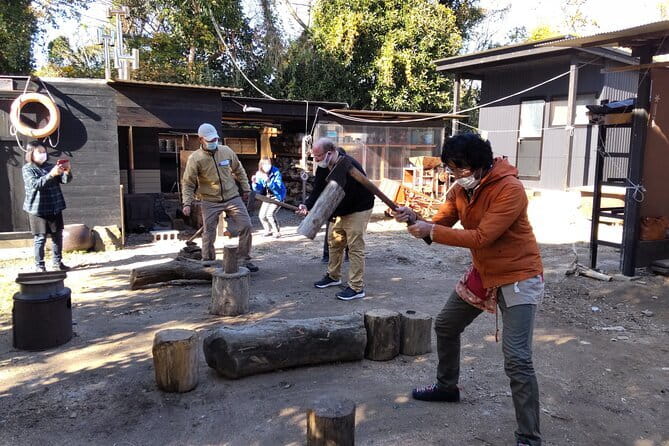
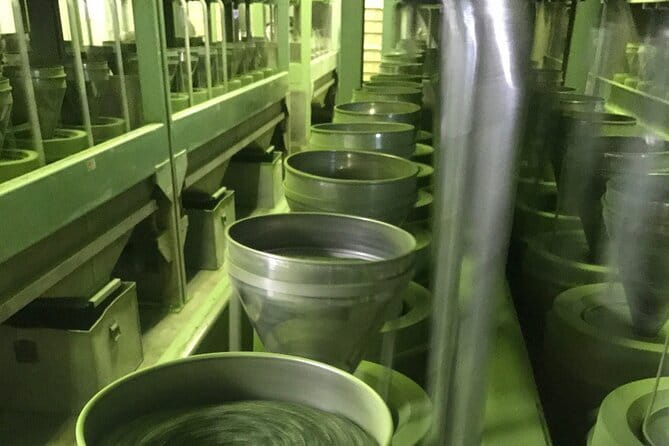
After the field visit, you spend roughly 30 minutes on a brief factory tour. The focus is on watching how the leaves are dried and prepared for tea-making.
This is the practical heart of the tour. The field shows you the source, while the factory explains why matcha requires more work before it reaches your cup. You see that the powder is the end of a preparation process, not a product that appears as soon as leaves are harvested.
The factory portion is short, so I would treat it as an accessible introduction rather than a detailed production seminar. You may not see every stage of matcha making, and the information provided does not promise a complete factory operation tour. Still, it fills an important gap between agriculture and tea ceremony.
If you enjoy food production, this section may be as interesting as the ceremony. It gives you a better reason to pay attention to the texture, color, and flavor of the tea at the end.
Making your own cup of matcha
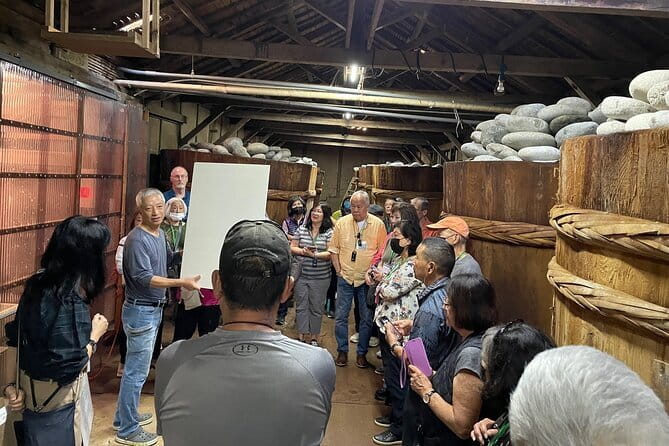
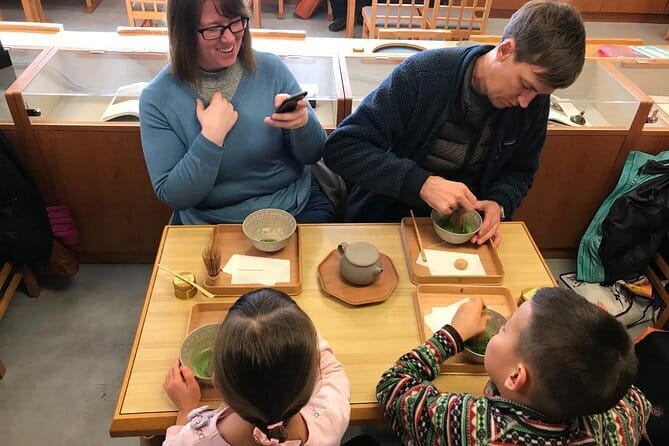
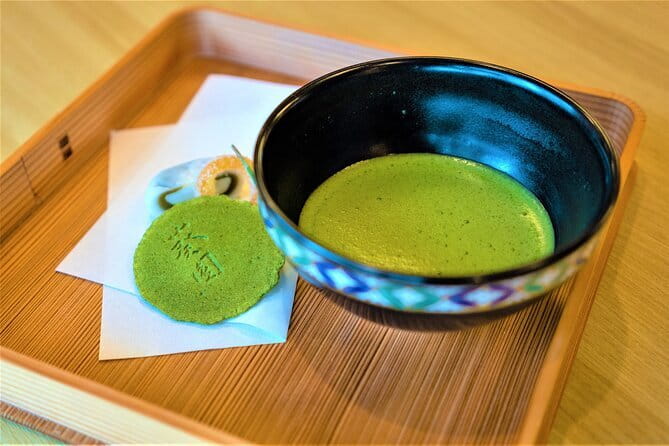
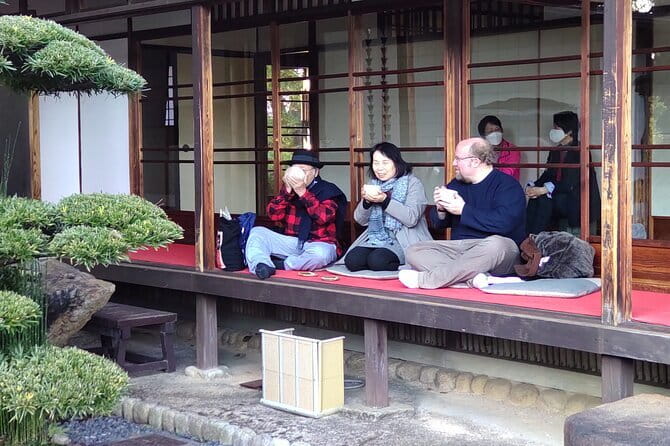
The final matcha experience lasts about 45 minutes. With guidance from the English-speaking tour leader, you make a cup of matcha, learn the proper manner, and then drink it with sweets.
This is where the tour becomes hands-on. You are not only watching an expert prepare tea. You take part in the process and get a chance to understand the care involved in preparing the drink.
The explanations about tea manners and matcha history received particular praise, and that makes sense. Tea ceremony can feel formal if you only watch from the side. A guide who explains the reason for the movements helps you see the session as more than a photo opportunity.
The tasting also gives the earlier sections a purpose. After learning about the fields and factory, you can taste the finished tea with a better sense of what you are drinking. The experience includes snacks or sweets, which provide a pleasant balance to matcha’s strong, earthy taste.
The available comments describe the tea as the best matcha some participants had in Japan. Taste is personal, of course, but the setting and the explanation can make the cup feel more meaningful than a quick café order.
What the English-speaking guide adds
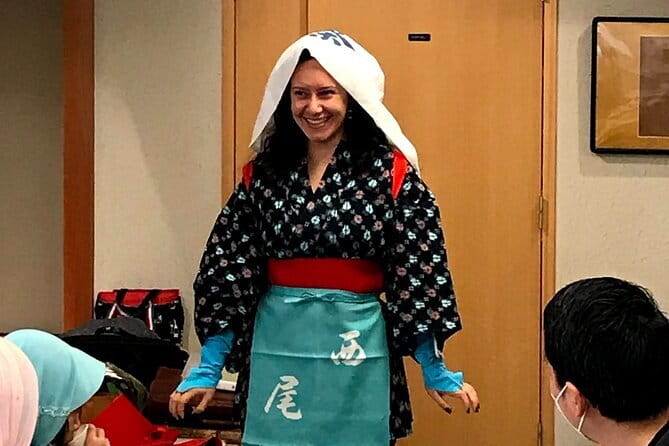
An English-speaking guide is included, and the guide leads the history explanation, field visit, factory tour, and tea-making session. That continuity is valuable because you do not have to piece together separate explanations at each stop.
The guide’s role matters most during the tea preparation. Details about manner and timing can be easy to miss if you are simply copying someone’s movements. A well-explained session lets you understand what you are doing rather than just following instructions.
The group size ranges from 2 to 14 people. A maximum of 14 is still large enough to feel like a group activity, but it is more manageable than a major bus tour. If your group is small, you may have more room to ask questions. The experience requires at least two participants, so solo booking is not available under the stated reservation terms.
Is $62.80 a fair price?

At $62.80 per person, this is best judged as a compact cultural experience, not as a simple tea tasting. The price covers the field tour, traditional outfit, factory visit, English-speaking guide, matcha preparation, tea, and snacks.
I think the value is strongest for anyone who wants the full chain from production to drinking. You get four distinct sections in about two hours, and the experience returns you to the same place. That keeps the schedule tidy and avoids spending much of the day moving between locations.
The price is less convincing if you only want to sample matcha or attend a quiet tea ceremony. You could spend less on a drink elsewhere, but you would miss the field and factory context. You also pay for the guide’s explanations and for access to a production setting, not just the bowl of tea.
Shopping is available after the tour. Souvenirs and purchases are not included in the price, so consider the shopping stop optional rather than part of the paid program.
Who will enjoy this Nishio experience?
I would recommend it to you if you want a clear introduction to Japanese tea culture without committing to a full day. It suits people who enjoy food origins, hands-on activities, photography, and guided cultural history.
It is also a good choice for anyone already interested in matcha but unsure how it is produced. The combination of field, factory, and preparation answers basic questions in a logical order.
Families and small groups may appreciate the short sections and the outfit photographs. The two-hour duration is easier to fit around other plans than a longer rural excursion.
You may want to skip it if you specifically want to pick tea leaves. That activity is not included. You should also reconsider if you dislike fixed start times, group activities, or close contact with tea plants because of skin sensitivity.
Practical planning for the morning
Plan to arrive before 10 a.m. at Aoi Seicha. Since there is no pickup or drop-off, check your route to Nishio before the day of the experience and keep the meeting address available on your phone.
The tour lasts approximately two hours, though the exact flow can depend on the group and local conditions. Afterward, you can shop at the meeting point. Since the activity ends where it begins, it is easy to continue with your Nishio plans from there.
The reservation is available for groups of 2 to 14 people, with a maximum of 14 participants. Confirmation is sent within 48 hours of booking, subject to availability. Free cancellation is available if you cancel at least 24 hours before the local start time. Cancellations or changes inside that 24-hour window are not accepted for a refund.
Should you book the Nishio matcha tour?
Book this experience if you want more than a ceremonial cup. The strongest reason to go is the complete progression: Nishio’s tea story, a field visit, a look at leaf preparation, and your own guided cup with sweets.
I especially like the balance between seeing and doing. You take photographs in the traditional outfit, watch the factory process, and then put some of the lesson into practice. The guide’s explanations of manners and history are a major part of the value.
Skip it if tea picking is your main goal or if you only want a quick tasting. For everyone else, $62.80 is a reasonable price for a focused two-hour introduction to one of Japan’s best-known matcha-producing areas.
FAQ
Where does the matcha experience begin?
It begins at Aoi Seicha, Japan, 7-1 Kamiyashiki, Kamimachi, Nishio, Aichi 445-0894.
What time does the tour start?
The tour starts at 10 a.m.
How long does the experience last?
The experience lasts approximately two hours.
Does the tour include tea picking?
No. The tour includes a tea field visit and a traditional tea picking outfit experience, but actual tea picking is not included.
Is an English-speaking guide included?
Yes. An English-speaking guide leads the experience.
How many people can join?
The reservation is available for 2 to 14 people, and the maximum group size is 14 participants.
What is included in the price?
The price includes the tea field tour, traditional tea picking outfit experience, matcha factory tour, tea tasting, snacks, and an English-speaking guide. Souvenirs, pickup, and drop-off are not included.
Newly steeped around Japan
- Yokohama : Tea Ceremony with Sweets and Souvenir★ 5.0 · 5 reviews
- Whisk Your Own Matcha: A Zen Matcha Experience at Temple★ 3.6 · 7 reviews
- Walking Tour: Yanaka,Nezu& Sendagi: Tea Ceremony & Old Tokyo★ 5.0 · 3 reviews
- Visit local home for music and tea ceremony near Disney★ 4.9 · 13 reviews
- Trip to Kamakura & Enoshima: Shrines, Seaside, Temples &Tea★ 5.0 · 11 reviews
- Yokohama: Sushi & Gyoza Cooking with Matcha & GreenTea Experience★ 5.0 · 3 reviews
- Kyoto tea town for matcha lovers★ 5.0 · 16 reviews
- Uji: Private immersion into Kyoto’s tea and reglious culture★ 5.0 · 17 reviews
Matcha Experiences, compared.
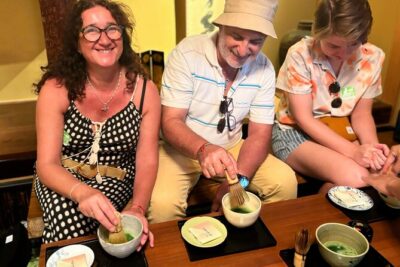
World Heritage Kyoto & Nara Uji Authentic Matcha Experience
Read our review →
Matcha Making Class in Tokyo with Authentic Japanese Sweets Set
Read our review →
Kyoto: Tea Museum Tickets and Matcha Grinding Experience
Read our review →
Kyoto: Tea Ceremony Meditation – Make Matcha with Tea Master
Read our review →
Tokyo: Matcha Making Experience with Mochi Sweets in Asakusa
Read our review →
Kyoto: Kimono Tea Ceremony with Matcha and Sweet
Read our review →
Browse the lists this tea experience appears in