
Review · JAPAN
Nishio Matcha Story|Tea Ceremony & Matcha Kaiseki Journey
Nishio’s matcha story is best understood with your hands: grind the tea, whisk it into foam, then taste how the powder works in a carefully prepared meal. This four-hour experience brings you into a former noble residence, where a licensed tea master explains the ceremony before guiding you through your own bowl.
I like the direct connection between place and food, and I like the small group limit of 10. The stone-milling session gives the day a useful physical focus, while the final matcha-inspired kaiseki meal turns a lesson into a full meal. The main drawback is the price, $229.17 per person, which is a serious outlay for four hours.
Key points to know
- You make matcha yourself: Grind tea with a traditional stone mill, then whisk your own bowl under a tea master’s guidance.
- The setting matters: The ceremony takes place at the Former Konoe Residence, followed by a stroll through Nishio’s historic district.
- The meal is part of the lesson: Mitsuyama serves seasonal Japanese kaiseki cuisine shaped by the aroma and flavor of Nishio matcha.
- Taxis are included: Round-trip taxi transportation connects the Nishio Information Centre with the activity venues.
- The group stays small: A maximum of 10 people makes it easier to follow the tea master and ask questions.
- Plan your budget carefully: The fee includes the guide, taxis, activities, meal, and travel insurance, but not dinner drinks or gratuity.
Why Nishio is the right place for a matcha lesson
Nishio is presented as a historic home of premium matcha cultivation. Its climate and pure water help produce tea known for strong umami and a vivid green color. You do not simply hear this as background information, though. The experience links the area’s tea tradition to the powder in your bowl and the dishes on your plate.
That connection is the strongest reason to choose this outing over a basic tea ceremony. In many Japanese cities, you can watch a formal ceremony for a short time. Here, you also learn how matcha is made, prepare it yourself, and taste it in a meal inspired by the same ingredient.
The format suits you if you want cultural context without spending a full day on a large group excursion. The total time is about four hours and 15 minutes. That is long enough for several distinct activities, but short enough to fit into a broader visit to Aichi.
More Matcha Experiences in Japan:
- World Heritage Kyoto & Nara Uji Authentic Matcha Experience
★ 5.0 · 1,573 reviews - Kyoto: Arashiyama Bamboo Forest, Monkeys, Matcha & Temple Tour
★ 5.0 · 759 reviews - Matcha Making Class in Tokyo with Authentic Japanese Sweets Set
★ 5.0 · 744 reviews
Meeting the guide at Nishio Information Centre
Your day begins at Nishio Information Centre, at 4-64 Hanaki-cho, Nishio, Aichi 445-0852. You meet the English-speaking interpreter guide there and then travel by taxi to the first venue.
The initial transfer is listed as about 15 minutes. Since transportation to the meeting point is not included, you need to arrange your own way to Nishio Information Centre. The tour does include the taxis between the meeting point and the venues, which removes the need to work out local transport during the main part of the experience.
This arrangement is helpful if you are unfamiliar with Nishio. You can focus on the guide and the tea program instead of checking routes between separate locations. It also keeps the schedule compact.
The group can include up to 10 people. That is not a private tour, but it is small enough for a tea master to watch each person whisking and offer practical help. The guide’s role is especially useful because the ceremony has rules and gestures that are easy to miss if you are only watching silently.
The Former Konoe Residence and the first taste of tea
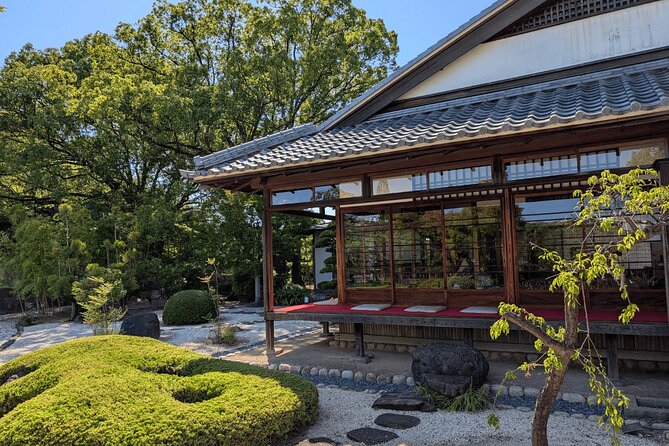
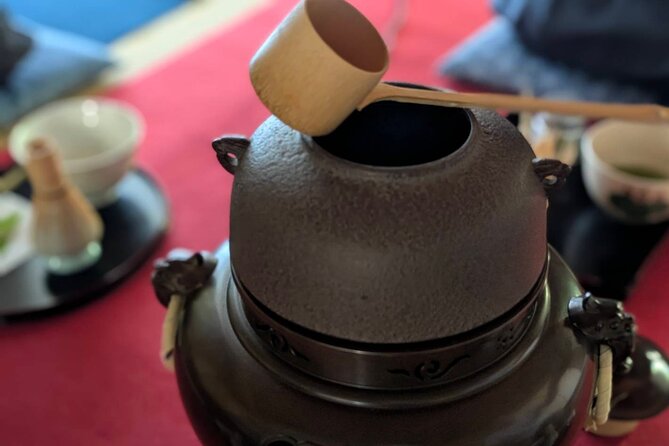
The central cultural section takes place at the Former Konoe Residence. This historic tea room gives the ceremony a sense of place that a modern classroom would not provide. You are not just being shown how to prepare matcha. You are seeing the practice in a setting connected to an older Japanese household.
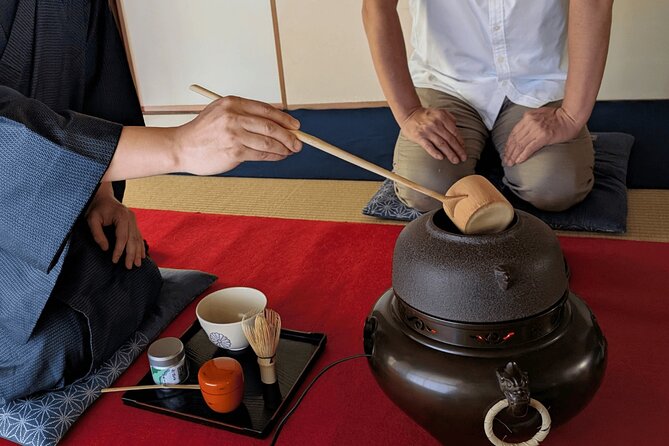
A certified tea master first demonstrates the formal ceremony. Pay attention to the pace. Tea ceremony is not built around speed. The careful movements, arrangement of utensils, and respectful presentation are part of the message. You will get more from the demonstration if you watch the details rather than treating it as a quick prelude to the hands-on portion.
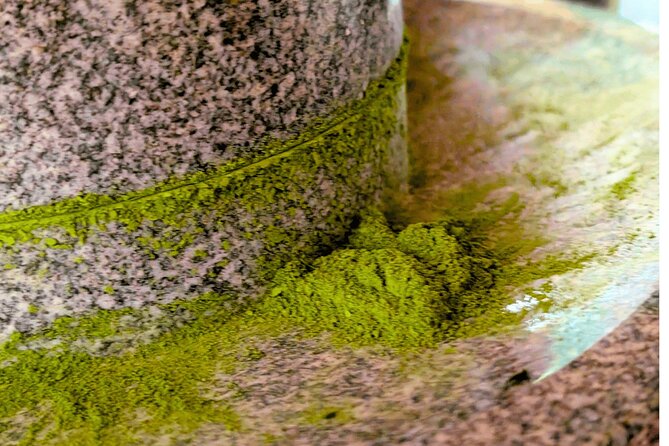
After the demonstration, you take part in matcha preparation. The experience includes a stone-milling session, described as using a traditional stone grinder, and also a grinding activity with a mortar and pestle. These are useful steps because they show that matcha is not simply ordinary tea poured into a cup. The leaves are processed into a fine powder, and that powder is then suspended in water rather than steeped and discarded.
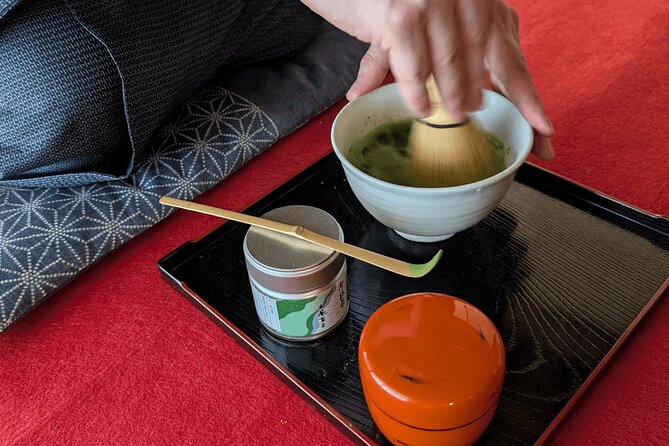
You also whisk your own bowl. The tea master provides guidance, so you do not need previous experience. Your first bowl may not have the smooth foam or even texture of a professional preparation, but that is part of the value. You learn through your own hands what the whisk is doing and how technique affects the drink.
A first-time matcha drinker can get a lot from this section. The available comments about the experience emphasize that careful explanations make the history and appeal of Nishio matcha easier to understand. Another useful point is that making the tea yourself changes the way it tastes. You are not only consuming a finished product. You have taken part in its preparation.
A short walk through Nishio’s historic district
After the tea activities, you stroll through Nishio City’s Historic District. The walk gives the morning a needed change of rhythm. Instead of staying indoors for the entire first half, you move through the town connected to the tea tradition you have just been discussing.
The supplied schedule does not give a detailed list of buildings or sights along this walk, so you should not book it expecting a long architectural tour. Think of it as a short local walk attached to the tea experience. Your interpreter guide can provide context as you go, but the main focus remains Nishio matcha rather than a broad survey of the entire city.
The Former Konoe Residence section lasts about one hour and 45 minutes, including the demonstration, grinding, whisking, and district stroll. That is a sensible amount of time for a hands-on activity. You have room to listen, try the technique, and ask questions without the session becoming an all-day lesson.
More Tea Ceremonies in Japan:
- Kyoto: Tea Ceremony in a Traditional Tea House in Kiyomizu
★ 4.9 · 3,519 reviews - Kyoto: Tea Ceremony Ju-An at Jotokuji Temple
★ 4.9 · 3,207 reviews - Kyoto: 45-Minute Tea Ceremony Lesson Experience
★ 4.3 · 2,378 reviews - Osaka: Tea Ceremony Experience
★ 4.9 · 1,426 reviews
Matcha meets kaiseki at Mitsuyama
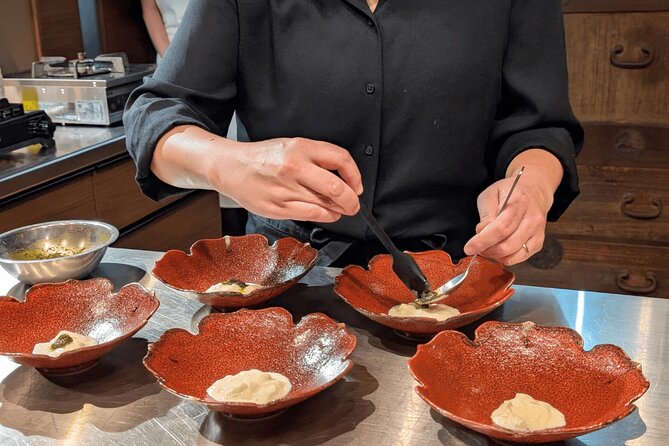
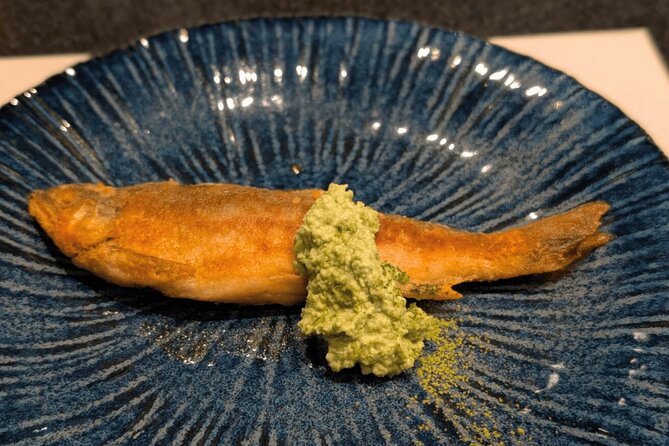
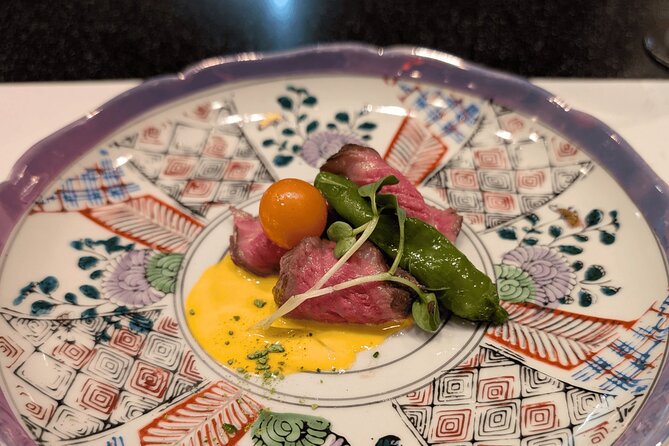
The final major stop is Mitsuyama, where you spend about two hours with seasonal Japanese kaiseki cuisine. The meal is described as having the aroma of matcha and featuring matcha-inspired dishes. This is not presented as a standard restaurant lunch with a cup of green tea added at the end. The tea is part of the food concept.
Kaiseki is built around several carefully prepared courses, seasonal ingredients, balance, and presentation. The exact menu is not provided, so you should expect the dishes to vary rather than arrive as a fixed list. That seasonal approach is appropriate for the format, but it also means you should not book this expecting a particular matcha dessert or a specific course.
The meal is included in the $229.17 price, though drinks during dinner are not. That detail matters. If you want sake, soft drinks, or another beverage, budget extra. Guide gratuity is optional.
One appealing feature is the chance to speak with the chef. The available feedback describes the meal as very good and notes the pleasure of talking with the chef. That kind of exchange can make the dinner feel less like a formal finish and more like another part of the lesson. You can connect the kitchen’s choices to the tea you prepared earlier.
The two-hour meal also means this is not a rushed tasting. You should have time to notice how matcha is used in savory or fragrant dishes, not just sweet ones. If your interest is limited to a quick bowl of powdered tea, this portion may feel long. If you enjoy Japanese food and want to see how one ingredient can be treated in several ways, it gives the price more weight.
What the $229.17 fee really covers
At $229.17 per person, this is a premium half-day outing. It is not the economical choice for someone who only wants to try matcha once. You could spend much less on a simple tea café visit or a short ceremony elsewhere.
The value here comes from the package:
- An English-speaking interpreter guide
- A licensed tea master
- Tea ceremony instruction
- Matcha grinding with traditional equipment
- Hands-on whisking
- A seasonal kaiseki meal
- Taxi transportation between the meeting point and venues
- Travel insurance
The meal alone is an important part of the calculation. You are paying for a substantial two-hour kaiseki experience, not only for the ceremony. The included taxis also matter in Nishio, where arranging transport between a station, a historic residence, and a dining venue could take time and planning.
I would consider the price reasonable for a visitor who places a high value on guided cultural access, a small group, and a complete food experience. I would hesitate if your main goal is sightseeing on a tight budget. The program gives you depth rather than a long list of attractions.
Time, group size, and practical planning
The full experience lasts approximately four hours and 15 minutes. The stated schedule includes a 15-minute opening transfer, one hour and 45 minutes at the Former Konoe Residence and historic district, a two-hour meal at Mitsuyama, and a 15-minute taxi trip at the end.
The small group cap of 10 is a real advantage during whisking practice. A large class can turn a hands-on tea lesson into a demonstration with limited personal attention. Here, you have a better chance to see the tea master’s technique clearly and receive help with your own bowl.
Most people can participate, and the activity is near public transportation. The supplied information does not give detailed mobility notes, dietary guidance, or a precise breakdown of walking distance. If you have mobility needs or food restrictions, ask the operator before booking rather than assuming the kaiseki menu can be changed.
There is one point worth confirming. The route description ends with a taxi to Nishio Station, while the meeting information says the activity ends back at the meeting point. Since those details do not match perfectly, check the final drop-off point before you commit to a train or another reservation.
Confirmation is sent within 48 hours of booking, subject to availability. The activity also requires a minimum number of participants. If the operator cancels because that minimum is not met, you are offered another date or experience, or a full refund.
The personal cancellation rule is strict. The booking is non-refundable and cannot be changed for any reason. That makes travel insurance useful, but it does not remove the need to choose your date carefully.
Who will enjoy this Nishio experience most
I would recommend this to you if you want to understand matcha as a Japanese food tradition rather than a fashionable drink. It suits first-time matcha drinkers because the tea master explains the process and guides your whisking. You do not need to arrive with specialized knowledge.
It also fits food-focused visitors. The kaiseki meal gives the day a second center of attention, and the chance to speak with the chef adds a personal touch. If you already enjoy Japanese cuisine, you may find the meal more rewarding than the ceremony alone.
The experience is less suitable if you prefer free time, independent sightseeing, or a fast schedule. The ceremony asks you to slow down, and the meal occupies two hours. You should also think twice if $229.17 feels too high for a half-day activity, even with transport and dinner included.
Couples, solo visitors, and small family groups can all fit the format, since the maximum group size is 10. Children may be able to participate because most people can take part, but the supplied information does not specify an age policy. Ask before booking if that matters for your group.
Should you book the Nishio Matcha Story?
Book it if you want a focused, well-connected introduction to Nishio tea. The strongest feature is the sequence: learn about the local tea, see the ceremony, grind the powder, whisk it yourself, and then encounter matcha again in a seasonal meal. Each part gives meaning to the next.
Skip it if you want a cheap activity, a broad city tour, or a quick tea tasting. The cost is high, the cancellation terms are firm, and the two-hour meal requires patience. For the right visitor, though, the combination of a historic tea room, personal instruction, taxis, and kaiseki makes this more than a standard tea ceremony.
FAQ
Where does the Nishio matcha experience begin?
It begins at Nishio Information Centre, Japan, 445-0852 Aichi Prefecture, Nishio, Hanaki-cho 4-64.
How long does the activity last?
The experience lasts approximately four hours and 15 minutes.
How many people can join?
The maximum group size is 10 people.
Is an English-speaking guide included?
Yes. An English-speaking interpreter guide is included.
Who leads the tea ceremony?
A licensed or certified tea master leads the tea ceremony and guides the matcha activities.
Do I get to make matcha myself?
Yes. The experience includes grinding matcha with traditional equipment and whisking your own bowl with guidance.
Is the kaiseki meal included?
Yes. A seasonal Japanese kaiseki meal featuring matcha-inspired dishes is included. Drinks during dinner are not included.
Is transportation included?
Round-trip taxi transportation between the Nishio Information Centre and the activity venues is included. Transportation to the meeting point is not included.
Newly steeped around Japan
- Yokohama : Tea Ceremony with Sweets and Souvenir★ 5.0 · 5 reviews
- Whisk Your Own Matcha: A Zen Matcha Experience at Temple★ 3.6 · 7 reviews
- Walking Tour: Yanaka,Nezu& Sendagi: Tea Ceremony & Old Tokyo★ 5.0 · 3 reviews
- Visit local home for music and tea ceremony near Disney★ 4.9 · 13 reviews
- Trip to Kamakura & Enoshima: Shrines, Seaside, Temples &Tea★ 5.0 · 11 reviews
- Yokohama: Sushi & Gyoza Cooking with Matcha & GreenTea Experience★ 5.0 · 3 reviews
- Kyoto tea town for matcha lovers★ 5.0 · 16 reviews
- Uji: Private immersion into Kyoto’s tea and reglious culture★ 5.0 · 17 reviews
Matcha Experiences, compared.
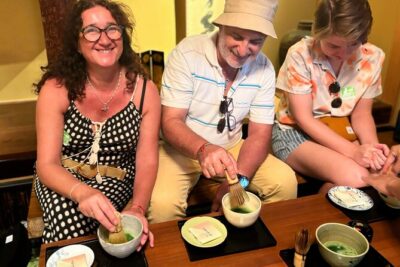
World Heritage Kyoto & Nara Uji Authentic Matcha Experience
Read our review →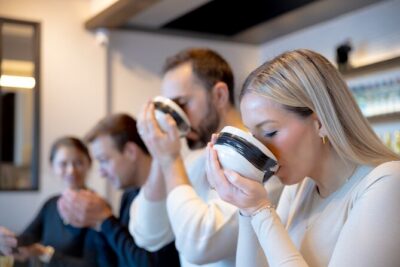
Matcha Making Class in Tokyo with Authentic Japanese Sweets Set
Read our review →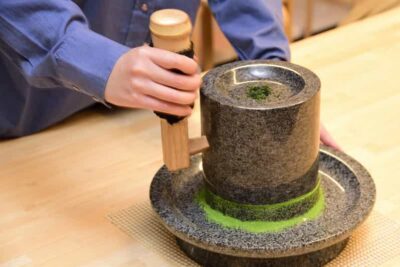
Kyoto: Tea Museum Tickets and Matcha Grinding Experience
Read our review →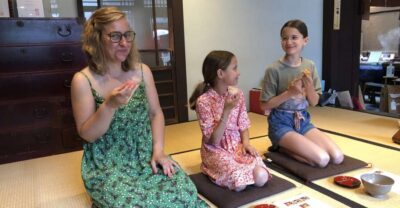
Kyoto: Tea Ceremony Meditation – Make Matcha with Tea Master
Read our review →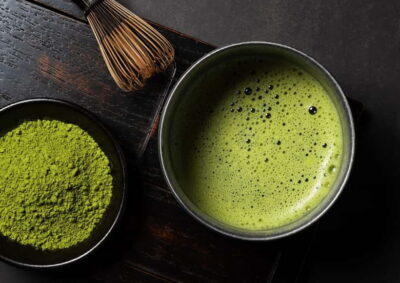
Tokyo: Matcha Making Experience with Mochi Sweets in Asakusa
Read our review →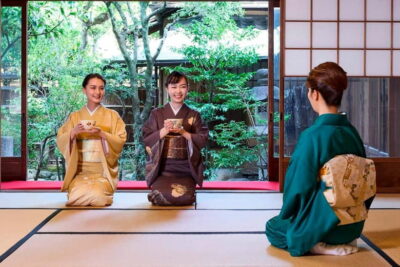
Kyoto: Kimono Tea Ceremony with Matcha and Sweet
Read our review →
Browse the lists this tea experience appears in