
Review · KANAZAWA
Kanazawa: Kenrokuen Tea Ceremony Experience
A proper matcha ceremony does not need half a day. This one-hour experience at Kenrokutei gives you the essential ritual without asking you to sit through the three or four hours of a full ceremony. A tea master prepares the drink, an English-speaking guide explains the movements, and you get to make matcha yourself.
I like the calm setting and the clear instruction. You sit inside a formal tea room in a historic building once used by Lord Maeda to entertain important visitors, then taste wagashi sweets from traditional confectioners. The main drawback is simple: Kenrokuen admission is not included, and the garden is not visible from inside the tea room.
Key points
- Watch a tea master prepare matcha: The ceremony is shown step by step, with explanations of the gestures and their meaning.
- Make your own tea: After observing, you whisk matcha yourself with help from the staff.
- Taste traditional wagashi: The sweets are served before the tea and come from established Japanese confectioners.
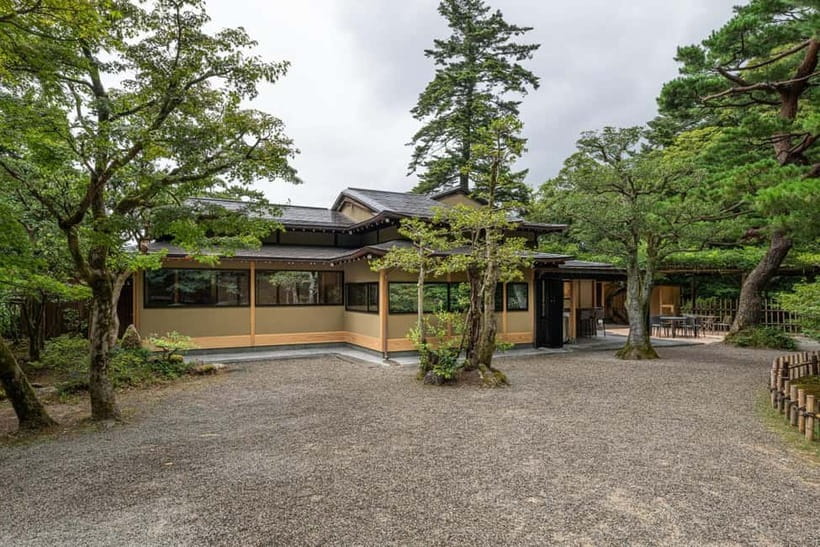
- Meet inside Kenrokuen: Kenrokutei sits near the fountain inside one of Kanazawa’s most famous gardens.
- English guidance is part of the experience: Guides such as Nana and Océane have been praised for patient explanations and clear communication.
- Plan for the floor, or request a chair: You can ask for a chair if kneeling or sitting on mats is uncomfortable.
Why this short ceremony works so well
Japanese tea ceremony can seem mysterious if you only watch it from a distance. Every movement looks deliberate, yet the reasons behind those movements are not always obvious. This experience solves that problem by combining a demonstration with plain English explanations.
You first watch the tea master carry out the procedure. The guide explains how to behave, when to bow, how to receive the tea, and why the utensils are handled in certain ways. You are not expected to arrive with perfect etiquette. The staff teach you what you need before asking you to take part.
That balance matters. I would not choose this activity if you wanted a long, highly formal ceremony with no interruption. I would choose it if you want a respectful introduction that lets you understand what you are seeing.
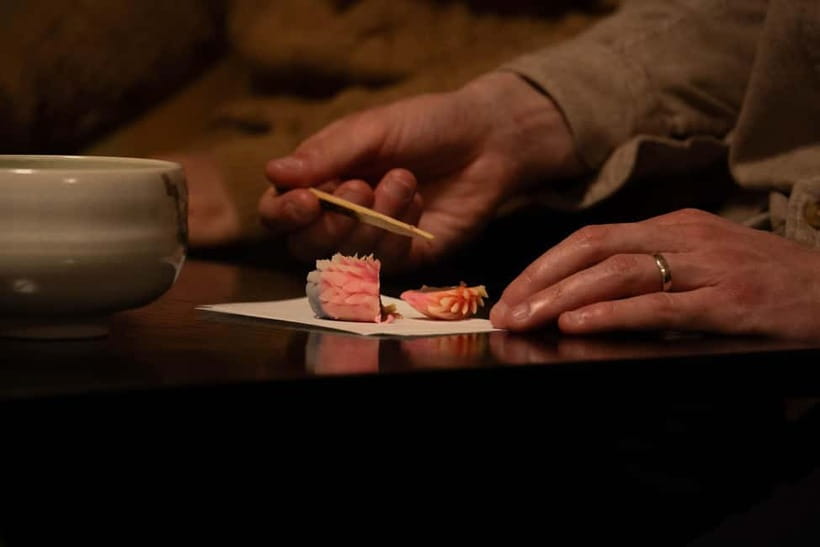
The format is also friendly to first-time matcha drinkers. You taste a traditional sweet before drinking the tea, which softens matcha’s bitter edge and follows the proper order of the ceremony. The wagashi are not just a snack. Their shape, color, and sweetness are part of the experience, and they give you a useful taste of Japanese confectionery.
More Tea Ceremonies in Japan:
- Kyoto: Tea Ceremony in a Traditional Tea House in Kiyomizu
★ 4.9 · 3,519 reviews - Kyoto: Tea Ceremony Ju-An at Jotokuji Temple
★ 4.9 · 3,207 reviews - Kyoto: 45-Minute Tea Ceremony Lesson Experience
★ 4.3 · 2,378 reviews
Entering Kenrokutei inside Kenrokuen Garden
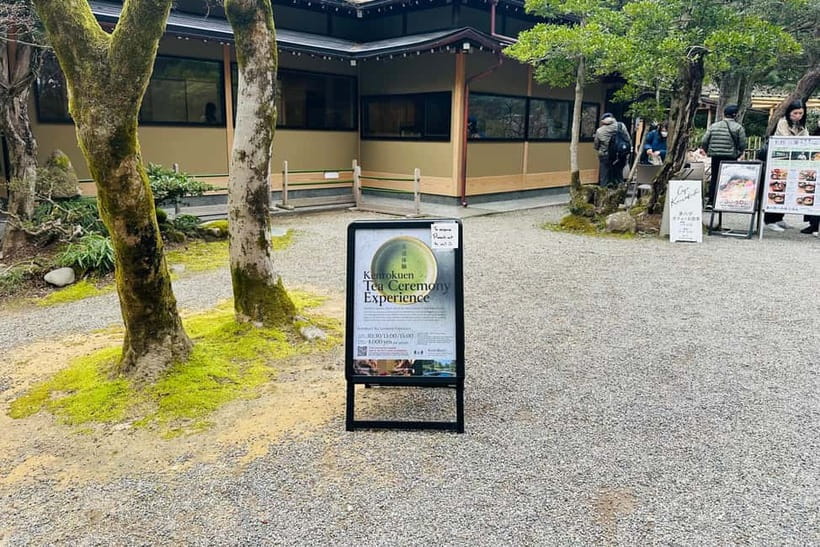
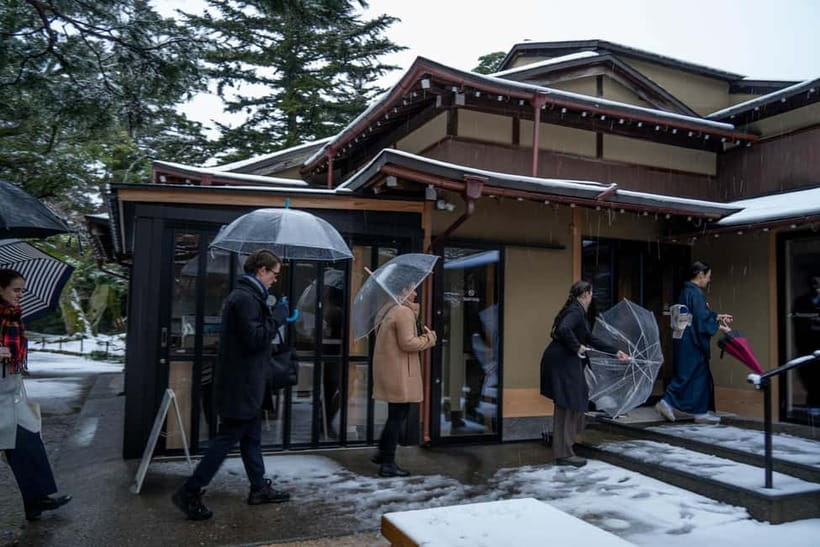
Your meeting point is Kenrokutei, located in front of the fountain inside Kenrokuen Garden. This detail is important because the experience does not begin at a street entrance. You need to enter the garden first, find the fountain, and then look for the shop and its tea ceremony signboard.
Kenrokuen charges a separate entrance fee of 320 yen. The fee is modest, and the garden ticket is useful beyond the ceremony because you can explore the grounds before or after your appointment. Still, add it to the advertised $35 price when working out your total cost.
The garden setting adds atmosphere, but keep your expectations precise. The tea room does not look out over the garden. Once the ceremony begins, you are in an enclosed formal room, away from outside views. I see this as a strength for the ceremony itself, since the room is quiet and focused, but you should walk through Kenrokuen separately if the scenery is part of your plan.
Allow enough time to find Kenrokutei. The meeting instructions point you toward the fountain and ask you to read the tea ceremony signboard for entrance information. Arriving early also gives you room to enjoy the garden instead of hurrying in from the gate.
The opening explanation and the tea master’s demonstration
The session begins with an introduction to the building and the way of tea. Kenrokutei has a connection to the Maeda lords, who ruled the area during the Edo period, and the building was used for entertaining important people. That setting gives the ceremony a useful sense of place.
The guide then explains the procedure before the tea master begins. English support is a major part of the value here. The guides do not simply translate isolated words. They explain what you are seeing and tell you how to respond without making you feel as if you are taking a test.
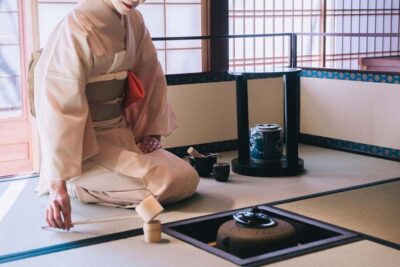
The tea master’s movements are the center of the session. You watch the preparation of the matcha, the handling of the utensils, and the careful presentation of the bowl. The appeal is not only the final drink. It is the quiet precision of the process.
I especially like the chance to ask questions at suitable points. Several guides, including Nana and Océane, have been singled out for making the explanations easy to follow. The staff may vary by session, but the experience is designed around an English-speaking instructor who guides the group before, during, and after the demonstration.
The group format also explains the request for quiet. Other groups may be taking part at the same time, so this is not a private lesson by default. One person described some noise from a nearby room, although the staff apologized and offered a small gift. That appears to be an occasional nuisance rather than the main character of the experience, but visitors seeking total silence should know that the building can have some sound nearby.
Learning the etiquette without feeling awkward
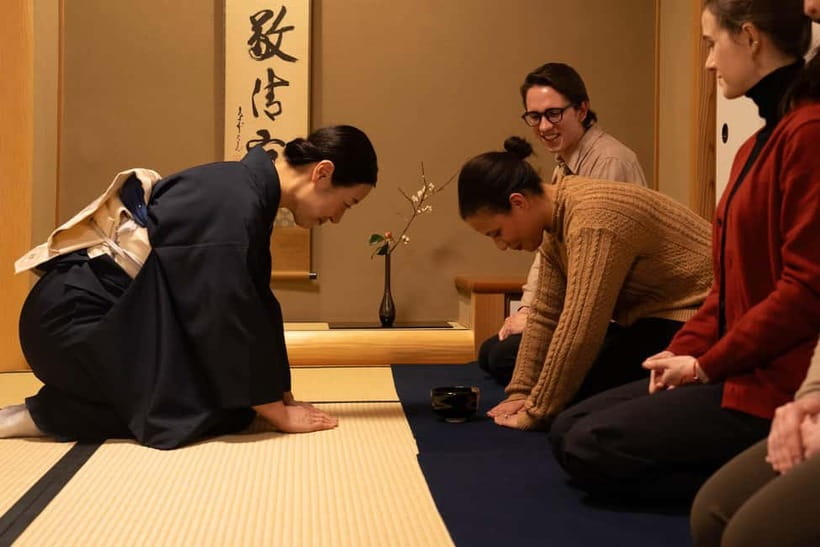
Tea ceremony etiquette can feel intimidating when you first encounter it. The staff reduce that pressure by showing you how to act before you need to do it yourself.
You learn how to sit, how to receive the sweets, how to handle the bowl, and how to enjoy the tea in the expected order. The instructions are practical rather than academic. You are guided through the ceremony so you can pay attention to the meaning and beauty of the ritual instead of worrying about making a mistake.
There is also a cultural lesson in the pace. The ceremony asks you to notice small movements and give attention to the person preparing the tea. It is a quiet way to see ideas of respect, hospitality, and present-moment awareness in practice.
You do not need special clothing or prior experience based on the information provided. The main physical consideration is floor sitting. The ceremony normally takes place on mats, but you can request a chair if kneeling or sitting on the floor is difficult. Ask for one in advance or when you arrive.
The age information needs a careful note. One part of the activity information says participants must be at least 7, while another says it is not suitable for children under 8. Since those statements do not match, I would confirm the minimum age before booking for a seven-year-old.
More Tea Experiences around Japan:
- World Heritage Kyoto & Nara Uji Authentic Matcha Experience
★ 5.0 · 1,573 reviews - Osaka: Tea Ceremony Experience
★ 4.9 · 1,426 reviews - Kyoto: Table-Style Tea Ceremony at a Kyo-Machiya
★ 4.9 · 1,211 reviews - Kimono Tea Ceremony at Kyoto Maikoya, NISHIKI
★ 5.0 · 911 reviews
Wagashi first, matcha second
The sweets are one of the small details that make the ceremony feel complete. You receive wagashi from traditional confectionery shops, including sweets made by a renowned confectioner. Their job is not simply to provide sugar. The sweetness prepares your mouth for the earthy, intense taste of matcha.
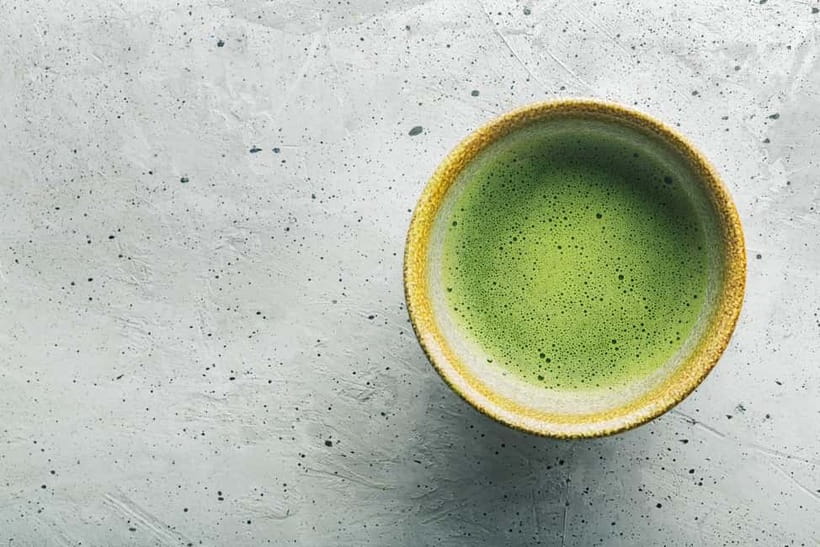
If you have only had matcha in a modern café, expect a different drink. Properly whisked matcha has a strong flavor and a creamy texture, and it can taste bitter without a sweet alongside it. The pairing makes the tea easier to appreciate, especially if this is your first formal tasting.
The sweets are served before the tea, following the traditional sequence. That order helps you understand the ceremony as a set of connected actions rather than a demonstration followed by an unrelated snack.
Some sessions include more than one sweet tasting, according to the information available, but the standard promise is wagashi served with the ceremony. I would not book this primarily as a dessert stop. The sweets are a thoughtful part of a cultural lesson, not a large food tasting.
Making your own matcha
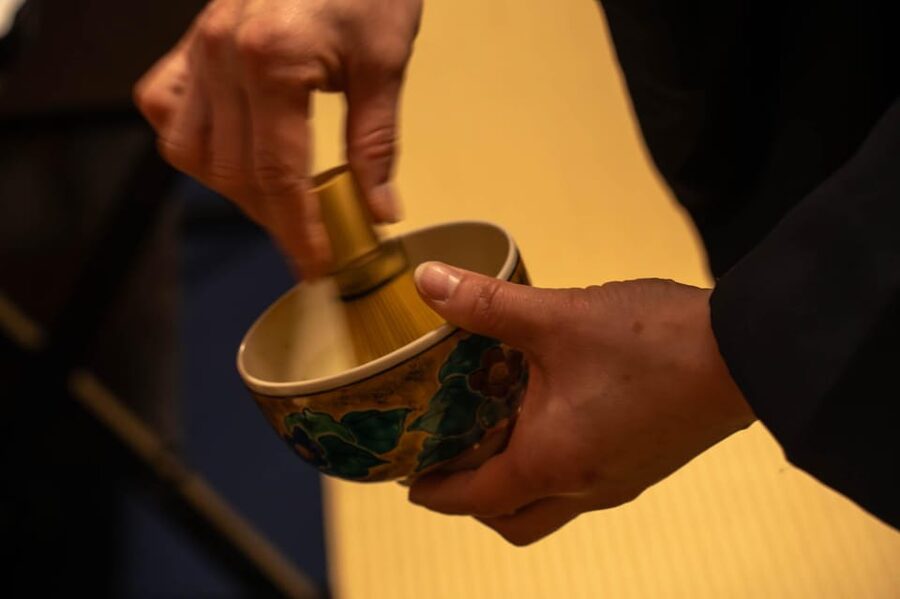
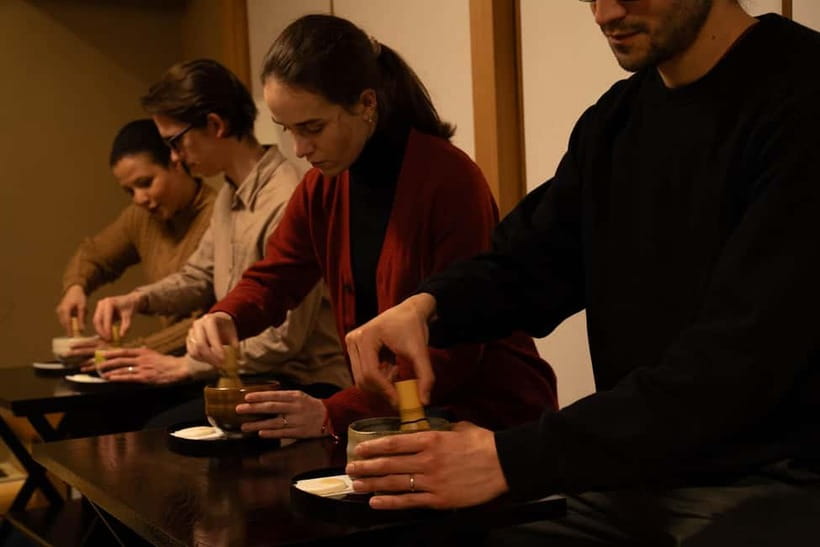
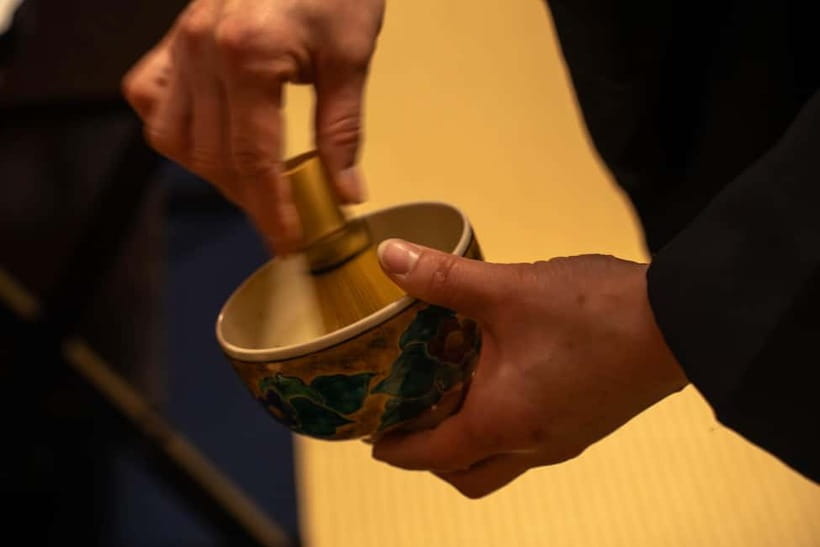
The hands-on part is where the experience becomes more than a performance. After watching the tea master, you prepare matcha yourself with help from the staff.
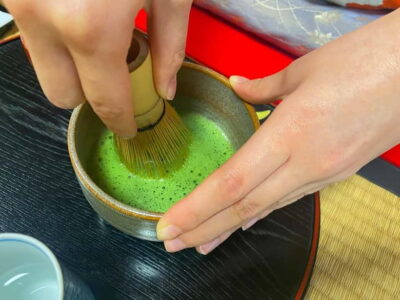
Whisking looks easy until you try it. You need to mix the powder and water properly while creating a fine foam, and the movement takes more control than many first-time participants expect. The guides encourage you through the process rather than leaving you to guess.
I like this part because it gives you a practical memory to take home. You are not only told how tea is made. You try the movement, see how the powder changes, and taste the result. The exercise also makes the master’s earlier precision easier to appreciate.
The quality of the matcha has received especially warm praise, with several people calling it smoother or better than tea they had tasted elsewhere in Japan. Taste is personal, of course, but this is clearly more than a token cup of green tea. The sweets help balance it, and the careful preparation gives the drink a focused place in the session.
Photography is allowed, so you can take pictures to remember the occasion. Be sensible about when you use your camera. The activity asks everyone to keep the room quiet and enjoyable, and constant photographing would work against the calm atmosphere.
What $35 buys you
At $35 per person, the experience is priced as a short cultural activity rather than a meal or a full ceremonial school. The price covers the tea ceremony, sweets, a photograph, and English instruction. The strongest value comes from the combination of demonstration and participation.
You could certainly find a cheaper cup of matcha in Kanazawa. That would not give you the historical setting, the etiquette lesson, a tea master’s full preparation, or the chance to whisk your own tea. You are paying for context and access, not just the beverage.
The extra 320 yen for Kenrokuen is reasonable, especially if you plan to explore the garden. Still, the admission is a real add-on, and the activity price should not be described as an all-in cost.
The one-hour length also helps with planning. You can fit the ceremony around Kenrokuen, Kanazawa Castle, or other central sights without giving up most of your day. I would schedule the garden walk before or after the tea rather than expecting to admire the scenery from the tea room.
Free cancellation up to 24 hours before the start time and a reserve-now, pay-later option add useful flexibility. Punctuality matters once you book: arriving more than 10 minutes late after the start time can lead to cancellation of the reservation.
Who will enjoy this most
I would recommend this for anyone who wants a clear first look at Japanese tea culture. It suits couples, solo visitors, families with older children, and anyone who prefers a structured activity over a passive visit to a historic site.
It is particularly good for you if:
- You want an English explanation of Japanese customs.
- You like hands-on activities and want to prepare matcha yourself.
- You are curious about formal etiquette but do not want a three-hour ceremony.
- You plan to visit Kenrokuen and want to connect the garden with Kanazawa’s past.
- You enjoy quiet experiences with a small food element.
- You have limited time but still want something more meaningful than a quick photo stop.
I would be more cautious if you dislike sitting on mats, strongly need a private experience, or expect panoramic garden views during the ceremony. A chair can be requested, but the activity is held with other groups, and the tea room itself does not overlook Kenrokuen.
Non-English speakers should also note the language limitation. The standard instruction is in English. If you need translation from English into another language, the provider asks you to arrange a private reservation by email so the group session remains quiet and easy to follow.
Small details that make the appointment smoother
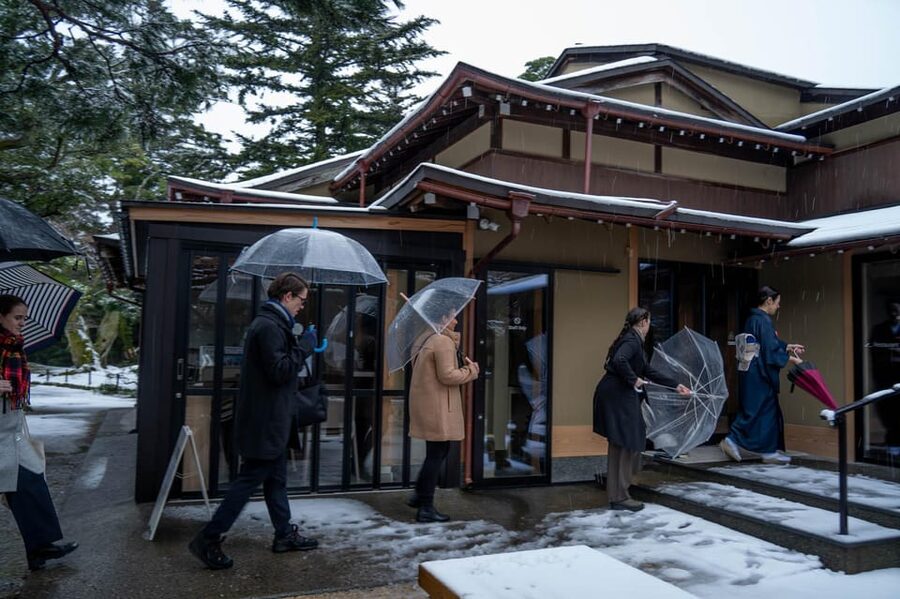
Enter Kenrokuen before heading to the meeting point. Do not wait outside the garden or assume the ceremony is at a separate street-facing shop.
Look for the fountain and then check the Kenrokutei tea ceremony signboard. The meeting instructions have caused some confusion because the fountain is the reference point, while the actual activity takes place inside the tea room.
Wear something that lets you sit comfortably. You may request a chair, but loose, comfortable clothing will make the hour easier. The room is intended to be quiet, so silence your phone and take photographs only when appropriate.
Try to arrive early enough to settle in. A late arrival of more than 10 minutes can cancel the booking, and entering in the middle of the ceremony would disturb the other people in the room.
Finally, allow time for Kenrokuen itself. The garden is not part of the view from the tea room, and the separate entry ticket is valid for your visit to the grounds. Treat the ceremony and the garden as two connected parts of your Kanazawa stop.
Should you book the Kenrokuen tea ceremony?
Yes, if you want an accessible and well-explained introduction to matcha. The strongest parts are the tea master’s demonstration, the patient English guidance, the wagashi pairing, and the chance to prepare your own drink.
The experience is not a full traditional ceremony, and it is not private. That is also why it works for many visitors. You receive the key rituals and cultural background in one hour, without committing half a day to formal proceedings.
Book it alongside a visit to Kenrokuen, budget 320 yen for garden admission, and arrive early at the fountain. If you can accept the enclosed tea room and shared setting, the $35 price buys a thoughtful cultural experience rather than just a cup of matcha.
FAQ
Where does the Kanazawa tea ceremony take place?
It takes place at Kenrokutei inside Kenrokuen Garden. The meeting point is in front of the fountain, and you should read the tea ceremony signboard for entrance information.
Is the Kenrokuen entrance fee included?
No. You must pay the separate 320-yen entrance fee to Kenrokuen Garden. The tea ceremony ticket does not include garden admission.
How long does the experience last?
The tea ceremony lasts one hour. Starting times vary, so check availability when booking.
Is the experience conducted in English?
Yes. The standard instructor language is English. If you need translation into another language, you should arrange a private reservation by email.
Can I sit on a chair instead of the floor?
Yes. You can request a chair if sitting or kneeling on the floor is difficult. The usual ceremony setting uses mats.
Can children take part?
The provided information gives two different age limits. One section says participants must be at least 7, while another says the activity is not suitable for children under 8. Confirm the age requirement before booking for a child in that range.
Newly steeped around Japan
- Yokohama : Tea Ceremony with Sweets and Souvenir★ 5.0 · 5 reviews
- Whisk Your Own Matcha: A Zen Matcha Experience at Temple★ 3.6 · 7 reviews
- Walking Tour: Yanaka,Nezu& Sendagi: Tea Ceremony & Old Tokyo★ 5.0 · 3 reviews
- Visit local home for music and tea ceremony near Disney★ 4.9 · 13 reviews
- Trip to Kamakura & Enoshima: Shrines, Seaside, Temples &Tea★ 5.0 · 11 reviews
- Yokohama: Sushi & Gyoza Cooking with Matcha & GreenTea Experience★ 5.0 · 3 reviews
- Kyoto tea town for matcha lovers★ 5.0 · 16 reviews
- Uji: Private immersion into Kyoto’s tea and reglious culture★ 5.0 · 17 reviews
Tea Ceremony Experiences, compared.
Kyoto: Tea Ceremony in a Traditional Tea House in Kiyomizu
Read our review →
Kyoto: 45-Minute Tea Ceremony Lesson Experience
Read our review →
Kyoto: Table-Style Tea Ceremony at a Kyo-Machiya
Read our review →

Browse the lists this tea experience appears in