
Review · KYOTO
Kyoto: Table-Style Tea Ceremony at a Kyo-Machiya
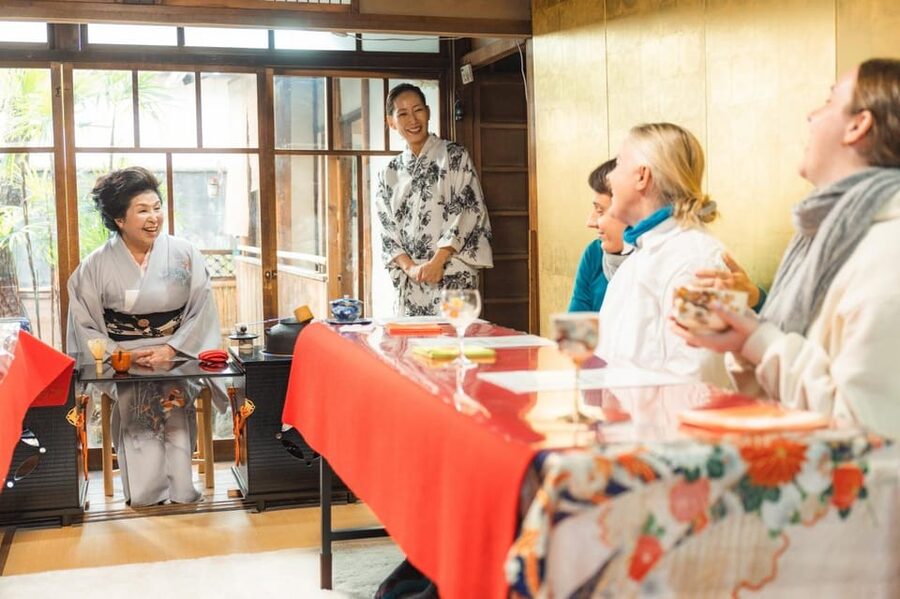
A table-style tea ceremony makes this Kyoto experience easier on your knees and more welcoming to first-time visitors. You’ll sit on chairs rather than kneeling on the floor, then learn the meaning behind the movements, utensils, sweets, and manners inside a more than 100-year-old Kyo-machiya.
I like the generous mix of activities: you make your own frothy matcha, write your name in Japanese, and have time for photographs with fans, umbrellas, and a katana. I also like the setting in Fushimi, a sake-making district with food streets and easy train links. The main consideration is location: this is about 20 to 25 minutes from central Kyoto, and the old house has stairs, so it is not suitable for wheelchair users.
Key points to know before booking
- Sit at a table, not on the floor: A comfortable choice if kneeling is difficult or you simply prefer a relaxed introduction.
- Explore a century-old Kyo-machiya: See traditional rooms, a garden, old Buddhist and Shinto altars, antiques, and household details.
- Make your own matcha: Learn to whisk a creamy, frothy bowl after watching the tea service.
- Add a kimono for photos: Arrive 30 minutes early for dressing, hairstyling, and pictures around the townhouse.
- Finish with hands-on crafts: Try Japanese calligraphy, flower arranging, and a personalized name written in kanji or hiragana.
- Pair it with Fushimi: The sake district works well before or after the ceremony, with Fushimi Inari and Uji also within reach.
A relaxed tea ceremony in a real Kyoto townhouse
The appeal here is not only the cup of tea. It is the chance to see how several parts of Japanese culture fit together in one compact visit.
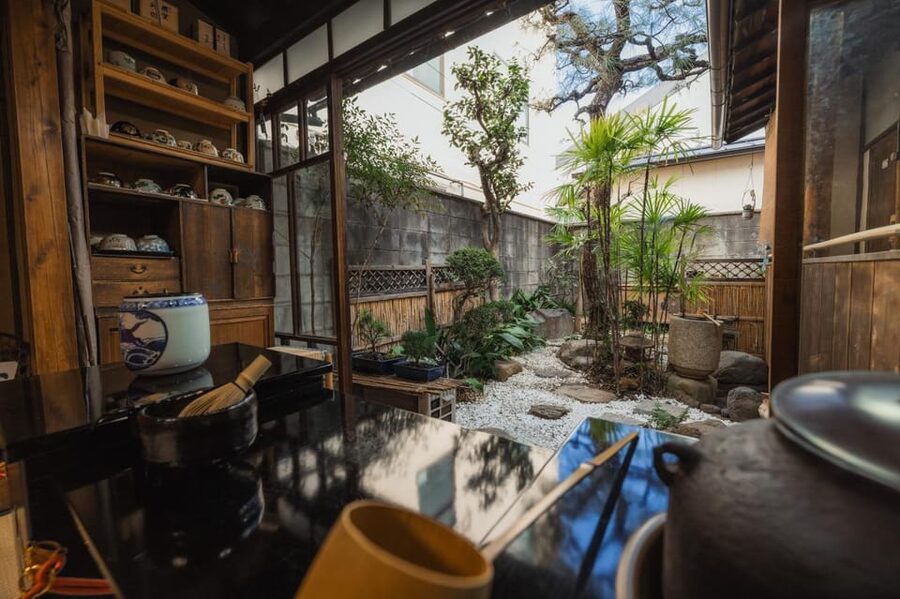
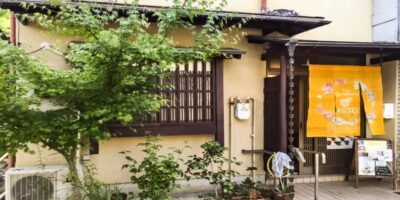
Éclat Japon runs the experience from a traditional townhouse in southern Kyoto. From the street, it may look modest. Inside, you’ll find the atmosphere of an older Kyoto home, with wooden rooms, a garden, traditional altars, antiques, and architectural details that are easy to miss on a standard sightseeing walk.
The format is friendly to international visitors. The English-speaking guides explain the ceremony with a presentation, then show you the practical steps. You are not expected to know Japanese etiquette in advance, and the guides are patient when you try the movements yourself.
I especially like the balance between watching and doing. You first see how the tea is prepared and served, then you whisk your own matcha, taste traditional sweets, and practice the manners. This keeps the 90 minutes active without turning the ceremony into a rushed checklist.
The setting also gives the experience a personal quality. You walk through a home rather than entering a large performance venue. That does not make the ceremony fully private by default, since small-group formats are available, but it helps the activity feel less like a stage show.
More Tea Ceremonies in Kyoto
- Kyoto: Tea Ceremony in a Traditional Tea House in Kiyomizu
★ 4.9 · 3,519 reviews - Kyoto: Tea Ceremony Ju-An at Jotokuji Temple
★ 4.9 · 3,207 reviews - Kyoto: 45-Minute Tea Ceremony Lesson Experience
★ 4.3 · 2,378 reviews
What happens during the 90 minutes
The exact order can vary, especially if you add kimono dressing, but you should expect several connected parts.
You begin with a welcome drink. Depending on the arrangements, this may be sake, juice, Japanese tea, or another nonalcoholic option. It is a useful pause after the train ride and gives the guides time to introduce the house and the plan for the session.
Next comes an explanation of tea ceremony culture. A PowerPoint presentation covers how the practice developed in Japan, along with the spirit and manners behind it. This context matters because the ceremony can otherwise seem like a series of mysterious hand movements. Once you understand the ideas of cleanliness, respect, attention, and hospitality, the gestures make more sense.
You may then be shown how to purify yourself at a stone basin in the garden, in a manner similar to the cleansing ritual at a Shinto shrine. It is a small detail, but a useful one. It connects the tea room to wider Japanese customs rather than treating tea ceremony as an isolated performance.
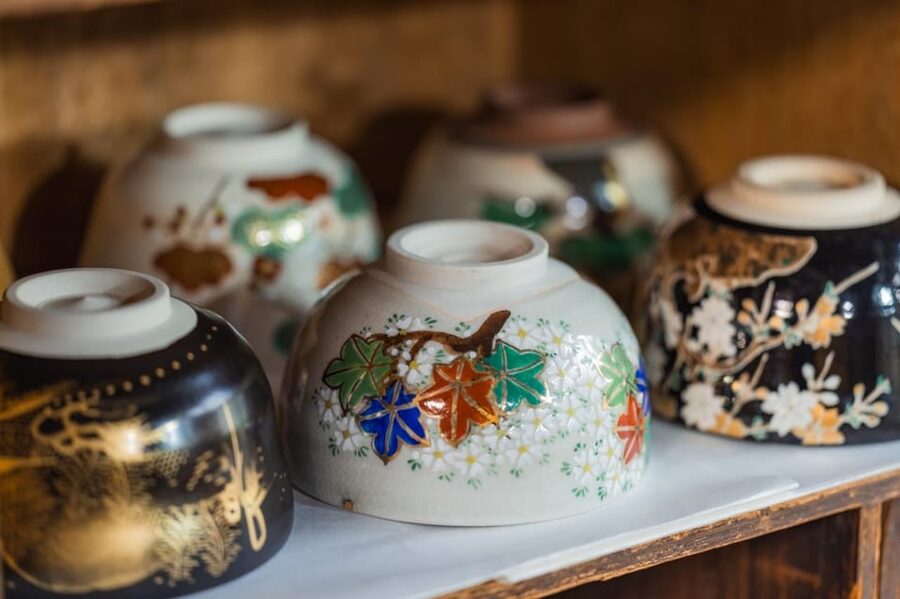
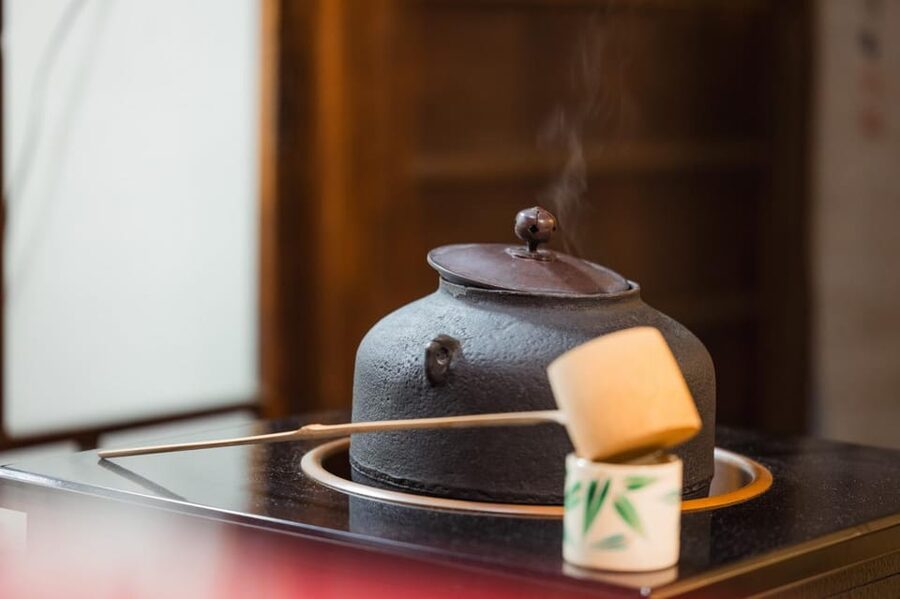
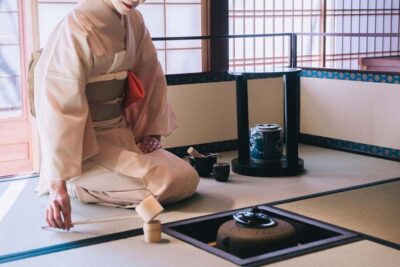
The tea service itself is the quiet center of the visit. Watch the host handle the bowl and utensils, then follow the instructions as you taste the tea with a traditional sweet. The sweet is not merely a snack. Its flavor and texture balance the bitterness of matcha, making the drink easier to appreciate.
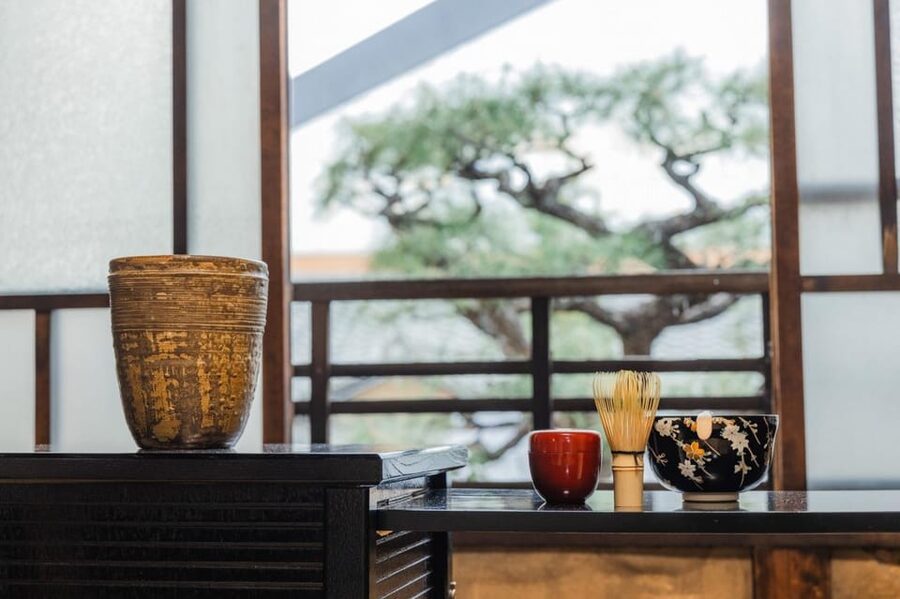
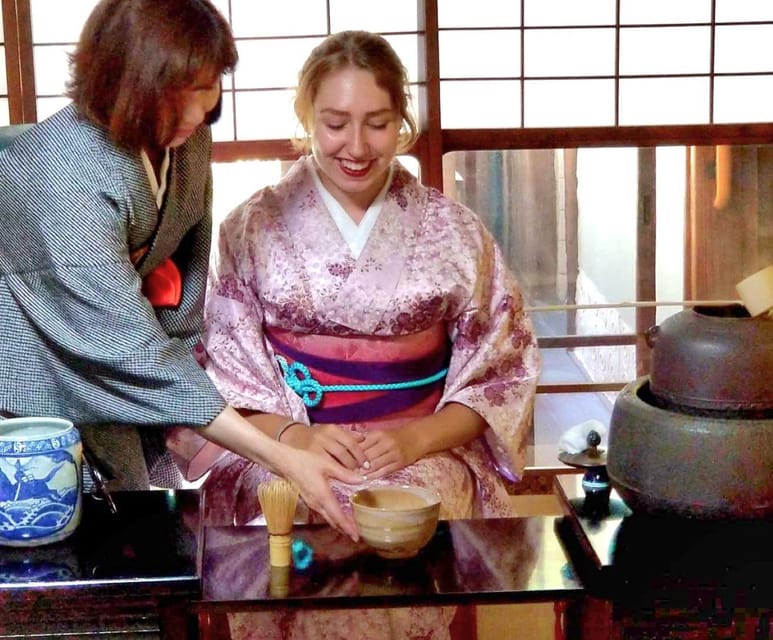
You also get a chance to prepare your own bowl with a bamboo whisk. The goal is a creamy, frothy surface, but do not worry if your first attempt is not perfect. The point is to feel the rhythm of the whisk and understand the care involved in preparing a simple drink.
One unusual extra is latte art made with thick tea. The activity information describes this as part of the included program, so it adds a playful touch to an otherwise formal tradition. It is a good contrast to the more precise tea service.
Why the chair-based format matters
Traditional tea ceremonies often involve sitting on the floor in a kneeling position. That can be uncomfortable for many people, especially anyone with stiff knees, limited flexibility, or a leg injury.
Here, the tea ceremony uses tables and chairs. You still learn the etiquette and observe the service, but without the physical strain of remaining on the floor. One participant with a leg injury was helped patiently on the stairs and through the activities, but you should not treat that as a guarantee of full mobility access.
The activity is listed as unsuitable for wheelchair users. The historic townhouse and its stairs are the key concern. If you have limited mobility but can manage steps, contact the operator before booking and explain your needs clearly.
For families, older adults, and anyone who wants the cultural lesson without the discomfort of kneeling, this format is a strong practical choice. It also lets you focus on the host’s explanations instead of worrying about your posture.
A 100-year-old house with small details worth seeing
The house is one of the strongest reasons to choose this experience over a hotel-based tea demonstration. A Kyo-machiya is a traditional Kyoto townhouse, and this one is more than a century old.
You can stroll through the rooms and see old Buddhist and Shinto altars, antiques, and parts of the house that reflect daily life in Kyoto. The experience does not present the building as a museum. That is part of its charm. You are seeing a lived-in style of architecture used for a cultural activity.
The garden provides a setting for photos and for the purification lesson. Depending on the season and light, the garden may be especially useful if you choose the kimono option. You can also take pictures with Japanese umbrellas, folding fans, and a katana sword.
Keep your camera ready, but remember that this is still a tea ceremony. The photo time is an enjoyable part of the visit, not the whole purpose. The best experience comes from treating the house and its customs with care.
Same leaf, a different ritual:
- Kimono Tea Ceremony at Kyoto Maikoya, NISHIKI
★ 5.0 · 911 reviews - Arashiyama Bamboo, Temple, Monkeys, or Secret Sake Brewery
★ 4.8 · 886 reviews - Kyoto: Arashiyama Bamboo Forest, Monkeys, Matcha & Temple Tour
★ 5.0 · 759 reviews - Kyoto: Kimono Tea Ceremony at Orizuruya Gion
★ 4.9 · 618 reviews
The kimono option adds time, color, and photographs
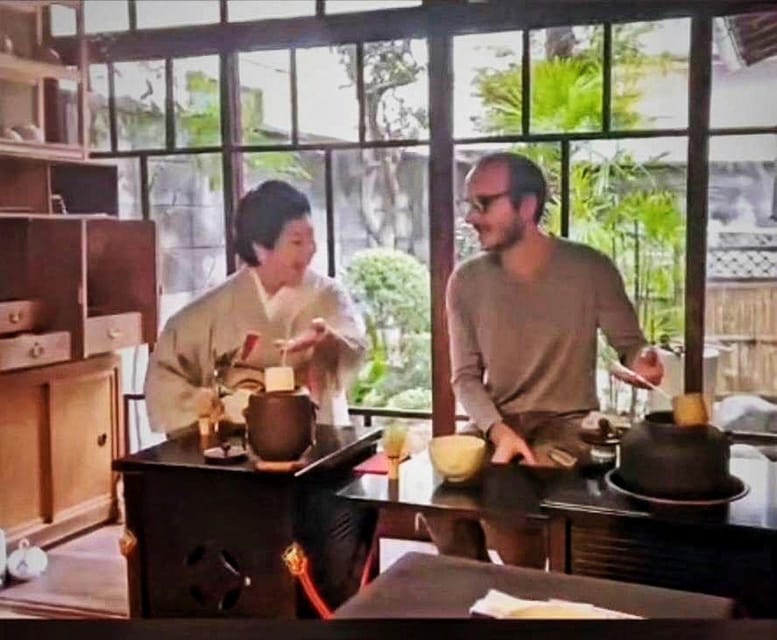
Kimono rental is optional, and I would consider it if you want photographs or are marking a special occasion. The clothing changes the feel of the visit, especially when you move through the old house and garden.
Several participants described the dressing and hairstyling as a highlight. The staff help you choose from a range of kimonos, fit the clothing, and prepare you for the ceremony. The process is handled by the hosts, so you do not need to know how to put on a kimono yourself.
If you select this option, arrive 30 minutes before the scheduled start. That early arrival is important. Arriving at the normal meeting time could leave you with less time for dressing and photographs.
A kimono is not recommended during pregnancy because of health and safety concerns. The activity also has stairs, so think about comfort as well as appearance. For everyone else, the clothing can make the ceremony feel more special, but it is not required to get the main tea lesson.
Calligraphy and flower arranging give you something to take home
The final activities broaden the experience beyond tea. You can write your name in Japanese, with instruction in kanji or hiragana, and in some sessions participants practice several Japanese writing styles.
The guides also prepare a hanging scroll or envelope with your name written in Japanese. This is a more meaningful keepsake than a generic souvenir because it connects directly to your visit. Take care when packing it, particularly if you are continuing your trip by train or flying soon afterward.
Flower arranging is included as well. The activity introduces the idea of arranging flowers with attention to shape and balance. It is not presented as a long specialist lesson, but it gives you another practical connection to Japanese aesthetics.
Children and teenagers often respond well to these parts because they can create something themselves. Adults who are less interested in formal ceremony may also find that calligraphy and flower arranging keep the session lively.
Why Fushimi is a smart location
The townhouse is in Fushimi, in southern Kyoto. This area is known for sake, casual restaurants, shopping streets, and the Otesuji shopping arcade.
From Kintetsu Kyoto Station, take the express train for about 15 minutes to Kintetsu Momoyama-Goryo-mae Station. From Keihan Gion-Shijo, use Fushimi-Momoyama Station. From JR Momoyama Station, walk toward the Otesuji arcade, pass Gokogu Shrine, and turn near Mizuho Bank or the Rakuten mobile shop.
Look for the old townhouse with a blue curtain and guides wearing kimono. The directions are detailed, but allow a little extra time because this is not in the central sightseeing core.
The location works well as part of a larger day. You can visit Fushimi Inari Shrine before or after the ceremony, with the shrine about 15 minutes from Keihan Fushimi Inari Station. Uji, known for tea, is about 20 minutes away by train. Osaka is roughly 40 minutes by express train, and Nara about 50 minutes.
I would not travel to Fushimi only for a quick cup of tea and then rush back. Give yourself time to eat, browse the shopping arcade, or visit a sake-related attraction nearby. The neighborhood helps turn a 90-minute booking into a fuller southern Kyoto outing.
Is $45 good value?
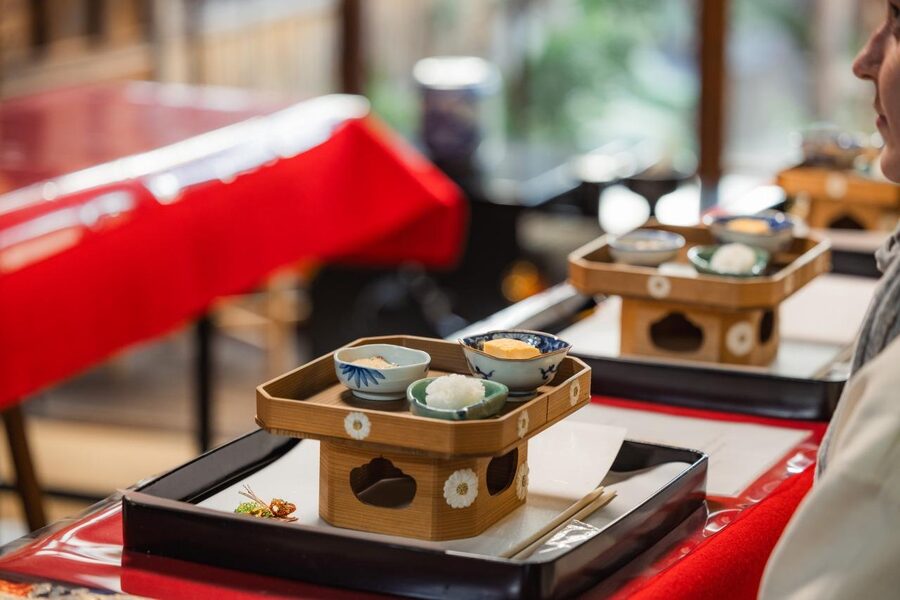
At $45 per person, the price is fair for the amount packed into 90 minutes. You are not paying only for matcha. The fee covers the tea ceremony, traditional sweets, a welcome drink, your own matcha preparation, calligraphy, flower arranging, the Japanese name keepsake, and access to the townhouse setting.
The value becomes stronger if you would otherwise book separate cultural activities for tea, calligraphy, and kimono photographs. It also helps that the session is taught in English, so you can ask questions and understand why the gestures matter.
The kimono option costs extra, though the provided information does not state the supplement. Check the final price before confirming. I would choose the add-on for a first Kyoto visit, a couple’s activity, or a family photo opportunity. If you mainly want to learn tea preparation, the standard booking should be enough.
Hotel pickup and drop-off are not included. That is not a serious drawback here because the train route is straightforward, but you need to plan your own journey and allow time to find the townhouse.
Free cancellation is available up to 24 hours before the activity for a full refund, and you can reserve now and pay later. Check the current start times when booking because availability changes by date.
Who should book this experience?
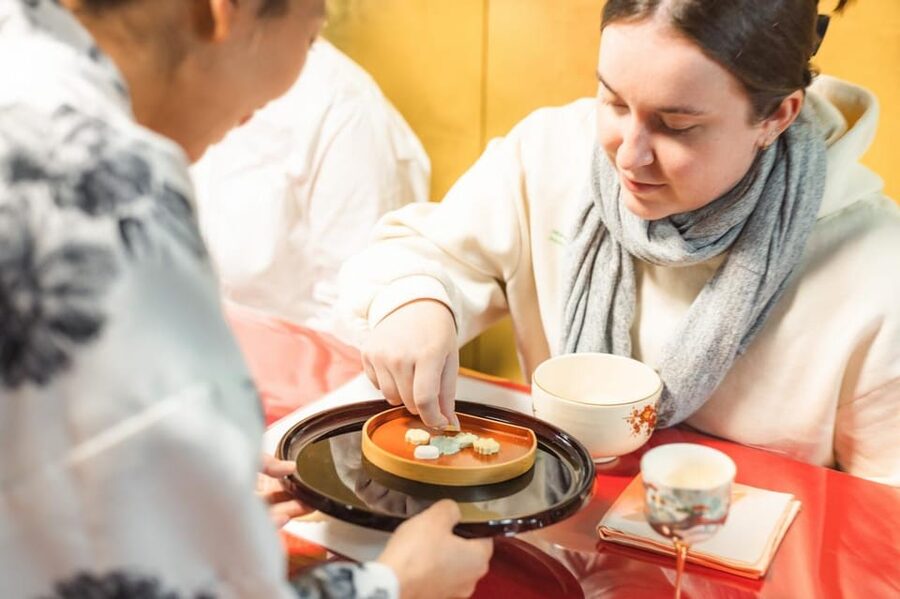
I would recommend it to first-time visitors who want a clear introduction to Japanese customs without committing to a highly formal or lengthy ceremony.
It is particularly suitable for:
- Couples who want kimono photographs in an old Kyoto house
- Families with teenagers who will enjoy matcha, calligraphy, and name writing
- Older adults who prefer chairs to floor seating
- Visitors interested in architecture and daily life as well as tea
- Anyone already planning a visit to Fushimi Inari, Uji, or the Fushimi sake district
It may be less suitable if you want a strict, specialist-level tea ceremony with long periods of silence and traditional floor seating. It is designed as an accessible cultural introduction, with several hands-on activities and explanations in English.
The guides’ warmth is an important part of the experience. They are described as patient, friendly, and able to explain the small rules without making you feel awkward. That matters when you are learning how to hold a bowl, use a whisk, or write in a script you cannot read.
Should you book the Kyoto table-style tea ceremony?
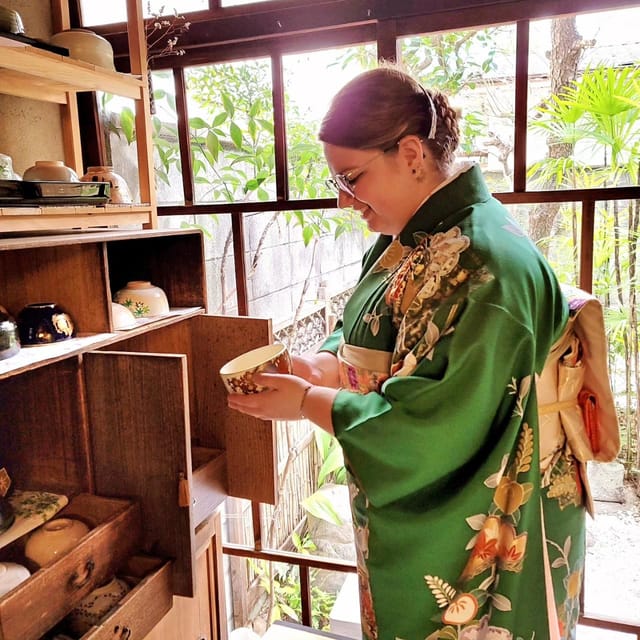
Book it if you want more than a staged tea tasting. You’ll see a historic townhouse, learn the reason behind tea ceremony manners, prepare matcha, try calligraphy, arrange flowers, and leave with your name written in Japanese.
Choose the kimono option if photos and traditional dress matter to you, and arrive 30 minutes early. Skip the add-on if you are watching your budget or prefer to focus on the tea lesson.
The main trade-off is the train ride from central Kyoto and the limited accessibility of the old house. For most visitors, the easy connection to Fushimi’s restaurants, sake culture, Fushimi Inari, and Uji makes the location a benefit rather than a burden. At $45, this is a well-rounded way to spend part of a Kyoto afternoon.
FAQ
How long does the tea ceremony experience last?
The experience lasts 90 minutes. Check the available start times for your chosen date.
Is the tea ceremony performed on the floor?
No. The activity uses tables and chairs, so you do not need to sit on the floor.
What is included in the standard experience?
The booking includes the tea ceremony, traditional sweets, a welcome drink, matcha preparation with a bamboo whisk, calligraphy, flower arranging, and a hanging scroll or envelope with your name written in Japanese.
Is kimono rental included?
Kimono rental is included only if you select the kimono option. If you choose it, arrive 30 minutes before the activity begins. Pregnant participants are asked not to wear a kimono for health and safety reasons.
Where does the experience take place?
It takes place in a more than 100-year-old Kyo-machiya in southern Kyoto, near the Otesuji shopping arcade in Fushimi. The nearest stations include Kintetsu Momoyama-Goryo-mae, Keihan Fushimi-Momoyama, and JR Momoyama.
Is the experience available in English?
Yes. The instructor and guides provide the experience in English.
Can wheelchair users join?
No. The activity is listed as unsuitable for wheelchair users. The historic townhouse includes stairs and may not provide wheelchair access.
Newly steeped around Kyoto
- Whisk Your Own Matcha: A Zen Matcha Experience at Temple★ 3.6 · 7 reviews
- Kyoto: Authentic Tea Ceremony in a Small Group★ 5.0 · 7 reviews
- Tea ceremony at Kyoto’s Zen Temple Teahouse★ 5.0 · 2 reviews
- Uji Walking Tour – Byodo-in temple and Tea Ceremony from Kyoto★ 3.5 · 3 reviews
- Tea Ceremony Experience in Traditional Kyoto Townhouse★ 5.0 · 19 reviews
- Tea Ceremony in 150 Years Old Townhouse with Tables and Chairs★ 5.0 · 22 reviews
- Sencha-do the Japanese Tea Ceremony Workshop in Kyoto★ 5.0 · 21 reviews
- Silent Beauty of Kyoto Zen Walk and Tea Experience★ 5.0 · 2 reviews
Tea Ceremony Experiences, compared.
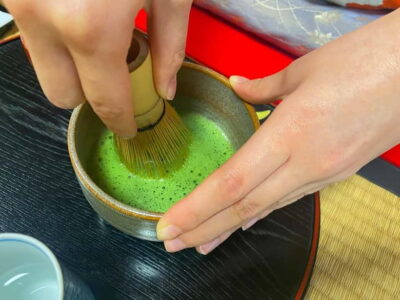
Kyoto: Tea Ceremony in a Traditional Tea House in Kiyomizu
Read our review →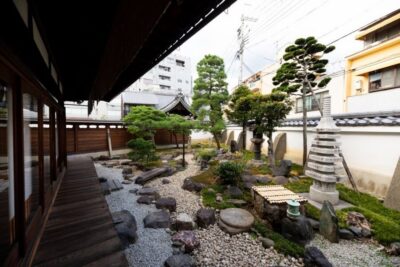
Kyoto: 45-Minute Tea Ceremony Lesson Experience
Read our review →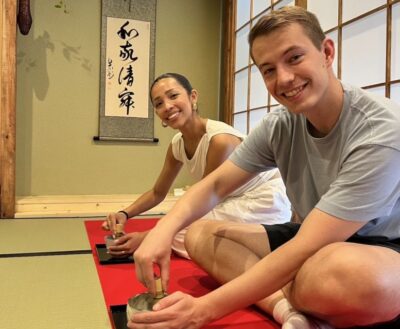


Browse the lists this tea experience appears in