
Review · KYOTO
Authentic Kyoto Tea Ceremony: Camellia Flower Teahouse
Kyoto’s tea ceremony is not just a lesson in making a drink. It is a quiet, precise ritual built around respect, cleanliness, seasonal beauty, and attention to the person in front of you. At Camellia Flower, you see the ceremony performed, learn why each movement matters, then make your own bowl of frothy matcha.
I like two things right away: the small groups of no more than eight keep the session personal, and the 45-minute format fits neatly into a sightseeing day. English-speaking instructors explain the ceremony clearly, and you get to ask questions rather than simply sit and watch. The one drawback is the plain, small room, which may feel less grand than you expect from Kyoto’s most polished cultural attractions.
Key points at a glance
- Watch before you whisk: Your instructor demonstrates the ceremony before you try making matcha yourself.
- Seasonal sweet included: A small Japanese sweet accompanies the tea and helps balance matcha’s bitter edge.
- English instruction: Instructors come from one of Kyoto’s three main tea ceremony schools and explain the ritual in fluent English.
- Flexible seating: You can sit on the floor in the traditional way, or use chairs and tables.
- Kimono option: Kimono rental is available for an additional fee and can make the photographs and ceremony feel more special.
- Easy Higashiyama location: The activity begins and ends at Tea Ceremony Camellia Flower, near public transportation.
Entering the tea room in Higashiyama
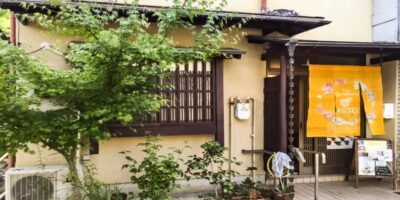
Camellia Flower is located at 349-13 Masuyacho in Kyoto’s Higashiyama Ward, an area well suited to pairing with traditional Kyoto sightseeing. You meet at the tea house, and the experience ends at the same location. Pickup and drop-off are not included, so you should plan your own route to the meeting point.
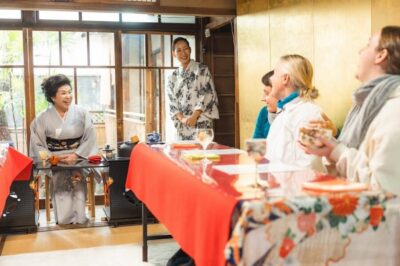
The setting is designed for a focused cultural lesson rather than a large stage show. That matters. With a maximum of eight people, you are close enough to see the utensils, watch the hand movements, and take part without feeling lost in a crowd.
The room may be smaller and plainer than some first-time visitors imagine. If you are looking for an elaborate historic house or a dramatic garden view, this may feel modest. The reward is the personal instruction. This is a practical introduction to tea ceremony, not a formal performance meant only for watching.
You can sit on the floor if you want the traditional experience. Chairs and tables are available, which helps if kneeling is uncomfortable or you simply prefer a more relaxed position. The activity is not wheelchair accessible, so this is an important point to check before booking.
More Tea Ceremonies in Kyoto
- Kyoto: Tea Ceremony in a Traditional Tea House in Kiyomizu
★ 4.9 · 3,519 reviews - Kyoto: Tea Ceremony Ju-An at Jotokuji Temple
★ 4.9 · 3,207 reviews - Kyoto: 45-Minute Tea Ceremony Lesson Experience
★ 4.3 · 2,378 reviews
A short introduction to matcha and Japanese tea culture
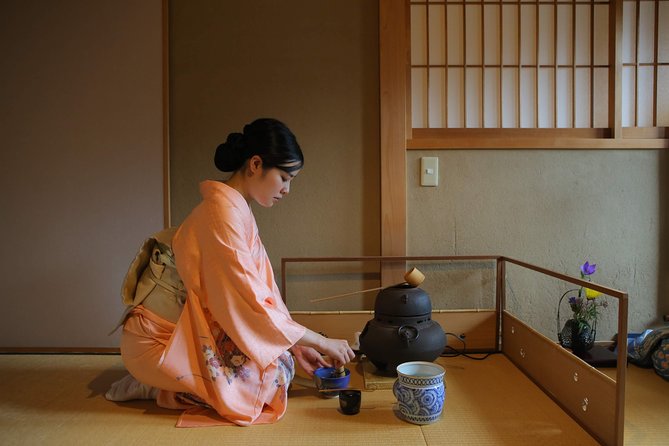
Your instructor begins with an explanation of matcha and the basic shape of the tea ceremony. This gives you useful context before the ritual starts. You learn that the ceremony is concerned with more than tea: the room’s arrangement, the utensils, seasonal details, cleanliness, and the relationship between the person making the tea and the person receiving it all have a place.
The explanations also connect tea ceremony with Kyoto’s wider cultural life. Architecture, taste, hospitality, and ritual meet in this small room. You do not need prior knowledge of Japanese customs. The session is built for first-time participants, and the instructors speak English fluently.
One especially useful idea is the focus on preparing your mind before preparing the tea. The washing and cleaning steps are not random motions. They express care, respect, and readiness. Once you understand that, the ceremony feels less like a set of mysterious rules and more like a carefully arranged act of hospitality.
The tone is friendly rather than stiff. You are encouraged to ask questions throughout the session. That makes this a good choice if you want to understand why the host moves in a certain way, why a utensil is handled carefully, or what the different parts of the room represent.
Watching the ceremony before making your own tea
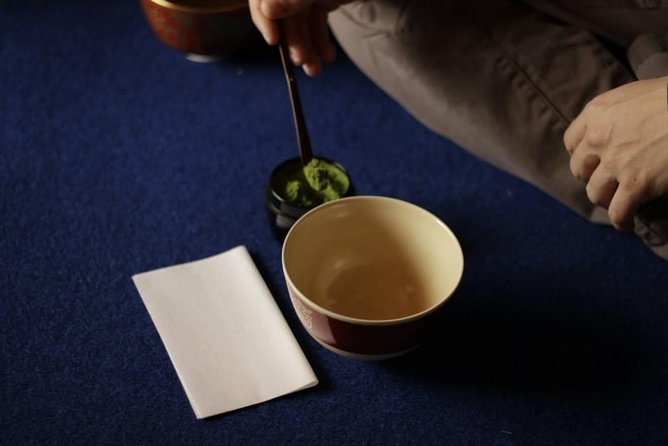
The instructor performs the ceremony first, giving you time to watch the sequence without worrying about your own technique. You will see the tea bowl, tea scoop, whisk, and other tools used in a deliberate order.
The precision is part of the lesson. A small movement can carry meaning, and even simple actions take practice when they must be done with care. The host explains the steps in English, so you can follow the purpose behind the actions rather than only admire the choreography.
You also receive matcha and a seasonal sweet. The sweet is an important part of the experience, since its flavor balances the strong, grassy taste of the tea. Matcha is not prepared like ordinary loose-leaf tea. It is whisked into the water, leaving a fine suspension with a fuller, more concentrated taste.
The ceremony itself is calming, especially after a busy morning in Kyoto. Several activities in the city involve crowds, noise, and constant movement. Here, the pace slows down. You are asked to watch, listen, and pay attention to small details.
Photos and short videos are permitted, which is useful if you want a record of the demonstration. Still, I would keep your phone away for much of the session. The ceremony is easier to appreciate when you are not trying to photograph every hand movement.
Whisking matcha with the provided tools
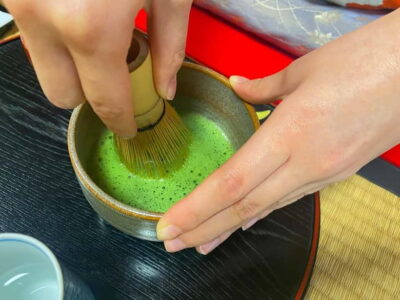
The most hands-on part comes at the end, when each person makes a bowl of matcha. Tea bowls, scoops, and whisks are provided, so you do not need to bring anything with you.
Your instructor explains the basic method and then gives you a chance to practice. You will quickly see why tea ceremony requires training. Making a smooth, frothy bowl looks simple when an experienced host does it. Your own first attempt may be less even, but that is part of the fun.
This practical section gives the ceremony a useful conclusion. You are not left with a vague impression of an old ritual. You have tried one small part of it yourself, and you can better understand the skill involved.
The session also works well for children old enough to follow instructions. Children under six cannot join, but children aged seven and eight have enjoyed the activity, especially the chance to make their own tea. Families should remember that the experience asks for quiet attention, so it may suit patient children better than very young ones.
Same leaf, a different ritual:
- Kyoto: Table-Style Tea Ceremony at a Kyo-Machiya
★ 4.9 · 1,211 reviews - Kimono Tea Ceremony at Kyoto Maikoya, NISHIKI
★ 5.0 · 911 reviews - Arashiyama Bamboo, Temple, Monkeys, or Secret Sake Brewery
★ 4.8 · 886 reviews - Kyoto: Arashiyama Bamboo Forest, Monkeys, Matcha & Temple Tour
★ 5.0 · 759 reviews
Why the 45-minute format works
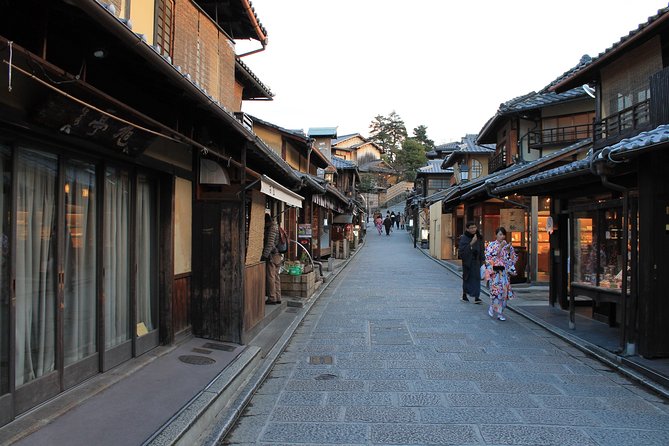
Forty-five minutes is enough time for an introduction, a demonstration, a sweet and bowl of tea, questions, and your own attempt at whisking. It is also short enough to fit between visits to Higashiyama temples, lanes, shops, and other Kyoto sights.
One advantage of the compact schedule is that you can add a cultural activity without giving up half a day. The experience brings a calm pause to a busy itinerary. If your Kyoto schedule is tightly packed, this length is practical.
The trade-off is that you should not expect a long, formal tea gathering covering every branch of Japanese tea culture. You receive a clear introduction and a hands-on lesson, not professional training. If you already know tea ceremony or want a lengthy private session, you may prefer to ask about a private option.
The activity has a maximum of eight people, which helps keep the instruction moving. A small group also gives you a better chance to ask questions and receive help with whisking. Group discounts may be available, making it more appealing for families or friends booking together.
Choosing the optional kimono rental
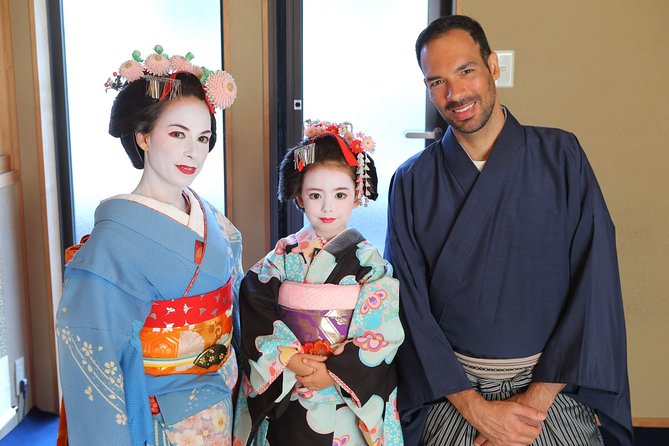
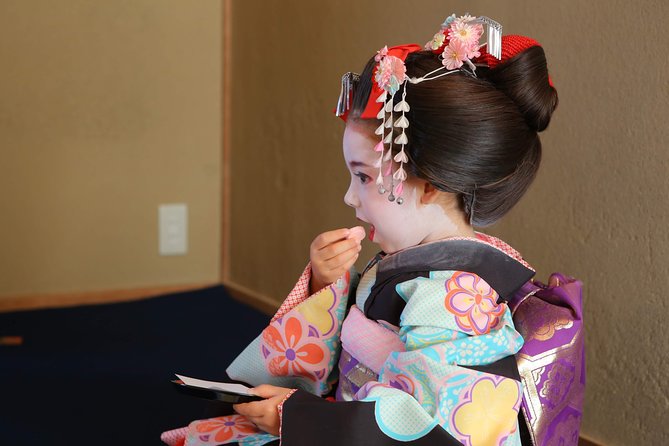
Kimono rental is not included in the listed price, but you can request it by message for an additional charge. Some visitors also have their hair arranged as part of the dressing experience, based on the available feedback about the activity.
A kimono can add visual appeal to the ceremony and make photographs more memorable. It may also help you feel more connected to the setting, especially if this is your first visit to Japan.
Still, treat it as an optional extra, not a requirement. The tea ceremony itself does not depend on what you wear. If you are trying to control costs, skip the rental and concentrate on the instruction. If you want the occasion to feel more ceremonial and have room in your budget, the kimono is a sensible add-on.
Ask about the rental when booking rather than assuming it is arranged automatically. The base experience includes the tea equipment and instruction, not clothing.
What the $36.48 price delivers
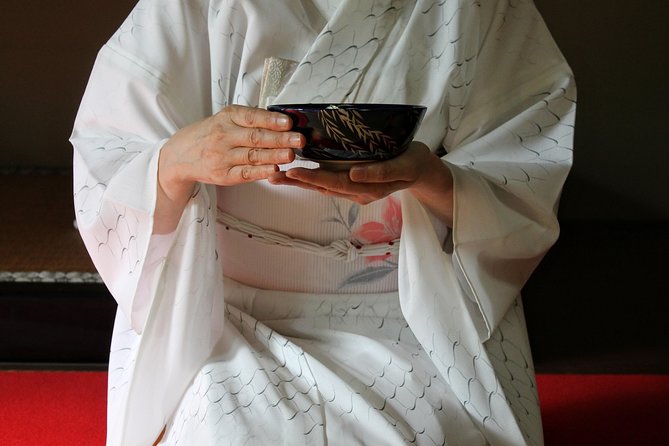
At $36.48 per person, this is priced as an accessible introduction to a major part of Japanese culture. You are paying for a guided demonstration, English explanations, a seasonal sweet, matcha, and the chance to prepare your own bowl using the provided utensils.
The value is strongest if you want context. You could drink matcha elsewhere for less, but that would not explain the ritual, the room, the tools, or the meaning behind the movements. You could also watch a ceremony, but the hands-on practice gives you a better feel for the discipline involved.
The price does not include transportation, hotel pickup, drop-off, or kimono rental. Keep those extras in mind when setting your budget. The group discount may help if you are booking for several people.
The overall rating is 4.8 from 269 ratings, with 95 percent recommending the experience. That fits the main strengths: friendly instruction, a peaceful pace, clear English, and the chance to practice rather than only observe.
Who will enjoy Camellia Flower most
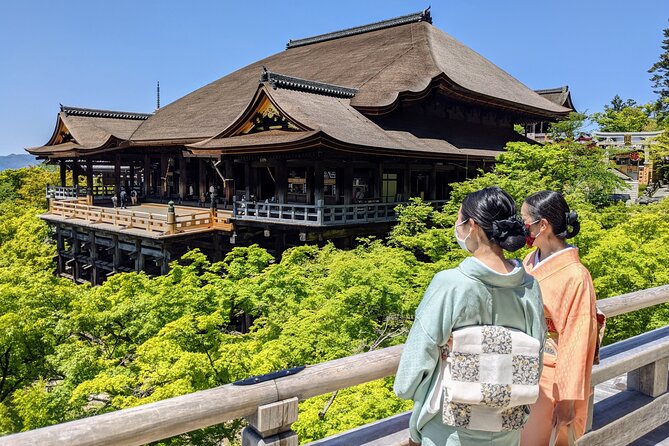
I would recommend this for a first visit to Japan, especially if you want a cultural activity that is easy to understand and does not require a full day. The instructors explain the ceremony in plain English, and you can ask questions as you go.
It is also a good choice for families with children aged six and older. The practical whisking lesson gives younger participants something active to do, while the demonstration provides cultural context for adults.
Couples and friends may enjoy adding the kimono option for photographs. Solo visitors can also fit comfortably into the small group format, though the social atmosphere depends on who else has booked that time.
You may want a different option if you need wheelchair access, dislike floor seating and do not want to use chairs, or expect an ornate room and a long formal ceremony. The room is functional and intimate, not grand. That is not a flaw for everyone, but it is worth knowing before you arrive.
Practical details before you book
Confirmation is provided at booking, and the mobile ticket makes it easy to keep the reservation on your phone. The meeting point is near public transportation, but you need to make your own way there.
Service animals are allowed. The experience is not wheelchair accessible. Chairs and tables are available, and you should request or confirm that seating arrangement if floor sitting is a concern.
Free cancellation is available up to 24 hours before the start time for a full refund. Changes made within 24 hours are not accepted, and cancellations inside that period are not refunded. The stated policy also says that poor weather can lead to a different date or a full refund.
The tea room is indoors, but the weather policy still applies as given by the operator. Check the local start time carefully, since cancellation deadlines use Kyoto time.
Should you book this Kyoto tea ceremony?
Book it if you want a short, friendly, hands-on introduction to matcha and Japanese tea ceremony. The small group, fluent English instruction, seasonal sweet, and chance to whisk your own tea give the session more substance than a simple tasting.
I especially like it for first-time visitors who want to understand the customs behind what they see in Kyoto. The experience is calm, practical, and easy to add to a sightseeing day.
Skip it if your priority is a grand tea house, an elaborate room, or a long private ceremony. The setting is modest, and the 45-minute format keeps the lesson focused. For most people, though, that is exactly the appeal: you learn the essentials, take part in the ritual, and still have most of the day left for Kyoto.
FAQ
Where does the tea ceremony take place?
The experience begins and ends at Tea Ceremony Camellia Flower, 349-13 Masuyacho, Higashiyama Ward, Kyoto, Japan. The location is near public transportation.
How long does the activity last?
The tea ceremony lasts approximately 45 minutes.
Is the tea ceremony conducted in English?
Yes. The instructors speak English fluently and explain the ceremony, utensils, steps, and cultural meaning.
Can I make my own matcha?
Yes. Tea bowls, tea scoops, and tea whisks are provided, and each participant has the opportunity to make a bowl of matcha.
Are children allowed to join?
Children aged six and older can join. Children under six cannot participate.
Is kimono rental included?
No. Kimono rental is an optional extra that can be requested by message.
Newly steeped around Kyoto
- Whisk Your Own Matcha: A Zen Matcha Experience at Temple★ 3.6 · 7 reviews
- Kyoto: Authentic Tea Ceremony in a Small Group★ 5.0 · 7 reviews
- Tea ceremony at Kyoto’s Zen Temple Teahouse★ 5.0 · 2 reviews
- Uji Walking Tour – Byodo-in temple and Tea Ceremony from Kyoto★ 3.5 · 3 reviews
- Tea Ceremony Experience in Traditional Kyoto Townhouse★ 5.0 · 19 reviews
- Tea Ceremony in 150 Years Old Townhouse with Tables and Chairs★ 5.0 · 22 reviews
- Silent Beauty of Kyoto Zen Walk and Tea Experience★ 5.0 · 2 reviews
- Traditional Tea Ceremony in Kyoto★ 4.5 · 3 reviews
Tea Ceremony Experiences, compared.
Kyoto: Tea Ceremony in a Traditional Tea House in Kiyomizu
Read our review →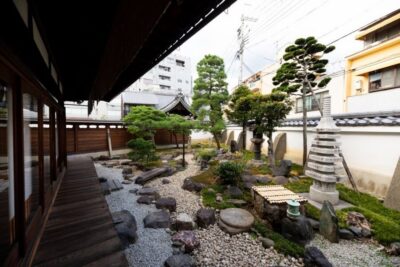
Kyoto: 45-Minute Tea Ceremony Lesson Experience
Read our review →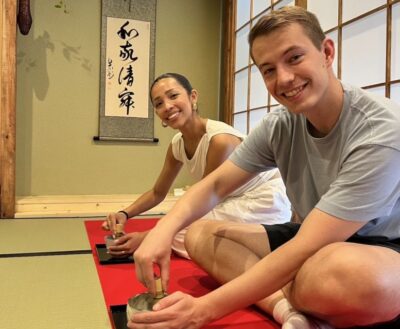
Kyoto: Table-Style Tea Ceremony at a Kyo-Machiya
Read our review →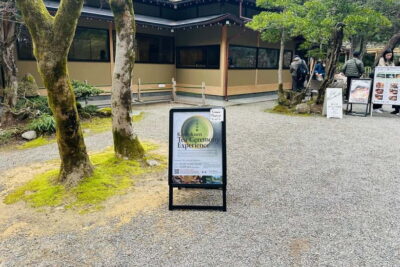


Browse the lists this tea experience appears in